B2B VoC Programmes that reduce churn and increase lifetime value

Stefan Kolle presents a framework for B2B customer feedback programs that cut churn and boost lifetime value. The CCC model covers systems and metrics, closing the loop on insights, and proving ROI. Real cases from Shell, Philips, and Toyota show how to get response rates up and turn feedback into profitable action.
Chapters
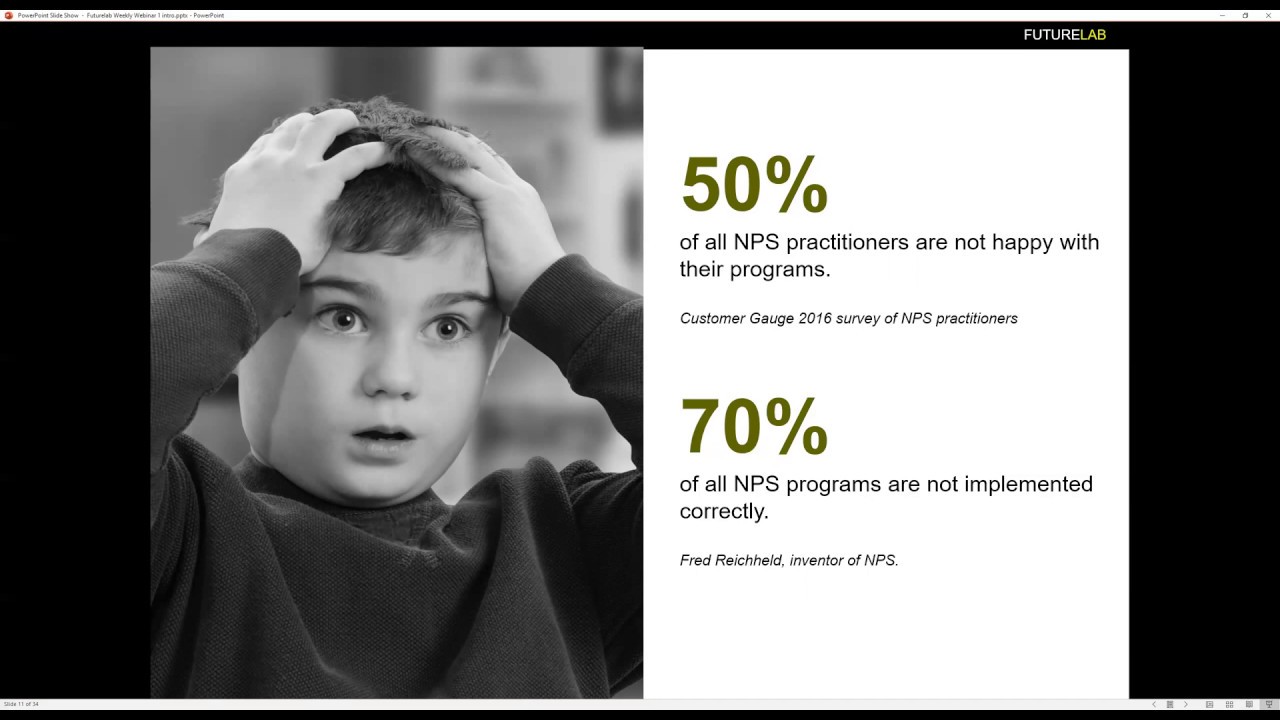
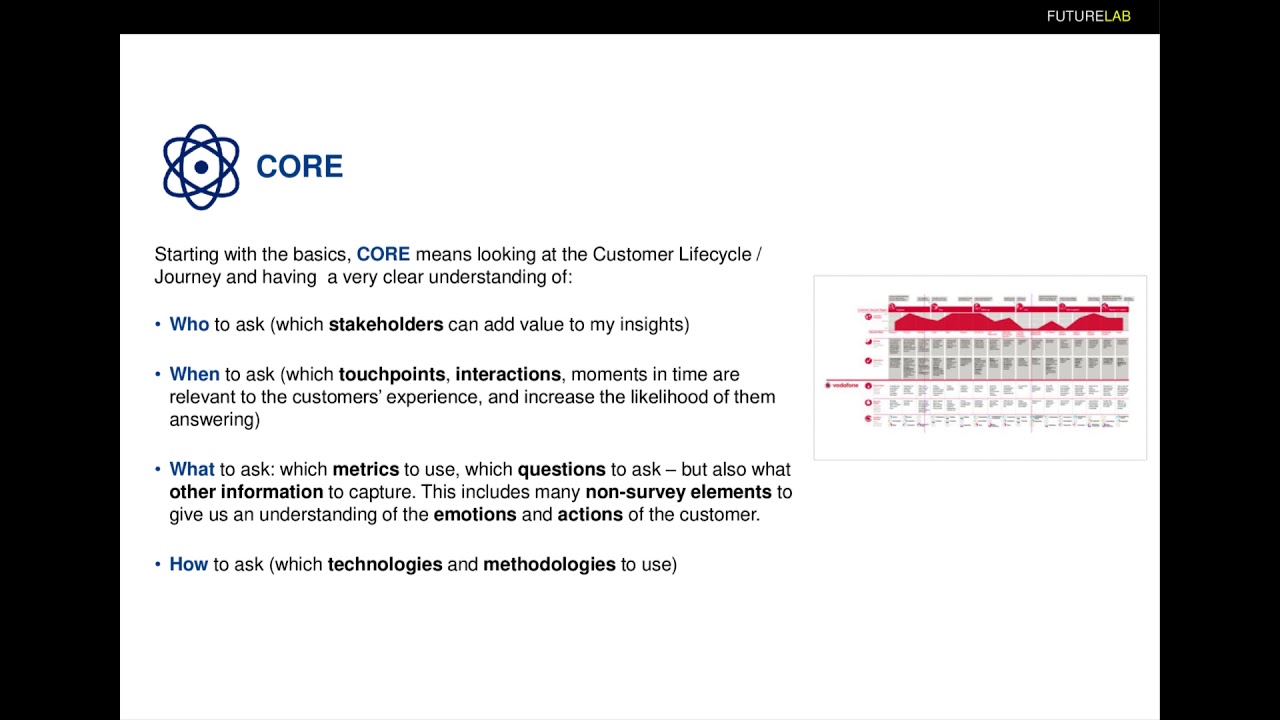
All right then, let's get going. Thank you all for joining me this morning. You already see it on the screen, we're going to talk about B2B voice of the customer programs, and we're going to really focus on how can we use a voice of the customer program to reduce churn, to grow referrals, increase lifetime value by sharing a framework that we have developed, but also very practical experiences, practical tips that we got in practice. Very quickly, who are we? Futurlab, we've been around for over 15 years running customer strategy programs and voice of the customer programs, and to us, those two are very closely linked. We're not that big, but we've worked for many very nice global as well as local customers. And I am one of the founders of the company and again have worked for both B2C and B2B companies, but we've seen recently that there's a lot more interest for the whole topic of voice of the customer and customer experience in the B2B sector. Which also reflects in many more projects in that area in recent years. Just as a background, we see the topic of customer experience as a holistic topic where we start with the design of basically what strategy do we want to deliver based on customer insights, which we get from voice of the customer programs, etc. But then, of course, that needs to be operationalized. You need to get your people on board. And finally, you need to make sure that you actually benefit from this program. In other words, how are you going to make money from this? But enough about ourselves. The focus today is really on how can we either start a voice of the customer program in such a way that it will bring maximum benefit to the company, Or if you're already doing it for a while, how can you take it to the next level? And many of you have been so kind to leave us your questions beforehand about what you're looking for in this webinar. And what we see is that these questions can typically be summarized in a couple of very clear points. How do we set up a program correctly? How do we get buy-in and support from the rest of the organization? Or in other words, how do I convince the rest of the organization that having a voice of the customer program is important? How do I drive action? And for us, this is directly linked. How do I get ROI out of the program? I'm running this. How am I actually making sure that my company is getting benefit from this? And finally, how do I keep it in existence? How do I make sure that the program stays supported and well-funded throughout the years? And as these are the questions that we keep seeing, that's where we're going to focus a little bit of our framework later on. Now, I don't need to convince all of you that CX brings value and that voice of the customer drives CX. I think you wouldn't be here if that wasn't your starting position. So we all know that customers who are willing to recommend you are more profitable. And this is not just about actual referrals, actual generation of new business, but the willingness to recommend is also a proxy for spending more, negotiating less, staying longer, upgrading, things like staff morale and operational efficiencies. Again, we all know this, we all believe in this, but the reality is that a great number of people are actually not happy with their programs. These numbers are specifically related to NPS programs, but I'm pretty sure that they relate to overall voice of the customer implementations. 50% of practitioners are not happy with their program. And why? Because we see that 70% of programs are not implemented correctly. That goes from the simple fact that often NPS, but also general voice of the customer questions, are just another question in a long questionnaire, or there's too much focus on the number instead of what does my customer actually tell me, to the lack of profitable action. Being associated with the program. So we over the years have developed a calibration assessment that touches on all these dimensions, and I will share the link to it later on, and it will also be in the email that you receive afterwards, as well as all the slides of this presentation. Because if you want to do it right, it's not just about sending out a couple of surveys. It is connecting it to your strategy, making sure that you get value, designing it correctly, focusing on actionability, etc. So what have we done to show how you can get the full value out of your program? We developed a relatively simple and straightforward framework that I want to share with you, again peppered with a lot of practical findings, experiences, etc., that we had over the years. So we call it the CCC framework. We're consultants, we love 3-letter alliterations. And what it is about is obviously in the beginning or in the core of your program must be your systems, your metrics, your processes. How do I deliver actionable insights to the rest of the organization. But then, of course, very importantly, the organization needs to use those actionable insights and create value by closing the loop and improving the experience for individual customers, but also at the strategic level by using insights to directly drive sales and by improving operational efficiency. If we do this, we need to capture that value. In other words, it's great that action is being taken, but we also need to prove it to the organization that this happens. So therefore, we need to have a clear understanding throughout the organization of the value of a customer experience and the value that recommendation brings, which we can use to build a full-scale business model. It's a little bit the holy grail, of course, for everybody. How can I test all activities against a business model to prove that we're actually profitable in our customer experience strategy? And that will also help us in implementing the right KPIs, because the biggest fault I see in companies is that the KPIs are not matching the goals of the customer experience. And finally, we need to communicate what we're doing in a proper way. When you start on your CX strategy, a relatively small group of people within the company will automatically and instinctively jump on this, participate, use those insights to take profitable action. We need to consistently communicate throughout the organization look, this is how we're building new profits for the company. And then people will start joining in and supporting the program. We'll dive a little bit deeper into every one of these topics now. So again, at the core is a system that delivers actionable insights. That's not just a question of a system, of a surveying system or sending out a couple of emails. It is also about using the right metrics and applying the right processes. And at the core is the question, who am I asking? How am I asking? When and what? So the who— which stakeholders will actually add value to my insights— is so often overlooked, particularly in B2B. I mean, in B2C, it is, of course, at the first glance, your direct customer, even though there's an influencer sphere around those where you would also like to get an understanding. But in B2B, it's so often only one stakeholder at the customer side that's being asked, and that's not enough, let alone the question whether it's the correct stakeholder. How do we ask? Which technologies and methodologies do we apply? And when? At which time in the customer journey connected to which interactions? How long after a certain interaction is very important in driving response rates and getting the right answers out. And of course, what do we ask? Which metrics? Is it NPS? Is it customer satisfaction? Is it customer expectations? On this, we will share a little tool later on as well. And in B2B, we find that one of the key issues is the low overall amount and quality of feedback gathered. And there's many reasons for this. There is, of course, by definition in B2B, a lower number of actual clients. If you're a B2C company, you easily speak about hundreds of thousands, if not millions of customers, while often in B2C, we're talking about hundreds or maximum thousands. Among these numbers, there's often a bit of survey fatigue, because of course, we all see that throughout the world, there's more and more surveys being sent out. We have exclusions, account managers or business leaders who say, don't speak to this customer for reasons X, Y, or Z, or exclude this group because we recently did something that impacted their experience negatively, so they will score us lowly. There's quarantine rules, there's the wrong stakeholder, too few stakeholders, the wrong moment, the wrong questions, the wrong channel. There's a lot of things that can go wrong, and of course, in reverse, we need to make sure that we try to get these things right as much as possible. Part of that is also broadening the approach we take to capturing the voice of the customer, not just focus on sending out a simple email. And to give you an idea what we're talking about, we had a recent calibration project, major project with a big global client, and they keep telling us that they, on the one hand, the operators told us that they had between 15% and 20% response rate, 25% in many countries, which is not bad. It's not great, but it's not bad either. But at the same time, everybody was telling us that they had not enough actionable insights in the system. Then we realized that this response rate was actually measured against only a quarter or 20% of their actual customer base. Over the years, this program was running almost 10 years, over the years, so many exclusions had been made that 80% of their customers never was surveyed. So the real response rate was 5%, and that in a B2B context is, of course, extremely low and very painful. So for us, a key element is to look at why are we not getting the right number of answers. Do we have the right exclusions? We need to refocus or recheck the exclusions regularly. We need to make sure that our quarantine rules are actually sensible and suitable, and we need to make sure that the account managers are not excluding customers of which they know that that they are unhappy at the moment. And for us, the starting point is to make a proper lifecycle map of your relationship with your customer, to find out not just from a customer experience strategy, what is the experience I want to deliver, what are the steps that the customer goes through, what are his or her expectations, both rational and emotional at each of these steps, But also to identify who are the people I should be talking to at each of these steps. Because the first question is really, who should I be asking? Who's the right person at that stage of the lifecycle? In other words, actually involved in that lifecycle, but who's also likely to answer and has valuable insights to offer. So give you an example from Shell, where we recently did a nice project. One of the key issues there was that they spoke to gas station managers about the delivery of fuels. Now, the typical gas station manager in their network manages five gas stations. Each of these gas stations probably gets two or three deliveries a week. If you then send the mail a week later asking them, how was the delivery? Would you recommend us based on this delivery? That manager goes, I have no idea what you're talking about. I have no remembrance about it. If at all, yes, if it went wrong, he will remember that. Another example of having a good understanding of who you're talking to was for Grant Thornton, where we ran into problems in 2 countries. In India, if you ask relatively junior people in an organization, their typical answer will be, I'm not important. Nobody listens to my opinion. Nobody would ever ask me for a recommendation. So you have to make sure that you talk to the right person who feels enabled to give you an answer, to deliver an insight to you. And we saw, for instance, in Dubai, but I've had that on occasion in other countries as well, that people say they give very positive answers to the email, up to the point that we had 100% NPS score, which is not realistic. When we then went in and did face-to-face interviews to establish a baseline, we found out that a lot of people in the interview actually gave us issues that they were not happy with. So you need to make sure that you use the right channel and the right question to get the right answer out of these people. In Weber, the barbecue company, we did a lot of different research with consumers, but also with retailers. And there, for instance, it's a massive difference whether you get a floor manager or you get an owner. A floor manager will give a recommendation based on what he experiences in dealing with the customers on the floor. While an owner, we get a lot of answers, would I recommend? Hell no, because you already have too many distributors in my neighborhood. I would damage my own business. That's of course a question of asking the question in the right way, but also of understanding who is the stakeholder that you're talking to. At the end of the day, as B2B people, you know, there's complex DMUs, and only talking to one person on the other end typically is not the right answer. This is one of the big issues that we need to overcome in VOC programs, that there's an account manager in between you and the customer who probably has the idea that he's doing great because the person he's talking to has a great relationship with him or her. But this is the research, an example from a big steel company where we recently did an establishment survey, and we found out that the heads of purchasing, typically the people that the account manager was talking to, were very happy. But the people actually dealing with the day-to-day purchasing process, the purchasing managers, were not quite happy. And even worse, we found out that the heads of production, the ones using the steel to turn into next-level products, actually were quite unhappy. But they typically didn't speak to the account manager. So without having the direct interaction with these stakeholders, you will not find out the real state of your relationship with your customers. So we say you should have many contacts in your sample. I've taken an example from somebody else here who is quite enthusiastic about the number of contacts. It will not always be possible to have that many contacts, but it's an absolute must at the beginning of every voice of the customer program, or further down the line when you want to upgrade, have enough participants, have enough stakeholders that you talk to. For that, of course, it's very important that you make sales your friend in this. We'll come back to that a little bit later. Then there's of course also the question how to ask. All channels, automated and hand-based. Short and interactive and adaptive surveys. First of all, on the topic of all channels, this is often interpreted as a high-tech recommendation. Oh, we don't only need SMS, we also need to do WhatsApp and whatever. True, but we see it with a couple of current customers that steel company Several surveys, not the majority, but let's say 3 to 4% for sure, came in through printed-out web pages which were filled in, scanned, or faxed to us, and we had to type over. Particularly in B2B, particularly in industrial organizations, there's a lot of people who are not very technology savvy. For another company, we're preparing a couple of surveys in, for instance, Indonesia, Malaysia, etc., where they say, well, our customers don't actually have computers. However, everybody has a mobile phone, and we have not email addresses from them, but we have their WhatsApp contacts. So make sure that you think through how do we actually interact with the customer in such a way that we get their true answers. And this also goes for the second block, automated and hand-paced. With hand-paced, we mean not just send an automated email 24 hours after the interaction or whatever, but if an agent or an account manager has an interesting interaction with a customer, let them send a survey immediately. This may not be a scoring-based survey, but it is about capturing the voice of the customer, the experiences of the customer. And as such, actually ask the agent or the account manager as well to give you their feedback and make sure that they are adaptive. If in the first question they say, well, I'm really not happy about what you did there, then the wording of the follow-up question, of course, should It's a simple, basic thing, but you'd be surprised or amazed how many surveys don't actually follow that rule. By the way, feel free to ask any kind of questions at any point of time. There's of course also the question when to ask. Identify the right moments in time, the right touchpoints to ask. Think about customer exit interviews, and take those stakeholder review outcomes in here. And this brings things to the table, like in Grant Thornton, we found out that a major ideal moment to interact with the customer was the onboarding moment, not the sale moments, not the finish of a project, but the onboarding moments when they had just joined the company, but before actual services were delivered. So that was a great moment to capture how the process had gone so far, and it was also a great moment to stimulate the account teams to really get into the needs of this customer and the personality of this customer. In Sonepar, a major retailer for building electronic or electro-building materials, I should say, in Germany, we found out that A lot of their customers were, of course, relatively small crafts and tradesmen, and we set out to think, what is actually the moment that a typical small craftsman does his administration and would be the most likely to view his emails and answer our survey? And the answer is Sunday in, let's say, European countries. Example, Indonesia, which is a Muslim country, it's more likely to be Saturday. These are, of course, things to take into consideration. So we started sending out our reminders on Sundays, which increased the response rate by 5% versus the original reminder, which was sent on a Friday afternoon. So we have a little handout here, which I just have to quickly— every time I have to find out how to do that. Oh yeah, here's the handout. We have a little handout which you can download, and we will also send it along after the webinar to go a little bit deeper into what metrics to choose, what questions to ask, what other information to capture, because that is a big topic that we will probably do a separate webinar on in the fall. But what we want to give you along is at least use a little model like this where you look at every potential metric and see how relevant, universal, applicable, and comparative it is for you. And ultimately, the biggest thing to us is, is it actionable? Will you do something with it? Only ask the question if you will act upon it. So identify the questions that are the most actionable for your organization. One example is, for instance, the ease of doing business, where we found, for instance, for that steel company, that it was the negotiation that was really the problem—not the prices, not the contracting, not even the the. Getting tech support, but negotiating the price, people felt was an arduous, complex program. Meeting expectations is a great score that we've been recently using outside of the typical Net Promoter Score, Customer Effort Score, etc. So have a look at our little handout and again, probably we will do a full-scale webinar on this topic. Just to give you an idea how complex this topic can be, even when we're just talking about NPS, there's actually 3 types of NPS. There's the relationship NPS, which you ask annually, which is really based on the recommendation question of the company as a whole. There's the touchpoint NPS, which, by the way, in a B2B context, we find is often not the best question. And there's a benchmarking NPS. So don't blindly go for one metric. Really think through what is the right metric and what's the right variation of that metric that we're using. And one thing that we keep emphasizing is keep it short, keep it tight. On the right side, you see typical NPS survey as we send it out. It's literally the recommendation question and 2 open questions. Maybe ask 1 or 2 more questions, but don't fall for the corporate reflex of start to piling on questions. If you're starting out, if you do a first NPS, it'll take you probably a year just to deal with the quick wins that come out of that first Don't ask more questions if you can't act upon them. And more importantly, the more questions you ask, the lower your response rate. We've seen with customers where the typical 20-question questionnaire they were sending out with response rates of half a percent, maybe a percent, jumping to 20% when we switched to a short NPS, which we also announced as a short NPS. 1 minute of your time is what we're asking. And people love that, and people respond well. So if you pull all of this together, if you want to take things to the next level, you have all these multimodal input streams, you create a data lake, and then you can start your big data analysis, etc. But this is at the end of a process. This is the next level that you go to, start with the basics. Now I'm a little bit behind on my timing, so don't worry if I skip a couple of slides here and there. You will get all these slides sent and you can have a look, and if there's questions, please feel free to contact me back. So as we said, based on the actionable insights coming out of the core, we need to stimulate the organization to create value. And the biggest topic in that is closing the loop. And the first one there is immediate individual follow-up with every customer. The biggest value of any voice of the customer program is in the individual follow-up that the customers give us. At the same time, on the right side of this, you also see there's a strategic component, there's root causes that we can find out, there's cross-departmental systemic change that we can identify. But let's start on the left side with identifying quick wins and identifying customers that we can basically make happier, sell more to, or even stop from leaving us. Closed loop helps in many different ways of driving engagement within the organization, but also drive literal sales to the point that, for instance, Toyota, where we did a 54-country rollout of NPS, after we did the initial pilot, the dealers said, look, please keep going, we'll pay for this research because we're selling more cars every day. We're selling cars based on the feedback we're getting out of this Voice of the Customer survey. To us, the focus is really on the verbatims, not on the score. The score is interesting from a management perspective. It shows long-term developments, but it's the individual customer telling us things that shows us where we can engage with this customer properly, but also what we can learn as an organization. to improve ourselves. And looking at, for instance, the value, the importance of closed-loop, here you see the initial output of that establishment survey with the big steel company. So what you're seeing here, and the numbers are maybe a little bit small, but you see the 4th row, that's kind Companies, customers with more than $1 million margin contribution, more than $1 million net profit generated by these customers. Oh, we have a much higher NPS with this group. Great. Well, I'm not so sure it's great because you actually have 44% of your key customers who are passive and even 8%, which is in this case literally 7 customers who are currently extremely unhappy. So that alone, saving one of these 7 customers, could drive the ROI for your whole program for 10 years to come. And this is the lovely thing in B2B, because the value of individual accounts is typically so high. It's also your biggest leverage to prove the value that you're generating to the rest of the organization. And I said earlier, it's about making sales your friend, because it is about showing sales that it's not just another marketing exercise, it's not just a survey exercise, it is about generating extra sales. And at Sonepar, a couple of account managers took the results in a beautiful way. They looked at the top customers, the happiest scoring customers, the 9s and the 10s, and compared their share of wallet. And for those who had a share of wallet of under 50%, they called them up and said, hey, fantastic that you're giving us a 10, But then we should have a share of wallet of over 50%, don't you think? That alone in the first year generated €47 million in extra sales. So it's a great way of showing sales, bringing sales on board, and stimulating them in the longer run to start giving you more relevant contact information. And let's not forget that having happier customers also leads to operational efficiencies in many different ways. Again, probably we will do a separate webinar on this, but the simple fact that, for instance, your service employees are happier and less likely to go sick or less likely to leave you is a major benefit of having very happy customers. We also have this little handout. We will send a link in the follow-up mail to this webinar. Please download it. It's 8 ways in which NPS can add value to your business. It's a great little helpful tool to, let's say, broaden your perspective. This goes from a better understanding, which I already mentioned, of how the different stakeholder groups within your customer base are performing, to getting an understanding which accounts to focus on, both the negative and the positive. How can we use the positive, the happy accounts for driving referrals and new sales? But also, for instance, how to focus on employee experience in all of this. So having created that value, we now need to capture it. We need to prove it. The one thing I have to give everybody on their way is ROI models must be useful, not necessarily perfect. I've seen too many companies fail by trying to create a perfect model, which can get very, very complex. Now, if you're in the preliminary stage in preparing, I have a very simple model for you. We've already looked at this slide, and we can turn that into a very simplistic but more or less correct model. And it's an automotive example, but we've done this for many B2B companies as well. Just sit down with a couple of colleagues and calculate a simple lifetime value model for your customer. And this is as simple as how many purchases, how many years, and what's the margin generated. And all of you know your business enough to be able to do this. And typically we then end up with a customer value of, let's say, $100,000 versus $300,000. But then think about— and in this case, for this car brand, we have done the actual research, but you can think about this yourself— how many customers does a potential new customers does an unhappy customer generate for us? And how many potential new customers does a happy customer generate? And suddenly you're getting a whole new view on this number because suddenly you see that an unhappy customer does not himself— not only himself generate less margin, but he costs us customers. So he's not just lower profitable, but he's actually loss-making. While the promoter has a multiplier effect, and suddenly you have gigantic numbers. And again, this helps you just in the initial stages of establishing, hey, focusing on customer experience might be a good thing. And of course, you then start to build more elements into this calculation, like the cost-to-serve differential, staff morale, the market intelligence you get from it, the reputation management. And then at a later stage— again, these are complex slides, so have a look at them when we send them afterwards— you can start developing a very extended ROI model which bases on what benefits are we getting, which cost reductions are we getting. And Forrester, for instance, has turned this into full-scale ROI model. This is for a B2B company, um, that you can start applying for yourself. Here Forrester calculates an ROI potential of 591%. Actually, I think that's way, way, way too low, particularly in a major B2B company. You should probably multiply that by a factor of 10, but that looks a little bit silly expressed as a percentage. So have a look at this example at your own leisure and see how it might help you. The simple business case in B2B is starting to look at, so what's the average revenue that detractors, passives, and promoters bring me? And then start thinking about, so what if I move a group from one level to the next? By the way, this is typical that the passive generates more revenue than the detractor and the promoter more than the If that is not the case, which we have seen in 2 companies, give us a call because that's a real indicator, that's like a fever indicator. You have a real issue if your passives generate more revenue. And then you can make a simple business case about, so what if I move X% of my detractors into passives and my passives into promoters? Yeah. And you can build from there. And here's another example how Grant Thornton consultancy and audit company have built their business model. Now very importantly, I always give along: nothing will ever happen if you don't change your KPIs. Everybody knows the culture eats strategy. But what drives culture? And culture, I've seen, is typically not driven by a lot of soft values. It's driven by KPIs, because KPIs drive behavior. People will behave based on the KPIs that they are given, and you cannot hold that against them because, after all, that determines their bonuses, their career, etc. So as long as you don't change KPIs, you will never see a change in behavior. So what is the problem with many KPIs? When a measure becomes a target, it ceases to be a good measure. It's a very simplistic way of saying it, but we see it time and again. And one of the recent calibration projects we did The company's been running a BOC program for many years, and their KPI is, are our customers on average at 8.5 customer satisfaction? The consequence of that is that everybody only focuses on that one number and not on what's behind that number. Anybody scoring above an 8.5, they don't even read the comments. Because who cares? Only people who are below and only the immediate action is taken, but there's no strategic review. And even worse, a lot of KPIs lead to unintended consequences. We had in one of the service organizations where the KPI was a case should be closed, should, not even must, should be closed within 8 days because we've seen from previous research that people get unhappy if it takes longer than 8 days. Alas, the consequence of that was that on— at the end of the 7th day, the service operatives typically marked a case as closed in the system, even if it wasn't, which meant that the customer came back the next day saying, but my case isn't closed. So now they started a new procedure, but being very upset. And we've seen so many cases of unintended consequences from the simple Oh, how about I call my customer and explain to him that if he's happy, he should give a 9 or a 10 and not an 8, to actual hardcore cheating. So very important is review your KPIs and ideally do that together with those people who have to deal with them on a daily basis. And the most beautiful example is the customer assistance center of Mercedes in Maastricht who have a B2C and a B2B department. They decided to have a monthly kill the KPI meeting. They got together representatives from the service staff and let them identify a KPI that should be removed because it had unintended consequences. So what you should look at is what is the behavior I actually want to stimulate? And then craft your KPIs to stimulate that. So for instance, it should be a set, a dashboard of KPIs together looking at, is it customer-focused? Which metrics are we using? But also, are we fitting the customer journey? And for instance, a metric to consider is Give the account management responsibility for the number of stakeholders they generate per company or the number of responses you get, not how satisfied are they, because account management often feels that they cannot influence that much, but they can influence how many contacts they have. Make sure that it's action-oriented. How many loops did you close? How did you impact loyalty insurance? How did you generate additional financial impact, etc.? And it must be integrated, not a singular number. As I said, good heart resistance, in other words, a broader dashboard-based approach really helps. And it should, of course, be linking to the quarterly results, because as much as we know that the focus on quarterly results can be damaging to the customer relationship, we must acknowledge corporate reality. And our senior managers need to demonstrate good results. So finally, once we have this model going and we can prove that we are generating extra profit and extra value for the organization, we need to communicate that. One of the core points is to look at our people. We need to make sure that they want to be customer-centric, that they're willing. So we need to convince them in their hearts, which is often relatively easy, but also in their heads. That's, for instance, where the ROI model is really important, but also showing willingness on a senior management behalf to really engage in this. But of course, we also need to make sure they're skilled. We need to make sure that when we deliver insights from our core system, that they know how to act upon them, that they know what to do. And finally, of course, that they're able to do it, that they're empowered, that they have the right tools and systems in place to really act upon the voice of the customer. So one thing that we always have to keep in mind, no employee gets up in the morning to say, you know what, I'm really going to mess up a couple of customers' lives today. It is systems, it is management instructions, it's KPIs. It's a lot of things that get in the way. And part of this is making sure that we really translate those voice of the customer feedbacks into actionable insights. So problem is that a lot of companies And I know it's a little bit ironic after just having showed you 60 slides, but a lot of companies focus too much on percentage-based slides and boring results presentations, while what you really need is ways of showing them what to do. And this can be— this is what you see in the background are from ING and their insurance branch, NN. Where an absolute genius guy consistently put out every week great infographics, great storytelling-based results from the voice of the customer. But it can also be things like Grant Thornton, where they put a couple of key verbatim comments from customers onto the lock screen of their computers. So people come to the office in the morning and get confronted with a statement by a customer. By the way, the focus in that kind of things is typically always on the positive. Happy customers telling us why they are happy. And one more beautiful example that was actually the first NPS program we ever did was with Philips. And they had a lot of very valuable insights and they were preparing a global board presentation to the CEO, Mr. Timmer, at the time. And we took the liberty of actually taking 10 of the most evocative statements, calling the people up and saying, can we do a very quick video with you? So we showed the video of someone— it was the first of the 10-second videos— someone actually sticking out his finger saying, Philips, You suck. And we almost got fired on the spot until Mr. Timmer started laughing madly and said, I want everyone in the company to see this video. This is what brings the need for customer experience to life. We're based as humans on storytelling, telling each other stories. We're not based on graphs. Nobody ever went onto a hunt in the Siberian tiger 20,000 years ago showing a PowerPoint. They said, look out, tiger coming. And once you've done with it, also communicate. Tell your staff what you did with it and what the great results were, but also tell your customers what you did with it. Closing the loop goes all the way. Close the loop. Tell all your customers You participated in our Voice of the Customer survey, and based on that, we took the following measures. We listened to you. This in turn will also help increasing the response rates on next turns. And internally, when you first start, I said it before, you will have a relatively small group of people who instinctively and by themselves will participate. And will start taking action and will start generating profits. Bring them into a community, help them to be successful, make sure that those first ones, those volunteers, have great success stories to tell, and then put the spotlight on them. It's the best way to stimulate everyone within the company to start participating and basically generate this virtual circle is by showing success stories. And you hear me saying this time and again, it is about focusing on positive stories much more than negatives. We saved this account, we helped this customer, he bought more. We have a great statement from this customer thanking the account manager, thanking the service team, et cetera. So I want to come to conclusions. I want to bring it all together. So just to remind you again, we say you need a good core where you really focus on the who, how, why, and when— the who, how, what, and when of the questions— with the right processes behind it to drive actionable profitable action, creating value, closing the loop, using the insights to actually drive sales. But don't forget the substantial operational efficiency you can get. And here, focus on those first people who instinctively engage with you. Capture that value, capture the stories of it, but also capture the capture it in a right ROI model, a business model, and make sure that you put the right KPIs in place that link to the ROI, but also focus on driving the right behavior. And based on that, we can then start looking at how many of the stakeholders are willing, skilled, and able, which in the first go-around will be a relatively small group. But by showcasing our successes, we can start getting more and more, and then the model starts supporting itself. And this is also what drives longevity. We can demonstrate ROI to the organization, and this in turn for us is part of an integral approach where we not just measure the voice of the customer, but we integrate it into customer journey management, to create a company-wide customer strategy that helps generate higher stock growth, higher customer loyalty, higher profits. Any kind of metrics we can come up with improves with a good customer-focused strategy. A starting point I already shared the link with you is do this Voice of the Customer Calibrate. It's about 25 questions. It will take maybe 15 minutes to complete. There's also, if you want to look at the broader strategic customer experience approach, we have an assessment where you can look at how mature and how ready is your organization to start or to improve your customer experience. We've made a nice little overview of what makes an effective Voice of the Customer program. Obviously, I'm not going to go through that, but again, this is, for instance, a printout you can make to discuss with your team. And most of all, I really want to emphasize, you've seen by now we're not doing sales pitches, we're really sharing insights and stories. We can make them much more concrete and practical for you if you book a call, or even— we've had a couple of these after previous webinars— ask for a private webinar. If you send me your specific questions, we can book a webinar together with your team, and we can take half an hour or an hour to really deep dive onto your specific And that basically brings me to the end of this webinar. Please let me know, have you— do you have any additional questions? Have your questions been answered that you felt beforehand, or is there anything else that you would like to talk about? The one thing to have a good program— well, actually, there's 2 things. Look at the KPIs, but okay, that's very hard to change, I know. So we should focus on the beginning of the program. The program only works if we have enough input. if we talk to enough people. So having this stakeholder review at the very beginning, so who are the different stakeholders that I should or could be talking to and how do I get their contacts, how do I get them to engage, is probably the one thing that's really going to help the success of your program because it helps the credibility of the program, it helps you get insights like, right, all the people that our account managers are talking to are happy, But a lot of people outside that limited circle are not. So I think that's the, the most important starting point. Are there any other questions? Well, then I guess I leave it at this. I said it a couple of times at the beginning, we're considering doing a couple of sub-webinars, so to speak, maybe take each of the 4 topics that we looked at here today and expand them into a full-scale webinar. Please let us know by mail or any other, via LinkedIn. what topics you would be interested in that would help you in developing your customer strategy and your Voice of the Customer program better today or tomorrow. And with that, I thank you very much, and we hereby finish our webinar. Thank you for your time. Thank you.
More from Stefan


Voice of the Customer for our smallest customers - a presentation at the Toy Forum in Nürnberg, 2025

6 Herausforderungen beim Kundenfeedback – und wie man sie 2026 mit KI lösen kann


Futurelab Weekly Webinar: Core-How to start the process and establish who/when/what/how you will ask