First Futurelab Weekly Webinar - Introduction to the CCC-Model
Stefan Kolle introduces a 13-part webinar series on Voice of the Customer programs. He presents the CCC framework: Collect actionable data, Close the feedback loop with metrics, and Create ROI proof plus organization-wide communication. Five pain points plague most VOC programs: weak buy-in, poor design, broken feedback loops, unclear ROI, and sustainability issues.
Chapters
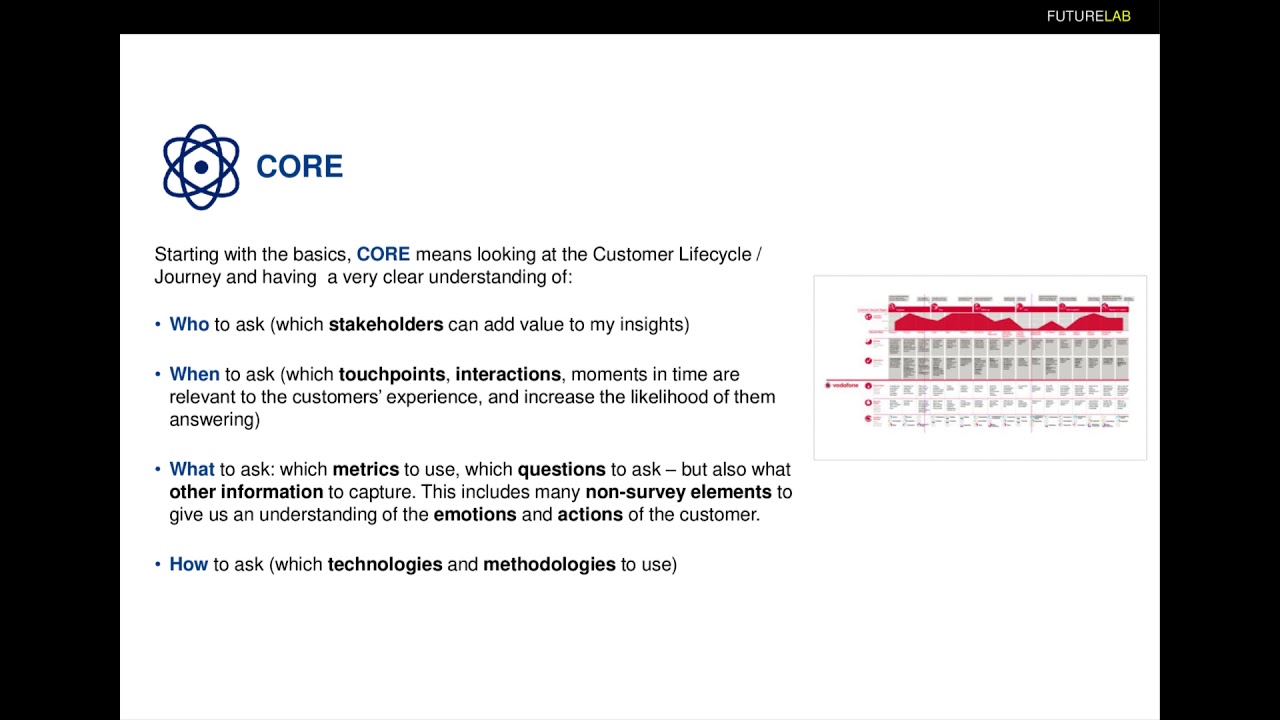
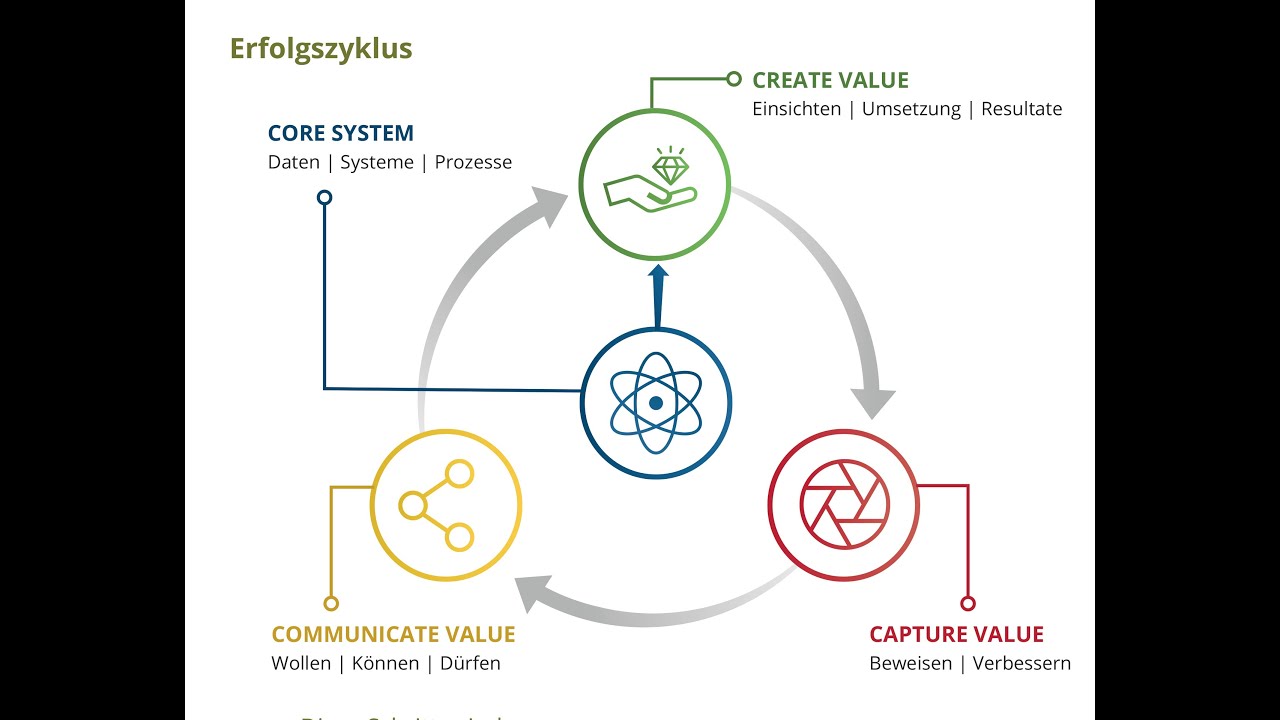
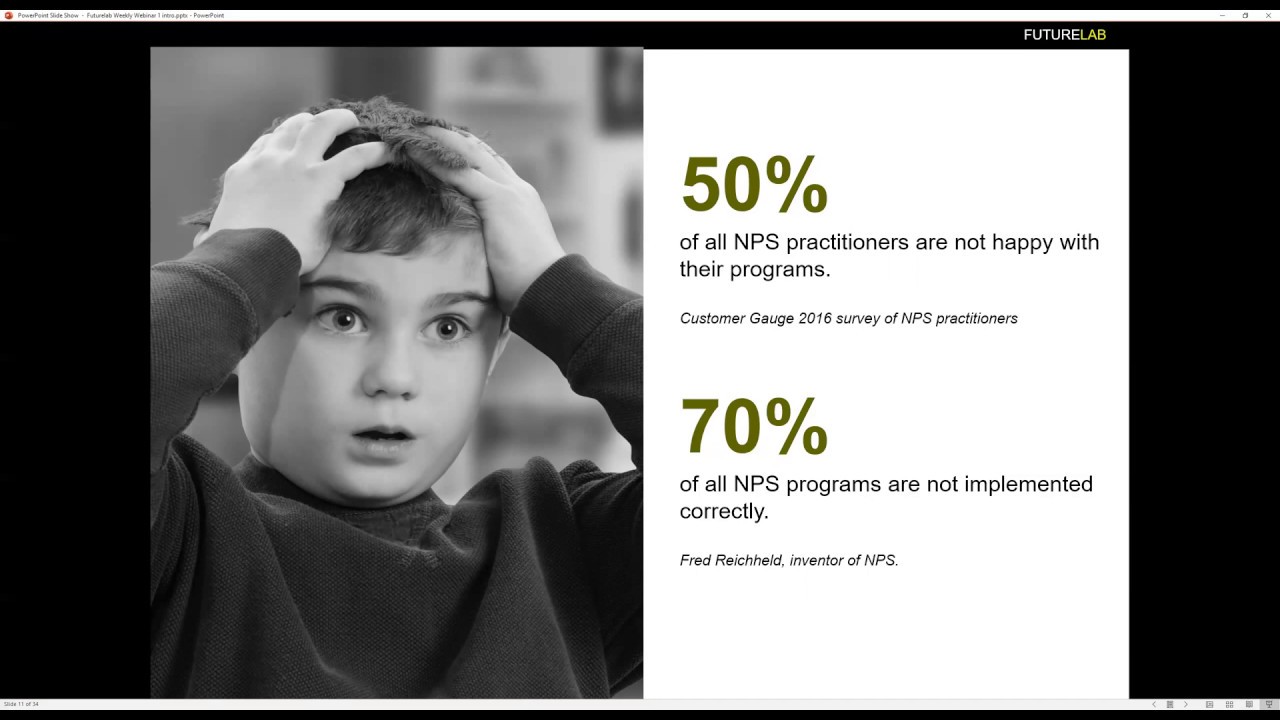
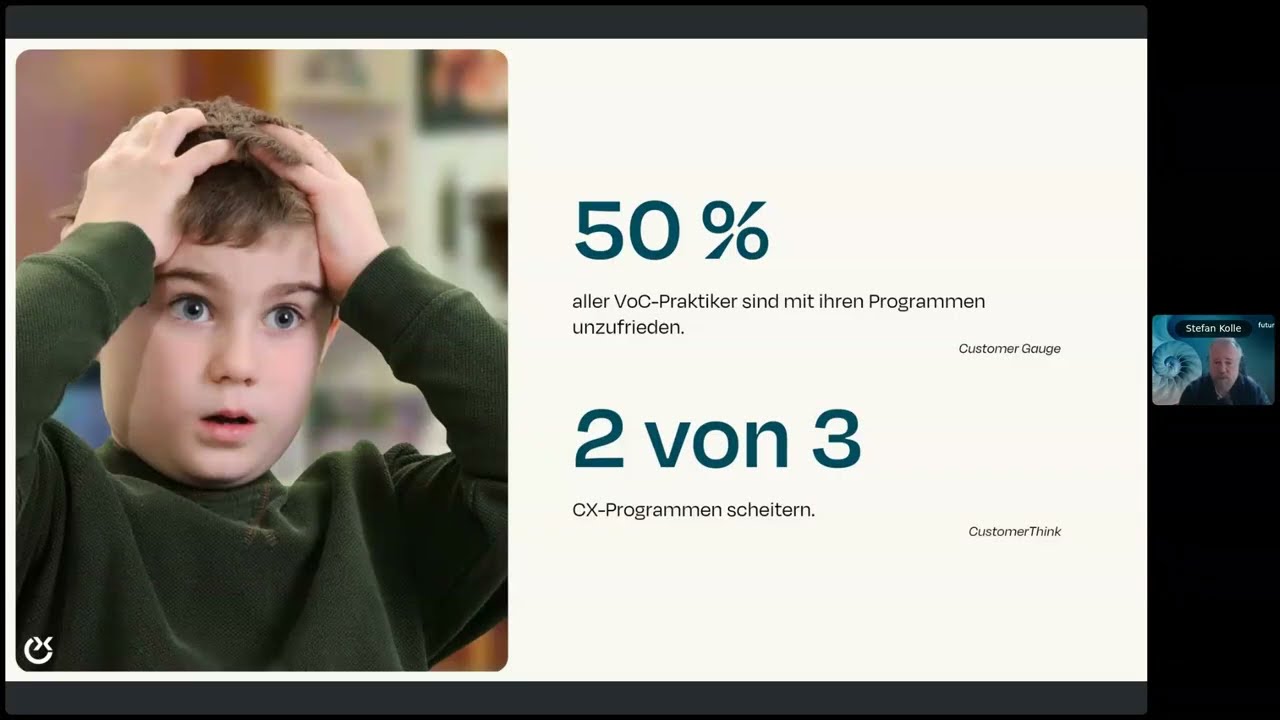
Hi, and welcome to the first of our FutureLab weekly webinars. We have created so much content over the years that we decided that it makes sense to maybe share something with you every week in what I'd like to call maybe a light lunch entertainment session. But the point is that while typically we go pretty broad, strategic, high level in our webinars, we now really want to deep dive on one topic every week. And for the first— for the start of the series, we're gonna connect with a white paper that we released recently, which is called Your VOC Program is Underperforming and You Know It. Somewhat provocative. I did a long 1-hour webinar presenting that white paper, and you can of course look at that, but it's a lot of topics in, in one white paper, and we now decided to break it down into effectively 13 individual webinars, 25 minutes each. The first one today is just giving the broad introduction. And for each of the 4 areas that we're talking about, we've broken it down into 3 subtopics. And per webinar, we're going to dig deeper into the reasons and background for that topic and give you some very pragmatic and concrete examples, cases, real-life examples that hopefully will help you to make some decisions in your business. Just a quick introduction of myself. I think most of you have encountered me at some point in the past. One of the founders of FutureLab, and over the years we've had the privilege to, as I typically say, punch above our weight. We've worked for a lot of great European global brands in helping them with general CX projects or building up voice of the customer programs. And when we look at our activities, we typically start by looking at the design of the experience, and that, of course, very much depends on understanding the needs and desires of the customer. You can only develop your own customer strategy if you know what your customers want. For that, you need voice of the customer. Second part, operationalizing it. Again, how do I set up a structural voice of the customer so I can build my strategy and my operations around it? We need to engage the people, to take them, to bring them on board, because without the people nothing happens, of course. And once we've done all this, how do we improve our day-to-day operations and how do we benefit from these things? And all of these elements you will see coming back in what I'm talking about today. I think all that are here know that CX brings value, and they also know that voice of the customer drives CX. So why do we even still need to talk about it? Well, we talked to a lot of people over the recent months, also doing some very specific research with several hundred CX managers in Europe, and There's a couple of pain points that keep coming back. How do I get buy-in from the rest of the organization, up to the point of them even understanding that there is a necessity for voice of the customer? How do I set up my program correctly? How do I make sure that we drive action so that changes happen? How do I get the ROI out of it, which is, of course, an important element in getting that buy-in? And how do I create existence management? And that's a word where people typically look at me quizzically. It's literally, how do I make sure that my program stays in existence? Because too often, CX, and even worse, voice of the customer, is seen as a one-off, as a campaign, as a project, while of course it should be an ongoing thing. Why do we have these issues? Because I think most of you have seen this slide at some point in some form, that a lot of CEOs actually believe that they do deliver a superior customer experience. Well, in most cases, the customers do not agree. So one of the key elements is understanding for the whole organization that the customers who recommend you are more profitable. They spend more, they negotiate less, they're easier to service, they upgrade quicker, they increase staff morale. So all very important elements that we need to bring back when we're looking at justifying the program and at the ROI, because the ROI comes from all of these elements. And of course, very hot topic at the moment, I heard a lot of CX managers who said, oh yeah, well, All our budgets have been cut, or at least frozen, and we see it with some of our customers who indeed have stopped their voice of the customer program for the time being. And all I can say is, we've seen it very strongly in the last crisis that those companies that keep focusing on customer experience do win in the recession, do win in the crisis that follows. One of the automotive companies we worked with, the countries where they had implemented the CX strategy that we developed together with them, luxury Japanese luxury car brand, those countries maintained most of their sales at, say, 90% level, while those that didn't implement the new customer strategy lost around 80% of their sales. So it is crucial even now to stick to your customer experience. So again, we all believe in the value of CX, but 50% of all NPS practitioners are not happy with their program. This is a question asked to NPS practitioners, but I'm pretty sure that we get the same answer if we ask a slightly wider As voice of the customer. And Fred Reichelt has actually told me over dinner that he thinks that 70% of all NPS programs are not implemented correctly. Personally, I dare say it's maybe even 90%. And not implemented correctly does not necessarily mean completely wrong, but it means not gaining the benefits out of the program that you could if you did it right. So we have developed a framework over those past couple of years that basically gives you the secret recipe to make sure that you get the full value out of your program. If you follow these 4 steps and you follow them meticulously, you will get the most out of your program that you can. We call it the CCC framework, and it basically consists of 4 elements. At the core, of course, we need a system that delivers actionable insights, a system that can be something that you have in-house, it can be something outsourced. We'll get back to that, of course, but you need something to actually actively collect the voice of the customer. You need to have the right metrics that fit your goals, that fit the organization, that help you achieve change and ROI. And of course, you need the right processes in place to make sure that you have the right addresses, that you have the regularity, that your answers are pushed out, that your analyses are shared in the right way with the rest of the organization. So if you do that right, you deliver those actionable insights to the organization, and then Value is created. And the value creation happens by closing the loop, by actually driving sales, and by improving operational efficiency. That last bit, for instance, is very often overlooked. Closing the loop, it's all about how do I make sure that we actually improve the experience of individual customers by getting back to them, by solving their issue, And we can also use those insights to drive sales, to drive marketing, to drive sales. We have a couple of very nice examples on how to do that, but it's so often overlooked that the customers do help us to also improve operational efficiency by telling us what is not important for them, so the things that we can stop doing, but also by simply being happier by being part of a good VOC program, and therefore allowing us to serve them faster, to have, on the other hand, even happier agents in the contact center, etc. Again, we have some very nice examples that we will share with you when we come to that webinar. Creating the value is one thing, but you also need to capture it. In other words, we need to prove the value to the organization. We need to show how recommendation is creating money value for the organization. We need to have a simple, a pragmatic ROI and business model, and we need to implement the right KPIs. And we'll even today get a little bit further on all of these topics. And finally, we need to communicate what we're doing, because at the end of the day, we need to inspire the people of the organization to start creating value based on those actionable insights. And that's how we create this positive feedback loop. So let's look just one step further. Again, we'll go into the details in each of the individual webinars, but at the core, for instance, it is essential that we must do this before we start to Establish a very clear data strategy. Who do we actually want to ask? Who are the stakeholders that can add value to our insights, that are willing to share those with us, that we can reach? How will we ask them? What technologies, what methodologies do we use? And when do we ask them? At what point in time, which sometimes comes down as literally to what time of day should I send my questionnaire out, but also how many days after the last interaction they had with us, how many times a year, all those kinds of things. And of course, what should we actually ask? What metrics? Is it NPS? Is it customer effort score? What are the questions that we ask to get those metrics? Are we at the risk of using our customers as mystery shoppers? Should we maybe not ask, but use observations, et cetera? So there's a lot of things to consider before you start building your program to make sure that you are actually asking the right things to the right people at the right time with the right methods. If you're looking at creating that value, the most important thing of any voice of the customer program, any CX program, is closing the loop. Or more importantly, it is about driving action. But the first step is closing that loop. People have given you feedback, and you have to act upon that feedback at the individual level and at the organizational level. And at the individual level, it means telling also your people what you learned from the customer, and getting back to unhappy customers to stop them from being unhappy, but also capturing the value of those that say, I would recommend you. How can we activate them? How can we make sure that they do actually recommend us? And on the other hand, we need to make sure that we identify the root causes, that we bring other departments in. And identify where we need to change the system. So that's the start of everything. But also, for instance, driving more sales from— it can be as simple as our customer Sonapower. If they see a customer who gives a 9 or 10, and they see that this customer has a share of wallet of 50% of the or less, they literally just call him up and say, hey, thank you for that great score, but if you're so happy with us, we should have a higher share of wallet. You'll be amazed at how impactful such a simple call can be. We'll have a few more nice examples for you. And again, operational efficiencies. We have a beautiful case from an automotive contact center where we really, by taking a completely different view, holistic view, managed to save a lot of time and therefore money through a great implementation of a voice of customer approach. Again, it's not just enough to create the value, we actually also have to prove it to the rest. That's sometimes a bit of a— where it falls down, because yeah, a lot of people are closing the loop and we're doing good stuff, But nobody else believes that or realizes or sees the value that is being created. And one of the pitfalls here is that too many ROI models are trying to be perfect. We'll give you a couple of very simple, not simplistic, but simple and easy starting points to build your ROI model, or as we actually nowadays like to say, ROE, return on experience. And it can start as simple as this, with a customer value calculation to which you add the word-of-mouth value, and we can make it much more complex. Again, we'll show you a couple of starters that should help you to start developing this for your own organization. And for instance, in a B2B environment, it can be as simple as simply looking at the turnover that detractors make versus the turnover from promoters. Again, this is just a starting point. If you want to get the attention of the organization, that's a great slide to start, because then you can start asking the question, so how do we move every customer from the detractor to the passive or to the promoter bucket, and how much extra revenue will we generate as a company? And finally, Maybe my biggest hobbyhorse in all of this, the KPIs. Nothing will change in the company if the KPIs don't change, as people can only act upon the KPIs that they're given. And too many KPIs in organizations are, of course, not deliberately, but effectively anti-customer. And that's a big part of unintended consequences. Nobody thought through the impact that a certain KPI would have on customer happiness. So that's a it's a very interesting topic to engage in together. And finally, we need to communicate the value that we create. It's all nice to have a great business model, but how do we translate that? To showcase successes and showcase the ROI to other departments, to senior management? How do we speak their language? Because at the end of the day, we need across the board, across the company, from the frontline all the way up to the board level, we need to make sure that people are willing, skilled, and able to improve the customer experience. And willing is often not the difficult bit. You will always have people in the company who don't really care, but it's very rare that we come across people who say, no, I really don't want to do anything good for the customer. I want to make customers' lives miserable. Nobody says that. But to go from a theoretical to a practical and concrete willingness is a step that we need to support with communication, With, again, taking away KPIs that get into the way. But of course, we also need to make sure that they are skilled. Do they know what they should do and how to do it? Closing the loop, for instance, can be felt as a barrier by people because they think that calling up an irate customer who has left a bad remark is a terrible thing to do. So you may need to show them that it's not, that is actually a great thing to do, and you will get very positive energy out of that. And of course, are they able to do it? Do they have the right tools, and do they have the right empowerment? Again, KPI-driven. Typically, the business gets in the way of people being able to close that loop, to get back to customers based on the feedback they left. So as this is meant as a nice and short intro, I want to spend 20-25 minutes on this over lunchtime. Let me just bring it back together. So we need to make sure that we create actionable insights with a perfect setup of systems, metrics, and processes, act upon those actionable insights to create value, make sure that we prove that value and adapt our KPIs on it, and that we then showcase it to the rest of the organization so we can inspire more people. The first time around, it may only be 10% of the people in the organization who jump to the occasion and start acting upon it. On the second time around, it might be 20%, and this way, we start building it up, and in the longer run, a winning organization, everybody in the organization is focused on how can we improve customer loyalty, customer happiness to drive profit. So, that is it. We always want to remind everyone, We have an awful lot of material to share. Look on our website, find us on SlideShare, find us on YouTube. We're sharing a lot. And please feel free to ask for a private webinar. We very happily spend half an hour or an hour with you and your team on one of the many topics that we have, but then we can go a little bit deeper into your very specific questions. So please— Thank you. Send me an email and join us next time. This is the series that we have lined up for the moment. Again, it's all based on the voice of the customer approach. Next series will then be about contact centers, about automotive. Have a look on our site and you'll see the white papers and presentations we've done in the past, we'll turn them all into nice bite-sized webinars. And with that, I want to thank you all for your attention, and we'll keep it at this. Thank you very much. Goodbye.
More from Stefan


Voice of the Customer for our smallest customers - a presentation at the Toy Forum in Nürnberg, 2025

6 Herausforderungen beim Kundenfeedback – und wie man sie 2026 mit KI lösen kann


Futurelab Weekly Webinar: Core-How to start the process and establish who/when/what/how you will ask