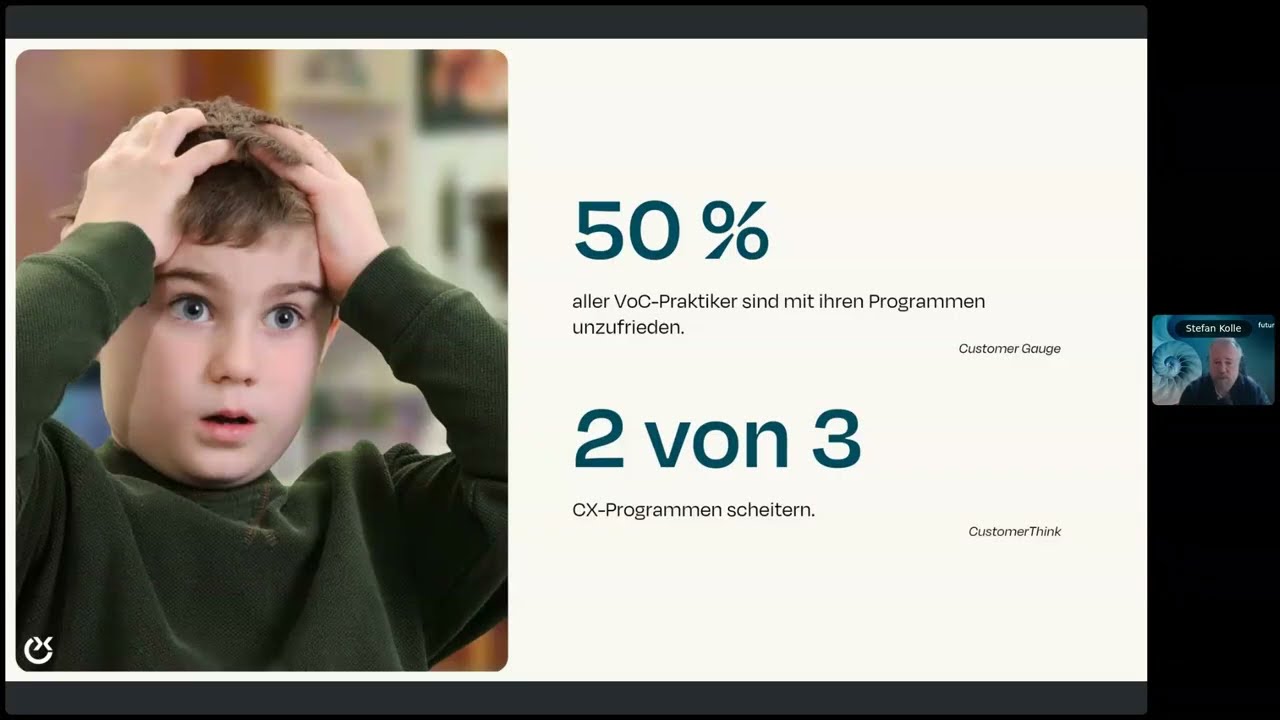
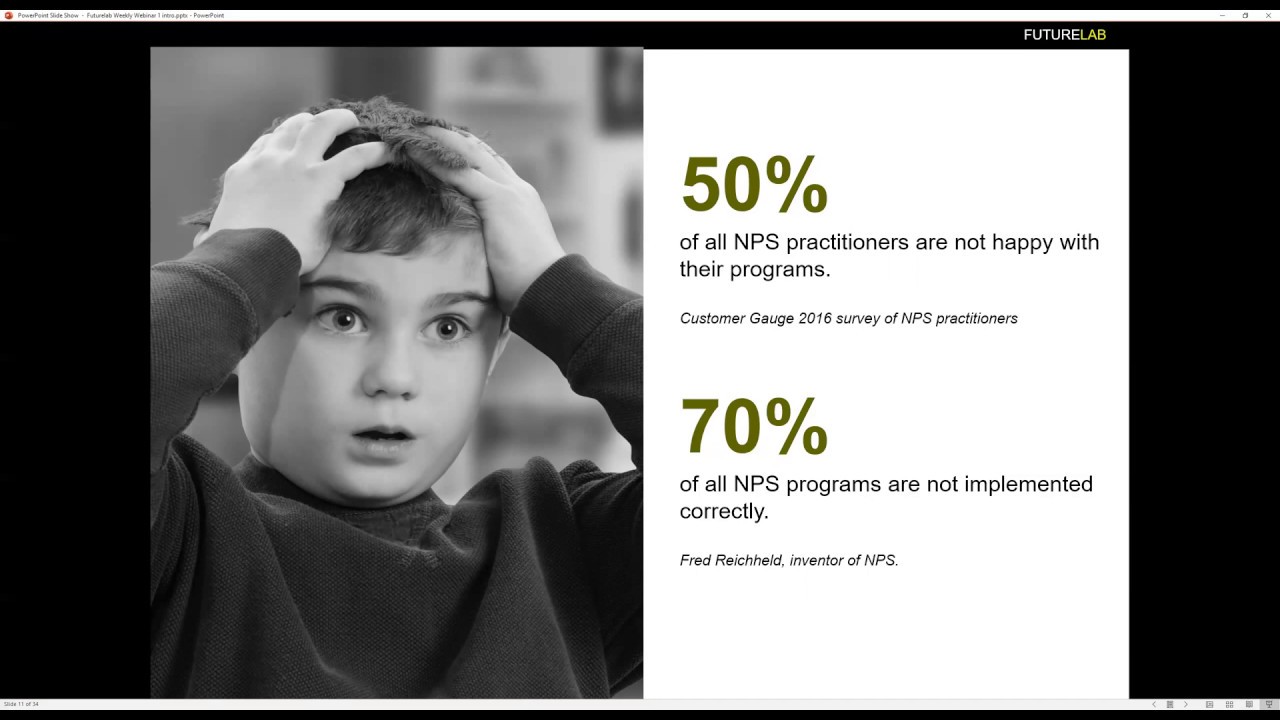
Stefan Kolle introduces a 13-week webinar series on the CCC model for customer experience programs. He notes that 90% of NPS programs fail to deliver value and roughly half of VoC practitioners are dissatisfied. The framework covers core setup, generating insights, closing the loop with action, and proving ROI.
Chapters
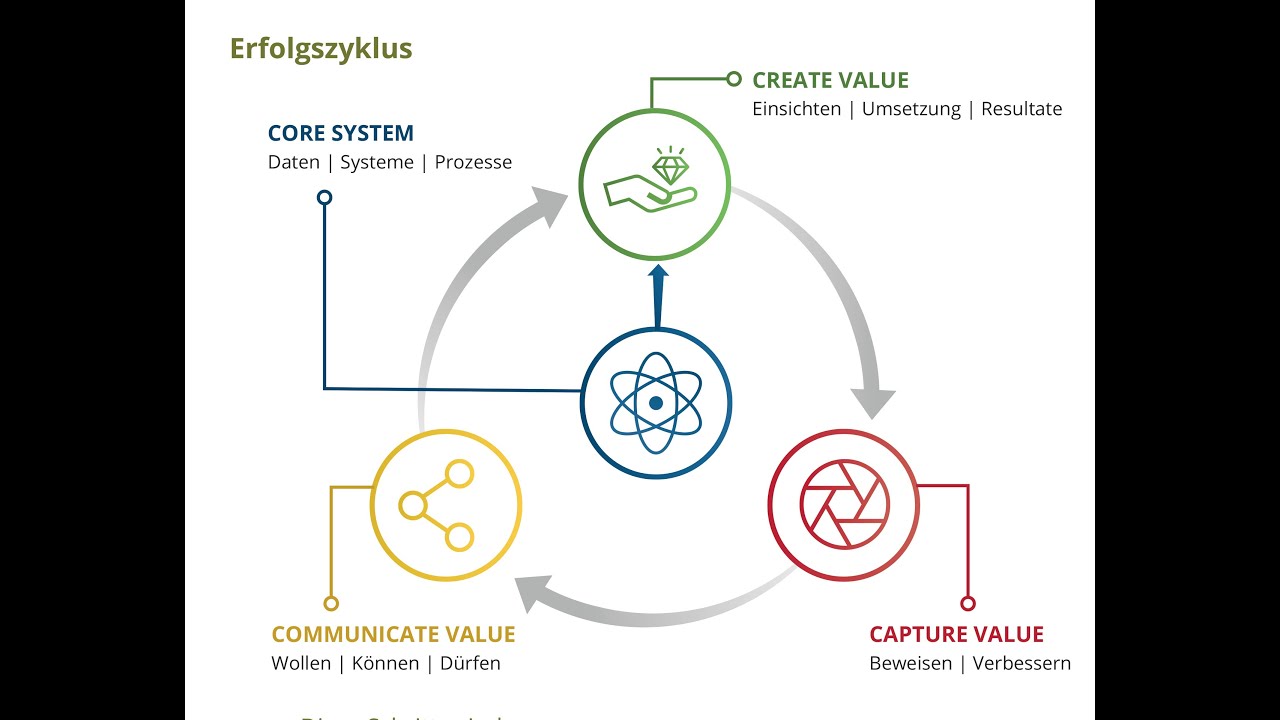
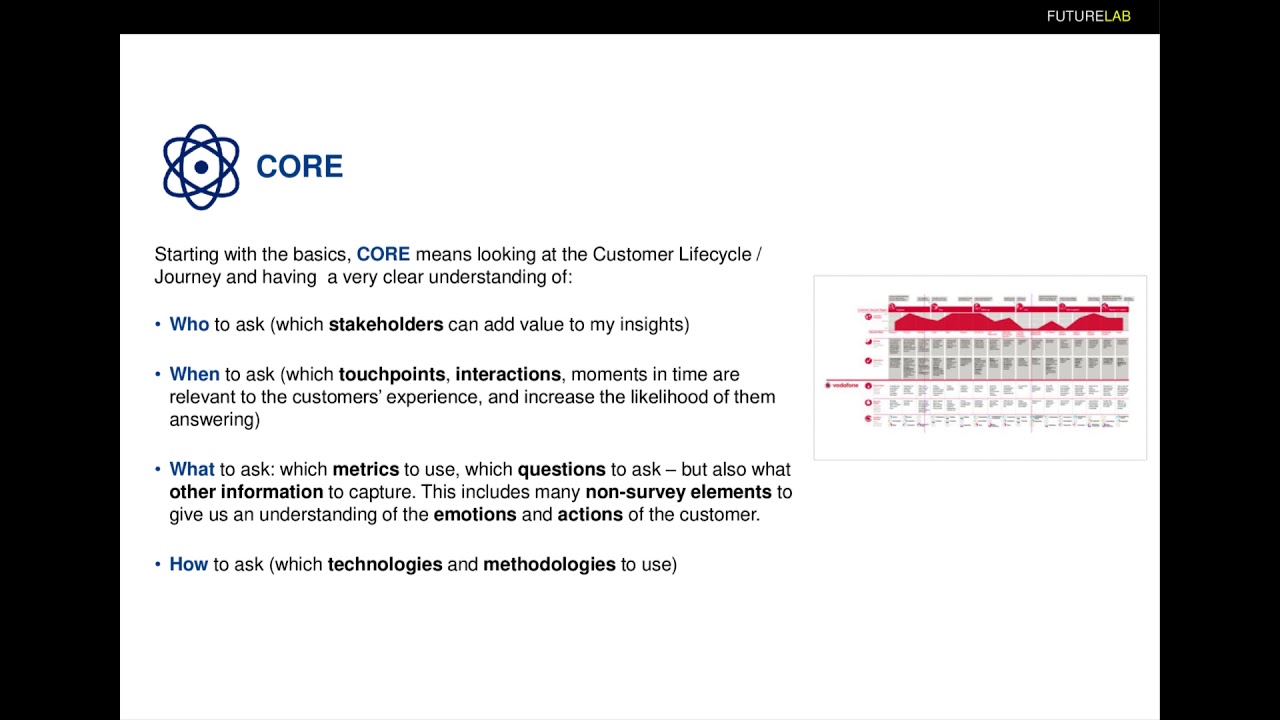
Hi, my name is Stefan Kolle. I am one of the founders and current CEO of FutureLab, and I want to welcome you to the first video of our FutureLab weekly webinar series. Over the past 15, almost 17 years actually, we created so much content that we thought it would make sense to share that in a weekly format. So every week we will have an article, a little video like this one, and a webinar to dig a little bit deeper into one of the many topics that we can share with you. To begin, we want to focus on the CCC model that we developed, which is basically the model that will help any voice of the customer program, and even by extension a customer experience program, to become successful. The point of today is not to convince you that you should run a Voice of the Customer program. It's 2020, and I really assume that you already have it. And if not, please give us a call. We can together look at how we can convince your CEO to start doing this. What we want to look at is the fact that 50% of all Voice of the Customer practitioners are actually unhappy about the program. And Fred Reichheld has on occasion said that 70% of all NPS programs are actually executed in the wrong way. And to be very honest, I mean, we've done over 40 of these programs over the years, and frankly, 90% of them are not fulfilling their promise. So what are the elements that we need to look at to make sure that we do have a successful program? At the end of the day, it boils down to 4 key elements. First of all, it sounds obvious, but still we need to look that we have a good core setup, that we have the right data strategy, that we have the right systems and the right processes in place. Secondly, out of this core setup, we generate actionable insights. Once we have created those actionable insights, we need to of course make sure that they are actually actioned. In other words, that we close the loop to improve the customer experience, that we drive sales, and also that we capture organizational efficiency improvements. The next step is to capture the value that has been created. In other words, we know that a lot of value is being created, but does the organization know? Can we prove it to the organization? So that's where we need to make sure that we have a business model, that we have an ROI model, and that we adapt the KPIs to these new insights. Finally, we need to communicate the value that we have created and captured into the organization. At the end of the day, we cannot change the customer experience if all stakeholders, all people in the company, are not willing, skilled, and able to make that change happen. So if you don't follow these 4 steps, you will probably not reach the maximum benefits of your program and potentially are heading for failure. That's why over the next 13 weeks, we're going to dig deeper into all of these topics with cases, examples, and very pragmatic and practical tips that you can take and implement in your own company. So please subscribe to as many of these webinars as you like. We hope to see you on a regular basis, and after this series of 13, we will have other topics, and we'll also have some interesting guests to join us. I hope to see you soon. Thank you.