Interview Stefan Kolle (Futurelab) and Norman Wolfe (Quantum Leaders)

Stefan Kolle and Norman Wolfe discuss building customer-centric organizations. Stefan's CCC model helped a Japanese car manufacturer use NPS to boost sales and expand across Europe. Norman's Living Organization framework transformed a distribution company's salespeople from order-takers to proactive sellers, delivering 10% annual growth after years flat.
Chapters
Hello everybody, my name is Vitaly Gimon and today very briefly we're going to talk to 2 gentlemen, 2 professionals in their fields about customer centricity. And I want to welcome Norman Wolfe from Quantum Leaders. Hi Norman.
Hello Vitaly, it's nice to see you and be with you.
Beautiful, thank you Norman, good to see you. And Stefan from FutureLab.
Hi Vitaly!
CX expert, how are you doing?
Very good, thank you, happy to be here today.
Thank you, thank you, I really appreciate it because it's going to be a very interesting topic. We're going to very briefly delve into what does it take to create a customer-focused organization and what is CX at the very core of it. So maybe Stefan, why don't you have a go at it?
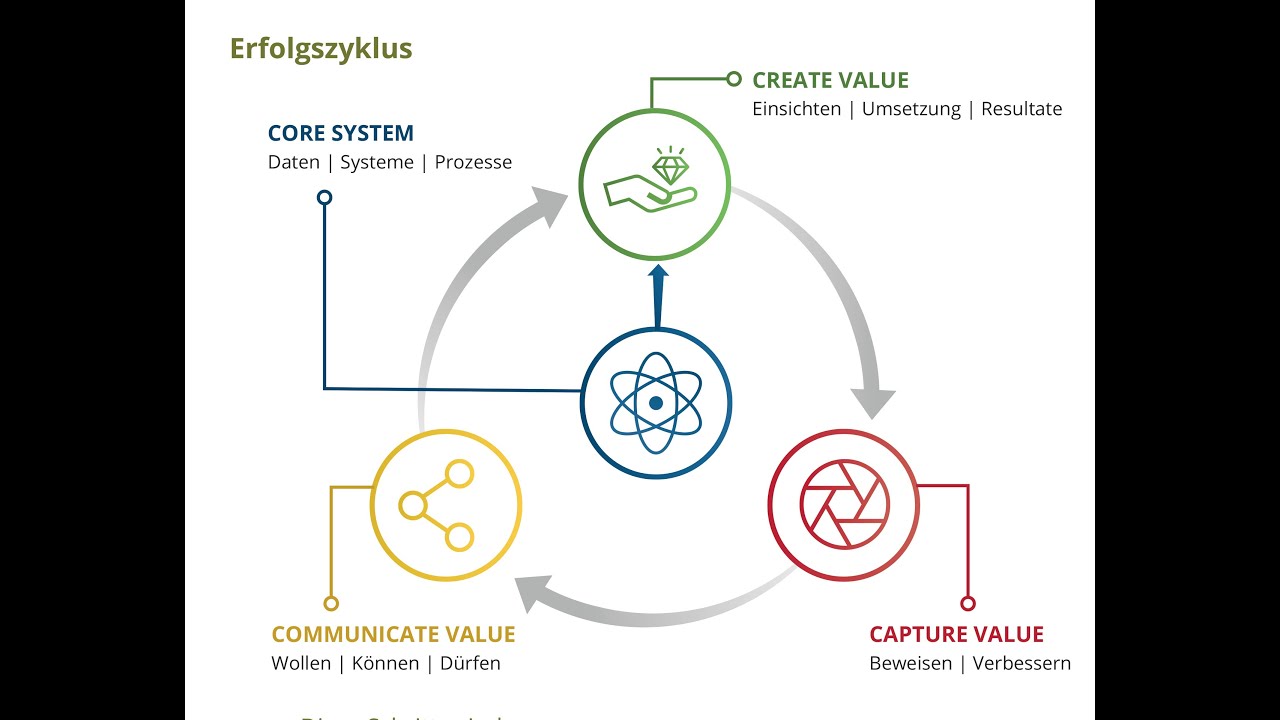
Okay, I mean, we've been doing this for 20 years now and at the end of the day it comes down to a couple of very clear steps that you have to go through as an organization to be able to be customer-centric. And it comes down to understanding what really drives your customer, you know, know what do they find good about your current services, your products, what do they find bad, but also what do they not care about. Based on that, you have to drive action in the organization, whether you call it close the loop or something else, whatever it takes to make the organization actually respond to that customer feedback to make their experience better, to improve sales, to reduce operational costs. Now, where many organizations then falter is to actually proving that these actions bring benefit to the organization. So you need a good ROI model, which then you can communicate into the organization to make sure that everybody in the organization is willing, skilled, and able to drive that action. And we call that a little model, the CCC model, you know, Create value, capture the value, and communicate it. If you don't follow all those steps, it will collapse at some point.
Okay, so create value, capture the value, and communicate it throughout the whole organization and to the customer, I assume, right?
To the customer, of course.
Okay, so Norman, how would you use your approach, which is the living organization approach, to augment that?
Thank you, Vitaly, and I totally agree with what Stefan says. Those are the 3 critical elements in, in really enhancing customer experience. If you think about what it takes to do that, there's, there's 2 key points I want to, I want to touch on. First is capturing value, which means you have to really get in and understand what the customer's needs are. What, what are you really helping them accomplish? And the best way to do that is to think of the customer and the organization as 2 living beings entering into relationship with each other. Because that changes the dynamic from thinking of it as mechanical transactions and product specifications to actually solving and helping people. The second part of it is moving into action, as Stefan has said. When you, when you want an organization to begin to do something new, it invariably involves changing what you might call a mindset, what we call changing the underlying context that creates the existing behaviors. And the Living Organization framework understands that dynamic and knows how to integrate that change in mindset with the process of trying to accomplish new outcomes. So we don't do change management as it's traditionally called. It's an integrated part of taking action and, and adjusting the mindset so that the action taken is, is going towards the outcome desired. And that's one of the failings in a lot of these implementations. So I would say, if you, if you add what Stefan says as to what you have to accomplish with our methodology of how to implement it, you really got a successful combination.
Gentlemen, I'm going to ask you, I'm going to throw a little curve to you. This sounds theoretically fantastic. Can you together give me a practical example of how would that work from your experience? You both had like, you know, years and years of experience in customer, working with customers. How would that work? Let's start with Stefan. How does your 3 C's work in practice?
We have a beautiful example of one of the biggest car companies in the world, Japanese. When we started working for them, they asked us, look, we have customer satisfaction ratings of 97%. You cannot motivate people to push beyond the 97%. How could we do this differently? So already some years ago, we introduced NPS to them. The NPS in the beginning was in the low 30s. So suddenly we had a motivational element. Hey, look, there's a lot of room for growth from the low 30s to a potential 100. But we also had very concrete customer feedback, and we could deliver that to a dealership, to an individual salesperson in a dealership, saying, look, this customer is telling you why he's unhappy. You can call him and right that wrong. And they did that, and they started selling more cars. Based on that, we could then show the business case. Look, this many customer feedbacks, this many phone calls made, this many cars extra sold, and start communicating that into the organization to motivate everyone else. So from a pilot, it went actually to a 54-country rollout throughout Europe because they sold more cars and they could prove that they were selling more cars.
Interesting. Well, thank you, thank you, thank you, Stefan. Now, Norman, if you can give us an example of a sales situation where you reframe the mindset from whatever, order taking to active sales, give us an example.
Well, that's exactly what I was going to refer to. We had a client who was a distribution company, and the context or the mindset of the salespeople where we were fundamentally taking orders. They, they actually defined the success as how fast can we get on and off the phone, because we're just picking up and taking the order and getting to the next one as fast as we can. And it wasn't just the mindset of the individuals, it was sort of the collective, um, support structure, how they were paid and how they how they addressed success and who was acknowledged and rewarded. Problem was that the company began to flatten out and there was no outbound sales. In other words, salespeople were order takers. They weren't really salespeople growing the accounts, growing the business, reaching out for new clients, prospecting. They weren't doing any of that. And so the CEO brought us in for the intent of of improving the, the salespeople's ability to, to shift. And that's exactly what we did. We had a look at exactly all of the underlying dynamics, including their mindset, the structure of pay, the— what was being acknowledged, what was being rewarded, and which you can think of as the internal rituals. And we changed the internal rituals. We redefined what success was for the for the salespeople, changed the reward system, and really worked with changing the narrative of what the company was about in terms of— it was a distribution company, so it was primarily a sales company to begin with. And that changed the outcomes. They went from flat sales for 3 years to starting to grow about 10% a year.
Wow. Okay, well, there's 2 wonderful examples, and I wish I could mash up both of you into one. into one person. And I guess this is what's happening. Are you— from what I'm hearing, there are going to be some kind of a partnership happening, right?
Yep, that's, that's what we're working to, recognizing that, you know, what Stefan brings is a methodology that's really powerful, proven by his success over the years. And what we bring is a way of facilitating that taking root faster, reducing the resistance to what's necessary And being able to enhance the adoption of, of these practices that Stefan has created. And that's where we see the greatest opportunity.
And what is, I think, one of the major secrets to success is to indeed not have this major upfront strategy development or change management development, but a very concrete and practical delivering success and impact from day one, which helps to convince the people in the organization and drive a program forward. I think the age of these massive consulting programs is over.
I totally agree with you, Stefan, that the best way, and it's been our experience repeatedly, agile uses the term sprints, and we find that's really the best way to change an organization is one sprint or one project at a time instead of trying to do a massive change management thing. Let's get some new outcomes accomplished. And then the outcome, in trying to accomplish the outcome, gives us all the opportunity to change mindset, change rituals, change structures, change incentive programs, whatever is necessary. But you don't do it on a big scale, you do it. And after a while, you do enough of these, and all of a sudden you look back and you've got a whole new company. And that's the best way to change it.
Also much, much less riskier, right, than changing the whole organization, finding out it was the wrong kind of change.
Absolutely, absolutely.
Thank you so much, gentlemen. It was a pleasure. Thank you so much.
Thank you. Thank you.
More from Stefan

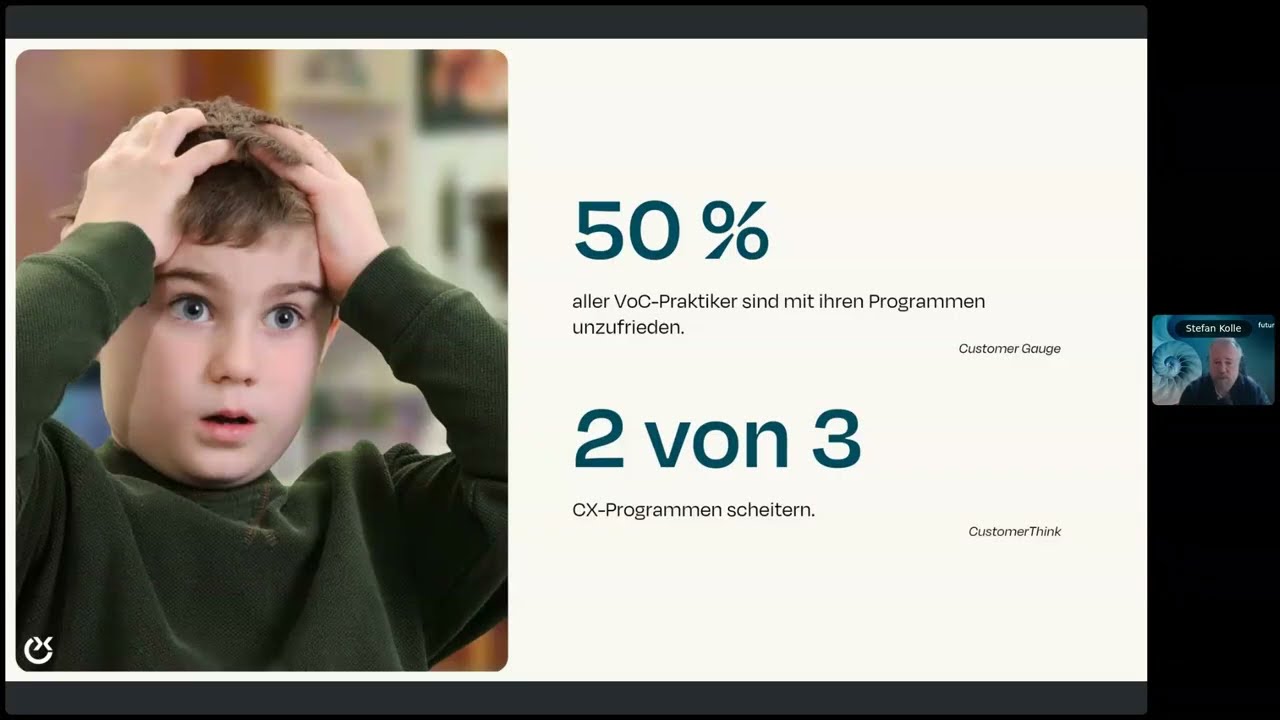

Voice of the Customer for our smallest customers - a presentation at the Toy Forum in Nürnberg, 2025

6 Herausforderungen beim Kundenfeedback – und wie man sie 2026 mit KI lösen kann


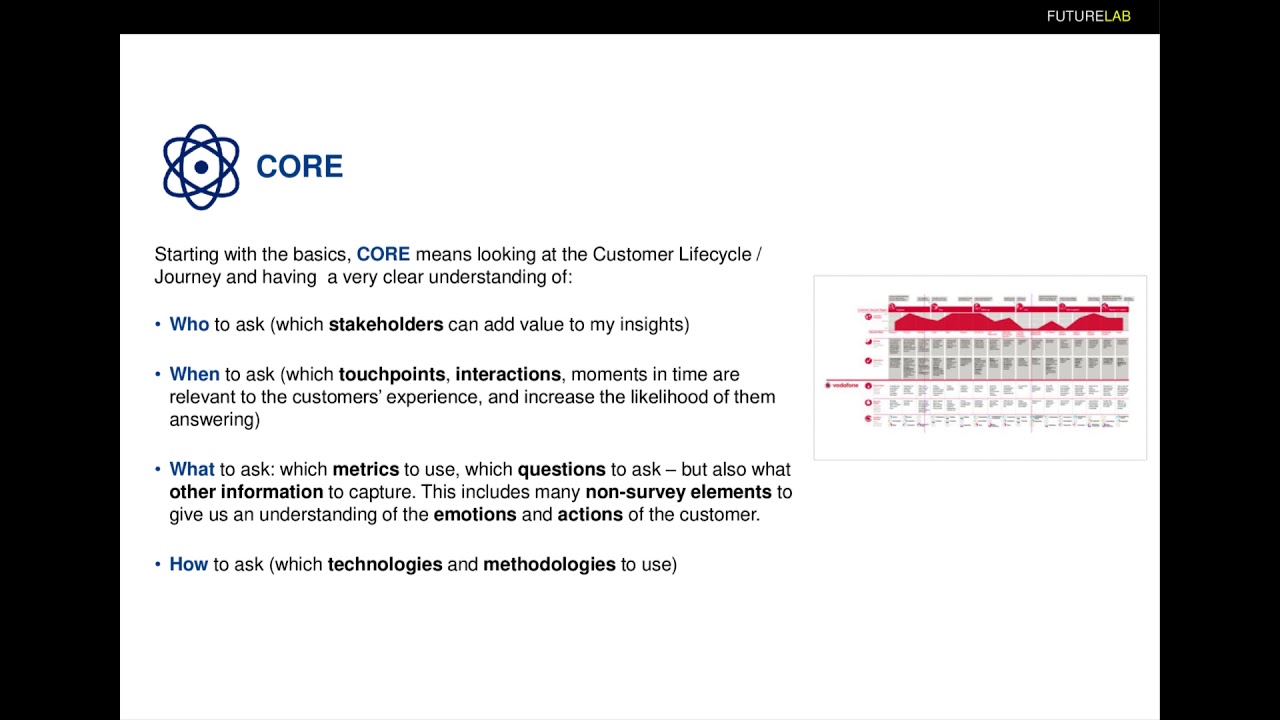
Futurelab Weekly Webinar: Core-How to start the process and establish who/when/what/how you will ask