From Worthless to Priceless - Turning your Contactcentre into Valuecenter Webinar

Stefan Kolle argues that contact centres treated as cost centres damage both customer and employee experience. A German insurer lifted NPS by 30 points through better service, while Aviva cut calls from 75% to 6% by changing communication wording. Non-monetary factors drive 80% of agent retention.
Chapters
All right, let's get going. We have relatively few participants today due to our slightly delayed announcement. I guess our schedules were messed up as everybody else's due to travel restrictions, canceled events, and other corona misery. So thank you for being here, and thank you for, well, effectively being our guinea pigs. This is the first time we doing this presentation, so we're gonna test a few things and we'll be very happy to get your feedback on this. So let's get going. You have joined us because we have released a white paper recently, From Worthless to Priceless: Transforming Your Contact Center into a Customer Value Center. And this is a, let's call it maybe an opinion paper. We express a fairly strong opinion about how important it is to put the human in the center of your contact center strategy, because that in the end is actually the most profitable approach. We see a lot of companies focusing entirely on the cost aspect, but not on the potential profit aspects that you gain by running a human-centric contact center. So let's go into our presentation. So what we're gonna look at today is a little bit of a storytelling approach. We have one orphan story, we have 3 magic spells and a 4-horse carriage, and hopefully a happily ever after. I think you see which fairy tale this might be heading towards. Just a quick intro of myself. I'm one of the founders of FutureLab. We've been at it for 17 years now, focusing on customer experience, and in the last couple of years also employee experience, and how those 2 together lead to return on experience. In other words, how do we make more money as a company by understanding the needs of both our customers and our employees. And we've been privileged to do that for many, many big and exciting companies over the years. We also work for mid-sized companies, so don't be scared by the logos you see here. Once upon a time, there was Jeff Bezos who told us that effectively the best service was no service. If the customer doesn't need to call you, That's perfect. So what if everything was like in that fairy tale that he gives us here? We would have a perfect customer journey where, as the moment I have awareness, I go to a website and I look at the website, everything is clear, it's very helpful, I understand everything, I start getting offers, I start getting product information, price information. It's very clear. I feel confident. I know this is the right offer for me. I make a purchase because I'm confident that the company will be able to deliver what they're promising to me. I'm using it, the startup, the onboarding, everything works. The product actually over-delivers on what was promised to me and Hey, I need something else, and I actually get that from the same company. And now I'm renewing, everything is happy, I'm a continuous customer, I recommend, everything perfect. Now, the reality is, of course, that this perfection very rarely happens. It happens often in Amazon, and that's why everybody always refers to Amazon as a beautiful best case, but let's face it, we can't all be Amazon. And that's where the question comes in, so why do we actually need a contact center? And let's face it, also Amazon needs a contact center. So in reality, when I go to that website, very typically I can't find what I need. I feel a bit lost, I get conflicting information. Do they even have what I need? How much does it cost? Why can't you just tell it to me straight? Particularly in a B2B environment, I think we all know this thing that you can search endlessly for pricing, you won't find it. Okay, you have still convinced me to buy something, but why can't I buy? Why can't I pay with PayPal? Or why are delivery options so hard? I mean, try to order something online with most supermarkets, it's still a drama. I'm using it. I have a question. I can't find it on the website. I'm not getting my order. Why is it late? Why do I get conflicting information? And a lovely one, of course, particularly well-known in telco. I've been with you for 5 years and still you offer me Worse rates than your new customers. You're not valuing my loyalty. We're not even going to go into service, and the question whether I will renew or leave is, of course, very open if I don't feel treated well. And all along this journey, we need a contact center to actually help solve the issues that are created here. So this brings us to our fairy tale of today, Cinderella, because what we see is that contact centers are basically treated like the corporate Cinderella. People don't like to wait. They want to be treated immediately. Currently, Most customers really don't like dealing with contact centers. They think they should be faster. They don't feel understood. They feel that they receive incorrect advice. They have to repeat information due to constant handovers, and they're frustrated by the waiting times. And let's face it, agents hate the contact center just as much. In the white paper, we compared it to survival rates of soldiers fighting in the trenches in the war. Churn rates are horrible, on average twice the churn rate of normal employees or other employees, in many cases actually much higher. We see churn rates up to 30% in some contact centers, those that really treat their people badly. And if you look around, people talk about their jobs in contact centers as something horrible, the worst job they ever had, up to the point of releasing videos of them screaming about their current situation. And part of this is that they live and die by KPIs that are completely misunderstood or misapplied, where the drive to maybe do something good for the customer According to Goodhart's Law, when a measure becomes a target, it ceases to be a good measure. We saw this very clearly at one of our customers where the original idea was people are unhappy if the resolution of their case took more than 8 days. So they turned it into a KPI, which led to agents cutting off any customer case on day 7, and therefore leading to further unhappiness with the customers because they got a message, your case has been solved, while they weren't actually solved. So this is a particular issue in contact centers, that there's this huge host of KPIs all focused on cost reduction, like average handling time, the closure times, etc., but leading to, at the end, unhappy employees and unhappy customers. So what we see is the various silos within the organization messing up by delivering incorrect product information, by delivering products badly or wrongly or too late, by having policies, legal procedures, or whatever in place, all leading to a situation that the customer contacts the contact center so that they can correct the problem, they can make the customer happy again. But the irony is that the contact center is simply seen as a cost center. This is where the cost of interaction with the customer happens, while the problem often lies somewhere else. So those silos having created the problem in the first place do actually benefit from the resolution that the contact center creates, but they're typically not sharing in the cost. So in many companies, the contact center is seen as a necessary evil, as a cost center, and this is something that we really would like to set out to change. Many companies are already talking about, oh, what we really need to create in the customer— in the contact center is customer satisfaction, is employee satisfaction, is contact prevention. But if we look at the actual investment that they're making, it's all focused on cost reduction. So to stay with our theme of fairy tales today, right now, alas, we have to say we are still in Kansas. We are not whipped away by a storm to a magical land. We are in a dire situation where there's a big divergence between what people say about the contact center and what they actually do. Well, the reality is customers do want human contact. Everybody talks about automation, but the reality is customers— look at particularly German customers here— 84% demands still human contact. And the fact is, that's not actually a bad thing, as a well-crafted and well humanized contact center actually drives impressive customer satisfaction gains. And this becomes even more impressive, we've done this research a year ago with one of the largest German insurance companies, where we saw that on average, customers who had some form of interaction with customer service, with the contact center, on average had an almost 30 points higher NPS than those that did not have any contact. Now, whatever your business case is with NPS or your business case with your contact center, these are essential numbers to feed in there. This is a thing that is missing often, so we will come back on that. And let's face it, all the new technology is not going to change the need for contact. On the contrary, Gartner expects a tripling of interaction volumes, and voice interaction is not reducing in any way, and voice is driven by humans in this case. Just for the clarity of understanding, when we're talking voice, we're talking about human interaction. So slowly we see the change coming. There's a lot of talk about how to improve experience more according to Google at the moment than how to reduce cost. And the baseline for all of this is that we say, to contact center managers, it's time to become a hero of your own story. Don't be pushed around, don't be seen as a cost center, don't be the first to suffer from cost cuts, from reductions, but turn it around and start telling a compelling story to your colleagues, to your superiors, to the board of your company, saying, look, we are making a great effort for the company. We're achieving great things for the company. We're achieving happy customers. We're achieving loyal customers. We're achieving higher NPSs. We are achieving more profit for the company. So let's treat us like that. So let's start from looking at the customer journey. One of the first things that we want to look at is negative contact triggers. I just showed you the example of the German insurance company. That's where we're seeing a lot of improvement of customer satisfaction, but we don't want all contacts to take place. We don't want really useless contacts. We only want to have the contacts where we can make a difference in the contact center. So if we're looking at, for instance, having an unclear website, we're losing the customer time. We're actually also creating effort for the rest of the organization to deal with the customer requests, to answer those questions that he has. If we're looking at prospecting, if we lose the company here because they— the customer here because they don't know what the cost is and they feel that they're not being treated straightly, we've lost time, but we've also lost a lot of marketing spend to get the person into the pipeline to this stage. If we now are at the purchase stage and they can't complete because they don't have their preferred method of payment, we again lose them in the funnel. If we have a customer who we sold to but they're unhappy about the usage, their NPS will go down and the recommendations will go down. They will actually actively recommend against our company, which is a major impact on our business case. During service, now we have a chance still to perhaps recover this unhappy customer or even lose them. And yet again, even if we manage to keep them as a customer until, for instance, their contract renewal and then they leave, we have the same problem, recommendation drop, and we have a churned customer. So the first step would have to be to look at this whole journey in a holistic way and not just isolated in the contact center. We look at the 4-tiered approach. If we know what is happening, if we know, if we can predict where the breakdown in the journey can be, we can prevent it. We can prevent the unhappy customer, we can prevent an unnecessary contact and costly contact with the contact center. If we know that a situation cannot be prevented, but we can spot it and we can solve it on time, we can proactively tell the customer, look, there was a problem, but we solved it for you. We got you, we got your back. If the customer still faces an issue, we can help them resolve it themselves in an easy way, not through some hopeless self-help pages like most companies still have on their websites. Now, if it cannot be resolved, if there needs to be a contact, then we make sure that we have a really great interaction in the contact center and we learn from it And we ensure that the same problem doesn't happen again. In other words, we have a feedback loop from the contact center into the rest of the organization, and that is sorely missing in most situations. So what we're looking at is increasing customer benefits, reducing the customer cost, and in that way building up the total customer value. We'll get back to that in much more detail later. So how can this look in a different way if we turn the contact center into a customer value center? First of all, we have increased funnel movements. So I'm missing the right word right now. We can make sure that people move smoothly through the funnel. They're happy, the website is helpful, they understand everything, they feel confident to move to the next level. It's a clear offer, they feel confident, hey, we're gaining brand value, we're gaining confidence from the customer, we might have our first recommendations going on, and they move forward in the funnel. So now we're actually selling to them. Excellent. We're using them. Everything goes well. They start recommending us. They continue their custom with us. They buy more. This is a great margin increaser because, as we know, an existing customer that buys creates much more margin than a new customer. Service goes well. We're definitely driving recommendations. We all know that an unhappy customer turned happy again through an intervention is much more likely to recommend us than a customer who has had no issue at all. And we learn from the service where it goes wrong, where we can prevent future actions, how we can reduce repair costs, how we can reduce process costs. And of course, a happy customer going through this journey uninterrupted will renew. And this way, we can create value, capture value, and start communicating that value and have our customers communicate that value and start our virtuous cycle. So just to give you a very concrete example, 2 or 3 years ago, we had a little situation where we stopped for 10 minutes in Switzerland at a service station, and it was at the time of the Pokémon Go craze. So somebody, we're not naming names, turned on their phone for 10 minutes, not even, probably in 5 minutes, just to look quickly whether there were any Pokémon there, and had a 50-megabyte data download, which for current telephones really is absolutely minimal. It turned out, as we found out when we came home, that our provider for some reason doesn't have a good contract with Swiss Telecom. So we got for that minimal data use a €750 bill. That's not a happy discovery. So how can our 4-tiered system deal with that? First of all, send an alert upon entering that zone with a very clear statement: look, this is the one country where you will not get your preferential rates. Secondly, if you know that environment, automatically stop the download, reduce download speed with a second warning. If there's an actual €100 loss, send another alert and turn off the data. And now, if then the contact— the customer contacts you, Of course, forgive the first bill, learn from the situation, and prevent another bill shock. Now, our provider does the forgive the first bill bit, but none of the rest. They basically create a situation where it's almost impossible for you as a customer not to get into trouble. So let's look at the value center. How do we turn that contact center into a value center? We say you have 3 magic spells: customer experience, treat your customers in a great way, employee experience, and return on experience. If we do it right, it is about creating a more profitable company. And we, even though it's 2020, we still need to keep pushing this topic. It is about the return, it's not about being fluffy Care Bears, it's a great way of increasing your company's return. So let's look at this. Now, customer experience is of course a major topic by itself. I'm not gonna go into a deep presentation about this. At the end of this presentation, there's a couple of links to many of the other presentations we've given. We have put a lot of slide decks around this topic online. I'll gladly talk to you about it, but let it just be summarized yet again that customer experience is the way to improve your company's profits because customers are willing to pay more. It is the ultimate differentiator, and it's much, much easier and much more profitable to work with your existing customers than to continuously find new customers. But just to give you a very concrete example how this can play out in your contact center, Aviva has a couple of years ago done 2 fantastic things. They really started digging into why do customers contact us and where does the contact break down. There were 2 beautiful things that they found out, that the script in the contact center typically said, your policy should arrive in 5 business days. And this should led to expectations and basically unclarity with the customers. And after 4 or 5 days, people started calling, where's my policy? Am I covered? What is going on? Did something break down in the process? The reality was that most policies arrived after 4, 5, or 6 days. Now, easily that can lead to misunderstanding. By changing the wording to it will arrive in 7 business days, which they knew was in 95 to 97% of the cases true, the Calls on this topic dropped from 75% to 6%. It's a simple change of 2 words by understanding what happens in the whole chain, what happens in the customer journey, and what is the misunderstanding that drives people to call. And it's a beautiful example how in customer experience improvements, so many things are actually solved simply by changing the communication, Changing the words and often not even having to change the underlying process. At the end of the day, people don't care whether it's 5 business days or 7 business days. They just want to make sure that they're covered. Another lovely example is that they found out that the oldest group of their customers typically were very insecure after having had a call and called back several times. Now, why was this? Ironically, due to the very originally customer-centric approach of Aviva, which had very friendly and proactive people who said, oh, no problem, we'll sort this out for you and everything will be fine, in a very upbeat way of talking. The oldest customers got insecure. about that. So for those, they changed the script to slowly saying, you know what, we will sort this out together. And again, the number of calls dropped by half and the NPS shot up simply by understanding a little bit the need for a different way of talking to a different group of customers. It's a beautiful example of massive savings because the the unnecessary contact center interactions really, really dropped this way. What I do want to spend a little bit more on is employee experience. Most companies absolutely agree that employee experience is essential. Employee experience, employee engagement are mentioned as most critical to achieve improved CX, improved business agility, and digital transformation. However, In reality, it's at the bottom of their investment priorities. And this is, of course, a terrible disconnect. Sorry, I skipped a slide there. And again, coming back to the KPIs, companies saying, no, the customer is important and the employee is important. But if it comes down to it, this company where we had this, people got fired over not sticking to the KPIs, even though the KPIs were actually having a bad impact on customer happiness. So what we're seeing is, on the other hand, companies that do do well, they don't even have to pay the customers necessarily more. 4 out of 5 of the most important drivers of agent retention are non-monetary. It is about the nature and the mission of the job. Now, will anybody be proud or happy about the mission of their job if they have to stick to an impossible-to-attain average handling time? No, they won't. Stress is important. What drives stress? Again, impossible-to-attain KPIs, reduction of break times, not being able to talk to your friends. In contact centers, friends and community feeling is really essential. So even Richard Branson already said 30 years ago, you know what, Virgin is known as an extremely customer-centric place, and said, we're not actually customer-centric, we're employee-centric. We focus on making the employee feeling happy, and that leads to great customer feelings. And if you do this, it will lead to more engaged customers and more engaged employees, and that leads to reduced churn and of course reduced recruitment and training costs. This is, for instance, one of the major costs or profit elements that we want to introduced. And every contact center manager knows this, that if you treat them badly, or if you give them bad KPIs, or if you don't give them job satisfaction, they will churn, and it will lead to massive recruitment problems, increased training costs. We're in a world right now where the need for well-trained and well-educated agents is rising constantly, And less and less people are willing to do this. So if you want to be able to deliver a great experience in the future, you must start delivering a better experience to your agents. And all of that will lead us to return on experience. Now, return on experience, ROX, is a relatively new term. It was coined or shared with the world by PwC last year, and it is all about having a holistic view, having a look at the emotional commitment to brand purpose and strategy that we're getting inside and outside the brand, influencers, internal and external brand ambassadors, in other words, happy customers who recommend you, but also Happy employees who drive things forward. It is, of course, crucial to have the right behaviors, so we need to measure on those. The value drivers that we're dealing with—I'll come back to that because that's where we start putting the money on it—and that leads to financial results. So how can we go about this? Now, first of all, beautiful statement by Oracle. You know, we need to look at everything and everybody must look at this. And let's just take a step back. At the end of the day, what is the problem? I've said it before, most contact centers are seen as cost centers. We need to prove to the rest of the organization that we're not cost centers, that we are drivers of profit. We have to do this, otherwise we will be always the first in line when it comes to cost savings. So for instance, at the very least, are you using— is your company using the data, the insights that are coming from the contact center? Already that is a massive breakdown. So how can we ever attain the full value that we're generating for the company if the insights we're generating are not spread into the rest of the organization and they're not learning from it. Now let's take this to start building some kind of a model. Very important, we're not talking about perfect models. It's one of the major downfalls we see in a lot of the companies that we're dealing with. They try to create a perfect model. They go to finance and say, can you give me these 27 measure points, these 27 financial data? And finance says, no, we don't have those, or it would cost enormous amounts of time or money to get you those. And then they give up. So we say, turn it around. Start with a simple model and then start building it up from there. Look at the retention rate. How are you influencing the retention rate? How are you influencing the NPS? Look again at the German insurance company I showed earlier. Most companies by now have appended some sort of value to their NPS measurements or their general voice of the customer, the customer effort score, Whatever the metrics are that you use, most major companies have put some form of value to it. Now it is simply about showing that you are helping to drive up that value. And then you can start looking at, so how do we calculate this? At the end of the day, building a model can start relatively easy. We have an intrinsic customer value that most companies have, some form of customer lifetime value. How much does the customer spend? How often do they buy? How long do they stay with us? Then we want to look at what's the word-of-mouth value. If we have that happy customer, if he gives us an NPS, how often does he recommend? How many new customers does he bring? Then we can start looking at the other value drivers like What's the impact of the happy customers on our staff morale? Happy customers leads to happy employees. How does it impact our reputation, our brands? How does it drive our cost to serve? And once we have an understanding of some or all of these drivers, we can start looking at how much do we need to invest to start improving those. Then we can start calculating. Now, this of course is a topic in itself, and we will soon have another webinar just on this topic. But let me just make one very important point that we had with several of our customers, that it's very important to create a holistic understanding. The start of proving the value of the contact center is to have a holistic understanding of what is going on within the company and where the touchpoints are between the cost center and other units. We did an experiment where we let some of the best contact center agents handle a case from A to Z. In other words, no handovers, Do it all by yourself. The average handling time, or the total handling time, I should say, for a case went from 3.5 minutes to 37 minutes. Now, that sounds like a total disaster, an impossible situation. However, when we started looking at the time savings due to handover reduction, due to customers not calling again, customers not being cut off after 7 days and returning, It turned out that the true total handling time in the company was 157 minutes for each case coming in. So suddenly we actually saw that we were having 120 minutes saving per case. But we need that holistic understanding. It is not about average handling time of 3.5 minutes and how much one agent hour costs. costs. It's about how does the contact center interact with the rest of the organization. And then taking it from there, you can start building a simple case. I know this looks complex. The point here is start out simple. Start with the things that you can measure. Start looking into behaviors. This is the output that we created. With that company I just mentioned. Better customer satisfaction, less wastage in the system, faster treating of the customers, happier employees, and reduced shrinkage of the staff. All of this leading to a much cheaper, more cost-effective contact center. This is where The magic lies. So at the end, let's just look at a couple of technologies. We said it in the white paper, we say it here, this is not a presentation about you should start looking at omnichannel, you need to do your digital transformation, you should have bots, etc. There's 100,000 other white papers telling you that, and I'm pretty sure as an experienced contact center manager, you know this. What the point we want to make is, how can we use cloud to improve the employee experience, improve the customer experience, and drive ROX? So we turn around the conversation because at the end of the day, that's the message we really want to get to you. Yes, use all the technology, use automation to reduce cost, but start by looking at what to automate from a customer perspective and from an employee perspective. That's how you create the same savings while increasing customer satisfaction and increasing employee experience instead of reducing them and say, oh, that's just collateral damage. of the cost savings. So let's just look at these quickly. I'm not going to go into every bullet point because you have had an opportunity or can do so after this. So in case you haven't downloaded the white paper, it's now here for download. Have a look there. I now just want to go through all of this relatively quickly also, so we maybe have a little bit of time for questions at the end. So first of all, cloud. I think by now everybody understands that cloud can be a massive benefit to your organization for many reasons. First of all, it's a great way of quickly implementing all kinds of innovation, thereby enabling agents better and faster, and of course also improved uptime and availability. Also, from the agent's perspective, having these improved interfaces, improved ways of working is really beneficial to them, and Cloud implementations make it much easier for agents to work from home. By the way, just a little tip on the side, if you have a current Genesys implementation, give us a shout because Genesys is making remote licenses available for everyone for free at the moment to deal with Corona challenges. It makes life and work easier and more pleasant for the agents. Of course, cloud also has implementation and operational cost reductions. Many companies nowadays favor operational expenses over capital expenses, and training cost is typically much reduced as well. And if we're looking at omnichannel, that is of course an absolute necessity. Customers expect you to be omnichannel. They are living in an omnichannel world. Most companies still completely fail at that, to put it very simple. 63% of the customers expect to be able to communicate via social media. They expect to be able to look at something in the store and then see matching information about that product when they go online. They want to interact with you anytime, anywhere, at zero cost. Now, what does that mean from a contact center point of view? If we have a good omnichannel setup, it will allow for advanced interaction routing. In other words, if I come in, you already know what I want to talk about. You don't have to ask me for my client number, my interaction, or even, are you interested in a car or in a bicycle? You know what I've just been looking at. So I can answer that need of the customer when, where, and how, and it actually makes service availability much more transparent. I can tell my customers, look, either you wait 3 minutes here, or you go to a chat channel, and then you can be answered in 1 minute, or we can call you back at a time that's good for you. Relieve the urgency and pressure of the phone call. One of the biggest things that we saw in some of the contact centers we work with is Give the customer a choice because many customers are not in a rush. They don't need to be helped immediately on the phone call. They are not there to create pressure on your IVR system. If you ask them at the beginning of the interaction, for instance, do you need a quick solution or can you wait for a more thorough solution? They will say, many of them will say, oh, you know what, I can wait, I can wait a week. To solve my problem. Customers are surprisingly reasonable if you do this. And this way, we can balance the workload between the different agents. An agent being active on phone and on chat, for instance, and being the master of his or her own interaction with the customer is much happier and much more productive than one who's only driven by the call queue. And a good omnichannel interaction directly brings profits because it drives the funnel forward. AI and predictive analytics, a big, big topic. It is seen by many organizations as a crucial element in the digital transformation. So this is happening, but how do we use it for us? Now, first of all, AI and analytics should be used to deliver faster and better answers to customer problems. And this is personally one of my favorite AI implementations, is that it allows for much better skill-based routing. We again can say to the customer, look, we can give you someone right away, but the guy who really knows all about this particular setup that you are having is currently with another customer doing a repair on-site. But if you want, we can put a message on his phone, and he will call you back when he's back in the car. That's a beautiful way of giving customers much better interaction and giving them a choice of how to do things. This will also help better case handling. It will give employees a much better understanding of what they're doing, because an agent hates not being able to deal with a customer request. He hates not having the right tools or the right understanding. This also gives us massive up- and cross-sell opportunities because through predictive analytics, we can exactly see who is about to leave, if only because of their tone of voice they're having when interacting with the agent. We can see, look, this customer is 5 minutes away from walking. Do something right now. Now, automation and bots, very, very contentious topic because, alas, most companies see it as a cost reduction tool. Well, the reality is— no, not the reality, my wish is turn it around, see how you can use Bots and automation to make life easier for both the customers and the employees, and the cost saving will follow. It will, of course, allow for more flexibility for customers. If I have a non-urgent question, looking at myself, I'm typically the guy who goes online and starts chatting to a bot at midnight. I don't need. If I just want to change my address or want to verify an order, I really don't need to chat with a live person. I'm perfectly happy to do that with a bot. And it's a great way to, for instance, do issue prevention communication. We can help the agent by capturing customer data, by giving him much better insight and also take care of, for instance, the post-call work. I think you will agree with me that it's probably the most hated activity for agents that they have to enter all the outcomes of their interaction into the system. If we can automate that by, for instance, voice recognition, voice analytics, it will make life much easier for everybody. And yes, it will reduce human intervention and reduce cost, but it's a— it follows, it shouldn't lead. And it will help with internal learning processes because yet again, having these automated processes going on will allow for more insights. So coming to A conclusion, what we're really saying. And just for you, test audience, while going through the presentation, I did identify a couple of spots where we maybe need to reinforce certain messages, and I'd be very happy to get your feedback on how you perceive this. The core message is put the human back in the middle. Use all those technologies you have to drive happier employees and happier customers. And happier employees have it easier to make happy employees, happy customers, but also happy customers make it easier to have happy employees. I've seen it so many times in contact centers where even the best of the agents If he gets yelled at 4 times in a row by unhappy customers due to not his own fault in any way, on the 5th one, he will snap himself. So it becomes a negatively reinforcing feedback loop you get there. And now even the top CEOs in the world, the Business Roundtable, which has 200 out of the 500 Fortune Fortune 500 companies in there has said, look, we have to stop with this pure shareholder focus, which is focused on short-term cost reduction, short-term gains, and we need to focus on the people and the broader stakeholders. So if they say it, well, then maybe we should collectively be able to go that way. And my question to the individual contact center manager is actually, don't you want to have fun again? So I don't think there are many contact center managers in the world today who consider their job fun. There's so much pressure. So that brings us to the end of the presentation, except that I, of course, I would invite you to give us any questions you have or feedback on the presentation. And I always invite everybody, look, if you want to have a private webinar, if you, for instance, want to have a custom-made presentation of this white paper for you and your team, please contact me. Please just book it in on Calendly. Also send me an email. And have a look at our inspiration section on our website because that's where a lot more interesting stuff can be found. So that gives us 5 more minutes. Anybody with any questions or remarks? Well, if there are no questions, then either I've managed to put you all to sleep Or it was all super clear, and in that case, I would like to slowly move towards the end of the presentation. All right then, thank you all very much for your participation, and let me know in private perhaps what you thought of it, any points of improvement you may see. Thank you very much and hope to talk to you soon.
More from Stefan


Voice of the Customer for our smallest customers - a presentation at the Toy Forum in Nürnberg, 2025

6 Herausforderungen beim Kundenfeedback – und wie man sie 2026 mit KI lösen kann


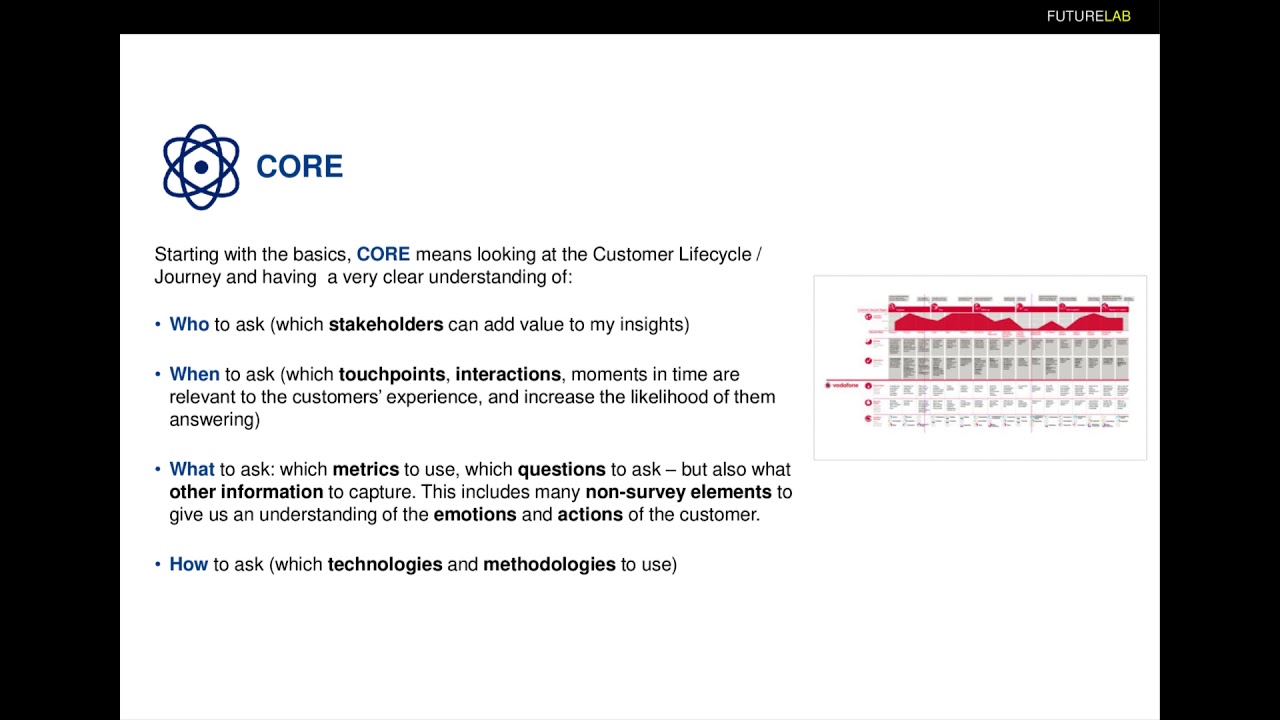
Futurelab Weekly Webinar: Core-How to start the process and establish who/when/what/how you will ask