In this 1‑hour webinar, Futurlab co‑founder Stefan Kolle outlines the existential threats facing automotive dealerships and proposes a suite of survival strategies. He begins by documenting the rapid decline of dealer networks in Europe, driven by several disruptive forces: the shift of car buying online (digital fatality), the rise of shared‑mobility and subscription models, urbanisation reducing car ownership, the millennial generation’s low interest in car purchase and distrust of salespeople, the growing influence of women buyers, and the transition to battery‑electric and autonomous vehicles that erode traditional after‑sales revenue. These trends compress dealer margins, increase fixed costs, and make the classic sales‑plus‑service model unsustainable. Kolle then presents ten concrete scenarios that can help dealers stay relevant, ranging from experience‑centers and test‑drive hubs to mobility‑as‑a‑service platforms, subscription offerings, dealer‑less “home” concepts, niche specialisations (off‑road, women‑only, EV‑only), and ultra‑fast “super‑service” models. Throughout, he cites real‑world examples (BMW Belgium, Volkswagen Home in Poland, Audi’s London digital showroom, Tesla’s test‑drive model, etc.) and highlights the importance of human‑centred, low‑pressure interactions, better matching of salespeople to buyer personas, and leveraging digital‑offline integration. The session closes with a brief pitch for Futurlab’s consulting services – quick‑win CX projects, persona‑matching tools, and longer‑term transformation roadmaps – and an invitation for questions and feedback.
Chapters
All right, a few more people have joined us and there may still be latecomers. So again, thank you all for joining us today. This is the first time we're giving this webinar as we've only just launched this white paper, as you know. So I'd be very grateful for any kind of feedback on how to improve, how to make it more snazzy, or Obviously, also a, this was fantastic, is just as welcome. So today, we want to talk about the future of the automotive dealership. I assume many of you have already seen the white paper. We'll go into the details a little bit more of, on the one hand, what are the disruptive forces that we're seeing in the markets, but also what are the saving graces, where are actual opportunities, which leads to a number of survival scenarios. And at the very end, a couple of short-term fixes where we at Futurlab could help you quite immediately to help your dealerships. Let me introduce myself quickly. My name is Stefan Kolle. I'm the founder, one of the founders of Futurlab 15 years ago. We've been focused on customer experience, customer centricity, customer strategies ever since. And a lot of our business, I'd say up to almost half of our business, has always been with automotive companies. So you see a lot of well-known references in there like Lexus, Toyota, Volkswagen, Mercedes, whom we've worked with, with great pleasure over the years. And you may see an example or two out of the things we did with them. So jumping straight in, are we seeing the end of the automotive dealer? In the UK, in the US, in Germany, in the Netherlands, the situation is starting to get dire. Automotive dealerships have already halved from 2000 to 2015 in Germany, for instance, and it's expected to halve yet again. And the same situation we see in the UK, we see in the Netherlands. So there is a major movement going on that is leading to a massive reduction of leaderships. Now, why is that the case? Well, there's a number of very important movements in society and technology, in business that are having a negative impact on dealers. So one of the first ones, and it's been talked about a lot, of course, over the past years, is, well, as we call it, digital fatality. Car sales are moving more and more online, and of course, while a lot of the sales are still taking place in the dealership, a lot of the rest of the process has moved online. 50% of the modern-day car buyers start their buying process online. And of course, this is different country by country. In Western Europe, it's higher. In Eastern Europe, it's lower. But the general trend really leads there. And the key thing, the key element of this for the dealer is, of course, that it leaves less and less room for interacting and building a relationship with the customer. Because building that relationship creates a buffer, creates a safety, so that if maybe at some point something goes wrong during the visit, you don't lose the customer forever. Currently, in some countries, Canada for instance, we already see that the typical buyer visits the dealership barely 1.1 times for buying a car, which means if you get it wrong during that one visit, you lose that customer forever. And a lot of these, of the decisions that people take, take place before they actually visit the dealership. This is not just a marketing element, but the point is, of course, that where it used to be, look, I go to this dealership several times, build a relationship with the salesperson, he assists me in helping to find out what kind of model I need, what kind of car I need. Now, many people go with a preset negative emotion into the dealership. I do not trust you. I know what I want. Don't talk to me. Which, for instance, has led the largest BMW dealership in Belgium— they have a strict rule: do not approach the customer at least for 10 minutes. They know if they approach the customer, if they start talking to him, chances are he will run away because he's distrusting of your salesperson and he doesn't like the process. And we'll come back to that a little bit more. And this of course means that all the training you applied in the last years suddenly, um, isn't— doesn't provide the value anymore because you can't build that relationship. Also, internet used to be the most important information source until 2 weeks before the purchase. In other words, we still rely on the dealership to do the deal, but now 72% of all car buyers would consider to complete the purchase online. Of course, there's always a gap between I consider and I do, We know that a lot of car brands have made bad experiences with trying to move sales online, which, as far as I've seen it, for instance, with some of our customers, wasn't so much due to resistance of the customer, but trying to move a bad offline process into online turns into a bad online process. While, for instance, Volvo, who did a great job in putting their 2016 special edition online, they sold 2,016 of those cars, cars that cost close to €100,000, 2,016 models within 24 hours. So it's absolutely possible, and again, if we see the number of dealership visits dropping consistently, it severely impacts the possibility we have as dealers to impact decisions. And of course, there's a major move towards mobility solutions. We see a major urbanization development, and this has of course been going on for hundreds of years, but by now the majority of the global population lives in urban areas, which for many people reduces the need to actually have a car. Because in urban areas congestion is severe, we see congestion charges being implemented in many countries, we see the prediction of future reduction or current reduction already of internal combustion engine cars allowed into the cities, the waste of time is matched by the waste in money by sitting in congested traffic. So there's a joint development, of course also driven by ecological considerations, for people to start reducing their car usage. And this for many people actually leads to the conclusion, well, maybe I don't need a car. If I just look at my own household, we are actually the typical classical 2-car household, but we only have one that we use maybe 2 or 3 times a week only for long drives because we live in the city and it would be absolutely crazy to have a second car. So that leads to alternative mobility solutions. And we see more and more people actually being willing to ditch their actual car ownership and take up alternative mobility solutions. This, of course, goes hand in hand with the more people are willing to, the more economic base there is for these alternative mobility solutions, and they will start growing fast to the point that prediction is currently that up to $500 billion in shared mobility services will be relevant, will be the total market size in 2025. And when you see companies like Daimler, in other words Mercedes, and BMW even join forces and start offering complete mobility services, which soon will allow them to actually offer subscriptions, etc., This is a major change in the market. And let's face it, every shared car means— clicking on the wrong button, sorry. Every shared car means 16 privately owned cars can be replaced. This is, of course, a major threat to overall sales. And secondly, a major threat for dealerships because these are fleet sales. All those BMWs driving in the Free Now or Drive Now app, they are typically not supported by individual local dealerships. They fall under major contracts. So for the individual dealerships, this is a major threat. 49% of car buyers would actually consider a no-ownership solution. In China, where the economics are, of course, the average salaries are still much lower, and where congestion is of a whole different level than what we're used to in Europe. That is the massive majority of people. And of course, we have beautiful case studies from Germany where BMW and Mercedes have been running their shared platform for quite a few years already. and 40% of the car-sharing platform users decide not to buy a car. Now, that is not 40% of people who necessarily would have bought a car otherwise, but maybe it's only 20%. It's still a major impact on sales and on the business model of the dealership. Now, millenicide, the fact that the younger generations starting with the millennials do not feel the need to buy a car anymore, and we already covered that a little bit in the previous section, but they also don't like doing it at the dealership. We see now that the youngest generation, and the numbers here are from the US, but we see the same development in pretty much all Western European countries. The Eastern European countries are trailing a bit, but they will come to the same point. young people start rejecting the whole idea of getting a driver's license because they find it too expensive, because they think, why would I need it? I've got Ubers, I've got friends of mine who have a shared car. They don't see the point of getting a driver's license, and obviously someone without a driver's license cannot buy a car. Now, millennials also are very open to all kinds of sharing models. This is of course driven by experience. Sharing has become big while millennials grew up, but it's also driven by financials. I mean, let's be clear, most millennials would still love to actually have a car, but many cannot afford it. Many of them entered the work stream in the Great Recession and they haven't built up the assets, they haven't built up the income that they need to join the league of car owners. But 60% say, you know what, it'll never be a priority to buy a car, and that number may even grow. Now, the biggest thing, of course, with the millennials is that they really don't like the dealership. And the funny thing is that a couple of years ago, we saw scores that said, oh, we loved the car buying process, it's exciting, it's fantastic, I'm getting this new toy. But now they've had the actual experience in the dealerships and they hate it. The salesperson at the dealership is the least trusted person. They don't believe what they're being told. They also don't like the process. Amazon and all those other e-commerce providers are starting to shape expectations where a lot of people think that you can buy anything with delivery within 1 hour to the home. Now, that 1-hour delivery will probably not be possible with the legal requirements for paperwork in most countries, but should we be able to develop a new model where we can quickly and decisively answer the needs of the buyer. We must. They have different expectations. They're not willing to wait up to a year for a car. They're not willing to wait up to an hour for some silly paperwork to be processed in a dealership. They're not willing to wait a week until they can walk away with a car. In Poland, it's The major decisive element for car buyers when they walk in, which car can I take right now? And generally, millennials, 57% of them, would love to avoid dealing with a car salesperson at all. And by the way, I already mentioned they don't trust the salesperson, and particularly women are extremely unhappy with the process. Now, We will run a separate white paper and a webinar on that topic next year, but we're still facing a situation where the majority, the vast majority of car sales is decided by women. Over 50% of the cars are bought by women directly, and another 30%, the woman is the key influencer of the purchase. decision process. So over 85% of all car sales are driven by women, but the whole process does not acknowledge this. And women do feel underserved, feel cheated. They feel treated like, well, basically like stupid people. And it's a massive, massive issue, and at the same time, a massive, massive opportunity for dealers to adapt their process, hire more sales, female sales staff, adapt their processes, make sure that you talk to the woman instead of the man if a couple walks in. Simple things that can be solved relatively quickly. And through all of this, only 1% of the people say they like the current car retail process. Can you imagine this? 1% of your customers says they'd like the process you're offering them, and that of course leads to losing the sale as well. And of course, they don't have the right vehicle is a major reason for finishing the visit to a car dealership, and that's a whole different story. But for instance, 16% is due to poor sales experience. In other words, 1 in 8, if not more, but at least 1 in 8 of the cars you could have sold, you're not selling because you're not delivering the right experience. That, of course, is for us at FutureLab a major topic, and I think anybody would very much appreciate a 15 to 20% lift in sales and lift in conversions. So millennials don't have the money to be able to buy, they don't have the understanding that they must buy because there's so many other options offered to them, and they don't like the process. They don't like going to the current sales channels that are offered. So we're not serving our future customers because, let's face it, millennials are still only relatively young, but we're not serving our future customers particularly well, and we stand no chance of bringing them to a dealership to become loyal customers if we don't change our behavior now. And of course, on the other side, we hear it from the dealers all the time, hey, we understand this, and we would love to act differently, and we would love to deliver a better experience, but the importer puts customer experience standards on us but doesn't give us the resources or the headquarters, the OEM. My people are trained to sell and repair cars, not to do small talk. We only get 15 minutes with the customer. I'm sure most of you who are in the dealership business recognize this. I was talking to Polish Volkswagen dealers who said, Every customer that walks in, we can talk to for 15 minutes, and then we need to spend more than an hour in processing them administratively, which is of course not the way to be able to deliver a great experience. So there's a lot of room for improvement in this particular field. Now, one thing that really Puzzles me at this moment. We see a major move towards electrical vehicles, but dealerships would rather, it seems at times, not sell you a car than sell you an electrical vehicle. The reality is that classical internal combustion engine vehicles are moving towards the exit. Now here we have 50% of automotive executives believe that BEVs, battery electric vehicles, are the number one key trend. I'm sure if we were to do research right now, it's probably more like 95%. We've seen the ouster of the BMW CEO just, what, 2 weeks ago because he didn't put enough attention to electrical vehicles. So we see a real move towards electric, also because I already mentioned it before, more and more cities saying, hey, by 2030 you can only drive in here if electric. At the same time, a lot of the obstacles, the barriers that we were seeing in buying electric are being removed. The price is price drop is massive. I drive a Tesla myself, and I could basically— I can buy a car with a 50% higher range and higher efficiency for 30% less than the car I bought 4 years ago. So soon, within a few years, electric will match the price point of classical ICE cars. At the same time, there is of course a unification or a standardization across platforms. So you see that Volkswagen will put out 30 to 40 models on the same platform. It's basically— they call it a skateboard, and it means that everybody has very similar drivetrains, everybody has very similar vehicle handling statistics. So it really becomes about how is the experience you're delivering around it. And this, of course, has a major impact. The whole move towards electrical vehicles has a major impact on the business of dealerships because there's much less maintenance. Again, I mentioned I have a Tesla. I spent over the 4 years that I have that Tesla €250 on maintenance. That's all. A similar BMW would have cost me at least €2,500 in maintenance. I'm not mentioning tires, that's a separate category, but even there, my Tesla used less tires than my Audi before. So there's a major reduction in the amount of spare parts and the amount of maintenance, which of course for most dealers is a major part of their earnings model, if not the major part. At the same time, we see, and we've just done some mystery shopping here in Belgium in the last month, we see that car dealers do everything not to have to sell you an electrical car. And we truly don't understand it. They probably think, I mean, on the one hand, we do understand it because they see the diminished return on their long-term revenue from the electrical car, but the reality is, of course, that people will then just go somewhere else. Dealers have to adapt to this new reality. People will buy electric. And in the same way, we, of course, see the autonomous driving building up quickly. Most customers would love to have usage of these autonomous driving or these assistive features. And this, of course, will again have a major impact on what people buy. And at some point, we see it's not ready yet, even though in some cities in the US, we're now seeing the first autonomous vehicles starting to drive commercially, not in a test environment anymore. Of course, it will take at least 5, if not 10, if not 20 years for fully autonomous vehicles to really dent the market, but it is starting. And there's, of course, all the cars that have— that are at some intermediate stage of autonomous driving, which starts to reduce accidents in a massive way. We already see it in Teslas, even though every accident with the Tesla on autonomous gets a lot of attention in the newspapers. We see between 75% and 90% reduction in accidents. This, of course, also has a major effect on the aftermarket where there's ever less opportunity to sell repair services and sell maintenance services. All of this means that the business model of the dealership is majorly under pressure. Effectively, a lot of the dealers are already not making money anymore, and this of course translates directly into the closure rates of so many dealerships. The fixed costs have gone up, the margin per car sold goes down. And there's of course a major impact here of a basically a self-reinforcing movement because so much of the sales model is driven by bonuses given by the importer at the end of the year. Dealers will do anything to sell a car at the short term. And again, those of you who are in the business know how basically sick this model is at the moment. where people start selling cars underpriced just to be able to collect a bonus at the end of the year. Interestingly enough, every now and then I come across dealers who resist this model, who say, we don't give the 6% or 7% margin that we theoretically have to give away. We don't give it away. We sell our cars at full margin. And I've met one of those dealers in Poland. He has business. He— He's a good guy. His location is about 150 kilometers from Warsaw, and people come from Warsaw to buy cars with him. When somebody comes in and says, I want a 6 or 7% discount because that's what the other dealer of the same brand down the road gives me, he says, well, feel free to go there, but look here. Do you feel that this is a trusted environment, that this is a clean and friendly environment? Do you feel that my people are perfectly trained to deliver you a qualitative repair service and a maintenance service. If you don't feel that, please go to the other ones. If you do feel it, you must understand that it costs a bit. And he sells the same amount of cars as the other guy down the road. Now, of course, not every dealer can switch to that model, but it's for me a perfect example that also there is a lot of people out there, there's a high number of people out there who do want a good experience, who want a trusted experience, and are willing to pay a reasonable price for that. And the problem, of course, at the moment is OEMs are not capable of closing that gap for the dealers because the current investment requirements for the OEMs are scary. I mean, we've seen announcements of $30 to $50 billion each from Mercedes, from Volkswagen, from BMW, and it's probably just the beginning. They do not have the current investment capabilities to help the dealers to make the big switch, especially if the dealers stick to their current models where there just isn't the money to pay back any investments. So currently we see in most markets that the dealership return on investment has gone And this is, of course, not long-term. This cannot be maintained in the long term because then we end up with this massive reduction in dealerships, and you don't want to be the one. I know there are some people from actual dealership networks in the call. You do not want to be the one that has to close. So that all looks quite scary. Are we looking at a flatline in developments? Well, we like to think that there are possibilities out there. So at the end of the day, there's a couple of things that really still allow to make a difference. There is the human touch. Yes, a lot of things have to go digital, have to go multichannel and omnichannel, but at the same time, a major part of humanity still loves a good human touch. I have to emphasize the good one. The current one where you get arrogantly mistreated in many dealerships when you walk in is of course not the human touch we're looking for. There is still the need for a test drive. For years to come, there will still be a majority of the people who absolutely want to have a test drive. A car is a major investment, and you don't just switch cars without having tested it. Now, having said that, there's of course also things like Tesla where they're there's a big stimulus on current owners to deliver the test drive to potential future owners. So they— we still don't need a dealership for that. Of course, the used car market will have still a lot of life in it, even though there's pressures there as well. There's the fact of non-urban life. We focus a lot on the threats of urbanization for car providers. However, A lot of humanity still lives outside of the city, and then you just need a car. And there's a lot of need for service, and there's a lot of opportunity to making service special, because underlying all of this is great customer experience. Think about how you can deliver the matching experience for your customer. So let's look at how that translates into a couple of survival scenarios. So first of all, there is the experience center, the perfect environment to experience your car with little pressure to buy, with friendly sales staff that are there to support you and not talk you into buying something. There is a perfectly tailored experience taking place. So this is for companies that are capable of training the soft skills of their people, that are capable to thrive through an emotional component. I already mentioned a major BMW dealer here in Belgium where they refrain from jumping the customer when he walks in, but they're doing all of this, and that's why they have eaten up most of the other BMW dealers, Because people love it. People love being treated with respect and with distance and having breathing space, but at the same time with immediate support if they need it. And I know this sounds like common sense, and it is common sense, and it has been common sense for 100 years, but somehow 90% of dealerships do not adhere to this common sense. And one of our favorite examples is with Volkswagen. Our client in Poland, they've set up Volkswagen Home, which is a trial for the dealerless dealership. They do not sell cars at Volkswagen Home. They simply invite people into a friendly environment, treat them well, tell them the story, and then if they want to buy something, they act as a go-between towards the dealers. The fascinating thing is that they close more contracts, they get more signed contracts on the spot than the largest dealers in the country, because people feel so comfortable and not talked into buying something. Another nice example, and of course this is more easily linked with luxury cars, is a situation like the Sound of Porsche, where a beautiful pop-up in New York to invite people to experience the story of the brand, or indeed the Loft Lounge on Brussels Airport, fully developed by Lexus to again give people a feeling for the experience of Lexus. But I very specifically mentioned Volkswagen because this is not by definition about a luxury brand. Not at all. Volkswagen is not luxury, it's a family brand. But by creating the right experience that matches the expectations or exceeds the expectations of their customer, they're having massive success. Of course, there has to be a digital model. There are people who insist on engaging in a digital way with the customer, but we can also create this digital environment offline. We've seen it with Audi with their experiments in London and several other cities where they set up the perfect digital environment within the city to be able to showcase many cars instead of the very few they could physically display. Technology is coming to the point that we can deliver a great immersive experience in a very small environment. So particularly for very digitally minded millennials and even younger people, this has to happen. You have to have this offering where you then offer all the benefits of a digital ordering environment. And there's, as I mentioned, the London Piccadilly environment. They have recently closed it. They're taking the learnings from it and now integrating them into their whole dealership network. And of course, we see great experiments, and some of them really good, like the DS virtual environment, which I tried out myself, where you really get a great feeling of what a Citroën DS delivers to you. And I think we have some Maserati participants in the workshop, in the webinar as well. And it's to me a beautiful example of what Maserati is doing with Alibaba in China. And of course, we're now also looking for or seeing brands developing collaborations with Amazon in the West. To really take all the learnings and all the experience that a high-end e-commerce environment delivers to the customer and bring the best of that to the physical environment, really merging online and offline experience. I would love to hear from our Maserati guys if they know what the outcomes are of that trial, but to me, it's a great case. We already mentioned the test drive center. Now, one of the elements, of course, irritating a lot of buyers is the process of booking a test drive. You can maybe book one car, maximum 2. You can't really compare them next to each other because how many cars does a typical dealership actually have in stock? How many of those are available for test drives? Even Volkswagen Home typically only has 4 cars, one of each of the key models there. While if I look at what Volkswagen— Dietrin, I should say, the importer in Belgium does, both for Volkswagen and for Audi and even for SEAT and Škoda, they have created major test drive centers. Now, it's in the vicinity of Brussels, so it takes me about 45 minutes to drive there, but it's a fantastic experience because I can actually book 6, 7, 8 cars for test drive if I want. At the time when I was looking for a new car, I actually test drove an Audi A5, an A7, Volkswagen Passat, and one other, all within An hour, an hour and a half. It's a perfect way of comparing these things without an awful lot of planning. And if you deliver good test drives, you have to make sure that they are relevant. So Ford has a beautiful setup in San Francisco where they really allow you to test the car in the environment that it's Or Hine, it's a little bit small, but the 2 examples you see on the bottom right, it's a dealership in San Diego who really have a menu. They say, look, if you want to experience the car in an urban environment, take— drive left at the next light. If you want to go into the mountains, drive right at the next light. And they give you the test drive menu so you can really experience it as you want. Of course, the ultimate example of this is the BMW Test Drive Center in Incheon in South Korea, where they have brought it all together, including a racetrack. Now, this is of course a little bit beyond the average dealer group to afford this, but it's a nice example of turning what for many people is a tedious part of a buying journey, turn it into an experience. Take your kids with you, take your family, make it a day outing, drive different cars. Now, what do you think is the conversion rate of somebody who went for that experience? Would it be 95%, 97%? I think it's pretty high versus the conversion rate we see in the typical dealership. A whole different approach is the mobility provider. Don't try to fight the movement, become the movement. It is for me incomprehensible, and I've done a lot of search, I have not found a dealer who has really adopted this model. Why don't you, especially as an urban dealer, become the hub for all the mobility needs of your customers? For instance, why don't you set up a major parking parking location so that people who live outside the city can drive to you, park their car, and switch to one of the many multimodal mobility options that you offer. Do it in combination with one of the, like the Finnish company, I'm sorry the name escapes me right now, but who offer an integrated app for car rental, scooter rental, bicycle rental, public transport, etc. And you become the hub. So instead of losing your customers to these other mobility services, you actually start offering them. Mobility as a service is going to be a major drive, so adopt it, go for it. In the same way, why not moving towards a subscription model? We see a lot of subscription tests being run at the moment. The thing is, your instinctive reaction might be, oh yeah, but isn't that a lease? No, you subscribe to a full-scale, either a car environment or even a full-scale mobility environment. In the Netherlands, the first tests about the full-scale mobility environment where people simply pay a flat fee of €600, €700 a month for unlimited mobility across across all modes, public transport, car, scooter, etc. Or at the simpler level, we see the big tests by, for instance, Audi, Volkswagen, etc., where they say, look, you subscribe to a car, but you tell us day by day what kind of car it is you need, because sometimes you need a small city vehicle, sometimes you need a big estate because you're going on holiday. We simply deliver to you the car that you need at this particular moment. It's hard to see, but bottom left is an example of a— we rent you your Uber car for $300 a month. Of course, this takes a lot of money, and the tests are run by the brands, by the OEMs, However, in the US already, there are investment groups that help individual dealers to switch to this model. Where are they in Europe? At the opposite of this is, hey, I just want a car. The buy and drive. You come in and you drive away with a car. And a perfect example is here in Belgium again, Cardoon. They call themselves a car supermarket, and that's really what they are. It's a superstore. Yes, they have a lot of secondhand cars, and that's funnily enough how most consumers still know them, but effectively, they have 1,000 new cars of 25 brands available for immediate buying and driving away. And with that, Caroom is growing and growing and growing and slowly usurping the Belgian market because there is a major market for that. And one key remark, of course, for all of this: none of these 10 scenarios answers the needs of 100% of the market, or even 50%, or even 30% of the market. But if each of them answers 10% of the market, each of them delivers a survivability model to a dealership group or even an importer. Then we have the relaxed service center. With the major part of the revenues of dealerships coming out of after-sales service anyway, why not take it to the next level and really pump it up and really make it a great experience where you have adjacent services, spa treatments, hairdressers, but also you give the people alternative transport while they wait, and not just a replacement car but also a scooter or an electric bike or whatever. Give them a menu of things to do in the neighborhood. Turn the car service into an experience instead of a nuisance. And there's several great examples. Yes, Mercedes, but also I've seen Honda and SEAT examples. There's room for this, for people who really want to turn their service into an experience. Here, for instance, a Toyota example. So it's not just for high-end car dealers, it's an offering that works across all segments. The off-road dealer, we mentioned it before, of course, there's still a lot of opportunity in the non-urban square, and I think there's a major opportunity for specialists in off-road. We see someone, for instance, in Germany, Autohaus Kölsch, who are purely specialized in Land Rover, and they get customers from 4 or 5 surrounding countries because it's the one place where you can get everything for your Land Rover. In other words, highly specialized, highly niche, but therefore also highly attractive to people seeking specific services. And of course, this kind of specialized, we can turn into other niche elements. For instance, luxury vehicles, women only, e-cars only. So in luxury, again, our friends from Maserati know all about it, and we've seen it starting from Lexus but going, of course, up to Ferrari dealerships, etc. Luxury is about creating a whole new experience. Look at those luxury dealers and see what you can learn from them. A lot of it is also just common sense, good service, not just making things expensive. I mentioned before there's a major opportunity for women, servicing women, and we've seen it even in Germany where the top-selling dealership in the whole country in Munich had a majority female sales staff. We see companies like Shecar that has been doing fantastically offline and online for the past years, and even like Senorita Maria in Berlin, a women-only service environment, because let's face it, a lot of women still feel that they're treated like being a little bit silly or stupid when they go to a dealership. Oh, little woman, can I help you? It's mind-boggling how often this kind of attitude is still being shown by people at current dealerships. So there's a lot of opportunity there, and it's not hard to do. That's maybe the— of all the examples we give, that one is probably the one with the least investment needed, because all you need to do is focus on recruiting the right sales staff and give them the space to do what they know is right. Also, there's of course a massive opportunity with electric only. Don't, again, don't fight the change, become the change. We have a nice example here in Belgium, Stroom. They say, look, switching to electrical cars as a business is not just buying new cars, it's also setting up charging infrastructure. You need those charging poles, but for instance, you can actually use them to also offer charging services to the public. We can put the— we can help you with putting solar panels on your roof. So it's a whole different type of ownership and different type of infrastructure that we're looking at, which is of course an incredible opportunity to, well, create a long-term relationship with customers, both consumers and companies, and keep selling to them. And finally, there's the super service. In other words, this is fast. You come in, we know what to do, we do it in half an hour, and you're on your way again instead of needing a replacement car or sitting in a horrible waiting room for a couple of hours. And this starts with simple things like We recognize you by RFID or by license plate recognition. Watch the GDPR, but you can still figure this out. And you know who's coming in, and the right service person can walk up to the customer immediately and say, well, shall I start on your transmission? And I've got all the spare parts already ready on the tray here, and you'll be out of here in an hour. Do you want an electrical scooter in the meantime? Probably not, but simply making sure that you have the best and the fastest service in the industry. Now, within the space of even a 1-hour webinar, there's of course only so far that we can deep dive. We can talk a lot more about these, but let me ensure you the consumer is ready for these changes. We see an incredibly conservative business who is facing either change or extinction. The customer wants the changes, you have to do them for economic reasons, so let's move. Find those investors because they're out there, talk to your importers or send your importers to us to talk with us, and we can start this process. And at the very end, now obviously all of this is not a sales presentation, but I still wanted to highlight a couple of things where we can come to your assistance to also look at how do we survive in the meantime, how do we increase our sales. You heard me talk about customer experience a lot. But there's also things like actual sales conversion, because one of the things that we see is a bad sales experience is often driven by a mismatch between the personality of the buyer and the seller or the salesperson. We have a method to change that, to very easily determine within 10 seconds what is the persona of this buyer that's now coming in, and which of the salespeople would match this person best from a personality. I ask you to think, how many sales have you lost in your dealership in the past week or in the past month due to mismatch of personalities, and what it would do for your bottom line if you just sold one car extra per dealership per month because you have a better match. We'll gladly talk to you about this in a bit more detail. And from a customer experience point of view, of course, that is our starting point. We've done this with many importers, we've done this with Lexus across Europe. What is your actual current CX that you're delivering? And where are the priority improvements? We get you 10 defined prioritized projects, how you can quickly and affordably improve the customer experience to not lose customers to this anymore. Again, we'll gladly talk to you about that in a bit more detail, and we have a quite broad range of services to help at the dealership level, to help at the importer level or even at the OEM level. So with that, I would like to open the floor for questions or remarks. Okay, 2 questions. First, Arnoud, of course, many of the dealerships that have gone off the market were bought by another group, But I don't have the specific numbers on this, but I'd say it was about 1/3 where we see mergers and takeovers, and 2/3 of the disappeared dealerships have actually closed. So the closure, the actual closure rates, the bankruptcy rates of dealerships is quite high. Of course, there's also takeovers by larger groups, there's takeovers by sometimes the importer, So it's a mix of those things. Bottom line is, for the individual standalone dealership, the business is quite hard. The alternatives we're describing will not fly legally within a franchised environment. Of course, not all of them, but some do. Secondly, so first of all, some of the models that I describe can perfectly fit even within the current franchise environment, like for instance a women-only dealership, the buy and drive, the mobility provider. There's nobody stopping a dealership from adding additional services to their business. Secondly, of course, the overall environment is changing and we need new franchise models. Franchise models and the legal environment around them are quite different in all European countries, but the task is of course just as much on the importers and on the OEMs to create a better environment to allow for these changes. For instance, I gave you the Volkswagen Home example in Poland. The reality is, that's for instance one thing that Matthias refers to, Volkswagen is not allowed to exploit this themselves. They need to— so currently it is the Volkswagen Home is run by a creative agency to sidestep this particular problem. So yes, some of these models can definitely not be executed within the current franchise, but there's a task for everyone to change the the legal situation in that sense. Any other questions? Well, I'm looking forward to receiving some feedback either here or sent to me by email or via LinkedIn, what you liked, what you didn't like, and obviously any further questions I'd be delighted to answer, and maybe we can at some point in the future work together. And indeed, Matthias, there's a lot of work to do for the OEMs. There are way too many dealers. I see dealers that sell an amount of cars where I just cannot figure out how on earth they are surviving. In Poland, for instance, we have dealerships that only survive because they do discounted sales to the German market. Which is of course a strange business model, let's put it that way. So thank you all for your attention, for your time. I'm looking forward to your feedback and I'm closing the presentation now.
More from Stefan

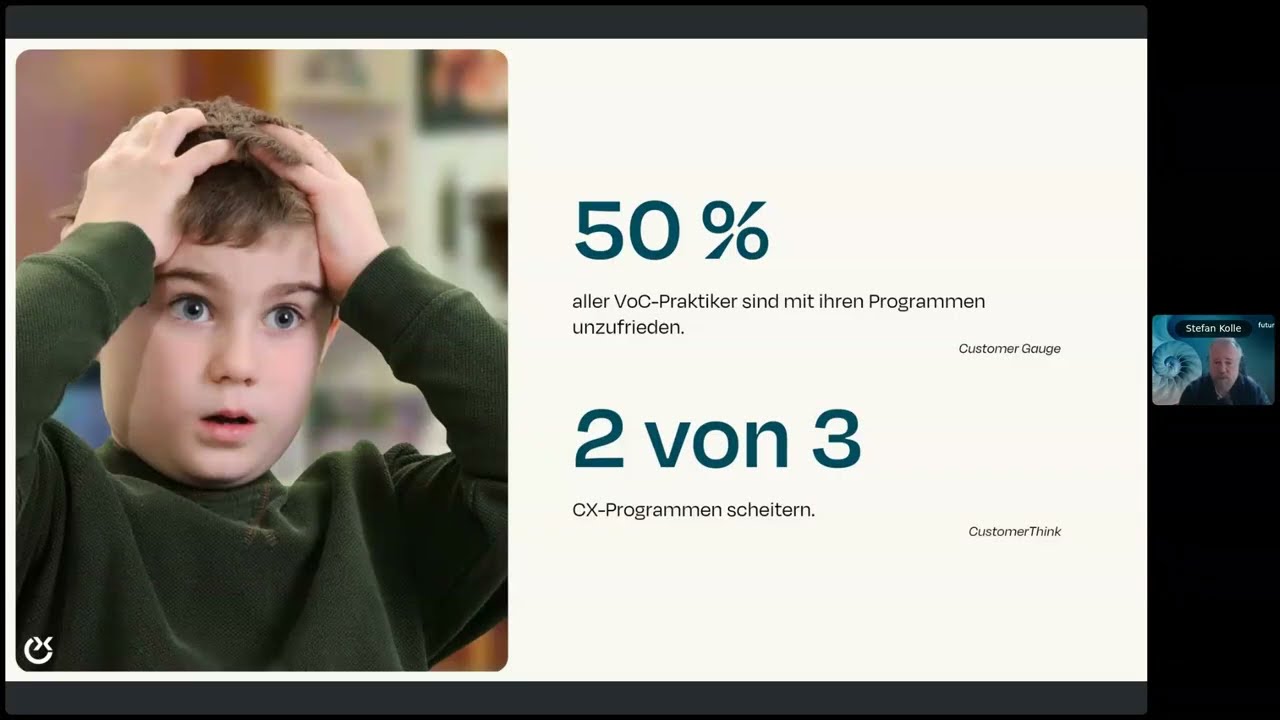

Voice of the Customer for our smallest customers - a presentation at the Toy Forum in Nürnberg, 2025

6 Herausforderungen beim Kundenfeedback – und wie man sie 2026 mit KI lösen kann


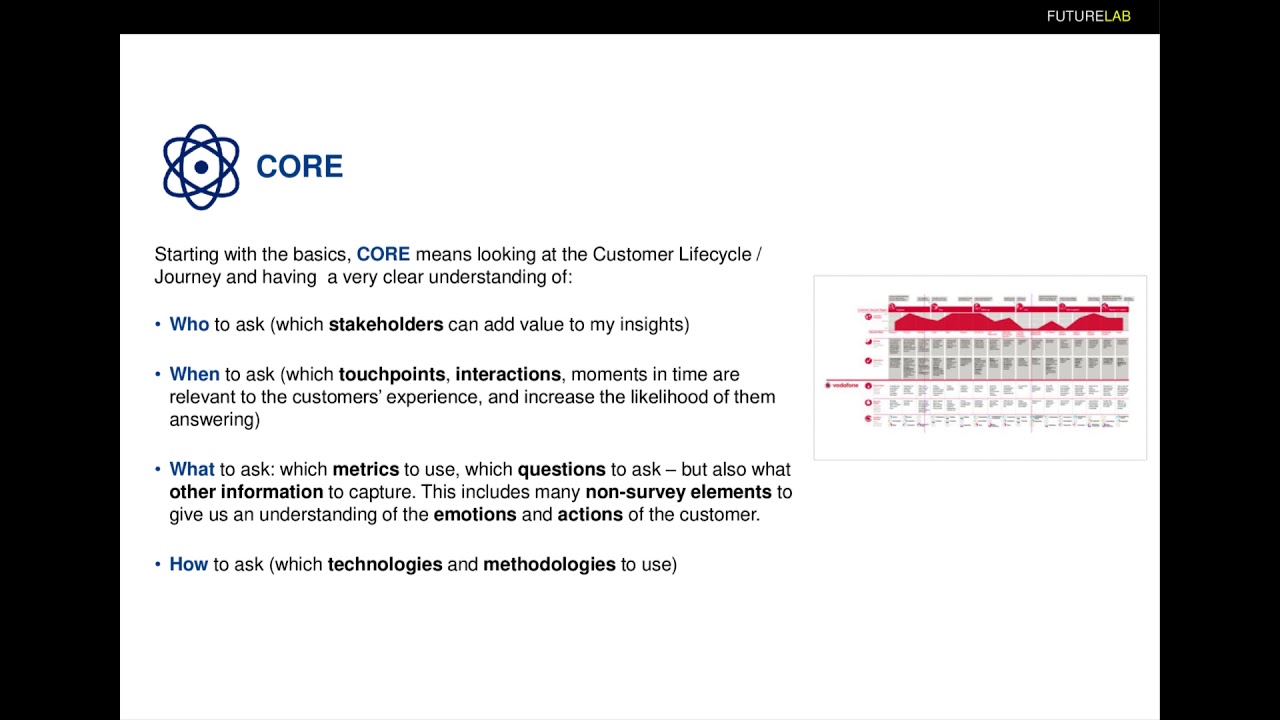
Futurelab Weekly Webinar: Core-How to start the process and establish who/when/what/how you will ask