Webinar Presentation Research: Customer Experience Challenges 2020

Stefan Kolle presents research from 144 surveys and 18 interviews on why CX programs fail. Most companies overestimate their maturity, struggle to prove ROI, and keep CX siloed under marketing. He walks through a four-stage fix: strategy, operationalisation, engagement, and quick wins that show measurable results.
Chapters
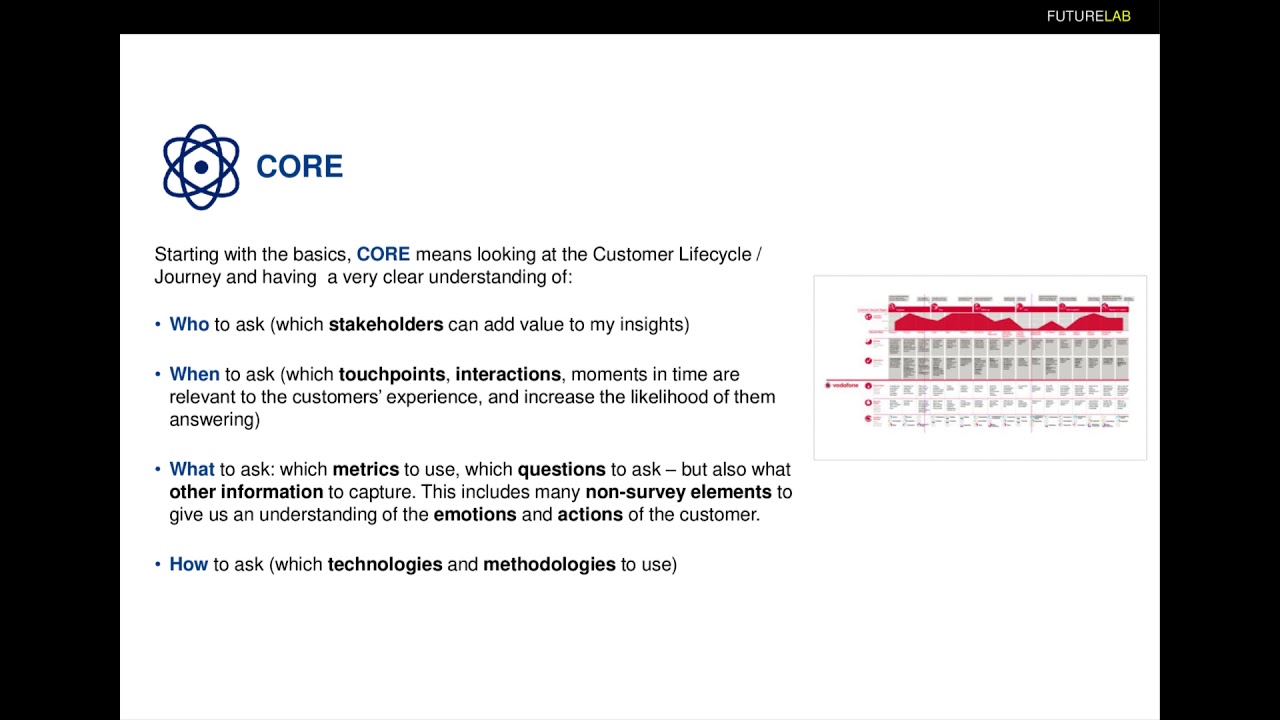
Again, thank you all for participating, and thank you for those of you who have participated in our little research. We've sent the report around. I think everybody has, has had a chance to read it. So again, I'm not gonna completely present it from the top. Now, why did we want to do this? This was already in the pre-pandemic COVID times, which I think for all of us feels like years ago as the endless days of quarantine float along like a river. But I think that the topics that were raised, the findings that we had, are just as valid in COVID times and in post-COVID times because What we saw in the feedback are a couple of very stark things. First of all, it is very hard for everyone to convince their colleagues, to convince the organization that CX is the way to go. Now, this has been a big topic in the past year. It's really not a surprise to hear people complain about this. But it's quite stark how strongly this comes through. One of the first things in that is, of course, that a lot of organizations overestimate their CX maturity. I mean, we've been using for years, and probably many of you also, that I think it was Bain Research already from a couple of years ago, where 80% of the CEOs think they have a above-average CX delivery, while only 8% of their customers agree. Somebody told me recently that that number has changed more to like 60% and 15%, or 70% and 15%, but the point is still, most organizations overestimate their CX maturity. And I think we've all had that kind of conversations, if you talk to someone, and I'm having that particularly strong in B2B at the moment, You say, look, you need a voice of the customer program, that the answer comes, oh, we know what our customers value. Well, no, you don't. And I think this is one of the key things where we collectively need to look for solutions. The second thing, of course, it's all linked to each other, that many CX managers are not sure whether their role actually has impact. That is on the one hand because they have trouble proving the impact, because they have trouble coming up with an ROI or something like that, but also sometimes a little bit— well, I think desperate is maybe too strong of a word, but we had a very interesting session last year at the Merits conference in Germany where there were 60 practitioners in the room, and one of the practitioners was actually moderating, and he asked everybody, what's your key problem? And it was more than a third of the people in the room, when asked, said, my biggest problem is that we haven't— that we think that what we're doing is cosmetic. We're only here as an excuse or as a shibboleth. We're here so that the CEO can put something in his annual report. Which is of course not a particularly motivating thought. And it was also there that we saw what I have as the big third point here on this page. Just a second, and so forth. Sorry. Had to answer something in the chat. The third point is that what everybody in that room expressed at the Merits Conference, oh wow, we thought it was so particularly bad in our company, but it turns out it's this bad everywhere. And I actually got that back in a couple of comments of people receiving the report. Oh, I really thought It's really reassuring to feel that we're not alone. That's also why I want to make this an interactive discussion, so we share maybe some ideas on how to overcome these issues. Obviously, that's a little bit also our role as consultants. We've dealt with 40, 50 projects over the past 15 years, so we have a couple of experiences, but I really, really want to invite everyone to share their experiences and ideas. So executive summary, if we look at the sheer numbers or the pure numbers, key points of challenge that was brought up by 41% is the engaging part. How do I engage all departments, all top management to actively show their commitment or to actually commit to engage. Secondly, interestingly enough, is the how do I show the return on investment, and then how do I establish the actual data collection processes, technology implementation. There's a big disconnect between the CX department, which is often located falsely, I think, in marketing departments, and IT departments that see them as airheads that just want things that don't really matter for the company. I posted as a comment on LinkedIn when I posted the research, one of the first comments is my own where I posted an article that came by just an hour later. After posting it, that showed that it's exactly those organizations where CX is put as a sub-function of marketing that struggle the most, while those where CX is directly allocated or directly reporting to the C-level, to the board, to the management, are the ones that actually have an impact. Does any of you have something to add in this? Any of you have this experience that can showcase a good example of how direct reports to the management can help? While you're trying to find the raise hand button or something else, I'll Continue. Then if you look on the right side here, very clearly companies that don't even have a defined CX role, it's a bit of an open door, they have the lowest maturity. And if there's a low maturity, then it's really hard to operationalize. In other words, we're still in the phase of finding ourselves figuring out what is this whole topic of CX, how do we go about it, so operationalizing it making sure that it has structural processes, that it is connected to KPIs, etc., is a huge challenge at that point. And of course, once you reach the higher maturity in the sense of we operationalized it, then that main problem of engaging employees and management kicks in. At the end of the day, then we also checked the correlation between highly developed voice of the customer programs, then there's still this breakdown between actual outcomes of the voice of the customer and implementing customer-driven improvements. Again, the key point here is it seems to hurt everywhere. So let's just go quickly through the actual survey. It was an online survey primarily focused on my contacts on LinkedIn, but we had a couple of people from outside that by posting it. In the end, we had 144 participants to the survey and another 18 one-on-one individual interviews that actually gave a lot of additional insight. So what were the questions we looked at? How would you evaluate your overall maturity? Do you have a voice of the customer program? What's your single biggest challenge? And then a couple of secondary questions: why did you even start on this topic? What have you tried in the past? And we also looked at— these were more for us internally to plan our future content strategy— how are people looking for content? What are the kinds of content they're looking at? So we chose not to put that in there. If we look at the participating CX professionals, so 13 people said we're not actually CX people, but our title is marketing and we're also responsible for CX. 87% have a CX title, which is a little bit of a self-selection bias, of course, because My LinkedIn audience consists mostly of people who have a CX title, mostly Western Europe, but generally also an interesting spread beyond that, that gave some interesting insights as well. So how would you evaluate the state of customer experience? About half has not started or was only making the first steps. So that's quite interesting, and it's actually in line with something we saw in the German research that we did with a couple of partner companies last year, that in an awful lot of companies, the whole topic of CX is still new. It's only just begun, which is for people like us who have been at it for for 15 years, and I see some of the participants here like Sandra and Michael and Mikkel who have been on it, and Lisa, who have been on this topic for many years as well. It's quite surprising to see that half the people— that's many people if you look at the correlation— many people who have CX in their title say we're still only making the first steps. Now, half says, yes, we have a running CX program in place. Then we found quite interestingly that there's a bit of a Venn diagram between people who have a CX program and who have a VOC program. So some who say we have a VOC program say, but we're only just at the beginning, and some who say, yeah, we have a CX program in place, do not have a voice of the customer program. Which for me is rather surprising, because in my view, you cannot have a good CX program if you don't know what the voice of your customer is. So to us, that was a major topic jumping out. And again, as I already mentioned in the summary, there's a big thing about maturity. If it's not a dedicated CX role, that seems to be a clear indication of a lower maturity. Then again, the self-assessed maturity, it might be overrated. How my friendly colleague Lynn wrote it, I dare say it is overrated. As some of you know, we have a very well-established CX maturity assessment, CXMA, and I don't know, have we run it 20 times? 20 times full scale, another 20 times in a light mode. The one singular outcome every time is that this big shock effect between the different departments Because most of the departments have an over-assessment, are, let's say, too confident about how mature the organization actually is. That's, for instance, one of the important things. If you want to do something internally, of course, obviously give us a shout. We have some self-test questions that you can just use. But if you do it, do it with all departments. departments, not just marketing, not just CX, also ask sales, ask logistics, ask senior management for their self-assessment on how mature, how well-developed the customer experience is in the company, and you will see shocking differences. For instance, we very often see a major difference between sales and marketing, who are very— and it's not that the one by definition says we're really bad on all questions and the other one says we're really good, they have different topics where they talk about. Marketing, for instance, typically says, oh, but we have pretty good insight into customers, maybe not a voice of the customer program, but we got this really good insight. If you ask sales, they may say, we have no idea because, oh, does marketing do all that research? We never see it. So it highlights, it brings out how The self-assessment sometimes is really also driven by the silo thinking. They look at what's happening in their silo and the good performance or lack thereof within their own silo, but they're not having the global picture. So it's very hard for them to understand that the whole company actually has issues in CX that they themselves might not see. And the same very strongly then of course goes to confronting, for lack of a better word, the senior management with this. They typically think that the situation is much better than it is. And asking for the biggest CX challenges, we highlighted a couple of topics that are typical, or a couple of responses that are quite typical across the board. You know, biggest challenge is that the organizational structure isn't organized around the customer yet. That's one of the core elements that we keep coming across. The organization is driven at the end of the day by KPIs. The structure responds, the humans in the organization respond to KPIs, and if those are not customer-focused, you will not get an organizational structure that is organized around the customer. And it's hard to establish that, and you will have to fight a lot of established structures within the organization. And then, the other topic, our company is too big, it's very difficult to change anything. I mean, last year we were doing an audit of the whole voice of the customer system at Shell, had been running for 10 years, so very well entrenched. We found that, let's say, there was certainly a lot of room for improvement in how the KPI, the Voice of the Customer KPIs, were transported into the rest of the company. And then if you look at it, okay, that means 450,000 people that need to be retrained on this KPI. That's quite a decision to take, and it's quite a difficult process also to then first convince that that in itself, all the effort that will go into that, will actually lead to a clear ROI. So before you propose this to the management board, or to the board, or the C-level, that's quite a decision to take as a CX manager. And of course, getting internal alignment, getting focus, so that we can start creating impactful changes. Well, how do you align people? How do you tell people what you've been doing so far is wrong? Well, spoiler alert, that's not how to tell it. But still, people are comfortable, or either comfortable in the role like they're fulfilling it today, or they feel overworked anyway. And I can't— I don't have the mental space and I don't have the time to deal with a new topic like this. So we tried to capture all this in the 4 stages that you need to go through. First of all, of course, you need a strategy. If you don't have a strategy and if you don't have a vision, how are you going to translate your customer value proposition into a customer journey? How are you going to define what does that mean at each step of the journey? What is the experience we need to deliver? How do we measure that? What are the KPIs? What is it that we want to achieve from a customer's point of view, from an organizational point of view, from a commercial point of view? If you don't have that, it will be almost impossible to convince the rest of the organization. Secondly, you then need to integrate, operationalize. You need all the supporting mechanisms, and KPIs for us are a very important there. And that's where it gets really complex, because the first part, okay, that's— I mean, to put it very bluntly, you can achieve that with a couple of people in a room for a couple of days with a lot of Post-its. You still need to convince the senior management, you need to convince a lot of people, but still, it's a relatively limited process. The second part, translating that into operational reality, is hugely complex, because that's when it gets cross-departmental, where you need to bring together technology, data, structure, sales and marketing changes. And at the same time, I mean, it's here sequential, but these 2 things of course need to happen at the same time. You need to make sure that the people are willing, skilled, and able. They need to be convinced in their heads and hearts that this is the right thing to do. They need to have the skill set and the tools, and they need the empowerment. All of these are breakdown points when we're looking at challenges that people tell us. And if we don't bring the improvement, if we don't show actual improved CX, which leads to an ROI, however you measure it, If the value is created, it needs to be captured and it needs to be communicated to make sure that your CX program creates permanence, that there's an existence management. So it is quite a task to start on, to get all of this right, and of course, that's one of the key elements as well. You cannot achieve this in a couple of months. That's one of the— when we come back to that group of people who feel that maybe they just have an alibi function. That's also where it goes wrong. Oh, we'll just appoint a CX manager and he'll make sure, or she will make sure, that everything will be right in 6 months, right? It's just another campaign. And of course, all of you know that it takes years. So we already captured this in the Executive summary: it's the integration, the operational reality, and the engagement where the real challenges are. That notwithstanding, there's still some people who say, well, we are stuck in the envisioning and the strategizing moment. We don't know how to choose the right path. And I've just been working with a big global beer company. They are still stuck a little bit, the project has been halted due to COVID, but hopefully we'll start again in 1 or 2 months. They're still in the strategizing part and it's very complex at the global company because you're dealing with different countries of different maturity levels. Some of their countries are already quite advanced, but 90% of the countries are nowhere. They've always only focused on logistics, on quality, things like that. So how do you establish that vision? How do you shift the mindset of the senior management that as of now maybe you need 3 pillars to your strategy and not just 2? And if you don't have that vision and if If it doesn't come from senior management, it will be very hard to approach the next steps. So again, we say one of the key elements is to really start with a clear assessment. Even if you are already going, if you already have a strategy, make sure that all the stakeholders in the organization are involved in a conversation. And I'm emphasizing this all. That does mean the frontline. It does mean drivers, it means mechanics, it means agents in the contact center, because they will provide a reality check on the beautiful strategies that maybe have been put down at some point. And that's, you know, very good. We're using here some case studies, but it's one of our real points of convincing. And yes, we'd love to do it, but if you want to do it yourself, do it yourself. But Make sure that you get this wake-up, this aha moment in the organization and set the right expectations. You cannot expect miracles in 3 to 6 months. It will take years. But, and this is of course very important to keep the momentum, you can continuously have some quick wins. Create these quick wins. They help you organize convince the organization to keep going. So don't make it just another campaign, but also don't make it this mysterious huge program that just keeps running and chugging along in the background and never shows any results. It's about agile, quick little projects. Execute, make a success, demonstrate, next. And along the line, use a simple business case. Start with a simple business case. The complex business cases can come later. And we are absolutely convinced that you need to use the customer lifecycle. So not— it's a different word for the customer journey, but this is the big lifelong journey that a customer goes through in his life, in his partnership with you as a company. So that you really get an overview of the rational and emotional needs of the customer, commercial goals, how you fit all of that together, where the data come in, how you manage it. If you don't use this, you will never have the total picture. Again, we're very adamant about this, and I know a lot of companies don't do this. I also see a lot of companies where the customer journey has been sold into as a miracle tool. It's not that either. It's, it's your management board, it's your Kanban board, it's your overview. It's not a miracle, it's a, it's a way of allowing you to get an insight on what's going on in the company. So that's another one of those really essential elements, essential tools that you should use. I'm not talking about necessarily highly complex customer journey mapping and customer journey management tools, I'm talking about that one overview. When we're looking at integration, at operationalization, or whatever we want to call it, that we already mentioned, it is about linking to the right KPIs. Because if we don't have that KPI, if we cannot show that there is also ROI that we're actually improving, it will be extremely hard to convince, for instance, IT departments that they should support you. And mind you, I realize I sounded maybe a bit negative about IT departments. I really don't mean that because most IT departments that we're meeting nowadays are very business-oriented, are even customer-oriented. But they're saying, look, like any IT department, we're constantly facing backlogs, etc. We have a lot of requests from everywhere in the company, prove to us, convince us that what you're asking for, that you're proposing, should be in the next wave of implementation in 3 months and not 18 months out, because we have scarce resources. So make sure that you tell the story right to everyone in the organization. And therefore, it's very important to get everybody in from the get-go, get your whole team on board, get the other departments on board, make it a cross-departmental effort, which is of course again where it's very important to have that support from the senior management. And get in with all guns blazing. Make sure that you get momentum. That you— I said it before, small projects. Take inspirations from other industries, see what they did, replicate, make it a small, quick success story, and keep going from there. Don't make it this big lumbering thing that needs millions in pre-investment before you see any results, because the chances that you will get your budget through are relatively small. Where are the challenges? Again, showing the return on investment, getting the data collection going, the connection to technology and IT. Organizational structure actually is a bit trailing. It really is in convincing the others that it makes sense, that you are going to show return on investment. Again, that's why it's so important to get small projects. Of course, important in all of this is listening to the voice of the customer. There will be outcomes that are different from what everybody in the organization expects. So a beautiful little graph come by from an IBM study, I saw it last night, about digitization necessities. The assessment of the senior management why digitization is important to the customer turns out to be a completely different one than what the customers themselves say. The customers are just looking for convenience, make it faster, easier, simpler, while the management thinks that the customer is this highly digitized being that wants all kinds of bells and whistles. Listening to the voice of the customer is not just a way to find out where your problems are, it's also a great way to help prioritize your investments in things. Don't do the stuff that's not important to the customer. A good CX program should, bluntly speaking, maybe not even cost much. because you will identify things that you can stop doing. Create that governance structure. That's the one thing where you really must insist, and insist to the point of threatening to resign. You must get cross-departmental support, and that has to be driven from the C-level. Otherwise, nothing will happen. But if you build that up, You will see that once they are on board with the topic, it's the other departments that often bring the best suggestions. We've had it at various financial service providers where it was the risk management who were considered the death of customer experience, in practice turned out to have the greatest ideas. And start with a simple business case. For instance, if you're using NPS, you can start with a relatively simple business case, just proving the extra lifetime value of promoters versus the cost to the organization of detractors. Just as a simple thing that everybody can follow, that everybody can understand, and once you've established that, you can start building up from there. Engagement is of course a big, big challenge. Hey, great, we've got this new idea, customer experience, And the people go, ah, they've got something new. Don't we already have 7 big strategic initiatives? Isn't this another bloody thing on top? So yeah, that's where you really need to start your, your best convincing, because if we don't have the rest of the organization willing, skilled, and able you won't be able to turn all of this into a success. You need to keep talking about the added value of the NPS or the CES, whatever it is that you're using to measure. You need to tell that customer story. Nothing convinced the people in the organization better than actual customer voices. Look what they're telling us. And at the same time, showcase those success stories you create, showcase the ROI. So one helps convince in the head, look, dear colleagues, this is what will help your career in the future. And it helps in the heart, because believe me, nobody gets up in the morning and says, oh, really going to ruin a couple of customers' days today by giving them bad service. But often they're stuck in a situation, they're stuck in a rut that they feel they can't deliver anything else. And obviously very important in all of this is a good employee experience. It's a whole topic in itself, of course, but— and we'll get back to that, but let it be said relatively simply. Unhappy employees are not capable of delivering happy customers, and the other way around, even unhappy customers make your employees unhappy by treating them badly. So first actions to focus on: gather those customer stories, whether it's through NPS or one-on-one interviews, and those can be literally 10-second interviews. The most impactful presentation we ever gave was with the management board of Philips, already 15 years ago. We had just started an NBS program and we took 10-second videos of a couple of customers. And I still to the day of today, I like to shock people because the first video we showed was a customer sticking his finger in the camera like I'm doing right now, which I think any communications expert will tell you not to do. But it's so evocative. It was a customer saying, Philips, you suck! You really ruined my business, you did everything wrong. And the CEO, after a stunned silence, first of all started laughing madly, but then said, these are the videos that I want to be shown to all— still 400,000 employees Philips had at the time, or 350,000— to all 350,000 employees next Monday. It's stories, it's people, it's emotions that bring these things to life. Secondly, make sure that you keep talking about your employees. Voice of the customer through the employee, VOCE, is incredibly important. They are your early warning system, they're your canaries in the coal mine, they know what's going on. So ask them, so what do you think how this customer felt, or how customers feel in general? How easy was it for you to solve this customer's problem? That's where your burning platforms are. If your agents or your mechanics or your frontline says, well, it was terribly difficult to solve these problems, you know where to start solving. You don't even— bluntly said, you may not even need a voice of the customer program. Your first burning platform comes from your employees. And finally, keep looking at your KPIs. People will only act upon KPIs. And every company where I come, most KPIs are not customer-friendly, and often they are actually customer-unfriendly, actively customer-unfriendly. They're typically also employee-unfriendly. So start asking your employees. They can tell you which of the KPIs that they need to work by are actually anti-customer. Set up a kill the KPIs get together on a regular basis, which is also a great way of showing to the rest of the organization that you're serious. They think that these terrible KPIs are your way of telling them that they don't matter, while if you tell them, hey, tell us what is wrong and show us what we should change and then do it, is an incredibly powerful way to start that willingness and that engagement in your staff. So finally, the improvement, you know, act on the customer voice and the insight it brings. Big challenge, how should we prioritize? That's of course a function of having trouble to establish those ROI models, having— making sure that we don't just have a checkbox that's ticked, but actually going into actioning. Example from one of the global organizations we recently audited: they had established that KPI of— or the benchmark, I should say— of 8.5. Overall customer score across the various metrics they used should be 8.5. What's the consequence of that? It becomes a tick box. Ah, customer has scored 8.5, tick, done. He's in the green, we don't need to look at it anymore. Well, when we dove into the comments that were there, some of these above 8.5 customers actually said literally, but this will not last, we're about to leave because there's X, Y, and Z problem going on. You're representative is mistreating us or whatever. So make sure that it's not a checkbox. Make sure that the KPI is actually the correct one. For instance, the KPI should be, have you read the comments? Have you closed the loop? Have you called the customer back? It should not be— I cannot say it any differently— a stupid number that turns into a checkbox. And indeed, how to make sure that we keep momentum and don't fizzle out. And here's some of the topics we— I already mentioned really come back. Show the money, show how we have had successes. And I will briefly show this presentation, it's not about that, but our little CCC model is about create the value by closing the loop, capture the value, in other words, make sure that you actually have the model that allows us to prove that value was created through closing the loop, through CX improvements, and then communicate it. If you don't do all 3 of those things, you don't create that positive movement and that ongoing momentum. But yes, focus on quick wins first. Small, clear, identifiable projects that showcase success, and they will be. Every single voice of the customer program, every single CX program I've seen has a plethora of quick wins or possible small projects. For instance, one of the key things we find when we establish the first voice of the customer program is that somewhere between 50 and 80% of all the problems highlighted by the customers are communication-related. In other words, very easy to change by changing tonality, by changing the words, or by changing the frequency of communicating up or down. That's easy, that's cheap, just do it, and you will see that customers suddenly show better scores, show higher satisfaction, and act upon that and actually start buying more with you. showcase that, communicate it into the organization, and then again, the CCC model: demonstrate this, demonstrate, demonstrate, demonstrate. Your role as a CX manager is as much communications guru as operational wizard. Lynn Hunziker said it, that the ultimate role of the CX manager is to tell the customer story to the organization in such a way that they cannot but act upon it, make it the only reasonable choice to act upon the customer's voice. So if we look a little bit at a couple of others, and again, I'm inviting you, please drop your comments, raise your hand, leave a question in in the Q&A, I'll gladly leave the floor to someone else. So I'm not going to go through each of these slides. They just show again where— what we already said. I mean, obviously, we see that a lot of people are relatively new to the job. At the same time, if we compare this number, how many people are actually new to the job, which is about half, um, well, really new to the job, uh, one quarter. And we see that, uh, what was it, uh, almost 40% says from a maturity level we're really nowhere. It showcases the pain of many CX managers. They've been working at it for more than a year, for more than 2 or 3 years even, and still feel they're not really making progress. Now, obviously, that perception of what is your biggest CX challenge, it's always subjective. Once you cross one hurdle, the next hurdle is, of course, the biggest one, and it's a very personal thing. So just again, to bring it somewhat to a close, I said we have this virtuous CX value cycle. This is really, I dare say nowadays, a must-have. If you do not go through these steps, you will not succeed. And it's at the smaller level of setting up a voice of the customer system, all 4 of these elements are relevant, but just as much if you look at the overall CX program. You need a system that delivers actionable insights, through the right systems, the right metrics, the right processes. You know, who am I asking? Which stakeholders do I gather information from? When do I ask them? Is it a touchpoint? Is it relational? Is it ongoing? What do I want to ask from them? Is it questions? Is it also observational? Is it NPS, CES? What is it that I need to ask that helps me improve CX for the customer, and then obviously, how do I ask that? Through which tools, platforms? Is it email? Is it observational? Is it asking the agents, etc.? So that's a— I have given several webinars on that topic already, so feel free to watch them or give me a shout if if you want to have a personalized webinar on that topic, how to set up a working voice of the customer system that delivers actionable insights. But the key is, of course, then to make sure that you do act upon those insights, closing the loop, using the insights to actually drive sales. It can be very simple. One of my B2B customers, if from the voice of the customer comes a 9 or a 10, But they see that the share of wallet that particular customer has is below 60%, they just call them up, say, hey, great, you love us, now prove it, buy more from us. And it's that simple, and people actually do it. And in Germany alone, they— I don't have the latest number, but I'd say they create 60 to 70 million, million in extra sales per year just through that. Call them up if they say that they're happy. Thank you. And of course, improving operational efficiency, and that can go from happier agents because they're getting less yelled at by the customer, which means reduced recruitment and training costs, to stop doing stuff that the customer is not appreciating. But it's not just about creating that value, you need to prove it. Show the value of CX, show the value of recommendation. Then build a pragmatic ROI model. Again, I— this is a big topic, um, I can't cover that right now, and I have given also webinars about that, but make it simple and pragmatic. Start collecting the numbers you do have. Don't try to build a perfect model, but collect enough numbers that you can make it believable in the organization, and then Ask the financial department to help you develop it from there. But then it has to be about the KPIs. And then of course, communicate, communicate, communicate, showcase. That's how you make people willing, skilled, and able. So yeah, that's what we had to tell in this presentation right now. We have changed our positioning a little bit. It's a bit wordy, we're still working on it. I'd love to get your feedback about this as well at some point. It's based on the interviews we asked, what are we good at and what is it that you need? And it seems to be that the biggest need is getting it done. Just get it done. We're getting stuck, we're not getting— we're not convincing people, and one thing we noticed is what's maybe missing is an understanding of the needs of all the stakeholders. As a CX manager, you have a tendency to focus on the needs of the customer, but for instance, what are the real needs of your senior stakeholders? What are the KPIs they are working with? Somebody said it yesterday very nicely in the CX chat, if you come to the board and you present and you use CX language, you're lost. You lost their attention within seconds. Use their words, use their KPIs, find out what matters to them on a personal and a company level and respond to that. The same for your colleagues, make it relevant. What's in it for me is what any colleague at the end of the day will ask. He may not say it out loud because he doesn't dare to, but that's what it's about. What's in it for me? Why should I start listening to you? Why should I spend some of my scarce time and some of my scarce money and some of my scarce engagement with you? Because I know what it gives me if I, let's say, do a new negotiation with my transportation partner. I'm the logistics manager. That's where I know how to focus my time, money, and engagement. Why should I give it to you? Speak their language. And the same is, of course, with the customer at the end of the day. Why should they spend time? Why should they spend money? Why should they spend engagement with us? So this is a little bit fresh and a little bit raw, but I'd love to get your feedback on that as well. We say, look, put the human in the middle. Understand all the stakeholders' needs and answer them, for instance, in time. Make it short, make it fast. Don't ask for huge budgets, ask for small budgets. Prove their efficacy, efficiency, and effectiveness, and then go further. And that's how you build momentum, that's how you build engagement. And with that, I think I'm coming down from my soapbox. As you see, I speak with a lot of passion. I am still very— after 15 years, still extremely passionate about this topic. And thank you for allowing me to share some of that passion with you. So again, I very much invite your feedback. You can also find some more of our white papers, white papers, webinars, presentations, etc., through hirschlab.net/inspiration. So please have a look at that as well.
More from Stefan


Voice of the Customer for our smallest customers - a presentation at the Toy Forum in Nürnberg, 2025

6 Herausforderungen beim Kundenfeedback – und wie man sie 2026 mit KI lösen kann


Futurelab Weekly Webinar: Core-How to start the process and establish who/when/what/how you will ask