Your VoC Programme is underperforming - and you know it

Stefan Kolle explains why most Voice of the Customer programmes fail to deliver value and how to fix them. His CCC framework loops actionable insights, measurable value, demonstration, and communication. Common failures include poor survey design, wrong metrics, and misaligned KPIs across insurance, steel, automotive, and retail.
Chapters
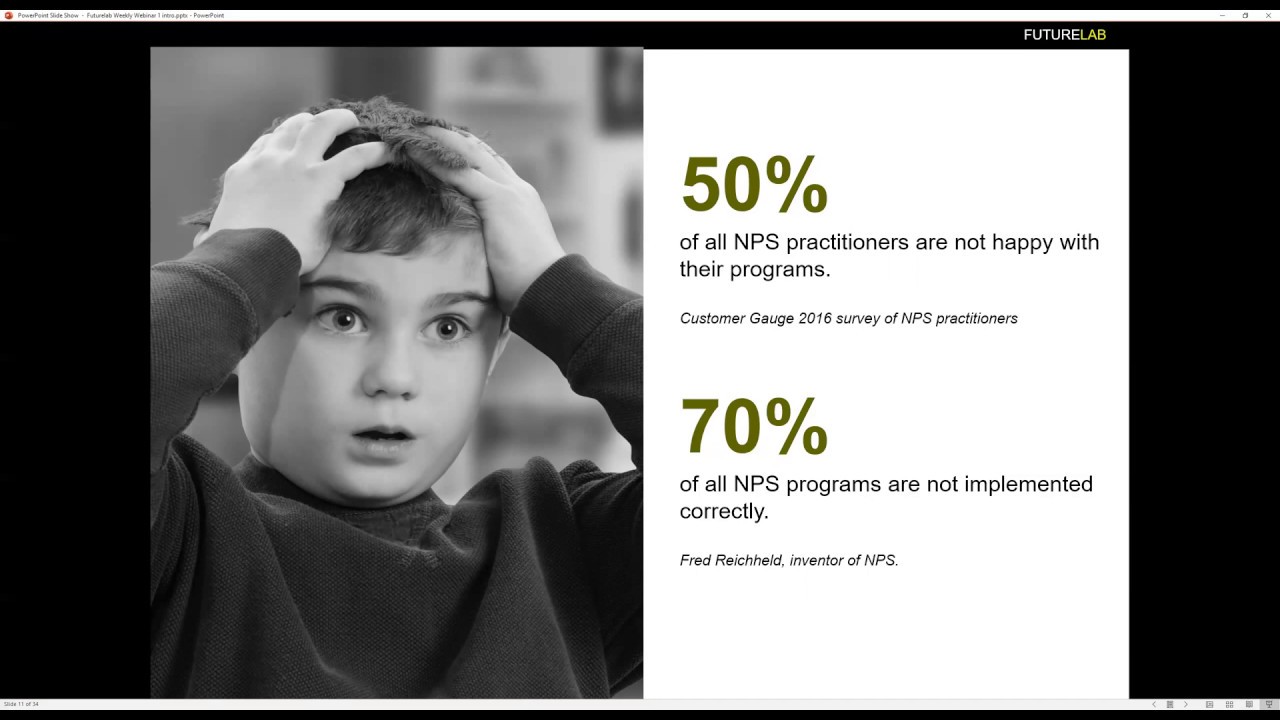
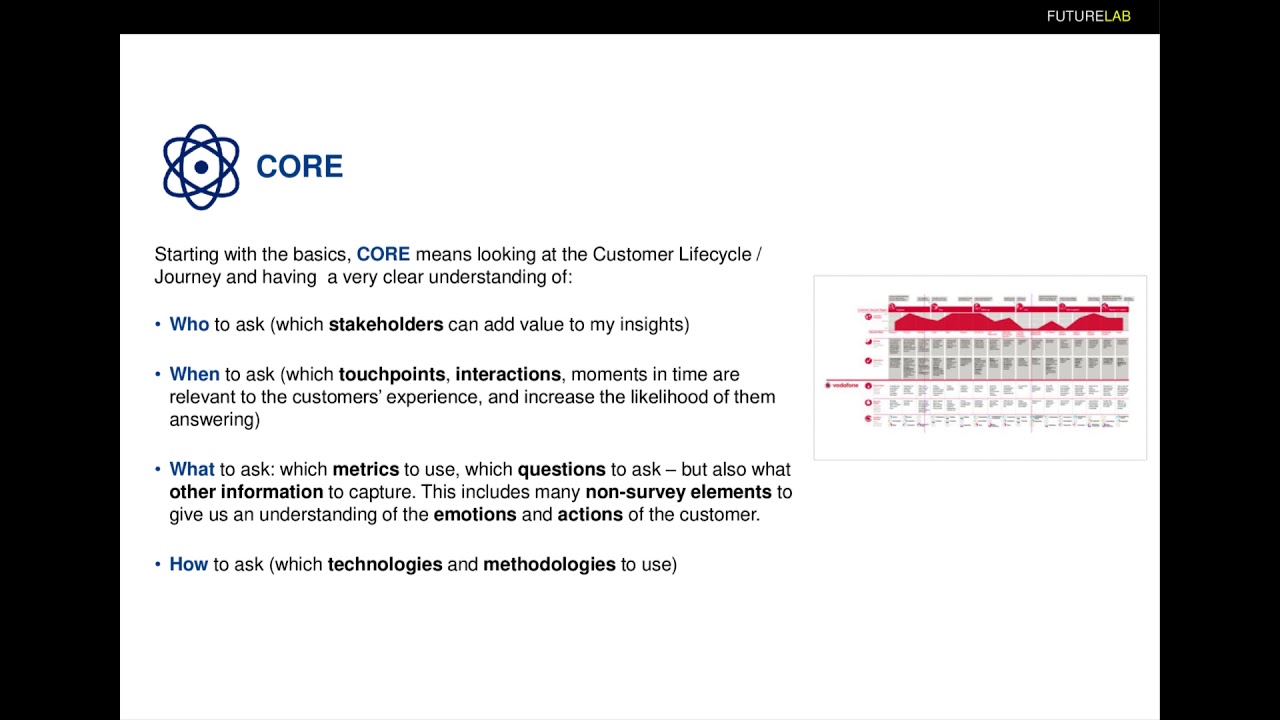
Welcome all to this webinar with a slightly provocative title: Your VOC program is underperforming and you know it. Do something about it. This is based on many years of experience where we have seen that indeed pretty much every single voice of the customer program we encountered did not fulfill its potential. And given the fact that we strongly believe in customer experience, customer experience driven through Voice of the customer. We really want to see a change in that field. So let me maybe just quickly introduce myself. I am one of the founders of FutureLab. We started FutureLab almost 17 years ago, or more than 17 years by now, and we have done customer strategy and voice of the customer projects, well, pretty much all over the world for a lot of wonderful names. And one of the key things I always do in these webinars is share a lot of the experience and the concrete stories and concrete cases that we have worked with over the years. We are a full-service agency all the way from establishing what is the customer strategy very importantly indeed, based on, amongst other things, customer experience, to operationalizing it, engaging the people, and making sure that we actually get the improvements and drive the ROI from these projects. Now, I think by now everybody knows that in principle, customer experience brings value and that voice of the customer drives CX. Nonetheless, we are here. There's quite a few participants that feel the need to hear more about this because apparently there is still some form of breakdown in a lot of corporations when we're looking at this chain. And from the questions I got from you beforehand and also over the last years from others, there's a couple of key elements that keep coming back. Where it goes wrong. First of all, getting a buy-in from the rest of the organization and getting an understanding of the necessity even that CX and therefore voice of the customer should be introduced in the organization. I'll come back to that at the very end because it's not a core topic to what we do today. Secondly, always again the question, so how do we actually set up the voice of the customer program correctly? Once we've set it up, how do we drive action? How do we get return on investment? And how do we keep it alive? How do we call that existence management? How do we manage the existence of the program? Because too often it is more like a flash in the pan. There's initial enthusiasm, but then it fizzles out, or as if it were a campaign instead of a— well, let's call it a way of living. So these are the questions that we keep encountering, and I hopefully will be able to answer for you today. Now, first of all, a key point is, of course, that many organizations still believe that they do actually deliver a superior customer experience. Honestly, these numbers— I love this slide, and I've been using it for quite a few years, So the numbers are maybe not 100% correct anymore, but the underlying gist of it is still the same, that there's a huge disconnect between what CEOs believe their customer experience delivers and what their customers think about it. Now, the only way of proving that they are wrong is, of course, through bringing that voice of the customer to the forefront. Because, you know, I mean, I've looked at the profiles of the people participating today. Pretty much all of you are customer experience professionals. You know that customers who are so happy that they recommend you are more profitable because they spend more, negotiate less, upgrade quicker, increase staff morale, generate new business. And most importantly, right now, in times of crisis, we need to reinforce this point even more. So what I've seen already in a lot of companies is that marketing and customer experience are the first 2 budgets that get cut, while in reality it is the companies that do not cut on these topics, that do power on through, so to speak, are the ones that come out as winners from the crisis. We've We saw that in the previous crisis, and it will absolutely 100% be an outcome of this crisis. So we need to reinforce within the organization, look, I know the pressure is high, I know budgets are the first thing that— spending budgets are the first things you cut, but keep in mind that if you want to have a long-term survivability, You need to keep focusing on your customers. Now, if we all believe in the value of CX, it still goes wrong with the voice of the customer programs. Here we say specifically NPS programs, because these are the hardcore numbers, but if we extend it a little bit wider to voice of the customer in general, I'm pretty sure the numbers are not that different. 50% of all practitioners are currently not happy with their programs. And Fred Reichelt, he said it to me personally over a dinner that we had, he thinks that 70% of all MPS programs are not implemented correctly. And frankly, having seen what I have seen over the past years, I wouldn't be surprised, or I even dare to say it's closer to 90%. So having brought all that to the table and having seen so many programs over the years where I saw breakdowns, I've come to a realization and turned that realization into a little bit of a framework. There is, at the end of the day, a bit of a formula, the number of steps that you have to go through, that you have to include In your program to make sure that it becomes successful, that it delivers all the value that you want to generate. We call it the CCC framework. Being consultants, of course, we love these alliterative names, hard to pronounce. And as a matter of fact, we could even call it the 4C framework, but We like triples. So first of all, at the core of the framework, we need a system that delivers actionable insights. Having the right systems, the right metrics, the right processes to gather that voice of the customer. And of course, I will go deeper into each of these steps in the rest of the webinar. So first of all, we need to make sure that what comes out of our voice of the customer program are actionable insights. Once we deliver those actionable insights, of course, we need to make sure that they are actually actioned upon, that we create value. Value in voice of the customer and in a broader sense, customer experience comes from action. Most of you know that, most of you act upon that. Nonetheless, there's a couple of basic pointers I still want to bring forward. The big breakdown often happens after this. We create value, but we're not capturing it sufficiently. We're not demonstrating the value that we create in a sufficient sense to the rest of the organization. We need to show the value of customer experience and the value of recommendation and develop a pragmatic ROI and business model to prove it to the organization. And then in conjunction with that, implement the right KPIs. And finally, once we've captured that value, once we've demonstrated it, we need to start communicating it into the organization to inspire more people to generate value. In other words, inspire more people to take action by making sure that everybody's willing, skilled, and able, by bringing other departments, senior management on board, etc. And that's how we create this value cycle where we continuously create value and inspire more people to join the movement. And it is this continuation, this keeping the 4 steps, the 4 elements continuously going, what drives success in the long run. So let's go into it a little bit more specific. By the way, I would happily say ask me any questions you want, but honestly, this is the first time that I'm running a Zoom webinar. We used a different technology until very recently, so I am not yet sure how to see your questions. I see that there's a chat going on. Mats, thank you for answering. I'll keep that chat window here, so if you have any questions during the webinar, please just type it in the chat and I will try to answer it. So let's look at the core of the framework. A key issue in many organizations is a lack of of overall feedback and a lack of quality of feedback. And that comes through many, many different reasons: a low number of clients that are involved, survey fatigue, exclusions and quarantine. And by this, I don't— do not mean corona quarantine, but quarantine processes or rules of how often to ask customers. They're asking the wrong stakeholders, they're asking too few stakeholders at the wrong moment, the wrong questions, the wrong channel, not actionable. There's many things that can go wrong. In any kind of voice of the customer program. So one of the most striking examples, and I won't name the company where it happened, but it's one of the biggest global companies, where we looked at the responses they had in their system, and they were very happy about their response rate, 25%. But overall, everybody felt that the number of responses were insufficient to, let's say, have gravitas to convince the people in the organization that we had valuable customer feedback. And when we looked deeper, we said, wait a minute, you have many, many more than 18,000 customers. How can it be that you only sent 18,000 surveys? And it turned out that over the years, because their voice of the customer program was already running for almost 10 years, they had established so many exclusions based on rules, based on somebody at some point saying, oh no, we shouldn't ask this customer because we're in a conflict, or an account manager not wanting to share the contact details, that 95%, that effectively only 20% of the customers were being approached for a survey, and effectively we had a real response rate of only 5%, which is not sufficient. So this was one of the most striking learnings, that's why I'm putting it here at the beginning. Make sure that you actually have all your customers in your contact base when it comes to surveying them. But let's take a step back. What we're looking at is, at the core, the 4 questions that we need to decide upon, that we need to continuously audit or check or re-question: Who are we asking? How are we asking them? When are we interacting with them to ask or observe them? And what is it that we want to ask from them. And again, I'd say 90% of all voice of the customer programs do not answer all of these questions sufficiently. Now, what you, by the way, will see, I switch between B2C and B2B examples freely. I will name a couple of companies that we worked with in the past where you get a very clear understanding whether it's B2B or B2C. Question. The who to ask is, who is the right person for that stage of the lifecycle that we should ask? Is that someone who's likely to answer? Is that someone who has actual valuable insights to offer? Is this the person that we should interact with at this moment? And to give you a couple of pointers on how this can be extremely relevant, Friends on the left, I mentioned Dela and ING. Dela is not known outside the Benelux, I think. They are here the absolute market leader in funeral insurances. Of course, there is a voice of the customer program there to ask while they are policyholders, but let's face it, what is the product they're selling? Delivering great funeral experiences. So to find out whether they are delivering on that promise, it's not the policyholder they're asking because sadly that policyholder has passed. So it is the family members, it's other stakeholders that need to be asked to understand whether we're doing the right thing. Mind you, I was very hesitant when we started on that one, but we're actually having response rates of 70%. on those family members we asked within 4 weeks after a funeral, obviously not immediately, but it shouldn't be too long, whether they were happy, whether their expectations were fulfilled, etc. In a B2B context, there's also— and ING, sorry, for instance, we worked with their life insurance department in many non-Benelux countries. There it was the same. Of course, there's the policyholders and there's the family members that need to be asked after a payment. of a deceased. For Grant Thornton, B2B example, we found that in some countries the hierarchical levels are so strict, for instance in India, that any junior manager will almost by default answer, no, I would not recommend you because nobody will ever ask. That's of course completely different than in a a more Western society. Or for instance, we saw in the Gulf countries that typically every single question about recommendation came back as a 10, while we knew that the client relationship wasn't always that great. So we had to follow up by phone or with a personal visit to get the real information, because there was the driver of the personal relationship between the customer and the account manager that was driving the, oh, we don't want to embarrass someone. Or in the case of Shell, where we saw that, for instance, some of the questions went to account managers or purchasing managers at large corporations, give you the example that they their largest retail customer, which had hundreds of millions, if not billions, in turnover on Shell's behalf per year, the email with the survey request was answered by a temp administrative person who had only been there for 3 weeks. That's not very useful. Sonepar is a company that delivers building materials. largely to small companies, so small service providers in the building industry, and there it's often the partner, the wife of the actual builder who answers the question. These are very important questions. You have to realize who you are asking and whether it makes sense, whether you are asking the right person. And of course, in a general B2B sense, there's a lot of different stakeholders that can be incredibly insightful to ask multiple stakeholders. And I would say it is an absolute necessity for any successful B2B program to ask multiple stakeholders. For instance, here an example from a large steel company for which we did Multiple stakeholder surveys, and we found that while the heads of purchasing were all very happy and had a great NPS score in this case— why? Because the account managers typically take them wining and dining and really take care of them. But the purchasing managers, the ones actually doing the work, turned out to be quite unhappy. And you can imagine what happens when they become the head of purchasing later. They may carry some resentment with them. And even worse, the heads of production told us, well, it's all fine and great, but you're delivering bad quality that we have trouble with on the factory floor. These are insights you typically will not get from your account manager because your account manager, with the best of intentions, typically only speaks with the head of purchase. So it is essential to have this multiple stakeholder insight. In B2C, by the way, you can also think about multiple stakeholders. Not always the one making the purchase at the cash register in the supermarket is the one actually influencing or driving the decision. There's of course the question how to ask. Needless to say, it is through all channels. We need to be multimodal. It should be automated but also hand-based. When somebody If one of your agents in the contact center has had a great interaction with the customer or a bad interaction with the customer, he or she should be able to send out an immediate survey. And it's very important to keep it short, interactive, and adaptive. Right, a little discrepancy between the 2 slides here. Also, please not forget that we were also always talking about voice of the customer, and initially that means speaking about surveys, but of course, we also need to capture, for instance, soft data and observational data and behavioral data, because the pure surveying is really reducing more and more, while we are getting much better access to different data. And VOCE, the voice of the customer through the employee, do not forget to ask about your employees after they had an interaction with the customer. How was your interaction? How happy or unhappy do you feel this customer was? How should we treat him next time? It's an invaluable source of customer experience data that is really, in 9 out of 10 cases, completely overlooked. And just to illustrate that, no matter how advanced we all are in our digital communication. What you see on the left is a copy from that same steel company where somebody— and it happened with several of their customers— they printed out the web page that the survey questions were on, wrote their answer in, and then sent it back by fax. I had not experienced that before, but it was a nice little wake-up call. That not every industry and not every region is as digital as we like to think of ourselves here in Europe. A very important question is also when to ask, and of course this goes in conjunction with the question what your questions are. For instance, Make sure that you include exit interviews. Make sure that you have a right mix between your touchpoint questions and your relationship questions, and coordinate all of that because companies have a tendency to have different departments not coordinate with each other and asking different questions alongside each other. One of the things we really don't want to get is that Customer gets bombarded with survey questions. I'll come back to that in a second. I have the example here of Nationale Nederlanden, ING, their new name. We had the particular question of looking at their scores throughout their customer journey, and we saw great. Scores all along the journey, all the touchpoints, everything was fantastic until the last survey where the scores really dropped off dramatically. They kept saying, we don't understand, we're really putting so much focus on our customer journey. And I had to ask, what is the final survey about? Well, it is about the payout of the I said, okay, what happens? Well, the contract is terminated. Explain to me in baby words what happens. Well, the customer has died. Yes, thank you. Sad as it is, it is what you're selling. Your customer has died and you're now talking to the family members. It's the first time that you're talking to somebody else, and that other person has just had an interaction with the contact center where the contact center said, well, your husband has just died, you have to deliver the death certificate within 24 hours. And really, it was that kind of very bureaucratic approach. So the answer was, of course, in setting up a different process where we became proactive and started to send agents immediately to the people to help them with the paperwork. But it's this crucial understanding of where in the journey is the person and what should I ask him, or should I not ask but observe? Maybe I don't even need to ask. If I look at my support moment, if I have a huge number of support interactions driven by unhappiness about the buying process, I don't need to ask the customer. I know that there's something wrong with the buying process. So Don't use the customer as your mystery shopper. Identify the breakdown yourself, and only then identify the touchpoints where you need to ask the customer instead of observe. And of course, there's the question or the difference between when we're looking at NPS, but this counts for many other metrics as well. Are we asking a relationship question? Generally, once, maybe twice per year, would you recommend our company, versus the touchpoint, based on the transaction you just completed with us, would you recommend us the product? Here again, we need to look very carefully at what is the right question at the touchpoint and which touchpoints do I want to ask. The answer is, for instance, not all of the touchpoints. I Being a customer of, for instance, Bpost here in Belgium, we get a lot of deliveries at the moment, like anybody else, almost daily. And daily I get an email, you received a package yesterday, would you recommend us? I think it's the wrong question, and I think it's absolutely crazy to ask me that after every single package that is delivered. For instance, at the touchpoint, generally a question, a much better question is, how easy was it to complete the transaction? Or did we fulfill your expectations? So I'm not a big fan of asking the Net Promoter Question at every touchpoint or at touchpoints, and definitely not at every touchpoint. And of course, there's a very important question about what metrics to choose. Now, that's a big topic in itself, so we've made a little presentation about that. If you go to our SlideShare, you will find— well, later on you will find this presentation, but you'll find a lot of our presentations, including this one, which metrics to use in voice of the customer. Because it's very, very important to have the right metric for the right moment. Sometimes it's the customer effort score, sometimes it's the net promoter score, sometimes it's the did we fulfill your expectation. They give different levels of insights and help us in different ways of improving, of actioning our interaction with the customer. Because, and this is the most important thing that I will always keep repeating, only ask those questions that will help you drive action in the organization, that will help you change behavior. And it comes back in every single thing where all of you know this, that you get the pressure from the rest of the organization to start including all kinds of additional questions to help you, or to help them get more insights into the customer. The moment you ask them, what will you do with this information, it usually breaks down. So please have a look at this separate little presentation. It gives you a little framework and a couple of approaches that can help you pick the right metric, which will be different depending on who you're asking, when you're asking, and which touchpoints you're looking at. And keep in mind, it's short questionnaires that keep high response rates. I just, not that long ago, were working with the Mercedes Global Contact Center. They had their typical customer satisfaction survey, which had a response rate of 0.4 or 5%. And when we switched to a more NPS-style approach where we said, 1 minute of your time to help us improve, we jumped to almost 20% response rates. Keep it short, keep it simple, but do keep those open questions in there because they are the biggest source of emotional information and actionable information. So ultimately, if you are able to do all this, you can start turning it into one data lake. I'm gonna jump over this a little bit because I am already a little bit behind in time, but think about all the different inputs that you can have. It is about outbound surveying, but it's also about soft and unstructured data, social media sentiment capture, call recording and analysis. Keeping the voice of the employee in there is extremely important, and it's the voice of the customer on the employee, but also the employee effort score can be an incredible source of insight. How easy was it for you to solve this customer's issue? That's where a lot of actionable insights for internal improvements come out. And of course, keep a broader view, keep a view of the customer's life, keep a view on what happened before or after the interaction. If you see a lot of customers canceling their policies 4 weeks after an interaction with the call center, that's a lot of valuable insight as well. So at the end, it's your customer lifecycle map that's really at the heart here. To understand your customers' expectations, their state of mind, to connect all the data streams, to identify which touchpoints you want to survey, to identify the KPIs you need to measure to find out whether you're actually delivering on your CX promise. And very important, integrated communication and survey management, because what you don't want is what happens most companies that different departments start sending surveys that are unrelated, that are not aware of each other, and can really damage the customer's perception of you. Now, once we are having these great, wonderful surveys and observations and all the other things in place that do deliver actionable insights, we need to action upon them. And of course, again, I think most of you know this, it is about closing the loop. Closing the loop is for me just a different word for taking action. On the one hand, there's the tactical, the narrow focus, immediate follow-up with the customer. Hey, we heard you, we saw your complaint, we saw your improvement suggestion, we're acting upon that. Or we're not going to act upon it because— but also, of course, immediate follow-up to the team. One of the key breakdowns is that voice of the customer systems, approaches, programs are not communicating enough, are not sharing their actionable insights enough. Again, the focus is on action. When I look at that same global company that had accidentally forgotten 80% of its customers, the problem with the system, how it was set up, was also that it delivered raw data to all the different departments. Some departments then put their own analysts on it to start drawing actionable insights from it. Others said, hey, I have got too many other things I got to focus on, I don't have time for this. So it is about making sure that it's communicated properly. And once action is taken, make sure that you learn what does and doesn't work. In your action management system, you should have this feedback loop so that others can learn from actions that have been taken. And of course, identify— see, there's a typo there— identify behavior behavioral changes that are needed and start discussing these with individuals but also with relevant departments. On the other hand, there's of course the much wider focus: identifying the root causes, involve other departments, identify systemic change needed to drive the long-term value. And closed loop is really the driver of the ROI because it's engaging directly with the voice of the customer instead of looking at blind averages. We've all seen these beautiful researches that say, well, here's 5 things that we asked the customer about on a 1 to 5 scale, and you're scoring 4.7, 4.6, 4.5, 4.3. So 4.3 is clearly the area where you're really performing badly, so you should find It's meaningless. It's pointless. It's meaningless. It doesn't help anybody. Having this direct voice of the customer is what really helps people on one hand understand the issues of the customer, on the other hand actually engage with the customer and help solve the issue. And solving the issue sometimes may be just talking about it and coming back to the customer and say, look, we can't change what you complained about, but it's because X, Y, and Z. It's amazing, just the example Mercedes, the simple fact that we started asking people and started talking to them already solved 80% of the issues. It's also closed loop, gives great responsibility to the people themselves, and stimulates promoters and helps to pick up dropped leads. And let me speed up a little because I am talking too long. Closing the loop can also be as simple as— and this is Sonepar, one of my favorite examples— when they have a customer who comes back with a great score, they look at their share of wallet, and if that share of wallet is below 50, they call them up and say, hey, great that you love us so much that you gave us a 9 or a 10, How about you actually now buy more from us? If we are your favorite supplier, your share of wallet with us should be higher. And they sell tens of millions more per year simply based on that direct closing of the loop. And let me give you a beautiful case of really acting upon betas. Weber, the barbecue brand, I'm pretty sure you know them all. When we did the research for them, the question was, would you recommend us? And we got overwhelmingly positive responses, and about 1/3 of the responses were along the line of what I put on the slide here. I am recommending you. I have already sold 3 grills to my neighbor and my nephew because the meat tastes so much better. Now, Whether that is objectively the case, I don't know, and I don't care. If that is the perception, if that is what triggers people to recommend us, then that's where we should focus all our marketing and all our interaction, that experience. So they had at that moment in Germany a famous German TV chef, obviously not Gordon, but somewhere of a similar stature in Germany, doing 30-second spots. They quit all these marketing activities and switch entirely to experience. Put twice a year an experienced grill master outside every do-it-yourself center. Invite people to the grill academies. Invite the sales staff of the garden centers and the do-it-yourself centers to the grill academy. So that they rave and rant about Weber grills. And I've done the mystery shopping and I've experienced it myself. The sales guy was in a generic garden center, he was showing me pictures from his own phone about the Weber grill party he had with his family. So it was the feedback from the customers, the verbatims from the customers that helped us identify What are the real strengths and what should we focus on in the marketing, which helped double sales over a period of 3 years. And the second thing was that we also asked, what can we do better? And almost 40% answered prices. Now generally, if you have that as a closed question, you would immediately start working on your prices. However, What we saw here, that first of all, even though you don't speak German, you see that for instance in the top left there's a wink emoticon there, and you see the score. It was the people who said, I have recommended you, I love you, you're fantastic, were the same ones who said, oh, a lower price would always be fine. In other words, the price was the default answer. They couldn't come up with any improvements, so let's mention price. So by understanding what drives the customer, you can heavily improve also your marketing, not just your customer experience. And from an experience point of view, the lesson here was the most extreme, but we've seen it literally in every single other company that we worked with, that a lot of customer happiness is or can be solved through communication. The simple fact that you're showing that you're listening to people and that you do close the loop solves so many issues, because often the unhappiness of customers is driven by not being listened to. And by the way, when we're talking about driving action, just to reinforce the point, this was that same steel company. that reacted initially quite happily when we showed this NPS by margin group. Oh, look, we have a pretty good NPS in our over $1 million margin contribution client group, customer group. Until we pointed out that in this case, it meant that there were 7 accounts of more than $1 million margin. I'm not talking revenue, I'm talking margin. We're actually at risk. It's the ultimate convincing argument for the ROI of a good voice of the customer program. And of course, there's also a lot of operational efficiencies that we can derive from this. It's a topic I will gladly discuss with you in a more direct setting. Capture value, We need an ROI program. We need to show to the organization how we're creating value for it. This is a difficult topic, and I will soon have another webinar only about this. So let me go through this relatively quickly. Again, if you are currently faced with this question, please send me an email or chat. I will gladly discuss with you. directly, because there is no one answer that fits. There's no singular approach to an ROI model that fits for all companies. The most important thing philosophically is don't try to be perfect. That's where a lot of the ROI models fail, because they try to create a perfect reality, which takes an awful lot of effort from an awful lot of departments and will fall down. Because you make it attackable. What you need is assumptions that are that reasonable people will say are not wrong. Now, let me give you a very practical example of that. For instance, the underlying value when you're doing an NPS-style project, you can start collecting or calculating. The value of a customer by looking at your classic customer value, customer lifetime value, the amount they spend per purchase, number of purchases, number of years a customer stays loyal. That's the basic, and most companies will have something like that already existing. As we're looking at NPS, let's add in the word-of-mouth value. And I'm gonna show you a beautiful example on the next couple of slides for that. And of course, then you have to start adding in other value drivers like the cost to serve, the staff morale and turnover, market intelligence, reputation management. The cost to serve differential alone is— one of our participants knows this number very specifically, I know— that, for instance, in telcos in some countries, there is a beautiful little calculation that shows that The cost to serve a happy customer, a promoter, on an annual basis is about €4, and to serve unhappy customers is about €30, or at least it was a couple of years ago. Now imagine if you were, for instance, Proximus in Belgium with 6 million accounts. That is a number that starts counting very quickly. Now, I give you this and take those slides and share them with your colleagues because we've seen that it's extremely powerful. One of the questions I was sent beforehand is how to deal with, for instance, distributors or agents or other independent or semi-independent parties that are responsible for delivering at least part of your customer experience to the consumer. And we had this question already many years ago with Lexus, where the dealers were extremely cynical about this whole customer experience stuff. We said, okay, look, we're not enforcing anything on you. How about you make the calculation yourself? And I'm showing you here a simplified version, but you can make this simplified version for yourself. I've done it with 40 companies by now. It works in 15 minutes. Sit down with your colleagues, take a blank sheet of paper and say, okay, what are the key value drivers we have with the customer? Is it purchases, margin on that, value of service visits, whatever your value drivers are. And the same you can do with your distributors or retailers or whatever. In this case, for instance, let's go through it very quickly. We found— we asked them, what do you think how many cars an unhappy customer will buy? Well, 1. How many will a very happy customer buy? Well, typically 4. Interesting thing is we managed to verify this afterwards through hardcore research, and it turned out to be exactly right. Now, a simplistic calculation, if you're a car retailer right now, purchase margin is close to zero, which is very sad, but that's part of the problem, that the margin models that most companies have with their distributors are absolutely not supportive of any kind of CX program. Whereas in insurance, the reward for most agents is still based on the one-off transaction that they're making and selling the policy instead of the loyalty of the customers that they're driving. Big topic, gladly discuss it separately. But here you see, based on this very simple calculation, you already see a customer value differential between €1,200 and €5,000. Now, the interesting thing is if we then feature in the impact that detractors or promoters have on other customers. And in automotive, we see you typically influence one other person based on each car that you own. So if we calculate this in, we're saying a detractor actually stops one other customer from becoming a customer. If we take the passive value as a, as a mid-range, We can say that the word-of-mouth effect that detractor has is it costs the company €2,500. So the total customer value of that detractor is negative. Well, the promoter actually has a multiplier because he brings new customers. And suddenly you have a value differential, and most importantly, a negative value on detractors. That's a very, very strong starting point to drive CX programs. And it's a starting point to make the bridge between voice of the customer and ROI. Because once you have this basic value, okay, but we as a company believe that promoters are valuable, have more value than detractors. You can look at, for instance, this was a major German insurance group where we found out that the difference in NPS score between those who had a contact, and whether it was a contact around the damage or whatever else, but the typical difference was over 25%, almost 30%, between those who had a contact and those who didn't have a contact. So that helps you calculate the value, for instance, of your customer service center. Another topic that we're talking about a lot recently, because they are under immense pressure, to cut costs while they are delivering an immense value to the organization. Once you have a belief in the NPS value, you can start calculating from that. There's also the much more complex models which I include, for instance, the Forrester model on voice of the customer, a great model to start looking at. In B2B, by the way, you have the very same simple calculation. What is the value of a detractor? This is an outcome of one of our customers, the real turnover of detractors versus promoters. So what if you start moving those detractors into passives and the passives into promoters? That can be hundreds of millions of additional turnover. Same for Grant Thornton. And at the end of the day, what we're looking at is this extremely pragmatic approach. Say, look, don't try to create the perfect model. Start looking at the numbers that you do have and start fitting them into a model. And only then, once you have things like your retention, your repurchase, your cross-sell, your share of wallet, your churn, which in most cases you have available, once you have that, then start digging for additional numbers and start solidifying the model and start adding more value drivers in, like process improvements, efficiencies, innovation. I have 10 minutes left and I'm only about two-thirds into my material, so forgive me if I speed up a little bit and skip maybe a couple of things. There's a few key points I still want to make because the KPIs, I mentioned them at the beginning. Very simply put, KPIs drive strategy— drive culture, and culture eats strategy for breakfast. In other words, if you don't change the KPIs, nothing will change. And this is purely human, this is purely normal. I cannot expect of the employees, my colleagues, the other departments to act against their own interests. So I have to change the KPIs. And KPIs are either, let's say, blunt. I just mentioned the situation that a lot of distributors, car insurance agents, or car dealerships, or whatever, have extremely blunt KPIs with huge unintended consequences. For instance, car dealerships in many countries get a bonus on if they exceed their sales value. What happens at the end of the year? They start giving out cars with huge discounts to make their bonus for the year, which diminishes brand value, which makes people wait until the end of the year to buy cars, and it's actually bad all around, but they have no choice. Because given the low margin they make on individual cars, they live off these bonuses. In the Mercedes contact center, what we saw was that at some point in the past, somebody with the greatest intentions had introduced a KPI that all complaints should be closed before day 8, because they saw that if it took longer, people were unhappy. So what happened? Some agents, or Of course not all, but some agents started gaming this and closed cases on day 7, even if they weren't actually resolved. The point is, when a measure becomes a target, it ceases to be a good measure. If you put NPS, a simple NPS score, in as a KPI, people will start gaming it. We've all seen it in car dealerships where they ask you to give them a 9 if you're unhappy or a 10 if you're happy. So keep challenging your KPIs that they do actually help the customer. And Mercedes-Benz has taken this up beautifully where they started involving their agents to identify the KPIs that needed to be killed. Good KPIs are on the one hand customer-focused but not singular. They're action-oriented. So for instance, Toyota introduced as a KPI how many loops did you close. How much loyalty do you drive? How much churn? And indeed financial impact as one of the elements. And integrated, so dashboard-based, not have a singular number. They should support the quarterly results, but not only them. And most importantly— or not most important, but also very importantly— tested for unintended consequences. And the question that just came in, how do you manage that discussion internally when the NPS is connected to the yearly bonus? I think it shouldn't. I think it's the death of every NPS program if the NPS, the direct number, is connected to, to a bonus. And I've seen it in some of the companies that I've already mentioned here. that the moment they instituted this, people started worrying more about the exact wording of the question and how we could keep out— oh, we see that these customers always give a lower score, so we should leave them out. No, the point of the Voice of the Customer program should be to identify unhappy customers so we can do something for them, so that we can improve their their problems, on their problems, their experience. Now finally, it is of crucial value that we— it is crucial that we communicate the value that we created. So at the end of the day, we need people who are willing, skilled, and able to improve the customer experience, to do something positive. And it— because it's not just good intentions, It's— there's head and heart involved here. Now, many people are, let's say, on the fence when we start on this. Yeah, I don't know about all the CX stuff. For instance, in Germany, they're very engineering-driven. I don't know about all this. We deliver the best product and that should be enough. So you need to find a way to make them willing, and then you need to make sure that they actually have the knowledge and the practice and the tools to do what is right. And finally, you need to make sure they're able. This is where the KPIs come in again, and you can tell them to change their behavior, but they will not do that if you don't show them what a difference it makes, how to do it, and that it's good for them because it actually helps them with the new KPIs they have. I see another question, I will come back on that. At the end of the day, most people do want to act on the customer's voice, let's be clear. Nobody gets up in the morning and says, haha, today I'm really going to mess up some customers' lives, but they feel that in practice they're really not capable to do so. And very importantly, they also don't get the access to the voice of the customer. No, 90% of our detractors have an issue with misaligned touchpoints. That's meaningless to any anybody outside quality management and the CX management. Make it more interesting. Bring it to life. And this may be a shocking picture for some of you, but it's what we really used. The very first big NPS program that we implemented was at Philips, and we were in the boardroom, and we showed the global CEO. Of Philips Timmers at the time, a very bullish man, a little bit of a Churchill type, and everybody was a little bit afraid of him. And the first thing we showed, we started the presentation with a 10-second presentation of a 10-second video of one of the customers saying, Philips, you suck, and showed his finger into the camera. And after a stunned silence, everybody particularly Timmermans, started laughing loudly and said, that's it, that's the video we need to show to all of our employees. And if we look at one of the beautiful programs I know of is BMW. The global head of CX has 10 minutes on the board every week, and every week she comes in with one verbatim, no numbers, no data, no analysis. She comes in with one real case, one real verbatim, and the board looks at how come this customer had a problem. So it's crucial to bring it to life. And here in the background, you see some Nationale Nederlande ING materials where there was a genius at work that really brought all these numbers to life on a weekly basis. Secondly, Once you've actioned it, tell it internally just as much as externally. Once you've done something or you decided not to do something, tell the customer, tell your colleagues. Only then you bring it to life. And you have those people that are really enthusiasts, turn them into your ambassadors. And okay, we're at the end of the hour. I will go on a little bit. Those of you who have to leave, I'm very sorry that I overrun. I need another 5 to 6 minutes to get through the material. Again, please contact me directly if you have questions that I didn't manage to answer yet. So unite your ambassadors, help them to be successful, give them concrete customer cases, show them how to solve them, and then put on the spotlights. Ignore the negative ones, focus on the positive stories, show how a team or an individual really made a difference for the customer, show the before and the after, the customer coming back and say, oh wow, you made such a difference for me, you made me such a happy person, really made the difference, and share these stories and slowly start inspiring people in the organization to also take action, to also drive value, create value, and then yet again start communicating that. So coming to the conclusions, this framework, it's really about this continuity of consistently creating actionable insights, creating that value, closing the loop, but also just very simply driving sales through these insights and Often forgotten, a good voice of the customer insight also helps improve operational efficiency, if only because, for instance, your contact center agents are happier and your recruitment and training costs drop significantly. But also by empowering, for instance, those agents at Mercedes, we managed to seriously drop by tens of minutes the average handling time for cases. Make sure you capture it, make sure that you have a holistic view of what is going on so that you can prove it to the organization. And develop a pragmatic ROI and business model. Find what works in your organization. This somewhat simplistic but still testable approach we developed for Alexis, we've introduced in many other companies from big B2B players to insurance companies, and it works because it's so easy to reproduce that you can convince people based on that. And finally, communicate to drive willing, skilled, and able. Find the ROI model that allows you to tell the right story in your company. And obviously we would love to help you. A few words from the sponsor too. We have a Voice of the Customer Calibrate assessment, which is a quick— so run— has a run-through from 10 days if everything works together, where we look at all of these questions and show you how you can improve on that. and really drive quick wins on your voice of the customer program. It's not expensive, so please give us a shout for that. Another thing is, by the way, it was also a question I got beforehand, how to convince the rest of the organization that you even need all this. We have a maturity assessment that is really quite confrontational because it brings together the external view, what do customers think, and the internal view and the discrepancies in that internal view. That's one of the strongest things you have. Once you have sales and marketing and logistics and everyone in the room and you show them how they even disagree about your current state of CX, it's a big wake-up call. And we've done this in 1-hour sessions with global boards and in 2-day work sessions for operational teams, and it works beautifully. So if we inspired you a little bit, please book a call through Calendly, ask for a private webinar. We've done that quite a few times, and it's really nice to be able to— a lot of stuff in this presentation is not relevant for everybody at the same time. Give me your questions, your states, and we can deep dive. And yeah, that's who we are. We're focused on— focusing on just get it done by putting the human in the middle, because whether it's your colleagues, your boss, your partners, or your customer, they're all humans. And we often forget that it's their human needs that are driving our success. So hopefully I inspired you a bit. Now I'm going to look back at the Q&A. Let's see, Sinead has been very active in asking questions, thank you very much for that. First of all, there was a question at the beginning, sorry for not jumping on it in the beginning, but the difference between relationship and touchpoint. Indeed, that's not entirely clear for Everybody, thank you for asking. The relationship question really is a generic question about the overall relationship somebody has with us, irrespective of the products, irrespective of the particular stage in the lifecycle they're in with us. So you simply ask, how do you feel about us? Would you recommend us? Whatever the question is, we love the NPS question for many reasons. But it's a once a year, maximum twice a year, general taking of the pulse. You go out with your partner for a romantic dinner and say, hey, where are we? How are we doing? Is everything fine? Touchpoints are you've had an interaction with the company, a specific interaction that can be placing an order, taking a delivery, having had a service interaction, or whatever. So some of these interactions are worthy of checking upon after that interaction. Not every one of them, but some of them you can ask to get an understanding of where your weakness is, where your chances of improvement are. So for instance, often we begin with the customer with a general relationship question, which points us to where are the weak touch points that we should follow up on. Then Sinead had another question. So to ensure it gets really embedded in the company focus on CX, we work on the culture to ensure it's a customer-centric organization and hire based on people that demonstrate those values. That is a great way of doing it. It is essential that you bring all the departments on board. And one of the departments that's often overlooked is actually the HR department. Most of the companies I just mentioned, at some point we brought the HR department in, say, okay, on the one hand we need to train for skills. What do we need to do? How do we do that? But also we need to take the skill set or the, actually, the attitude of people into place, into consideration. A beautiful example is Southwestern Airlines. They're a discount flyer, and nonetheless, they have since their start always had amongst the absolute best customer satisfaction ratings, because they've had the very simple credo or rule: we hire for attitude, we train for aptitude. In other words, we don't care about your skills. We can train all the skills, but we cannot train you to be genuinely empathetic and friendly. So this may become a key recruitment driver. So at the end of the day, You look for people that fit your organization philosophically and culturally, and once you've established this customer-centric culture, yes, that is what you need to start recruiting. And I know of companies where they exchanged 40% of the staff, obviously not forced, but they made it clear to staff, look, if you're not parts, if you don't believe in this, there is long-term no career for you here. Go somewhere else. And one of the— it's one of the global tire companies. Again, they exchanged 40% of their customers over the— employees over the years based on that. Now, final question, and again by Sinead, and everybody else is allowed to ask questions too. But you can also ask them by email if you don't want to throw them into the group. And that's the final point for now. Would love to hear best examples of activating it in a company creatively. I mean, there's so many examples that can start very simply by, for instance, making sure that there's a continuous confrontation with verbatims. Again, I love the verbatims, and whether it's you use NPS or CES or whatever you use, use real statements by real customers and spreading them into the company. And for instance, one beautiful example of that was putting them into the screensavers. So whenever the screensaver turned on, people would get a new quote by a customer floating around. Obviously, there is the activation through apps. I've seen, what was it, OTE. So I'm a judge at the CX Awards, so I've seen a lot of nice examples. Apps can be extremely powerful where you just ask everybody to open up the app in the morning and you make sure that they are delivered one actionable insight that morning. And when they're more frontline-based, one loop to close. Or ideally, even you bring in your senior staff, let them be part of it. Now, when it gets about the senior staff, of course, there's also making sure that they get a much better understanding of customer reality. Whether your CEO sits for half a day a quarter in the contact center, or all your senior staff— and that's Reebok, for instance— all your senior staff have to spend at least one day a year in a shoe shop actually selling shoes, putting shoes on people's feet. Or UBS, who— a friend of mine at UBS a couple of times organized that people had to put on fat suits and old suits, in other words, big suits that made them feel like people who had some limitations in the way they could act, and go into that branch office feeling like an 80-year-old and understand suddenly that the way that your whole branch is set up is totally not useful for this. So I've overrun by 11 minutes now, so thank you all for your participation. Please let me know what additional questions you have, and I will probably turn this into a little series of webinars where I pluck the 4 topics apart and go deeper on each of them, maybe in a half-hour individual webinar. Any suggestions are very much welcome for that. So thank you all. I hope to speak to you again.
More from Stefan


Voice of the Customer for our smallest customers - a presentation at the Toy Forum in Nürnberg, 2025

6 Herausforderungen beim Kundenfeedback – und wie man sie 2026 mit KI lösen kann


Futurelab Weekly Webinar: Core-How to start the process and establish who/when/what/how you will ask