She Quit Corporate... Now She Makes $10k a Month

Hannah left corporate sales in Sweden feeling lost, then earned $10,000 in a month through Shelley Young's TFSA mentorship program. She credits shifting from perfectionism to imperfect action, building community accountability, and learning that sales skills are teachable, not something you're born with.
Chapters
Hey girls, welcome back to my channel. Today we are joined by Hannah. Welcome, Hannah.
Thank you so much.
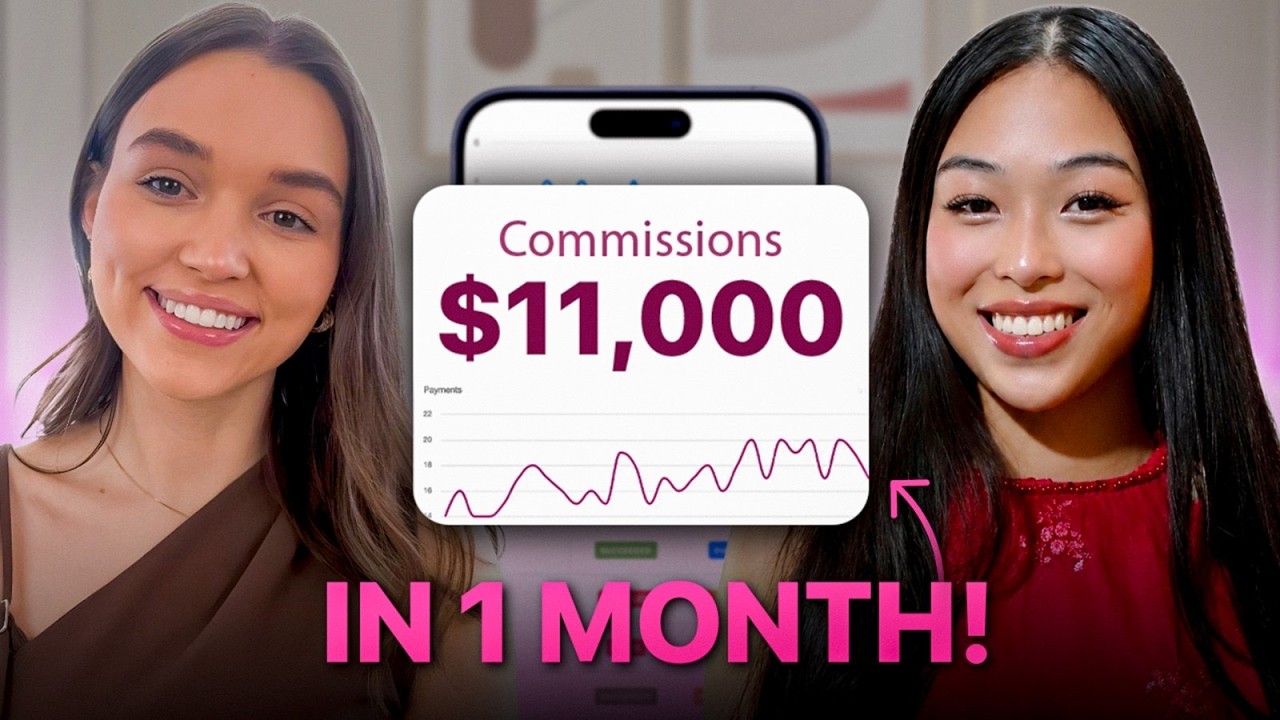
Hannah is an incredible inspiration. We've been working together for quite a few months now, and today sitting here, we are celebrating her biggest month to date, which is $10K in a single month. Hannah went from living overseas in Australia, working a 9 to 5, feeling very lost, honestly, not knowing what she wanted to do and really struggling with the direction she wanted to take, to now embarking on her remote sales journey with myself within the TFSA. Hannah has genuinely always showed up consistently. Like, something I've always noticed about you, Hannah, is you've always been consistent. You've always asked questions. You always put your hand up. You always have tried and gone that extra mile, which I think is an absolute testament to Hannah's success and why we're sitting here today. And And I know this case study is going to serve as a huge inspiration just to women all around, really. Like, it's not too late to try something. You're allowed to feel lost and pivot. You don't have to stick at one direction that you thought you were going to take your life in. Like, you're young, you've got time, you've got options. And I think it's a great, you know, representation to show that you can experiment, you can try something new because you never know. where it's going to take you. So let's dive straight in. Hannah, I would love for you to paint us a bit of a picture of what your life was like before we met and before you got into sales.
Absolutely. So right before I joined TFSA, I had just gotten back to Sweden from living in Australia for about 2 years, and originally, The plan was for me to stay there a bit longer. I had a potential job offer. Well, I had a job offer and a visa situation kind of lined up. Nothing really felt that aligned though, and I didn't truly feel excited or good about staying there. And so it was one of those tricky decisions. As far as what do I do next, I think, I don't think I've ever felt that much like kind of pressured into a corner, feeling like, oh well, if this isn't the path forward, then what do I actually do? So I went home to Sweden and I felt incredibly lost because I had just kind of let go of that idea of staying in Australia, which was the original plan, and basically starting over from scratch. I knew I didn't want to go back to corporate. I'd been in a bit more of a corporate setting Prior to moving to Australia, I'd been in corporate sales, B2B. I did not enjoy it whatsoever. I knew of high-ticket sales. Um, I had seen some high-ticket sales coaches online as well. I knew of the space, but I hadn't really made a deep dive into it because I didn't think it was going to be for me. And so before joining TFSA, it was really just starting over from scratch, still kind of I remember sitting down, looking over my goals and thinking about, well, what makes the most sense? I knew I wanted to move again. I knew I wanted to move abroad. And so what ended up kind of happening was that looking at where I was, it was more so a decision of what would make the most sense.
Mm-hmm.
If I'm going to do this completely solo and just try to figure everything out myself, or do I I find a vehicle that gets me closer at least to these goals that I have and kind of get over that hurdle of fear or whatever thoughts that you might have towards an opportunity or towards, like for me it was remote sales, not really thinking it was going to be aligned. So that was where I was at before joining.
And did you have any preconceptions of sales and the sales industry before getting into it yourself?
I mean a lot because I had been in sales, right? Very different setting in a very different, like, again, B2B. It was a bit more of that. It was a bit more like bro culture for sure. And it's also very different because it was cold leads, right? And so you're doing a lot of cold outreach. You're— it's like a full cycle thing and it's a very corporate environment. So I definitely had my thoughts and my own limiting beliefs towards it. And I think once you've had an experience that wasn't the most pleasant, or maybe you didn't feel confident about it at the time, you didn't feel like you were skilled enough, I think it's easy to kind of put yourself in that corner of fear. And then you operate from that place of like, this is my perception of it, and you don't kind of open up your mind to what other ways there is to do sales, to what other industries there are, and how different doing something like remote sales can be to doing what I was doing back then.
Totally. You almost like block yourself off in a corner, don't you? You're like, one bad experience, it's not for me. But it's super interesting that you were able to overcome that almost. How do you think you did? Like, what was— because I know a lot of women watching this right now will feel the same and that will be the reason they don't do it. So how did you change that mindset?
Well, I think a part of it is some level of just accountability towards, okay, am I painting this picture out of my own perception, out of my own, you know, lived experience? That's a very small part of like the bigger picture, right? And granted, have I done remote sales? I haven't. So how can I know for sure? And being honest with yourself in that aspect, I think, is pretty important. I think also at the end of the day, once you understand that everything is learnable, right? Because everything is really based on skill. The fear of needing everything to be perfect or to be perfect at something. I think that was something that held me back a lot. This obsession with perfection and feeling like sales was a game of how perfect can you be? How Like, can you have perfect conversations, perfect conversions, perfect deals closed? Letting go of that and starting to take imperfect action to get better at the skill and realizing that there's no such thing as being perfect at anything, let alone sales. So that helped a lot, definitely. And then of course, I think if you're going to invest into mentorship or do something as I did joining Tivsei, finding someone and something that also aligns with your beliefs and finding a path to your goals where you feel like you can confidently get behind it and feel also excited about that learning curve. For sure, I think it's an important part.
100%. And I guess that leads us to obviously you choosing to join a mentorship and invest in that education. Had you ever done anything like that before, before joining the TFSA?
I had, yeah, I definitely had. Not a lot of times, but I invested into a mentor. I think it was back in 2022. Okay. Very different, but I wasn't completely unfamiliar with it for sure.
And how did it feel embarking on that journey? Did you almost feel comfortable with doing it because you've done it before? Did you get any nerves? Because I know, again, a lot of women watching this thinking, that scares the life out of me. I can't do that.
So how did you feel? I think for me personally, the way I am, which is if I don't take action on something, it stresses me out more. It's just like a cycle of just perpetual stress. And so the only way for me to ease away from that is to do something, really. So for me, and I know this is going to be different, I think, for everybody, and their experiences might differ from mine, But the quickest way for me to decrease my stress is to move a little bit closer to something that I think is going to lead me long term to what I want. Investing into TFSA, like into the sales training, I knew for a fact that I had a better shot at getting good at this, making that decision than just staying slow and overthinking and overtrying and Um, trying to figure everything out myself again. So for me, that step felt like a relief, even though there was some nerves attached to it. I would say it was probably 5% nerves and 95% relief.
That's a great mindset. I've never heard it being— I never heard it spoken about like that. And I suppose I'm almost the same, but I've never heard it being worded in such a way. That makes sense. But yeah, that's, that's so true. And I bet a lot of women, if they really stopped and thought about it, they feel the same. But we almost just kind of label it as fear or whatnot, or like procrastination. But yeah, no, so true. I love that. And I know we spoke a little bit earlier about kind of different programs and kind of you looking into them. So you obviously looked into different options, you'd researched different options. So what do you think made you join us in the end over everyone else in the industry?
100%. So I think that in order for you to feel really confident about any decision, I do think that alignment is important. I think there is some— I think Natalie Dawson said it in a video I watched, like, to the extent that you're sold, you will also sell, right? And so The marketing approach, or the approach that I think a lot of these sales trainers take, is very much focused on like a certain lifestyle or a certain outcome, which is great. I do think that every girl should aspire to build their dream life. Now, that might look different for a lot of different people. I think for me personally, I didn't necessarily resonate with the lifestyle that they always presented. And I also didn't really resonate with the messaging always of like, you can just glide into this opportunity, smile, be nice, and you'll just make bank, right? Because also coming from somebody who had done sales prior to, and I've been working, well, different career paths, and I've been doing sales back in like 2021, and then also like working For, I think, that experience, like working for a founder and working as an assistant to a CEO, seeing what it actually looks like to be your own boss and like the amount of effort that goes into crafting your skill. Like, it's not an overnight process. There's no such thing as, oh, you just show up on these calls and you just start making so much money and all of a sudden you can buy this car and live in this city. It's possible, 100%, but I don't really like that approach. And I think because I've lived actually working, you know, through different, um, in different roles, I think just my view on it was different. So when I found you, I think I saw you on YouTube first, and I think one of the things that you very much acknowledged, um, in one of your videos was like, yes, I am traveling now, I'm making X amount, But that also looked like, first of all, months of isolation, months of training, months of a lot of unsexy work before it looked glamorous.
I understand.
So that aligned with me, and that also gave me a sense of security as far as like, okay, I know for a fact that this is somebody who is focused on the skill, and then understanding that the outcome that comes when you focus on that, on the skill and the effort going into it, then it's just a granted. It's like saying when you go into sales, if you just focus on really doing well and you stay consistent and you focus on the volume game as well, like, the money will come versus just chasing the numbers.
Yeah, no, 100%. What's something you felt you resisted at first on your sales journey but it ended up being exactly what you needed?
Something I resisted first on my sales journey. I think that I'm naturally a skeptic. I'm a skeptic optimist. It's like I'm naturally very skeptic, but I will absolutely bet on that 2% of my brain that says it could still work. I think that it served me well in many ways, but also leaning into— because you cannot play both defense and offense at the same time. And I do also argue that life And like sales as well is built on offense. Like you have to take a lot of action. You have to have a lot of that opportunity mindset. And so something I think I resisted in the beginning was still that very, not necessarily tactical mind, but more logical. And that can be a hurdle for yourself. You can sometimes block yourself out by staying in that mode. So It's good to vet properly, to have that ability to be slightly skeptic in life. I would argue, at least I still keep that with me, but being able to lean into opportunity and sometimes understand that it is to your long-term benefit to play on the offense and not just sit and ponder too much on if this makes perfect sense.
Yeah.
Okay.
I love that. And how, I guess, with this in mind, you're coming into the program and into your journey as a whole with that mindset, how would you describe, I guess, the support system, if you will, within the TFSA and how that's helped you grow and develop for someone who's never experienced it?
Absolutely amazing. I think the one thing that people heavily underestimate is how much you need community in absolutely everything you do. And even like right now, I'm traveling, I'm in the US, spontaneously kind of decided to stay in the US for a couple of months. And I'm able to do so because I've got such an amazing team and such an amazing community built. When you're starting something and when you're embarking on achieving, I think any goal, it doesn't necessarily have to be just sales, it can feel a bit daunting and lonely because you've built this huge thing up in your head and you feel very like, oh, I'm the only one doing this. And I think that can add a lot of unnecessary pressure in a way where you almost feel like you've built this perception that it's me against the world and I've got all this pressure and all these people watching and no one is really watching. No one really cares that much except yourself. But it's like this like, Yeah. Imaginated experience. When you come into a community, you quickly realize how small your goals are and that they're actually not that special in the best way possible. I don't say that in diminishing way. I mean, oh, there are a lot of other people that are striving for the exact same things, that have actually reached the same things that I wanted to reach. I am a couple of steps behind some of them, and I'm a couple of steps ahead of others. And so I'm in this amazing opportunity to provide value to others and support others on their growth journey, which I think is such an amazing and underrated way to grow yourself. And you're also able to walk in others, in other people's footsteps and see that it's actually not saying it's a piece of cake, but it's doable. And that's truly all you need. I think at least if it's doable, then there's no reason as to why you couldn't do it. And you only get that in community that is in alignment with the same goals that you are trying to build.
Yeah, because you are, as the famous quote always says you are the 5 people you surround yourself with. So you want to surround yourself with people who are— your goals look teensy tiny compared to their achievements, right? Because you're going to have to catch up. It's the only way your mindset starts thinking bigger and your goals, your habits change, your goals change.
Yeah.
For you, if your old self, you know, Hannah before sales, could see you now, what do you think she would say about the woman you've become?
I think he would be incredibly proud of, I think, especially the fact that taking imperfect action leads to far more confidence and far more ability to do things you could have never expected out of yourself than sitting and trying to perfectly plan, trying to be confident or be good at something before you've ever you know, delved into it and allowed yourself to fall flat on your face because that's part of the journey. It's an inevitable one as well to be a beginner, to be bad at something, and allowing yourself to be bad is also what allows you to eventually be great. I have a really phenomenal leader and manager in our team that he has this thing that he always tells us that you don't need to be great in order to get started, but you do need started— you do need to get started or to start in order to be great. And I think that is honestly the perfect way to put it, um, if you ask me.
Yeah, 100%. I love that. And financially then, like, compared to where you were when you first started to now, how has that— obviously I know you have bigger goals and you want to grow and expand, but How has the financial element impacted you, you know, mindset, the choices you make, how you feel, or the things you can do?
100%. So I think that, of course, like, first getting out of that scarce part. Like, me, before I started sales, like, I was hell-bent. I didn't want to go back to corporate, right? So I had to turn, you know, job opportunities down. I kind of pinched myself into the corner, um, being like, I'm going to make this work and there's not going to be another way. But of course, like, that is stressful financially when you're 100% commission reliant and you're not yet great, right? Um, one thing that is a huge confident boost when it comes to numbers, I think, again, is Once you've learned not just the skill of being able to sell or to do sales, but understanding the infrastructure that supports those numbers and how you can engineer yourself in your life to be able to make the kind of money that you want and go well beyond that, you get a completely different level of confidence and your relationship with money. Like, trust me, it changes so drastically.
Mm-hmm.
You can kind of attest to that as well, is Yes, like when you're starting out, you're kind of still in that fearful state. I know I was as well, um, beginning of like, oh, you know, you can have one good month, but can you sustain it? And you have this kind of relationship with, I think, especially sales, like, will this be predictable long-term? Can I continue to do this? But once you understand how it works and how you play a part in that ecosystem, it gives you a completely different level of Mm-hmm. confidence towards your ability to make money and your ability to retain that money as well?
I think once you've proven it to yourself that you can do it once, it's like a new level unlocked, isn't it? It's like, it's like a power, superpower.
I love that.
That you can apply anywhere. It's almost— I think that's why salespeople have such an ego or such an aura. Because I'm not in a negative— well, sometimes people do have it in a negative way. But what I mean by this is like, I know I have an ego more than I did when I was a nanny because it's like confidence that I've got myself. I can make money with the skill that no one can take away from you. What's your perspective on that? Like being a woman and having that level of autonomy around your finances and, you know.
It's just as you kind of said it, like you operate differently, you move differently, and I think you trust yourself. very differently once you've proven to yourself that you can do something. And I think, um, if you're somebody who's like never done sales before, or, or is your first, you know, time betting on yourself, it is rarely— I mean, I don't know, some people might just, they just have it from the get-go, right? That confidence level. Um, but I do think you feel almost small in a sense. You feel like your goals are so big in comparison to yourself and where you're at. But it's as you say, once you've proven to yourself that you can do it once, it's not only, oh, I can do this again, I can do this again and I can do it better and I can grow further from here and I can take on bigger goals and I can have a bigger vision that isn't necessarily birthed out of scarcity. And I think that changes your identity in the most impactful way and the most beautiful way as well. Because I do think a lot of the times we set goals, and there's nothing wrong with that, they come to a degree probably out of a scarce place, right? Because you need to make X amount of money, or you feel like, okay, well, I need to get to this level to just feel good because right now I don't. Once you get there, I argue that's really where you're able to build a vision that isn't coming from scarcity or lack or fear of not being able, whether it's to pay your bills or whether it's to be confident, like you're able to really build something unique and completely, completely just in alignment with where you want to take your identity and your journey.
And you saying that actually has made me realize we talk about being in your feminine and selling your feminine energy and building feminine lifestyle. There is nothing more feminine than a woman having money, because you're getting out of masculine, you're getting out of pressure and hustle and scarcity. And you get to, like you said, be creative, have flow, have more autonomy over your life, think about your passions, and have the means to pursue them. Have you found you've come to that point yet where you can enjoy life more, or? The little things, you know?
Absolutely. I think for any girl, well, I think for anyone, but like, granted, yes, women especially, I do think we need to feel safe and we need structure and we need to feel like we can rely on something that can sustain, you know, our life in a way where we feel again safe. So Being able to get past that part of like, I don't think anyone really gets to skip over that phase where you feel like there's not a lot of certainty and you might feel like finances are tight or you might feel like you don't know where the next check is going to come from. Yes, that allows you to kind of get out of that, like operating out of scarcity. And that I feel, at least for me, has done far more like internally being able to be more present, being able to see things with a completely different lens and to vet, you know, opportunity, my own strengths, my own weaknesses, kind of dive into myself a lot more in comparison to when you're operating out of constant stress, being like, what is my next move going to be like? What is— where's the next check going to come from? What makes the most sense? It's day and night.
Did you ever think sales would do this for you? Like, obviously you had that confidence, you had that conviction, But did you ever imagine it would come from the unsexy skill of sales?
Yeah, I could actually. Before going into TFSA, I think I sat down and I really had a think about it, an internal, you know, conversation with myself as well, where I knew it would take me a lot closer to where I wanted to go. And like, at the end of the day, sales isn't just about, can you sell X product to Y person? We do sales unconsciously all the time. Like, you, you, I would argue, start your sales journey unconsciously most of the time, you know, selling yourself, whether that is like even when you're applying for jobs. So even if you're somebody who's looking to get into a relationship, even if you're somebody who's coming with suggestions of where family vacation is going to go, you know, like we do unconscious sales all the time and understanding like the dynamic and and understanding, um, sales as a— I don't want to say art, sounds far too cheesy, but like understanding sales as something that's already so embedded in our day-to-day, and then understanding how you can incorporate, okay, how can I help people go from, you know, X outcome to this by either being in the info space like we are into selling digital products or programs or whatever it is. Um, Yeah, so I, I could have definitely seen that, and I was, I was always interested in leaning into sales. I just don't think I had the guts to pursue it because I had that previous experience where it didn't feel aligned, basically.
Yeah, 100%. What do you think you would tell someone then, Hannah, who is scared that they're not the type of woman for sales and that they are not masculine enough or pushy enough or loud enough To succeed like you have?
Well, I don't think you need to be none of those things. I don't think you need to be pushy. I don't think you need to be loud. I don't think you need to be convincing in that sense. I think that there are certain foundations. Do you enjoy helping? Are you naturally curious? I would actually argue that is far more important if you're looking to get started than being pushy or being convincing. And then, I mean, as far as being somebody who's completely brand new to it and looking to get into the sales space, I think you need to let go of certain ideas and beliefs that you might have, you know, gotten painted for you, whether that is through lived experience or by watching movies like Wolf of Wall Street and thinking it's gonna be like, you gotta show up and Dial those people and just be naturally very charismatic. Like, the most successful people that I've seen in this space aren't necessarily the most charismatic, the most hardcore people in sales at all. So I think truly, just if you're looking to get going, wipe your mind, forget the things that you think you know. And start learning from people who are actually doing it, um, in real time, not from movies or previous experiences or, or beliefs. Totally.
What's next for you? Like, what is your next goal? What do you want to achieve?
So it's a good question because there's, there is a few. Obviously, I'm— and I think we spoke about this when I was joining your community, actually. I obviously wanted to relocate again, which was one of the primary reasons as to why I was looking into doing remote sales, because I always knew I wanted to be living out of Sweden for majority of the time and creating something of my own. I think for me, Obviously continuing to double down and grow within my, within the offer that I'm on. And then right now also exploring certain other projects and avenues that we might be taking. I don't want to talk about it too much because we haven't really made it happen just yet, but we do have some really exciting things going that we've started out on. So I'm super excited for that. But I would say the primary next step as well, if we can Um, look, aside from sales and income, it would be relocating for sure.
And I think that's the beauty of sales. When you mention different projects, your mind kind of opens up to things that you never even knew. Like, I speak with some ladies and they're like, well, I don't want to do sales forever, or this or that. I'm like, just don't overthink it. Don't overthink it. You're going to be working an offer. You're going to learn how businesses run. You're going to meet people. super successful people that you'd never have met otherwise. And then doors just kind of open and it's pretty cool.
I think it is amazing. And it's just as you said, because you can only— I think it's easy, especially when you've never been in a space like, for example, info before. You can kind of get started, sit in your bedroom in wherever you're based, whether it's UK, Sweden, or whatever you're at, and you can see this, get a peek into this like big space. It looks really big from the outside, right, into it from social media. And you can see all these online businesses and these digital entrepreneurs and you think that sales, doing, doing closing or doing setting or whatever it is, is like the end-all be-all. But once you really like— I've spent now about a month in the US and I've been so incredibly blessed with being around great people within the info space, team members that are pursuing like such different paths apart from closing and setting. And you realize how much opportunity there is and you realize like how much abundance there is also in crafting, you know, your own path within that ecosystem. It's insane and it opens the doors to so much more. So that's also why I would argue it's so important to like Taking it back to that community stance, get into a community, get outside of your comfort zone, get outside of your— if you're based, you know, wherever you're based, of course, not everybody wants that. But I would argue, like, find ways. Outside the bubble. Yeah, find ways to travel and to connect with people within the space because there's so much opportunity. And I think that it's far more about timing than it is about people say, oh, success takes time. It does take time. granted, but I think it's also a lot about timing and making the right connections and building the right relationships.
Agree. I love that. I think this call has so many unique, valuable insights that we've never touched on before that I know so many women will really benefit from. I guess to summarize, for someone who's seen great success in such a short amount of time within the space, What would you say to the ladies watching this? Maybe the less confident version of you who's super nervous, never invested in training before, but really likes what we do or likes the idea of getting into sales. What would you say to her watching this right now?
You know, somebody watching this and you know that you want a different outcome, you can choose not to invest into yourself, you can choose not to join certain things, but Then ask yourself very honestly, is that desire going to go away? And if the answer is no, it's just better to get there faster. It's just better to get the ball rolling now than later. Because if you're not— if the desire is not going to go away, then you're just going to sit there and you're going to continue to think about it and ponder on it. And then you might as well have some results whilst overthinking. That would be my most honest, genuine advice. Or if I could—
Love that.
say anything, because that's kind of how I think— that's kind of how I approached it, at least for myself.
Yeah, amazing. Hannah, thank you so much. You've been absolutely incredible to work with. It's been an absolute pleasure, and thank you for joining me today. Like I said, I know this case study will resonate with a lot of women watching this. So yeah, thank you for your time.
Thank you so much, Shelley.
And if you are watching this, ladies, and you are interested about what we do within the TFSA, there'll be a link down below so you can book a call and we can have a chat about your high-ticket sales journey. I'll see you in the next one.
Bye!
More from Shelley





The Girls Buying The Bags Aren't Influencers - This Is What They Actually Do.