The 3 Ways You Can Make Money With High Ticket Sales
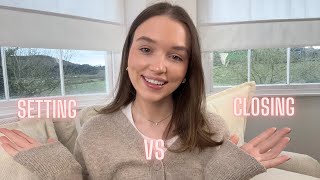
Shelley Young breaks down three high-ticket sales roles: setters, triagers, and closers. Setters book calls for $3k+ deals, triagers qualify leads, and closers seal them. Each role has different pay structures and dial targets, and you can move up from setter to closer as you improve.
Chapters
Welcome back. Or if you're new here, my name is Shelley. I am in high ticket sales. Over the past 12 months, I have taken my career from zero to six figures a year. And this channel is to basically tell you how I've done it and share my knowledge over the time. So let's get into it. In this video today, I really wanted to discuss the different types of roles within high ticket sales. What they are, what you have to do, how much you can make with hope that it will help you decide like which career path you want to embark on, if you are looking to get into high ticket sales or where you need to start at least. Anyway. So in my opinion, there are three different roles within high ticket sales. First of all, just to quickly explain, for anyone who didn't know, high ticket sales is when you're selling a product, you know, an online product, a physical product, a service that is of high ticket, which typically means over around 3k plus it can be 3k. And the upward limit is limitless essentially. So the first role within sales that most people start at, whether they just want to stay in that role or whether they want to work their way up, is setting. And setting is essentially where you are taking leads, either cold leads or semi warm leads, who have shown an interest in a product or service that your company selling, whether it's via an ad, filling out a form, sending a dm, whatever it is that interest has been showed, they've left their deep shown, they've left their details kind of on a form or somewhere. And your job is to see if that lead qualifies to then move them along the pipeline into the sales process. So for setting you can do this via DM or over the phone. Typically this is really great for someone who either wants to work their way up or just loves to stay behind the camera. So if you're someone who wants to work their way up and eventually you want to be a closer, you're going to learn fantastic communication skills. You're going to get a really good idea of the avatar of the people that you would be speaking to throughout your job. You're going to be building confidence and overall you're just going to be getting so many like repetitions and essentially so many reps in which is crucial for your success in sales. If you are doing over the phone, that's preferable if you do want to be a closer because you're learning how to speak, you know how to be, you know how to articulate yourself with these leads. If you're doing IT via dm, then things can be a little bit more laid back. Still a lot of work, don't get me wrong, but obviously you're texting over a phone or a computer. So you know, you don't have to be, you know, as communicative, as vocal, you know, in real life, essentially. So as I said, you don't actually have to use these roles to work your way up. You can just be a setter. I know many people who just want to be a setter and they earn fantastic money from being a setter. However, if you do want to be a closer, trust me when I say this is where you're going to start, you need to start. I don't want to say from the bottom because that's not fair on the setters that are just you setting because it's not the bottom, it's like an excellent job. But if you want to be a closer, that is like the first role, that is like the bottom role that you would take on before you kind of move up essentially when it comes to your job role itself, it's not easy, I'll tell you that. I hear a lot of people online who say, you know, if you're a setter, you can just answer a few DMS a day, do a few phone calls a day and you're good and you can make decent income. It's definitely not the case and it is definitely doing injustice to the setters that I know. In your role as a setter, you will be expected to pick up the phone and dial and that's usually a few hundred leads per day. I know setters currently that are doing 2, 300 dials per day to set leads. So that's phone calls per day. So bear that in mind. Same for DMs, you will have targets, you will have performance metrics that you have to hit and that's typically a few hundred DMS per day. So yes, you are still working like you would a normal hour job, but you do have the location freedom. You obviously will earn a decent income from that as well. So you can travel a lot and you don't have to be as I guess present in like a great location. As long as you have a WI FI connection, you can pretty much do your job, answer DMs on the go essentially. Well, typically from the setters that I've spoken to anyway. But it really does depend on your targets and the offer that you're working on. And then when it comes to like compensation, when it comes to pay, typically within the industry at the moment, setters would be earning anywhere between 3 to 5% commissions on all deals made. So let's say if your ticket price is a $5,000 deal, then you could be making around $250 on the higher end per deal. Some setting offers have base as well, which is because your commissions are not really in your power. Yes, you can do a lot of outbound and you can set a lot of leads and yes, it is on you to make sure you're setting high quality leads, but you aren't the one closing the deal. So it is, you earn less, you're kind of not bringing the deal across the line essentially. So some offers will do commission of like anywhere between like 1 to 3k base where you'll just get earned that monthly no matter what. And then you'll also get your percentage of deals on top as well. So it just depends, it depends on kind of what you like. I personally like to work commission only. It makes me more motivated. But equally I am on the closer commission so it is higher. So yeah, I would definitely speak with your offer only about that if you are kind of an interview to see kind of what that base would look like if you are entitled to one and then your commission structure as well. So I'd say on a monthly basis you could be earning really I'd say anywhere between like 3 to 7k on average per month. Of course there are exceptions to that rule, but that is what I would say is like a realistic earning potential. Obviously 7k depending on ticket price and depending on your performance. As you can probably tell by now if you've done research, this is a performance based job. You get paid on your outputs or your inputs that equal your outputs. So you want to work hard and you want to be motivated to dial. Pick up the phone, do the DMs, do what you got to do. Essentially the next role is triaging and this is the role that I personally started out doing when I joined the high ticket sales space. Now going back to what I said earlier, this triaging role can be linked to setting because it technically is, it's a bit of like a hybrid depending on the company you work for. Triaging from my experience is when you take 10 to 15 minute Zoom calls with a prospect, qualifying them for the closer or yourself. Triaging is like a fantastic, it's like the best of the best in setting in my opinion. To ensure that you are learning the skill set, building your confidence, learning how to communicate with leads. It's like a mini closing Call, essentially, in my opinion. So depending on the company you work for, you can either triage leads, like warm leads for the closer and you pass them on, or you triage them for yourself and then jump on a sales call. That is like the perfect thing to do in my opinion, because it builds your confidence. It the lead already knows who you are, they trust you more. It makes the sales process easier. Easier. And that is exactly what I did when I was transitioning into closing. I had the opportunity to triage and then close my own leads essentially. So yeah, it's all over zoom, it's cam, typically, it's camera facing and like I said, they're just mini closing calls essentially. With triaging, you don't really need to do any outbound. Typically they are all booked in your calendar. So this is when you are starting to move closer to the closing side than the setting side. Typically commissions are around 5% and usually there's not a base for this type of role. So let's say you were doing the 5K ticket mark. You're making around $250 per close. Let's say if you wanted eight calls in your calendar, half of them showed, so four showed up and maybe you passed two on. That would be your opportunity to make around $500 from your lease being passed on. In an ideal world, of course, I would say, and maybe this is for another video, there are a lot of metrics involved. Show rate, close rate. For these prospects to actually close, it's not just as simple as getting them on your calendar and then closing the deal. But obviously the more reps you do, the more calls you take triaging, the more reps you're going to book, the more money you're going to make, theoretically. So. So that is the goal. And yeah, like I said, it is the best role if you want to be a closer. I don't know many triages that just do triaging and then they just want to stick at triaging. It is the gateway to being a closer and like I said, I would highly recommend it. And if you ever need any tips on triaging, let me know. Last but certainly not least is closing. And this seems to be the role that everyone wants to do. I do think there is quite a lot of misinformation out there and I do think a lot of people start thinking they want to be a closer and then they quit pretty quickly. So hopefully I can give you just a very like raw and honest perspective of closing to help you make a decision of if it's something that you want to do essentially. So closing is essentially when you are jumping on calls, 30 to 45 minute calls, typically with warm, qualified inbound leads. These people have gone through the sales funnel, they've gone through the process, they are qualified, they have the money, they have the desire, they want to get started most of the time. If your setters have done a good job and it is your role to offer and sell your product or service now, don't be fooled. Just because these people are warm and they're qualified and they have the desire and they have the money, it does not mean they expect to buy. It does not mean that they are just going to hand you their credit card over and the deal is closed. There is work to go into this closing. You've got to be skilled, you've got to be dedicated, you've got to do a lot of repetition. You have really got to like hone your craft to be good at it, to close the deal. Now, another misconception is you're kind of like forcing people, you're conning people into buying a product. It's not the case. What you are helping people do is take that step to change their life, that maybe they don't have the support at home to do it. Maybe internally they're lacking self belief and it's your job to show them that with your product and service and with their mindset, you're the vehicle and they drive the car, that they can achieve their goals, whatever it is, business goals, personal goals, relationship goals, health goals, no matter what it is, with your support, they can do it. Remember, if you're skeptical about this, they came to you. These people want you. They want your service, they want your product. Most of the time people just feel a bit scared. As you would. As I would when I bought my first training. Handing over a few thousand dollars on a zoom call is scary. That's a natural reaction. However, it is your job as the sales rep, as the closer to guide the prospect to their desired result. You can equally tell people that they're not the right fit. I've done that so many times where you are on a call and you just genuinely feel that this product cannot help them. So yeah, I know sales reps get like a bad name for forcing people to like buy and spend their money. And it's not like that, it shouldn't be like that. You're just helping people help themselves essentially. For this role, typically you make a 10% commission. So of course $5,000 ticket, $500 is what you'd be making. Obviously that stacks up and that accumulates the more calls you take. Now if you can imagine if you're taking eight calls, if you have eight calls booked in your calendar a day, you have a 50% show rate which is definitely on the low side. That would be four calls taken. Let's say you could have a 50% close rate. It's not very industry average. Let's say if you have like a 25% close rate, then you've closed one deal, $500 per day. If you do that over five days, you do the math and that is how the reps accumulate. Obviously the better you get, you can have a higher closing percentage, the more money you make equally. Offer is like so, so important for this type of role because you could be closing a 3k offer or you could be closing a 10k offer, the same reps, the same amount of work for $300 or a thousand dollars. But those higher ticket offers are hard to find. You know, they don't just accept anyone. You can't just be a complete beginner and think, I want to find a 10k offer 9 times out of 10. It doesn't work like that. If it has for you, you're super lucky. What you want to do, in my opinion is build your work ethic on the harder offers, the ones that are harder to sell, the ones with the lower ticket price. Really spend maybe six months of your career just honing your craft, becoming good, increasing your closing percentage, climbing to the top of the leaderboard, being a top performer, which is exactly what I did. I worked my way from the bottom with no experience, all the way to closing at 50, 60%, being the top of the leaderboard, earning the most amount of commissions in that company, until I was then noticed by another company with a higher ticket price and I could transition over. And that is what I would recommend to everyone. You don't want to rush this process. I know it can sound, you know, like a no brainer to want to rush it. Because if you rush it, you can theoretically make more money. But in reality you won't because you won't perform. You'll get let go of this industry's cutthroat. You have to perform and then you're kind of stuck at ground zero. So that would be my personal advice for this role itself. It's fantastic, but it's not for the faint hearted. You do really have to perform for all of the roles. To be honest. Within high ticket sales, you have metrics, you have minimum KPI targets, minimum Cash collector targets. And if you don't perform, you're not on the team anymore. So enter with caution. I would say only do this role if you're competitive, if you like having that type of pressure on your shoulders, if you perform well under pressure, I'd say is the key one as well. With closing, I'd say it's the role that gives you remote freedom. You can take closing calls from anywhere in the world. However, unlike setting, there are more, I guess, rules around that. You need to have a good location, you need to have a super strong WI fi connection to take zoom calls. And of course you have calls in your calendar at scheduled times. So you can't just kind of be out and about doing DMs, you have to be there at your desk, at your laptop. So it's still fantastic. It's just you're still working like a normal, let's say nine to job hours. Just, you can just work from anywhere. So if that's something that you're open to, it is a fantastic, fantastic opportunity to do that, to earn a lot of money at a young age without having to invest in a business or have loads of capital at stake. In reality, you just invest in one good mentor, they'll teach you everything you need to know and then you're good from there. I mean, my return on investment from my mentor to now is crazy. So yeah, I would say it's a very low barrier to entry. But the reason it's kind of only some succeed and some never will is because you got to have the mindset and the mindset can't be bought. You know, that is who you are. If you're disciplined, if you're competitive, if you're a hard worker, if you're going to do the extra rep, that is the type of person who will make the 20, 30, 40k plus months in this industry. I hope this has been helpful. I hope this has given you just like a really broad idea of the different types of roles within the space. So can you. So you can think about what it is that you actually want to do. Closing might not be for you. You may now discover that you want to do DM setting or phone setting and that just makes more sense for you. But as always, if you need any help, any questions, any support, I am on Instagram, just send me a DM and I'm more than happy to help. Bye guys.
More from Shelley





The Girls Buying The Bags Aren't Influencers - This Is What They Actually Do.