The Exact Sales Process That Helped Me Close $4M
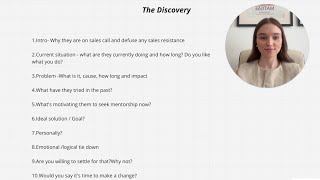
Shelley Young walks through a 10-part discovery framework she used to close $4M in B2C sales. The sequence moves from intro through pain identification, past attempts, and motivation to consequence-of-inaction questions that shift prospects into a buyer mindset. Tone and emotional probing matter as much as the questions themselves.
Chapters
Hi guys, welcome back to my channel. If you're new here. Hi, my name is Shelley. In this video today I'm going to do things a little bit different and I'm going to do a training on the exact formula, the exact process that I used as a closer to help me generate over $3 million in sales in less than a year and a half. I want to keep this call quite short and concise. The best I can for you to actually be able to action what I'm discussing today for you to implement in your sales calls. And of course, if you are a setter, you can absolutely implement this into setting calls as well. Setting calls are just mini closing calls. So you'd want to edit the questions, maybe make them shorter or skip a few and add some others to actually help you with your process. But anyway, let's get into it. So first for the discovery, I've kind of broken this up into a 10 part process with 10 of the main questions that I would ask in the specific order. It's very important to understand that you need to know what you're saying and why you're saying it. These questions in a completely different order will not have the same desired result as if they were said in this order. So that would be my first piece of advice. When I do trainings with my girls, we talk a lot about kind of the roller coaster of emotions that you can take a prospect on and you really want to keep that to a minimum. You don't want them up, down, up, down, up, down, up, down. Because one, it's going to be quite unsettling. It's not going to be a nice experience and often not. It will read disturb kind of that buying mindset, that buying process that obviously you want your prospect to be in. So the first question or the first kind of part of this process that you want to do at the very beginning part of the call is you want to have the intro and you want to know why they are on the sales call and diffuse any sales resistance. Now bear with me guys, my typing is a bit slow. I'm not, I'm not an expert with this, but yeah. So introduction, introduce yourself, find out why they are on the sales call and diffuse any sales resistance. So for your introduction you'd obviously say something along the lines of, hi, I'm Shelley, nice to meet you. Where are you calling from? Keep it professional, keep it friendly and keep it simple from there, you want to set the tone of the cool. I can't stress enough how important it is to Set the tone of the call. So with that being said, you want to say something along the lines. And this is just what I would say personally, it's completely up to you, kind of how you want to do it. But I would say something along the lines of, okay, so the first part of this call is really just to find out a little bit more about yourself, Yourself, your background and kind of what you've done in the past in regards to X, what you're doing now and then really, I guess just to understand, like, what it is that you're exactly looking for. Just to see if we can help in the first place. If we can, then I can walk you through that today and of course, answer any questions you have as we go. And if we can't, just let you know because, well, there are some potential clients that we can't always really help. You know what I mean by that? Right? The purpose of that intro is to set the frame of the call so the prospect knows exactly what to expect. They're not stepping into the unknown because they're probably going to be a little bit nervous about being on the call in the first place. Like, that's totally normal. Like, remember, you do zoom calls all, all the time. But this prospect, it's probably like their first ever zoom or sales call. So you want to set the frames. They're not worried about where the call will go. They already know. You want to let them know there's going to be enough time to ask questions because there are a lot of prospects who will go, I've got, I just want you to answer my questions. I don't, I don't want to go through all this. I just want to know what you do and how much so you have taken authority to tell them. I will get to that. If you are the right fit, psychology proves that that will just allow the prospect to be in the state of mind that, okay, I have something to prove, I want this. Like, I need to show them that I want this, which is exactly what we want. And then last but not least is giving them a way out. And by doing this, you're saying, if you're not the right fit, I'm just going to let you know, this isn't a tactic, this is genuine. The amount of people I have told are not the right fit because they're genuinely not. Like, you don't want to sell to someone when they genuinely don't need the product. It's just not the right time. So you are telling them, like, genuinely, if it's not the right fit. That's fine. Like it's completely okay. I'll just let you know. And the amount of people I've had actually thank me for this and say thank you, I really appreciate that is countless. So that would be personally the type of intro I would use and diffuse any sales resistance. And then the last part to this is to find out why they are on the sales call. So after you've done your intro, you could do something along the lines of so help me understand, like I'm curious, what was it that attracted your attention to reach out to XYZ to explore xyz. So just get that beginning intro from them. Like why are they here? Let them do the talking, you do the listening. That's super important to know. Hope that makes sense. Next question or next kind of part of the framework you want to know is their current situation. So with that in mind, you want to know what are they currently doing and how long? So what are you doing for work? And that would be your first question. How long have you been doing it? That's important to start to get to know them. Question number three or the third part of the framework you want to know is the problem. So why are they actually here? So what is the problem? So what is it? You want to know what's causing it? So let's just put cause how long and impact. Okay, so what's the problem? So I'm curious. The way I would do this is so what do you do for work? What do you do for a living? Oh, I'm a nurse. Okay, nice. How long have you doing that? You could even ask the question, do you like what you do? This will really start allowing them to open up and then we want to go to the problem. So a perfect question that I answer, which I actually would usually put a step four, but you can link this actually to step three is I'm curious, if you like what you do and you've done it for five years, what's motivating you to look outside of that and pursue a career in X? Now, bearing in mind if I haven't made this clear, this discovery is for a business opportunity B to C. So I probably didn't say that at the beginning, but essentially this is to sell to business, to consumer business, to customer, business opportunity. So typically these people are looking to go from their career to a business. So this question would be perfect, is what's making you look outside of that to pursue a career in X. From there they're going to tie the problem you want to have two problems, two pain points, in my opinion. That's what I always tell my girls in my training program. You need two pain points, whether it's money, family time, whatever it is. You need to know what they are, how long have they been going on, what's causing that, and if that's having any impact. That's super important to know because from there you can really understand why they are here to buy without the problem, without the pain, they are not going to buy. That is super important to know. None of us will will buy without the problem and without the pain. That's why I'm in sales, because I bought a program because I had pain that I wasn't living the life that I wanted to and I wasn't making enough income. That would be one. The second one was I really wanted to be able to give back to my family. I couldn't do that because it linked to income, lack of income for lifestyle and lack of income for family. They were my two pain points that I was closed on. So you want to know what their two pain points are as well. Number four is what have they tried in the past? So for example, you could say something along the lines of, so before you met me, what were you kind of doing? Were you out there looking for different ways to achieve more income or what have you been doing about that current situation to actually achieve more income? That's just kind of a, a way you could ask that question just on the spot. You want to know if they have tried, like if they have tried anything in the past, if they have invested in mentorship in the past. From there you want to understand what motivating them to seek mentorship now. So from the question number four, it's going to lead on to question number five. What's now motivating them to seek mentorship? What's driving you to kind of look outside of what you've done in the past and actually invest in your education to help you achieve xyz. From there, we want to know the ideal solution, slash goal. Okay, so where they want to be. So we've talked about where they are now. We've talked about the problem, we've talked about what's causing it. We've talked about why are they here? Like, why are they wanting to invest in education? So we're starting to really build a framework and if you can see here, we're starting to go down, down, down, down, like a roller coaster. Down, down, down to understand now. We want to bring them back up now we actually want to talk about the tangibles, the exciting stuff that's making them really want to take this step. It's really making them really want to make that change. So with that in mind, you would say something along the lines of, and I'm curious to know, like, what's the goal for you? Let's say income, what's the goal for you income wise? Like what are you hoping to achieve? Or if they haven't mentioned income, I'm curious. So like what's the goal for you? Like what, you know, this main driving force, what are you hoping to achieve from, you know, investing in X and doing, setting up your XYZ business? Talk about that, sit in that for a moment, allow them to feel the happiness and the pleasure from getting the goal and thinking about what that would do for them. And then you could say something along the lines of what that, what will that do for you personally? Like if you're able to achieve X, you can even start going down that path of really building them up and understanding like what, what that would actually do for them personally. Like how does that, how would that make them feel? From there you want to flip the switch and you want to understand and make them look straight ahead to understand if nothing changes. So first of all, before we do that, you want to say something along the lines of if we were able to give you xyz, so within the mentorship, if we were able to give you support, guidance, one on one mentorship, everything you would need to achieve the goal, whatever it is, what would that mean for you personally? So I will add that down as a point because that is kind of a separate question. With the goal, then we want to help them look in the mirror to understand, okay, what is the gap here? If they do nothing about this, what is going to happen? It's super important to talk about. So that would be something along the lines of emotional, logical. Tie down. Okay, so with that being said, I don't know why that's happening. We got there at the end guys. So emotional, logical tie downs, this is building the gap so you could talk about what it does for them personally. So their goal, what it does for them personally. And then you want to say something along the lines of, okay, so I guess that's the top of the mountain, right? 5k a month, more income to be able to spend time with your family and, and travel and take more trips and to be able to buy that car that you said you wanted. But I guess that's like the top of the mountain. So if we kind of take a step back and look at the other side of the coin, which really is where you are right now. You're in your nursing job, you know, you're making 2k per month, you're working 40 hours, probably you feel burnt out. Like if you were to just stay where you are right now, nothing changes for the next one, two, three years, just exactly where you are, what would that look like for you personally? So we've gone from best case scenario, worst case scenario, where they are now. Because at the end of the day, guys, we all know if nothing changes, nothing changes. And we know what happens if we stay the same, but we don't know what happens if we just take that bet on ourselves and try. And that's what you really want to make them understand here. And nine times out of 10, people don't have these conversations with themselves. People don't really reflect on where they are now to where they want to be. The complete life changing difference. Like if I looked back to where I was before I was working as a nanny, I was making less than 2k pounds per month, to skipping ahead one year, making 30k per month, complete time freedom, location freedom, that is incredibly life changing. So that's because I took a step, invested in myself, learned a skill to become a closer. So with that in mind, you really want to make them realize like, this is where you want to be, this is where you are now. But if you let the nerves, et cetera, get in the way, which inevitably, inevitably there will be, this is what you get. And that really hits home for a lot of people. And they're very grateful you've kind of asked that question because typically they'll be like, well, that would be horrible. Like I would hate that. I wouldn't want that. And you really make them realize that they don't want to be in that situation. They don't want to keep on going on that hamster wheel. They want change. And that's where you can confront them and say, are you willing to settle for that? The answer is no. Why not really probe. Don't be scared to challenge. We're all humans, we need to be challenged at times to be able to really make change. Because this is never going to be an easy change. Yes, you're going to get people who come on the call who are just ready to buy because they've already made up their mind. That's the 5%. Then the other 5%, we're never going to buy in the first place. But the 90% are the people who are half in, half out and it's your job as a closer to help them take that step and actually make a change. And your final question is really tying down on that. Well, what happens if they don't change? Slash would you say it's time to make a change. And that is the process. Now this is the bare bones of my process. There's a lot of EQ probing questions, comforting reframes that go into this whole cycle, right, this whole discovery. But I really wanted to go through today like the absolute bare bones of my process because I appreciate there's a lot of information out there. It can be quite daunting to know kind of the process. For me, this process has served me so well in biz op B2C. I have also sold career coaching, which is an entirely different discovery. So this isn't going to work for every single offer out there and I don't want you to think it would because it won't. Every offer you sell slightly different, but if you are on an offer as a setter or a closer and you are selling a business opportunity, Ecom, fba, Airbnb for examples, then this type of framework is going to allow you to kindly but firmly lead the prospect to their desired state, to their desired pit position and put them in a buyer's mindset. From here you would take them to the pitch and then the price drop, which I can do in another training if you would like. But for now guys, that is it from me. I'd love to know in the comments what you have implemented from this and if you found that it's worked for you or if you have any other questions off the back of this of how I probe deeper of how I use my feminine energy and my EQ to actually connect with the prospects to close more deals. I'm more than happy to create another training on that or answer your questions in the comments below. But yeah, as always it was great speaking with you and well speaking to you and if you are a woman looking to get into sales or you're already in sales and you're looking to kind of level up closing, setting to closure or just increase your income in general, I'll have a link in the description. You can book a call with myself directly and we can chat to see if my mentorship is a fit. Bye guys.
More from Shelley






The Girls Buying The Bags Aren't Influencers - This Is What They Actually Do.