How being "real" makes you magnetic af...
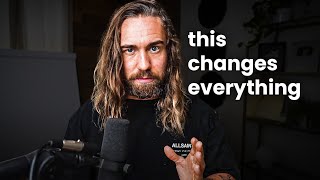
In this motivational monologue, Aaron Doughty explains that true freedom comes from being willing to be disliked, because authenticity creates a magnetic pull for those who resonate and repels those who don’t. He draws on Alfred Adler’s psychology—particularly the “separation of tasks”—to illustrate that each person is responsible only for their own feelings, choices, and self‑validation, while other people’s reactions are not our job. Doughty describes how seeking external approval is a substitute for love that stems from childhood unmet needs, and how this habit forces us to carry other people’s emotional burdens. He shares personal stories of growing up with a controlling step‑mom, learning to own his “shadow” side, and confronting rejection in sales and on YouTube. By embracing his intense, “weird” aspects and refusing to internalize praise or criticism, he experiences greater respect, freedom, and a stronger personal frame. The talk concludes with an invitation to join his free “High Vibe 101” community for further practice in maintaining a high‑vibration, self‑authentic reality.
Chapters
Freedom is the ability to be disliked. When you are free to be you, not attached to what other people think and feel about you, you end up becoming more expressive, more free, and more magnetic because you're being the real you. You could even take this a step further from saying that freedom is the ability to be disliked to freedom is actually being disliked. Because the truth is, when you're being the real aspect of you that is not attached to what other people think, you will repel people who will not actually resonate with the real you anyways. And when you give yourself permission to express even the weird aspects of yourself that maybe you're afraid to share, what you'll find is that that actually makes you more magnetic, even though it may polarize people even more to you. Because when you think of that of a magnet, think of it, a magnet, the more strong it is, it will pull to it what really resonates with it but what it repels, it will have an even greater force against what it naturally does not resonate with. So being magnetic is really a response to you being free within yourself to be you. Now, this was one of the most powerful insights I have learned over the last year, which comes from that of a book called The Courage of Being Disliked, which is all about a certain type psychology that is called Alfred Adlerian psychology, from a man named Alfred Adler, who is considered one of the grandfathers of psychology, along there with Carl Jung and Freud. He's considered one of the three, kind of like the Three Amigos. But one of the things that shifted my life more than anything else was understanding this idea of what is tasks and what is called the separation of tasks. And this so beautifully fits into everything else that I teach when it comes to self versus other and individuation. Because what happens is many of us, we have certain tasks within our energetic field. We all have certain tasks of what we, in a way, is our responsibility. You could think of the tasks that you have of you choosing who you are and how you relate to others, that's your task. How you feel about yourself is your task. Now everyone has their own tasks, which is their responsibility. So other people and how they feel about you, that is not your task to manage. Other people's energy and maybe their, their challenges or their problems, that is not your task or your responsibility to manage. But what happens is if somebody else feels tension when you set a boundary with them, you may think, oh, that's my, this is my thing to deal with. It is my responsibility to help my friend feel better. Then you will take on their task, therefore take on their burden. And one of the things within Alfred Adlerian psychology that's so powerful is understanding what is called recognition. The recognition that we have where if we crave recognition from someone else, we are asking for them to meet our needs, but we're also asking for them to accomplish our task because it's our task, it's our job to approve and validate ourself. And when we abandon ourself for other people because we give them the incredible burden Think about that. It's an incredible burden you may give someone else to meet your needs. That's really what we do, by the way, when it comes to wanting validation and approval from other people. It's like we go around with a little report card and we're looking for someone to put a little gold smiley face on our card and we're saying, "Approval and validation. Will you give me approval and validation?" I want you to like me. So we go around and we say, will you stamp my card? Will you like my card? Will you stamp my card? Will you stamp my card? And then they stamp your card and you go, okay, now I can feel really good about myself. And what we do is we end up giving someone else the power to stamp our card. We give someone else the power and we're giving away our own power and projecting onto them a huge burden. The burden is, can you meet my needs? Can you please validate me? Can you approve of me? And who do I need to be in order to get that approval and validation? So really what this is, is this is a game of asking ourselves from childhood, am I safe? That's still on autopilot. As a kid, we may have said, "I want validation and approval," which by the way, validation and approval is the ugly cousin substitute to love. If we didn't feel that love, seen, heard, soothed, or nurtured growing up, guess what we do? We compensate for the ugly cousin. And we say, "Okay, I'll settle for you, love and approval. Who do I need to be?" to receive love and approval. And then the freedom goes away. We are not actually free anymore. We are tied to every single person we meet into our life and constantly asking ourselves the question, am I safe? Who do I need to be to receive that love and approval? Who do I need to be to get them to stamp my little card? Because I wanna be, and a lot of times people, that have this, have a pattern of maybe not expressing and polarizing other people by being them true selves, they also sometimes have an identity of being the good child, the quiet child, the good child who does what they're told, the child who's nice and pleases, but they always end up pleasing and being nice at the expense of themselves. And they always end up being nice and pleasing everyone else at the expense of freedom and of authenticity. So being free is about also understand what are you really avoiding by abandoning yourself to make other people happy, to get this ugly cousin substitute of approval and validation? What are you really afraid of? What are you afraid people will think and feel about you? I can tell from my own childhood that what I had to learn how to do is to step more into being, like, I'm a very intense person naturally. I am very focused on what I do. I have an intense personality. Even when you're scrolling on Instagram and you may see one of my videos, it's like kind of intense sometimes. But there was a part of me that I realized that I would avoid, I would feel shame for being that intense because growing up when I had the ex-stepmom that was very controlling and manipulative, but she was also, she had a lot of, I guess you could say it was power even though it was toxic, but she was, there was such anger there that I could tell that I would avoid feeling the anger or expressing the anger or even expressing the darker side of myself, owning the shadow, because I didn't want to be associated with her. I did not want to turn into her because her meant bad growing up. Her meant manipulative. I don't ever wanna be that way. Now, at the same time, at the expense of that, there was a desire to be the good person. I wanna be good or to be nice. But eventually I realized that that was inauthentic because nice is with an attachment. Nice is I'll be nice to you if you give me a validation and approval or if you give me less tension. And what I learned to do is to lean into the shadowy side of myself and to own my shadow, to own my dark side, where I'll go out to the gym and I'll get into fights very often. I'm just kidding. But I will express the real me. And what I will do is know that there will be polar— there's not that fear of being considered someone Being attached to what someone else thinks, whether it is like this person may not perceive me as being nice, which is actually not a bad thing. I think it's offensive if someone says, "Oh, they're very nice. Oh yeah, you know, that guy, that person, that girl, she's nice." Who wants to hear that? "Oh, you know, they're just nice." It's like nails on a chalkboard. You don't wanna be nice, you wanna be authentic. And the more authentic you are, the more you will polarize people. The more you will get into fights at the gym. I'm just kidding. You're not gonna fight at the gym. I'm just saying, the more you are, the true freedom is really about understanding that it's not your job to get other people's approval and validation. It's not your job to fix other people. It's you take on other people's tasks. That's where all interrelationship problem comes from according to the Alfred Aldarian, Adlerian psychology. It comes from having that of intermixing with other people's tasks, taking on other people's tasks or burdening your tasks on other people. But really what you're afraid of is the shame, is an emotion that says there's something wrong with me. And we're afraid to share, be vulnerable because we're afraid that people will see if I'm the real me, that there is something wrong with me. But what they end up exchanging for that is respect. Because when you start being the real you, even if everyone doesn't like it, people will respect you more. I remember when I started to embrace this side of myself, this darker aspect of myself, but also not even just darker, but just more expressive and more in my own frame of reality. There are people, there are some things I had to set boundaries with certain people where the energy dynamic was outta whack. And when I did that, there was a fear, oh, they're gonna think I'm a bad person. They're gonna not like it. There's gonna be tension. But then I realized that their tension is not my tension. Not that I'm trying to be some like overbearing dictator, but I'm expressing the real me. But you know what was funny is what resulted from that is there was way more respect. Like, I respect this person for saying standing up and expressing how they feel. So there's respect that comes when you start to be free, when you start to express that aspect of yourself, but also understand that there's an acceptance that comes from, what if it were, like, I'm not saying it's a good thing to be disliked in the sense that like you become some narcissist that's gaslighting people to like take energy from them. That's also like the separation of task thing. But what I'm saying is, what if being disliked was an indication of you being the real you? So instead of being disliked as this thing you avoid at all costs, what if you embraced being disliked and you were okay with receiving even rejection? 'Cause that rejection is something we avoid. Why do we avoid rejection? Because of what things mean from it and the emotions we would feel. But if you were to watch someone, I used to always admire kind of these people when I used to work selling women's shoes back in the day. There were these people that worked at these cosmetic stores where they were, they would like bait people into the store. They knew, it was probably somewhat manipulative honestly, because they would bait like old people in that then they would like sell them $2,000 to $5,000 worth of creams and, It was like they were just, they would greet hundreds of people a day and try to give people samples. And then they'd get some old lady in and then they would sell them like, you know, $2,000 to $5,000 worth of creams. But one thing that I would notice about that is they would get rejected like hundreds of times a day. You imagine the first day doing that? They rejected me. Does it have anything to do with me? And then after like hundreds of times of getting rejected, there's probably no internalization of that. You know what, it has nothing to do with you. But I always admired the ability to like hold that frame and to like not be affected, not internalize it. But understand when it comes to being the real you, you may be afraid that something else, someone else thinks about you, it means something about, there's an afraid, avoiding of a certain emotion inside of you. And if you can allow yourself to feel okay and accept whatever emotion comes, you may realize that it begins to dissipate in your body, but then you may realize that you get to be the one to generate the source from within. I remember so many times on YouTube, I'd be afraid to share a certain esoteric concept but then I would share it. And it was interesting because a lot of times the sharing and having the vulnerability, those videos would do really well. People would really resonate with it. It's almost like that fear is an indication that you're about to grow, that you're about to expand yourself. But I literally believe that like since I've been on YouTube, the more people I am able to impact on YouTube, it comes with both more people that like what I do and also some people that don't like what I do. And imagine if I was trying to avoid and trying to tiptoe around these people that didn't like me, I would not be free. I'd be chained to what they think. I'd be giving them the power to tell me who I am. I've had to accept that the bigger I become, the more people will like what I do, but also not like what I do. So what I do is I don't associate to either the good from either one. If I meet people in public that recognize me from my videos, I'm not like— someone's like, hey Aaron, I love your videos. I'm not like, yes, I am the spiritual YouTuber Aaron Doughty. You like my videos. This is quite awesome because I am so amazing. I don't identify with that, and I don't get anything from that where I'm like, yes, Phil. There are people that like just really get high on people recognizing them and seeing them, and I've never been I thought I was when I was first getting on YouTube, like it'd be so cool to be recognized in public. I'd feel so special and significant and unique. What I realized is just, it's a cool reflection, but I don't, when I see a good comment on YouTube, I think it's cool, but I'm not like, I'm finally worthy and whole and complete 'cause I helped someone. But at the same time, because I don't attach to the positive, I also don't so much attach to the negative. So I see a negative comment and I know, It has very low, normally it has very little to do with me in the sense that I may be reflecting something back to someone and they may get triggered 'cause of the something I represent because I have long hair, whatever it is, the stereotypes has nothing, I don't internalize it. Only people that leave negative comments are people that have negative emotion inside that they're projecting on other people. Now, at the same time with the positive comments, I know that the people that have really positive effects in their life from watching my videos, It also has very little to do with me in the sense that the people that are making the changes in their life are the ones with the power. I may be a reflection. So I don't associate too much with the likes or the dislikes. Therefore, I'm more neutral and free. Now, in the same way in life, if somebody likes you, if you're dating someone and they're into you, you'd be, look, I'm finally worthy, whole, and complete. You'll be really attached. And then as soon as they take it away, they take away your power. On the other side of that, someone may say, there's a few people in my life, just a few because I'm so likable. I'm just kidding. But there are some people in my life where for a while, I would find out that like someone didn't like me. I remember one time I went to a Tony Robbins conference and there was a guy there that I recognized from YouTube and he knew who I was and I knew who he was. And 'cause when he met me, he called me Aaron and stuff when I saw him. And I could just tell he just did not like me. Maybe he didn't like what I represent. Maybe there's something about him didn't like me. And for like a day or two, I was so confused. I'm like, we both do YouTube, we do something similar. And I could just tell 'cause we were talking and he kind of like immediately, I could just tell. But there was a part of me that was like almost couldn't accept it. I was like, why wouldn't he like me? We do the same thing. I have such, does he not know I have good intentions and I wanna help people? I couldn't figure it out. But then it was a great lesson for me though, because what I realized is why do I, why would I put the burden on this person that they have to even like me? And what I eventually ended up doing is saying to myself, like, it doesn't matter either way whether he likes me or not because I like me. And it was a freedom. I was like, I don't, maybe if, maybe I don't even, what if I question the thought of I want this person to like me? What if I questioned that and I just didn't care? Not that I didn't care like from a moment of apathy, but what if them not liking me is a good thing? Think about that. What if I could accept that and be like, yeah, I am myself and not everyone's gonna like me and it's okay. And it's interesting because that energy, that reframe has been very powerful because it's like, it's okay if people don't like me. I'm not gonna project onto them some big burden that you have to like me and understand who I am. And yes, maybe some of the videos I put out in the past have a certain vibe of like, you know, like a certain energy. Like you start contemplating like, why wouldn't this person like me? Maybe some of the videos I put out in the past that they saw that they know me from, maybe they thought they were like cringy titles, but then the videos, of course, they're authentic. Like there'd be this whole thing where you do like mental gymnastics But what ultimately the reflection is, is that who cares? You're more free if you're okay with people not liking you, not even not liking you, but actually disliking you. And I felt so much freedom with that that I'm like, oh, I don't need this person's approval or validation. I like myself. And if they don't like me, okay, it's not my task to manage. So understand that for this process, it's about really understanding your relationship with you. What do you feel about you? What do you think about you? That is what your task is. Your task is not to convert other people into liking you or validating you, and don't project your energy onto them, and actually embrace being disliked and knowing that you're more free if you can actually let yourself be disliked. Now, the challenge is that a lot of us may have blocks around this because of the inner child patterns from the past where we tune ourselves to others and we make it our responsibility to ease tension. Tension is not bad. Dislike is like tension. It's not bad. And if you can sit and have the courage, the courage to sit in that energy, that will build a strong frame. It's just that you may think it's your job to manage other people's emotions and energies. Now, something I do have is a completely free course called High Vibe 101 in my completely free community called the High Vibe Tribe that will show you step by step how to elevate your vibration to be in your own frame of reality, to feel more confident, whole, and complete. If you want that, you can go ahead and click the link below. You can join that group. Calls in there, we do breathwork occasionally, there's live events in there, it's awesome. And if you want to learn more about how to be in your own frame of reality, one of my most popular videos is a video clip from a live event that I did on being in your own frame. So go ahead next and watch this video and see the energetic shift that happens inside of you. So watch this video right here. So empaths, people that can feel other people's energy, this is both a superpower
More from Aaron

If you can see this, you're about to become so magnetic you are unrecognizable









