How to detach so easily love chases you
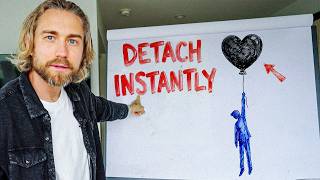
In this solo coaching video Aaron Doughty explains that attachment creates resistance, which blocks the manifestation of desires. He argues that true freedom comes from deep surrender – being "good either way" – and that letting go of outcomes allows the universe to bring what is wanted. Doughty breaks down the psychology of anxious and avoidant attachment styles, showing how they stem from childhood scarcity and lead to controlling behavior. He teaches practical shifts: feeling the avoided emotion (shame, fear, rejection), imagining the opposite of what one thinks they don’t want, granting oneself permission to not conform, and reframing negative feedback (e.g., YouTube comments) as signs of growth. He illustrates each point with relatable stories – a date with two different partners, a corporate coworker scenario, his own experience with negative YouTube comments, and the sale of his house in Austin – to demonstrate how releasing attachment changes outcomes. The video culminates in a call to action for a 21‑day meditation designed to raise vibrational set‑point and deepen the letting‑go practice.
Chapters
In this video, I'm going to show you how to let go so deeply that your desires come to you because you finally let go of resistance. So often people believe that if they let go, they will not receive what they want. The belief is that if I think about it, if I'm attached to it, and if I somehow control it, then I'll actually get it. But in fact, the more attached you are the more resistance you create. And when you learn to actually let go, that's when everything can completely shift. So in this video, I'm going to show you how to move into a very deep level of surrender so that you are literally good either way, whether that thing happens or not, whether that person comes into your life or not. You will learn how to balance out the energy so that someone or something isn't on a pedestal, and you'll learn how to actually process the emotion that's being avoided. Now, first off, let's use an example for this, and I'm gonna show you how that energy is underneath the surface and how this will completely shift and change the way you view letting go in general. So imagine something that you've probably seen before or been in an experience before of. Imagine that someone goes on a date with two different people. Okay, imagine that on one hand you go out with someone. Let's say it's you. You go out with someone who's really eager for you to like them. You go out with someone that's really attached to what you think, that wants the date to go perfect, that wants— when you go to this specific place, it's like, how are you feeling about it? Do you like it? Okay, let's go to the next place. You want to come still? Now imagine there's an energy of attachment there. What does that feel like inside of your body? You can probably feel that you're like, ew, ew, icky, right? Now, on the other hand, you go out with someone else who is more calm, who is more comfortable with themselves, who is good either way whether you like them or not, who is present to the moment. Who even if they say something that you don't necessarily like, they hold their ground. They're like, "Okay." It's not this big thing that's on a pedestal that's creating resistance. Now feel in your body what that feels like. It feels much more free, doesn't it? Well, what happens is this is the key to understanding the difference. Inside the body, of one person, there is an attachment to outcome and a fear that if that person doesn't like them or it doesn't go the right way, there is a belief that there is something wrong with me. What does it mean about you? You see, this is where deep down, when you get to the core of understanding this, it will help you to begin to free yourself to another level. Because whatever desire you have, the belief is that if I have that desire, it means I'm good enough, it means I can feel safe. So the attachment becomes a manipulative means to an end, and that is where the resistance is. So for example, let me share with you a couple situations that I've experienced this. And let's start with this one. I was coaching someone yesterday who was talking to me about how she's in corporate politics and she has a job and she's like, "I have to play the game. I have to play the game and be nice at my job or I'm going to be alone." And she said that there's some coworkers she works with she doesn't really care for, and they all are going to put in money for this certain birthday thing for this person that she doesn't care for. And she's like basically asking, "Do I have permission to not put in the money? Do I have permission to not play the game?" And what I was helping her become aware of is the avoidance of feeling a certain emotion by being authentic. The avoidance of not wanting to be seen as bad. You see, what happens is we think we don't want other people to be in tension. We think like that was what the avoidance was around. And it's like, what if instead of believing that you don't want that tension, what if you do want the attention? What if you do want the— not the attention, what if you do want the emotion? You see, this is— here's a shift for you right here where you can start to Actually imagine the opposite of what you think you don't want. What if you do want it? This is not just a way of like tricking yourself. This is a way of realizing that you can question the belief that you don't want it and realize that in fact there are things that you do want. Let me share with you some other examples. So her breakthrough was basically around I can have myself permission to not pitch in for this thing if they don't like it or they think something about me. That's not my thing to manage. It's not my thing to take on. So, for example, let me use this example. I used to think on YouTube, I would say when I first got on YouTube, I don't want negative comments on YouTube. I'm attached to what people think. Eventually what I realized, one of the ways in which I actually let go, was realizing that a sign— getting negative comments on YouTube literally is a good sign that I'm growing. Like, the only videos on YouTube that were really growing and reaching a lot of people were the videos that had negative comments on it. Because it means it was reaching more than just the audience of people that normally watch me. Because of course there's a lot of people that no matter what I say, I could say some sometimes radical things, but people like, I like Aaron, we have a similar childhood, so he can say whatever he wants, I understand him, right? But when it expands beyond that, then we get to some people where it might be like, they're like, why did— who is this guy? How did this come up on my feed? Right? And then it's like, oh, I don't want negative comments. You do want negative comments because negative comments are a sign of growth. So what's funny is, in your body, if you're like open and non-resistant to it, whether you get it or not, you're good. You see, that's when freedom happens. Freedom happens when you are good either way. Good either way. That's when you're truly free. You're good when— like, the key is not if I control and get people to only like me, then I'm good enough. If I control what people think, or I go on dates, this person feels a certain way. No. Understand that your true level of freedom is whether you're good either way. Because truth is, you don't understand from the ego's perspective what is actually ideal for you, ideal for your soul, your soul growth as well. Like, imagine that the people you attract into your life are a reflection of whatever energy you are currently integrating. So if you attract Controlling people. They're not supposed to be in my life. But it's like, maybe they are so that you can claim your power back and not choose it or stand up for yourself. But a lot of times when you resist, see, letting go is about realizing you're good either way. You can handle it. So somebody else might say, like, let's use another example. To be free on this, how do you let go so deeply that what you want actually comes to you? Well, when you let go so deeply, you are then not in resistance to what you want. And most people think that they need to be attached to it in order to get it. But that is also a protection mechanism as a kid. If you think of the anxious attachment style, You think of avoidant and anxious attachment style. Anxious is I lean in. Avoidant is I push away. So it's like a protest behavior to getting what you want. It's like if mom and dad's energy wasn't there as a kid consistently, there is a belief in scarcity. And if there's a scarcity, in order to get my needs met, I must lean in I must go after, I must be attached to the outcome, identity, the person, etc. But you see, what that does is once again it's creating a, a means to get a certain result as a way of avoiding an emotion underneath the surface. So like, what is the cure to an anxiously attached person? Is to start to feel safe inside of their body, is to start letting go of trying to control and feeling what's there, feeling the, the shame, feeling the fear. And when you can be present with you, you then begin to process that emotion. So let's now take this— we're talking about anxious-avoidant attachment styles in a way, so Anxious is like a way of trying to control, and letting go is actually feeling the emotion underneath the surface. So my question to you right now is whatever you're attached to, whatever you've been subconsciously resisting, what emotion have you been avoiding feeling? What emotion could you actually embrace? You know, when you think of somebody like an ex, for example, Why is it hard for people to let go of an ex? Well, many times there's a belief that this ex was the person on a pedestal, very important. And there's a belief, if I let this person go, I'll never have that happiness again. And also, if I let this person go or if it didn't work out with this person, it means there was something wrong with me. Not that this person maybe just wasn't a fit for me, This person was somehow wrong for me, or I'm something wrong with me. You take this idea of letting go so deeply that what you want comes to you, it's about letting go of the resistance under the surface of actually the deeper inner child stuff where as a kid you may have felt that if mom or dad wasn't physically or emotionally available, you may have thought it was your fault. Something wrong with you. So now if it doesn't work out with a certain person, you might think there's something wrong with me, and if I just make it right, or if I can control them and get them on board, then there's something that could be right with me. And subconsciously, it's like as a kid trying to convince mom or dad that you're good enough. But you see, if you can get to a place to where you're okay whether they choose you or not because you choose you, That's when you're actually free. So it's very interesting how letting go can be so powerful when we realize that the spell we've been under is that attachment is what we need, when attachment is actually the root of all suffering. Attachment is what creates resistance. Attachment is a false belief. And we believe that that attachment is hard to let go of. No, no, no, no, no. Attachment is easy to let go of. It is just our story about it that makes it hard. It is the level of meaning we give to these things that is what creates the pain and what it means to us and about us if it happens or not. So can you begin to feel now how there's a little bit more space in the equation? Share another example with you. So there's this house that I'm selling right now, supposed to close on it in a couple days. And what's interesting about this, first off, there was attachment a while ago. There's a story about this as well. There's an attachment to a story where I got to be right about reality. I realized about a month ago when I was in the process of selling this house that I felt burdened by this house. It's a nice house. Just don't feel like living. Didn't want to live in it anymore in Austin. The house in Austin, Texas. I'm like, I want to sell it. And basically, it was on the market for like a month. No offers. And I was like, "What? What's going on?" I put all this money into it to sell it because the real estate agent recommended I did. Why is it not selling? What I realized is I had an attachment to being a victim. It's subconscious. I'm not walking around like, "I'm a victim." But subconsciously, I realized in a moment that I felt burdened by it. I felt kind of trapped by it. I was like, "Oh, this is similar to my childhood energy, childhood story. I feel trapped. I need to fight for freedom." And I realized that. And what I realized is the way in which I was relating to it was like, "Oh, this still— why is this happening? Why won't it sell? Blah, blah, blah." I was in this victim energy. What I decided to do is I was like, you know what? I'm not a victim. You know what? There's nothing, this is just a situation. Nothing wrong with me. I was like, you know what? I'm gonna let go of believing that and take responsibility and do what I can. It's on the market, what else can I do? Within one day of dropping the energy of a victim, and this is happening to me, I then got an offer on the house. Within one day, like the next morning I woke up, I had this epiphany in bed while reading this book. On letting go, woke up the next day, I got an offer on the house. Cool. It wasn't a good offer though. I had to negotiate and we ended up settling in a certain spot. And then we went through the process of putting it, you know, on the calendar for when we're closing and all this stuff. And at that point, I was like, I let go, but I would still at times like check in, checking with the real estate agent. I felt like, Felt too good to be true. So then what happened is a little bit later, a little bit later, a few weeks later, there were some things that came up. There's documents that were needed, things about the house. And there were some bumps that came up, which also gave me an opportunity to really let go. Let go and trust. And I remember at a moment when it was like, I used this idea of imagining the opposite being ideal. I was like, you know what? We're kind of at the— Yeah, I want to let go of it so that I can just like focus on other things, but like we're at the very bottom of the market right now. I almost guarantee if I held onto it for 2 or 3 more years, it would be worth way more. And it could be a difference. It could be a very, like, very lucrative to do. So I started thinking of the opposite where the opposite might actually be ideal. Like, what if this is redirection in a way? What if God or the universe has something like, not that God or universe is sitting around like, Aaron, yeah, this house is very important to the collective consciousness. I don't. But what if there's just a larger vision to my soul that it's like you just let go and trust and there were different opportunities to let go and trust where then even after the offer happening, you have to deal with Set, it was like, and I'd have to just keep checking myself and recognizing that this isn't something I can control. And by letting go every time it comes up and if I could truly get to a place to where I'm good either way, that's when I'm actually free. And even yesterday, we're supposed to close on the house today and now it's been moved to Thursday. Yesterday when I got the text like, "Oh, we're moving the closing date 2 days just because of 1 or 2 little technical logistical things." It was like a jolt. I was like, "No, this is an opportunity to let go more." It's like the need, feeling like I need, like I'm going to lose it. It's scarcity really is what it is. Like something's going to happen if unless it happens to— No, it's fine. And letting go is the key to then becoming free. Okay? So understand that the attachments are a way of avoiding some type of feeling. If you think of rejection, shame, et cetera, we say, "Oh, I'm afraid of rejection." You're not afraid of rejection. You're afraid of what the rejection would mean to you. You're afraid of the meaning you give to rejection. Remember, negative YouTube comments is good. If you can reframe and say that rejection is actually what you want, that's actual freedom. Like, if you can go out and get rejected, there's a book on this on— I forget what it's called, but it's this book where this guy goes out and wants to get rejected like 100 times. He has 100 days in a row of getting rejected every day. And every day, it gets bigger and bigger. So the first day he'd ask someone if they, you know, for like a quarter or something like that. And then by like the end of it, he was doing like these crazy things where it like, where he'd basically like do something that's like very much a stretch experience from what we would assume. And he completely transformed through this process and realized that rejection, when you don't have resistance, it's like you'd be amazed with what happens. He actually went somewhat famous back in the day when he wrote this book because he went to Krispy Kreme and asked them to make the donuts in the shape of like the Olympic, like, symbol. And they ended up doing it. Like, he asked them to do it and one of the managers there did it. And then it got all this press and it became this like phenomenon thing back in the day. But what was interesting, he said, is when he would like— when you embrace rejection, like, he would go out and actually embrace the rejection. He would go out and and just know he's getting rejected, so like non-resistance to it and acceptance. It's like when you have non-resistance, you're amazed at how many people will like do what you want them to do or like wanna be around you. It's when you don't, it's when you can allow and embrace that which you've been avoiding. So often people attract love when, when they don't have resistance to even attracting it. In fact, some people are like, I don't, I'm not gonna attract it right now. I'm gonna focus on myself. No resistance. I'm gonna actually enjoy being single. No resistance. That's when things actually shift the energy because it's not, no longer is something on a pedestal too. 'Cause often we put things on a pedestal subconsciously when we really, really want something. So if you want to be free, understand letting go is easy. It's so freaking easy. Just you believe it's hard. If you let it be that it doesn't mean anything about you and that you're good either way and you have more fun in the process, you will be more free. So these are the 3 shifts for today. It's like if you can focus from the outcome to the process, the videos I have on YouTube that do the best are the ones where I'm most having fun with the process. It's one of the most in flow state. There's less attachment to outcome. Anything, any live event that I do, if I'm focused on getting great content at live events because I hot seat coach people, not so good. If I just focus on having fun, if I focus on letting go of outcome, if I mess up on a speech or forget what I'm going to say, it doesn't mean anything about me. Then I'm more free. Then instead of things being on a pedestal, you saw it as natural. You saw it as equal to you. It's no longer on this authority. So you can take the person off of a pedestal. You can take the situation off of a pedestal and you can see it as natural for you. And that allows you to then have a more calm, regulated nervous system around it, around the person. Around the thing, around the circumstance. Because by the time you get the goals that you want, by the way, it's gonna feel pretty dang normal. It's not gonna be, oh, it's so amazing on a pedestal. No, it's gonna feel pretty dang normal. It's only in our vision of it that we project all this stuff onto it. So allow yourself to move from pedestal to letting it be equal. You can literally take it off a pedestal. But remember, you can imagine the opposite of actually, the opposite of it actually being ideal. Embracing the emotion that's underneath the surface. And when you then move from control into the divine, remember, can you make a plant grow? No. You can set up the conditions for a plant to grow. You don't make it grow. The divine does that. So when you begin to surrender to something greater than you, That's when you can then really begin to become more free. And if you want the most powerful meditation for letting go, I have a meditation on raising your vibrational set point here. Read the comments to see what's possible. Commit to this meditation for 21 days and watch what happens.
More from Aaron

If you can see this, you're about to become so magnetic you are unrecognizable









