How To LET GO and Move On After a Breakup (Guilt-Free)
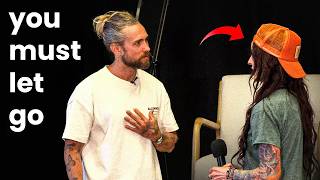
In this live coaching session, Aaron Doughty works with a participant (Speaker A) who has recently divorced a long‑term marriage marked by narcissistic manipulation, guilt, and conflict avoidance. The conversation explores how the ex‑partner used shame and control to keep Speaker A dependent, how her upbringing in a restrictive religious environment contributed to self‑judgment, and why she feels guilty for seeking connection and joy. Aaron validates her experience, points out the common empath‑narcissist dynamic, and guides her to reclaim personal power by setting clear boundaries, recognizing her own strengths (e.g., athletic discipline), and shifting from a victim mindset to self‑ownership. He introduces a practical Ho’oponopono mirror‑forgiveness exercise (the four statements: I’m sorry, please forgive me, thank you, I love you) to release lingering shame and facilitate self‑forgiveness. Throughout, he weaves spiritual concepts from Eckhart Tolle and Dr. Hew Len, emphasizing that reality mirrors internal energy and that true forgiveness involves recognizing the divine essence beyond egoic actions. The session concludes with the participant affirming a new mantra—“I allow myself to be happy”—and committing to integrate the insights, notes, and community support into her ongoing healing journey.
Chapters
I'm just coming out of a divorce right now.
Yep.
I was finding a better path for me, and I felt like I was elevating and I was connecting with people. Husband didn't like it and started making fun of it. I've been told that now that this has become very toxic and my husband tried to kill himself because things weren't working out, and I've chose not to, to go down that route of feeling guilty and not being responsible for things like that. Um, but I do feel guilt for having connection with people, although I know that it's what I love and what I feel is right.
Why would you feel connect— feel guilt for having connection with people?
Um, other than my husband, he, he was thinking I was being conflict avoidant by not, um, talking to him and working with him on some things, but he was trying to control me.
Yeah.
And I watched some of your videos that came up. I just found you about 6 months ago, which helped me through a lot.
Well, first off, I want to acknowledge the fact that you're able to tune to yourself to ask yourself that question as well. Because a lot of times what'll happen is if there is some form of manipulative person, what they do is they use as control, they'll use these different mechanisms to get you to feel shame, to get you to do what they want you to do. So what you were saying with your husband or ex-husband is if it's like shame around, you're connecting to all these people, you're doing all this other stuff, you're bettering yourself by stuff studying spirituality, it's, you're in a way, it's fearful for him because you are branching out of how he knows you and how he probably knows you as naive. Somebody that just goes with the flow.
Yeah, yeah, exactly.
Is that true?
Yeah, that's very true.
Yeah. Yeah. So now that you're questioning things, now that you're tapping into your own body, you're starting to take your power back. And now that you take your power back, what's happening is he's throwing you another line of like, okay, let's see if this gets you. Gets you to do something. And then if that doesn't work, sometimes they'll say they're gonna do this or do that, do more extreme things as ploys to get you to do what they want you to do, right?
Yes, that's true.
So what you're doing now though is you're questioning yourself. Let's just stand over here a little bit.
I'm like, keep walking this way. I don't know.
So what is the challenge for you here now, would you say?
Well, and a lot of the great questions have come up. I love positive stuff like this. I'm always writing stuff down, but then when you ask questions, I'm just, I feel blocked. Yeah, and I, and I don't know because I just love doing stuff for people, like going to lunch and stuff, with taking people in my camper van and doing stuff for people so much that I just block a lot of that out and go squirrel brain and don't really pay attention and in tune with what I'm needing to deal with. So yeah, I'm stuck with questions. So those are good questions. I don't know.
Yeah, so when you're— when you say you like the positive stuff, what about the stuff that's not so positive?
Um, that could be conflict avoidant.
Yes.
Yeah, I might want to run from that.
So maybe he was right. I'm just kidding. But there's an aspect that you can relate this in the context of what she was talking about. If there was that intention of manipulation, it's a different story. But as far as people that are empaths that can feel other people's energies that tend to attract narcissists, as many times they are conflict avoidant and that's why they stay with them so long because even though there's conflict in the dynamic, it's of more conflict to leave the dynamic than it is to just stay in the slow poison drip of energy. Does this make sense? It would be more pain to do that than it would be to just pretend I'm naive and I don't know what's going on. And by the way, I've experienced people in my own family that say they didn't know what was going on when things were going on. Because that may have been easier to rationalize than to say, I knew what was going on and something was obviously wrong. Now, to his credit, it was just easier for him to not stand up and call out an energy than it was for him to actually, it was easier for him not to do that than to actually do that because there would've been more tension up front. But what's interesting is that there would've been less tension long-term. Think about this, people pleasers, people that are trying to fix other people, what happens many times is they are afraid of tension. This is the same. It's like they're afraid of tension. So in order to ease your tension, I'm gonna please you. And if I please you, you won't have tension. And your tension is my tension because I can feel your energy. But what happens is you keep the tension inside the body underneath the surface. And what you do is you carry it around with you everywhere. You just don't brush, like get too close to it and ruffle it enough to where it's just kind of under the surface versus learning to set boundaries or to stand up for yourself, which will cause more of a jolt in the beginning, but then a long period of not having to deal with that tension underneath the surface. So you could say, on one hand, you are conflict avoidant avoidant. On the other hand, you could say that you love conflict because you keep inviting it over and over again instead of setting the boundary one time.
Yeah. And then I set the boundary and yeah.
And then what?
And then, and then all of a sudden he wants to try the spiritual stuff and go out in nature and everything, which he never did before, made fun of it.
You know, you know what's interesting about this? So listen to what she's saying. So it's like she, she actually expresses herself authentically. You actually set boundaries and then there's like an opening or some energy. I'm not saying, you know, I don't know the exact situation. So I'm not saying you need to work this out and figure it out, but it's interesting how that's the response once you stand up for yourself.
Yeah.
Right?
Right.
And you can apply that towards many different aspects of your life. When it comes to the narcissist and empath dynamic and just being a people pleaser and being in your own frame of reality, it's very important to become aware of where you're losing your frame to make other people happy. And it's very important to choose how you show up and how you express yourself. And if you began to, instead of going through the filter of how do I be the good person? How do I make him happy? How do I ease the tension? Those are some questions you could ask and you'll get a certain response if you live in it. But what's other questions you could be asking yourself is What is actually authentic? What is actually authentic here? What is my opportunity for stepping into my power? What do I really feel about this situation? So if you were to be honest with yourself, how do you really feel about this situation?
I got tired of the rollercoaster ride and I had to get off.
Yeah.
And had to take my power back.
Yeah, how'd you do that?
Friends and things like this. And yeah, just coming into my own and just realizing that just really good friends who supported me and got me through it.
I love that. Yeah. Yeah.
And then finding out, you know, that I, that I do have the strength, you know, and stuff like that.
I mean, you do have this—
what, the strength to overcome it? I mean, as an athlete too, and a runner and everything, that's what I did, you know, mental mindset, you know, all that kind of thing. So that did help me. And my coach kind of helped me walk through that aspect of it in this life too, as long as— as well as an athlete, right? Using your mental and your Visualization for that too.
Yeah, many times in one area of your life, you can maybe see some success or something you've been able to do, and you can apply that towards another area of your life. For some of you, you may say, I don't have good willpower or something, but there's probably some area of your life where you do have good willpower. You just don't see it because you tell yourself a story that I don't have strong willpower. But if it's something you're passionate about that you love, you probably do have strong willpower in a certain aspect. So in a similar way, strength around athletes, running, whatever is your passion, it's important to become aware of that. So in this dynamic now, where are you at right now with this person?
He doesn't know I'm here.
Okay. Well, is this someone you're still with?
No. No.
Okay.
I just, I don't have children, but I have a dog involved. And so I just kind of worry about, I have a babysitter dog person that I just don't want him to know. So he's trying to use this. He's trying to manipulate me and use me. Yeah, this is a long story.
So, so you— so you're still in contact with this person? No, you're not in contact?
Lawyer thing.
Okay, that's good.
Yeah.
Okay, so you're not in contact with them? No, not some dog situation?
Yeah.
Okay, I see my baby. So sometimes, sometimes what happens is, as the last points of vestige for a connection, they'll be leveraged. So sometimes as kids, unfortunately, if the kids aren't leveraged, then it could be animals. Yes, dogs, you know. So then where are you now then? Where's the next breakthrough for you? Is there a breakthrough here for you, or have you kind of already experienced it?
Well, last week when I was here with my friend, yep, and we visited the vortexes and got a lot of good energy here and found a lot of healing and some definitely some resolution as far as just kind of a more clear path of following my own way.
That's awesome.
A ticket came up at the last minute, so I was lucky to come here.
I saw you at that, uh, yes, yeah, she was, uh shopping around. We were somewhere, you came up to me and I was like, I'm doing an event next weekend. And you're like, I'm going back to— where are you from? North Boise.
Boise, Idaho.
That's where you were.
Yeah.
Yeah. Anyways, that's okay. So really cool. So you ended up making your way here.
Yeah, I had to come back and I feel very lucky and fortunate. I feel like it was like, you know, um, just meant to be. So meet some great people and then know that I'm not alone and that everybody has their, their, their things. And, um, it's just great to, to know that. And so I feel like I have a new family of people who get it, right, who are on that level of of healing.
I love that.
So thank you.
You're welcome. Yeah.
Um, so hopefully I'll find answers for my questions, but I'm gonna get them.
So let's look at that for a moment. So where do you say you're— you say you're blocked with answers? With—
yeah, like, um, I don't know if it's— I feel like I can— when people are up here, I can help them answer questions left and right, and I'll write down stuff like crazy.
Okay.
But I can't answer.
So it's interesting, right? She has answers for everybody else that she sees up here.
Not everybody.
But yeah, but not, but not for yourself.
Right.
Right. So I want you— let's, let's play a little game real quick. Okay. You're going to come over here. We're going to switch spots and I'm going to be you. Okay. So I'm going to— you're going to coach me as you through my own blocks. So I find that I just got out of this narcissistic relationship. And I'm going through all of these things and I find that I'm a giver. I've got a camper van. It's really cool. I came here a week ago and now I'm coming back. I got the last ticket. It was awesome. And what happens is sometimes I see people being coached. And what happens is I see them being coached and I feel like I have the answers and I could help them, but then I feel blocked myself. What do I do?
I don't know what to say. I wish I could be you.
Allow yourself, allow yourself to embody that energy. The answer's inside of you. I need your help. Like I'm asking for that reflection. Why do I feel blocked? Why when I go to write something down right over here, and by the way, you do have some stuff written down. Is this yours?
Well, yeah, there's some.
Yeah. Oh, you've got a whole bunch of stuff written.
I know I do, yeah.
Okay, so first off, so you said, That you feel blocked writing stuff down. I see pages of stuff written down.
Yeah, just questions I haven't answered yet.
Okay, I see. So what is one of the questions that haven't been answered? All of them. Who am I without the outcast identity?
Yeah, who are you? We're trading roles, right? Right. Who do you think you are?
Let's try it again.
Oh, dang it.
Let's come back. So if you were to embody the energy of having the out— of understanding any of these questions, really, and you were to shift into that energy state, the answer— you just believe the answer isn't there, right? How could—
I believe it's there in emotions and stuff, but I can't put it to words. Like, that's where I feel really blocked. Like, I don't have the words to the— Yeah, I don't know.
Yeah, so you— so it's like you—
like, I'm like, I feel emotions and I kind of know, but then I feel blocked, and then I get the answer from somebody else that comes up sometimes.
Sometimes I get the answer, and that maybe, maybe part of the breakthrough sometimes is that the way that you get some of the information is just through reflection of other people that come up here. That could be it too. Maybe there's nothing wrong with not having all the answers written down already. You know, sometimes it's like we're playing a game where we tell ourselves a problem, and our problem is that we don't have all the answers and we need to figure it out right now.
That's really good to know because I feel like I have to— everybody else is writing down, so I feel like I have to too, but I don't have it. So that's good to know.
You can also write down, I don't have the answer. Yeah, you know what I mean? Like, it's— it's— that's a part of the process. Like, part of the process is that I think I should have an answer and I don't have an answer. And that's okay. You see, the shame, shame hides in the dark. Shame does not wanna be seen and heard, and it's afraid of being seen. So it's like, well, we'll hide that underneath, and then we'll just feel like there's something wrong with me. There's shame, there's something wrong with me because I don't have the answer. So then we just feel blocked. And then we think there's an answer. And from my perspective of everything that you've going through, you've been going through a lot recently. And maybe you're not supposed to have all the answers, right? So maybe the challenge is I'm over here like, what's my answer? What's this? And maybe that's not even the correct question to ask, right? Because part of the question is, especially you're coming off a divorce.
Almost done.
Yeah. Well, if you're coming out off of a divorce, a lot of times that can be a very like a zone where you're really stepping into the unknown. You know, like you're detaching from a lot of energy cords. And a lot of past patterns. And there was a lot of certainty, by the way, in a narcissistic and empath dynamic, there's a lot of certainty that's there because you know what's gonna piss this other person off. You know where the line is, you know what you can do and what you can't do, right? And that probably at a certain level feels safe. And then when you're outside of that dynamic, now it's like you're in the unknown. And it's almost like, where do I find safety in the unknown? So we can create control. We can control different aspects of our life like our business, et cetera, friendships, like our diets, our how active we have to be. We can find control in different ways. We can also though embrace the journey of not knowing, embrace the journey of the unknown, embrace the journey of going into that and going into that unknown energy. Realize you don't have to have it all figured out. And actually it's kind of fun to not have it figured out for a while. Because you've had it so figured out for so long, because you've been in this known energy of control and manipulation. But now it's a power, a time and energy where you're able to take your power back. And you're taking your power back even by being here. You're taking your, like, he wouldn't want you around a whole bunch of other spiritual people learning these concepts and you're here. And also you're not with him anymore technically, you know, you're moving out of that. So it's about being aware like, oh, this is, that reaffirms your new identity. That reaffirms this new version of you because the old version of you was naive, right? Or was like, at least your own, what we were talking about earlier.
And I grew up in a religion, not that I'm against religion or anything, it was a religion that was very like, women can't say anything.
Yeah, well, what's interesting is women can't say anything, should be seen and not heard or whatever that energy was. And was that a common feeling in that relationship that you just ended?
Yes. And that's why I also, I got connected with a gentleman, but we were just close connection kind of thing. And it was just kind of people here. So, and then I just met more people that are just great people. Yeah, it's just one of those things where I think it was just a jealousy thing and he didn't have it and he wanted it, but didn't know how. And then I realized through 28 years of marriage that it was the whole time and I didn't see it until after that.
Yeah. How do you feel about yourself for that 28 years?
Um, I feel, I feel sad, I guess, that I didn't see it. And I think it could be part of the religion that I grew up in, that just you're supposed to just do and, you know, yeah, without really saying too much.
Like, right, it wasn't horrible, but I'm just saying, you know, there were times— do you judge that past version of you for not knowing?
I do, yes.
I say that because that is true, huh?
Yes, I do. Yeah, yeah, there's still a little bit of judgment guilt there. Yeah.
There's judgment and guilt towards the past version of you that was in the relationship for 27 years.
Mm-hmm. And blaming it, trying, I mean, I'm trying not to be a victim, but blaming it 'cause religion made me that way. And I'm trying not to do that anymore, so.
Right. Yeah, it's also important to acknowledge that part of you as well. The part of you that feels that way, that feels like, you know, I realized for myself when I was going through my own, like 4 or 5 years ago here in Sedona during COVID times, I was going through like a powerful transformation. And once I became aware of a whole bunch of parts of my life that were imbalanced, what happened is I was very, I got angry instead of at the other people, 'cause before it was like, they're crossing my boundaries, they don't appreciate me, all of these things. I became aware that I was allowing it. So that anger got transferred where? To me, exactly. So then I was angry at myself and I was like, I was just pissed off at myself. I find myself judging myself, but also is there a way that you can forgive yourself? Because I had to learn to forgive myself and realize I was doing the best that I could with what I had at the time. And even though like forgiveness is really the key to a lot of healing, because when we store it inside our energy field and we store it and we don't let go and we don't forgive, we attract more people to reflect that story back to us subconsciously under the surface. So you forgiving yourself could be a very powerful way for you to release that energy instead of blaming. Blaming is easier than feeling. Do you guys get that? You can blame mom and dad, you can blame siblings, you can blame people, the government, you can blame. Blame is just a way of externalizing our power. And not taking ownership. But when we take ownership, we could say, okay, maybe there's an opportunity for me to realize that I was doing the best I could with where I was at the time, right? And the part of you that was maybe naive, and maybe when I was looking at my past self and I was like, I was naive for so long, I had to realize that I was just doing the best that I could. I was working on myself. I was doing the best I could with where I was at the time. But as I started to forgive myself, it's like that emotional edginess began to kind of drop away.
That's exactly what I'm working on. That's great.
Yeah. Well, how about this? How about for a moment or two, what I'm going to do is I'm going to bring the mirror around, and we're going to do— have you ever done Ho'oponopono? No. Okay. So we're going to do some Ho'oponopono real quick. It's a very simple process. And what it is, is you can also do this. I've done this before, looking in the mirror. So you got this right here. So what happens is when you're looking in the mirror, now there's these 4 simple statements. How many of you have heard of Ho'oponopono before? It's a powerful Hawaiian tradition that was later modernized by this guy named Dr. Hew Len, who there's books about, and basically It's 4 simple statements. There you go. She got stuff to write down now.
I have to write it down.
Look at that. No blocks.
Okay.
So it's 4 simple statements. Now, the idea is that everything in our reality is data. Everything is data. Now, what happened is Dr. Hew Len, he was into Ho'oponopono. And what he did is he did this experiment where what he did is he went to a mental hospital and there were a whole bunch of people there. That were literally declared mentally insane. The vibe of this place in Hawaii was that there were people that were like worried for their life that worked there. There were some patients that had to be sedated 'cause they were so much, so much so like violent. And there was just a real not good energy there around the vibe of it, of this place. People didn't wanna work there. They had a high turnover rate. Basically what happened is Dr. Hugh Len comes in And what he does is he works on the process of Ho'oponopono. And what he does is over the course of a few years, many of the people that are there that are labeled mentally insane, some of their cases got dramatically better. Some of them actually went home. The lesser cases actually went home and were deemed like safe to go back into public. There was less of a turnover rate, like everything switched in this place. Now, the cool thing about this 4-step simple process is that he never actually psychoanalyzed and worked with the people. What he did is he worked on their files. So what he did is he had these people's files and what he did is he cleaned by looking at these people's files, the parts of him that he was seeing in them. So what he did is these 4 simple statements are, I'm sorry, please forgive me, "Thank you." "I love you." These are 4 simple statements that in Hawaii, it was traditionally used because families were so close that anytime there was quarrels between families, they would do this process with each other. "I'm sorry." "Please forgive me." "Thank you." "I love you." Now, "I'm sorry" is the first one. "I'm sorry" is simple in the sense that what you're doing is you're taking ownership of it instead of blaming. I'm sorry means I am aware of this energy that is inside of my field. We are all connected to the divine consciousness of God. So it's like your conversation with the divine. If I am perceiving of this, I am sorry. Even if you're like, well, I didn't do all this stuff to me or I didn't do all this stuff to this other person, why would I be sorry for what they did? But if you are even perceiving of it, I'm sorry, I'm taking responsibility for this. I'm choosing not to carry this around any longer. I'm sorry, please forgive me, for they know not what they do, for I was not aware in the moment. Please forgive me. It's your conversation with the divine. I love you. This is who you really are, is love. And this is your conversation with God, with the divine. And thank you, which is the divine gratitude that you put into the process. So what this man did, Dr. Hew Len, is he worked on their files and then That was hard for me to believe that like he never talked to the people or anything. So I did some more research on it. And what he did is he worked on their files and he would walk around and dialogue and interact with the people, but he wouldn't psychoanalyze them and say, this is from your family lineage and your trauma. And they're like, great, now I'm mentally like stable. It wasn't like that. It was more like he was working with them. I'm sorry, please forgive me. Thank you, I love you. He was changing his image of them. Which then cleaned out his field, which then his perception, which gets into a trippy thing about reality. Why? Right. What is reality? Because what if— because part of the teaching of this is that there's 11 to 15 million bits of information that are in the field at any given moment. But we can only perceive of about 100 bits per second of information. So there's all this data everywhere, but we only perceive what is active inside of our field. So if we have inside of our field resentment or anger or blame, well, guess what we're gonna bump up against when we go out in public? Exactly. It's literally a mirror. It's literally, reality is just mirroring back what energy's inside of our field. The 100 bits per second of information out of 11 to 15 million bits that we're gonna perceive of whatever's active. So this process of, I'm sorry, please forgive me, thank you, I love you, is a way for you to connect to that part of you that does feel maybe blame, maybe naive, maybe you judge yourself. And what you do is you're able to start giving yourself permission to feel and to accept that part of you. Now, what's interesting about forgiveness is something else that I find very interesting is Eckhart Tolle, Any of you know Eckhart Tolle? Many of you. Eckhart Tolle talks about how at the deepest level of forgiveness, there is nothing to forgive, which is trippy because it's like, what do you mean? This person did something wrong. But the doing something wrong is a story, right? The doing something wrong, this person did something wrong. Now we can get together and say, but Aaron, some of the things that happen in reality are really, really wrong. And we can all agree that, yes, they're wrong. And we can agree to that. But at the fundamental level, the belief that it's wrong is a story that we're also projecting into it. So if you realize everyone's doing the best they can with the level of consciousness they're at, and there's acceptance of that, and that you understand that it was not the divine essence of your husband that was doing this stuff to you. It wasn't the divine aspect of it. It was the separate ego that is lost in illusion. Now, this doesn't mean that it's like, I bypass it all and that means it's all, but what it does help you do is it helps you recognize that you are a divine being. Everybody else is a divine being. And it was not the divine being and whoever did whatever wrong to you in the past that did it to you. It wasn't that divine aspect of them. It was the lost, scared aspect of them with patterns they probably learned growing up. Because maybe something that happened that they did to you happened to them. And narcissists tend to have a lot of toxic shame. And a lot of times there's a lot of toxic shame there and they live with that energy. And the way they get through that energy is by controlling, manipulating the environment. Doesn't make it right, but understand it wasn't the divine essence of the person in their unconditional loving energy that did it. It was their fragmented ego that did it. The way this makes it easier is kind of understanding that the story's what we hold onto because we also want to be right about reality. We wanna be right. This wasn't fair. I blame this person. We get like, with some things, we get like a dopamine high. We get like a dopamine high from like the drama sometimes of certain things happening. You're used to a certain level of drama if you've been for 27 years in a narcissistic empath relationship. Certain level of drama that now that it's gone, there might be a part of you that's like, huh? Yeah, where can I recreate this? Yeah, but there's a subconscious part of ourselves that might be addicted to stories that like, see, this isn't fair and I gotta fight for this now. So, and then there's a big reaction and that reaction fuels the field. So the power in what I'm sharing is that there's a deeper level of forgiveness here. Ho'oponopono is an extremely powerful modality that you can use if it resonates for you. I have YouTube videos that talk about the whole process, kind of what I just shared, but then there's like guided meditations on YouTube that I have that you just put in the background. There's also a lot of other stuff you could find online about it. However, for now, what I think would be really cool if you did, and you're kind of doing it for yourself, you're kind of doing it for us, for the group, is allow yourself to really connect with yourself in the mirror, to make eye contact with yourself, and to use these 4 simple statements. Of I'm sorry, please forgive me, thank you, I love you. And as you're looking at yourself in the mirror, really allow yourself to connect to that part of you instead of just saying the words and being like, okay, I'm gonna get through this. I'm sorry, please forgive me, thank you, I love you. Like really connect with yourself and really see if you can tap into that part of you that does feel guilty or feels responsible. Exactly. And what you're taking responsibility for right now is your response, your reaction. You're taking responsibility for even your interpretation of it. Because ultimately, if we keep the story alive, we're keeping that story alive in other aspects of our life too. So it's like, that's why it's, I remember watching it one time when Eckhart Tolle was talking about forgiveness and he's like, at the deepest level of forgiveness, you realize there's nothing to forgive. And it triggers the shit out of people that are like, no. And that the degree of triggering is the degree to which they're still attached. It's the degree to which they don't wanna let go of being right or they haven't processed or healed something horrible that maybe happened to them. And even horrible things that happen, there is an opportunity to recognize this energy and to forgive. There are people that have forgiven for horrible things, probably way worse than a lot of what we've even been through. And I can imagine that in this group, there's things you've been through that I can't even imagine for some of you. But understand that what you can become aware of is holding space for that past version of you and forgiving that past version of you can be the release of a new life. So now what I offer you the invitation to do is to come look into the mirror and there's no right or wrong way to do this. And you just connect with yourself and just realize that's you. And you can make eye contact with yourself. And you could just feel whatever comes up is perfect, and you just want to look at yourself and just connect and say, I'm sorry.
Okay, I'm sorry.
Please forgive me.
Please forgive me.
Thank you.
Thank you.
I love you.
I love you.
There you go.
Let's do it.
Let's Do it a few more times. Yeah, you're doing great. Yeah, allow yourself to really feel into it. And tears come, it's fine. It's all part of the process.
I'm sorry. I forgive you.
Yeah.
I love you.
Thank you.
Thank you.
I say I'm sorry.
I'm sorry.
Please forgive me.
Please forgive me.
Thank you.
Thank you.
I love you.
Love you.
I'm sorry.
I'm sorry.
Forgive me.
Please forgive me.
Thank you.
Thank you.
I love you.
And I love you.
Keep doing it a few more times and really connect with yourself.
I'm sorry. I forgive you.
It's okay. No, it's easy. I'm sorry. Please forgive me.
Please forgive me.
Please forgive me. Thank you.
Thank you. And I love you.
Maybe for now just say I'm sorry, please forgive me.
I'm sorry, please forgive me.
And keep doing it. See, see what's coming up. What's coming up right now?
Like nervous. Yeah, just energy. Just kind of energy.
Yeah. What is the energy that doesn't want to?
I don't know. I'm just having a hard time letting go, I think.
Yeah. Well, allow yourself, allow yourself to feel it and then to keep saying it and to see if that energy moves at all. Because it's normal that there's a part of energy that's been right for so long, that's held on to this energy for so long, that's comfortable. And everyone that's watching right now, there's moments where when we're moving energy, there's a part of us that maybe doesn't want to let go. It's normal.
Yeah, because you feel like you should carry it.
And you should exactly feel like, I should carry it. And there's a part of you that may feel safe carrying it, or it's so familiar carrying it. Who am I without it, right? So why don't we more time look into the mirror, connect yourself, and just say, please forgive me.
Please forgive me.
I'm sorry, please forgive me.
I'm sorry, please forgive me.
There you go. And keep doing it.
I'm sorry, please forgive me.
Yes, keep doing it.
I'm sorry, please forgive me.
Yeah, there you go. Keep doing it.
I'm sorry, please forgive me.
Yeah, see? Oh, you're doing it. You're doing great. You're doing great. Let yourself feel what you're feeling. What you're feeling is perfect. Yeah, let yourself feel that. Sometimes we feel this emotion come up, the crying, whatever, we think, I shouldn't be feeling this right now. This is exactly the medicine to the forgiveness. When you forgive someone or someone else forgives you, how does that feel? Feels like relief, right? Yeah. What are you feeling now?
It was hard to look at. Yeah. Yeah, I feel a little lighter, for sure.
Yeah. So this is a process. So we can go and put away the mirror now. But it's a process. It's a process of releasing this energy. How many of you could feel inner energy? There was energy that was moving there. Yeah. So that energy that is moving, you're allowing it to flow through you and to understand that from this point moving forward, it's a layering of like letting yourself feel that emotion. And who would you be without that blame? Who would you be without that blame?
Better version.
Okay.
Stronger individual that could stand on my own and be okay.
Yeah. Have you ever had any trouble setting boundary statements? Huh?
Yeah.
What are some boundary statements you've had trouble saying?
Just that I have had trouble saying that I shouldn't be talked to that way.
Okay.
I don't deserve to be put down or ridiculed for things that make me happy.
Yeah.
Yeah.
So what do you think the most— if you were to summarize that, what would it be? One statement, one mantra that'd be like a version of you taking back your power. Yeah, maybe say that. Maybe say, I'm allowing myself to be happy. Say it.
I'm allowing myself to be happy.
Say it with confidence, with energy.
I'm allowing myself to be happy.
Now stand up straight.
I'm allowing myself to be happy.
Okay, now stand up.
Oh boy. I'm allowing myself to be happy.
Okay. One more time. So say, I allow myself.
I allow myself to be happy.
Yes. Yes. And as you allow yourself to be happy, notice that there's energy that may come up. It's like, am I worthy to feel happy? Am I allowed to feel happy? But it's like you're giving yourself permission through this process. So this is a process of unwidening. So moving forward, how will you apply what you've learned here today in your life? What's the next step for you?
Reading all my notes.
Yeah.
Remembering everybody.
Yeah.
And then also taking that and applying that. If everybody in here can be strong and get over things, so can I. Yeah.
Similar to what we were talking about earlier, right? If other people can do it, why not me? Other people, are there you standing in your power? It's a reflection for you.
And then that John Lennon song, I mean, of course.
Yeah, yeah. And then maybe that mirror work that you were doing, there may be some deeper layers there. You've shed a few of them and opened up some of them today, but really becoming okay and comfortable with you looking at yourself in the mirrors could be very powerful permission slip for you. Okay, awesome. Well, thank you so much.
More from Aaron

If you can see this, you're about to become so magnetic you are unrecognizable









