If you can see this, you’re pushing love away
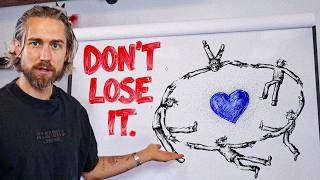
Aaron Doughty argues that spiritual "letting go" can become avoidance that isolates you. He maps three stages: codependence, independence, and interdependence, warning that hyper-independence creates a prison of distrust. Real growth means moving toward vulnerability and staying present with uncomfortable emotions instead.
Chapters
If you could see this video, take it as a sign that it is time to stop letting go. It's time to realize that letting go can have a shadow side of actually avoiding love, that it can feel safer to not need anyone, and it can allow you to only need to entrain yourself with yourself, which guarantees no relational trauma, guarantees no rejection, but at the cost of connection and love. And if you're seeing this video, it is time to evolve past the stage of letting go into independence, and it's time to begin to embrace the next stage of your development. When I learned this, it completely transformed my energy from the inside out. It's the missing key for so many people, and it's why letting go as a spiritual practice can be so powerful. And at the same time be the very prison that you end up in. And what got you to a certain stage of your development is going to be not what gets you to the next stage. And I'm gonna show you how to make that shift. I'm gonna show you in this video why your life will completely transform when instead of focusing on letting go, on detaching, on not needing anyone, why the key is actually embracing what subconsciously you might be afraid of. Now, the truth is, you letting go is a very powerful spiritual practice altogether. Letting go of a person, letting go of attachment, letting go of caring what people think— these are all very powerful things that can help you at a certain stage of development. But then what happens is you might get into a new prison in a way. Priorly, you may be in, in this stage of development. There are 3 stages of development I'm going to show you in this video, and I'm going to show you how to break free at each level so that you can go from codependence to independence but not get stuck in independence. And move into interdependence. So first off, let's understand that this is something that has to do with your own awareness and your honesty with where you currently are, okay? For me, this was very hard to look at because I could see that I got so much benefit from being in the independent stage of development, right? I let go of people pleaser patterns. I let go of overgiving patterns. I recognized that I was abandoning myself for so many other people, which is what you do at this bottom level of the codependent stage of development. It's like you attract people that have certain trauma bond-like dynamics, and you end up in this stage of trauma bond energy where you're in this like You're in this pattern of feeling stuck. And then you find yourself thinking of people a lot, trying to prove it to other people. This is like a stage of development where there's very much a focus on the other person. If the other person is okay, then I'm okay. They need to meet my needs, I need to meet their needs. And what happens is when you start to become aware of this, and you start to see that you've been abandoning yourself, a part of this stage 2 is you may end up becoming very angry with yourself and angry with others. I remember when I woke up from this back like 4 or 5 years ago, I really started to become aware of like the remnants of this pattern. And I remember there were a whole bunch of dynamics that were imbalanced and I was more angry at myself than them. And I became aware of this and I realized I had to be— I had to realize I was doing the best I could with where I was at. I had to realize that it got me to a space of becoming aware of the independence. So for me, letting go became extremely powerful when I began to focus on recognizing the boundary between me and others. That's their stuff, not mine to manage. You see, in this codependent stage, it's where we're also trying trying to close the loop from childhood. So if you imagine like, who did you have to be as a kid to receive mom and dad's love? I had to be very, in a way, like accommodating. I had this connection that to be in relationship was burden, was a burden because then it's like, not only do I need to manage my emotions, but I also have to manage someone else's emotions. So subconsciously I'd be in this pattern where that would feel heavy and it would be my responsibility. So if they felt tension, it was my responsibility to fix the tension. Well, you start to become aware of this and first here, you're unconscious of the pattern, you're trying to fix everybody. Then eventually you realize it's not your job. Eventually you do let go. This is where you let go of external validation. Approval, trying to tune to them to fix them. This is where letting go has been super powerful. This is where when you see on YouTube, I have a, something called the Frame Technique that's transformed so many people. You feel the separation between you and other people. You start to feel safe inside of your body. And what happens is then you're not taking on other people's emotions so much. But also you start to develop a stronger frame of reality, which is a missing key of development for many people and why they feel like a leaf in the wind around certain people. So what happens though is this is the challenge and this is where many people that are in watching this video have gotten to. You're either at a stage of this or in the stage of independence. This is where you may have the patterns of self-reliance, controlling dynamics in life. It's in a more empowering stage than down here where everyone else has the power. Now you have it, but you're just wearing yourself out. You're trying really hard, trying to get people on board. You might be trying to like create out success in your life so that you don't need anybody else. And what happens at the independent stage is like, I don't need anybody. I don't need anybody. I am self-reliant. And what happens is the shadow side of this is you end up in hyper-independence. You get to be right about reality, normally right about men and women. So it's like, I can't trust men. So as a woman, you might not trust men. Therefore, you create a very successful business that you work hard at. Or you start to create your own, like, purpose in the world in a powerful way. And if you can get to a spot to where you don't need men, you're free, aren't you? That's what you think, but you're really not free. You're really imprisoned in a belief that says that men are the way your dad was, or men are the way the first men in your life you related to— maybe not reliant, not emotionally present, etc. So what ends up happening is detachment, letting go, becomes a survival mechanism towards not needing no one. You don't need a man, you just need yourself. And while that can be very empowering, especially because you've moved out of the codependent stage from stage 1 into stage 2, Eventually it becomes pretty lonely. This is why so many people that we consider to be spiritually evolved, been doing all the healing work in the world, may end up still staying alone. Why would that be if they were really healed? What I'm here to say is that true healing, true spiritual progression, is not meditating in a cave not needing anybody. Real spiritual progression is when you can come out of the cave and be in relationship. The real spiritual dojo is when you're in a relationship and your inner child wounds come up and you learn how to move through them with someone else. You learn how to express yourself even when it's uncomfortable. And you learn how to not run from them. This is something that would come up for me in relationship and dynamic, where in the past what would happen is as I was dating someone, in a relationship with someone, there'd become a certain stage where it would become very intense. And many times I would chalk it up and say, this isn't the right person if this is coming up. This isn't the right per— this is too hard, this is too uncomfortable, I'm going to run. And then I would go and, and I would end it. And I remember once, actually, this is like a year ago, I was at a friend's house who had a husband and wife that had been together for like 10, 15 years or more. And I was talking to someone, I, I had just gotten out of a relationship at that time because I knew it wasn't— it was that kind of thing. Something came up and I was like, this isn't the right person. And I got out. And I said, my breakthrough was speaking up for myself and ending it because I knew it wasn't like it meant to be. And he said to me something I'll never forget. He says, interesting that where your mind went with that is I need to end it instead of working it out and working through it with the person. And in that moment, I really thought about that. And I really thought like, I remember that kind of planted a seed for me because so often before I'm like, no, the letting go technique is so powerful. I let go of caring what I think. It was very painful in the breakup as well because anytime I'd go through some form of breakup, I would feel their disappointment or their pain as well. So I'm processing mine and theirs. So it was very sad. And then I would chalk it up like, ooh, and if I'm just at my house by myself working a lot, Guess what? I'm creating success for myself and that's how I'm going to get my spiritual purpose out in the world more than anything. To find out that that is a form of avoidance. That was a form of me getting into a space of fight or flight. Fight, creating success in my business, but flight when it becomes uncomfortable. I don't need anybody. I could do this all myself. But then recognizing that that is many times the easier path. It's the easier path. The breakthrough might be to let go, and at times the breakthrough might be to work through it. That's where relational trauma is actually healed. Not in feeling the pain and then dipping. It's feeling the pain and then dipping in the pool with them, swimming and figuring it out, doing the dance. So at every stage, you're hearing this right now and you might be in some, you know, trauma bonded narcissistic empath relationship and you're being treated a certain way and you're like, "Yeah, Aaron's telling me just to stick with it." There are times where that might be the case or letting go maybe is the answer. But at a certain stage of development, what happens is this becomes a way of not actually learning how to connect and work through the childhood patterns. So for me, I've had to let go of my, of really learning. I can learn how to not lose myself in relationship, or I can just leave the relationship, not learn the pattern, but then not have to deal with it. Which feels like more growth comes? If you're somebody that takes on the energy of somebody else, for example, So one of the huge insights for me has been that I've noticed that, yes, there's lots of content I've made on letting go. Letting go is a very powerful modality for many people that hear it, and it is a very powerful way of moving into the independent stage for people that may not have a strong sense of frame and reality developed. There are people that watch me that are high— that are high achievers, have created lots of success, that if you look and see on paper, you could see this is everything that they've done. But at the same time, many times their relationships tend to be lacking because they focus so much on one area. And then as an excuse, when things come up that are uncomfortable in relationship, it's hard. What's one thing that you can't control? You can't control relationships. Control your business in some ways. It's not the most enjoyable thing when you have to control aspects of your business, but you can— what you put in is what you get out. It's the same thing with relationships. The work you put in, the uncomfortable emotion you put in, learning to stay present and regulated when you're in conflict, learning to, uh, Actually embrace the feelings and emotions that come up. Learning how to communicate in a vulnerable and empowered way. Learning to not, for me in relationship, learning to not try to, you know, as a guy, you wanna fix and find solutions. And that's not always the answer. Many times the answer is to stay present and to not lose yourself in trying to fix someone else, but that present energy allows somebody else to process. Because remember, healing happens in the presence of an empathetic witness. Not healing happens in the presence of someone who's desperately trying to fix you. So when is letting go healthy? Well, letting go is healthy when you're letting go of external validation, approval, um, etc. Very powerful. When you are in the stage of independence, you may have to let go of hyper-independence. Of believing that you can figure it all out yourself. It's easier to believe that when there's relational trauma in the background, and that relational trauma is, is uncomfortable to look at. You can stay in your own lane, stay in your own independent, like, work zone, but then you end up feeling more alone than ever. You end up creating a little prison for yourself that you're not even aware of. So what you end up letting go of here is you let go of the belief that you don't need anybody else, and you let go of believing that the vulnerability— it's not about letting go of vulnerability, it's more about embracing vulnerability, embracing connection, embracing, expressing yourself. And that is a form of expression, which you could say is a form of attachment in the sense that you are put— you are attaching yourself to opportunities and people that could reject you, that could not accept it, not like it. But that's where the true power is. The true power is when you are whole and you still choose connection. This is when you focus on being love, you focus on embodying your truth. And when you have those be the thing that drives you, that's when you're in a true level of empowerment. So letting go is powerful at certain stages of development, But there's a stage where you move from, instead of focusing on others, instead of just focusing on self, you focus on us. You focus on interdependence. You focus on connection to, yes, God and the divine, but that works through people. That works, that is your dojo. Your dojo is your relationships. Your dojo is your relationship with yourself and your relationship with others. But embracing vulnerability, embracing the uncomfortable emotions on the inside as they come up, embracing expressing yourself and letting go of the beliefs that come up or the thoughts that come up and say, "Oh, this isn't the right person." At times that may be true, certain type of dynamic in relationships, at times that might be a flight response towards not embracing deeper connection. So I had to let go of that pattern inside myself 'cause anytime that would come up in a relationship, that's what I would do, just dip out. So there are times letting go is actually avoidance. You can let go so deeply, you never need anybody, but then you end up alone in a cave doing your spiritual work because you've thought that spiritual work did not include relational, like dynamics. And the truth is, true spirituality is learning to connect to yourself, learning to connect to God, and learning to connect to others. As much as we can say we don't need no one, truth is we do need each other. We do need each other. We need connection. The most important thing at the end of your life, I guarantee you, At the end of your life, you're not gonna be thinking of the one thing in your business you could have done differently. You're not gonna think of the millions of dollars more you could have made. At the end of your life, you are going to think of your connections with people. You're gonna think about the relationships that you have, the relationships that you had. And if you go around your whole life just letting go, letting go, letting go, That is a sure way of avoiding going deeper with people. That's a sure way of avoiding the uncomfortableness of getting to that depth. So allow yourself to, instead of focusing on letting go, is now focus on actually vulnerability, expression, realizing that your triggers in your relationship are what are revealing to you where you're not free. So as that comes up, you are able to then celebrate. It's hard, tell you, when you're triggered, is hard to celebrate it. But ultimately, it's leading you more towards freedom, and it's leading, leading you more towards more of yourself. So letting go is powerful. Letting go becomes a limit. Stage 1, Stage 2, Stage 3. And eventually, as you move into opening your heart, you're focused on vulnerability and expression. You're focused on actually putting yourself out there, choosing connection, choosing wholeness, choosing to embody love, choosing to embody truth. And that as you focus on this energy, you'll find that you open yourself up to more connection, opportunities, synchronicity, And it didn't come from just letting go. It came from actually, in a healthy way, attaching, attaching to something deeper inside of yourself and actually attaching and connecting to other people as well. So if you, by the way, want to learn more on how you can apply what is called the Frame Technique, one of the most powerful things I found for feeling safe in the body, I have a free training video you can go to and you can watch a video, I just remade it, you can go and click below, look at the frame technique, see how it can transform your life. And then if you want to learn more about how to let go, I have a video on letting go that's over 2 million views, different stories there that will show you how to let go. But keep in mind that the other side of this is learning to connect. So I'll go and put that video right here.
More from Aaron

If you can see this, you're about to become so magnetic you are unrecognizable









