"I'm not worthy" This Belief will keep you Poor and Single (here's how to break free)
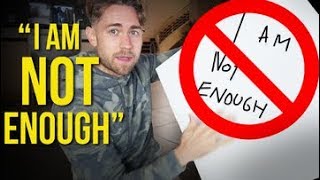
Aaron Doughty explains how the belief "I'm not enough" keeps people stuck in poor relationships and finances. He uses a tabletop metaphor: the belief rests on legs made of past experiences like a critical parent or rejection. By reframing those memories and releasing them through meditation, you collapse the belief and let the truth that you're already enough surface.
Chapters
The most common limiting belief there is is that I am not enough. This is the one belief that keeps us single. It's the one belief that keeps us not becoming wealthy. And in this video, I'm going to show you exactly how to know you are worthy so that your life on the outside begins to change as a reflection of that knowing. Welcome back to another video. My name is Aaron Doughty and I help people expand their consciousness. Consciousness. Now in this video, I'm going to be sharing with you this one belief that I found is the most common limiting belief that people have. I have shared a lot of videos on YouTube about understanding how our beliefs create our reality. If we change our beliefs, we change our life. The outer reality is a reflection of what we believe to be. Another word for belief, by the way, is story. The story that we tell ourselves, and we may tell ourselves or have a subconscious story that says I'm not enough. I don't feel worthy. I'm not worthy. And the thing is, is when we believe that story, when we buy into it, people then treat us according to what we are projecting out. So we'll say, I'm not worthy, I'm not enough. And then somebody else will look at you and they'll compare you. They may feel that off of you and then somehow communicate to you, yeah, you're not enough. And maybe a girlfriend or boyfriend breaks up with you, or maybe you find that you can never really become abundant because of that. Well, that has to do with an underlying story. And here's what I want to really emphasize. It's a story. A story is something you can change. It's like you're watching some type of movie and there's some type of story on there. And if the screenwriters went in and changed that story, it'd be a completely different story. The thing is, is many times we believed we were given a script and something happened in the past many times that we think was set. It's just the way reality is. It's who I am. And because of that script, That's become our reality from that point going forward because we believed it and we thought that it was unchangeable. So when we start to realize that, first off, it's just a story, we can begin to let go of it more and more and we become free to then be the way we want to be in our own story that we call of life. Now, to explain this belief to you that I'm not worthy, I'm actually gonna do something I've never done before and I'm going to explain it using a prop. So let me go get that prop. Actually, I'll take you with me. Let's go. I told you guys I'm doing something I've never done before, but I'm going to show you how this table is the belief system that is holding up the belief I'm not worthy. And I'm going to use that. This is a metaphor, but nonetheless, I'm going to show you how to break it down, break down that belief system in the same way that we may have built it up over time. I'm going to show you exactly how to change that. So, uh, now I got to do is figure out a way to set this up so it it looks— you could see what I'm doing. Well, it looks like I got the setup. This will do for now. So I want to share with you that this table right here, this table is an analogy for our beliefs. And many of us may have the belief— and the most common limiting belief that I've seen, by the way, is the belief that I am not enough. Hopefully you can kind of see that. I didn't realize that this table Eh, you can kind of see it. Maybe I'll get a different marker. Now you can kind of see right here, it says, I am not enough. There's a little bit of a glare, but you see, I am not enough. Now this is the belief that is on the tabletop. Now in order for this tabletop, this belief system to be in place, what it needs is it needs these legs on the side. Now what happens is there were certain points in our past they call like past reference experience, where something happened. And when something happened, we gave it a meaning. And that meaning, that core experience, is what is a leg that holds up this whole entire belief that says I'm not enough. So one of these could be— I'll use my own life as an example, and I'll try to use a new example because I know I always share a lot of the same ones, um, just because I've made daily videos for like 3 years in a row and it's, we got something to come up with so many different stories, you know what I mean? So for example, one thing, so worthy, am I enough? I know one thing that my dad, my dad's a firefighter and he still is a fire investigator. And when I was growing up for a certain period of time, he eventually loosened up, but for a certain period of time, my brother and I, we had to tuck in our shirts and comb back our hair. And if we didn't do that, we would get— we would, uh, we just— we weren't— we— that belief, that meaning we gave it was that we weren't enough, that we weren't representing him well, I guess was the idea. Because when you're a firefighter, there's a certain level of, I think, pride that comes with that. So we were a reflection of him. So, uh, we had to tuck in our shirts, we had to comb our hair back. And in that moment, you know, I was young, I was probably like 8 years old when that started, or 7 or 6 years old. And I remember I wanted to express myself, but I couldn't. And that meaning could have been I had to tuck in my shirt and comb back my hair and look a certain way in order for me to be worthy. You see, not all of these situations as well has to be some mind-blowing thing. It could have been something like, um, you know, it could have been— it can be something small too. It could be like your parents— you ever see where like parents are in a grocery store and they're like, their kid's not coming. So, okay, bye, bye, little Jerry, bye, see you later. And then the kid starts screaming and crying. Well, the kid might actually start to believe that his parents would actually leave him, even though the parents may know it's such a joke. I'm never going to leave my kid here, you know. But these meanings are things that we absorb. So on one side of it, we had to tuck in our shirts and our, uh, and, and comb back our hair in order for us to be enough. That's one experience that I definitely remember that happened that I was like, why is this? Am I— do I need to be this certain way in order for me to be loved or in order for me to be accepted? There was another, of course, the ex-stepmom story of having an ex-stepmom that was physically, mentally, and emotionally abusive. That for sure. I mean, I can't, I can't, I can't let that— when it comes to being worthy, that definitely had a powerful effect. So I'll just put that. So the meaning we gave these in the past is the meaning that then holds up these different belief systems. So, or holds up this whole belief of this. And the key to it is becoming aware of what these core experiences are. What are the things that are holding up this belief? And the way you do this is you just ask yourself the question, what were times in my past when this was a feeling that I felt, when I really felt unworthy? What is a time in my past when my dad or my mom treated me a certain way, or you know, even friends or family. Maybe you felt rejected. Uh, there were times I remember in school I kind of felt like a weirdo, I guess, because I, I, well, I didn't have freedom between the ages of 7 to 15. So in that time period, I wasn't allowed to have friends, hang out with friends and stuff like that. So I just, I kind of felt like I wasn't as socially aware, I guess you could say. And that had a lot to do with, um, you know, me not believing I was worthy or not accepted A lot of times as well, I think that with the belief of worthiness has to do with also the approval that we get from other people, approval that we get. Maybe you could think of a core experience when you seek approval and maybe didn't get it. But in general, what you want to do is you want to become aware of what that belief is and you want to find a few reference experiences that hold up that belief and realize that these reference experiences that hold up the belief are what's keeping it on autopilot. Now the other key to this, and I'll show you with a different camera angle. Also, there's one other belief that I totally forgot about. When I was like younger, I had really bad acne. My dad had it as well. And I remember that it was, it was pretty bad. You know what they say? It just came to me as well. They say that in, in the book called You Can Heal Your Life, whatever, by Louise Hay, It's, it says that acne, that gives meanings to these different things that manifest in our body and it shows the belief that corresponds with it. With acne, it means that we don't love ourself when we have really bad acne. So it's like a sign for us to start loving ourself more. That's the meaning in the book, uh, You Can Heal Your Life by Louise Hay. Now when I was a kid, I had really bad acne. I don't think I loved myself at all. My dad had it also growing up as well, but that was something else I was very embarrassed about. I, yeah, there was definitely something in my life as well that would also affirm the belief, hey, I'm not worthy, I'm not enough. Now what happens is these beliefs are held into place because we have given it the meaning in the past and we haven't in a way completed the past yet. We haven't let it be there and maybe even reframed it. Now that's kind of a cool analogy too. Think of it like reframing. Like when you reframe something, it's like, uh, you know, reframing a meaning of the past. If it's like, oh, you know, my dad, uh, my dad used to tell my brother and I that we had to tuck in our shirts and comb our hair in order for, you know, for us to be accepted, or that was the belief at least I gave it. And when I was young, instead of seeing it like that, if I already reframed the meaning of it and realize that, you know, maybe my dad just, uh, I could not necessarily always rationalize it and justify it, but just be aware that maybe that led to me becoming a little bit more rebellious and maybe breaking out of my own belief systems in a way, kind of seeing the positive that came out of it. You know, when I looked at my ex-stepmom and the craziness that, you know, the no control that my brother and I had between 7 to 15 years old, that led to my spiritual awakening. When I looked at that and saw it from that point of view, it changed everything. All that emotion from the past, all that baggage. Like I was carrying this around everywhere I went going, I'm not enough, I'm not enough, thinking I wasn't. And then it was really uncomfortable because everywhere I'd go, I'd have to carry around this belief system that is metaphorical for this tabletop that says I'm not enough, with the little reference experiences on the side. Like I had to tuck in my shirt, I had bad acne, I now have black all over my hands because this table is resistant to the Sharpie, and seeking approval These are all things you become aware of when you start to inquire within yourself. You start to become aware of your story. What is your story that says, I'm not worthy? Well, how do you know that? What are things that happened in the past that showed you you're not worthy? And then what you can begin to do is begin to reframe it and think of reframing. It's like literally reframing this table, taking off these beliefs that don't serve. And when we take off these beliefs, guess what? The table table can't hold itself up. It's just going to completely crash down. It's not going to be able to hold itself up on two limbs. It's going to— on two pieces of the legs, it's just going to fall over. That's the key to this process. So when we say I'm not enough, realize that when we go into the world and we want to attract more money, we want to attract a relationship, we have this tabletop we're carrying around. It's going to be very hard to get into certain restaurants because you're not allowed to have tabletops in certain restaurants. It's gonna be very hard for you to bring that tabletop into certain banks so that you can cash out that money. You see what I mean? That's, it's a metaphor. It's, I know it's kind of a silly metaphor, but nonetheless, everyone, most people are carrying around this tabletop that says, I'm not enough. And you guys want to know what the key to this is? Breaking it down. And the way I'm going to show you exactly how to break it down, the key is questioning and inquiring on why these different beliefs are here. I'm gonna show you from a different camera angle. Here we go. Here's what you want to do. You are a reframer. Now, a reframer is somebody that can look at a new meaning and give a new meaning to a past experience. Now imagine that right here, here we are saying, I'm not enough. I had this thing that happened in the past where my— I had to tuck in my shirt and I had to always comb my hair in order for me to be to be accepted. Well, as a reframer, which— what, that's what you are, you could be a reframer— and as you reframe it, guess what? You're gonna be tearing down the belief, I am not enough. One way that you reframe this is you start to see it from a new point of view. You let it be there, and you see that at a certain point you made that choice in the past. A lot of this is— we have to understand that we gave it that meaning. Even though yes, many other people can maybe agree that, oh, that control that you had when you were growing up, that wasn't preferable, that wasn't cool. It's not that we're saying it's cool, it's that we're becoming aware that we generated that meaning because when the meaning goes unchecked, when the meaning is on autopilot, it continues to create it over and over again. So when we look at certain things and we see, oh, acne, okay, I had acne, I thought I wasn't worthy enough, I thought that people were judging me when they were seeing me, and we're able to look at that And first off, do something called complete the past. With— if you haven't seen before, I have a whole video that's on completing the past with a meditation that helps you to go back into these past experiences and then release them. And when you do that, that then clears out that energy pattern. The idea is that within our energetic field, something happened in the past. When something happened, it caused this jolt in our energetic field. And until we go back and we let it be okay that it was there, we in a way Okay, also look at that past version of me when I was like 11, 12, 13 years old, probably 13 years old going through that bad acne. Send that version of me love. See that that actually maybe built me into becoming more mentally strong. And as I start to look at it, guess what? I start to reframe it. Okay, so that's all, that's all I did for now. But you see, you need to reframe it a little bit, a little bit more energy. Okay, okay, okay, there we go. Now I'm gonna have to clean that up, but guess what? We're getting the point across, right? So here we go. Look at this table. Look at this table. Let's just set the table here. Okay, see, it still stands. It's still standing. You kind of see it still stands. So the key to this is that maybe it's more than just one experience. Maybe it's more than just this one thing that's like, oh, that The acne thing I let go of, that's cool and everything, but what about the ex-stepmom thing? Okay, this says that I'm not worthy. I actually look at that and see how that got me to a place of going more within myself. I can see that I could give it a new meaning in a way because I do believe that that kind of in a way led me to my spiritual awakening years later, even after my dad divorced her when I was 15 years old, having the ex-stepmom in my life. What happened was is then years later I went through a spiritual awakening, became aware of a lot of things, and in the moment I changed the meaning of the past, the meaning that said, oh, all of this happens, it means I'm not worthy. I could then see also— here's something else that helps— see it from their point of view. My ex-stepmom was probably treated the same way by her dad. That's what I found out. Stuff like that happened to her. So that was— she just playing out these dramas, playing out these patterns. And in a way, when I became I became aware of that. Doesn't mean it made it right, but it did help me understand it a little bit more. And sometimes when you understand it, that helps a lot. So then when I changed that meaning and I stopped giving it that negative past that I was giving it, guess what ended up happening? Guess what ended up happening? I reframed it. Okay, now look, now we got two. Let's see how this stands. Okay. I'm going to take this out real quick. Let me figure this out. Okay, so here we go. Now let's look at this. Okay, let's just put it down here for a sec. Okay, here we go. Let's see what happens. How does that still stand? I'm kind of mind blown right now. When we look at I'm not enough, this belief system that says I am not enough, I thought that for sure you let go two legs, it would like go. Okay, obviously that's not the case. So what do we gotta do? It's like we got this personality of ourselves. We're like Bob the Builder, Bob, and then Bob the Destroyer. Okay, we're gonna destroy. We got one more belief that we have to destroy. So let's see, there is this, uh, that's the one that's like, oh, I had to tuck in my shirts. And now that just means that I had to look at— and when you're a kid, you don't really become aware of certain things. So I'm not like, oh, 'If I don't tuck in my shirt and comb my hair back, my dad doesn't love me.' That's the meaning we give it when we're a kid. Now that I look back at it, I can look back and I can reframe it to see that, hey, that led me to becoming a little bit more expressive because then I had this desire to like break out of that bubble, out of that belief. I could also see that my dad, seeing it from his point of view, he just wanted to probably be accepted by his peers and he wanted to be represented well to say, 'Oh, his kids are good kids.' Maybe that was it, but now that I'm older, I can look at that and see that, and guess what? It doesn't have the same emotional charge that it used to. So I can see at a certain point in my past, I thought that that led to me not being enough. However, I am Bob the Destroyer. Okay? And one more time, let me go ahead and see if this is a good camera angle. Okay. Yeah. So one more. Dang, I got a lot to clean up later. But now look. Oh my goodness, oh my goodness. Now, now look, okay? The table is destroyed. Bob the Destroyer destroyed that table. Now it can't stand. It's trying to stand, but if we want to do one more thing, I think there's one more thing we can do. You guys ready? Let's destroy this belief. See, the key is also it's not about getting a new tabletop that says, I am enough. It's about just destroying the belief that says, I'm not enough. 'Cause when you realize, when you let go of that belief, you just are enough. That's the thing. That's the way that it works. So let me go ahead and let's go ahead and we're gonna take this right now and we are going to destroy it, destroy approval, destroy all these different things. I'm going to, we're gonna go all the way up here. I'm showing my house a little bit as I, I don't know if I've really showed it in this video, but here we go. So I was gonna do it right here, but I'm not going to. I'm gonna do this outside, okay? Maybe the first thing I could do is maybe I could try to drown it. You guys think, you think I could drown the table? Let's try that. This is my cold plunge right here. Maybe I'll just drown it. Is that a good idea? Do you want to be drowned? Do you want to be drowned? No, I don't think it does. I don't think honestly that would do anything and I'd have to clean out the water so I'm not gonna do that. However, imagine this right here and then imagine I just kind of toss it over. Huh? I could just kind of toss it over. Let me see. So I'm not sure exactly how this is gonna work. I'm not sure the neighbor's gonna like me doing this, but let's say I am not enough and we just throw it down. And there we go. I don't know if you can see it, but pretty sure we just destroyed the tabletop that said I'm not enough. And what do we have to do? We had to tear down. We had to tear down. Each of the different legs. As we tear down each— it might get a little bit messy, that's a part of this process— but as we tear apart each of these different legs, we then tear apart that belief system. And as we tear apart that belief system, we then become aware that, hey, I am enough. That's what happens when we go through this process. The belief I'm not enough will leak into every area of our life. And the key to this is tearing it apart by becoming aware of those 3 or 4 reference experiences, reframing them, seeing them from a new point of view, and completing the past. And if you haven't seen yet, there's a video I have on completing the past where you— it shows you how to complete the past. You no longer have to repeat the past. Plus, it'll help you to feel 100% whole and complete. It'll change your life. It'll be right here. Click on it, check out that video. And as always, if you want me to do more videos on this, let me know below, and I'll do down— I'll do that to different belief systems. You let me know. Okay, peace, much love, and namaste.
More from Aaron

If you can see this, you're about to become so magnetic you are unrecognizable









