Let Go of Attachment in Minutes (My Most Powerful Technique)
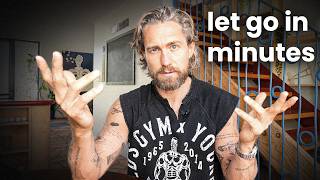
In this live coaching session Aaron Doughty explains his "letting" or "letting‑go" technique, which he describes as simply allowing emotions to be present rather than trying to suppress or control them. He argues that resistance arises from attachment and that welcoming emotions dissolves that resistance, leading to a natural release. The talk weaves together several related themes: the role of the inner child in emotional avoidance, the ego’s survival‑driven motives, nervous‑system regulation (breathing, co‑regulation with others or animals), and practical self‑inquiry questions (e.g., “What emotion am I avoiding by obsessing?”). Doughty answers audience questions about people‑pleasing, feeling responsible for a family member’s illness, and balancing an inner‑child‑driven life, using anecdotes such as Paramahansa Yogananda’s deer story and his own plant‑medicine experience. He also promotes upcoming live events in LA and London, emphasizing that repeated live teaching builds confidence and accelerates learning. Throughout, the core message is that true transformation comes from observing and welcoming feelings, recognizing the ego’s survival agenda, and allowing a higher intelligence or divine flow to guide healing.
Chapters
The one thing that makes the letting technique so powerful is that you let the emotion be there. It's a paradox because when you let the emotion be there and you welcome it in, what will happen is the resistance will go away. And normally what we're doing is we become aware of an attachment and we want it to go away because of what that attachment represents or because there's negative emotion or resistance there. But many times when I'm coaching people either at a live event or just in general, it's the questions are geared towards how do I avoid feeling certain emotions? How do I get rid of this? And a lot of times when we're saying to ourselves, how do we get rid of this emotion? There's an inner child part of ourselves that we're also subconsciously trying to get rid of. So it's interesting because it's like, would you, if you had an inner child or a child and you're like, listen, you're causing me a lot of drama right now, I need you just to go away, please. I don't wanna feel this. Of course it sounds silly to say that, but a lot of times that's what we do. We do that with our inner child. We're telling them just to subconsciously like, go away, I wanna get rid of you. And it's interesting because that was even the big breakthrough I had around learning to observe my thoughts back in 2012. When I would observe my thoughts, I realized that when I was trying to control the thoughts, more of them came. There was resistance. When I let the thoughts be there, that was the magic. You let the thoughts be there, eventually the momentum begins to write itself out. It's the same thing with emotions, don't you know? They say that a lot of times, I forget what the exact time is, but many of the emotions we have, if we simply welcome them and allow them to be there and we give them space to process, it begins to dissolve the pressure. So what if your next breakthrough is not around trying to get rid of emotions, not just around a little mental flip? What if your next breakthrough is around letting emotion be there, welcoming it in. And when you are able to welcome in the emotion, it becomes an interesting energy because that can become a positive release and a positive experience. Now, the letting technique, the letting go technique, is so simple because basically it's You just let the emotion be there. You become aware that there's an attachment or an emotion there. You allow it to be there. You welcome it in. You observe it, you welcome it in, and you allow it to complete itself or integrate. And then you can make the choice to let it go. And it kind of switches the questions because a lot of times, like at a live event, people will be asking certain questions, but it's like, well, what if instead of avoiding that, you just let yourself feel it and it's okay to feel it? What happens then? Exactly. Release. Release happens and you feel like you're not fighting Think about that. It's kind of like you're fighting as a gatekeeper. You're gatekeeping what emotions come in, what emotions don't come in. And that's a lot of pressure. It's a lot of burden, isn't it? Isn't it? It's quite a bit of pressure. And if you stop If you stop doing that by welcoming it, that's where there's big— there can be big breakthroughs around this. So if you have questions, you can go ahead and comment your questions or put them in the, uh, the little question mark thing. I will be answering questions. We can keep them around letting go. We can keep them around kind of the stuff that we're talking about here, feeling emotions. A lot of times, I was talking in the last live Q&A, we were talking about like how to feel safe in your own frame of reality. And one of the big insights there is that to feel safe in your own frame of reality means feeling safe in your body. And to feel safe in your body means learning to regulate your nervous system, learning to breathe, learning to find also friends that you co-regulate with. Some people even co-regulate with animals. So realize that a lot of, you know, because people feel what you feel. So when you begin being more present to the moment and you're also maybe following your excitement or in your zone of genius, you will find that from that energy state, you attract people, synchronicities, etc., that mirror that back. So the topic has mainly been on letting go, regulating your nervous system, why a lot of times people ask questions around avoiding emotions, and instead of avoiding the emotions, if you— the biggest challenge transformational part of the letting go technique is that you let the emotions be there. You welcome them, which is so counterintuitive with what we normally do because we have these mechanisms in place that we use to avoid feeling. And when we avoid feeling, we repress, suppress, project. These are just mechanisms we use to avoid feeling. Nice. Yeah, you have even one friend you can co-regulate with, that is a blessing. Yeah, Letting Go by David Hawkins is an amazing book. Someone says, so what do you do when you're obsessing about something? You feel the emotions. You can let yourself feel the emotions that come up. And what is the emotion if you were to let go of control? And what if you let it be good either way? If you were to imagine the thing that you're obsessing about happening or not happening, and if you're good either way, And you feel the emotion of almost like, what if it doesn't come to pass? Because the reason you're obsessing about it is because subconsciously you believe if you obsess about it, you're going to get it. If you obsess and think about it, there's an attachment there. It's a mechanism. It's a mechanism of control that your mind is using. To get to control. But when you realize that control blocks, control is a survival mechanism, that's where you can start to really become free and letting yourself feel the emotion that comes up. What emo— ask yourself this: what emotion are you avoiding by obsessing about this thing? Think about that. Think about it. Think about that. 'Cause a lot of times when people obsess about other things like that and they think about it over and again, it's a distraction from feeling another emotion. What emotion are you afraid of feeling? Are you afraid of feeling abandoned? Are you afraid of feeling out of control? What are you afraid of? And remember, like we talked about yesterday, the paradox is that if you feel out of control, you are controlling that experience to feel out of control. Interesting. You take your power back and realize you're doing it. Why does that feel familiar? Do you see? So what emotion are— okay, so if you were obsessed about something happening, What is the emotion you are avoiding by obsessing about that thing? You're either distracting yourself, which sometimes people do in relationship, by the way, when there's a lot of blame. It's like, I'm gonna blame this person for not coming. This person's not coming around. This person's an addict. This person's doing this. This person's doing that. Attention is out there, not in here. And what happens is when you start owning that power back, owning that energy back, you can then do something about it. But you can ask yourself that question. That's the theme of today's live. What emotion am I feeling by staying attached? Ooh, interesting, isn't it? You might be trying to control reality because you're avoiding feeling Like you don't have it figured out. For some of you say it's anger, abandonment. And now even we take this a step further. Yeah, so someone says abandonment and losing control over the situation. Even more than that, what if you were to allow the divine to come through? You see, because your ego is the one that wants to control. Your ego is the one that wants to avoid or that one that wants to cling. Your ego does not want to thrive. Do you realize that? Do you realize that? Your ego does not want to thrive. You say, oh, it's my ego that wants this. It's my ego that's clinging. It's my ego that's resisting. It is because the ego is in survival. Your ego just wants to survive. That's it. Your ego might also like to be, get payoffs for being right about reality. All the men are this way. All women are this way. This is how friends turn out. This is the betray. Like you get to be right about reality, baby. When you're right about reality, the ego is like, yes, I understand reality. Even though it's not what I want, it's what I know. And what I know is familiar, familiar, familial. Dun dun dun. It is familial. You see what I'm saying? Do you see what I'm lying down here? Am I laying it down or am I lying it down? Do I have an itch to scratch? I'm going to itch my, I'm going to itch myself. You guys don't know that reference. In a live a while ago, I said I was talking about itching myself and people like, it's scratching, itching. I say what I want. Yeah. So it's familiar. So let's be honest, your ego, then why? Okay. If your ego just wants to survive, it doesn't want to thrive. Your ego just wants to survive on whatever its vision of love is, if that's conditional. Then why give so much power to it? You see, here's a big shift in consciousness you can have if you're here right now. Here's like the theme of today's live. There's the perspective of reactive to what's happening. There's the perspective of trying to control what's happening. Avoid certain emotions, cling to certain things. Those are like the dynamics. Once you realize that the ego just wants to survive, does not wanna thrive, the ego wants to keep you in familiar energy. Once you realize that, you can then say, do I want to keep in reaction to the ego or can I observe the ego? Observe it, that's where the shift is. You think thoughts, you're not your thoughts. You have emotions and attachments, you're not it. And what eventually you do is you observe it from a third perspective. And that third perspective is also where you can make the choice to allow God or the divine to flow through. Do you guys see this? This is where the power is. The power is there. It's within you. It's just, you might be using your power to limit you. By saying, "I'm so stuck." And sometimes the main reason you're stuck is 'cause you believe you're stuck. You're stuck on a definition. You're stuck on a belief. You're stuck on a story. You're stuck on a payoff of being right about not having it figured out. Someone says, "I am so happy. I'm aware now of the pattern of my ex-dismissive avoidant boyfriend I have to let go of." Well, awareness is powerful. One thing that I do recommend is the trap people get into with labels when people are labeling, like this person is this, this, this, and this, is those labels become an attachment. And then there might be a story. Your story might be after you process, the awareness is powerful though. Celebrate the awareness that you have. Also become aware that now you're aware of it, kind of that third party perspective we're talking about. The other thing is to become aware is, is there a story that is also there? Is there a story that this person is the pattern of an ex-dismissive avoidant boyfriend? Like these are labels that you may attach to and you may say, these are the kind of people I attract. And then guess who you're gonna attract next? If that story is there and it hasn't processed, you almost haven't let it be good either way. And also seeing your part in it. What part of you was attracted to that? Does that make sense? So part of this is just the awareness. Part of it is what emotions were you avoiding? What emotions are you avoiding by attaching to certain things, by maybe being attached to an old image of it that allowed you to be in it and tolerate it for so long? These are things to become aware of, but it's, but good for you, good for you in the awareness of it and learning to let go. But I just wanted to give you that little touch of awareness there around the labels and the story about the kind of guy that you attract. Someone says, how do I manage the emotions of not being able to heal a family member's cancer? I wish I studied medicine. I'm going crazy. So first off, I'm sorry to hear that. I'm sure that's not easy moving through that of having a family member that has cancer. I've experienced that. I've said that before in different ways, and I know it's not easy. Secondly, what I would say is, when did you decide it was your responsibility to heal someone else? Also, the healing of someone else is a mechanism towards getting them to stay here. But the thing is, is when you can get to a place to where you can trust God or the divine to heal, that takes out the pressure of the ego. Do you see what we're doing here? The theme of this live event is becoming aware that the ego wants to survive. The ego is what's asking the question is how does the ego heal a family member's cancer? If you could go to school and learn more, then you can maybe heal and heal the family member. What are the payoffs the ego gets Of course you get to keep the person, alleviate their suffering and pain, but also think about the burden that that comes with. Remember, the ego wants to survive, not thrive. One of the best things I think we can do for people that have, you think that the way to heal the cancer is by studying medicine when many times cancer is a reflection of an energy. Sometimes even an unprocessed energy. One of the best things you can do for this family member might not be for you to go to school to study medicine to help them. You might feel called to that. One of the best things you could do is to be an energetic pillar by seeing the person in a powerful light. Because sometimes when people get certain things like that, everyone pities them. That pity energy or that seeing them as sick adds to the field of them being sick. It adds to an energy that keeps them disempowered. If you were to hold the vision of that family member in their power and you related to them in that way, that may be of greater benefit than you going to school to learn medicine so that you can heal your family member's cancer. Does that make sense? So we're just kind of riffing on the different structures of the question and what it implies. Now, the other question though, even if you take out the whole situation, but how can I manage the emotions? First off, let yourself feel the emotions that are coming up. If you let the emotions be there, that can be a breakthrough. If you become aware of when you decided it was your responsibility, that's also powerful. This is a different scenario. I'm not— this is gonna sound harsh. It's a story from the book Autobiography of a Yogi. It's a different context. I know this is a person, and in this thing I'm about to share with you, it's not a person. It's a deer. Paramahansa Yogananda in the book Autobiography of a Yogi talks about how at one of his— he started a school in India before he came to America, and in the school the whole school fell in love with this deer. There was this deer that he loved so much that this deer would spend the night in his room and he loved this deer. All the kids loved this deer. It was a deer that was in the school in India and what happened one day is the deer, one of the kids fed the deer some type of food it shouldn't have fed it. He came back, Paramahansa Yogananda, who wrote the book Autobiography of a Yogi, he came back and the deer was dying. And it was like, the deer is dying. There was a lot of fear. All the kids were freaking out. They didn't want this deer to die. It was this childhood, like, it was like this schoolground deer that everyone loved. And even Paramahansa Yogananda loved the deer. Well, what he did is through the grace of God, through allowing God to flow through him with his yogic Siddhi powers and stuff, He literally like saved the deer. So it wasn't him and his ego that saved the deer. It was God that saved the deer through him. But then what happened is the deer came back. The deer is back. We're all good. The deer is back. And then for a day, what happened is that the deer was good. But then what happened is the next day, the deer fell back into the sickness. And as Paramahansa Yogananda was going to save the deer, He got a vision from the deer's soul that said, I'm trying to leave. Stop trying to save me. My time up here on earth is up. The deer wanted to leave. So what he did is the moment he realized this, he let go and the deer just dropped dead. Now the lesson here is that a lot of times we think we know what is best. We think we know what is best when there is a soul that has an intelligence of its own, has the power of its own. And at a spiritual level, at the ego level also, the ego is the one asking the question, right? The ego is like, I, this person, obviously you don't want them to pass away. I understand that. But also at the same time, there is a larger intelligence at play. And when you let God do the healing, the ego doesn't have to heal. When you also trust and you trust the course of someone's soul journey, it kind of takes the pressure down. And I know you might wanna hear this, by the way, 'cause you're like, well, Aaron, that's a deer, this is a family member. I understand, but who's to say the family member as a soul doesn't have more of an understanding with where the soul wants to go? Now, the soul may wanna go in a place to heal, to tap into their power and to heal maybe the emotion that's coming up or to be nurtured with the medicine, whatever. But do you see the difference here? So when you ask the question, it's important to become aware of where you think your responsibility is and think of the Paramahansa Yogananda story of trying to save the deer, save the deer, use the grace of God to flow through, through the deer's on its deathbed, comes back to life the next day, Aaron Doughty literally is like, let me go. He's trying to save it. And then he finally lets it go and it moves, it moves on. Interesting, right? So that, that story was popping in my mind as you were asking it. Also, if you guys didn't hear, the LA live event is happening. It's happening next Saturday. If you're in LA or you wanna come to LA, you just type in LA event. LA event, L-A-E-V-E-N-T. If you wanna come, maybe I'll type it here. I'm gonna answer more questions here in a minute. I'm just, this just happened. This is now available. LA event. So if you want to join the LA event, you can do so. It's happening next Saturday. It's gonna be epic. I have this really cool, there's this really cool like jumbo screen and I'm gonna have different backgrounds on it. I'm hoping it's not too cheesy, but I was like, wouldn't it be cool if there was a background of like the Redwoods forest or something and you come in, it's kind of expansive 'cause it's this huge LED screen or I'll just make it black or something that looks good on camera. But I'm like, that would be freaking cool. So we'll see. And it's cool, I found this place that's like right down the street from me 'cause I was looking at venues in LA and there was one that, all of them were like 50-minute drives. I'm like, I don't wanna drive 50 minutes. Minutes. I wanna get up and I wanna just go and do my thing, especially for these pop-up live events. Also, I'll say the more live events I do, the more comfortable I become with live events and the more momentum I create because I remember, I'm learning and remembering what I'm learning at every live event. So it's like I'm, I'm quicker to apply what I learn when I'm working with people. And it also decreases the importance around any one live event. So use this as a, use this as a lesson to like anything you do consistently, you just get more and more comfortable with, you enjoy more and more, but then you learn that quicker and quicker too. So yeah. Okay, let's see. Let's go. Hmm. So it says, I feel like my inner child is running my life. How can I create balance? If you feel like your inner child is running your life, what if you sat down and energetically connected to your inner child and asked them what that message was? Because the only reason your inner child is trying to control your life is because your inner child is in survival mode because no one is paying attention to it. So there's a message there. Many of these mechanisms we have that are subconscious, if someone has the mechanism of people pleasing or perfectionism, those are inner child mechanisms to say, who do I need to be to be worthy? I need to ease tension in the family I need to be perfect. I need to please other people, which is a whole rant I went on the other day talking about love languages. The toxic side of certain love languages is that what many people call love languages sometimes is a validation language. People that overgive and are people pleasers, it's conditional love. And it's saying, I want love, but you really want validation. I give, I give, I overgive, I over— you overgive because that overgiving is reflective of a self-image that says I'm not worthy for just being me. I have to give because my value is tied to what I do, not who I am. So it's an inner— that the people pleaser, it was a certain time in your past as a kid, you may have decided I must please to be enough. Well, guess what? A lot of pressure to put on a little kid. No wonder that little kid is running your life. That little kid is running your life because the little kid is in survival. You see that? The little kid's in survival. And then you're like, well, how do I create balance? You sit that little inner child down. You say, listen here, inner child. We gotta balance some stuff out. You've been running my life. It's not fair. How do I get rid of you? And that inner child is like, I just want to be seen and heard. I'm not good enough. Create balance by disciplining your inner child. Sit down with it and say, listen, stop your stuff. Stop. Just stop. I was in a plant medicine ceremony in Costa Rica. I did almost 2 years of not taking any plant medicine. And in Costa Rica, I did it again. It was amazing the first time in like 2 years. But at one point on one of the music playlists, after like the second cup, it was getting kind of deep. There was this song that came on that wasn't really a song. It was just like this pattern interrupt voice. And it was like this woman that was like, 'You could just stop.' It just said that. 'You could just stop.' And then it kept saying that and I was like, am I hearing myself? Am I hearing music? 'You could just stop.' You imagine if like you just started hearing that, like that was trippy. But imagine if you just sat your inner child down and you're like, 'You could just stop.' Does your inner child want you to just discipline them that way? Maybe, you know, some— there are some kids that grew up with no discipline figure at all. They secretly crave discipline, and because they didn't receive discipline, they went to control. Now they are controlling everything. They have the burden and they're running their life. Maybe what your inner child needs is discipline. Just saying, it may be. I'm joking around about it, but it's your self-inquiry practice. What does your inner child wanna hear? Maybe your inner child actually wants boundaries. Boundaries are a good thing. When I run live events and I set these group rules in the beginning, every event, if I don't, it gets a little nutty. These group rules create a safe space. The boundaries are good. Everyone's nervous system kind of relaxes when I set the rules. Like every time someone has to go to the bathroom, they have to raise their hand and they have to sing a song. It sets a rule. It sets a frame, right? Don't you feel safer knowing that every time you have to go to the bathroom, you have to sing a song in front of 100 people, right? You just kidding. But there are rules like, you know, show up on time. It's one of the rules. You go to a break, you come back. On time. We're all in integrity on time. Boundaries with each other. Not talking over people and trying to coach people when you're at a live event, you're in a group. Listening, letting people speak. These are good group rules. They allow people to relax. Yeah, I'm just kidding. You don't— obviously, if you want to use the bathroom, you just freaking use the bathroom. That's it. That's it. You just go. You don't have to sing a song. So if your inner child is running your life, it's because your inner child is in survival mode and it has a message for you. Maybe that message is for you to listen, be present with them. Remember, healing happens in the presence of an empathetic witness. Healing doesn't necessarily happen if you sit them down and you're like, listen, stop your stuff. How do I get rid of you? The inner child goes, no, more, more abandonment is what the inner child thinks. More abandonment. You don't, your inner child doesn't want that. Makes sense. So the inner child heals the degree to which you pay attention to it and you breathe and feel it. You listen to it. You feel and you listen to it. Someone says, can you talk about the experience of people-pleasing, always trying to be there for others and really see them while quietly longing to be deeply said and understood yourself? Well, it's interesting because people pleasers are trying to please everybody else and they're giving everybody else the medicine they secretly want to receive. So the question is to ask yourself, the thing is, is no one can actually please you because you are not pleasing yourself. You probably, if somebody did actually give you what you're asking about, you probably wouldn't even receive it. Am I right? If you're a people pleaser and somebody compliments you, what do you do with that normally? A lot of times people pleasers avoid it, deflect it. They say, oh, just this old thing. Oh, this, this, oh, I am, I am the reflection you, like they just avoid it because it feels unfamiliar. And you say, well, I want it. I want to be pleased. So you're giving the medicine you wanna give to yourself. Now the question to ask yourself also is when did you start feeling responsible for everyone else? And is that also the inner child part of you that's trying to control? That says that love is conditional. If love is conditional and you need everyone else to please them, what are you getting from pleasing other people? Validation. Approval. But what if then you reject yourself and you abandon yourself? What if you were to approve of yourself? What if you were to let yourself not please other people and to sit with that tension and to notice that that's their tension, not yours to manage? But what if you started turning that attention towards pleasing yourself, not abandoning yourself, choosing vulnerability and authenticity over validation and approval? That's the switch. It is. It really, really is. The switch is when you start choosing you. You— what song was that? It's like a '90s— no, it's like a 2000s rap song. You— is it Soulja Boy? Is it Soulja Boy? So that's the only part of the song I know. So people pleasing is a pattern that comes from conditional love. And what you're doing is you're trying to give pleasing to other people. You're trying to make other people happy because their happiness means you can feel safe and you can relax. It's a way of managing the environment. And when you realize you can feel safe inside of your own body by being present inside of your own body, by choosing vulnerability and authenticity over validation and approval, you begin to feel confident and safe about who you are. You let them be with their tension. Exactly, Kate, it says, "Which is manipulation." It is manipulation. And people pleasers never wanna think they're manipulative. They don't wanna think they have an agenda. They're good because to have an agenda is bad. I'm good, I give, I give, I give, I please, I please, I please. But also you please because of what you believe you'll receive, which is validation and approval. It is manipulation. One of the first steps is awareness, becoming aware of the pattern and then choosing to please you, you. Every time I say you now, I'm gonna think of that Soulja Boy song. Anyways, um, yeah, so anyways, I'm getting hungry and it's 11. It is 11:11. Oh my God, spiritual number. Haha. Ha ha ha. I gotta eat, you know what I mean? So that's what's happening. The London live event is happening September 26th, 27th, 28th. If you wanna join, you just respond London, L-O-N-D-O-N. Link is in my bio. What else is going on? And then I think that's it for now. Other than that, thank you all for being here. And as always, peace, much love, ha ha, namaste. Talk to you guys soon. If you wanna see one of my Instagram lives that I did that's also recorded like this on the letting go technique, step by step how to let go, how to let go of caring what people think, how to detach from the ego to allowing God to flow through. It's one of my most powerful live Instagrams I've ever done. You can check it out right here.
More from Aaron

If you can see this, you're about to become so magnetic you are unrecognizable









