Let Go of People thinking you are a "good" person to have MAGNETIC Energy
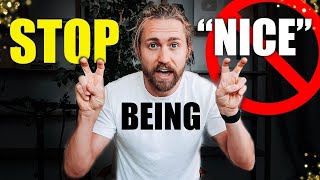
In this self‑help monologue Aaron Doughty shares a personal epiphany about releasing the part of himself that seeks other people’s approval and validation. He explains how that people‑pleasing habit stems from childhood trauma, especially a manipulative ex‑step‑mother, and how it is amplified in empaths who constantly tune into others’ emotions. Doughty describes the resulting shame, loss of boundaries, and the tendency to equate “being nice” with an exchange for validation. He introduces the “frame technique” – feeling the separation between one’s own body and others – as a way to generate magnetic energy and authentic presence. The talk contrasts authentic kindness (a virtue) with inauthentic niceness (a need‑based exchange) and urges listeners to re‑evaluate their value system, let go of the belief that they are “broken,” and adopt new choices that align with authenticity. Practical steps include body‑awareness meditations, visualizing separation, and a “stretch experience” of acting against old identity patterns. The video ends with a call to download three free meditations that support inner‑child healing and identity transformation.
Chapters
Recently, what I had to do was to let go of the parts of myself that want other people to think that I'm a good person, that I'm a nice person. And this is something that is like an epiphany that I've had that has completely changed my perspective on how I'm relating to other people. It's helping me to be more authentic. It's helping me to also be more detached from what other people think of me. And it's allowing me to also be more bold in my own life with the way that I'm being, not also attached to like people's perception or— and understand that sometimes that comes with polarity as well. So in this episode, you are gonna learn how to let go of the parts of yourself that are seeking approval or validation or are wanting other people to think that you are nice. And you're gonna learn how this is actually blocking you from not only being more authentic, but it's having, a lot of times we put out an energy of people pleasing and we put out an energy of wanting validation or approval from other people. And anytime we want it, the less we actually receive it, the less respect that we have, that we get from other people. If you think about it, if there's somebody you really, really wanna meet, or if there's somebody that you're really, really looking forward to seeing, if it's coming from a place of like wanting their validation or approval, they will feel that needy energy on you and they will many times want separate, it'll almost be like the opposite of a magnet where like one side attracts, the other side repels. It's like repelling them away. That's what needy energy is. And when we are caring or wanting people to think about us in a certain way, that means we're attached to outcome. We're attached to outcome. And being attached to outcome is what creates suffering. As the Buddha said himself, he said that desire and attachment is the root of all suffering. And we'll find that in life, you know, as I go through my own life, I can tell that I definitely have many themes I go through where it's all around letting go. You know, whether it's letting go of outcome when it comes to business, when it comes to people I'm, you know, managing, or when it comes to family members and friends, like, it's like there's a desire that I have to control the different aspects of what's going on. And I can tell that the more I try to control, the more resistance gets infused into this process. So this is also an epiphany I recently went through, and I wanna share that with you. So you can also like see these different aspects maybe within yourself. I think a lot of times people that have gone through a spiritual awakening, there's a lot of spiritual people that are what are called empaths. Are any of you empaths? If you're listening to this right now, either on the podcast or on the YouTube channel, like this video or do whatever you do on the podcast. But let me know if you are an empath. Do you consider yourself an empath? And most people that are empathic, I see a lot of them, sometimes they end up becoming people pleasers. Because the thing is, as an empath, you can feel other people's energies. So clearly. And I know that sometimes you can't differentiate your own energy from someone else's energy, or even if you can tell the difference, it's like almost their energy, their approval, their satisfaction. If they aren't feeling a certain way, then you feel like you've lost a part of yourself or you feel like you have to fix them in order to get them to feel a certain way. That's because there's been a loss of boundaries. And when we feel like we don't have a strong sense of self, a strong sense of frame, we then tune to other people's frame because as we do that, we are then getting information around whether our environment is safe or not, whether we can relax or not. And many of us as empaths are the fixers in our family. Tell me, does that resonate with all of you? If so, like the video or let me know. Do you feel like you are the one in the family that is focused on fixing or holding or gluing everything else together? Because if you don't do it, then nobody else will do it. And once again, an empath or somebody that is like a, you'll find very often may be people pleasers because they are tuning to other people's energy. They can feel them, and then they want someone else to feel a certain way. They are attached to outcome to get some type of validation, love, or support coming back. So this also was a coping mechanism as a kid. So many of you that are empaths also as kids went through an experience where you had to tune to your mom, your dad, your brother, your sister. You had to tune to your environment to look around to see, is it safe? Am I safe? Am I okay? And if you saw that a dad or a mom was emotionally unavailable, then you probably felt like maybe there's something wrong with me. Maybe I need to, I can be a little bit different. If I'm a little bit different, then I'll get, and everything will be okay. Like it was back in the day, like when you were a baby or something. So an empath is a survival mechanism. It is a coping mechanism that we develop to create where we kind of lose our sense of self so that we can ping to other people and we can understand what's going on. And I'm gonna talk about how this relates to the people, you know, letting go of people thinking you're a good person as well. So from my own sense, just to kind of share a little bit more about this too and how this plays out in my life, I have always been able to read people like a book. I can read people's intentions. I can, you know, and I guess the more aware I've become, the more I can maybe see other parts of myself in other people to where I can see kind of like my past versions of me in a way. So like now that I've come out of like being a people pleaser or a nice guy, I can easily see it and recognize it in other people. Not that I'm judging it or I'm like, that's so bad. I'm almost like, I understand where this person's coming from. I have a friend of mine that, he reminds me so much of my past self because the way he is and just like, I just see it in his body language. I don't know, it's hard to describe, but I think the reason I can read people so well, I can tell people's intentions is because from the ex-stepmom thing, from when I was 7 to 15 years old, having somebody that was very manipulative, I had to tune myself to my ex-stepmom to constantly know and to ping myself off of her energy to know whether I am safe or not. So like the way, the psychological warfare that my brother and I dealt with my ex-stepmom was we like, we weren't allowed to have friends, weren't allowed to watch TV, weren't allowed to, we had to earn going to school activities and stuff. But a lot of times she would, if we wanted to go to like a band camp thing, you know, which is required from the school, by the way, if we wanted to go to that and she knew we wanted to go to that, she would leverage it and say, you guys can't go to that 'cause you didn't do some chore correctly outside. And most of the time we were locked outside just doing chores. If my dad and her were at work during the day, we were locked outside. We drank water out of a hose. We were very malnourished. I weighed like 115 pounds up until my sophomore, junior year of high school because of this. But the reason I'm sharing that with you is I had to tune myself to her, and then I had to learn psychology. So if she knew I wanted to go to this band camp tournament, I had to pretend like I didn't wanna go. And it was the same thing for the forensics debate, same thing. I'd have to pretend like I didn't wanna go. So I'd be like, oh, I don't really wanna go to this band camp thing. Oh, this is gonna happen, blah, blah, blah. And she goes, oh, you think you're gonna get outta that? You committed to it, you're going. You see, it was like this weird manipulation thing. So I had to constantly tune myself to her to see how is she today? How is her crazy emotions going? 'Cause she's, I think she has like borderline personality disorder. I don't know if she was officially diagnosed with that, but definitely narcissist, that's for sure. And it's interesting because I can see that from set, my dad divorced her when I was 15 years old finally. And then after that, I just, I've always been able to tune to other people. Now the challenge is that if I'm always tuning to other people and I can read their emotions because that was a survival mechanism that I gained when I was a kid, as a kid, there's a balance to where then I need to be able to tune it on and turn it off. Yes, it's good to be able to see people's intentions, but the way that that shadow has become like a double-edged sword that hasn't served me is I can so acutely tune to other people that I really kind of care what they think, their validation, their approval, what they think about me. It's become something that I think I very much tune to And in the way I've in a way abandoned myself. So many people that are people pleasers that really care what other people think, what they are really afraid of is they are afraid of abandonment. They are afraid of somebody abandoning them or rejecting them. And the thing is that the irony of this whole thing is, is that most of us that have experienced that as kids, we felt emotionally or physically abandoned as kids. So we made a choice that I'm going to be a certain way, I'm gonna present myself a certain way so that I can get that validation, love, and approval. The thing is, is that most of us will abandon ourselves in the process. Now think about this. When it comes to being an empath, it's all about other. People are focused on other. What is the other thinking? What is the other feeling? Can I fix this other person? 'Cause if I can fix them, I can feel safe, whole, and complete. So the empath feels other. They get value and validation from other. They have abandoned themselves, the self, because they have abandoned their frame. They've abandoned even being in their own body. And because of that, they then tune to other people and look for it on the other side. So the key to the empath, the trauma that sometimes comes with that, is being and bringing the awareness back to self, back to inside the body. And one of the things you will wanna do is normally what happens with an empath and just many people in general is there's a belief there that says, I am broken, there is something wrong with me. It is not safe, but it is safe now. The thing is, is we just believe it's not because we have an initial belief, an identity belief that says I'm broken. It's called shame. Shame says there's something wrong with me. And the thing that I had to let go of to cure the people-pleasing mentality was I had to let go of the shame that came from when I was a kid. Because when I was a kid, I felt like I was emotionally abandoned because my parents had their own stuff going on. They were doing the best they could with where they were, but I felt emotionally and physically abandoned. Well, not physically abandoned, From that, guess what? I'm broken. There's something wrong with me. For many of us, we've had parents that divorced. They divorced. Why did they divorce? Well, as little kids, we literally think everything is about us. We're little narcissists. So it's like, if my parents divorced, wasn't 'cause the relationship was messed up, it was because of me. I caused it. Why am I so broken? But let me tell you something. You can let go of that now. That survival mechanism was in place from when you were a kid to keep you warm, to keep you safe, to keep you feeling like you got your needs met. You can let go of believing you're broken. How do you do that? You realize that your mom's emotional unavailability when you were a kid, your dad's emotional unavailability when you were a kid, or physical unavailability, guess what? It had nothing to do with you. Nothing, zero, nada, nilch, absolutely nothing to do with you. It was their own stuff going on. But you see, when you're a kid and you're an empath, you literally are tuning to your parents and you're thinking that their emotion is your emotion, their emotional unavailability is yours. Do you see? So it's the sensitivity as a kid that made you think that that was all your stuff. That was not your stuff. That was mom's and dad's stuff. And what you could do is a meditation. And what you could do is feel inside of your body, inside of your hands, and feel the separation between your mom and your dad, between you and your mom, between you and your dad, and then realize, and you could literally say like, "Oh, that was your stuff, not mine." It's like the mantra of all empaths. Oh, that's your stuff, not mine. Some people may look and say, well, it's bypassing your own stuff. Well, one of the biggest challenges with empaths is you think everything's your stuff. Your mom's stuff is your stuff. Your dad's stuff is your stuff. Your brother and your sister getting along, it's all your stuff. It's all yours because there's no boundary. So the thing that you can realize is that you're not broken. There's nothing wrong with you, but you have to claim your own space. You have to get inside your own body. You can even feel the separation between you. This is called the frame technique if you haven't heard about it before, but you feel inside your own body and you feel the separation between you and other people. It makes you magnetic. I know it sounds crazy 'cause it's like love and light, right? We're all here to connect to each other. We're all one consciousness. We're all ascending to a higher level of consciousness. But feeling separation is actually more powerful in a lot of these situations because when you feel the separation, you're feeling inside your body, you're more present. That creates magnetic energy. I've done this, I've tested this, I've walked around and been present in my own body and feeling the energy inside, feeling the separation between me and other people. It is powerful how magnetic it is to people. People will come up to me, they'll ask me questions, they'll wanna be like, it's interesting. Even if I'm at the store, hiking, whatever, it's crazy how powerful this works. Now with this though, the thing that I realized recently, I went to a get-together It was like a party. And I've been really good about this whole people pleaser thing for like a year or two now. I isolate a little bit more back and forth. I've had some like relationships I had to heal with past people where I think I overextended my own, like I under, I didn't have boundaries with them. So I had to like reestablish boundaries, which is like interesting and powerful. But there's times I can still feel myself kind of slipping back into old patterns. Now remember, this is a process of awareness. Awareness is 90% of all transformation. So I go to this party recently and it was, you know, it was really cool. It was at an influencer's house. So somebody in the same industry that I know, it's a real cool guy. And I was there though, and I could feel myself as I was there, you know, since like everything going on in the world, I've gone out and I've, you know, eventually I'll be doing live events soon and stuff, but like that's a different context, I guess. I've gone out and been around people, but like, around a lot of people, not just people, but also I could feel myself slipping because there's always, when it's around certain people that maybe I've known online or certain people, people consider celebrities and stuff or whatever, I think it's like a self-worth thing where it's like, ooh, this person's validation and approval means more to me because I like want to connect with this person. And then I could feel myself slipping more out of my own frame and starting to tune to other people. And it's this interesting thing because I don't know if it's just a form of self-sabotage or what it is, but I can tell that my energy begins to kind of fade or when I'm in situations where I want, like there's somebody I put on a pedestal or someone's connection I think would be really cool. And I had to like wake myself up out of this, like in a way, like I go to this get-together It's from like 4 at night till like, I ended up leaving like 9 or 10. But the whole time I was there, I was meeting all these other influencers and stuff and it was cool. But the thing that I realized, my big epiphany was I was going around, there was a couple of moments where I could just tell that I was like kind of being a little bit needy in a way where I was wanting people to like see me in a certain way, or I wasn't, I was kind of holding myself back from being the real me. The real me is pretty sarcastic. The real me is very, is pretty witty if I do say so myself. Jokes around a lot. And the real me isn't as nice. Like the real me is a little more polarizing. Like I will say things to people. If somebody says something, not that I'm trying to argue with people, but like I'm not attached to like what people think about certain things. And I could tell, it's funny, there were different people I was talking to that night. That are friends of mine that I've had many conversations with where I'm really myself and I'm just expressive and it's like dynamic and I'm laughing and I'm joking. And then I talk to some other people that I've seen online and stuff and it's like, I'm kind of like more in this box. And I've had this happen before too. There was somebody that I met back in 2017 when I first got on YouTube that was also an influencer. And I remember going to meet him and at first we didn't really connect 'cause I think I was, for maybe a couple different reasons, but we didn't really, anyways, I could tell that when I met this person like 3 years ago that I was kind of putting them on a pedestal. And then the second time I met them, I didn't do that at all. Like my perspective shifted, I started realizing my own sense of self-worth and my own sense of self-value. And I took all the fucking numbers significance thing out of it. And all of a sudden this person started like wanting to be around me. I started to get more respect. It was like very interesting how that happened. So I kind of have this awareness that when I, meet new people, especially influencers or people in my niche and stuff, that there's a part of me that like the first time might be kind of like, you know, whatever. And then as I get more comfortable, it's like the real me comes out and people see the value in me because I see the value in me. But anyways, the thing that I was realizing from being at this event, and then I left and I was like, wait, why was I being so fucking nice in certain situations? I was like, I could just so clearly see that there was a part of me that wants other people to think I'm nice, that thinks I'm a good person. And here's what I realized. Growing up from 7 to 15 years old, I had the ex-stepmom in my life. She was not a good person. She was what I'd call it, not a bad person. I mean, I guess I now can see how she was in her trauma and her dad treated her a certain way, so I understand it more. but for me to be a mean person or a, I guess in certain ways, a polarizing person, that would mean I'm a bad person. Our mind sometimes likes to think in forms of extremes. So what happens, I believe, is that when we're kids or when we're younger, we have someone in our life that we would consider bad or somebody that we consider to be, we don't wanna be like them. So what we do is we make a choice. We give life a meaning that says, hey, I'm going to be a good person because if I'm a bad person, then I'll be my ex-stepmom. If I'm a good person or a bad, like we make these judgments and say, if I'm gonna be this way, like my dad's a real nice guy. I think the reason my dad's a really nice guy might be because his, I know my dad's dad, I never met him, but I know he, I think he died from being an alcoholic. So I think he was very emotionally unavailable. For my dad, I know that. He wasn't really in his life that much, but I could tell that my dad made a choice that I'm going to, that he, I think, craved that validation significance that maybe he didn't get from his dad. So he made a choice that he was gonna get it growing up from other people, from other sources. Well, all we're trying to do is we're trying to get our needs met from when we were fricking kids. We were kids, we didn't get our needs met, we searched for it when we grow up, you know? And I think a lot of people that are successful, especially if they're craving significance or they're craving like recognition or like big YouTube followings and stuff, it may come from not feeling significant, worthy, and complete growing up. Not all the time, but if that's the shadow, then that might be the case. So what I had to become aware of is I had to become aware of the meaning and the value system that I have around my old identity, which was craving significance, people to like me, people to think I'm a good person. Now, What I've realized is my values were fucked up. That's all. My value was that part of, a value's kind of like a belief. Our beliefs create our reality. So whatever we believe to be true is being reflected back to us. Now the thing is, is our values are kind of like virtues that we live by that make up our identity. Most of them are unconscious or in our subconscious. And we say, oh, if I get people's validation, if I get, if I get like people to like me, then I have my needs met, or that's just who I am. I asked my dad once, like, why are you so fucking nice? He's like, I don't know, it's just who I am. Oh, it's part of your identity, I guess. It's part of a virtue you live by. But here's the thing, your identity is a flexible noodle. It's flexible. You can make a new choice about who you are right meow, right meow, right meow, right meow. Every moment you are a new version of you. That's what quantum physics shows us. So you can make a new choice. So the reason I'm sharing this is because something powerful that I think you can do is first off, the stuff we talked about in the beginning of the episode, the shame, releasing that, getting in your own body, starting to do that, feeling the separation between you and other people, but realize what is your definition of being good? What is your definition of being bad? Because if you're trying not to be bad because to be bad is to be someone that was in your family or something like that that was like mean, then we'll think in extremes and we'll actually hold back different aspects of ourself. And what I had to realize was that I can let go of the part of myself that wants to be considered nice. Nice, nice is inauthentic. Nice, there's a difference between being compassionate and kind. Being kind and being nice are very different. Nice is exchanging exchanging energy. It's like, hey, I'm gonna be nice to you. I'm gonna be nice to you and you are gonna give me validation and support and you're gonna give that to me in exchange, okay? And then people are like, okay, and it's like this weird energy and it's needy and it's wanting and many times it then demands or like people don't respect it. So instead of it being an exchange of value with strings attached, attached to outcome, it's like, well, and then a lot of times nice guys, nice people, people pleasers, they get angry if they were nice and somebody didn't like them. Why wouldn't you be nice to me? I was doing this thing for exchange and you're not meeting your side of the bargain. When in actuality, it's inauthentic to just be nice in exchange for validation. Instead, you can be kind and being kind is, it's because who you are, it's not attached to outcome. It's a virtue you choose to live by. So there's a difference there. But niceness is about, and people pleasing is about understanding the shadow of wanting to be liked, of wanting validation, of wanting people's approval and wanting people to think you're good. Because if you weren't good, then you'd be bad. And to be bad would be to be like my ex-stepmom or you to be like someone in your family that was bad. So really a lot of transformation is, is it's untangling meaning. Now, and something that I think that'd be very powerful for me to do is like a stretch experience. I don't need to necessarily intend to be a dick or to go out in public and to get people to like think I'm a mean person, but it would be powerful if I were to like kind of like to do the opposite of what my identity would normally do. Might be very powerful. I've had experiences before where people were like, you know, a certain way to me and I kind of held myself back from saying what I really wanted to say. It's like, what if I actually said what the fuck was authentic? And as I start doing that, I start to reframe my identity and I start to realize, no, I am a new person right meow, in this present moment right meow. But what I can also decide is that I live by the virtue of authenticity over validation or craving validation. You see the difference there? So like, it'd be powerful if I did a stretch experience where I go out in public and I'm just addicted to people. I don't wanna do that 'cause I don't want that karma. But I guess to be more authentic, not to be a dick, but like doing things that my old identity probably would think is a little bit taboo or a little edgy, but actually doing that. Like one time I remember I went to, I told this story before, but I went to Sedona. I went to this little like shop to get like a camel, like a backpack that you put water in and stuff, like CamelBak or something. And then I also got bear mace spray. The reason I got bear mace spray is because there were like rumors of mountain lions and shit on these hikes. I go on hikes and stuff when I lived in Sedona and there's these rumors of like mountain lions and I've hiked at night before where it's not night, but like I'm just walking around my neighborhood and there's like javelina pigs and there's like all these, there's like deer, there's like, you see eyes floating around. It just would help me feel safe if I knew I had bear mace on me just in case, right? So there was a lady there, there's two people working there and I'm like, hey, "Can I get that bear mace?" And that lady immediately, there was a lady there who was like, "You know, you shouldn't be spraying animals in the eyes." And I was like, "Why do you guys sell bear mace if you're gonna shame them for buying bear mace?" I think she thought I was a local kid or some shit, I don't know. And she was like, "You better not be spraying animals in your eyes." I was like, "I'm not." I felt like I had to defend myself. I'm like, "No, you don't understand." I'm not gonna spray, I'm not running around looking for animals to spray in the eyes. Don't you know that I'm a good person? Don't you know I'm good? And instead, what would've been more authentic was actually, I would've been more sarcastic. That's my personality. But she was like trying to tell me that I don't need Bear Mace and stuff like that. And you better not be going around trying to find animals to spray in the eyes. Like that was like the energy. And what I realized though, What would've been more authentic for me to say is, actually, you know, one thing I like to do for fun is like grab that bear mace and I like to chase people with it. I like to find animals and spray them in the eyes. I get a lot of pleasure out of watching like innocent creatures just shriek with pain. You know, like be completely sarcastic in the other direction, you know? That'd have been more authentic. But instead I was like trying to defend myself. I'm like, you think I would like do that? Do I look like a young kid that would like do that? It's like, no, I just want it for protection when I'm on my hikes. It was like this thing where I realized, like, what would it mean to be a bad person? You see? So the more authentic thing for me would've been kind of like a sarcastic person that like kind of calls her out and like, is that how you think about me? You see me and you just assume I would like go and like fucking torture animals? You know what I mean? Whereas no, maybe this person's buying the bear mace for fricking, why would you sell it in Sedona if there weren't bears around? I don't know. I don't wanna go too much of a tangent on that, but you see what I mean? There's also a part when people really are attached to people thinking they're a good person, a lot of times people will find themselves overexplaining themselves to people. Have you ever done that? Like this video or comment below and let me know if you've ever done that. You overexplain yourself to people that you don't need to. And that also comes down to self-worth. Would you let people treat you a certain way if you really felt 100% worthy, whole, and complete? If you knew who you were? If I was in my own frame, I could then clearly see, oh, that's her shit, not mine. That lady that didn't want me to buy the bear maze 'cause she thought I was gonna go around spraying animals in the eyes, well, guess what? She probably had a little brother growing up that was torturing animals, and therefore she just thought that maybe I'd be doing the same thing her brother would do because all men do that, or all guys wanna do that, or all younger people wanna do that. I don't know. But you see, that's her shit, not mine. And if I was really in my own body and I could feel that, it'd be much clearer to see. I'd be like, what are you talking about? Like, you think I would do that? I look like I would go do that? Thanks. You know what I mean? Like, it would be a different energy. So anyways, the key to this is your value system. The key to this is you being inside your own body. The key to this is letting go of the shame growing up that there's something broken with you. You're not broken. There are also 3 meditations that I have that will help you heal this inner child wounding, that will help you to change your self-image, to change your identity, everything I'm talking about right now in this episode. There is something for free, my 3 most powerful meditations. You can download them, listen to them whenever you want. Go to aarondoughty.com/free, F-R-E-E. Download those 3 meditations. They're the most powerful meditations I've created. They will help you to heal this energy within yourself, let go of these aspects of yourself, and be the version of you you came here to be. If you wanna learn the 5 secrets to letting go that will make you attractive AF, that's this video right here. Highly recommend that you watch it 'cause it'll help you with what you learned in this video. The less attached you are, the more attractive you are. People are attracted to somebody that is in their own frame and doesn't need
More from Aaron

If you can see this, you're about to become so magnetic you are unrecognizable









