This ONE Technique Will Make You Instantly Magnetic (The Frame Technique)
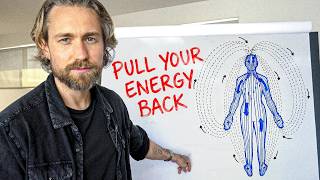
Aaron Doughty teaches the Frame Technique, a practice that stops you from absorbing others' emotions and blocks authentic expression. A candle-flame visualization exercise creates separation between self and other. Doughty traces how guilt and people-pleasing keep you from stepping into personal power.
Chapters
Why is it the Frame Technique is so powerful that it has literally transformed thousands of people's lives? When I learned this years ago from my shadow work coach who had a double PhD in psychology, this one technique completely transformed my life from the inside out. And then as a result, sharing it on YouTube, I've now seen thousands of people go through the same transformation. You will literally go from feeling like you're in an invisible cage, feeling like you absorb the energy of everyone around you, feeling stifled to express yourself subconsciously and can't help Why is it you go from that to literally like, like walking like Conor McGregor down the aisle, feeling, knowing that you don't have to take on other people's emotions and energies? In this video, I'm going to show you practically how to apply what is called the frame technique. And I'm going to show you how this is the key to no longer abandoning you, to no longer tuning to everybody else to find safety. First off, just to paint the picture of how this looks and how this also connects to that of a simple transformative process, I'm going to explain it using this right here. So sometimes people will say, they'll say, how do I change? I am aware of my pattern. I'm aware of the inner child that I've been abandoning. I intellectually understand it, but I still can't figure out how to shift my life. I keep falling back into old patterns and then I beat myself up for doing it. And it's like, just give me the process, show me what to do so I can get rid of that needy little inner child and feel good about myself. Well, here is the process of transformation, and then I'm going to show you how to apply this with the frame technique. Okay, so it's kind of like this video is a little bit of both. I'm showing you the frame technique and I'm showing you also how you can completely transform your life using a very simple process that'll allow you to actually embody it instead of it just being intellectual. So first off, when you look at this, look at— this is the simple flow of things, and then I'll show you how that I applied this to the frame technique. So awareness, becoming aware of the beliefs, becoming aware of the pattern, becoming aware of the contraction side of your body, Being able to observe it is where there's a lot of power. The second step is feeling. Feeling, letting yourself feel what comes up. Instead of trying to reject the emotion, embrace it. That's when you allow it to begin to basically flow through your body, through your nervous system instead of trying to control it. Then we have expression, expressing the real you. Expressing the real you. And then that's where the frame technique comes into play. And this is where most people feel blocked because they're afraid of expression because they're absorbing everyone else's emotions thinking that it's their responsibility. So from there, from once you express it, then it leaves the body. And then from there, you then have a new behavior, a new action. Now transformation follows this simple 4-step process. You could add in forgiveness into the healing section. You can express new values and new ways of being. But this in general is an expression or is a transformational arc that we go through even with that of the frame technique. Okay? Now let me share with you an example of how I use this in my life. I was coaching the other day and this memory came up for me because someone came on and was saying that like basically they experience where someone in their life feels jealous of something else. And then they feel controlled by that, and they realize they didn't have to take on that, like, that judgment, um, or that jealousy. I had this situation where a few years ago, um, my best friend and I, we had a friend that was starting to become closer to us. And what happened is, as time went on, I could feel that there was a desire for this friend to be as close as we both were. And I remember that what happened is like a year into this, my best friend and I have been friends for like, I don't know, um, 7 or 8 years, 8, 9, 10 years. And we would go on these trips. And I remember that we went on this very specific trip to Sedona. And when we went there, I remember being at this restaurant going to eat And I remember literally being afraid to share on social media that we were there because I was afraid that my other friend would see it and would be jealous that he wasn't there with us and would have been maybe hurt that he wasn't invited. Now, on the surface, when you look at it, it's like my friend and I just wanted to have like— we would— our thing was going to Sedona to like do business thing, to like think and to like explore, brainstorm business ideas, etc. But I remember in that moment feeling constricted. I remember feeling like this invisible cage around me, the fear of what he would think, the fear that he would be butthurt. And I remember that there was this moment where I was like, I allowed myself to feel the energy under the surface, but then I simply used the frame technique. And the frame technique has to do with actually feeling the separation between you and someone else, and it's where you bring your energy back. But what I realized is that if there was tension there, it was not my thing to manage. Maybe that tension was good because that would help this person evolve out of the pattern, letting them sit with it. So there were times where I would feel what this person— I would anticipate what they might feel and it would control me because I wouldn't want them to be jealous or whatever emotion they have. And mine on the other side of that, I guess, is guilt. Which is interesting because the emotion of guilt says, "I feel responsible." Your tension is my tension. I don't want you to feel tension. So instead, I will just not express on social media that I'm here. Not express it at all. And what— as a result of that, I'd feel constricted. And then also, it was in a way enabling the pattern. It was like dancing around someone else's emotions and letting them— instead of just letting them sit with it and be like, that's their thing, not mine to manage. And even the expression could have been around, hey, sometimes I feel like— I just want you to know that sometimes I feel like I hold myself back from posting because I'm worried what you're going to think. I'm worried that you're going to be like sad or hurt because we hung out. So it's like there's multiple opportunities to express, but expression can't really happen when you feel you are responsible for someone else's emotions. So when I originally learned about the frame technique years ago, I remember I lived in Sedona at the time and I remember I would simply do this practice which included looking at a candle flame and feeling the separation on the in-breath between me and the flame, putting the awareness on the space between me and the flame. And the in-breath— on the out-breath, still focusing on the flame but focusing on the peripheral. And when you think about it, it's kind of like in one way oneness, when you think of that of the— you think of this right here, This is the candle. This flame is what you're focused on, right? You've got your eyes focused there. Now think of it, the candle and the flame represents one, which is self, and everything around the flame is other. Self versus other. So on the in-breath, you focus on the separation and your feeling of you being inside of your body. And then on the out-breath, you still focus on the flame. You don't move your eyes. Eyes that wanders, a mind that wanders. You focus on the peripheral, which is true. You are both connected and also separate. And one of the reasons this thing is so powerful, this process, is because it helps you to lean more into something that is called individuation. Individuation is a stage of development where you begin to become more self-realized, where you stop living in the patterns from childhood and you start choosing what you value. You start choosing who you are. And there's certain ways of relating this where you realize that to ease other people's tension is not your thing to manage. So when I learned about this in Sedona, I remember going on a walk and realizing as I was even walking on this hike, that there was this— there's pressure I'd feel to say, be nice to people, say hi to people. Now there's a difference between being nice and being kind, by the way. And if you don't feel like, you know, greeting people or being nice, to be pleasant, it's okay to bring the energy back to yourself. It's okay to realize it's not your job to manage. But imagine how drained you will feel as every— if everywhere you go you feel like when you're around people, your job is to manage their emotions. That would feel very heavy, wouldn't it? Because you literally would believe that it was your job to manage their emotions. It's your job to— So the unknown is that they could feel whatever they feel, but it'd be your job. But you see, your transformation here is leaning into the tension of expression. So when you think about the transformational arc here that we're talking about, so I remember specifically when I was, you know, talking to my shadow work coach, there was a certain person that, good friend of mine that I had to reestablish some dynamics with. And that meant expressing things that I knew he was gonna have tension hearing. But expressing it, I used the tension and realize that as this person would feel tension, it wasn't my thing to manage, but the intention, the tension of the expression was the authenticity. This meant literally expressing that certain dynamics, how I felt about certain dynamics, this meant being honest. So part of the frame technique of this simple practice of feeling separation between you and others because you could do it with the candle flame and you could also do it between you and somebody else and begin to take your energy back. Because think about it, if when you are in, you know, just existing and you're thinking of other people, it's like your energy is being projected outside of yourself. It fragments your energy. The story I've told like 100 times on my channel was one of the first times I ever experienced this version of it that was planted years ago was in 2017 when I went to a transformation place in Costa Rica and there was a consciousness teacher there that was basically did this exercise at the front of the room. She said, "Everyone in the room, send me energy, send me energy, send me energy." And it has this blocked effect. She said it has this intrusive effect. She goes, "And it like actually repels," which is interesting, right? 'Cause a lot of people are thinking about what they want. They're thinking of someone. And because they're thinking of someone, they're projecting their energy, it actually pushes away what you want. Because think about it, how you feel in your body when you're thinking of them becomes this intrusive version of control. And the reason you've expanded your energy field to include them is because subconsciously, once they feel safe, then you can feel safe. So what you call as this people pleasing pattern, or this super empathic sensitive pattern is a manipulative control pattern. And a lot of people don't like to hear that because they said, "No, I'm good." But here's the thing, you may associate good, you may associate good with abandoning yourself. You may associate good with easing other people's tension. You may associate good with getting mom and dad's approval. So good is actually bad. What you think of as good is actually bad for your inner child self. It's bad. We think of good and bad, and of course, what I'm doing here is I'm trying to help you reframe some of these ideas because if you see one of the strongest human desires there is, is to remain consistent to the way that you define yourself. So if you define yourself as, say, I am good, I absorb other people's emotions, and my way of being good is I must resolve other people's, like, tension, and that means projecting my energy out and to expand to include them, but then I feel burdened, I abandon myself to do it. So it's no, it's no surprise that people will abandon themselves to do this. And then wonder why they feel abandoned by others. People treat you the way that you treat you. So back in the day when I was— had that experience where I became aware of the pattern, where I'm sitting with my friend in Sedona and I became aware of the pattern and I became aware that I was stifling myself and not wanting to express, and instead I let myself feel the guilt, let myself feel that emotion, let it run through my body. And then I would in the separate. So you could say it's kind of right here. That's like where you begin. That's their stuff. That's their stuff. Not mine. Go and comment that below. That's their stuff, not mine. This little quote right here will help you then realize, wait, I'm going to express the real me. And that may, that may mean actually putting it out there. It's actually just happened to another friend of mine too. A friend of mine had this really good business idea that they wanted to do, and what they do— what they did is they shared it with a couple friends of theirs that also have businesses. And what happened is it was a really unique idea. It was something that this person was really excited to do. And what happened is one of this person's friends decided they were going to do the exact same thing. Call it the same thing, same way of connecting these things together. And this person has a much bigger platform and a much bigger business. So now my friend would then see it as— see, it would feel like this person was actually, um, copying the person with the bigger, the bigger following. So when I was talking to them, I was telling them like, okay, you know, I could tell this person, you know, was feeling aware of the pattern, feeling it, and then not expressing it. And I thought to myself, why don't you express that to your friend? You know, why don't you express it and realize that if they have tension, it's not your thing to manage. At least you'll feel more free. Hey, I gave this idea Recently, and I told you about this idea and now you're using this idea. And the challenge is that you have such a big following, people are gonna think that it was your original idea when it was something I wanted to do. But the block is normally around expression, not expressing that. So this person, what they decide to do is they decide to actually express it. And that expression is like wiring in the new you. The expression of understanding, You are worthy of having these— this emotion comes up, these needs. Now, it might not be their job to like ease the tension in you, but just expressing it is a way of not holding it in. Because realize, we're training people how to treat us. And if we want to continue to have the energy of feeling guilty and managing their emotions, that will be on autopilot until we take our power back. That'll be on autopilot until we decide that that's not our thing to manage. So me going to Sedona with my friend and then not, not like expressing or showing my life and not expressing myself, that was a way of keeping that energy dynamic alive, keeping that burden alive, keeping me abandoning myself. But you see, in the expression is where you start to become more free. So when you think about this too, here's a couple layers deeper with here too that I think can really shift a lot. Awareness, a tool with awareness is observation. You think thoughts, you're not your thoughts. You have emotions, you're not your emotions. When you can observe from a neutral place, that's where you're not as reactive. Feeling, one of the very powerful parts of feeling is accepting the emotion. Something I call repatterning, repatterning it. Locating it in your body and feeling it and releasing it. And repatterning allows you to repattern the mother-father-child dynamic or the past dynamic of where this pattern originally came because that pattern is stored inside the body. Now, expression normally means having some form of stretch that stretches your identity, stretches how you view yourself, and that allows vulnerability. That allows you to open up, that allows you to be more free. And from there then, massive action into the new you. Massive action or new behavior. Making a new choice about who you are. It could be a small action like me expressing myself on social media in that Sedona example. But realize you are not blocked by these things and your job is to bring the energy back into you. So if you're interested, by the way, maybe I'll do an individuation workshop soon or a video on individuation. Maybe comment below, let me know. But one thing I also have is I have, I have two things. I have a video on the frame technique to learn step by step how to do it. I'll link that at the end. I also have a frame technique meditation that I just redid and made, and you can download it by clicking the link below. It's free and it has this visual thing that helps you to like sink into it a little bit more. So if you want to learn more about the frame technique, I have my original video here that a lot of people people have watched. And then also, you want to go deeper, there's a free meditation below on the Frame Technique that you can apply that will completely transform your life. And then let me know if you want me to do a video on individuation, and maybe I will. Peace, much love, and namaste.










