Using the "expectation effect" changes your reality..
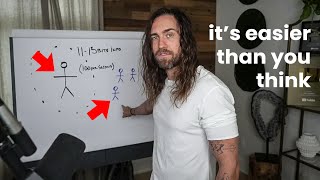
Aaron Doughty explores how expectations shape reality through studies on placebos, teacher bias, and stress beliefs. WWII soldiers given saline reported pain relief because they expected morphine. Shifting your expectations about energy, aging, and relationships produces measurable changes in mood and performance.
Chapters
There are different scenarios that explain this process and just how this actual effect works. Let's look at a few examples. One I found very interesting, what the way this actually even started was back in World War II, there were that of people that were in this, like, you know, in this camp they were going through, they're like arms chopped off, all this crazy stuff happening, and the army medical office, you know, place, they ran out of morphine. Morphine is the drug they give to people to numb pain. They ran out of morphine and these people were in excruciating pain. So what they ended up doing is giving people a saline solution, which is just salt water. And from doing that, there was a 90% success rate of people feeling that morphine, even though there was no morphine in their system. Imagine that. They literally believed they were taking morphine while they were in excruciating pain. And then as a result of that, 90% of the time they felt that relaxation and they felt like that pain relieved itself while they were having their operations or whatever was happening. That's kind of how the expectation effect was accidentally found, was one of the things. Now you talk about like how people, 'cause the interesting part of this idea, people have talked about the expectation effect before. I wanna merge this with hope. Ho'oponopono and understanding that everything is literally a reflection of the beliefs and the energy that you have within your field by understanding your relationship to people. Because since I've applied this in my life, people respond to me differently because I believe something different about other people. That's really what is what the expectation effect is all about, by the way. Your beliefs create your reality. Now there's more of a scientific showing that this is actually the case. Now let's talk about this, how our expectations can affect that of other things, not just ourselves, not just like placebo of something going into somebody. Imagine that you're in, there's this lab, and in this lab there are these rats that are inside these cages. And imagine that someone goes in the night before and what they do is they put Post-it notes on each of these cages. One says smart, one says dumb. So what they do, this person does, is put Post-it notes on every single rat cage and it says either smart or dumb. And the next day you put these two rats into two different categories and you give it to people and you have them test this maze to see how well the rats perform. Now what you do is you tell people that the Post-it notes are an actual representation of whether they are smart, they are rats that are smart or rats that are dumb. And then you have them test how long it takes for these rats to go through the maze. Now the results of this, by the way, was that the rats that were labeled as smart were twice as fast as the rats that were labeled as dumb. Twice as smart. That's not just a little percentage different. Literally, people's expectations that this is a smart rat or this is a stupid rat had an effect on the rat to where it performed at either twice as good as the other. The truth is the rats were all just regular rats. None smart, none dumb. There was no selective processing. It was just random. The interesting part about that is that a lot of times they've also showed this in teachers, teacher-student relationships. You have a 3rd grade class, for example, you tell a kid, you tell a teacher, they've done this before. You tell a teacher, these are the smart kids, these are the kids that aren't so smart. The teacher, from the belief and the expectation that these are the smart kids, literally expect more out of them and expect them to be smarter, and they are smarter or they perform better as a result. Isn't that interesting? So if the expectation effect works in these dynamics of teacher and kid or person and rat, and you could look at that and say, okay, well, Maybe people treat the rats differently. It could have been that the people held the rats more carefully 'cause like, this is a smart rat, it's gonna perform so well. So then they put the rat in there and it performs twice as fast. I'm like, yes, I always believed in this smart rat. Maybe the teacher makes more eye contact with the smart kids because it is expected to be smart. And the kids that they don't expect to be smart, maybe they just kind of like they're a hopeless cause. Regardless, the kids perform at the rate at which their expectation of is and what the image is of the person that is holding it for them. Kind of reaffirming this, 11 to 15 million bits of information, 100 bits per second. What are your expectations of people? This is where we get, this is where it gets interesting. Imagine you wanna attract love, but you expect people to let you down. You expect people to not really like you. You expect people to betray you. Imagine that that's the expectation you have. What built— what 100 bits per second of information from other people are you gonna pull out of other people based on that energy, based on that belief? Because remember, your beliefs create your reality. So the way that I've been applying this is in general in my life is I've been expecting myself to have more energy. I've been expecting myself to, in a way, love myself more, in a way, feel more accepting of myself. And the funny thing is, is as I accept myself more, as I love myself more, there's a different reflection in my life as a result. I've had to look at what my beliefs are. What are my expectations? Like, how do I expect people to respond if I do XYZ. I'm like, wow, the expectations I had that were subconscious that I make conscious, it makes it so much more powerful once we do that because then we can make a choice and we can reframe what those expectations are for ourself. And even if I look at that of the word expectation, the definition of expectation is a strong belief that something will happen or be the case in the future. A belief that someone will or should achieve something. And in general, many of us have low expectations of ourself because we don't believe in ourself. We don't believe in our capabilities. I know a lot for myself changed when I was in— here's it. You talk about identity, you talk about, you know, how you see yourself. Back when I was in 9th grade, I was a freshman in high school. I was a C student, C and D student. And then one day I took an English class test and I performed better. The teacher literally said like, oh gee, I remember getting the piece of paper and it was like, you performed better than most of the other kids. Like you performed in like, you were like one of the best grades on this one test. Just from her saying that, I began to see myself as a smart person. That little nugget of information is so stupid 'cause it was one test, but something shifted in my mind. And I remember I started to see myself as an A and B student. And I'm not kidding you when I say within months, I was a solid A or B student. I graduated with a 3.8 GPA, took honors classes. Before that, I was an average student who literally thought I was dumb. My self-image changed. What if your expectations are also a direct reflection of what is natural for your current self-image and the stories you tell yourself? You are acting out that expectation, that strong belief, and that that is all that you are capable of. So expectation is something that you can start priming yourself for in a new way. I look at myself and I look at some of my friends and I have an incredible amount of energy just naturally, not trying to brag or anything. Maybe I am bragging. I have a lot of energy. Are you jealous? There, just kidding. I have a lot of energy. I just believe I have a lot of energy. I expect to have a lot of energy and I don't get tired after little things. Now they've done experiments with this before. What they would do is they would take two different people and put them into two, it's always two, right? Groups of two, two different classes, two different groups of people. One, they said stress makes you more resilient and more sharp. That was how they primed them. And the other people said, that stress will make you less resilient and less sharp. Then what they did is they had them do one of those tests where you read the color of a word without reading the actual word. So it'll say yellow, but it'll actually be the color red. And then it'll be blue, but actually be the color green. And you have to say the color, not the word that you're reading. And people that were primed the first way, that were told that with more of this stress you become more sharp, they performed much better than the people that were told that with more fatigue you're gonna get more mentally slow and you're not gonna be able to, like, it's gonna be harder to do a test like this. Now, whether that information is true or not, whether you work better under pressure or stress, the truth is whatever you believe about stress makes you better. Some people, perform better under pressure. When they told people you will perform better under pressure, they were able to do this quit, this thing way better than people that were primed with the words, you do this, you're gonna, it's more tiring and less sharp once you're in that stress. Interesting, right? So for myself, what I've recognized about myself is I just always have a lot of energy. I believe I have a lot of energy. When I'm around some of my friends, I notice that they get tired a lot easier, not in a judgmental way, but sometimes they look at me and they're like, how does Aaron have so much energy? Even when it comes to aging, I have friends that give me shit. I have a couple friends that are older than me and I'm over here in my 30s and they're like, like early 30s, it's like, it's a different ballgame than when you get into your mid or your late 30s. It's so different, oh my God. And I'm like, yeah, I pretty much think that age stuff is like, it's more of a belief. Like what do you believe happens when you age? I believe I will get better with age. By the time I am like 50, I believe honestly I'll be in my peak, not only financially, energetically with my purpose and everything, but I believe I will look better in my 50s. I just believe that. I don't know why. And people that I believe think the opposite, like your beliefs go into how you experience it. I made a video on age before and I talked about not the best example 'cause people are like, this person's got facial surgery and this and that. But people that have like a very youthful energy, there are certain actors and people, you know, even women that are much older than they look. And one common thing they say is that they just believe that age is like a mental construct. They believe they get better with age. Remember, expectation. A belief, a strong expectation, a strong belief that something will happen or be in the future. If you expect yourself to age horribly, then you'll age horribly. If you believe you get better with age like a fine wine, you're gonna get better with age, you're gonna be like fine wine, whatever. So become aware of what your expectations are and realize that people are reflecting that back to you whether you realize it or not. Now, one of the powerful things this also talks about is that of rituals. Here was something funny they did. They would have somebody do this karaoke pitch contest thing where they'd have to sing this certain song. I think it was Journey or something like that, to a certain pitch, and they were being graded on it, and there was like a software or something else involved. Half the people, once again, half the people that were doing this pitch were told to do this ritual where what they would do is they would write like 10 things about themselves, 10 positive things about themselves. They would sprinkle salt on it. They would crumple up the piece of paper and throw it in the trash. And that ritual was gonna make them have a better pitch, sing better, They then did the ritual and they performed 13 points better than everybody else that wasn't told that. That ritual literally made them believe they were better. Interestingly enough, if they changed the word ritual to random things like random behaviors, so instead of it being this ritual you're doing to create this effect, it's just random behaviors, it had no effect. Literally believing in the ritual was what helped them shift, was what helped them have that expectation of reality. You look at basketball players when they're getting ready to do a free throw, when they do their pre-free throw ritual, like Serena Williams, for example, she'll hit the ball like 5 times. When they do that, they perform better than when they don't do that because they believe in the ritual, not the random behavior, in the ritual. I've done this before as well. And it sounds stupid. I almost think it was like an OCD thing back in the day when I was working at selling women's shoes. I'd be like, I would play basketball in the morning and I'd be like, if I make this, I'm gonna have a great day. Boop. And then I make it, I'm like, yep, gonna have a great day. You wanna know the ultimate expectation thing? Is you see 11:11, a spiritual number, and you see the 11:11 and then you're like, this is an amazing day. This is a confirmation I'm gonna have an amazing day. And then you begin having an amazing day and then something good happens and then it just adds on. See, this day was so amazing. When in fact you can look at any number, 11:56, it's 11:56 right now. That's the best number there is, Aaron Doughty. Don't you know 11:56 means that you're gonna perform better today? You're gonna be the most magnetic version of yourself. Of yourself and you're going to make an incredible video that's going to get viewed by so many people. It's going to help so many people. Now it's 11:57. That's still good too. You choose what things mean, but these little things happen and then you believe. So the important thing is that you believe it, right? So everything just has positive meaning now, which it could. I mean, it's kind of what Bashar says. Give anything you give meaning to, you can give it positive meaning. And you will get positive effect out of it because you'll, even if it's something that plants the seed for that positive energy that grows later. But nonetheless, people are responding to you depending on what your expectation of them is. So if you expect people to judge you, they're more likely to judge you. You're probably also judging yourself. I just happened recently, we ran a, ran a retreat in Costa Rica and there were so many awesome people there. It was one of the best retreats we've ever done. We've done like 9 of them in Costa Rica. And one of the days is like the day before everyone leaves. I normally will go and interact with as many people as possible because, you know, I'm so happy that people came. And it's normally a time that can sometimes be a little bit energetically draining for me because it's literally like I'm talking to 30, 40 people and going around and saying hi or saying bye and like interacting. And it could be a lot of energy sometimes. I literally just expected myself to be in top shape. And sometimes it can get overwhelming when there's like 3 people talking to you at once and you're like, you're having to control all the dynamics and all the situations. And then people want photos and stuff like that. Like that sometimes can be overwhelming. I went into it expecting everything to just flow and expecting myself to be able to, instead of be, like somebody that gets like drained from it. I expected just to give me energy almost. I literally went through that experience for like an hour, engaged with all like 30, 40, 35 people, had an amazing time, was in my own energy, and it was fun. And I felt sparked up afterwards. Whereas in the past, I expected that to drain my energy because I was like kind of going around and seeing so many people. My expectations, affected a different result from it. So what if when you meet other people, you're going— if you're going on a date with someone and you expect them not to be interested in you, what if you expected people to treat you the way you treat yourself? And if you're curious within yourself and you love yourself, then it's gonna be a lot easier for other people to love you and respect you. This goes back to also Ho'oponopono, which is about becoming aware of the energy within your field and 4 simple statements: I'm sorry, please forgive me, thank you, I love you. Realizing that everything and everything on the outside is a reflection of the inside, which is funny because sometimes people want someone else's validation or approval on the external, which means The truth is they can only give it to themselves. They're craving it on the inside. So you can go and create an Instagram account with a whole bunch of followers or get a whole bunch of validation from dating and all of that, but it's not gonna actually fill up what you're trying to give yourself, which is your own validation and approval or your own love. It's all within. So if you expect and believe that it's already inside of yourself, then you won't be seeking it on the outside. But become aware of what your expectation is, is with how you relate to other people and realize that it's all just a reflection of you. The more I've expected myself to just love myself, accept myself, expect to have high energy, expect to enjoy my interactions with other people, the more my reality continues to shift. And you could do the same by making a choice about who you are and choosing to believe it. Now, it can be that simple. I look to, I have YouTube videos that are meditations that have thousands and thousands of comments from people that have shifted their life using these different meditations. Probably the most notable ones are the Attract Love Meditation, which has over 7 million views, literally thousands of comments from people saying they attracted love doing that meditation. Could it be that they read the comments and then they believe like thousands of comments from people that say they attracted love? There are people in the comments section of that attract love meditation that literally say within 2 weeks they met their partner and they've been married for like 3 years because that video is like 5, is like 6 years old. Like there are people that claim they are married because they watched that video that did that meditation. And then people read it and then they expect to do the meditation. And then the meditation maybe is also like this group pendulum thing. That's a whole nother video I could eventually talk about, like a mass thought form or something. But nonetheless, it increases the probability of things like that happening. And then other meditations, this meditation will raise your dominant vibration permanently. Thousands of comments from people saying it shifted their life. People read the comments, it increases the belief, and then they do the meditation and they get that expect, that result. They expect to receive something from that. That's the power of expectation and the power of meditation. Now, one thing I do wanna do more of is more meditations live on YouTube using the power of this expectation effect for getting into our heart. If you wanna join those, then turn on notifications so that you can see those 'cause I post those. They're normally gonna be on Sunday, but subscribe and, push, push notifications so that you can see those meditations. We'll be doing those. And then also let me know if you like this video and you want to learn more about the power of expectation. Maybe I could do a follow-up video on merging that with Ho'oponopono. And then also if you want to learn more about that of Ho'oponopono, it will completely change your life and really dig into this. This is the next step of the journey. Check this out right here.










