Why Narcissists and Sociopaths Crave your Attention (and how to stop feeding them)
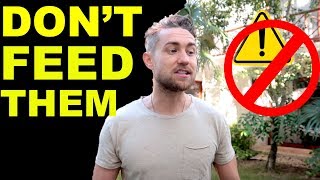
In this self‑help video Aaron Doughty explains why narcissistic and sociopathic individuals seek and thrive on other people's attention, describing attention as a form of energy that fuels their behavior. He draws on his own childhood experience with an abusive ex‑stepmother to illustrate how such personalities manipulate, control, and drain others. Aaron cites a cortisol study to show how lack of emotional response can increase stress in manipulators, and he recommends practical tactics: becoming emotionally "invisible," maintaining neutral facial expressions, setting firm boundaries, and forgiving the abuser to release held energy. He frames narcissists and sociopaths as victims of their own unresolved patterns and introduces the Hawaiian healing practice Ho’oponopono, offering a 21‑day meditation to help listeners let go of attached energy and transform their own vibrational state. The video concludes with a call to action for viewers to engage with the channel.
Chapters
This video, I'm going to show you why narcissistic people and sociopathic people crave your attention, and I'm going to show you exactly how to stop feeding them. Welcome back to another video. My name is Aaron, and I help people expand their consciousness. Now, in this video, I'm going to be showing you why narcissistic people and sociopathic people want your attention. Why they want it, how that actually fuels them, and how you can begin to divert your attention or to not keep giving them your own energy. Now, I've done a couple of videos on this channel on narcissistic people and sociopathic people and how to deal with them. And the reason being is because I went through an experience between the ages of 7 to 15 years old where my ex-stepmom in my life— my dad divorced her when I was 15— And when she was in my life, she's definitely somebody that has characteristics of being a narcissist and a sociopath. She was somebody that was physically and emotionally abusive. It was always about her, and she was very manipulative. So for example, if I wanted to, uh, it's almost like whatever I wanted to do, she would control and make sure I would do the opposite. So for example, it would be like, oh, I want to go to some band camp tournament. Well, if she knew that I wanted to go to that band camp tournament, she would tell me that I got in trouble for something, something really dumb like not cleaning something properly or saying I did something I didn't do, and then I wouldn't be allowed to go. So what I would have to do is I'd have to be like, oh, I really don't want to go to that band camp tournament because I haven't been practicing or something like that. And then she'd be like, oh, you think you're not gonna go? You're gonna go. It'd be the exact opposite. Opposite of anything that I would want to do. And she was, uh, you know, if you've, if you've listened to my stories or you, you've watched my other videos, then you've seen the kind of experiences that both my brother and I had to go through. Many times we were locked outside of the house and we had to, uh, just do chores. We weren't allowed inside of the house. My dad was a firefighter, so he was gone a lot. She, when she was gone, we were outside working and, um, we weren't allowed to eat very much. So Both my brother and I were very skinny up until 15 years old. My brother was 13 years old, my dad divorced her. Then we were allowed to eat what we want. We were allowed to have friends again because we weren't allowed to have friends during that point of our time. She was, we were brainwashed against not wanting to be around our mom because anytime we go to our mom's house and come back, we would get punished for something. And eventually we decided, oh, well, don't wanna go to mom's house 'cause I go to mom's house, come back, it's gonna be a lot of pain. So there was definitely a level of, brainwashing going on. And the kind of characteristics that she had was always in a way controlling things and also just making it so that our life was harder. And it was almost like having somebody that was like a drill sergeant, army person or something like that, drill sergeant. And it was just a very, you know, it was a very difficult time. 15 years old came around, my dad divorced her, then we're allowed to have friends. So we were able to learn how to socialize again, and, and we didn't have to— we were allowed to eat the kind of foods that we want. We were allowed to watch TV, something that we didn't do between 7 and 15 unless we were like sneaking it, like we were watching kind of like in the living room trying to sneak watching TV or something like that. What we would do sometimes is when they weren't home, if we were able to sneak inside the house, my brother and I would take turns watching TV. We'd have the remote on the lat— with the last button button on the last channel in case somehow they were able to find out which was the last channel, like that we were on a different channel. And then what we would do is when we saw someone pull in the driveway, push the last button, turn off the TV and run outside. So we'd get work done and then go do that. So the reason I share this is to kind of paint a picture for you to see that I've been through this kind of experience. And one thing that I've noticed is that narcissistic people and sociopathic people, they crave your attention. They want your attention. And the reason they want their attention is they may not know this consciously, but anytime somebody is focused on someone else, that person that is focusing on someone else, the person that's being focused on is receiving energy. They're receiving energy. So even and especially when it's something that's negative, think about it. If something negative happens, you really take someone's energy because that person is constantly thinking about what you did and how angry you are that it happened. And because of that, what happens is you're constantly sending that person energy. That person can then feel it. So what happens is doing something negative and having someone continue to run it over in their mind, that person will continue to send energy to the other person, maybe not even knowing it, but playing a certain role. And, and that continues to fuel them. Now, I remember a specific scenario of this, and just, I have a video that's on how, why narcissists and sociopaths don't get their karma. And I'll go ahead and link that. I'll link all the narcissistic and sociopath videos below and how you can deal with that and distance yourself from it. They'll all be below, but there's one on why they don't receive their karma. Well, I do, I believe that they do eventually receive their karma. At the very least, at the end of what we call a life review, or at the end of our life we have a life review where we feel everything that we've made everyone else feel. So my ex-stepmom that now is doing everything she can because my dad divorced her, um, she's doing everything she can to make my dad's life hell. And she, uh, she lies to courts because, for example, my sisters— I have two half-sisters where that's their real mom, so they can't really get out of it the way that my brother and I did because my my brother and I aren't related to her biologically. So it's easy for us to distance. I never have to see her again. However, uh, two sisters that have to deal with her. Now my dad is and has been dealing with, you know, dealing with that because, because of my sisters. It's like there's this tie to where he still has to deal with my ex-stepmom. Now my ex-stepmom will lie to the courts. She will try to trigger my dad. She's just extraordinarily manipulative. And a compulsive liar as well. Compulsively lies about everything. If you were— the funny thing is, if you were to see her and the way she is around people in public, you would have no idea, no idea whatsoever. She will pretend to be the nicest person ever. She'll be like, oh, and then when she's at court and stuff, or she has to deal with something in front of the judges, she's like, oh, you know, I just want to be there for my kids and blah blah blah blah. But as soon as the— as soon as the the doors close and she's at home, that's when she's able to, you know, bring back her controlling type vibe. And especially my youngest sister, or my, yeah, my youngest sister, she has to deal with it even though she wants to pull away. But it's hard because the courts definitely favor the mom and like that kind of perspective. So it's hard, especially when someone's putting on a show and pretending to be the best mom ever in front of the courts, but behind the scenes is completely a compulsive liar doing everything she can to be manipulative. Now my dad, one time, the reason I say that is because my dad one time, many times has to go to these little court things. And when he goes, what happens is he has to, you know, talk to maybe a mediator or some type of person. And what happens is sometimes he'll be sitting there with my ex-stepmom and she will just be trying to get into him, try to like trigger him. And she's done it many times with different, like anytime, She'll try to trigger him to get him to a place to where there's like some type of altercation. And he tells me about it. He's like, yeah, this is, she'll just say this, blah, blah, blah, blah, blah. And trying to trigger him. And I told him one time, I said, try this. 'Cause I know how, I know how it works. I know how the energy dynamics of it works. So I tell him to do this. I said, when you were sitting there, like he had to go to like some type of mediator and he was sitting there in the waiting room and she comes in, she's trying to say stuff, trying to, trigger him, I said instead of feeding it and responding to her frame of reality and arguing with her, sit there with a blank stare. Don't even have any emotion in it whatsoever. No emotion whatsoever, as if you— as if she's invisible. And the reason I said this is because I remember reading a study, and there was this study that said that they studied the cortisol levels of of people that were going through a job interview, and there were 3 different types of expressions that the person that was doing the interview would have. One expression is the person would like smile and nod as the other person, as the interviewee, like the test subject, was being interviewed. The other, and they would test that person's cortisol levels, and then the other person they would have is they would give negative reinforcement. They'd be like, shh, somebody was like telling their story, they'd give like negative reinforcement. They would measure the cortisol levels of the other person, the person being interviewed. And then the third one, they would have no expression. So the person being interviewed would be explaining, you know, telling, you know, on the point, trying to get the job and answering questions. But the interview person, the interviewer, would have no expression whatsoever, like this, the whole time. Well, guess which out of those three the person had the highest level of cortisol, meaning the stress hormone? They were more stressed out when there was no expression whatsoever, because when we don't know what to think, when we don't know what someone else is thinking and there's no expression there, no response to the frame that we're putting out, it's very stressful. It's very like uncertain. We don't know what's going on in that other person's mind, and therefore it increases our cortisol level more than if someone was given negative feedback. So think about that. That's, that's what I remembered. So I told my dad, I said, when you go into this, just pretend like she's not even there. Pretend, just be there. And even if you want, just. Just smile. Not like a condescending way. Although he may have, I don't know, but you just like smile. Like, just like that. No expression whatsoever. She probably tried to say things, trigger him. So what happens is he's sitting there, she comes in, blah, blah, blah, blah, blah, blah, blah, blah, blah, blah. Like that. And then what happens is my dad just sits there as if she's not even there. She did that for like 30 seconds to a minute and then just left, just completely left the facility. She couldn't even handle that level of being invisible. And the reason being is because when you don't feed someone with your energy, when you're not fitting into their frame of reality, then what happens is they can't take that and then they go somewhere else. You see, that's the thing with narcissistic and sociopathic people, is it's always about them. And if you're not focused on them, you're not feeding their energy. I also remember, this is kind of a side tangent, there was someone I used to work with, and I'm not saying that this person's a narcissist or sociopath, but I did notice that a lot of times she would talk out loud to herself all the time, all the time. No, like, it's almost like there was no internal chatter. She would just say it out loud. So she's like, oh, how do I do this? How do I do this? Blah, blah, blah, blah. And it was so draining to be around it because you're sitting there trying to think, I'm trying to help customers, it's my old sales commission job, where I sold women's shoes, and she would always be talking, I can't figure out how to do this and this and this. And I remember when I first got hired there, I wasn't a guy, I was trying to help her with everything she was saying because I was just now getting to know her, you know, I didn't really know her. I didn't know that's just how she is. And it would drain my energy the more I put attention on her and what she was doing. And I felt like energetically she would almost benefit from those beats, not just because I'm showing her what to do, even though, you know, she may have worked there for like 10 years. And know the system better than I did because I've only been there for, you know, a short period of time. But I noticed that that would in a way fuel her. And what I learned to do is I learned to just be in my own reality, focus on my own goals, focus on what I'm doing, and not get kind of sucked in because I realized that attention really is energy. Now here's the thing. Wherever you put your attention, you are putting your energy in that direction. If you are reading books about— if you're reading books from an author, you're connecting to their energy. Your attention is connecting to their energy. If you're listening to certain videos, then you're connecting to that person's energy. You listening to my videos, you're connecting to my energy. Wherever you put your attention, you are putting your energy, and you are beginning to resonate with that person. So if you are focused on somebody that has done something negative to you, then what happens is you are sending that person energy and you are not only sending them energy, but you are receiving some of their energy, maybe even some of their negative intention. So the key to this is having more boundaries of your more intent, of your own intention, because your attention is feeding different people. People may try to take your energy. They want you to focus on them. And if you get angry, if they were to, let's say, somehow abuse you, you're sending them energy even way after this situation may have happened. And you're losing energy. It takes energy to think about those kind of things and to, and to feel angry about it. And that sends energy to that person. And that's why we have people that act out violently against other people. They may remember that forever and always, subconsciously. They're sending that energy to that every time they think about it. So what is the key to this? The key to stop sending energy— and the reason they crave your attention is because they crave your energy. That's why. So what do you do about it? The first thing, the most powerful thing that I found to do is to forgive. It's to forgive. Forgive them, for they know not what they do. When I look at my ex-stepmom and how manipulative she is and how emotional, how controlling she is and how abusive she is, she's like that because she may have been treated a certain way when she was young. She's acting out a pattern. She's unaware of what she's doing. And because she's unaware, it doesn't make it right, but it does help me understand it more so that I can forgive. Because if I didn't forgive, I'd be carrying that energy around. And I did for years. Even after my ex-stepmom, I had someone in my life that was always, was always reflecting back that level of control back to me because I hadn't actually completed it within myself. I hadn't actually forgiven her. So I forgave her, which means I still have boundaries. Doesn't mean I'm ever gonna go talk to her again, but I forgave her and just let her be. And by forgiving and let it be, I'm then able to forget about it. Now of course I bring it up so that I can talk in these videos about it because the thing is, is many people are going through similar things. And if I can share my story and it helps other people realize, hey, I went through all these things in the past and I came out and live a high vibrational lifestyle and love my life, then you can too. It's more relatable than me just talking about the good things that, oh, I've forgotten about all of this. No, I bring it up because I want to help you to do the same type of thing. Maybe you've been through it, you know someone that's narcissistic or sociopath. Trying to get out of this, you know, back this up a little bit. So maybe you've experienced it in your life where there's somebody that's controlling, that's taking your energy. They can't take your energy unless you give it to them. Just that you might be patterned into giving it to them. Now the key to this is developing the boundary and knowing that you don't have to fit within their frame of reality. The, the video I did that went viral that I had no idea would get so much attention is the Why Narcissists and Sociopaths Don't Get Their Karma. In that video, I talk about how they are playing reality according to their frame. When people are responding to their frame and they're playing maybe the victim role, they're playing the other role, then it keeps the energy dynamic going to where the karma can't happen. The karma can only happen when the, the roles are stopped. And the way that you stop the role is you take your power back. Maybe you create better boundaries. Maybe you create better boundaries and you become aware of it. And that boundary is a sign of love. It's a sign of love to yourself, saying that I don't deserve to be treated this way. And by then forgiving that other person and then just being in your own frame of reality, you stop feeding them energy. They will go and they will look for someone else to take their energy, for them to take energy. You can just focus on yourself. And as you focus on yourself, then you start to gain your energy back. So realize whatever you focused on, it's a two-way mirror. You're sending them energy and you're also resonating with it. So the key to this is to stop focusing on them, to completely stop focusing on them, stop feeding your energy to them, stop being angry about it, emotionally charged about it, and to hold your own frame of reality. And an extraordinarily powerful way to do this is through a process called Ho'oponopono, which allows you to heal your own energy field and also to heal and to in a way start to see that person in a new light, which can then also affect them in a powerful way. Ho'oponopono is an ancient Hawaiian technique, is extraordinarily powerful. It's 4 simple statements. Anybody can do it. And what I created is I created a meditation you can listen to. I recommend you listen to it for 21 days. I think it'll absolutely transform your life. It has to do with the notion that we're all connected. So when you heal your vision of yourself and you heal yourself, you also heal the other person. And when you see that other person as whole and complete and you see them as being healed from their narcissist or sociopathic tendencies, that's when things begin to change. Because I believe that narcissists and sociopaths are victims themselves. They are, they are people that are unaware of what they're doing. Some people say it's a mental disease. And very well could be, you know. If we remain like, 'They're the bad guys, they're the villains,' then guess what? It's keeping that frame of reality going, you know. People are the way they are because of their past. People are the way they are because they're doing the best they can with where they are. So the idea is to understand that and understand they may just be playing out an old pattern so you can forgive. And Ho'oponopono is The most powerful process I found for letting go of that energy. You let go and you also heal many different areas of your, your energy body. So it's extraordinarily powerful. The meditation below, I'll link at the top of the description box. I recommend you listen for 21 days. I think it'll absolutely transform your life, especially if you commit to it. Read the comments to see what is possible there. A lot of people message me saying thank you for it and that it's really changed their life. So I wanted to kind of let you know about that in this video because it's seems so relevant. Other than that, could you do me a favor? If you like videos on very specific topics like this, could you hit that like button and let me know? It lets me know to do more videos that are a little bit more niche like this, but maybe it's something that gives value and adds value to people. So with that being said, hope you enjoyed this video. Peace, much love, and namaste.
More from Aaron

If you can see this, you're about to become so magnetic you are unrecognizable









