Your "Story" About Love is Keeping You Single
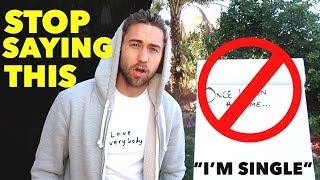
In this self‑help video Aaron Doughty explains that the narratives we tell ourselves about love—shaped by childhood experiences, family dynamics, and repeated personal stories—create an identity that keeps many people single. He illustrates how early conditioning (e.g., a controlling step‑mom, a jealous first girlfriend, parental divorce) forms subconscious rules such as "love equals control" or "I am not worthy". These stories drive feelings, actions, and the energy we emit, which in turn attracts similar relationship patterns. Doughty argues that by becoming aware of these stories, recognizing them as mere narratives, and consciously redefining the meanings and rules attached to love, we can shift our identity from a passive "cameo" role to the "star" of our own story. He offers practical guidance: ask yourself what your love story is, identify limiting beliefs, rewrite the story’s meaning, lower the criteria for feeling loved, and adopt new energetic patterns. The video ends with a call to explore his playlist on stopping the chase for love and money, encouraging viewers to take control of their narrative and attract healthier relationships.
Chapters
All the good ones are taken. Every girl I meet seems like the same kind of person. Women only want me because of my easel. I'm just gonna be that crazy cat lady. Nowadays it just ain't that easy. It's hard to connect with people at a deep level these days. I'm just waiting for my princess. The guys I meet are never doing anything with their lives. Finding a genuine connection these days is hard. Every single thing you just heard was a story, and many of us have stories about love, stories about being single that keep us being single or keep us out of love. And in this video I'm going to show you how to break free of those stories so that you could experience more love in your life than ever before. Welcome back to another video. My name is Aaron and I help people expand their consciousness. Now in this video I'm going to be showing you how and why your story about love, your once upon a time, is keeping you single and I've actually thought about this recently too because I've realized how powerful identity is. Identity in the way that we see ourselves. So there's this identity for the way that we see ourselves. And I've seen some people before that have an identity. Maybe they are a certain age, maybe they're like 32 years old. And normally that's when the pressure comes on for somebody to think, oh, I need to have kids. A woman to think, oh, I need to have kids 'cause now's my time. And then sometimes what'll happen is as they start to identify with being that person, or they, they still tell themselves a story that all my other friends are getting married and having kids, here I am all single. That story and that identity of seeing them as somebody who's single and 32 years old and biological clock is ticking away, as they tell themselves that story, that's when they start to create more and more pain for themselves. And that's when they start to lock in their identity, and then they think actions, and they take actions equal to that. They feel feelings equal to that, and they will literally repel people from coming into their life because of that level of identity. So even like, you ever heard somebody call somebody a crazy cat lady? I'm just one of those crazy— I'm gonna end up being one of those crazy cat ladies, uh, single and lonely. That's a story, but that's also an identity that gives a visual mental image, and When we have that, we are then moving towards that, whether we are just joking about it or not. It's very important to understand, one, our identity, and then two, the story we tell ourselves about who we are and how love shows up in our life. So the stories we have will change from person to person. Every person will have a different story, and everyone's story is based on meaning, the meaning we give things. And that meaning we give things many times is on autopilot from a long period of time. We have a story about money, we have a story about love, we have a story about health. And all of these stories we have, we may say, oh, it's hard for me to lose weight, it always takes this, or I always bounce back to this level. And part of that is bouncing back to this level because the identity may be that I'm a bigger person and it's hard for me to lose weight, which is a story. The stories we tell ourselves are equal to the reality we experience. And the thing is, is most people's stories are on autopilot and they're They're just not aware of it. They may say, oh, when it comes to money, I have to work this 9 to 5 job I don't like. Not only that, the money just doesn't come very often, and when it does come, it goes quickly. It's all a story. The story, many times the stories also come from our parents growing up. How did our parents treat money? Were they worried they were gonna lose it? If so, then you might find that you also have a story that says money is scarce. There's only a little bit of it. I need to make sure I make the most of this and this, and having the scarcity mindset. What about love? Do you view and have your story about love Is your story about love that it's hard to attract love, that you always attract the same person with a different face? Is your story about love that, that you don't ever have a real genuine deep spiritual connection? For me and my own stories, let me share with you some of them and how I broke out of them. Now, one of my stories used to be about love in general. Love in general as well. Understand that we have stories about what it takes for us to be loved, and we have rules about how we know love is met in our life. For example, subconsciously I used to have a story that said that the way people show me love is by controlling me. Because if you know my story, between 7 and 15 years old, I had the step— the ex-stepmom in my life, and she was controlling, manipulative, emotionally, physically, mentally abusive, and very controlling, where my brother and I had no freedom whatsoever. And then 15 years old comes around, my dad divorces her, my brother and I now have freedom. But after that, even I got into my first relationship. I was with somebody who was very jealous. She was always wondering where I was. She didn't like how outgoing I was. She didn't like— there was so much she was trying to control about me. And then I was with her for a couple years, and then eventually I broke up with her. And when I broke up with her, I then got transferred to a department at Nordstrom's in women's shoes. I got transferred to a better department with a manager that was almost the same type of personality as my ex-stepmom. I associated women— I had a story about women that was that women wanted to control me. And really what I was saying is that's the way I thought women were supposed to love me because the model that I had growing up for that period of my life, 7 to 15 years old, was somebody. And the way that I thought love was, was control. And I've seen this in other people's lives too, in different ways. My buddy Victor, who many of you guys know, Victor Otto, his parents really worried about him growing up because he had a, he had a firecracker accident and he was in a lot of pain and it's very traumatic and his parents felt guilty. About it, but his parents were always worried something was gonna happen to him. And his mom would tell him, I worry about you because I love you. So he started to associate worry with love. So guess what? Now with his kids, he worries a lot about his kids. Not— he didn't know for a while. Now he knows that that worry for his kids is him trying to love his kids. And in the same way, he may worry about money, worry about money, not knowing that that's his way of loving and, and wanting to create more of it. That's what he thinks he has to do because we associate love with a certain emotion growing up, and the story we tell ourselves about love specifically is going to control the kind of people we attract into our life and the kind of story that we have. Maybe you had divorced parents like I did. Part of me started to develop a story that said, I don't ever want to get married because I see my dad go through two divorces, and I've seen a lot of pain with having to you know, go back and forth and then the pain of my ex-stepmom in my life for that period of time. And part of it, and then I've seen the way my ex-stepmom even to this day treats my dad. So I'm like, don't, they don't want everyone to have to experience. However, that pain of that story of seeing that has made me, made the meaning in my own life like, I don't ever want to get married. I don't ever want to have to deal with that. And I don't ever have to worry about somebody trying to take half my stuff. 'Cause the situation between my dad and my ex-stepmom is pretty crazy. She lies about a lot of things and my dad's the nicest guy in the world and he just gets taken advantage of. I don't wanna be that. That's my story. And I've realized recently that I have a story that says that most likely if I get married, I will get divorced because that's what I saw growing up. And why go through all that pain? So subconsciously my story is attributing pain to divorce. And pain to love because I assume, I assume and associate that with, that's probably what's gonna happen anyways. That's the story I'm telling myself. And that story remains on autopilot. I also realized that I had one root experience from when I was like 13, 14 years old when I was at this park and recreational summer school type thing. And it was becoming, getting rejected by this girl that I asked out. She was 18 or 19 years old. She was one of the teachers. And there was this little dance that only teenagers could go to. And I was like 13. So I was all excited. I got to go. And I was like this girl, I was thinking about her, I was thinking about her. She's like 18. And then I went up and asked her, hey, do you wanna dance? And she kind of laughed and goes, hey, dance with this one's your age, dance with her. And I was like, ah, I was rejected. Oh my God. I'm not worthy. I'm not worthy. Maybe if I do more things, maybe I could finally be worthy. And then that, that story started. And then I associated pain with stepping out of my comfort zone and, and, and putting myself out there. So these stories sometimes are subconscious, but the key is just being aware of what is your story. And the way that you get out of this is you see these things that have happened as stories. That's it. Once you see them as stories, they don't have as much power over you. The only time they have a massive amount of power over you is when you think and you believe your stories. You think your stories are who you are instead of seeing them for stories. It's like watching that movie Once Upon a Time in Hollywood, and you watch that movie and it's like you, you're able to dispend the belief and see that as a story, but it's not real. Would have been cool if it was real though, because the twist at the end. You know what I mean? If you've seen that movie, it's a much better ending than actually what happened in real life. But a story, it's a story. And, and the more we believe in our stories, the more power they have over us. And I'll tell you right now that the unlocking of this is becoming aware of your story about love and what you have to do to be loved and what you have to do to give, how you express your love in the world. You may find that, you know, I found that even though I experienced the pain of that control, part of me, when I was trying to help other people in my family, sometimes I try to control situations. I'm like, well, if I just give you this money and if I just help you like this and if you do this, then you'll get out of your pain. I want people out of pain, but I do that sometimes in a way of trying to control it because that's what I learned love was. And if I could just you know, help you out of the pain. But now I realize that I have a story about even that. There's stories on stories on stories, like racks on racks on racks, but you got stories on stories on stories. People will have a story about their story. So they'll say, well, yeah, that's my story, but stories are hard to change. Stories you can't just change like this. You got to really work at it. Change can't be that easy. Beliefs are hard to find. What are beliefs? You see, now we have stories about stories. Here's the thing. Every moment we recreate ourselves. Every moment we recreate ourselves. Every moment we recreate ourselves. The thing is, is we keep recreating ourselves to be the same identity with the same story over and over and over again. We're like, oh, it's hard to attract the right person. It's hard to attract the right person. It's so hard to attract the right person. We keep telling ourselves that, and then therefore it's our reality. And then the key to it though is becoming aware of the story and seeing it for what it is. It's just a story. And when you start to become aware of your stories and you shine the light on the stories, you see that you can then change the story. The key to this, and the reason so many people are single, is because their story is that love is hard to come into their life. It's that you— they feel like they are not enough. They feel like they are not enough. Therefore, they put out an energy that says, I'm not enough. And then when they go out into the world, they also get people that are responding to that energy, they may not be as attracted because they feel that that person believes they're not enough. Or if they do attract a relationship, they attract someone who probably also always also believes they're not enough. It's always a direct one-on-one reflection. The key to this whole process is becoming aware of the stories you tell yourself. And if you want help with that, look at the stories your parents tell themselves. Were your parents divorced? Did they then associate love with pain? Do they use their kids as pawns between their own emotional baggage? Happens a lot with divorces. And then these kids, the kids develop these belief systems and these stories about the way love is and who they are and what they have to do to be worthy. So the power though is simply becoming aware of your stories by starting to ask yourself the question, what is my story about love? What is my story about who I am right now in my life? What is my story about how, and my rules for how I love and what it takes for me to be loved and the rules I have for how I know love is met? And what that means is like, what if we had these rules like, well, I know I'm loved when everyone in my family tells me all the time how much they love me, when I'm constant validation, when they do nice things for me. All of these things that are outside of us, rather than giving ourselves love, we have all these rules. And it's almost impossible to feel love because not everyone all the time is going to tell us that they love us because we've set such high barrier to rule the rules to it. But what if we lowered the error of entry to the rules and we said, you know what, I'm going to feel love anytime I focus on my heart. I'm going to feel love anytime I realize I'm grateful for what I have. And if we redefine it, we redefine our rules, we find that it changes. When I redefine my rules and realize, oh, control doesn't equal love, and I rechange the meaning of my past. The pain of my past, I realized that led me to a spiritual awakening. The meaning of my story changed. That's when then I never attracted someone in my life controlling like that again because I completed that pattern. I changed the story is what I did. And in your story right now, just like a movie, in your story right now, you're either the star of your own story or you're the cameo in someone else's movie. And many people that are single are trying to be the cameo in someone else's movie, and that's why they're single. If you were to instead take the star role back and then move forward with that powerful energy, that beautiful energy of knowing you are enough, you'll then putting out a new energy. You're playing a new role and people then respond to you as you made that change of that role within you. You see, that's the key. People are responding to us based on the energy we are putting out. And if we're putting out the energy of a cameo, then that person will treat us as such and they will continue to be the star of their movie and you'll just be the little per— the person that's there. And remember, if you treat somebody like a celebrity, they're gonna treat you like a fan. So take your star role back, and then people will start to treat you that way as well. But you have to first off become aware of the story you're telling yourself about, about love, the story you're telling yourself, and the role that you're playing, the identity you're playing. And at any point you can change it. It's just that up until this point you thought it was set. You thought you were given a script, and you thought you were told this is the script that I meant to to read, and this is all there is, not knowing you could change it. You are the director. You are the person that can change it at any moment, and you could change your story by changing the meaning. Everything up until now led you to this point, and from this point going forward, you can now change it. So I have a whole series on how to stop chasing love, how to stop chasing money, and it's one of the most powerful series I have on YouTube. I'll go and put that playlist right here. Check out that playlist and it'll help you on this journey as well. Other than that, I hope you enjoyed this video and as always, I'll see you in the next one. Peace, much love, and namaste.
More from Aaron

If you can see this, you're about to become so magnetic you are unrecognizable









