Affaire Mamoudou Gassama; le règne de l’émotion
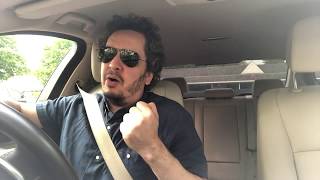
A single-speaker YouTube commentary about the Mamoudou Gassama rescue (a Malian man who climbed a building to save a four-year-old) and the intense emotional and political reaction in France. The speaker praises the individual act but criticizes the government and media for making rapid, emotion-driven decisions—notably Gassama's speedy regularization and meeting with President Emmanuel Macron—and uses the incident to argue for a wholesale review of French immigration and naturalization policies.
Questions this video answers
Four years old.
Emmanuel Macron (President of the French Republic).
YouTube video (single-speaker monologue).
Hello, my friends. Today, France is living to the rhythm of the Mamadou affair. It's history. I must remind you. For those who will watch this video in 100 years, and who may have calmed down by then, I still need to recap this story that every French person has heard at least 100 times, even though it's only 4pm so it's about the case of this young Malian who climbed the side of a building to save a child, a child who was four years old, or rather, who is still four years old, thanks to the intervention of this young man, and who was therefore at risk of falling at any moment following this exploit that was filmed. It appears that this young man is an illegal immigrant from Mali. He was met this morning by the President of the French Republic. For those who are not good at history in our time, it's Macron. Emmanuel Macron. Well, yes, that's it. And so he would have been naturalized French. So he literally saw. He saw the French death, and then he joined the Paris firefighters, it seems. Well, I would still like to tell you two or three things about this story. First of all, I feel uncomfortable when I see heads of state give in, let's say, to collective emotion, or not even give in, be the leader of a collective emotion and make decisions on this basis. Because in the same way that he acted on the spur of the moment, in this case, he acted on the same impulse when he saw montages on YouTube showing children supposedly gassed in Syria, Then a sovereign country that has been fighting terrorism for years was bombed, and French missiles came to add to it. Do you understand? That's the danger with emotion. You can't run a country with emotion because you become extremely dangerous. You have too much power in your hands to allow yourself the luxury of acting on a whim because you saw a tweet, you saw a YouTube video, and then you act. So that already bothers me, and that surprises me. Secondly. Secondly, there was recently an attack in Paris. There was a cat in who attacked people with a knife. Okay? It wasn't just that one. There were many others. What is terrible is that every time there are terrorists. And I can assure you that the next attack that happens, I hope it won't happen, but the next attack that happens, we will learn that the terrorist or terrorists were naturalized a few years ago. That, for example, this young man who committed an extremely heroic act, that doesn't surprise me. Malians, that doesn't surprise me. Africans in general, they are extremely generous people. They are people who do not hesitate to Risk their lives when the life of a child is at stake, just like that. And if you want to know, the mortality rate we have in Africa or the problems we have in Africa are not due to a lack of heroes like Mr. Mamadou, but are often due to a lack of organization, a lack of resources and cultural problems that mean that despite these genuine scholars like Mr. Mamadou, Africa has never managed to get out of it. So let me tell you something. Last time there was an attack in the hypercasher, there was a young man who distinguished himself. Although I am sometimes very careful with the media, which always tends to want to find the hero in such dramatic situations. And it almost ends with an Indian attack. It's like the Colonel Beltram affair, where we practically experienced this attack as if it had been the most extraordinary thing that had ever happened in France. So what I'm trying to tell you is that at the time of the hypercacher, the young man in question was also an illegal immigrant. So the question I ask myself in France regarding immigration, and I think we can ask ourselves this is, isn't it time to take all the French immigration laws, all the procedures, set them on fire and rewrite them from A to Z, start over from A to. Because how can we explain that every time someone hates France, or very often someone hates France, to the point of committing attacks, to the point of running over people who are 4 years old, that guy has French nationality, Okay? I see people waving the flags of foreign countries, acting as troublemakers in France, even when it doesn't go as far as terrorism and they are French nationals, while at the same time I see foreigners of very high quality who live in hiding on French soil. So isn't it time to review this immigration system that is giving you selective immigration, but crappy immigration, to put it simply. Okay, I think that's very important. There's something else I'd like to point out. I thought if I were Malian, if we had done this to an Algerian, for example, I would have felt insulted by what happened today in France. Because I'd still like to tell you something. Well, on an individual level, I'm very happy for the guy. He was black, he was struggling, he did something heroic. There you go. He was French, he was regularized. He's very happy. He'll be able to live his life and everything. Okay? On an individual level, I'm very happy for him. There's another problem, though. Why? Why, when Americans intervened at their own risk in Talas and prevented a terrorist attack, why didn't Anyone offer them French nationality? Okay, but I'll tell you something, I'm in England. You go to the detention centers, okay, the detention centers where they arrest people who are illegal and who are in the process of being deported. I can assure you that there are a lot of Americans in there. Why? Because their passport, in terms of being able to settle in Europe, to work in Europe, the American passport is not worth much more than the Malian passport. I can tell you that right away. It's true that the American passport allows an American to come and visit European countries without a visa, that's true. Whereas the Malian passport requires a visa. But it doesn't go any further than that in terms of an employer who wants to recruit someone and obtain a work visa or something else. For them, there is no difference between a Malian passport and an Australian passport. An American passport or a Japanese passport, it's exactly the same thing. So why weren't these Americans offered French nationality at the time? Maybe they were afraid of insulting their country with that. So that's the thing. I feel like there's this celebration, there's this emotional celebratory mass that says, look, a Malian saved a four year old child. He can only be French. That's not normal. It's so abnormal that we're going to fix it immediately. Here's a French passport and that's one anomaly that's been fixed. It's a French person who saved a child. No, it's a Malian person who saved a child, okay? And I find it insulting for his country to have done this express naturalization that he didn't even have time to formulate. Strictly speaking, strictly speaking, I'm not against the guy. Strictly speaking, he would have said to okay, you've done something extraordinary, you've achieved a feat, etc. Okay, we'll give you a residence permit, we'll give the guy a residence permit, even a permanent residence permit, a 10 year residence permit, whatever, which is practically the eve of French nationality, a permanent residence permit. It gives practically all the rights that a French citizen can have, with the exception of the right to vote, for example. And so the guy proves himself, just as he did when he was illegal. He does so in a legal context. He shows his life, he has no restrictions with a card of his days. And if one day he really wants to apply for French nationality, he can apply for it. And of course the feat he has achieved will be taken into account. For example. But come on, come on, say it's not possible right away. He must be naturalized right away. I find it an insult to his country of origin. And I didn't say that he should be expelled or that he should be made to have difficulties with his status or anything else. On the contrary, I said that he should be helped, but it should be done with sensitivity, with diplomacy, and with respect for where he comes from. Today, Malians will hear that there was a Malian. Well, no, it's true. He was Malian at the time. But we have corrected that mistake. It was a Frenchman who climbed the building in the 18th arrondissement. He climbed a building to save a child who was hanging on while his father was playing Pokemon. Apparently, this story happened in the 18th arrondissement of Paris. But could it have happened anywhere else? I ask you, my friends, there you have it. Finally. It's not good to give in to emotion like that. And what's more, I want to tell you something. We have regularized Mr. Mamadou in a flash or express manner. Okay, I'm not saying anything. Uh, would it be possible now in a flash, in a way that is just as express, to deregister very quickly and expel just as quickly, all these. All these scum, all these terrorists, all these apprentice terrorists, all these. All these people who support terrorism, who are involved in terrorist movements that finance terrorism? Okay. Would it be possible to do it today? Let's take this idea to its conclusion. I agree, I agree. Every time we find someone who has distinguished himself through a feat like that of Mr. Mamadou, I immediately say, you take him. You take him to the Elysee Palace. That's it. You stick a residence permit in his passport. I'm not saying anything. Honestly, I'm not saying anything. Yes, yes, yes, yes. Immigration can bring us people like that. It's a wealth. It's a wealth. There's no problem. Even give us to England if you have too many, it's not a problem. But would it be the same logic? By a logic, by a parallel logic, would it be possible to permanently expel people who threaten civil war, who threaten the countries in which they live, and in any case, they are unhappy in the countries in which they live? Would it be possible to do that? That's the problem. Finally, I won't even mention the media coverage because. Yeah, it's a bit of a disgusting recovery, huh? It's like they have their hero. We have. I had the list this morning, like you have. You have 1,000 events. You have 1,000 dramatic events, including killings, rapes, and other abominable things. There you have it. And which generally involved people who arrived illegally. Because you have to know that migration is legal. It doesn't bring you engineers and doctors. That's clear. And so there you have it, A positive case. Of course there is. There's always one. There's always a positive case. You know, as they say, even the blind squirrel sometimes finds a black woman. So there is a positive case. In this whole story. And with this over mediatization, we literally want to make a generalization. No, it's not a generalization. It's an exception. Because Mr. Mamadou has some exceptional people. I saw here in England, I saw foreigners. I knew one illegal immigrant in particular. The person she gave. She's a girl. She gave without blood. She was undocumented in this country. She gave blood without papers. She would go and give blood without papers to the Red Cross. She would faint almost every other time she gave blood without papers. But she gave it because she felt she had something to contribute to this undocumented society. Okay, but in general, it's not that kind of person who regularizes. So, okay, that's all. Anyway, I'll leave you my friends, and I'll come back. I'll come back another day. Uh, I'll come back another day when the emotion has subsided. Sometimes when you see people living in emotion and everything, you just want to keep quiet because you don't want to be their rabbi. You tell yourself they're not in a situation because, you know, because the human brain has two modes of functioning. It has the emotional mode, the rational mode. And the two are opposed. One chases the other, right? Uh, you see, there are people who fall into abominable situations. And when they reanalyze them later, they tell you, I would never have done that, or I would never have fallen into that situation if I wasn't under the influence of an emotion. You see, for example, the guy tells you, I was in love. That's an emotion. For example, where I was furious, where I was. Those are emotions. And emotions completely break, completely distance the individual from his rational center. And precisely, very often, very often, the. The media and politicians and all that, even advertising play on that. Even advertising plays on that. They do everything they can to appeal to the emotional side of humans. Because by appealing to your emotional side, uh, your rational side is literally turned off. Okay, anyway, that's it. I'll leave you my friends, and I'll come back another time.
More from Aldo



La FIN du Royaume-Uni ? L'Ecosse, l'Irlande du Nord et le Pays de Galles veulent partir !




Analyse Présidentielles 2027 : Marine le Pen remet ENCORE le voile sur la table !


Scandale "60 Millions de Consommateurs" : la France mange des pâtes contaminées au Cadmium !

2 dossiers : Accident d'autogyre en Italie & un pilote sauvé par le parachute du Cirrus