Armée Française (MFO) : Le Twin Otter du Sinaï
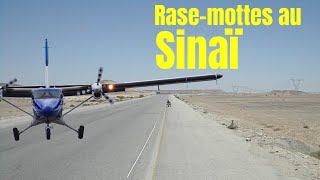
A single-speaker YouTube analysis (by 'Sam') recounts the May 6, 2016 crash of a French DHC-6 Twin Otter near El Gorah (Sinai) after it struck a truck while flying low over a road. The video combines a chronological narrative of the flight and impact, technical explanation of how losing ~6 m² of wing area and control surfaces would narrow the aircraft's flight envelope, and discussion of pilot behavior and the subsequent investigation and institutional response.
Good morning, my friends. This week's aviation news was marked by the CL215, the Canadian Air Force aircraft. We see it arriving to put out a fire. It reaches the ground at a certain speed. It banks and then the low wing, the right wing, passes through the vegetation for a moment. It disappears into what looks like a tree. It must have hit it. The video does not allow us to estimate the damage with great precision, but our aircraft is completely out of control. The proof is that it follows a purely ballistic trajectory, showing that the pilots were not really able to influence the trajectory. If we had launched along the same exit vector from the tree, if we had thrown a patank ball, it would probably have followed this very characteristic ballistic trajectory. The aircraft climbs and then returns to the ground, hits the side of the hill and explodes. Today I'm going to tell you about another case, another file of an aircraft that ended up with a badly damaged wing. It happens. It's very rare, but it can happen sometimes. Wings fracture, fatigue, bad maneuver, impact with something, another aircraft, an obstacle. It can happen that aircraft end up with damaged wings. I have a book here by Jean Claude ripple, published by ENAC, an excellent aerodynamics book, almost 300 pages, extremely complete, but there's not a single word on damaged wings. So since there's no documentation on it, we're going to speculate today, we're going to try to see a little bit how a badly damaged wing behaves. So for this story, we're going to go to the Sinai, but before going to the Sinai, we're going to go to France, where we have a twin AU tear. We're with the French army. So the twin OTOR is an aircraft, sorry for the size of the model, very small. So the twin OTOR is a twin engine IC that looks like a large Cessna. It looks like they took SNA172, enlarged it, put two engines on the wings, and there you have it, the twin Otor. So it's an aircraft that is designed to land and take off on extremely short runways. When it's light, when there aren't many people in it, it can stall. Its stall speed is around 56 to 58 knots. We're talking about nearly 100 km h. It's very comparable to single engine club aircraft. In other words, despite its size, it's an aircraft that can fly very slowly if necessary. And it's actually designed to land and take off, literally from handkerchiefs. This aircraft is due to take off from France to go to the Sinai. I'll tell you in A minute. What he's going to do in Sinai. As captain we're. We have Mr. Guillaume Pyke, and as co pilot, well, we have no one. The co pilot is sick and so we have to find one. The army will take a week to find one. Instead it will be a certain Lawrence Briankin. Lance Briankonnen is 35 years old, highly respected, a soldier, a pilot. She flew on the Twin Odor. She also flew on the casa. She flies on ice planes for the French army. She does transport. So she's going. And even though she's qualified as a captain on this aircraft, she'll be constantly involved in all this. She'll be in the right seat. That means she'll be acting as co pilot instead. So the plane takes off a week late and it's going to Sinai. Where exactly is it going? In Sinai? To the Elgora base in the north. In fact, it's a base that is managed by what is called the mfo. The MFO is a multinational force that was created in 1981 following the Quds David Accords between Egypt and Israel. It's an observer force. In fact, they are there. 13 countries are represented. There's Canada, there's France, which provides a large contingent. There's even Japan, the Fiji Islands. And in fact, these soldiers observe that each other respects the Quds David Accords or terms. They have no other power than to be observers. So the aircraft arrives at Al Gora. And then it must be said that the Sinai, when the Jews and Arabs aren't fighting each other, is a place that is sorely lacking in entertainment. There are the unmissable diving trips to Shamir. There's also the Monastery of St Catherine, but apart from that, it's a desert. The various soldiers and others created the Moulin Rouge on the base. It was just a place where they went to have fun with whatever they had. And even if they had the keys, they could go there whenever they wanted, including when it was closed. It's true that the real enemy when you're in the Sinai is boredom. It's the first enemy. So sometimes what they did was that it would seem that there were overstepping their bounds. There were departures from the security context during flights. I tell you about many pilots, when they go into aviation, it's because, among other things, they love freedom. I'm a pilot, I'm free, I fly like a bird. I don't realize that if there's one job where you're not free, it's that of a pilot. It's A job that's highly regulated. Everything a pilot does is part of the procedure. It's a profession that is monitored, audited. And the pilot ends up having to execute flight plans drawn up by others to the letter. So when they arrive in the Sinai and suddenly there's no real radar coverage, when suddenly there's a bit of a laxity, it's true that pilots tend to regain a bit of this freedom and sometimes use it to fly very low. So there are videos, for example, where we see planes flying extremely low. In the Valley of the Chars, for example, it seems, it said, it's repeated, that planes were having fun, leaving the longest possible trails on the dunes. That means they were approaching with the landing gear down. Well, that one is fixed. So they arrive and then they fly. They touch the dunes and they stay on the dunes for as long as possible to leave a long trail. Of course, all those who frequent clubs, airlines and aviation schools know that there are a lot of rumors circulating. There are a lot of legends. It's part of the culture of the place. No one will ever know where the legend begins. And the truth ends anyway. On May 6, 2016, we had a training flight. The training flight was going to leave from Al Gora to go to St. Catherine. In reality, it wasn't really a training flight, it was a pleasure flight. The aim was to visit the monastery for those who wanted to. Now it has been registered as a training flight because of military bureaucracy, flight hour quotas and all that. So in the cockpit we have Parc Berlin, those who came from France. Inside, we have passengers with them. There are nine people in total on the plane. There are h French, h French soldiers. The youngest is in his early 20s, the oldest is around 50. And then we also have a Canadian who joined this flight. The plane is going to take off from Al Gora. Al Gora. Two runways that cross perpendicularly. There is one that is functional and the other that is completely destroyed. It was bombed with Arab and Jewish stories. So they take off, they go south, and then at one point they disappear from the radar. What is going to happen during this time when they disappear from the radar? We are going to go on a road. There is a road that crosses along an east east axis that crosses the Sinai. This road, it reads like you can go, for example, from Kerr to the Gulf of Aqaba. You can go all the way to Jordan. And there is truck traffic all along this road. And, well, something extraordinary is suddenly going to happen. We have a truck, a Mercedes trailer truck that is moving. And then suddenly, what he sees is that on the road, he sees the truck speeding towards him. The truck, for reasons we will discuss later, is flying at a certain speed, at a good speed, even at the road rat. When I say road rat, it is not that. It is not that. It really means that it has literally touched the tire. The driver sees it and what is he going to do? He is going to turn the steering wheel and then pull off the road to allow it to pass. What is crazy? Note in passing that the driver realizes that they are on a collision course. A collision course. And despite the fact that his big brother, a truck, is not very responsive, he still manages to turn the steering wheel and pull off to avoid the impact. And the driver of the twin track truck does not seem to do the same. So the plane passes by, scraping. It really passes by a hair's breadth from the truck without touching it. The problem is that 50 meters behind this truck there was another one that was more or less hidden by the first one. It is often said that one train can hide another, but one truck can also hide another. This means that once this truck moves away, the plane passes by and it is facing a second vehicle. And there, there is no way to avoid it because it is less than a second behind. This is the impact. How does the impact happen? Let me tell you. If you look under the left wing, there are a number of fittings. There are a number of fittings that are like metal brackets that form the device, the mechanism that allows the flap to extend and retract. You see, this model is small, but it is extremely realistic, very precise. So one of these fittings is going to rip open the cabin or the roof of the truck. So the cabin of the roof was dented. The two guys who were inside, the driver and a customs officer, must have seen the fitting go through the top of their truck. So what's going to happen next? Since we have a sidewall, this part of the truck that's higher, which is higher, the wing, it's going to hit the cabin, but when it reaches the level of the sidewall, it's lower than the sidewall. So there it really hits it, the fuel there it was dented. The fuel is sprayed. The truck catches fire immediately. Fortunately, the guys who were inside managed to escape just in time. They weren't injured, but they managed to escape. Now let's look at the damage to the aircraft. So the aircraft is going to lose part of its wing. It's going to lose about 250 kilograms of metal and fuel at that moment. Six square meters of wing is torn off. We'll find them around the truck, the police will pick them up later. And in fact, if you look at this whole part in reverse, that means the end of the wing from a station we call station 272.5. This whole part there will be lost. Further inward we'll have flaps that will be torn off and then the rest of the wing won't. I don't want to say that the rest of the wing is intact. The rest of the wing is probably also damaged. So what does this plane make the drivers believe? Well, this plane will suddenly pitch up, bank to the right and then climb into the sky and move away and disappear. It continues to fly. So in the cockpit, what must have happened? This is the story, this reflex there to pull back on the stick, to get away from this situation when it had hit, because what could we have expected? We might have expected an impact. And then suddenly the plane cuts the throttle and then it goes to land more or less on the road behind the truck. That's not what happened. When it hit, it put the throttle on and it took off. Why? It's a reflex that we've seen many times in certain situations. I'll give you a fairly recent example in my memory, the Pakistani Erbus. Do you remember this Pakistani Airbus? It was arriving at the airport, the pilots were completely disorganized. They forgot to lower the landing gear. They arrive above the Runway, they start to pitch the plane up and then it touches down. But what does it touch since the landing gear is retracted? Look, if I take a plane, if the. If there's no landing gear, what's it going to touch first? It's the engines. It's the jet engines. So they hear the proverbial. The proverbial banging sound. Bam. The engines are scraping against the ground. And what do they do at that point? Well, it was over. Normally they reduce the throttle and wait for the story to stop. That's all. And they'll be fired during the day. What they're going to do in a panic is they push and hold the throttle to full pull. Back on the stick, the plane regains altitude, except that the plane is badly damaged. The plane's engines have left several hundred meters of oil and metal marks along the Runway. So, yes, it flies. That's good. But how do you fly in flight with an aircraft that's in bad shape? Both engines gradually start to fail, one after the other. They find themselves flying without any propulsion and they're going to crash into the village not far from the airport, another story that was circulating a few years ago on social media. We have a twin engine plane. A twin engine plane has to land on a Runway. He forgot the landing gear. When he panics, what does he do? The pilot puts on the throttle, pulls back on the stick, the plane takes off. We see him having a little trouble staying in the air and he disappears. The this one, he was lucky. Despite damaging both propellers, both engines and a good part of the plane's frame, he managed to get to another airport and land. Okay, so there's always this reflex there. So what does the plane do once it crashes? So when it crashes, it's going to lose the left wing. Well, half of the left wing, it's going to lose the left aileron and it's going to bank sharply to the right. Why? One reason is that if you're going to be in a tulinary plane or something, it's. It's not recommended. But we did it mentally. If you take an aileron and push it up, what will the aileron on the other side of the other wing do? Well, it will necessarily go down. The two are connected by a system of pulleys, cables, linkages and gears that mean that when one aileron goes in one direction, the other one necessarily goes in the opposite direction. Now, here's the other experiment. I take a regular aileron, I push it up and someone goes to the other wing and takes the regular aileron and also pushes it up. What will the ailerons do in this case? How will they move? Well, they won't move at all. Because in reality, if I push my aileron up, the other one will want to. But if someone prevents it from going down, I won't be able to move mine either.
Okay.
That's why the ailerons don't move on their own when we're flying. Because since there is suction on the wing, what happens? There are forces that pull both ailerons upwards. So that's why when you let go of the controls on an airplane, normally there is no tendency. The ailerons do not tend to move on their own.
Ok.
Except that in the case that interests us, once the airplane hits the truck, the left aileron is torn off. What does the right aileron do? There is more force that will force it to stay in place. There is no longer this balancing force coming from the opposite aileron. Since there are no more ailerons in the opposite row, what does the right aileron do, it is sucked in. So it will suddenly go up. That means in the cabin, in the cockpit, what does the control column do? Suddenly it goes to the right. That is one of the reasons. So there are probably two things happening at the same time. The impact, the control column suddenly and by itself goes to the right. And then the pilot, who is also trying to escape the truck, who is going to pull on the control column and apply the throttle. And we end up with this trajectory where our aircraft has been banked. Suddenly, right, it is climbing. So now the plane is flying with half a wing missing. There is half of the left wing missing, 6 square meters of it. I was saying that it is missing. What is the aerodynamics behind this? What is going to happen? So I will tell you. There is one very important thing here, which is that since the wing has been partially lost, well, our aircraft is going to have difficulty controlling it. That is to say that now what we have to do is use the rudder and the ailerons to keep this plane more or less straight, which is going to be extremely difficult. So for that you need a certain speed. Let me show you something. If I take my notary tube, the minimum stall speed that could be allowed is around 60 knots.
Okay?
In the same French opinion, even in French military documentation, and also, okay, the speed in the flight is expressed in terms of nay. So I say that we have this and then higher up we have the maximum speed that our aircraft can allow, which is around. I don't remember. For the notary tube, I think it's around 170 knots. So 60 knots. 170 knots. That's the speed range that is possible for a two noter in a normal situation. Now this will give us in terms of speed. So this is my normal flight envelope. This pink arrow is my normal flight envelope. Now, when we have this destruction that has taken place, there will be changes. What kind of change? Let me tell you. If we want to control our plane, we won't be able to control it. If we're at 60 or 65 knots or whatever, we'll need a relatively high speed.
Okay.
To be able to control our plane, we'll probably need to be around 100 knots, about 180 or 190 km h to be able to control our plane.
Okay.
Below that, if the plane is slower, it's not controllable because the asymmetry created by the missing 6 square meters of wing is such that we have to go all out on the stick and rudder pedals to keep the plane straight. If we don't have enough speed, the effectiveness of the remaining aileron and the rudder won't be sufficient to manage this imbalance. And the plane will be lost. Control will be lost. So what I'm showing here is a question of control.
Okay?
What you see here is a question of control. Another thing, since the wing has been lost, all things being equal, if our plane wants to continue flying, it will have to give more incidence now on what remains in the wing to be able to stay in the air.
Okay?
So all things being equal, it will fly at a higher incidence at the same speed. That means that in reality, the stall speed, OK, is no longer 60 knots, but it will also increase, right? So it's not just a question of control, but it's also a question of stalling. So you see that the stall will also increase the stall speed. Now another thing. How does our plane fly? Our plane flies asymmetrically tilted with full rudder just to keep it. So it will no longer fly straight, but it will no longer fly like this. Symmetrical flight is over. Now it will have to fly banked and then probably with the rudder fully applied, okay, to keep it straight. And so it will fly, right? It will fly asymmetrically. Asymmetrical flight is very expensive because it is a flight that has no. It is a flight that requires a lot of energy, that requires a lot of power. So the aircraft is also limited in speed. It will not be able to go very fast. Why? Because there is asymmetry, which means that, for example, it will not be able to go beyond 140 knots. If it wants to go above 140 knots, it will end up going towards the ground. It will not be able to maintain a speed higher than 149 knots approximately.
Okay?
So there are limits here. So now, what is our new flight envelope? What is our new possible flight envelope? Well, we can clearly see that now the new possible flight envelope is reduced, huh? Sadly, we're only here, okay? We're only in this very narrow speed zone. Below that, it's a loss of control or even a stall. And above that, well, we don't have enough power to go there.
Okay?
Above that we'll start to go towards the ground. So you see, the problem with damaged aircraft is the reduction of the flight envelope. In fact, the flight envelope is reduced. So in our case, in the case of our twin notary, he was, so to speak, lucky to have hit the aircraft while it was in this zone.
Okay?
It was quite fast. If he had hit Slowly saying that he was at that speed when he hit. But considering that he was at 80 knots when he hit, what's going to happen when the wing or its 6 square meters is torn off? What does the pilot do? He can't control it anymore. He loses control right away and crashes 50 to 100 meters behind the truck. Okay, so he had this moment. He was lucky to have hit at a relatively high speed. By the way, if you look at the Greek plane, the, the Canadian plane, well, we can simply say that it was slow. And when its wing was damaged, although it was damaged, but also its flight controls, well, it probably ended up in this area. It was in this area, and so it was already outside the flight envelope. That means that it couldn't do anything. In fact. So what did our plane do? Our plane took off again a little later. When the French army saw no one coming back, it began to worry. So they launched a search. And then an American helicopter went looking and saw a column of smoke in the distance. Then he arrived on the road. He saw this truck smoking and burning with the police around and all that. And then he searched far and wide. And what did he find? He saw a second column of smoke about 12km away. He went there and found the notary's pipe. In fact, the notary's pipe managed to fly for about 12 kilometers, maybe even more. In fact, he was found 12 kilometers away. But he didn't necessarily go in a straight line. He probably had to zigzag, maybe make a loop, all that. And so he finally arrived and crashed 12.5km further, 12.2km from the place of impact with the truck. So when they analyzed the plane, the remains, because it was deeply burned, we see an image with the landing gear somewhere. But the landing gear, you have to be careful with it. Landing gear rarely stays at the impact site. Why? Because when it hits the ground, it acts a bit like a tennis ball that you hit hard against the ground, it will bounce and sometimes end up quite far from the point of impact. So when there is a fire, generally the landing gear is thrown away from the fire site, so it is not affected. But in reality, the plane was completely destroyed by the fire. Also note that this plane does not have a cvr, does not have a dfdr, does not have a black box, and is not supposed to have one, is not required to have one, which means that in reality there are relatively few solid concrete elements. What is solid is that it crashed. What is solid is that it hit a truck. What is solid is that it was flying along the road at high speed. And that's it. Everything else is just speculation. But what is true is this. There is also something true. At one point, when he looked in the rubble, he found that the position of the flaps seemed to be in the extended position, which is quite crazy and which proves that the plane probably took off, finally took off, hit the truck, took off. It was in that area. It was in that area. And in general, it was advisable to stay there. That is to say, there are plenty of pilots who got out after being in a damaged plane. But in general, what they do is, as long as they identify that the plane is controllable and flying at a specific speed, what do they do? They keep it. They keep that speed. For example, I'll tell you a story another time about a 727 with a damaged wing. Well, the pilot discovered that at 220 knots, he could fly, he could control it. He kept that speed. He landed at that speed. You can't change it anymore because you don't have the same plane anymore. Once the plane has been damaged, you're no longer in the same aircraft. You're in a different aircraft. So if, by providence, you have a speed and it's flying at that speed, it's controllable, that's it. You can't change it anymore, neither up nor down. You just have to keep it and land at that speed. The pilots tried to land, and they tried to reduce the speed. So what they tried to do, we know this because the flaps were in the extended position, so they tried to extend the flaps. So when they try to extend the flaps, there are two things. First, the flaps will extend on the right wing and not on the left wing, because there are no more flaps on the left wing. They have been torn off. So there's already a significant asymmetry now, which is added to the existing asymmetry of the aircraft. Second, it means that the speed is going out, going down, and probably entering the area.
Okay.
Probably entering the area where control can be lost or the aircraft can stall. And so at that moment, at the moment when they try, they probably wanted to land in the desert or somewhere. And at that moment, what happens? Uh, they end up losing control, and the aircraft crashes and falls almost vertically. Okay, so it flew. It flew after the impact with the truck for probably. Hard to say. But we'll say roughly four minutes, maybe five. But we're in that range, maybe three. But we'll put three to six minutes, roughly three, four, six minutes. Okay, so it flew during that time, which means somewhere that it was. It was. Maybe it was flyable, so to speak, if I can make that word up, okay, because if the aircraft didn't have a solution, that is to say that sometimes you can find yourself. I'll tell you about other cases. You can find yourself with this. This is the minimum speed, this is the maximum speed. Minimum, maximum. You can have cases where they do this, they crash into each other, the minimum speed, the maximum speed, crash into each other. And in that case the aircraft can't fly. In that case there is no solution. In that case, we are in a purely ballistic trajectory. There is absolutely no solution. Okay, but in this specific case it was able to fly 12 km, which is still proof that there was a flight envelop, however narrow it may be. But this flight envelope existed because if there had been no flight at all, it would have crashed after 200, 300, 400 meters. It would have followed a ballistic trajectory, it would have ended up somewhere on the road or in the desert right next to it. But the fact that it flew 12,5 meters, that's an aircraft that still flew. Of course, everyone died. So it was a real disaster for the French army. And from that point on, it is very embarrassing for the mfo. It is very embarrassing for everyone. The investigation now by the French army will say that in the end he was playing that the pilots, Mr. Pike, had decided to fly very low on the road, at high speed, to jump trucks. He also cites other maneuvers that were carried out not by him, but by other pilots, it seems in Africa, in the case of the Chasparag, where he did more or less the same thing on pieroges, on rivers. And they say that he flew very low because he wanted to amuse the gallery, and then he crashed into a vehicle. Others, there are even newspaper articles from the time say that the plane wanted to land. The plane was in a logic of. Actually, when planes want to land urgently, one of the options is to land on a road. But that is really a last resort. Even a single engine fin, for example, does not justify landing on a road. You only land on a road if there is a fire on board, if you have lost control, if you know that the controls are not responding at all, if, for example, you have lost power on both engines. Okay, These are very rare cases that justify landing on a road. But in this specific case, this is what the army says, that it is not possible that he wanted to land. Why? Because there are several reasons for this. First of all, the aircraft was flying at high speed, okay? It was not flying at a slow speed, because if it had flown at a slow speed, if it had wanted to do 60, 65, 70 knots, it would have hit the truck, it would have been 50 meters behind, it would not have been able to take off again. So if it took off again, it was because it was already flying fast. So it's inexplicable that an aircraft of this type flies so quickly for an emergency landing. Secondly, there's also something else, which is that even if it were making an emergency landing, it sees trucks. It could have flown over the trucks instead of crashing into them unless it had absolutely no control. But then how do you explain that we have an aircraft that is uncontrollable, that has very serious problems that justify an emergency landing on a road. We can't even wait, even if we see a truck, we have no choice. We're going to crash into it because the aircraft is uncontrollable. But still, once we crash into it and lose 6 square meters of it, well, we can still climb. Then take a turn and fly for 12 kilometers.
Okay?
It's very difficult, very difficult to justify. It was also said at the time that the plane was on a mission. Okay, it was in a mission context. The problem is that with missions where the wheels are touching, if you have to go on a road with the plane's wheels touching the ground, well, ideally it would be better to replace the plane with a 44, for example, or to take an all terrain vehicle that could do the job in safer conditions. The advantage of a plane is that you can see. So to see, you won't climb to 20,000ft, but you won't fly with the wheels 5cm above the ground either.
Okay?
Flying, I don't know, at 100 meters. 50 meters already gives a better balance between risk and visibility. So it's true that it remains extremely difficult to justify an emergency landing. Now, what I'm going to tell you is that I'm following the logic of the American ntsb. If the NTSB had investigated this story, it would have said the plane crashed because the pilot allowed it to fly very low over a road, and it ended up hitting a truck. And from there it became uncontrollable. Now, the pilot's intentions we can speculate, but the problem is that there's no recording, nothing at all. So it's very difficult to know what the pilot wanted to achieve with this maneuver that he performed on a road. What's surprising is that the MFO then began to Sanction a lot of pilots by saying yes, he was doing similar exercises, he was taking risks and we didn't know it, we didn't see it. It's still funny for one. I'll end on this note. It's still funny for an observation force that is there to observe Israel, to observe Egypt, to see if there is any trafficking, to see if there are any intrusions, if there are any people smuggling missiles or God forbid, cluster bombs or something else. Well, they're not even capable of monitoring a twin engine aircraft that belongs to them. They're not even capable of monitoring their own planes.
Okay.
So the army probably then acted a bit like a virgin and fierce and then pretended to completely ignore the actions of the pilots and started cracking down here and there to try to save the hierarchy a little bit and save the institution as usual. In any case, it was a tragedy that cost the lives of nine people that day in the Sinai Desert. Impact with a truck followed by a random flight of about 12 km that ends in an extremely brutal crash, killing everyone. Thanks for watching this video so far and I'll see you in the next one. Friends, I just finished editing and realized that there are still two or three small elements that I would like to quickly pass on to you. First, this aircraft, number 742, the twin, had been damaged previously, probably by veering off the Runway or hitting a truck or something. Whatever, it was bent, everyone knew that, including the pilot, it was bent, it was impossible to compensate properly. It had a tendency to weave to go one way and the other. So that's something to consider because this type of aircraft, which has imprecise handling due to these deformations, is not the kind of aircraft that you use to just brush a truck a few centimeters away. That's something to consider. Secondly, Regarding this caress, Mr. Pike, the pilot that day, well, if we look back at his career, he had an incident one day. The incident was as follows. He had arrived with a Tuonotar, he had landed, he was taxiing, he arrived at his parking space, it was taken by an American plane and so he decided to park elsewhere. So he went to a part of the airport that was a little less familiar to him. And then what happened when he turned, he hit a tree with his wing, he damaged the right wing tip. Nothing serious, he just dented it a little. But still, an incident is taken very seriously within the military. There is an investigation, there is paperwork, there are a lot of things that are going to happen following this incident. Now, let's think about it. There's this guy who normally has trouble judging the full wingspan of his plane when he's on the ground taxiing and he hits it against a tree. Is this same person, the same type of plane to try to caress it at a relative speed? This time we're higher at walking pace than when taxiing try to caress the cabin of a truck a few centimeters away. This truck is not piloted by Ry Julian. It's not something that's discussed or agreed upon. We know the truck. We know what the driver is going to do. We know the load. We know that there's no oversized aircraft. We know that there's no metal rod sticking out. We know all that because everything is calculated. If we're doing a stunt here, we take a random truck and then we're going to hit it a few centimeters away with a plane whose pilot had just crashed into a tree because he couldn't judge the correct wingspan. So these are questions that remain in your head when you listen to this. Even if the Army's version seems relatively solid, I don't rule out the existence of other versions. Thanks for watching this far and I'll see you in the next one, Sam.
More from Aldo



La FIN du Royaume-Uni ? L'Ecosse, l'Irlande du Nord et le Pays de Galles veulent partir !




Analyse Présidentielles 2027 : Marine le Pen remet ENCORE le voile sur la table !


Scandale "60 Millions de Consommateurs" : la France mange des pâtes contaminées au Cadmium !

2 dossiers : Accident d'autogyre en Italie & un pilote sauvé par le parachute du Cirrus