British Midlands vol 92 : Ils arrêtent le mauvais moteur
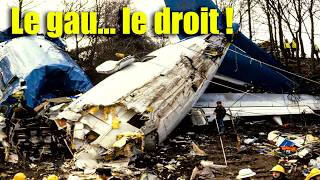
A narrated YouTube monologue recounting a January 1989 accident of a Boeing 737-400 that had just been delivered (≈500 flight hours) and departed with 126 people aboard. During climb past FL280 the left engine suffered a compressor blade failure, causing severe vibrations, fire and unstable engine parameters. The flightcrew (captain and less-experienced co-pilot) misidentified the failed engine, shut down the right (serviceable) engine after also disconnecting the autothrottle, and later attempted to restart but impact occurred ~50 seconds after the command to restart. The aircraft crashed near East Midlands (diversion airport), broke into sections alongside the M1, producing 47 fatalities. The video explains technical causes (blade fracture, engine debris ejection), human factors (misidentification, fixation, poor cross-checking, poor cabin–cockpit communication), and investigation evidence (CVR, DFDR).
Questions this video answers
January 1989
Boeing 737-400
126
47
Approximately 500 flight hours
Good evening, my friends. I'm going to tell you a story with a rather incredible and terrible sequence of consequences. It was January 1989 at Hitro Airport. Towards the end of the day, there was a Boeing 737,400 aircraft that had just left the factory. It had 500 flight hours and was preparing to leave for Belfast, Ireland. There were 126 people on its bench. The aircraft lined up on the Runway, took off and passed from one controller to another and finally gave it clearance to climb to level 350, which is about 35,000ft. As the aircraft neared the end of its climb, it had just passed level 280. Suddenly, it was shaken by terrible vibrations and there was a burning smell, a smell of rubber and burnt oil that permeated the cabin. They were felt by the passengers and the pilots. There are two pilots on the plane who are not very familiar with the 737,400. You understand, it's an aircraft that they have just received delivery of. Even though the Captain has flown 13,000 hours and was used to other aircraft in the 737,200, he is not very experienced. He has only flown 23 hours. In the 300, the co pilot, this is his first jet aircraft. He only has his flight counters on it. The passengers, in addition to the vibrations and the smell of smoke, see something else. Looking out the left porthole, they see the engine belching out tens of meters of flames behind them. So they see these flames that sometimes appear intermittently, sometimes they disappear, only to come back stronger and stronger a few seconds later. In the cockpit, the pilots, what they are going to do, which is completely normal, is to disconnect the autopilot. During this flight, it was the co pilot seated on the right who was doing the leg. That means he was the one who performed the takeoff. He was the pilot who was doing the flight. And the other was the monitoring pilot that the captain should normally monitor. Now, when the emergency occurs, the captain takes over without directly verbalizing it. But this time he cuts it off. He does two things. He cuts off the autopilot and he cuts off the autothrottle. This is something completely normal. We expect the pilot who is faced with an emergency, to start by cutting off the autopilot and taking control. We are talking about the Boeing philosophy here, of course. So he takes control and he turns to the pilot, he. He asks him, which engine is it? Which engine is it that has failed? And the co pilot will answer, it's the right one, the right one. Actually said left, he said left, he said right. And then he swallowed the word left and changed his mind, said the right one, what was this assessment based on? And gumdrop, in reality, in front of them there, under the dashboard, there were the engine readings. And indeed the left engine readings were extremely fluctuating. Its temperature was very high. Without these revolutions, everything that was rotation was doing a bit of a yo yo. And what was doing even more of a yo yo was the fuel flow. The amount of fuel it was consuming was doing a yo yo, showing that the regulation system was trying to obtain a stable speed but was not able to do so, which kept opening and closing the fuel. And this was precisely giving, in addition to the rest, therefore giving vibrations and an unstable speed. The the captain then took the lever of engine number two, the right one, and reduced it. When he reduces it, both pilots notice that the vibrations have reduced. There's less vibration. All of a sudden things seem to be getting back to normal. At that point they're interrupted by a radio call. So they start talking to the controller. They say, okay, we have an emergency, we need to divert. And then they're given vectors to East Midlands airport and they have to. It was 20,000 nautical miles away and they say we're going to reach about 36km, we're going to reach that airport as quickly as possible. Once they've finished talking to the air traffic controller, they shut down the right engine. So the right engine is shut down with that. And remember, the problem is with the left engine, but it's the right engine that's been shut down. Now the question we can ask ourselves is, but then why did they reduce the throttle levers? Why did they reduce the right throttle lever? The vibrations stop. Or at most significantly, in bc, why? In reality, we are not comparing equals. When you want to compare two situations, you have to change only one parameter. Important if we want to compare two situations before and after, I don't change any parameters, I change just one. And that's the only way I can compare. But the reality is that there were two different parameters. Which ones that before and after the auto throttle had also been cut? Well, yes. So the autothrottle was cut. What does the autothrottle do? Since it is a system that sought to manage the thrust of the reactors, we. Well, when the left reactor, the one that was damaged, when it lost power, well, it tended to advance the corresponding lever to add more power to it of power. And when this engine suddenly woke up and started to send power, started to send thrust, well, the auto throttle reduced the throttle. So what did we have? We had an unstable engine and we had the auto throttle that was sending it orders that it didn't tolerate very much. That was sending it orders, nonstop orders to increase or decrease the power. And this engine that was faulty didn't tolerate these orders. And the more we sent it these orders, the more it was multiplying the fluctuations, if you like. So we weren't comparing. In reality, the vibrations were reduced not because we reduced the throttle of two, but because we removed the auto throttle. But since there was a concomitance, uh, the pilots didn't even think about the auto throttle. It was for them from the moment we reduced the throttle of two, well, of course it's him. I reduce the throttle, things are going better. So it's him. The pilots turn off the shut off valve on number two and therefore the engine is off. So they continue their descent during the descent, since it's an emergency descent, they don't need power. So where are the engines? The throttles are at idle. The right one is off, its throttle is at idle, and the left one isn't off, but its throttle is also at idle because we don't need it. The problem is that it's a damaged engine, but since it's running at idle now, we don't feel like there's a problem with it. The problems will only manifest themselves when we need to add power. We don't need it because we're doing an emergency descent. During a normal descent, there are often level offs. This means at some point the controller will give permission to an aircraft to descend, and then the aircraft must stabilize at a certain altitude. And that's when the engines are coming in. Except that during an emergency descent, the pilots go from level 280 to landing without having to level off. And that will play a role during the descent. An air strike arrives. It arrives and says, gentlemen, I'm really sorry to disturb you, but the passengers are a little worried, a little panicked because they saw flames and all that. Wouldn't you like to let them make a little announcement to reassure them? So the captain in fact uses the public address system and says, okay, ladies and gentlemen, as you can see, we had a problem with the write engine, which started to vibrate and maybe spit flames and all that, and we stopped it. So the other testers don't pay attention to the content of the message. They clearly saw that it was the left engine that had a problem. Except that they didn't follow the content of the messages carefully. They knew the general content because she was the one who had asked for it. But they didn't follow the details. They were more interested in checking if things had happened, if everyone was wearing their seatbelts, etc. The passengers themselves noticed that there was indeed a problem with what the captain had said, except that they were passengers. I mean, if the captain said you could either think that he made a mistake, he might have meant left, he might have said right. And maybe he doesn't know any better anyway. And you can imagine a passenger would be extremely uncomfortable in a situation like that, calling a flight attendant and telling her, listen, I think the captain made a mistake. He might hear some very unsales y remarks at some point there's an emergency, so we're going to tell him to fasten his seatbelt and close it, right? To put it mildly, there's a disconnect between the cabin and the cockpit. And what's terrible about this accident is that the passengers know more than the pilots. So the plane continues to descend, and then we give it vectors. It lines up to catch the Runway centerline. The ILS, the Instrument Approach System, it's. It's around 8pm, it's January, so it's already dark. And then the pilots decide that it would be a good idea to wait until relatively late before starting to extend the drag strips, the flaps, the landing gear, all that, because they want to be on the ground as quickly as possible. So there's no question of slowing down too far before the Runway and making a long interminable approach. That's not the goal, huh? The goal is to really go for it. And at one point, when they're at about 2,000ft, the captain says to the pilot, go ahead, put the flaps at 15. Before they were at 5. So there wasn't much drag. But now the pilot is going to grab the lever and then slam it. He's going to put it at 15. At the back of the wings. We're going to see large areas that are starting to unfold. Huh? A screw like that is pushing them out. Give me the landing gear too. So grab the lever, slam landing gear. Bam. The gears are coming down. And at that point, what do we need? Well, we need to warm up a little because at that point we have to add a little gas to prevent the plane from falling. Like an iron, the captain pushes, and still manually, he hasn't put the autopilot back on. Push the throttle on one, the left engine, and at that moment there is a fire alarm on the left. And the Vibrations start up again. Even worse, it is only at that moment, when he is at 1,000ft above the ground, only 300 meters from the ground, that he realizes that he has probably made a mistake. He has stopped the wrong engine. The co pilot says to him, do you want me to stop the engines? One says, no, no, it's fine. We have stopped enough engines for today. We stop start less the of. So since the POO had been launched, and the PU will therefore provide compressed air to start the engines. So there the copilot will comply, but he will do it very badly. That means later, when we find the instrument panel of the plane, right? We will see that, for example, the button used to distribute the pneumatic flow to the engines from the pub was closed. It did not open. So the copy probably went to the start button. It was grounded, except that the right engine did not accelerate at all. It did not move because the compressed airflow did not reach it, because something else would have had to be done. That said, and according to the investigation report, this did not change much. It was too late anyway, because when the commander of Bore told him, start this damn engine, it was 50 seconds before impact. So there was no reasonable time to see this engine start, display a stable speed, push the levers again and get the thrust to the right. No, it is not possible. So the copy complied, but he did it badly. And the reality is that the right engine wasn't even starting. It hadn't even started spinning. The captain, seeing the ground coming at full speed, what did he do? You see? In his place, he took the engine and put it on full throttle. There was no choice. He put it on full throttle. He said to himself, this engine is vibrating. It's emitting smoke and flames. I don't care if it can cushion my fall. Why not? Why not? He put it on full throttle. The vibrations of the plane were so strong at that moment that these doors, the luggage racks were going to open and suitcases and backpacks and everything started to rain down into the cabin, started to fall on people. Just to give you an idea of the power of the vibrations at that moment, at one point the captain got on the radio and yelled at the people. He told them, attention, crash landing. Crash landing. We're going to crash. We're going to crash. It's one of the worst messages you can get that you can hear on a commercial flight. So 10 seconds later, the plane will pass over the M1 motorway and then it will hit the side of it, bounce, break into three pieces, and then There you have it. Comm. Will return. The firefighters will intervene. They will come from the airport, they will come from the surrounding towns. At one point, there were up to 70ambulances on the scene. There were soldiers, civilians too, and motorists who were on the motorway who would stop to help. An extraordinary stroke of luck, and this is perhaps unlike what we saw with the SOY super jet in Moscow, is that the landing gear of the Boeing 737,400 behaved exactly as it should have behaved in a similar situation and broke cleanly at very specific fracture points without ever ripping open the tank. Because the plane had barely started to fill its tank. There was enough fuel in there to create an inferno. And in fact, there was no fire, apart from a small fire starting on an engine that then stopped. There was no fire that day. So what happened is that the firefighters started to free people. The total for the night was roughly 47 dead out of the 126 passengers. The last crash happened around 8pm the last person incarcerated was after 4am and then the investigation began. The aircraft was equipped with a CVR, a voice recorder, 30 minutes, was also equipped with a DFDR that records 63 flight parameters. And that's what allowed us to reconstruct the story a little. What we discovered later was that the left engine, one of the fins that was numbered 17,1 of the compressor fins had broken when it passed level 280, it broke, it tore off and in fact, it hit the engine fairing and at the air intake level. And it remained there. It remained stuck there, but in an unstable position. Later, what it did later, towards landing, what it did was that it. It detached itself, it went through the engine, and there. A slingshot is a metal object that is very hard. And when it passes and starts hitting other slingshots, it will create a cascade of damage. And so there was a breakage that happened, and then many slingshots broke and were ejected. By the way, by the way, on the track that had flown over. If we look at the flight of this Boeing and go back, we will find pieces of metal up to 3km upstream. This means that in the last 3km before impact, the 737 was spitting out parts of the left engine. The investigation concluded that the pilots acted in haste. The investigators did not understand why the pilots did not interpret the instruments in front of them, because they showed very, very clearly all the instabilities that I mentioned to you. Instability of engine speed, high temperature, instability of fuel flow. All of this was clearly evident on the instrument cluster of the left engine, while the right engine cluster did not show such instability. All the needles were stable. And the reality is that there was probably a vision tunneling. From the moment the co pilot said it was the right engine that had failed. And we pulled the throttle back and suddenly it seemed. Calm down, right? All the symptoms that started this whole story seemed to calm down. Well, from that moment on, we decided that it was the left engine. And we forgot that we were not comparing equal situations, but that we had also cut the auto throttle, which was a factor of instability in this case. In any case, that's it. I was just telling you this story because I remembered it because of the GJR where the pilots shut down the engine, the wrong engine, the one that was functional. They shut down the GER at low altitude, right? It would have shut down at level 280. We can imagine that if we shut down an engine at level 280, we still have a chance, don't we, of being able to restart it. But the problem is that the failure stopped them at high altitude. That's true. If they had detected the failure earlier, they would have had their chance. Except that in particular, there was this isolation between the cabin where people knew it was the left engine, and the cockpit where people didn't know that an engine had failed. And this meant that the error remained hidden, camouflaged, and was only detected a few seconds before it was too late. Thank you, my friends, for watching this video so far and see you in the next one. Sam.
More from Aldo



La FIN du Royaume-Uni ? L'Ecosse, l'Irlande du Nord et le Pays de Galles veulent partir !




Analyse Présidentielles 2027 : Marine le Pen remet ENCORE le voile sur la table !


Scandale "60 Millions de Consommateurs" : la France mange des pâtes contaminées au Cadmium !

2 dossiers : Accident d'autogyre en Italie & un pilote sauvé par le parachute du Cirrus