Ces pays qui ont rejeté l'UE et qui s'en sortent TRES bien !
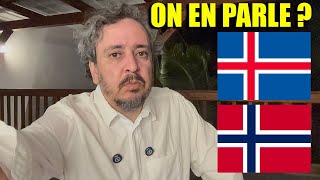
A French-language YouTube monologue arguing that several non‑EU countries (notably Iceland and Norway) rejected European integration yet prospered, while the United Kingdom’s Brexit failed because elites used it to further harmful agendas. The speaker recounts Iceland’s 2008 banking collapse and recovery (small population, banks allowed to fail, currency collapse, McDonald’s exit), cites Iceland’s current high Human Development Index ranking and macro figures (speaker: ~20 billion debt, ~3% annual growth, unemployment ~3%), and highlights Norway’s rejection of EU membership and its very large sovereign wealth fund (speaker cites €/$1.5 trillion). The video contrasts these cases with the UK—criticizing its elites, rising inequality, judicial anecdotes, and policy choices—and briefly mentions Bulgaria’s planned euro adoption (Jan 1, 2026) and criticisms of EU-driven regulation in countries like France.
Questions this video answers
About 320,000 inhabitants (speaker: "not even that").
"20 billion in debt" (speaker's claim).
About 3% per year (speaker's claim).
Unemployment approaching 3% (speaker's claim).
Number one in the Human Development Index (speaker's claim).
My friends, good evening. The United Kingdom has become a boogeyman. People are leaving it. I am part of what is called an exodus, a mass exodus from this country. Now, there is one thing you need to know. There are other countries that have said no to the European Union, that have said no to Europe, that have rejected it and then given up on them. No one is betting anything on these countries that are now extremely developed. They have a quality of life that is among the best in the world, and their name is taboo. You will not hear about them very often. Let me tell you, the first country I want to mention tonight is Iceland. Iceland, for those who remember those who were with us in 2008 when the crisis hit, when the big financial crisis began in the United Kingdom, in the United States, the subprime crisis, which then contaminated Europe and then the rest of the world markets. Well, Iceland found itself with three huge banks, three local banks that were extremely exposed and that they were going to collapse, that they would collapse. And in fact, what Europe said very harshly, they threatened Iceland and said, you pay up, we don't have any money. These are huge banks. At the time, Iceland had 320,000 inhabitants, not even that. And these banks represented huge sums in the billions, tens of billions. So what happened is that in other countries, what we were doing was simply doing what was called a bankster bailout. What that meant was that we went to the banks and said, okay, we're sorry, you did some bad business. Okay, show me how much. Oh, there. A trillion. It doesn't matter. It doesn't matter. We're here. We're going to give you a check for a trillion so that you can continue to play, you can continue the game, you can continue to distribute bonuses and all that. And don't worry, there's that taxpayer. He'll work his descendants if necessary. But you're too important. You're not going to. You can't go under, right? Hey, we're in countries where we've closed hospitals, schools, police stations and people have been left to die because we supposedly didn't have the money. Money, right. But when there's money for the banks, well, you have to find it. Well, the fact remains that Iceland said, no, we're not playing that game. So at the time we said, yeah, it's volcanic, near the Arctic Circle. They're going to starve to death. They're going to freeze to death. No one will realize what happened to them. Right? Because one day we'll get there and then we'll find some cannibals the ones who ate the others. And by the way, I remember the story that went around the world in 2009. It was a year after this story started. That's when McDonald's decided to leave.
Why?
Because the Icelandic krona, their local currency, had fallen. Its value had fallen by a factor of 10. And that's it. So McDonald's said, at this price, it's no good selling burgers and fries. That's it. We're leaving. And they left when McDonald's left. It's good. The articles that were written at the time were suggesting that, well, famine was coming tomorrow. Okay, Iceland, let these three big banks go under. These three big banks no longer exist today. Well, without beating around the bush, they did bad business. Well. Well, too bad they went under. Today, Iceland is number one in the Human Development Index, okay? Every country on earth is represented. Iceland is number one. On the OECD website, they say that Iceland is one of the richest countries in the oecd, but also the most egalitarian. Because there's no point in counting a country's wealth just in terms of raw numbers if there are inequalities. Because in that case we can quite easily find countries with extremely respectable levels of wealth. Hey, follow my gaze, huh? Take the United Kingdom, for example. Since the city of London is home to billions and billions of people, on paper, it might seem like a rich country. While millions of children live in poverty, millions of pensioners can't heat their homes, etc. So it's not really an egalitarian country. So please always count wealth against the actual distribution, against the actual average. It's like if I said to you, I don't know, I have a lecture hall. I have a lecture hall with 1,000 people. I let someone in who has a billion and that's an average of 1,000. A billion. That's a million people. That's a million per person. And then I said to you, well, you see here I have an average of each. I have a. On average I have 1,000 people. And on average, everyone is a millionaire. Do you see what I mean? Well, in reality I have one who is a billionaire. The others have zero in their pockets. You see, it is very important to see equal distribution. So ICELAND today has 20 billion in debt that is under control. It is 3% growth per year. It is unemployment that is also approaching 3%. So do you see what I mean? It is a country that is doing extremely well. And we never talk about it because it is a country that said no to Europe. That Said no to the forces of the empire. It has finally managed to get by. Another country that is also very rarely talked about is Norway. Norway considered joining the European Union. It has had two referendums. I think there was one in the 1990s. 70, 72, 73, if I'm not mistaken. Then people said no. Uh, they tried a second time with another referendum. The Norwegians said no. Well, they, that's the end of the story. Norway is not part of the European Union. It doesn't have the euro. And then when you look at them, well, sometimes they're the first in the Human Development Index, sometimes it's Iceland. That means they've achieved absolutely phenomenal development. Same as slanting numbers. Just to give you a number. The largest investment fund in the world, the largest sovereign wealth fund owned by a state, so by a population. Before that it was the one that belonged to the Norwegian population where there was 1.5 trillion in it. That means that Iceland, Norway invests money, so from oil and all that. Well, invests it or whatever from its people in a sovereign wealth fund. This sovereign wealth fund is the largest in the world. Just to give you an example, an idea, during this time we see countries like France that are caught up in the European Union, so hyper regulation. France has even managed to deprive itself of energy, while EDF has really built a jewel in the world of energy that is really seen everywhere as an example, isn't it? Well, it has an energy problem.
Why?
Because it's the bureaucracy that imposes an energy deficit on it, that imposes high prices on it. You have to be completely crazy. You have to be crazy to join the European Union. So I can understand that Bulgaria wants to join the European Union. Bulgaria will adopt the euro on January 1, 2026. So they're really going to suffer. I can understand that Bulgaria might say, okay, we're going to sell part of it or sell our sovereignty, but in return we'll get investments, we'll build roads and so on. I'm against that. But I say I understand the reasoning, but I'm against it because it's short term thinking. It's thinking that at the moment you have a little bit of money, but in the long term you're destroyed, you're dead, you're finished, you no longer exist. So these bellies are leasable, as they say. But a country like France, when you're one of the richest countries in Europe, what are you going to do with it? What, what are you going to do? What are you going to gain? Apart from paying for everyone. So I was saying Norway, to give you an idea. So it's digging in the North Sea, which is shared territorially with the United Kingdom, among other things. Well, the United Kingdom doesn't dare to dig on their side because for ideological reasons, they say we, the United Kingdom. Well, what interests us is protecting the climate. We're afraid of global warming, right? They have 12 degrees at night in August in the United Kingdom. But, well, the climate is a local religion. So what they do is they don't dig on their side. So they forbid themselves from going to look for oil. And what do they do? They address the Norwegians who are on the other side of the border and tell them, sell us oil. So the Norwegians are extracting oil, which they give to the British. You have to be completely crazy. So what happened? Why am I telling you this? Because I know that today Brexit was clearly a huge failure, but in reality, it never really happened.
Why?
Because if you want to take action, there has to be a sincere approach. There has to be a sincere approach to rejecting the European Union, to reject supranational forces and take back control of one's destiny. It's not just about doing a showy Brexit, pretending, lowering the European Union flag and saying we're free. That's not it at all. It's really getting to the bottom of things. The United Kingdom didn't have that intention. The British elite, on the contrary, was. And I realize in hindsight that when we were in the European Union, we would very easily accuse the European Union, while in reality the British elite was more hysterical than the European elite. Okay, so it was probably even among the most hysterical in the eu. It turns out that they were the ones who were pushing the EU at a speed that it didn't want to advance at. And when they wanted to take control, when these elites wanted Brexit, it was not to reverse the trend, but to go faster than the European Union would allow them. So they made practically all the problems that we knew before worse. Because quite simply, we gave sovereignty to elites who, on the one hand hate the countries, on the one hand want to make it poor, on the other hand are extremely corrupt, on the other hand, are extremely ideological, on the other hand, are subservient to little people like the WEF and all that, including even at the level of the royal family. So the decision was made to make the United Kingdom a poor country. Again, it is a poor country. If you want, I will say something. The United Kingdom is not rich like that just by nature, well, there are rich countries, poor countries on earth. That's how it is. That's not history. We have to see what happened that made it a country that became rich. It's a contingency. It's something that happened but could not have happened. If we look at the United Kingdom over the years, you look at the 1800s, while, for example, Karl Marx wrote Capital or the Critique of Political Economy, he described scenes of horror and scenes that we find beyond Karl Marx were described by others. And we find all that in the literature of the time. And in fact, what we find are children as young as seven working in factories, cleaning chimneys and indoor stacks. We find women working in textile factories until they died. We find places in certain regions of the country where life expectancy had fallen to 17 years. So there was poverty. The United Kingdom was in poverty for 100 years. What he saved were two things. First, the Industrial Revolution that began roughly around 1760 in the United Kingdom. So there was the Industrial Revolution that then spread all over the world, but it began in Britain and also the colonial empire, the colonial empire with the Indies, the East India Company and so on, which carried out an unspeakable pillage. So this is what we call primitive accumulation. So they had these historical opportunities, but they are not reproducible. It is not something that can be reproduced. So if this country becomes poor once again and returns to its Victorian roots that seem to be sucking it in. Right. It will not be able to go back. So these are choices that are being made today that are quite irreversible. But here is what I wanted to tell you with all this, is that the United Kingdom is on a path of self immolation. When the United Kingdom wanted to take, so to speak, its sovereignty, wanted to leave the European Union, it was not to embark on a new path of development, prosperity, national dignity. A little like the Norwegians or the. The Icelandic one. No, it was elites who wanted to destroy the country. But Europe wasn't moving fast enough for their liking. So we're going out and doing it. We'll show you. We're going much faster. That's it. That's what happened. So in my opinion, it doesn't call into question, let's say. Let's say the ideas are the sovereignist aspirations of some and others. But we have to be careful in the United Kingdom, if you like. The idea that we could have seen is to say we do Brexit and then we have to change the elites. Yes, that's what should ideally be done. But in the United Kingdom, a large part of the power is hereditary. You don't change the elites like that. You're not going to snap your finger and say, well, let's change the elites. No, you're not changing anything at all. There are people who are there who are passed down from father to son with titles of nobility, who get irritated and all that. And so you have a system that is too corrupt. You won't be able to change it. So Brexit or no Brexit, nothing is going to change for you. At worst, we have even made our situation worse by giving more freedom to the people who are at our head here. I will give you just one example to finish. If you look at the United Kingdom today, there are voices saying that we should leave the European Court of Human Rights. I am quite constrained.
Why?
Because the British judges are more unhinged, more crazy than those of the European Court of Human Rights. Okay? For example, we have someone who is a repeat offender. He arrives at a British court to fight his deportation, right to appeal and tell the judges, my son likes the nuggets that are sold in the uk, doesn't like the nuggets that are in Albania. She just said, well, there is a right to nuggets and it allows you to stay. So that's just one case that I'm giving you. Well, you're going to say it's anecdotal. No, no, no. You can find hundreds of cases like that. There are people who haven't been deported, criminals. I'm not talking about ordinary people. I'm talking about real criminals who haven't been deported because there wasn't a hairdresser who would accept them in their country. There was even someone who went before the judge. He said, I have to invent a reason, sir. And there you go, you're taken aback. I don't have a reason right now, but I have to invent one. The judge said, okay, fine, you have the right to stay. Give him a residence permit like that. It will give him time to think about it one by one to a reason. You know what I mean? So we are at the European Court of Human Rights, tenfold. I mean, the ECHR really seems like reasonable people in the face of the madness of the British. The British today are literally an asylum. Psychiatric open skies. They are more. They are more of a country to which we can compare or study or decide, say, okay, I'm going to do comparative politics, right, with the United Kingdom. Asylum or forget. What? There you have it, my friends. Thanks for watching this video so far, and I'll see you in the next one.
More from Aldo



La FIN du Royaume-Uni ? L'Ecosse, l'Irlande du Nord et le Pays de Galles veulent partir !




Analyse Présidentielles 2027 : Marine le Pen remet ENCORE le voile sur la table !


Scandale "60 Millions de Consommateurs" : la France mange des pâtes contaminées au Cadmium !

2 dossiers : Accident d'autogyre en Italie & un pilote sauvé par le parachute du Cirrus