Charlie Kirk : ils ont arrêté le tireur (Tyler Robinson)
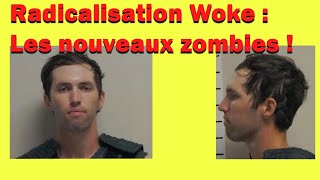
A French-language monologue by Charlie Kirk commenting on the arrest of Tyler Robinson, a 22-year-old from Utah accused of a recent shooting. The speaker recounts the arrest (confession to his father), cites social-media images showing long-standing familiarity with firearms, describes Utah’s gun culture, and situates the event within broader themes of national mourning, radicalization (framed as "wism/wisdom" ideology), and campus debates (Oxford Union). The tone alternates between descriptive reporting and polemical analysis; the speaker predicts legal consequences and societal fallout.
Questions this video answers
Tyler Robinson
22 years old
Utah (referred to in transcript as "uta")
He confessed to his father, which led to his arrest by the sheriff's office.
The body was transported by Air Force Two (described as the Vice President JDV's plane) accompanying the coffin.
Good evening, my friends. His name is Tyler Robinson. He is 22 years old. He is a student in his state. He is from uta. He was arrested. He did not live very far from the scene of the crime. He is the shooter that the United States had been looking for since yesterday. He confessed to his father and then from there things snowballed and he was arrested by the sheriff's office. So he is 22 years old. He is not a career soldier. He is more of a student. On the other hand, the precision of the Shah can be explained because there are photos of him that were taken from his social media. And in fact we see him at 12, 14, 16 years old and so on, handling weapons. So we feel this fascination with guns which is quite common there. It is quite normal. It means this fascination that you see or this proximity to weapons. It's something normal in Utah. It's not a particular or special family. I've even at people's homes in Utah where during the meal you arrive and they show you the latest shotgun that was given to you for a birthday or for Christmas, the M16 and against the wall over there in the back. And all these are weapons, they're loaded weapons. And even children, even 10 year old children know how to be wary of them, know how to handle them and all that accidents are rare. He was someone who was used to shooting, which explains Ben's precision in what he did with the assassination, doesn't it? So America today is first of all honoring the dead because it has its Charlie moment, it has its I am Charlie momentum. But the psychological impact is much stronger than the Charlie Bedor attack in France at the time. We are, I dare say, very close to Kennedy. It's something that will be talked about for years and years. So the body was transported by Air Force Two, which is Vice President JDV's plane which accompanied the coffin. There was also a large, long police motorcade on the road with motorcyclists and everything passing under an American flag that was lifted by a crane. And I want to say that having seen it from a distance, but also from up close, Americans have a sense of occasion. They know how to honor their dead. They know how to put in place an extremely noble, extremely dignified decorum when you're there and you see that it's absolutely impressive, which is not a snub. It's not really a snub. But I notice, for example, when I compare the two events, for example, the death of Charlie Cork and I compare it to the death of Jacques Chirac, who died a natural death. And then I see the coffin placed on the ground with Macron standing like that in front of it. It's true that it's a stain. I don't think it's. Unless I'm mistaken, I don't think it was Macron who invented this ritual somewhere. But it's true that we can see right away that it lacks elegance, it lacks dignity. There's no. When we look at the traditions of peoples around the world, there's no tradition. We put the dead person on the ground, and then you have the guy standing in front like that, looking down on him, right? You're dead. I'm here. That's true. Okay. I just wanted to say that in passing. Now I'd like to say that I've seen quite a few messages from people sending photos and saying that the one who was captured is not the same one in the images that circulated yesterday. And that's something I had already pointed out even before the arrest of this guy named Tyler Robinson. By the way, I. I have the impression that half the residents of UTA are named Robinson, but, hey, that's a detail. I was saying that yesterday, when the FBI images circulated, they were surveillance camera images that were of poor quality, but there you go. They gave this to people who took these images, gave them to artificial intelligence, and they said, make these images better for me. You should never do that. Why? Because it's well known what Lee is going to do is, well, she's going to put a face on top of it. So it will generate a face and come and stick it against your image. So it's not an improved image. It's a literally regenerated image. So the face it creates, it's clear it won't be the same. And yesterday I pointed out that when we arrest the guy, it won't be the same face. We have to stop with these techniques. It's not the first time people have done it, and it's not the first time we've seen that he doesn't look like anyone. So the motivations. The motivations. Well, there you have it. You guessed it, it's democratic extremism. So it's someone who said he was radicalized. So it's not his family who radicalized him, because his family seems like normal people. Notwithstanding the trees I mentioned earlier, which are a cultural fact there in the region, it's not a marker of a violent family or anything like that. We don't really see it in Europe. We might say, oh, yeah, they're violent. No, no, it's completely normal. There. That's it. Having a weapon is like having a fork or a kitchen knife. Well, that's normal. There's nothing special about it. His family are good people, and today they too are in trouble because on one side, there's the family of this debater, and on the other side, there's the family of this killer. And. And it's a family that wakes up to a nightmare because they saw the nightmare on tv, and today, well, they're in it today. Well, they've lost their child, and their child will never see the light of day. Ah. Either he will die in prison or, well, he will go towards the death penalty, because that's what will probably happen after spending 17 or 20 years writing books against violence on death row. It's terrible. It's terrible for everyone, really. So the question people are asking themselves today is, who radicalized him? How did he become radicalized? Because now you see the terms we use, they're terms we used 10 years ago. We talked about Daesh, we talked about terrorist groups, we talked about radicalization. And we see that today we have radicalization through another ideology that leads to terrorism. It's an extremist ideology that W is really talking about. W. And in fact, I've often described wisdom as a new religion. And a few days ago, I had an interview with Aline Maurice at the bar of the Barons of B, which is online. I'll give you the link in the description. But in fact, at one point in the conversation, we said that wisdom was losing ground. So with the arrival of Trump, yes, wisdom is losing ground. But be careful. Like any ideology, when it loses ground, what does it do? Well, it tends to become radicalized and feeling its existence threatened, it can resort to extreme violence in order to continue to exist and to continue to have influence. But the mistake, the fundamental mistake, is that whiz me, there is a force, tolerance, that has been applied, you know, that has been put in place by the states, that has been written into the laws that has. There are. There are companies, you know, the forces of money that have financed it. So we have wismas who claim to be victims. In the meantime, we have banks, we have big companies that finance them and defend them. I mean, you're not a victim, you know, you can't come and play the victim when you have the forces of money that are paying you billions. So what happened is that we took a sort of modern religion that was ultra minoritarian, but which is dangerous with its radicals, its mentally deranged, People, its violence. And what did we do? Well, we completely turned a blind eye to his failings. We didn't want to see them. And we started using him to buy ourselves a clear conscience. So we started pouring money into him, defending him and everything against all odds. And the problem is that these people who are above criticism, well, today, this is the result today. Well, it's been about 10 years now that they have literally had a monopoly on violence. And today, well, it's getting worse. And we'll see what Trump is going to do, but it's going to go badly. I don't think they're just going to bury this guy and then say, well, let's move on. It's nothing. I think there will be w organizations that will be declared terrorist organizations that will be classified in the same chapter as Al Qaeda. We'll go to prison for supporting them. Whereas until very recently, you could be blocked, banned or prosecuted for criticizing them. Right. So there is a very profound shift, and this is precisely what gives rise to radicalization. Another example of radicalization today comes from the United Kingdom. We have the Oxford Union, which is a union of student organizations at Oxford University. And what is appalling is that Charlie Cor came to debate there in January of this year. He came to debate. He is a debater. He likes to talk and debate ideas. But. But he is always kind. He has sometimes defended his detractors. That means, for example, sometimes he's in a debate and then the audience starts doing things like this or doing things like that to someone who's debating with him and he's stopped them and told them to stop. It wasn't his goal to humiliate people or break them down. It was really about talking and exchanging. And I'll tell you something, between us, as long as people, as long as people who come from a country where there's been a civil war, I can tell you something simple. As long as people can debate, can talk, they're not killing each other. Wars happen when we can't talk anymore, when weapons, when the crackling of weapons replace microphones. And at that point, the debates, the conversations, the meetings in the middle, the splitting of people are over. It's over. And then we arrive at a radicalization that means that, well, there you have it. The other has to disappear. There's no room for either of us. So that's the risk, unfortunately. So I was saying Oxford Union, who write on their Twitter, are the oldest union organizing intellectual debate and everything since 1823 or something like that. Don't quote me 23 or 28 or whatever centuries. Well, they're elected president. That means their new president, the one who will replace the current president, he's a guy from Nigeria. He was recruited, I don't know how because to get into Oxford before you had to have extremely high grades. But he it seems has fairly average grades. But he still got into Oxford. We're probably in a DUI type approach. But he debated, so listen to this one. He debated. There are photos in the ex Oxford campus with Charlie Cork. By the way. The dress code was suit and tie and Charlie Cork was well dressed like that. Whereas usually when he's on university campuses he wears a T shirt. But out of respect for the institution, he came dressed in a three piece suit. The guy opposite came wearing a top, it looked like a big T shirt and with some slacks. He was dressed as if he had just gotten out of bed, as if he had just put down his coffee and then he came like that. That's the president of the student union. Even worse, he congratulated himself on the death of the guy he debated with just a few months ago. So that's where we are in universities today. We say to ourselves, where did he get radicalized? He didn't get radicalized in basement mosques here we're talking about Wizmi. And in fact they have people who are radicalized today in universities. And you all know those photos where we have young people, young women, young men who enter universities, including universities that have existed for centuries, Ivy League universities, world renowned universities, and who leave like vegetables after a few months, a few years. They, they are vegetables that we recover. And here we have a 22 year old guy who is ready to kill and who has taken action, who has killed. And some time ago he kept saying, yes, he simulates hatred and all that. Well, him with his gun. Well, he wants to see love. So there you have it, my friends. And it really is an extremely disastrous situation. Of course you realize there is a psychological impact. Many people feel that we have passed. There is a bar, there is something, there is a before and an after. In reality it is part of these events. It's not fair. Not fair. Well, there you go. Someone shot themselves who was shot because of the weapons. And then goodbye and we're moving on. No, it's really something profound that broke today. And we'll see in the weeks and months to come, we'll see the fallout from all this. We'll watch together. In any case, thank you for watching this video so far. And I'll see you in the next one.
More from Aldo



La FIN du Royaume-Uni ? L'Ecosse, l'Irlande du Nord et le Pays de Galles veulent partir !




Analyse Présidentielles 2027 : Marine le Pen remet ENCORE le voile sur la table !


Scandale "60 Millions de Consommateurs" : la France mange des pâtes contaminées au Cadmium !

2 dossiers : Accident d'autogyre en Italie & un pilote sauvé par le parachute du Cirrus