Le Grand Reset & Effondrement : La vidéo qui explique tout
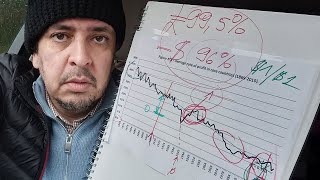
A French-language YouTube monologue arguing that long-term average profit rates in major Western economies have fallen sharply since mechanization began (graph cited from 1869→2009), producing declining returns for investors and driving financialization, privatization and growing reliance on subsidies. The speaker links mechanization to the creation of the proletariat, interprets the 1929 crash and WWII as a historical reset, and warns of potential modern "resets" (economic or military). He cites sectoral evidence (pharmaceutical R&D returns), corporate lifespan decline in the S&P 500, and long-run currency erosion (pound, dollar). The talk closes with promotional references to the speaker's books.
Questions this video answers
1869 to about 2009
About 43%
About 9% (speaker says below 10%; 9% at 2009)
"Probably at 6 or 7" percent (speaker estimate)
The 1929 crash leading toward collapse by 1939, followed by WWII as a reset
Good morning, my friends. I'm here to talk to you about the Great Reset. But I'd like to tell you things that go beyond what you hear in the videos, whether they're in French, English or something else. I'd like to talk to you about a certain number of realities beyond the reset. And you'll see that there may be. There may be some extremely troubling, worrying elements to understand that correspond to realities that are taking hold to things that are coming towards us at high speed. So, you know, for a few months now, I've been writing a book on the Great Reset. And as they say, there are books that you read and you can come out changed, but there are books that you come out changed by writing them. If what happened to me with this whole Great Reset thing, you know, people on our political side, if I were to talk to you about it, I could start right away about the erosion of fundamental freedoms, the erosion of democracies, corruption, a world built for the rich. I can talk to you about all that, about Davos, about Mr. Klosh Vov and all that. I can talk to you about all that. And these elements that I just mentioned are not without merit. On the other hand, there's something else beyond that. I would like to share that beyond with you today. So, first of all, I have a graph here. It's a graph. We don't really need to go into detail, but I would like to tell you that it starts in 1869. 1869, and goes up to about 2009. It's a downward curve with some significant elements that I would like to tell you about. What does this curve represent? This curve shows the average annual rate of profit in a certain number of countries. So these countries are countries, let's say, that are the economic locomotive of the West. I'm talking about the United States, the United Kingdom, the Netherlands, Japan and Sweden, which are countries that are going to be in the economic income, if you like. The possible economic profit in these countries or the average in these countries has been averaged along this curve.
Okay?
If you're an investor, if you're someone who wants to embark on an economic adventure, this kind of curve tells you roughly how the average person has evolved from 1869 to the present day. So what do we see? We see that in 1869 we had a gain of about 43%. If I zoom in here, okay, we're at 43%. And here, if you like, what does that correspond to? This corresponds to an enormous economic gain, to profits, to absolutely incredible Margins that were made because of the arrival of mechanization. The arrival of mechanization. If I go back a little to the theories of Karl Marx, for example, which he describes very well in his book Capital, well, this period corresponds to the creation of the proletariat. What is the proletariat? How was the proletariat created? The proletariat, if you like, comes from the mechanization of the economy. Let me give you an example. Let's imagine we are in a Street in 1860, and in this street there are people who make tiles. They make tiles, don't they? From father to son, as we used to say at the time they make them. It's laborious, it's long, it's difficult, it requires a lot of time, a lot of energy. And these craftsmen make these tiles that they sell for €5 each. At that point, the disruptor will arrive. Someone will arrive who will completely disrupt this situation that has lasted for generations. Someone will come with a machine that will start making the tiles, and he will ship one every 30 seconds. Instead of, for example, spending an average of two hours per tile. Well, he ships one every 30 seconds with the machine. They were selling them for €5, but their cost price was maybe €4.50. His cost price is 30 cents. Okay, so he will never be able to compete with him. And he will sell the tile for €2. That means he will literally kill them. It's over for them. There is no way they can compete. You're going to tell me they should just go buy the machine themselves, Right? They just have to buy a machine too. The problem is that the machine costs 100 million.
Okay?
Do you see the thing? That's what created the proletariat. That means that these people who were craftsmen, well, are going to have to stop their craftsmanship and go watch over the gentleman's machine. The machine does all the work, but it needs a certain number of people. Humans become a sort of extension of the machine. Ultimately, if they become an appendage to the machine, and they will provide it with what it cannot do on its own. People, for example, pouring the raw materials into it, recovering the finished materials, all that. So there is a need for humans. And that's why the further we have advanced on this path, the more humans have ultimately become indifferentiated. That means that, for example, before we had jobs for men, there were jobs that were considered jobs for men. Today we don't care. Men and women, it's not important, because humans have become an indicator of the machine and Therefore, their personal characteristics, we don't care, after all. So, for example, we even have countries where they make children work, okay? Because anyway, there are children who go to factories. Because in the end, we don't care. All you need is hands. So we continue. At the time, there was this revolution that meant that those who arrived with machines could make 43% profits. It was huge. They could turn their fortunes, reinvest. Reinvest, and build dynasties, dynasties of huge billionaires who would later define more or less what would happen in the 1900s. So in the years that followed, we would see that regularly, regularly, the system was slipping. The system is going downhill, with profits falling below 10% at some point in 2009. So now we're talking about 9%. That was in 2009. Today we're probably at 6 or 7. You see, it's going downhill. So if we look at one of the last times, it went downhill quite sharply. It was during the crisis, when we had the crisis. Look at this part here. It was during the crisis of 1929. So the crisis of 1929 corresponded to a sudden economic collapse. So suddenly, look, if I take this curve, If I take this curve and I continue it, okay, if I take this curve and I continue it, okay, where does it fall? It fell in 1939. That means that we were clearly heading towards an economic collapse. We were heading towards zero in 1939. Now, in 1939, very opportunely, what did we have? We had a reset. A reset that at the time would materialize in the form of a war. We'll call it the Second World War. So the Second World War allowed us to do what? It allowed us to restore, if you like. It allowed for an economic recovery.
Okay?
It allowed for an economic recovery. You see a sudden reversal of the war economy. War is good. It allows us to do a reset. It allows us to destroy the means of production and rebuild it. It allows states. It allows us to capture states that are in a panic. Who will start investing en masse, who will start to release money, who will start to print it. There are more constraints. Who will start to borrow. We are no longer in a long term logic, in a logic of just getting things done right away. And the economy likes that. So the thing is that what we hoped for with the Second World War, well, we caused 100 million deaths in the process. But what we hoped for, we hoped for was that we would return to strong growth. We hope that maybe in a few years we would get back to the bar, that maybe around the 50s or 60s, we would get back to the 40% profit rate. The problem is that it didn't work. The problem is that you see that this little bump there represents 100 million deaths, okay? And in fact, quite quickly, the profit rate of these world economies, well, it reached the average going down. That means that ultimately the story of the Second World War didn't serve much purpose. There was a small upturn, and then we got back to the situation before. We thought we had perhaps avoided a total collapse of the global economy in 1939. So we slowed things down. Now, maybe it's not important, but it's becoming important. There's one thing you need to know. If you pull up a graph here, you'll see that what we call government bonds are also collapsing along with this. And I'll tell you why. Because if you look at zero, because if you look at the profit here, you'll say, well, where's the profit? You'll say the profit is there, okay? You'll say the profit is between zero. That's zero percent, okay? And then this curve, the W, for example, 30% here, and that takes us back to 1909, okay? Now you're going to say it's 30%. In reality, it's not really 30%. Let me explain why. Because the zero is not there. That's not the right zero. Zero is the government bond. Why? Because as an investor, if, for example, investing in industry brings me back, for example, 30%, like here, except that government bonds bring me back, that means lending to the government, buying treasury bonds, saying that government bonds bring me back 20%.
Okay?
That's the bond rate. Well, at that time, I don't remember what the bond rate was in 1909, but the bond rates were much higher. So that in reality, what interests me in economic investment is only that part that is between the government bond and the real profit. Why? Because. I'll tell you why. Because assuming that we are in a situation and we are approaching that, or rather trying to avoid that, assuming that the average rate of profit is 10%.
Okay?
There I am risking the money. I have to put it into the real economy. I am investing it, okay? In the economy, and what do I get in return? I get an average of 10%. But I still took a risk. I took a risk of, Instead of getting 10%, I could get -20%, right? If I wasn't smart. Now, assuming that on this same market, at this same time, we have government bonds that pay 15%, why am I bothering? Why am I bothering at all to invest in the real economy. I go to the government, I give them the money, they give me treasury bonds and they will pay me 15% on top of that.
Okay?
So you see the reality, Every investor doesn't just think about the profit in absolute value. They won't say 18% profit. The reality is between what is the profit between the profit that is offered to you and the government bond.
Okay?
So that's the goal. The goal of those who work, those who invest, is to obtain a higher return than that of a government bond. Otherwise, there's no point in waking up in the morning. So let me show you. Let's continue along our curve. And here what do we have? We have the 70s.
Okay?
We tried oil problems, we have crashes, we have crashes, literally where things are going to collapse. Then we try to catch up timidly, and then we continue the curve with some years better than others, but we are still going down. So what we did is we went from 43%. We went from 43% in 1969. We went down to 9% in 2009. We are now talking about single digit revenues with government bonds. Anyway, so if I look at the United States, the Treasury bonds are just below, I think over 10 years, they are just below 5%.
Okay?
And then in France, we are at 1.75. In Switzerland, I think it is 1.4.
Okay?
Roughly speaking, that is subtracted from the 9% that I told you about. That means that the ability to make money in the economy is really shrinking and has been shrinking continuously and sustainably for a very, very long time. You see, it's still a very serious problem. If you look at a number of corollaries that go with it, it's that here, here I spoke to you, I made a video recently where I talked about stakeholder capitalism where we have ideological investments. We have a very ideological position of the company that says we're not there. It was signed. Look at the Business Round Table, the Washington based association called the Business Round Table. And look at how many people, how many CEOs have signed. You have Coca Cola, you have American Airlines, you have, you have mine, you have everyone there, ikea, everyone is there. They signed the Declaration on Stakeholder Capitalism. So this is a reality that says that we are not here to serve only our shareholders, but we are here to serve society in general, which is a form of fascism. But that is not the purpose of today's video. And in fact, the reality is that they do not want to be judged on profit parameters in a Society where there is more profit in a world where it is increasingly difficult to make a profit. So they would like to be judged on parameters like, I brought diversity. I fought against climate change and all that, and non measurable objectives, because the measurable financial objective in Friedman's logic is an objective that is unattainable today. So they would like to be able to base themselves on other criteria, to evaluate themselves. Okay, to evaluate themselves. That's better. Because of course, if you're the CEO of a big company, it's much easier to say, I've increased the diversity rate in my offices. I now have coffee machines that are employee friendly. We have company vehicles. 20% of our fleet is now electric. You see, it's much easier to talk about things like that than to say, well, the share price has increased, the value of our shares has increased, our market penetration has increased, our profits have increased. And that's much harder to do in today's economy. So we prefer to be judged based on ideology. Now, regarding ideology, there are two very important elements that I'd like to share with you here. We have the powerful arrival of all this. What triggered it? The powerful arrival of finance, of financial capitalism. Financial capitalism will therefore begin to enrich itself by polluting society in general and workers in particular. So how are workers robbed? They are robbed in two ways. First, they are robbed by a minimal payment for their work. Okay, if you look at it, there are many economic theories that tell you that, for example, commodities, commodities, the price of commodities.
Okay?
When a product becomes a commodity, its price will slide until it finally reaches its cost price. Commodities always end up being sold at cost price. And one of the first things that became a commodity was labor, manual labor, for example. Manual labor became a commodity. That means it began to be indifferentiated, knowing that humans are just an extension of the machine, and began to be paid at cost price. In this sense, we are going to have workers who are paid how well, we give them enough to live on. That means they are alive, they eat, they breathe, they have a roof over their heads. So what do we do? We are going to see what the cost price of this work is, which is roughly the minimum wage. And we are going to pay them this minimum wage. He will tell here, that's your price, that's your cost price. Sometimes we even pay below our cost price. But in that case, we want the worker to compensate with things with elements that he himself adds to the equation. So we have a deficit equation from the worker's point of view, but he will compensate. How Will he compensate? He will compensate with things that are, that are not, that do not have a monetary value at the time. But in reality, we can consider them as wealth. For example, he will destroy his health. But as long as he has health capital, which we will evaluate at a million euros, well, what will he do? He will receive less than his cost price. That means that what we pay him is less than what he actually spends. And so he will spend part of his health, which he will gradually destroy, which he will add to the mix to balance the equation.
Okay?
And on the days when his health is destroyed, well, in any case, he will be taken care of by public services. Now, something else. That's the first way of spoiling. The second way of spoiling is simply called, and it's really no surprise, it's called subsidies. Subsidies. The economy of subsidies is an economy of spoiling the worker. Why? Because the worker works, he pays taxes, okay? So normally we return his taxes that he gives to the state. What is he supposed to get back? He is supposed to get back these taxes. He gets them back in the form of public services, for example, in the form of schools that work very well for his children, which allow for social mobility, which allow for well educated people, foolproof security. He can leave his house, come back and find that his meager possessions have not been pillaged by thieves while he was away. He can walk around the streets of his city at 3am after work without anyone coming to attack him and steal his phone and things like that, okay? He can go to the doctor in a hospital. He won't die in a hallway. He'll find enough doctors who will take good care of him, who will take care of him quickly, who will treat him right? That's what the money of this hard working taxpayer is normally used for. Now what the boss does, what the forces of money do, is that they sell it to the state and say about the money that was paid to you by our workers or our employees or our proletarians, we want it. And so you give money to the state and your boss goes to the state, gets that money back, okay? Which goes into his profits, which goes to his shareholder. So that's also a method of spoiling. Well, there are others, right? We can talk about credit, we can talk about things like that. But where the financialization of things like for example, we took the. We took the public services, everything that was public services, we started selling them, we started privatizing them. What's the goal? What's the goal of privatization? You go to the United States, they even privatized prisons. And here in the United Kingdom, they privatized doctors, surgeries, they privatized primary schools, all that. Why universities? Because privatization allows for financialization. Because as soon as something is at the state level, something belongs to the state, it becomes very difficult to capture the wealth that emanates from it. Whereas when you have a. When you have a financialization through privatization, it effectively allows banks, it allows the forces of money, it allows speculators to insert themselves into the middle. And then at that point they say, well, the student who goes to this primary school, before the primary school belonged to the state, we couldn't do anything. Now when he goes to primary school, he costs the state €20,000, OK? Per head, per year. Well, out of the €20,000, we take €16,000 and the school only has €4,000 left to get by. We don't care. But 16,000 managed to capture privatization. That's what happens when we encourage or push the state to privatize sovereign assets. It's just to financialize them and capture them. So what I'm telling you is that it's collapsing. So since we have a collapse here, that is very close to the bond rate, right? Okay, so what's left? We still have the subsidy savings that have always existed, but today they are becoming a very significant windfall. What does that mean? It means that when we were there and we had 43%, we weren't chasing subsidies, even if they're always good. They put butter in the spinach. But they weren't absolutely vital. Today they are vital because the subsidies that are received today are becoming much more significant than the real economic potential.
Ok?
That means that the real economy will bring you a return. If you calculate a delta with respect to the bond rate, you will find that it will bring you 4%, whereas perhaps the subsidy will bring you 30 or 40%. You can have projects where half is financed by the state, by the General Council, by the European Union. So at that point, indeed, capturing subsidies is very important. And that is why we are starting to have an economy, the economy of subsidies. I am talking about wind turbines, I am talking about many electric vehicles, I am talking about heat pumps, I am talking about many things. I am talking about solar panels in countries where the weather is gray, where it rains. You see, it is the economy of subsidies that will appear more and more. Of course, this is an average of several countries, as I said, and it is an average of their economy in general. Now, if you look at this curve and break it down into different countries. You'll see that they're all going down with different cycles. Like Japan, for example. It had its heyday, then it went down and so on. But basically all countries individually and collectively are going down. Another thing I wanted to tell you is that some economic sectors can sometimes follow a slightly different path, but ultimately they're all going down. I'll give you a figure from mink in the 60s, in the 50s, in 1958. In 1958, take the standard index, the SP 500, which is an index that shows a basket of 500 major American companies.
Okay?
Well, the SP 500 companies in 1958 had an average age or average lifespan of 61 years.
Okay?
There was a company that was in this index, so it's a major company. She lived less than 61 years in 2014. Again, the mink figures. Do you know how long the S&P 500 companies lived in 2014? How long did she live? 18 years on average. Okay, so that's almost a quarter of the life expectancy. And we consider that in 75, in three years, by 2027. And that's a forecast, right? That's not what I'm giving you so far. These are realities later on. It's a forecast. It's worth what it's worth. It considers that by three years, by 2027, 75% of the companies in the S&P 500 will have disappeared. So two to three quarters will have disappeared. So you see, it's becoming huge. Okay, that's really starting to take on interesting proportions. Another figure to show you a story. If you take the pound sterling, I'm in the uk, the pound sterling has lost value since its creation. Its creation in 1600 and something, right?
Okay.
It has lost value. It's not a mistake. It has lost 99.5% of its value.
Okay?
That means that today we are living on the remaining 0.5% of its value. That means we are on the crumbs. That means we are heading towards zero. That explains why they are thinking about creating digital currency for, for example, doing resets like that. How much has the dollar lost? The dollar since 1913? The USD since 1913 has lost, I think, 96% of its 1913 value. So they are living on the remaining 4%. And so be careful. If you look at the years, if you make curves at the year's level, you will see that of these values during our lifetime, most of these losses have been realized during our lifetime. That means you will see that, yes, it is true. The pound has lost 99.5% of its value, but potentially it has lost 80% of its value since over the last 30 or 40 years.
Okay?
So things are accelerating. What is happening is not linear, it is accelerating. Same for the same for the dollar. The dollar on the 140 years before 1913, its value has hardly changed, OK? It had a fixed value for 140 years. And then suddenly in 1913, I think it was the creation, if I'm not mistaken, the creation of the Fed, OK, the Federal Reserve, which is no more federal than FedEx for example, but which caused 95% of the value of the dollar to erode. Until today, it's accelerating. So what's happening today? I'll just give you a little bit of information. I was telling you that some companies, some individual sectors may experience different prices or different values or slightly different paths. For example, you take pharmaceuticals, take pharmaceuticals. Well, there were articles published in 2007-2016 and so on about pharmaceuticals that said that they're going to reach a level where $1 of investment brings them $1 of income. Do you know what I mean? Let me explain, let me explain. When you invest, you have something like this in an investment logic, when everything is going well, when you're experiencing the glory days, the glory days. Look what happens in the glory days. You invest $1 or €1, it doesn't matter, you get a return of $10. Okay, so that's good, that's great. After that, it can't continue like that. One day you've invested a dollar, you get $5.
Okay?
So that's multiplied by five. Now when things start to collapse, because the thing is, at the beginning, at the beginning, it's low hanging fruit. Like you have a tree, you have an apple tree. So you recruit the apples that you can reach from the ground. At the beginning, it's easy. Then you climb up on a bench, you kill more apples. But then you had to have a bench. Then you bring a ladder. There you go. You had to bring the ladder back. And then at the end, towards the end. What happens once you've removed all the easy apples? Well, for example, you're left with this apple that's at the top of the tree. And then you need to bring a truck. You need to bring a truck with an articulated arm, a cabin. We block it, we put some sledgehammers, there are workers, we block the road and everything. And we're going to take this apple away from you. And there you go. Congratulations. The Apple cost you €2,000.
Okay?
And that's the problem. I mean, the pharmaceutical companies were moving towards a system where it was becoming increasingly difficult to make money, to find new drugs, to find new products. So in 2020, we predicted, in very serious analyses, he predicted this in 2017-2016, predicted that in 2020 we would arrive at this equation. $1, $1. That means later. What happens later? You have this later, you have $1 and you earn $0.80, for example. @ that point you are at a loss. It's over. At that point, the existence of your sector is threatened. There is no reason for your sector to exist. Because at that point what you are doing is that for every dollar you are investing, you are losing 20 cents, you are losing 30 cents and so on. Well, of course. So at some point you will have to find a change. In 2020, something happened that caused pharmaceutical companies to change their model. They changed their model. Instead of targeting people in good and poor health, who represent niches, they started targeting people in poor and poor health. They also started using coercive methods, methods that force consumption. I can't tell you more because as you say in Latin, forum non convenience, which means that I'm not in the right place to talk to you about it in more detail. My book, Les Nouvelles Religions, I go into detail on this particular point. It's on Amazon, on Kindle, and in paperback. So today, if we summarize everything I've said since the beginning, what am I telling you? I'm telling you that the system is heading towards collapse, okay? A very real collapse. I almost want to say that with his reset, the perch VAB is perhaps being kind. That's what he's telling them. Listen, we don't need a world war this time, because last year didn't go very far anyway. It didn't change things significantly. Why not do an economic reset that means a revolution for the rich? Usually it's the proletariat who made the revolution. Here, it's the rich who want to make a revolution. He wants to rebuild the system, to recreate it, because he sees that the system is heading towards collapse.
Okay?
It's a profound collapse. It's not something you see like atomic energy, like wind turbines, like all these ideological investments, all that. It's just temporary. It's just that these are cover ups to hide a reality that is much deeper. A collapse that didn't start yesterday. Now, we must also note that there are the redists, the Shibabians, who want to carry out an economic reset by 2030. But there are still those who support classic or traditional methods. I would say World War Three. And that explains what is happening with Russia, for example. You see, this graph tells a lot of stories. In fact, it tells you everything. We are going through the war with Russia. Well, yes, we waged a third world war. We killed 100,000, 200 million people. We destroyed production facilities. We razed entire countries. And then we come back into the equation. And then we will have 30 glorious years. We will have glorious years. Years when everything will have to be rebuilt. There will be full employment. There will be full employment because half the people will have died. So, I mean, there will be full employment. Housing prices will drop because there will be more space, more land, and more houses than people. Not necessarily. We will return to a very dynamic market. People will be able to trade, sell things. Things have changed, okay, on the economic level, but there still have to be 200 to 300 million deaths between the two. Of course, if you want to participate. If one day they tell you there is a war, you want to go and die, you go. They will give you. They will buy trinkets in China, and then they will give you a medal, a flag, all that. Yes, it is because you want to give them your life back in exchange for a trinket that sells for €2 and $0.50 on eBay later. Why not, huh? Why not, huh? That's what teenagers collect. But you see, we're going to go. Okay, it's really happening. Yeah, it's serious. I'll show you one last thing before I go. Toxic. That's doing well. I like it. It's selling well. And I've got good. I've got really good reviews. I've got really, really good feedback from people. It's Toxicity in Business. It's literally a survival guide in business, what career coaches don't tell you. And this book is somewhere along the line because of the Toxicity in Business. What's wrong with business today? And why is it like that? Why is there all this negativity in business? Well, because business is dying. And that too, you know, is a dying beast that's giving way to the end. Okay, that's it, too. There you go. You can also find it on Amazon. You can also find it in paperback, like the one I have in my hand here. And you can also find it on Kindle. It's largely autobiographical, if you like the way I talk. You'll like this one, because it's not about business. It's about me, too. My life journey and lots of things that I share with you. Thank you my friends for watching this far and I look forward to your comments.
More from Aldo



La FIN du Royaume-Uni ? L'Ecosse, l'Irlande du Nord et le Pays de Galles veulent partir !




Analyse Présidentielles 2027 : Marine le Pen remet ENCORE le voile sur la table !


Scandale "60 Millions de Consommateurs" : la France mange des pâtes contaminées au Cadmium !

2 dossiers : Accident d'autogyre en Italie & un pilote sauvé par le parachute du Cirrus