LOT 5055 : l'Incroyable Histoire du Cercueil Volant
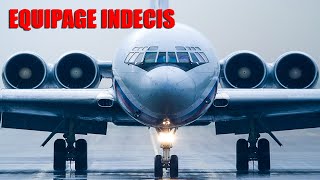
This YouTube video (narrated documentary monologue) recounts the May 9, 1987 LOT Flight 5055 accident involving an Ilyushin Il-62M. The narrator details the rear-mounted Solovyov engines' mechanical failure (an uncontained turbine rupture that destroyed engine #2 and damaged #1), subsequent airframe damage and baggage-hold fire, crew decisions (attempted diversion to Modlin then return to Warsaw), and the final uncontrolled descent and crash about 30 seconds before the runway; the piece also situates failures in the wider context of Soviet engine reliability and 1980s Polish industrial/maintenance constraints.
Questions this video answers
May 9, 1987
183 (nearly 184; one passenger stopped by customs)
Solovyov (Soviet) engines
3050 meters
110 nautical miles
My friends, Good evening. The LE62 was called the flying coffin by some pilots during the 80s. And this video will not contradict them. It is May 9, 1987 in Warsaw, Poland, and we have an aircraft of this type. The slightly improved 62M version, equipped with 4 Solovy Vengeance. These engines are installed in a slightly special, very particular way. It is a choice that has rarely been used in aviation. The four engines are installed at the rear. We have another aircraft that was developed at the same time in the United Kingdom, the V10, which also uses this choice. The VC10 was less successful than the Uhine 62. In any case, this design presents a risk that we will also find in the Concorde. The risk is that if an engine were to experience a contained failure, it would mean an explosion that would start to project parts around. And the adjacent engine could also suffer. So in history, when we look at the history of the linosine 62, the VC10 and even the Concorde, we see that this propensity to lose two engines at once is very widely verified in the field. So I was saying that this plane was going to take 183 people on board. It almost took 184 if it weren't for the fact that a passenger was stopped by customs. And so the doors close, the plane lines up. It's evening. It's 10pm to take off for San Francisco, with a stopover planned in New York. It's a long flight that starts that night. The plane accelerates along the Runway, takes off, passes from one controller to another and gently begins to climb to cruising altitude. When suddenly they receive a call. It's the radio operator who takes care of it. It's a cockpit with a lot of people. We have the captain, we have the classic co pilot, but we have the flight engineer. We also have the radio operator, a guy who only does the radio. We have another guy who only does the navigation. So that makes. That makes. That makes cockpits with a lot of people there. On the radio, there's the air traffic controller who says, expedite your climb. He's insistent. Climb immediately. Now. Why? Because quite simply, he realizes that this plane is in a conflict direction with a prohibited area. An area where a military exercise is potentially taking place. And he wants it to climb as quickly as possible to get over this area. At that point we have the flight engineer who with his swivel seat faces the levers at the central console, who takes the four levers of the engines and gently pushes them until they display a power Almost equal to that of takeoff. The captain pulls back on the control column, the plane pitches up, the variometer goes into the positive direction, we start to gain altitude, and suddenly the aircraft is shaken by an extraordinary explosion. What was unusual, and it happened very often on this plane, is that a reactor exploded and the explosion started to spread to these reactors and to many reactors. Very often, uncontained failures follow more or less the same pattern. In fact, in this channel we saw a case with a very similar explosion on a DC9 or an MD80, something like that. In fact, if you want, when you look at the reactor, you have compressors that are driven by turbines that are on the other side. And how is the drive done? It is done by means of a tube. So the turbines drive a tube and this tube drives the compressors. Simple. The problem is that this tube is subjected to enormous mechanical and thermal stress. What happens if it breaks? Imagine that the turbines through which their heat passes, their pressurized heat passes, and indeed they want to turn faster and faster, except that since they have to drive compressors that compress the air, well, that creates resistance. So these turbines have resistance that makes them reach a certain speed and it stabilizes there. Now imagine that the tube breaks, the tube breaks cleanly in the middle. What will happen to the turbines? So this is what will happen, is that the turbines, since they are freed from the weight of the compressors, well, they will accelerate. And what happened in this device and in others, is that literally in a second, in. In one second, the turbine revolutions, they are generally expressed in percent, will go to 130, 140, 150%. So very quickly the needle went up. In an instant there was an explosion, and in an instant the needle of the N2 Revolutions instrument went to the stop. And in fact, at that moment, the metal disc on which the turbine blades are placed, well, it was subjected to enormous centrifugal forces. And what was it going to do? It was going to explode. It was going to shatter. And then its pieces would fly in all directions. The blades also flew in all directions. That's what happened that day. So we had reactor number two that exploded. Obviously it damaged reactor number one, which was on fire. There you have it. We, we lost two reactors on the same side. Even worse, we had the fuselage of the plane that was bombed. It was bombarded by pieces of heated metal. So we had the cabin that was pierced, that was ripped open, torn in various places. Air escapes. Since this is an aircraft that looks a bit like it was designed in the 1930s. While its architecture dates back to the 1960s. For example, it doesn't have a mask that falls when there is a depressurization. So the air escapes depressurization. Another thing, where are the engines located? These engines are located at the tail, so they are in a critical area of the aircraft. Pieces of metal will start hitting the tail. And what will they break? Well, one of the metal bars that moves the elevator. One detail in this aircraft, something quite extraordinary to mention. Despite its size, it didn't have any hydraulics for the flight controls. The flight controls were better with rods, ropes, cables, pulleys, counterweights. Counterweights. And there were other planes, there were other planes that had partial hydraulics on their flight controls. But in the case of the DC9, for example, if I remember correctly, the DC9 did not have hydraulics on the elevator. It had hydraulics on the wings, but not on the elevator. But the. The illusion 62 goes even further. It has no hydraulics at all. It has hydraulics for braking, for example. You. Yes, but not for the flight controls. So it's something very special. But the problem is that the flight controls lack redundancy. That means that there is a part that will break and then once it breaks, well, there is no more control of the elevator in this plane. So when the pilots touch the sticks, they see that the depth is light and there is no reaction from the aircraft. The trim remains. The depth trim is controlled by two electric motors. So it's the only thing that allows them to have any semblance of control over the aircraft. So immediately they contact the air traffic controller to announce the situation and they want to come back for life. So that's the first decision we come back. So note the decisions carefully and going to play an important role. So we want to come back to Warsaw. Of course, the controller tells them to turn around, all that. So they initiate a turn around and then they feel like they're sinking. They don't know where it's going to stop. Are they going to sink all the way to the ground or will things calm down at some point? There's one important thing to know when you have an aircraft that is flying at or near its cruising altitude. Generally all engines are needed. But if you take an Airbus at 380, it is flying at its cruising altitude. But as long as two engines are missing, what will happen? It will necessarily start to descend. It will not be able to maintain the same altitude as it had with four engines, with only two. So it will descend, descend Descend until it reaches denser air layers, where this time it will be able to hold on with the two remaining reactors. It's the same if you have a Boeing 747. If it loses an engine, it will not be able to maintain the same altitude. Generally it will start to descend until it reaches an altitude where it can hold on with three engines. So we are in a similar equation. But what pilots also do is they decide to dump fuel. The problem is that the valves that allow fuel to be released are faulty due to electrical problems caused by the bombing of metal parts. The valve that allows fuel to be released sometimes works, sometimes doesn't. It works intermittently, sometimes it works and fuel is released overboard and sometimes it gets stuck. So there you have it, an extremely precarious situation. They manage to turn around somehow and the plane is losing altitude. So this is the conversation, this is what they describe to the air traffic controller. At one point they realized that they might not be able to reach Warsaw because Warsaw was at 110 nautical miles at the time of the explosion. So we're talking about nearly 200 kilometers. So it's a huge challenge not to return with a plane damaged in this way. So what they do is they ask the controller if there is a closer airport. There is a modeling. There is an airport that has made its way between their point here and Warsaw. There is the airport. It is called modeling. They want to go there. Yes, but there is a small problem. The controller tells them it is a military airport. I am happy for you to go there, but I have to get permission from the military to get it. I don't have them on the radio. I have to contact them. So give me a minute. So we have an aircraft that is in distress that is literally falling. And the controller, instead of giving them vectors to modeling, even if it means that later he will contact the authorities who manage it and synchronize with them to make sure that the Runway is clear and so on. Well, no, he doesn't do that. He tells them, wait, I'll be right back. So several times he's going to tell them, yes, wait, wait. Then he's going to try to call the modeling control tower on the phone to tell them, I have a plane under my arms, it's falling, we're going to have to let it land. So during this time, the pilots are thinking, they're asking themselves, is modeling the best option for us? Especially since given the wind and the Runway at this airport, is he going to risk landing either in a tailspin or maybe he'll have to do a big loop to come back and land. And then they weren't too sure about doing a big loop to land on the other side. So he started to have doubts. Plus the plane was heavy, so there was a good chance they'd have to land with an overweight plane. The Runway isn't very long for this maneuver. It's a 3050 meter Runway. So they're thinking maybe they have doubts about the length of the Runway. And they're having this conversation while the controller is trying to get them a clearance for model. At the moment the controller tells them, okay, it's good for model, you can land there and then we'll help you get the instructions to get there. Well, at that moment in the cockpit, another idea will germinate in the crews minds and they will say to themselves, and if we're not going to survive, why not go? And remember, especially since the plane's fall has stabilized, that means that since they are now lower and they have arrived in slightly denser air and they have managed to dump a certain amount of fuel, there is a kind of stability that makes them say, why not go to Warsaw? The problem is that going to Warsaw adds eight to nine minutes to their flight. Eight and nine minutes. When you have a plane with two engines stopped, you are in N2, uh, the depth doesn't work and all that. It's true that it's quite tricky. So the pilots finally discuss among themselves. Very quickly everyone votes to return to versovy. So they tell the controller to continue to versovy. There you go. And continue to versovy. This time another conversation will take place with the controller. He tells them either you land straight ahead, which means from the heading you are on now, the Runway will be in front of you in a few minutes and you land straight ahead. But that will mean you will have a little bit of a tailwind. You will be in a slight tailwind or there is another option if you wish. It is up to you. You pass the airport, you do a loop and you come back to land. This time into the wind. It is a choice. The pilots respond, okay, well we go around, we will arrive, we will pass the Runway, we will engage in what is called a tailwind. Turn to base, return to final. Once again we are not in their heads, we are not in their shoes. But we can only be surprised by this maneuver that will add a few more minutes to our story. They arrive and manage to lower the landing gear and start their loop. During the loop they do not see the Runway. The controller helps them a little because they missed the axis during their turn, which was a little too big. The controller tells them, you, you missed the ils, I will help you catch it. So start giving them the headings a little bid. They're clear to land in there. In fact, there was something else, something else that hadn't, that hadn't realized. When the pieces of metal heated to over 1000 degrees Celsius were thrown in all directions, some got lodged in the baggage hold. That means that there are pieces of white hot metal that were thrown and that ended up inside the suitcases of freight and all that. What's going to happen is that there's going to be a fire that's going to break out inside the baggage hold. The problem is that this fire probably started after the reactor exploded, but, but there was no corresponding alarm in the cockpit because probably either these alarms weren't working or the electrical current was cut or the wires were cut, or something else. In any case, there was a fire in the section, so under the floor where the luggage is. The fire that has been smoldering for several minutes will choose the moment when the plane is really on final to break out even more. What happened? And we won't know everything, we won't know completely everything that happened. Besides, we know because it was recorded. We know that, for example, they lost an air hostess. They don't know what happened to her. He looked for her on the plane and he didn't know what was happening to her. There are voices, screams, there's someone telling the other, don't panic. And in fact, what happened at that point the black box stopped recording, which probably meant that the electricity stopped abruptly in the entire plane at that moment. And what happened was that the E li wan, while it was inside of the Runway, it suddenly went into a nose dive towards the ground. It went into a nose dive. One of the pilots realized that it was over, that they were going towards the ground, which was just a few hundred meters below them, and he went to the radio. If he had just said it like that, it wouldn't have been known because the black box didn't record it. What he did was he got on the radio, he shouted on the frequency, uh, goodbye everyone, see you soon. We're dying. The plane, a few seconds later crashed into a forest at an extremely high speed and disintegrated, killing everyone. What's terrible about this story is that between the explosion, the explosion of the engines or engine number two, followed by the fire in engine number one, there was. And then. And the tragedy and the actual impact with the ground, there was half an hour, There was roughly 30 minutes. The accident happened about 30 seconds before touchdown, 30 seconds before landing. It took just 30 seconds to reach the airport. And that's why this really highlights and gives a very special weight to all the decisions that were made. It means that if they had landed at modeling, they could have landed at modeling. So then would they have landed or would they have hit the plane? Or would they have. Would have broken it, or. That's a mystery, the gumballs. If they had landed directly with one, excepting a slight component of backswing, they could have touched the Runway with it too. We don't know if it would have been a gentle landing. It would have been brutal. Since they don't have a lot of control over the depth, that's also debatable. But the reality is that by choosing to operate in this way, they wanted to reach a Runway that was too far away. The Soloviev type engines were considered better than the engines that had been initially designed by the same company, by the same design office that had imagined and developed the original Oschiin 62. And in fact, these engines were normally guaranteed for, so to speak, 3,000 hours. The ones that were before were guaranteed for 5,000 hours, which means they had to be serviced every 3,000 hours. The reality is that the Soviet Air Force engines, whether they were on aircraft, civil or military engines, have never been very good. They can perform well at the moment, but the problem is that the materials they were made from were not very good. So breakages were quite frequent. I spoke to a technician who worked on these engines. He told me that the normal time between overhauls for these engines was around 800 hours, not even 3,000. It was only 800 hours if we wanted to operate them with a certain degree of safety. By the way, today the AN8262 is still flying. I think the only company that flies it is Aircoro, the North Korean airline. And I don't know how many overhauls they have to do. It's possible that they overhaul it every two flights. These are engines that have shown a very high propensity for braking, for exploding. By the way, if you. If you look at some of the aircraft, we recently talked about an Antonov that became the Coyote in the United States. If you look at some Russian or Soviet aircraft that were successful in the west and that were then Western variants created, they generally did not use Russian or Soviet engines. They changed the Engines, they put in turbine engines or CFM engines when they were jet engines, but they did not use the original jet engines because that was really the weak point. Another thing in Poland in the 80s, from the beginning of the 80s, there were major strike movements because, uh, the country on the social level, uh, the currency collapsed, inflation, the endless strikes, all that. And then a trade union movement was born. Uh, it was the first union, I, I think in Poland, or maybe even in the whole world. The first union in the whole world, Warsaw Pact. And what happened was that there were a lot of strikes and this paralyzed, if you like, the industrial production apparatus. And in that, well, one company, like the other, found itself with reactors that needed a lot of human labor hours because they had to be serviced very, very regularly. But in fact, they didn't have the humans, they didn't have the money, they didn't have the means, plus the strikes. So they apparently received authorization to operate them beyond their limits. That means that what was very often done on the lines was, well, they installed reactors that had exceeded the number of hours for servicing. And in practice, what the officials at the time decided was to say to themselves, since there were four of them, what we were going to do? Well, we were going to only have one reactor in operation. We'll be overrun. So we're not going to send off a plane with several engines overrunning. We're going to leave just one overrunning. And that way, if it ever malfunctions, well, we can change it or we'll bring the plane back to the country without passengers on three engines, which has happened quite frequently. So the problem is that sometimes planes of this type end up with two or three engines that were actually beyond their potential. And there was even a case where there was another aircraft that crashed. It was Flight 007, I think, a few years earlier in a context quite similar to the one I told you about tonight. And in reality it had three engines that were overrunning and only one new engine. And imagine that it was the new engine that exploded. Because often when you have this kind of, when you have this kind of object, sometimes they have manufacturing problems, quality control problems. So if you don't expose it to the face at the end of 2000, he. That is, you can go up to 10,000 and it will continue to work. I say that in quotation marks so we understand each other. It means that sometimes manufacturing problems manifest themselves relatively early. And then we enter a phase where we have a plateau in terms of failures and then we start to age the reactor too. Much. And later we enter another zone where failures are frequent. So I was saying that we are in 1987, and after this accident, let's quickly say in 1989. Already the Polish company stopped with its aircraft and it will receive Its first Boeing 767s two years after this accident. Thank you, my friends, for watching this video and I'll see you in the next one.
More from Aldo



La FIN du Royaume-Uni ? L'Ecosse, l'Irlande du Nord et le Pays de Galles veulent partir !




Analyse Présidentielles 2027 : Marine le Pen remet ENCORE le voile sur la table !


Scandale "60 Millions de Consommateurs" : la France mange des pâtes contaminées au Cadmium !

2 dossiers : Accident d'autogyre en Italie & un pilote sauvé par le parachute du Cirrus