Que s'est-il vraiment passé lors de l'accident d'avion aux Saintes ?
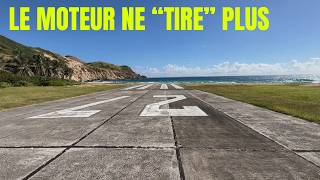
A single-speaker YouTube commentary (June 2025) reviewing the December 1, 2023 crash near Les Saintes of a U.S.-registered single-engine "type 32" tourist plane carrying four people. The speaker recounts the flight (takeoff from a short, uncontrolled runway, climb to ~680 ft, a tight right turn, then a stall and impact in 45 m of water), delays in search-and-recovery, and post-recovery findings (pilot and two passengers with narcotics detected; engine showed corrosion but no mechanical failure). The commentator advances likely causes: fuel selector misposition or wrong-tank selection causing fuel starvation, followed by a pilot-initiated turn after engine power loss producing a stall; also raises questions about possible illegal commercial carriage and critiques regional inter-island transport options and emergency response timing.
Questions this video answers
December 1, 2023
Four
Described as a "single engine type 32" aircraft registered in the United States (as stated by the speaker).
About 680 feet (≈200 meters) according to the speaker's narration.
Approximately 45 meters deep.
Good morning my friends. On December 1, 2023, an accident occurred on the island of Les Saintes involving a patron two type aircraft, a single engine tourist plane with four people on board, which made headlines. I had talked about it on this channel since the B report came out. And I think it is high time to talk about it with more solid information. It is the tradition of this channel when we have an accident, we try to talk about it based on testimony, analysis, feedback. And then later, when the report is out, if there are new elements, well, we will revisit it. That is the case tonight. So the B report, I warn you right away, opens up a lot of avenues, makes assumptions, but the conclusions are relatively weak. It is not the bee's fault. It is simply that these aircraft do not have black boxes. There were no witnesses, even though one of the passengers had a GoPro. And so of course we come up with a certain number of options, but unfortunately they will not be closed. So I will try to give you the best information available today with a little bit of analysis so that things are clear. So back to the facts. December 1, 2023. We have a single engine type 32 aircraft registered in the United States, even though we are technically in France, which is going to fly around the islands in the region. Why? There is a project, a project that involves installing fiber optics. I don't know if the project has progressed since then. In any case, it involves deploying fiber optics. So members of the General Council of Guadalupe are due to visit various construction sites. Now, when you're in the region, and I was in the region at the time, when you're in the region, there's the most available way to travel between the islands, let's say, is to take the ferries. The problem is that there's no rail service. It's very complicated and there's no direct service between all the islands at all times. So it can be quite complicated. If you want to visit four different islands in the same day, it's quite possible that you won't be able to do it. There was an air campaign that linked these islands to some extent, but it went bankrupt. I wonder why, in a public service context, the local authorities can't do a bit like they do in the Maldives, buy two notary offices and then make constant rotations between the islands. But it seems that it's not a priority. At least there's no budget. We can't hold it against them. In any case, it's would have avoided the disaster if it had happened. That's the angle I'm talking about. So I was saying that the plane is going to take off from the airport. So the airport is just a rock. You have a Runway a few hundred meters long and that's it. You don't have a Runway office, you don't have a control tower, you don't have anything. It's just a piece of land. And it's a very tricky place to land and take off. When you see the planes arriving there, they're small planes, it's always a great moment. And the pilots who fly there have special training for this airport. We don't go there like that because we skim. We skim the mountain to be able to land. On the other hand, there is a supervisor, a guard, as they say, a security officer, if you like. He's there, he has a radio. And in fact, his prerogatives are extremely limited. He's not an air traffic controller, he's not an information service. He's just someone who arrives in the morning and leaves in the evening. When the days are long. Of course, he won't stay there all day, so he often goes away. In any case, the plane is going to take off to go to the island of Marie Galanti. There are four people there. Since they have to fly over a stretch of water, it is mandatory to file a flight plan. Yes, but he files a flight plan. That's true. There are several ways to file a flight plan. Online, by phone, in some places, even by text message, and so on. There are lots of devices for filing a flight plan, but once you've filed it, you have to activate it. And when there's no control at the airport where you're taking off, how. How do you activate it? It shouldn't be a problem. In some places you activate it by phone, in some places you take off and call on the radio. And that's when you activate it. But until we activate it, it just sits on a server somewhere, on a computer. But no one will pay attention to it. This detail will be important later on. So the plane will line up with four people on board and take off. The guard sees it take off and then sees it disappear. He doesn't follow it any further. However, in the minute and a half, two minutes after it took off, the plane is at the bottom of the water. In fact, what happened is that we already knew at the time, because the DSB tracks were already there. And in fact, what happened is that the plane took off in the extension of the Runway. It climbed to about six hundred and eighty feet. We're talking about 200 meters of router. And then it made a turn to the right, a fairly tight turn, and then it took off. It stalled and it went into the water 45 meters deep. What happened is that the accident happened at 10am but no one looked for the plane for over six hours. It wasn't until 6:30am that the owner of the plane, not seeing it, returned. This is an owner who usually didn't rent out. Since he apparently knew the pilot, he rented it to him. He realized that his plane hadn't returned. What did he do? He got worried and started calling around and around. We spoke to the caretaker who said, I don't know, I saw it leave at 10am and that was it. So then the search began and it wasn't until around 6pm There you have it. It's almost nightfall. There's a helicopter. The gendarmerie arrives, customs, the police, all that. But it's too late. They wait until morning to start the search. And the next morning the plane is found at a depth of 45 meters. It's divers from the gendarmerie who find it. The four occupants are inside and of course they're killed. And then both wings are broken. And then the Gila plane is under water, so it's recovered. But what's it going to say? What's it going to say about this plane? So first they're going to analyze the blood of the pilot in particular, of course, and also of the passengers, to get an idea of a certain number of things. The report mentions the presence of narcotics, doesn't it? Narcotics in the bodies of two passengers. Let's say it's not the end of the world for the passengers because they have no role, right or responsibility in the matter. But unfortunately, they also detected it in the pilot's blood. So the B report is extremely cautious. They say we don't know where it comes from. We know everything, we all know where it comes from, but we don't want to make excessive assumptions. So they had some. Now, where did it come from? Was it contaminated? They were contaminated like that, like they passed through. And in fact, it's an extremely hard drug. I won't say the name, but it's the same one that French politicians take. Okay, there you go. We even found some in the national assembly in France, just to tell you what it is. Something quite strong. So that's something off the beaten track. Secondly, they will find that the fuel tank selector. The fuel tank selector is on the rightmost tank. So I would like to tell you something, and I have said it in many videos. In the majority of accidents where there is an engine failure due to a lack of fuel, this means we will improperly call it running out of fuel. But in fact it is not running out of fuel at all. Running out of fuel. A real running out of fuel with empty tanks is extremely rare in general navigation because the consumption of these engines is generally very predictable and it is very difficult to plan your fuel badly. On the other hand, on the other hand, in the majority of cases of running out of fuel, it is the wrong case. The wrong tank was selected because this plane, for example, has four tanks. Two on the left, two on the right from the outside to the inside. The left auxiliary, the left main, the right main, the right auxiliary. So that makes four. The pilot has a sort of button that he slides from one position to another to supply fuel to the engine. The problem is that if you select an empty tank or if you stay on a tank for too long, it empties. Even if you have fuel in the other tanks, it's still a waste of time. And that's the direction that the BOA is heading, even if it doesn't really have a definitive answer. But we feel that the report is heading in that direction because in the GoPro camera that one of the passengers had, well, he sees that the engine is losing power. The engine was later reassembled. They analyzed it with difficulty. It was completely rusted and even more so because it had been poorly preserved by the people who recovered it, because they were supposed to take it out of the water and put it in fresh water. In fact, they put it in a fresh water tank, but they didn't realize that this tank was leaking. So the fresh water, which was supposed to protect the engine from atmospheric air and prevent it from oxidizing. If you've noticed when you take the black boxes out of an airplane that was under water or something, well, the black boxes and sometimes certain critical parts are immediately put in water just to protect them from the air. But they put it in a tank. This tank leaked, so it emptied. So I was saying that the engine was analyzed. It didn't have any faults. There's nothing broken in it. There's obviously nothing broken. So if the engine lost power, it probably ran out of fuel, so to speak, with the reservations that I mentioned earlier. So it didn't have any fuel. It stopped. Now, if we look at the fuel selector on this aircraft, and you have to know one thing, my friends, all of these single engine aircraft, well, not all of them, but the overwhelming majority that you see in the aeroclubs in the small airports, all of them, they were manufactured during the 60s, 1960s. The design dates back to the 50s or even the 40s. At that time there was perhaps a different awareness of ergonomics than there is today. I'll show you how and I'll show you. I'll show you the image and what the bow suggests, what the BA would have preferred as a design. I'll show you. It has five positions. The far left position is off. When you put it in this position, you cut off the fuel. Then the other positions from left to right will go from left to right on the aircraft, tank by tank. So the first position after the off position is the left auxiliary tank, main tank, right main tank, right main tank and then right auxiliary tank. Now the question then, wouldn't this way of doing things have been better? Let me show you a little drawing of my uplift. Wouldn't this drawing here have been better? It means putting the off position when you go to the left and then you're going to take fuel from the tanks on the left wing. When you go to the right, you're going to take the tank, you're going to take the tanks on the right. Right. So it's debatable. It's true that it seems more logical, but it's debatable. There are probably several reasons in the design. If you look at this one, it forces, unlike the original design, when you go from one position to another, and we do it regularly in flight, you constantly go through the off position. You see, you constantly go through the off position with the risk of stopping at the off position. So that's up for discussion. The guys who put the off switch here probably put the off switch on the far left. Probably what they wanted to do. They just wanted to eliminate the possibility of accidental selection by thinking the off switch isn't there. It's on the far left here. And in fact, once we don't go all the way to that end, we'll always have a tank that is selected. That was perhaps, I repeat, perhaps, the reason behind their vision. There is also another flaw with these readers, of course, and it is mentioned in the B report, but in fact it is mentioned in many B, NTSB and other reports. It is that if we put the selector halfway between two positions, we can have a situation where the fuel hardly arrives and we can have an engine that is shut down because the system is a horse. And sometimes these old systems, these old systems, well, when you touch them. When you're on the ground and you start to touch them, you see that there's play. You see that there's play. That means that if you put it somewhere, is it really there? I'm not sure, because it can sometimes move 5 millimeters to the left, 5 millimeters to the right. So we're not really sure where it is in the middle, because it's getting old and all that. So it's awful. A horror, my friends. So I was telling you, he probably selected the right auxiliary tank, which was empty or almost empty. He takes off with it. He reaches initial climb. Just after takeoff. What's going to happen? The engine starts to misfire. What's surprising is that with this theory, the majority of pilots, including him, had 4,200 hours of flying time. Someone very experienced. Most pilots, when they have this, what they're going to do is immediately go to the fuel selector and change the position. He didn't do it, at least not the engine. What did he decide to do? He decided to do one of the actions that has killed a lot of pilots in the blink of an eye, which is to turn around. The pilot initiated the turnaround. During the turnaround, he. He lost a lot of altitude. Why do we lose altitude? Because of two things. If you take a single engine plane and do a 180 degrees turn, you realize that you have to apply a lot of throttle to maintain your altitude. If you don't have an engine, what's going to happen? Well, you're going to descend, you're going to sink because you can't compensate, first of all. Secondly, when you take off, you always take off into the wind. Here it was 13 knots head on. When you do a 180 degrees turn left, where is the wind? It's coming from behind. So if we have a headwind of 20, let's say 20 km h and we turn 180 degrees, now we have a tailwind of 20 km h. If we look at the difference in vectors between before starting the turn and after, we have a delta of 40km h that we have to compensate for by increasing the speed of the plane. How do we increase it if we don't have an engine losing altitude? But if we are very low, we what do we do? We crash. That's why it is highly recommended not to turn around on an engine failure after takeoff. We are generally more likely to say to ourselves, okay, I accept the decree of Providence. The engine failed at 600ft. Well, 600ft. It's true that I'm going to touch down in 30 seconds, maybe at 35. And what I'm going to try to do is start the engine, change the selector, start the fuel pump. It's probably going to start the takeoff, change the selector, restart the engine. If I can't start the engine, well, we'll do a water landing, we'll open it. There were seats, there were life jackets in there. Hopefully someone will see the accident and come to their aid. But the reality is that when no one saw the accident, what would have happened if they had managed to get out? Would they have been able to be rescued? That's still debatable. In any case, another thing, one last element. The bee in this story points out the fact that the flight may have been illegal. Why? Because the pilot was a private pilot and therefore he was transporting passengers for a fee. So it's very difficult to determine whether it's illegal or not, because there are gray areas. Let me give you an example, which is B. Someone comes and rents a plane. He's not a pilot, he rents a plane. I'd like to rent you a plane. How much do you charge me for the day x hour of flying and so on? He rents it, he gives us the plane as it is, he finds a pilot and then he organizes a flight. That's okay, it's considered a private company, that's fine. Now we rent the plane and the pilot to someone. We say to him, okay, so do you want it? How much does it cost? Yes, and then we can transport you to such and such a place. That's purely commercial flying. And if it's done without an airline license or something else, then it becomes illegal. Passenger transportation and passengers are often exposed to risks. Remember Eliano Salah, for example, the footballer who crashed on his way to the UK from France? He was also on a plane. I think the plane was registered in November with an American registration number. And he was on the plane and it was a night flight. Total madness. And even on the plane he was worried and sent WhatsApp messages to his friends before takeoff, telling them, I'm worried. When in reality, if you're on a plane and you're flying with strange people in a context where the organization is illegal, dubious, and you're really scared and you're still on the ground, it's better for him to send WhatsApp messages, it's better to tap the pilot on the back, tell him to stop and then get off. That's much safer. That's it, my friends. So here is the situation of this accident. I know that these are general outlines. I know that it is not. You would have wanted it to be more detailed, but we will not know more. The investigation is over. There is no further investigation on this subject. All available information has been used. And so this is what we have learned. Broadly speaking, potentially the influence of narcotics, potentially fuel tank error, potentially a 180 degrees turn, ending with a stall, ending in the sea, 45 meters deep. Four people lost their lives. It was December 1, 2013 and it happened on the island of D? Cinte, or just east of it. Thank you my friends, for watching this video and I will see you in the next one. See you soon. It.
More from Aldo



La FIN du Royaume-Uni ? L'Ecosse, l'Irlande du Nord et le Pays de Galles veulent partir !




Analyse Présidentielles 2027 : Marine le Pen remet ENCORE le voile sur la table !


Scandale "60 Millions de Consommateurs" : la France mange des pâtes contaminées au Cadmium !

2 dossiers : Accident d'autogyre en Italie & un pilote sauvé par le parachute du Cirrus