Se sentir seul : que faire après une prise de conscience ?
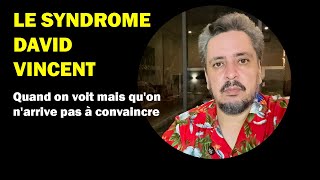
A reflective YouTube monologue exploring what happens after a personal awakening. Using recurring metaphors (onion layers, curtains, wineskins), the speaker argues awakening is iterative — each insight uncovers further challenges — and warns against ego, premature arrival, and social isolation. The talk contrasts individual survival strategies (conformity/chameleonism) with authenticity, emphasizes the need to renew oneself before integrating new insights, and situates human concerns as small against cosmic scale. The tone is philosophical, anecdotal, and pastoral.
My Viennese friends. When I was a kid, I used to watch a series, a bit of science fiction. There was a guy, he was driving in the car at night, and he looked for a shortcut to get to his destination, a shortcut that he never found. And then he came across a flying saucer. In this flying saucer, there were aliens. And he saw them coming. And so his name, for those who remember, is David Vincent. And David Vincent, he saw them, he knew they were there. But he still had to convince an incredulous world that the nightmare had already begun. That's how each episode of this series began. So now there are a lot of people who come to me and say, listen, we felt an awakening. I woke up. What did I get? We don't know. In reality, awakening is an awakening that is done in a pot, in an onion layer, if you like. It means you wake up. And when you wake up, you're not going to reach absolute light. You're not going to find yourself sitting next to the divine. That's not it. But you're going to remove from your shell, you're going to remove from your shell a layer of an onion. How many layers are there? I think there are an infinite number. But in any case, when you lift one layer, well, you're going to reach the next layer. And then this time you'll be confronted with other challenges, other intellectual, cognitive, emotional, spiritual challenges at all levels to remove the next layer. And when the next curtain falls, it won't be the revelation, it will just be the realization that there is a curtain a little further away and we must walk towards it and continue and help as much as possible. Those who are behind. Those who are behind are not more in the dark than those who have advanced because they just have more curtains to navigate in a maze, in a system that has an infinity of them. So in reality, everyone is equal and equal, the ignorant and the knowledgeable, the Nobel Prize winner and the illiterate. Ultimately, we can say that compared to the great forces of infinity, they are in the same place and are in reality insignificant at all levels, because our Earth, our Earth itself is dust. I saw a photo of a probe that took an image of the Earth from a great distance. And, well, we don't really see the Earth. We just see millions of points in space, like we would see points on a television. You know, today's televisions are very high definition. We don't really see the points. If you look at the old cathode ray tube televisions where David Vincent's show was on, right? Well, when you looked at them closely, you could see the dots, because I don't know if there were any, I'm saying 500 or something like that. So you could see the dots. And the Earth was one of those dots. And all of that, all of that, all of our problems, our anxieties, our depressions, our worries, our dreams, our hopes, our births, our deaths, ultimately, in the grand scheme of things, it's nothing at all. And since we are perhaps the conscious manifestation of the universe, here we are, we are that part of the universe that knows that it exists, that realizes that it exists. So we are a form of life. There may be other forms of life that we can't conceive of, because in reality we call ourselves intelligent, but we may not be any more intelligent than artificial intelligence. In reality, we can imagine that what we already know, what our senses communicate to us and everything we know about the universe, how has ultimately been filtered through our senses. So in a way, it may not be much. This is not a debate that I am inventing.
Huh?
It is a conversation that was discussed a long time ago. I don't know how you read it. Uh, I'll just give you a source if you're interested. Uh, even if we wrote it in a way that sometimes dances a little bit, it could be interesting. Uh, this, these are conversations that have already taken place, that have been discussed, refined, all that. Even if in reality they never reach their conclusion. Because there probably isn't one. Because when you reach the conclusion, you open a curtain and then there is yet another, another conclusion. Conclusion. So now the idea is that to go from one curtain to the next, when a curtain falls, you realize that perhaps you have reached what some call a higher level of consciousness for what it means. With all the reservations that I have just expressed since the beginning of the video, in fact, there are two challenges. Three, even the first challenge is not to worry, not to get too big headed, not to commit the sin of ego. I am not going to tell myself, well, I am not reunited, it's fine, I am superior to others. The second mistake or second trap is to believe that we have arrived at our destination. That is to confuse the path. Let's say the milestone. We are going to pass a milestone, A kilometer milestone. It says KM61. It is not yet the destination. Knowing that the destination was at kilometer 50 billion. You see? So you are only at the beginning of a process. Okay, so that's still a threat, Lets say a very significant one. And of course the big threat is also the one that awaits us, knowing that we may. Certainly. It's not even here. Perhaps. Certainly we will disappear one day. We will die one day without having reached the last milestone, right? But we still continue to walk. Sometimes it seems a bit like salmon swimming up the river in search of, I don't know, somewhere in search of a source, A source that they have in their imagination, A source that they have in their attack part. Let's say we too are looking for something, but we don't really know what we are looking for in reality. Many people, when you talk to them, listen and then what are you looking for? What do you really want? Many people have difficulty answering this question. It happens to me. It happens to me sometimes to meet people with a lot of temperament. Lots of talk, speech, all that talk, talk and talk. Lots of words. There's emotion. Finally, you, what do you want? What do you want? What's your thing right now? What do you want? They have a hard time answering this question. And sometimes you realize that for many people, the path or the fight is more important than the rest. You realize that sometimes they do it for the fight, right? And if they stop fighting, they get bored. Maybe they've developed this habit. That's also the problem is that sometimes we develop the habit as individuals. We can develop a habit of fighting. And the day we can't fight, well, there's no reason to fight in reality. Well, we feel that there's something we're missing, and we sometimes want to create problems for ourselves to continue the fight. It can happen on an individual level, but it can happen on a collective level. For example, you take the United States. They have a system. They have a military or industrial complex. I mean, you don't need to say yes to the military industrial complex. It's a bit like. No, look at the speech of their president. What was his name? Zeno? January 1961. You look at his speech still on the White House website, by the way, in the National Archives and all that. His last speech before leaving. Look at the second and third paragraphs. You'll see that he's already talking about the military industrial complex. It's a country that started waging war and then continued to wage war. And then after a while, it doesn't know when to stop waging war. And when there's no more, it's forced to continue it because, well, it's built around this industry. That's a country, a nation, a group. But an individual can be the same, can be built around the idea of this Approach of waging war, of moving forward like that. And then sometimes he doesn't know when to stop. Now, sometimes, maybe when we stop, when we stop, that's when we see the most important things. You see, that's it. Sometimes you have to just know when to stop. Just stop, stop and you will discover God. I don't know who says that. Biblical. A biblical passage, another very interesting biblical passage is that once you've dropped a piece.
Of.
Once you've dropped a piece of a curtain or you've removed a layer of the onion that surrounds you, well, you've arrived. I was saying there are pitfalls. Getting worked up, developing ego, believing that you've already arrived, looking down on others. There are all these risks, aren't there? But now there's an awareness to be had. Awareness is telling yourself that there is now a new layer, a new curtain, therefore a new challenge, a path that I must continue to travel. So how do I travel it? How do I do that? So I'm telling you, there are lots of people who tell me, yes, there you go. I woke up, I opened my eyes, I received a revelation. It's not like that, but we understand each other. Life through, life's difficulties, through the blows I've received, I fell, I got back up, I went through hard times. I was betrayed. They did this to me, they did that to me. Sometimes situations where humans encounter themselves, tense situations, peak situations, these are often situations of awakening. So they say, I've opened my eyes, now what's next? So what's next? Of course, one of the things people want to do is go talk to their family. They say, yeah, I'm going to go talk to my family, tell them about my friends, all that. But unfortunately, it's not always obvious. And then you come across the problem of David Vincent, because David Vincent was looking for a shortcut that he never found. And he saw them, he knows that they are there. But he still has to convince an incredulous world that the nightmare has already begun. That's the problem of David Vincent. And you become like a David Vincent. And it's a very common archetype in history. Even in the stories that are told, even in the stories of Brother Grimm and other popular accounts, we find the archetype of the one who is different. You look at the story of Joseph in the Bible, in the Quran, Joseph and his brothers. What is it? What's the difference? What's the problem? The problem is what was different from his brothers. You see, that poses a problem. His brothers threw him into A well like that, in the middle of the desert, they threw him inside. I'm the one who. He's not dead. He could have broken something, you understand? But the story is based on that. The story is based on Joseph, who is different from the others. And there are lots of stories. The little boy who was pushed, his brothers wanted to get rid of him too, right? Difference. So the problem is that difference isn't. In society. Being different isn't something that's going to carry you sometimes. To drown in the crowd.
To.
To drown in the crowd through chameleonism, I want to say it means to be a chameleon, right? When you arrive in a company, for example, you make a mistake, you drown in the crowd, you try to drown in it. You don't try to assert your difference because you're going to attract bad attention to yourself and get into trouble. So at first, as a survival strategy, you become like a chameleon. Chameleon. Why does it change color? Don't. It's for fun. He does it to preserve himself. It's a survival strategy. So humans can also adopt the same very primitive, reptilian strategy, right? To preserve themselves by trying to stay in the environment, trying to stay like everyone else. The problem in business, this is perhaps a good topic, but the problem in business is that we can find a lot of people who each pretend to. Pretend to be like everyone else, but the others don't exist because the others are ultimately everyone who is trying to be like everyone else. So there is no. There is no. There is no such thing as a standard, as one would say, as a friend who lived in Sevres used to say, there is no standard, you know, to which we can compare. Everyone, everyone says no, everyone comes and pretends to be. And in fact, it happened to me once. Let me give you an example. I was with an eye, I am with a friend. We were walking, we were going somewhere. We were going to someone's house. Then we walked. We walked. It lasted a while. I said, do you know where he really lives? I have the impression that you are going anywhere. He turned to me, he said, but I am following you. I said, no, I am following you.
Ah.
Then we stopped. We say, but since just now we turned left, we turned right, we turned, we went through tunnels, we went over bridges, we went upstairs. All that. And then to say that in the end, we are anywhere. And yes, in a company or in a human group, it can be sometimes in a family or other where everyone wants to be the chameleon. And in front of the others. And in fact, in the end, we are all believing that we are following the other person. And then finally the other person is following us. And that's precisely why we end up completely lost. That's why sometimes, even if it means offending people, it's better to assert yourself. It's better to point out that you're different. Not to just say I'm different, not to say I'm better, but simply to try to avoid situations where we get mixed up and lose each other. Because no one had the courage to. Well, to. To express their doubts. For example. Because, for example, in the story of the friend who we were going to and then we got lost, I didn't arrive saying, I know I'm better. No, I said, I'm lost. I said, what are we doing here? He said, well, I'm following you. I said, well, I have no idea where we're going. Well, neither do I. Sometimes you just say that. You know what I mean? It doesn't have to be expressed in a superior way, right? You can just express it with sincerity, with authenticity, and that will already help others a lot. That's why an authentic person is much better than someone who just improves. But we understand that sometimes, when you're in a survival or dangerous situation, chameleonism may be the only option. Now, I was saying something. Actually, I didn't even come here to make this video. Actually, I. I came here to talk about other things. I came here to talk about the European Union and completely different things. And by pressing R, I started telling you about the idea of David Vincent and all that. And here we go. We're here. You know what I mean? So maybe I'm just following a path, a path that leads me somewhere and somewhere. I don't know, I don't know where that somewhere is. So I keep going. Ah. When you come up against a wall, you come up against a wall, you've dropped a curtain, you've dropped a layer of onion, and you're aware of all the traps that I've mentioned many times already. What happens next? What happens next? I'll tell you. The next is quoted. I think it's biblical. I don't remember where it is. Matthew something. Yes. I'd put my money on Matthew, but I can't remember. I don't remember the number. If someone knows it, they can tell us. Well, at that point, we have to renew ourselves. Why renew ourselves? Because we can't put new wine in old wineskins. Why? Because if we look at how he used to do it and compare it to our history in the past. He would prepare a wineskin, put wine in it, drink it, and then put it somewhere in a cellar or somewhere else. It would be dried out, dusty and all that. Then a new wine season comes along. I'll move on and on. We prepare wine. Where do we put it now? And then, very importantly, we don't put new wine in old wineskins. Why?
Because.
Because if I remember the verse correctly, we're going to waste wine, we're going to waste the other. So what should we do? We have to renew the other. And to renew it, what do we do? That's why the image is so powerful. That's why this biblical image doesn't come here by chance. It is super strong. Because to renovate the other one, well, we turned it over. We turned it over and the inside comes out. We are going to reveal the inside of the other one, and it is only then that we can prepare it to receive the new wine. And through this preparation, we lose neither the skin nor the wine. So when we arrive in front of a curtain and we have let one fall behind us, the curtain that has fallen behind, it is already the past season. It is already the past sales. It is the past harvest. And now, what are we like now? We are like an old skinskin. We need to renew ourselves. This renewal is extremely important. Without this renewal, we will not be able to go any further. Because we are here. We are tired. We have potentially suffered. To bring down this curtain, we must first prepare ourselves to accept the new reality that is offered to us, the new vision that is offered to us. So it's not because you have a vision. It's not because you have a vision and you have someone there or a truth and a human being, a man or a woman, that there is a concordance. There must be preparation.
Huh?
It's like the story of the other. It's also very kabbalistic, the image of the other, because it means that you have to prepare. You have to prepare yourself to receive a truth. You can't just receive it like that because you're there, because you're passing through. It's not by chance. So it's a phase of renewal in which you. So each time you have a new revelation, a new revelation in your life, a wave of autonomy, and you move towards another. Don't rush. Slow down a little. Stop. Slow down. Reflect and find ways to recharge your batteries. Find ways to renew yourself. Work on yourself deeply to try to renew yourself. Otherwise, you'll just fight, fight, fight, and wear yourself out. You won't be very effective in your approach. It might be effective at first, but the older the other person gets, the more they'll start to spill the new wine in which they're going to put it. There you have it, my friends. So there you have it. I just wanted to share this thread of thought with you. I know it's not a killer. I know it's maybe not something that's going to interest many people. Right? You can listen to it before you go to sleep if you want. Or if you have questions, don't hesitate. But it's true that I like to share this kind of thinking, but I do it quite rarely. Are you watching? I do it quite rarely because it's not what people expect. People expect something much simpler sometimes. So sometimes I try to distance myself from this kind of thinking. At least in terms of sharing, not in terms of existence. Thank you for staying with me until the end of this video.
And you if.
And I don't even know what to title it. You see, my problem now is to give it a title because I don't know. We'll see. Thanks again and I'll see you in the next one.
More from Aldo



La FIN du Royaume-Uni ? L'Ecosse, l'Irlande du Nord et le Pays de Galles veulent partir !




Analyse Présidentielles 2027 : Marine le Pen remet ENCORE le voile sur la table !


Scandale "60 Millions de Consommateurs" : la France mange des pâtes contaminées au Cadmium !

2 dossiers : Accident d'autogyre en Italie & un pilote sauvé par le parachute du Cirrus