Camille Burns, CEO, Women Presidents Organization
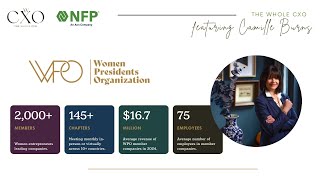
In this interview, Donna, a chapter leader, speaks with Camille Burns, CEO of the Women Presidents Organization (WPO), about Camille’s 25‑year tenure and the mentorship she received from founder Marsha Firestone. Camille recounts her start in 2000 as a program assistant, the early culture of a small, 200‑member organization, and how Marsha’s tenacity and advocacy shaped her leadership style. She describes the gradual grooming for the CEO role, the fear and confidence shift, and her vision when she assumed the role in January 2020, including the pandemic‑driven pivot to global expansion, digital and AI‑enabled programming, and a focus on high‑touch, confidential member experiences. Camille emphasizes the critical role of chapter chairs in creating safe, inclusive spaces, the organization’s current structure (≈11 staff and ~110 chapter chairs), and the importance of networking, mentorship, and authentic connections. Looking ahead to 2026, she outlines goals to grow globally, launch AI‑driven virtual programs, enhance member engagement, and maintain quality over sheer size. The conversation closes with a call for members to stay alert to opportunities amid rapid change.
Chapters
Today's interview is with the, the person who's kind of the reason I'm here in a way. It's, I can't give you credit, Camille, for recruiting me into WPO, but I can give you credit for growing this tremendous organization that a lot of our members find life-changing. And I wanted, um, my members in Colorado to know who our president is and celebrate your 25th anniversary too. So Camille Burns, thank you for taking time to—
Of course. Thank you so much, Donna. So good to see you.
It's always good to talk to you. You're such an inspiration. And I know that we talked about the fact that the founder of WPO, Marsha Firestone, chose your 25th anniversary to go ahead and exit the universe. And that has to come with some emotions because she gave you some extraordinary opportunities. So 25 years with one organization, tell me about that mentorship and how you entered into this world of Women Presidents Organization.
Yeah, sure. I'm a bit of a dinosaur that most people don't stay with companies for 25 years anymore. No. And it, you know, I owe a lot of that to Dr. Firestone. Marcia, just for a quick background, was founder of the WPO. She worked in women's economic development for many years and found that there were resources to help women start businesses. But once women were achieving a certain level of success, it was very much an old boys club. And there weren't a lot of opportunities for women to even find each other, you know, to know other women running companies of scale. And, and she started WPO with one group in New York City in 1997. Um, yeah, and I came on board in 2000, so this is my 25th anniversary. And, um, Marsha, you know, she was a real visionary. Uh, she was one of those women— I, I say this all the time, you know— she was a force. Um, she had so much tenacity and, and sort of fight in her, which I think was necessary and can be necessary when you're starting a company, um, because there's going to be those naysayers, there's there's going to be people who tell you it's a bad idea, this is never going to work. And certainly, uh, Marsha experienced a lot of that.
Yeah.
And I started working for her quite young, and, and, um, I will say that I'm not the only young woman who came into Marsha's orbit. And she really, you know, from a— she allows people and she gives people opportunities, particularly young women, to, to take things on, to learn, to be in the to sort of hear, overhear the conversations that are happening and be part of what's going on within the organization. And Marcia really kind of trusted me from the beginning and I give her just a lot of credit. I wouldn't be the woman I am today without having worked with Marcia for 20 years. You know, Marcia could be tough, but she also was a fierce advocate for her team. She was a fierce advocate. When you worked for her, it was like no one could mess with you. You know, she taught me a lot just about supporting the team, being there for the team. And she was just a strong woman. And, you know, sometimes when you're a young woman, you haven't developed yet that strength, that ability to just kind of You know, there, I think some women, and I'm, I'm certainly one, where we're raised a little bit to be pleasers, to not cause too many waves, and that was not Marsha. And so I just learned a lot from her on, um, you know, just not backing down when you feel really, uh, you know, sure of something, or you, you know, it's the right direction, and just pushing, pushing through even when everyone's telling you not to.
Yep. It does take that tenacity, and it's great that you got a front row seat to that. What was your position when you first started 25 years ago?
Yeah, when I started, I was— my title was a program assistant, but I was really— I was Marsha's assistant. I was just doing basically all kind of admin. We were a very small team at the time, and WPO only had about 200 members, so it was a very small organization. And I, when I started, um, I had no interest in business. Like, that was not appealing to me. But I, I took a lot of women's studies courses. I kind of was just like, my whole life it bothered me when— that I didn't feel like women were always treated the same. And, um, I loved the idea of women in leadership positions, and I felt like that was the answer to so many issues that I had perceived. And so when I took the job, it was really because I loved this idea of women CEOs, presidents, running companies, being the boss. But not at that time. It wasn't about small, medium-sized businesses. Like, I just didn't understand or care much about that at that time. But obviously that changed.
Absolutely. At what point in your work under Marcia's direction did it start to become apparent that you're being groomed to succeed her?
Probably, you know, the last— I would say the last 5 or 6 years of her tenure with the organization, she started saying to me and to the board that she thought I was the right person for the role. And what's interesting about that is when she first started having these conversations with me, I was just terrified. I was like, I can't do this. You know, I saw her as this really kind of strong human being, and I felt like I'm, I'm not going to be able to do that. But she really had faith in me, and she really believed that and would tell me that she believed that I was the right person and got the board behind it. You know, there were board members who knew me and also believed in me, but there were certainly board members who didn't know me as well. Or when we started having these conversations, you know, I was in my mid-30s, and there were certainly people who felt like like, you know, I didn't have enough experience, or, um, maybe they're, you know, they— we should look for someone who's been a CEO of a company before. But Marcia really was, I think, determined and fought for me. And I, I'm really grateful for the opportunity because I, I know I wouldn't have— my career wouldn't be what it is today without Marcia's support and backing.
Absolutely. I can share that, um, that fear that you had because I used to be, uh, I'd have people, um, ask for me to coach them. And I'm, I was intimidated to coach a CEO because I hadn't been a CEO. And then once I had a top officer position, it changed my confidence level 100% because I knew exactly what was going on in that position. But as a CEO of this organization, watching the trajectory of its growth, I think you are demonstrating leadership as a CEO. So it really pays back in your ability to also be a mentor to our members. I just think you've done a really outstanding job. And I'm curious to know how you started to visualize where you wanted to take this after Marcia stepped down and you took over in that seat.
Mm-hmm. It, it was tricky because when I first, I had all these ideas as anyone who's ever been, you know, second in command does, right? You have all these ideas of, of what you might do or what you'll do when you're in that role. And, uh, I, I came into the role in January 2020. So, um, you know, we all know what happened a few months later. The world shut down and, you know, some of my, a lot of my plans were kind of put to the side. But, um, that allowed for a lot of change, I think. I think, as well for the organization. And for me, it was, it's always been focusing on our core, our core audience, our, who our members are, staying true to that. And really trying to stay within the mission of the organization. What is the right focus to help support women entrepreneurs? As we kind of came out of the pandemic, I went back to one of my passions, which was growing the organization globally. I think there's so many women around the world who need this kind of community. In many ways, it's even harder in other countries for women to find other women who are running these type of companies and to be able to work with women and talk about everything they're dealing with and process their issues and opportunities within their businesses. So that's been something that has been really exciting for me because I just want to be able to support women in a meaningful way and help women grow and scale companies because I see so much give back from women, you know, giving back to the community, all of taking care of their employees. I saw that, I've seen that time and time again when economies have been difficult and times have been tough, how much women care for their people. And so I've wanted to make sure that that we're continuing to help people in a meaningful way. But one thing that's been very important to me, Donna, is not growing for growth's sake. Yeah, like I don't want to just have tons of members so I can go around and say how many members we have. I want to make sure the high-touch quality, I think, is something that makes WPO special.
Yeah.
And I think even as we're moving more into this digital world and with AI and everything else, that human connection is so important. And I want to make sure we maintain that.
It's absolutely true. I know in my chapter, the friendships that have evolved over the past few years are really the reason that people are still here. And even those who decided to leave have told me, I really hate leaving this group. I love the women.
Yeah.
I love the women. And I just, I need something for my business right now, and I have to just honor that. Um, I do things to try to keep people engaged because you never know who's going to come back. But, um, I think you've, uh, you've created an atmosphere where we are free to be human and connect authentically. And I see that in every form. It's so much fun. In fact, I've told my members, if you travel on business, take your directory out and call some people up. I guarantee they'll meet with you. And it has been true with me, and it's been a delight in Austin and Seattle. I always— I can book up an entire day with WPO members who are just eager to connect. So how do you think we've done such a good job in building that culture? What have you done to nurture that?
I think so much of it goes back to the chapter chairs, honestly. Um, safety is so important, and, and WPO only really works when You've created that, that safe environment, and that's why confidentiality is so important. And just finding the right chapter chairs who can create that kind of space and can really work to make sure that everyone feels included, that it's an inclusive environment. That's something that's been really important to me in my— particularly since I've been in this role, is making sure that, you know, we've got membership criteria, but that's about it. And when you meet the criteria, you know, coming into the room and feeling like you belong and, and feeling like the other women are peers and understand what you're going through. Um, but really it goes back to the chapter chairs creating that safe space, making sure everyone feels like they can talk about whatever's going on, because WPO is only going to benefit you if you're honest, if you're telling everyone this is what I'm dealing with and get the kind of feedback you need, that's really when WPO is at its best.
It's true. That makes all the difference in the world. That authenticity is the success factor. So what are you hoping to achieve in 2026?
2026, we're continuing to grow the organization. That's been something that's really important to me is growing both in North America, but also growing globally. We've got a lot of new countries on the agenda for next year. And, you know, one of the things, Ani, you mentioned is traveling and connecting with members. And I highly encourage any of our members when they're traveling overseas, it's even more fun to connect with, you know, and women are doing interesting things and different things in different countries. And so there is this, you know, someone sees a WPO person pop up in their email, they want to, they want to connect. So continuing to grow, we are continuing to look at what other kind of programming we can do. We just did a really— I think we're in process of a really incredible AI virtual program that we've been doing with Jeff Woods and just looking at other ways that we can continue to educate or provide opportunities for education for our members. But ultimately, what I'm looking at is how can we continue to create connections it engagement? Because that, again, I think is the most important thing. And so not just within your local chapter, but how can you get to connect with other women in, in your region, around the country and around the world? True.
Yeah. We have been talking about doing something across Colorado, and that's actually in the works. I hate to waste an opportunity for our people to meet other people in the state who are like-minded. And, um, they can benefit so much from knowing each other. And, you know, in addition to the traveling thing, um, I'd really like to get people connected in, uh, similar industries.
Mm-hmm.
And, um, you know, even though we don't have anything that formally exists, I have one member who is really trying to scale her business. So I just went through the directory and I reached out to like companies and made the introduction for her. And she really appreciated that. So I think there are a lot of opportunities for us to learn from each other. I love the generosity. You're right. You put WPO in the subject line and people will say, oh yeah, I'm going to respond.
Yeah.
Yeah.
And, you know, there's also just so much business opportunity within the WPO. And as business conditions change, it's important to see who you might be able to align with, who you you might be able to partner with. You know, as, as global business becomes more complex, connecting with women outside of the country, if you're thinking about or hoping to expand into a different country, there's just a lot of opportunity.
Yeah, especially when you're thinking of growing internationally. It's, it's really critical. I'm so happy that you've invested in the infrastructure. We have this great new database. Um, we have lots of opportunities to be able to connect with one another, and I just really appreciate what you've done and how you've grown your organization. How many people work for WPO now?
Uh, the team is about 11, but then we have almost 110 chapter chairs.
Yeah.
So, um, you know, the, the chapter chair community is really, um, I think that's just an incredible group of women as well. Women who dedicate their time and energy to wanting to support women entrepreneurs is something really beautiful about the organization.
Yeah, I love connecting with the other chapter chairs. That's half the fun. They're really amazing women. Yeah, yeah, they really are.
Yeah, thank you, Donna, for everything you do in, in Colorado Springs because it's, it's incredible. And I know you have a great group of women there who've really connected and love working with each other and spending time together. And I love that.
It's been fantastic. And we created our chapter from scratch the year that we had Forum here. And that was a really great shot. Arm because all of the PR I got from Forum really helped to attract new members. I think I added 2 to 3 directly because of all of the social media interaction regarding Forum. So I'm always encouraging the other chairs, okay, if it's in your city, brace yourself.
Yeah.
Brace yourself for growth. Take full advantage of it. Well, Camille, what one thing would you like to say to members and potential members as we close this conversation today?
I just, you know, keep looking out for opportunity. I know that sometimes things can feel challenging and it can feel like there's a lot of hurdles along the way. But with, with all of these challenges and everything that's going on, there's so much opportunity. And I think we always have to be looking at what we can do, how we can change, and where we can fit in as the world sort of rapidly, rapidly changes around us.
There's nothing we can do about that.
But look, yeah, exactly.
Place for us to serve, right? Thank you so much for giving us your time today. I appreciate it.
Thank you, Donna. So good to see you.
More from Camille
Camille Burns Unlocked: Scaling Secrets from 25 Years Leading Women Entrepreneurs
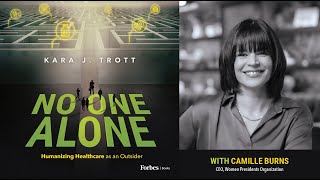
Camille Burns Unlocked: Scaling Secrets from 25 Years Leading Women Entrepreneurs
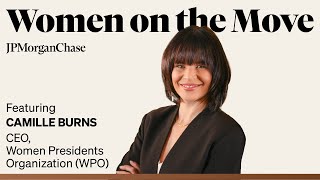
Camille Burns on Peer Networks and Scaling Women-Led Businesses | JPMorganChase

S5 E4: The Power of Womanhood with Camille Burns, CEO of Women Presidents Organization
Entrepreneurs as Equalizers (Feat. Camille Burns) | Dauntless LeadHERship Podcast #05

Empowering Women Entrepreneurs: Insights from Camille Burns and Linda Hamilton