Camille Burns on Peer Networks and Scaling Women-Led Businesses | JPMorganChase
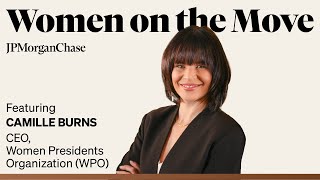
In this interview for the Women on the Move podcast, Camille Burns, CEO of the Women Presidents Organization (WPO), discusses the evolution and impact of the organization’s peer‑network model. She explains how WPO creates safe, inclusive spaces where women CEOs can be vulnerable, share challenges, and receive feedback that fuels growth. Burns recounts pivotal moments—9/11, the 2008 financial crisis, and the COVID‑19 pandemic—where the community’s mutual support helped members keep their businesses alive. She details the chapter‑based structure, membership tiers (platinum, zenith), and the role of professional chapter chairs trained in the PeerView model. The conversation covers inclusivity of men as partners, common entrepreneurial pain points (talent, capital, cash flow), and how chapter chairs act as facilitators and mentors. Burns notes generational shifts: younger leaders are less competitive and more exit‑oriented. She shares concrete examples of members pivoting sectors and navigating exits with peer guidance. The discussion turns to WPO’s global expansion, including a forthcoming Dubai chapter, and the strategic approach to scaling beyond North America. Finally, Burns offers advice for aspiring entrepreneurs—build relationships, join communities, recognize entrepreneurship as a calling—and emphasizes that impact, not just membership numbers, defines success, with a goal to grow from 2,000 to 5,000 members while preserving the organization’s feeling of inspiration and support.
Chapters
The thing about WPO is that it's got to be a safe space. And so when you talk about inclusivity, that's something that's extremely important to me. And we work really hard with our chapter chairs on making sure that at the meeting, no matter who you are, that you feel like you belong and that it feels like these are your peers and you can talk about anything that's going on and you, you feel comfortable doing that because that's, that's the most important thing is being able to feel Be vulnerable so that you can get the kind of input and feedback from others that will really help you scale and take your business to the next level.
Welcome to the Women on the Move podcast. I'm your host, Sam Sapershtein. This season, we're delving into how strong communities create opportunities, foster belonging, and empower leaders to make a lasting impact. Today we have the privilege of speaking with Camille Burns, the CEO of the Women Presidents Organization. Camille is a leader in women's entrepreneurship, driving WPO's mission to elevate women entrepreneurs globally. With 25 years of experience, she has expanded the organization's international reach and fostered a unique peer learning environment. In this episode, Camille shares insights on redefining leadership and empowering women to lead multimillion-dollar businesses. Join us to explore her inspiring journey and impact on women leaders. Camille, thank you so much for joining us on the Women on the Move podcast. It is great to have you on.
Thank you so much for having me. I'm so happy to be here.
So I am so excited to see you not that long after your annual conference, your entrepreneurship conference. So I might wanna start talking about that first off the bat. It was fantastic. Congratulations to you and the team. And our bank, JPMorgan Chase, is so thrilled to be a part partner of WPO, Women Presidents Organization, and I had never seen that conference done. I'd not attended it to date. It was so vibrant, so interesting, so valuable. The women I met there, the founders, the owners, the CEOs were amazing. I mean, these are women who created businesses in every sector who have grown them from nothing to hundreds of millions of dollars in revenue. It is amazing. You really built a great organization. So, Thank you. I can't wait to talk about this with you.
Oh, thank you so much. I was so happy to have you there finally.
It was, it was great. I mean, it, as we were talking before here, how long did it take you to really come down and really get back to earth from having such a great conference?
You know, a few days, but there's so much energy and it was so great right now to bring so many women business owners together that, you know, I leave feeling really inspired and excited.
And how many actually came?
About 650.
650. I mean, that is enormous for any conference of that size, but also to see so many women who built such great things altogether was really Fabulous. So I know we'll get into more of that. So you have been at the WPO for 20 years.
More than that. Almost 25, actually.
25. Okay. So you have spent basically your whole career there coming right out of school and taking your first job there. Is that where you thought you'd be 25 years in?
No, not at all. I took the job because I was, I liked the idea of women in leadership positions. I had zero interest in business at the time. I just thought it was pretty cool, the idea of women CEOs, and I was going to do it for a year or two like anyone you know, when they're young and out of school. And the organization was really small. And so I had this opportunity to join a small organization, New York City-based, and grow the organization, but also grow with it myself and help build the organization into a global, global community.
I mean, I bet. So you were just out of school, living in New York, seeing this organization grow. Tell us about maybe the pivotal moments, like big leaps you took, both you personally in your career and then in the organization that marked like different eras for you.
Sure. Interesting question. You know, first of all, when I came into the organization, it was shortly before 9/11. So 9/11 was a really pivotal moment for me just in, in watching women business owners support each other.
Yeah.
So here's a period where a lot of businesses, especially in New York City, were significantly impacted. Some were in buildings or lived in the area. And I was really moved by how the women stepped up to support each other. It was a time when people were not working virtually. Mutually, right? So other members were opening up their office space to let members bring their whole teams in and work from their space and just helping them keep their businesses alive. And, and that was a really impactful moment for me personally in watching women support other women and help each other navigate something that was, you know, really challenging and difficult. And from there, I think every time we've gone through something challenging, that's when what I do really feels really impactful. You know, whether it was 2008 or more recently with the pandemic. Yeah, just seeing how the women business owners want to help keep each other alive, keep each other in business, help navigate, think about what are opportunities that, that you might not be seeing when you're going through something really difficult. And so I would say in many ways it's, it's more of the going through the challenges as a community and seeing the community come together, that's been really impactful and really pivotal for me and I think for the organization.
So certainly the pandemic was one such moment in time for all businesses. And I recall at the conference some of the 50 fastest growing business owners really talking about how vital it was to stay alive, you know, post-pandemic. And one business in particular was a travel agency. Of all businesses, nobody was traveling. I mean, that business, she really said, went to only almost nothing and yet has really come roaring back. This is so incredible that you can see a business like that really come back from the ashes, a multi-generational business too. When you think about that time and what your members really needed from you in the pandemic, what was that and how did you all come together in a crisis to meet that moment?
What they needed was each other. And what I found was when it's businesses like travel industry or any industry that was significantly impacted, what I found so moving was how how other women who may not have been impacted in the same way were so willing to sit down and navigate what was going on. We— our meetings typically are monthly. We had groups getting together every week just to help support each other and make introductions. Oh, you need to talk to— I mean, in some cases it was financing, right? So, yeah, building those relationships, having partners like JPMorgan Chase and other partners that we had that can help, that could help support the business owners and help keep them alive in some ways was extremely crucial as well. But just women sharing resources and helping each other think outside the box. Because as you know, any time you have to make a change in your business, it's really important to get out of what's going on and be able to, you know, look at it from up here and make the kind of changes that you need to make.
You might never have done before.
Exactly.
That was exactly the time. So tell us about WPO structure in terms of how your members interact. What does a membership give to you? And I think one of the parts I love the most, how do local chapters really come to be?
Yeah. So our, our core model is the, the local chapter model. So it's a small group. It's about 15 women that get together every month. There's never competitors at a table. And we have a proprietary program that we use to help navigate challenges or opportunities. We have professional facilitators that we call chapter chairs that run the meetings. And so in, in a city like New York, we've got 6 chapters. So in some places we might have multiple chapters, but it's like having kind of that board of advisors of other other women CEOs, presidents with all sorts of different expertise and experience come together and talk about what's going on in their businesses. And, you know, also being women, we don't put aside our lives when we step into our business every day as a CEO of a company. So other issues can come up and just helping each other think through what's going on in their businesses and in their lives. We've also got some different tiers of membership. So we've got platinum membership for women that are a bit bigger with at least $10 million in revenue, and then Zenith membership for women that are $50 million and above, just because those, as you know, challenges, opportunities, things are different as you, as you grow and scale your company.
And the most amazing thing is seeing so many women at that level and growing, which is exactly what we want to see. You know, I think about women coming together for themselves. I think many of us have a hard time breaking away from work, breaking away from family, taking that time to do self-care. But usually you're putting yourself last. Do you find your members prioritize their WPO time and commitment because it's for their business? Like, do they prioritize it in a different way than they might prioritize other aspects of their life?
They do. Or if they want to get value from it, they need to. Yeah, if that makes sense. Because, you know, for WPO to work, you have to show up to the meetings, you have to be part of the group, you have to really— it's a safe space. And for it to be a safe space, there has to be that, that level of commitment. I do think that when people have business value, any business owner, when there's a value to the business, they make it a priority. But I also think that WPO, sometimes when people first join the organization, they don't realize what a priority it's going to end up being in their lives because they really see that value.
They—
some groups do a one-word check-in and check-out at the beginning and the end of every meeting. And how often that word, you know, they can walk in and the word can be defeated or stressed, and then they can leave feeling excited or inspired. And, and if you get that little shot of inspiration once a month, it's worth showing up.
Oh my God, for sure. You know, you could see that when you have gatherings like you just did, when chapter leaders were seeing their members and the hugs and I can't— I'm so excited to see you. We're here. Or there was just real camaraderie at these levels and almost really a loyalty and a commitment, right, to be there for each other. Which I think is fantastic. So tell me, as you were in the organization in your early years and really looking at these women businesses and also growing the organization, were there any people who were important to you in your development, any mentors or others, whether they were part of the organization or not, who really helped guide you?
There were so many. I, I, I've been really lucky throughout my career because of being part of a community of entrepreneurs, right? So there were so many women that took me under their wings when I was younger, and I think one thing that was really impactful for me personally was how many women believed in me before I believed in myself. So as I got on the trajectory to become CEO and the conversations were starting to happen around what would be the succession for the organization, I had my own insecurities, my own imposter syndrome feelings, my own— I can't actually do this. I'm not the right person. And having so many women that believed in me and sort of felt like I could when I didn't necessarily think that about myself, I think was huge for me just in my, in my personal development and my career development.
Did you see that happening or in retrospect, do you realize that was happening?
Probably a little bit more in retrospect. But at the time, I, you know, I know that there were just, there were a handful of women that really saw something in me when I, when I was very young even, and knew that I wasn't ready at the time. It wasn't like they wanted, you know, 25-year-old Camille to take on the role, but it was sort of like they knew that there was something that, that if I kept— if I stayed with the organization and I kept working and being part of the community, that there was a lot of opportunity.
So you are an investment at a certain point, right? Especially with such a long tenure that to have someone else come in when you've been there so long guiding things and growing things, it would seem like who would be— who would be a better person to do that? So talk about how the connection, you know, in these local markets gets fostered there and how does that— how could that help businesses with their global expansion and also their global aspirations?
Sure. So within the local community, the groups, our chapter chairs are really responsible for building that community by having women in different industries. You get a different perspective, I think, in your business in terms of what you're able to do and where you're able to bring your business to the next level. And we've got women who have global companies, obviously, in pretty much any chapter at this point. So Connecting with other women business owners who are doing things that potentially you want to do or have expertise in an area that you may not, I think really helps build your capacity and your ability and your knowledge in terms of what you're able to do with your, with your organization. And then ideally we do some regional programs. We, we obviously have our big event every year and that, you know, with that goal, we're trying to bring the larger community together because, yeah, not only are we about women supporting businesses in terms of their WPO chapters and working together. But also we want women to buy from other women. We want women to want to, you know, you're thinking about doing a strategic partnership, you're thinking about an acquisition. There might be other women business owners in the community that you need to talk to and that that could potentially be a great match for you.
It's funny you say that. I was expecting at the conference a lot of great content and the keynotes and being in just sessions with each other. I had no idea outside the conference you would have such a big array of women coming with their businesses to sell to other women. The clothing, the bags, the shoes, the jewelry. I was like, this is amazing. But I, you know, aside from being a consumer and very excited to be there as a shopper, I was seeing the women build their businesses there and how important that was because they were making lifelong loyal customers right there on the spot. You know, I came in with colleagues who ran right to one of the vendors. I'm so happy to see you. And they bought something immediately. Or, you know, you could just tell these were really important certain relationships and you were bringing the right customer to these women's businesses for sure. And so that was amazing to me. I really hadn't expected to see that.
Oh, I love that. And I— women business owners are really busy too. So one of the reasons we like to do that at our event is sometimes it's one of the few times they actually shop in the year. You know, it's— you can sort of buy a bunch of things in one trip, ship it back, and you're done.
It really helped me and I'm not spending any more money for the rest of the year. So thank you. But no, you're right. You're right. It's a time Savor too. I love that. And I also love just seeing everybody when the program was over really enjoy themselves with each other. So the line dancing and just being together in community, I think was fabulous. So can you think of a time as we were talking about the value of the membership and really women helping each other in important times that a member helped another company to really have a breakthrough to get into a new market, expand the business? Does anything come to mind in terms of a story you can share?
You know, there's so many, um, honestly, there's so many times that, that members have helped each other navigate whatever's going on or help them with opportunities. One thing I would say, Sam, is that where I've seen a lot of impact for our women business owners is in their exits, where having other women who may have been there, done that, or, um, have navigated it and how— whatever that exit looks like, because obviously there's a lot of different avenues, but, uh, learning from each other and being able to kind of share what, if you could do it over again, what maybe you would have done a little bit differently. And I've also heard so many times members say, particularly ones that have sold their companies, say, "I would never have gotten what I did without my WPO chapter sort of being there through the journey with me." That's incredible.
So it's not only the building, but it's the other side of it. Yeah. I won't say shrinking. It's the exiting, I suppose. But that's really terrific to hear. Helping women with exits is a really interesting way the community has come together. Tell us a story about companies helping each other with growth while they're still in their growth phases.
Sure. So I can, I can think of one business owner that comes to mind who was very focused in the government sector and all of her business was working in the government space. And another member in the chapter said, you know, maybe you should think about expanding into the private sector. And she felt like, you know, I've got— I know what I do. I know what I do really well. And she wasn't sure, but she took her advice and she started trying to branch out into the private sector. And then there were some shifts within some of the sectors she worked within the government, and it was huge for her because she had that branch out. She was able to then pivot and focus solely on the private sector. And I think she tripled her revenue in, in just one year by making that, by making that change and probably defended the business.
Yeah, for sure. Yeah.
And survived. Often, or at least, you know, didn't, didn't have a big downturn.
Wow. And how do you make sure that the community is inclusive? So we obviously talked about different sectors coming together, different levels and tiers for the members. What about the men? You know, how do you invite men in to help the women further, which is what we'd love for them to do?
First of all, we, we need men. So the WPO is an organization for women, but it's not about keeping men out. And, and now that you've been to our event, you see that, yes, you know, there's not tons of men, but there are men in the room. And it's really important. We also with the WPO, we're not a certification organization, so it's for women business owners, women entrepreneurs, but we're not looking for women that you have to own 51% or anything like that. So a lot of our WPO members have male partners, they have male investors. And so it's not that their organization has to be all wholly owned or yeah, have all women. We want the organization, we want the company to grow and thrive, you know, regardless of of what that structure looks like. The thing about WPO is that it's got to be a safe space. And so when you talk about inclusivity, that's something that's extremely important to me. And we work really hard with our chapter chairs on making sure that at the meeting, no matter who you are, that you feel like you belong and that it feels like these are your peers and you can talk about anything that's going on and you, you feel comfortable doing that because that's, that's the most important thing is being able to feel, be vulnerable so that you can get the kind of input and feedback from others that will really help you scale and take your business to the next level.
It seems like such a valuable thing for people who don't know, are they entrepreneurs? Can they be entrepreneurs? Could they have their own business? Do I have the confidence to do that myself? So I can see being in a chapter with other people who might have felt the same way, that's so encouraging that they could be told, of course you can do this and here's how, right? And I'll be with you. Do you see other themes? You talked about exits, which is fascinating. Any other themes that seem to come up with women at the chapter level that they really want help with that you're uniquely positioned to help them with? People.
I mean, human resources issues.
Does that ever go away? Exactly.
Exactly. I mean, I don't, I don't know that there's any group or any meeting where some— yeah, where talent doesn't come up in some way, shape, or form. So that's always an issue. You know, access to capital financing, I think, can be an issue. Cash flow can be an issue. So some of those aspects just working with each other and learning from each other. But yeah, people, let's say it always comes down to that.
So, okay, are we in an era right now of we can't find talent, we can't retain talent, we don't need talent as much because of AI? Where, where are we right now?
I don't see the third quite yet. I feel like people still need talent. But, you know, who knows in a couple of years where we're going to be with that. Some of that I think could be a little industry specific too, and what space you're in and what the issues are. But Finding the right people, making sure that you've got the right people in the right seat. And those issues, I think, are universal. And I don't know that they're— they're never going to go away.
No. Yeah. Same with the big companies. Yeah. So your chapter chairs are really important to this structure. Who are they, generally speaking, and how do you train them? And I guess my third question would be, do they almost feel like therapists sometimes in a big group like that, or They're, they're more facilitators than, than therapists, I would hope.
But, you know, I don't know. You can ask. You can. And it probably depends on what's going on. They are— many of them are business consultants, former business owners, some are current business owners. So they have to have that business expertise and experience. They have to really understand. They don't necessarily need to be an entrepreneur who would qualify for WPO. They just need to understand the issues and challenges, um, and what it is to, to be an entrepreneur and what the business owners might be going through. I am seeing more as time goes on women who sell their companies or exit, and being— becoming a chapter chair for WPO becomes a great next step. It's a way to really give back with all of your own experience and all of your learning and, and stay engaged and be part of the entrepreneurial community without necessarily jumping back in and starting another company.
And do you give them training on top of it once they get in?
Definitely. Yeah, we've got our own model that we use to run the monthly meetings, our PeerView model, and our chapter chairs are trained in that when they come on board. And then we have annual training, and beyond that, we have other tools we train them on and just different techniques and tools that they can bring to their meeting, content they can bring in, etc., so that they're So each monthly meeting feels really meaty and, and really valuable to the membership.
That's super. So there were so many different women in terms of age as well. Women who've been running their businesses for decades and some newer CEOs, which is fascinating to see. I love seeing the newer ones come in. Do you think the newer generations of leaders, are they doing things differently these days? Could you observe anything that, uh, you know, inspires you maybe about their leadership?
Yeah, sure. A couple things that I think that I see with the newer leaders or the younger generation is I feel less of a competitive spirit between the younger generation. I think they're a little bit more open in terms of talking about what they're really going through and not worried as much about competition. I, I'm a big believer in all ships rise with a rising tide, and, and I feel with the younger generation there's a little bit more of that perspective. Um, I also see younger entrepreneurs coming in with the exit in mind. So the earlier— yeah. So as I said, I've been doing this almost 25 years, and in the early days, it was, for the most part, it was women who'd been in corporate America. They had an idea, they, they'd seen an opportunity, and they went for it, and it was their legacy, and they were gonna, you know, run this business until they, uh, Yeah. Until the pandemic. Pretty much. Yeah. And now I see the younger generation is, is already kind of got a little bit more of a plan and isn't looking at it always in the, I want to run this business forever, but more I want to get this business. I've got goals, I want to get it to a certain place. And then, you know, thinking about that exit a lot earlier, which, which I think is a really good thing, particularly for individual wealth and, and for the business structure.
Agree. I mean, I think we need more people, more women to be doing that. We see so many women starting businesses. The goal is obviously to get them and grow them to sustainability and of great sizes and then be able to exit successfully. You know, what happens when folks, I guess, stumble business-wise? Do you see them come in looking for a different kind of support, like really having needs that, you know, WP can sometimes help and sometimes unfortunately just businesses dissolve? Dissolve? I mean, that must be a painful experience for members.
Yeah, it is. I mean, most businesses don't make it, right? Most small businesses don't make it. I would say that the WPO groups, I think, are really helpful during those periods of time. And I've seen so many women on the brink of closure that have actually stayed alive and pulled through. But I also think it's quite beautiful when someone's business does need to shut the doors. And watch the other women business owners say, it's not your fault, it happens. You know, things changed. Sometimes the economy changes, sometimes the market changes, and it's, um, and it's really nobody's fault. It's, it's just what happens. And getting that kind of encouragement and, um, pat on the back that, you know, you did everything you could and, and not yourself up. Yeah. Not every business lasts forever.
Yeah.
And to appreciate the success that you did have and the year, many years that, that you did have that went really well.
As well. That's a good lesson. I appreciate that. So let's talk about your leadership. What kind of leader do you think you are? How would you describe yourself?
I try to lead from a place of purpose. So for me, I want to lead the organization from a place of, we're— we've got a goal, we've got a mission. We're a mission-driven organization. Obviously, we're a not-for-profit. So, um, I want everyone who's part of the organization to be inspired by, by what we're doing and moving toward that that same goal and moving toward the purpose of helping support entrepreneurs and helping support that ecosystem. I'm not very good at hiding things, so I'm probably more on the vulnerable scale. I'm happy to ask for help. I'm happy to say when I'm not good at something or try to— I try to surround myself with people that are a lot better than me in pretty much every area because I know that there's a lot of, a lot of areas that there's a lot of people that are a lot smarter than I am.
Oh, it takes a strong leader to say that, acknowledge that, and then do it.
Wow. Right?
And have the people around you. And when you think about your legacy, and hopefully that's not gonna come for a while, but you know, what do you wanna do in terms of leading the organization? How do you wanna leave it better? And what does success ultimately look like for you at WPO?
For me, success is much more about impact than numbers, if that makes sense. So I wanna grow the organization.
In terms of number of members?
In terms of number of members, we're at about 2,000 members today, and I'd— I have a goal of getting the organization to about 5,000 members, but I want to make sure we're still doing what we're doing.
Yeah.
So for me, it's, it's making sure that we're having that impact, and I would rather grow the organization intentionally and, and not super rapidly just to have numbers and just to say we have this many members, but to make sure that, that we're impacting it. Um, I always sort of feel like that What is that saying? It's not about what you do, it's about how you make someone feel. And I, I, WPO to me sometimes can be a bit of a feeling. And so I wanna make sure that we retain that feeling, as I said earlier, that women leave their meetings and feel inspired, excited, ready to take on what's next, ready to go to work the next morning. And so that kind of impact impact is, is really important to me, is that we're continuing to impact the individual.
Yeah, I love that. And listen, whoever's listening out there to this, we need 3,000 more of you to make Camille's goal come true here. So, um, let's go, ladies. Tell us, you know, as you think about building that next generation of entrepreneurs, what advice would you have for women or men out there who want to take the leap, not sure if they should? You know, what are your best entrepreneurship tips for them to really encourage that next generation?
First of all, I'm a big believer in finding people who have what you want and trying to connect with them, build relationships with them.
As what, co-founders or?
Or just if you see a business owner that's been successful, someone that inspires you, try to build a relationship. I, people are much more open to building relationships and having conversations, I think, than people realize.
Yeah.
Get part of a community, meet other entrepreneurs, um, connect with, with other individuals who are in a space that you wanna be in or who run companies so that you really understand what goes into it.
Yeah.
Because entrepreneurship is not for everybody. It is. I, I believe it's a calling. Mm-hmm. And I, you really need to understand what you're getting into. I think when you take that, take that leap.
Mm-hmm.
But it's really exciting. And, um, and I, I think if you are called to entrepreneurship, you should do it. There should be nothing that, that holds you back.
Well, when you say the best ones, you realize nothing has held them back. They can't do anything else, right? That is their mission. They are fired up by that. And I think folks who are able to build something, stumble, get back up, keep going, it's remarkable. I mean, I have all the respect in the world for that and would love to see more people do that.
I think what you just said too, Sam, is that, is entrepreneurship is never sort of this linear line up. And I think once you understand that, it makes the journey a lot easier. That I know women with billion-dollar companies who've had, you know, real hiccups along the way and they got back up and figured things out and made the changes they need to make and move on to the next level. And so, reminder, just knowing it's a, it's a very up and down journey. Yeah.
I think we see so much today about entrepreneurship that seems so glamorous. It's very sexy, you know, it's what you need to do. I mean, certainly since I got out of school, it's been just much more popular, but you have to realize it is hard and it takes everything out of you and you're probably working a lot harder than if you did in other jobs and you have no one else to blame. And anyways, yeah, I'm talking myself out of it as we speak. But, you know, it is, I think it's wonderful. It's obviously created so many jobs in the country and economy and, you know, for the right people, I agree with you, but you have to be in it and commit to it. But maybe we'll see more people too in like later stages of their careers. As you said, you're seeing more women come outta maybe corporate careers doing this. I think that's fabulous.
And women tend to start businesses later.
Say more about that.
If you look at the statistics, women tend to start businesses, which some organizations that have age cutoffs for entrepreneurs have adjusted those for women because of that.
Oh, wow.
So women sometimes will have their kids. They might work in corporate America or somewhere else, have a different kind of career, and then make a shift a little bit, a little bit later in life. Sometimes entrepreneurs partnership, women will start a business when they have children because it gives them that flexibility, but they're not as interested in growing it or scaling it until they get a little bit older and their kids are a little bit older and they, they have more, feel like they have more time.
Yeah. No, and that's where I think we need to support women in what I like to call the second half of the race or, you know, the, the split when you run a negative split. Yeah. And you're faster at the second half. Like, that's what I'd love more women to do is once they have those obligations outta the way, like, going. So what can our listeners do if they wanna help the small business ecosystem where they are and women that they know? You know, well, how can they just do everyday things that help these women?
Buy from women-owned businesses.
Buy, buy, buy, buy, buy.
Yeah. Fund women-owned businesses. Yes. Um, give attention to women-owned businesses if you're in the media. Um, you know, get women business owners out there.
Love that.
So that we—
Shopping is your duty.
Yeah. Shopping is your duty. And, and particularly shopping from, from women-owned companies. Yeah.
Yeah, I think we forget that. I think we forget we can vote with our feet. We can really make a difference at the local level. The businesses in your community need you all the time. I say this knowing there's a lot of e-commerce out there that makes it very convenient to buy from the comfort of your home, but really getting out there and supporting the businesses where you are is vital.
Mm-hmm.
Mm-hmm. So I, I agree. Keep going. Well, what else would you leave us with in terms of your fantastic career in this organization and where you wanna take it? Do you want to take it?
Where do I want to take it?
What's on tap for this year?
Well, one of the things that we're working on right now is our more of our global growth strategy. So a lot of our global growth has been very organic to date. And so we are working on right now having a little bit more strategic approach to growing outside of North America while still continuing to grow in North America as well. I'm going to be on July 1st going to Dubai to launch a chapter there, and we've got a number of other chapters as well. Yeah, the, the global growth is exciting because I think it supports the entrepreneurs here as well as you continue to, to create that global community. So there's more opportunities for, for everyone to work together.
And to think of you in that market really helping women entrepreneurs there is great. Yeah. You know, maybe not the place you think of first and foremost, but maybe we should.
Yeah. Yeah.
So I love that. Well, Camille, it's so nice to see you. Congratulations again. Great conference, unbelievable run, and we look forward to seeing so much more.
Thank you so much. Wonderful to be here.
Thank you for listening to my conversation with Camille Burns. It was fascinating to hear how WPO members helped each other during the very worst of times after 9/11, and more recently during the pandemic. Through her organization's chapter-focused model, members come together to support one another and build community. Community. We hope this episode helps you reflect on the power of community in your own life. If you're enjoying our podcast, please like, subscribe, and follow on your favorite podcast platform so you don't miss an episode.
More from Camille
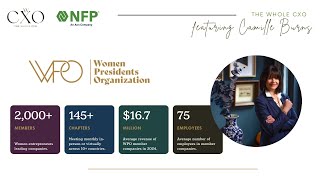
Camille Burns Unlocked: Scaling Secrets from 25 Years Leading Women Entrepreneurs
Camille Burns Unlocked: Scaling Secrets from 25 Years Leading Women Entrepreneurs

S5 E4: The Power of Womanhood with Camille Burns, CEO of Women Presidents Organization
Entrepreneurs as Equalizers (Feat. Camille Burns) | Dauntless LeadHERship Podcast #05

Empowering Women Entrepreneurs: Insights from Camille Burns and Linda Hamilton