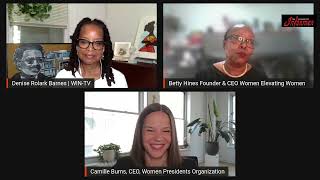
Camille Burns | Creating a Pathway for Women in Business
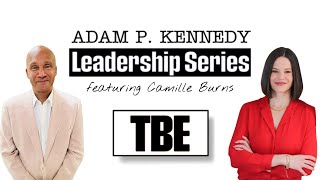
Camille Burns became President and CEO of the Women's Presidents' Organization after starting as a program assistant under founder Marsha Firestone. She grew the WPO from 200 U.S. members to a global network, launched the 50 Fastest Growing Women-Owned Companies awards, and expanded into Canada, South Africa, and Latin America.
Chapters
If you could just talk about, you know, sort of where you were born and, and what that was like and, and growing up.
Sure. So I was born in Evanston, Illinois, which is just right north of Chicago. And I grew up, I have, you know, my parents and an older sister and a younger brother. And, you know, we had a, I had a good childhood, I would say. My parents are interesting. They're both very career-oriented. So their careers were very important to them. So I did grow up with a lot of nannies and childcare and things like that, different, different types of babysitters. My Father, his, his story is interesting in that he grew up in Southern Illinois in a really small town, and he played basketball, and he lifted himself out of poverty with basketball. He ended up getting a scholarship to Northwestern, and he did play briefly professionally, although in those days they didn't get paid much, and it wasn't, it wasn't the job it is today.
Yes.
And so he went back to law school, and most of his career was spent spent in the public sector. So when he got out of law school, he was an assistant U.S. attorney and, uh, and then eventually became the U.S. Attorney for Illinois, appointed under Bill Clinton. Wow. And, uh, spent the remainder of his career, I think the last 20 years of his career, um, as the Inspector General for Illinois under Jesse White, who's an incredible man. He's the Secretary of State of Illinois. And my father did pass away in December 2020.
Okay. And what was your father's— what was your father's first name, Camille?
Jim Burns.
Jim Burns.
Wow.
That's extraordinary. Okay.
Yeah. And my mom's a neuroscientist. So on the other spectrum, she's a PhD speech pathologist. And at this stage in her career, she's now really focused on neuroscience. So, you know, both of them were working a lot and, you know, really their careers were really important to them. But it did, I think, instill in all of us the importance of a career. I think for me, Having a working mother who was a very hard worker and cared very much about her work and had a lot of passion for what she did, I think is one of the reasons I ended up in the world I'm in today. I'm a big believer in women and their professional careers and advancing them in any way I can to help support that.
No, well, thank you for sharing that, Camille Burns. So tell me, what was, what was Evanston like growing up in terms of like socioeconomics? What was the community like?
Sure. So Evanston is— it's, it's a diverse community. Pretty much in Evanston, it's, it's Black and white. There were a few other individuals that were other ethnicities, but it was really Black and white in Evanston. And it has a long history. It's very interesting in terms of the city and, and the story of Evanston. So I grew up in a very diverse environment, and but the socioeconomics were of Evanston were a bit split. So there is sort of part of Evanston where people are not as well off, and then a part of Evanston where people are well off, and then there's parts of Evanston where people are very well off.
Okay.
So it really ranges in the, in the city, and it's, it's the city It's a city right north of Chicago, so it does border Chicago on the, on the north side.
Okay. And when you attended school, uh, were they public schools, private schools that you were attending?
Yes, I attended public school when I was younger. I'm dyslexic, so I did end up going to Catholic school at about 10, um, mainly because my mom wanted me to be in classes with smaller class size. She worked with a lot of children who had various disabilities and really found that it's very easy for kids with, with any kind of disability to sit in the back of the class and hide when there are a lot of students. And so Catholic school became an option. The private schools were just very expensive and not in the realm of possibility for us. So Catholic school was a good alternative where I had smaller classes and was able to get the attention and, and couldn't hide in the way I perhaps could have in public school. But my siblings both went to public school their entire lives.
Okay. And when you, when you compare notes with your siblings from public schools to Catholic schools, I know there's some obvious things, but I, I'll let you sort of go after that. What were some of the big differences that you and your siblings used to say, you know, we don't have to do this, we have to do that kind of situation?
Yeah, I mean, I'm jealous of their— I kind of wish I went to their high school, but it is what it is. Um, they went to Evanston Public High School, which is a big school, um, and it's a very diverse school, and there's a lot of different opportunities at Evanston, uh, you know, the athletic program. My sister's an actress, and the theater program at Evanston is very strong. There's a lot of famous actors like the Cusacks and Jeremy Piven and people like that who have come out of, of Evanston High School. Um, and so I think they had some opportunities in that realm to get involved in extracurricular activities that were, I think, um just a lot more diversity in that area. A lot, you know, whatever your interests were, you were able to focus on that. I think just being in— it was a bit more of a vibrant environment, I'll say. I think where they went to school, um, I ended up going to a Catholic all-girls high school. So all-girls high school, which is probably part of why I'm jealous. Um, all-girls high school is a bit different. Yeah, there are elements to it that I think are very good. And I think honestly, as someone who struggled struggled with reading, struggled with writing, struggled with learning in a lot of ways. Being in a girls' school was good for me because it— you're not worried about what boys think. You're kind of a little bit freer to be yourself. It's a little bit more comfortable, I think. And so in some ways that was a benefit for me.
Okay. So I'm curious, because your parents were working a lot and you mentioned, you know, nannies and so on, When you look back, were there some— and because you had dyslexia, were there any mentors and champions sort of in the, in the high school period at your Catholic school that you sort of reflect on, Camille?
Yeah, I mean, first of all, my mom was a real champion, at least with my disability. She caught it really young, I think, because of her field of work, and she really did everything she could to help me catch up and get to the grade level that I needed to be at and really worked with me a lot. There were a couple of teachers along the way. There was one in junior high, Ms. Johnson, who I think was really supportive of me. I was never a teacher's favorite student because when school is hard, it's not that fun, right? So I think that sometimes when kids have disabilities, it's hard for them because teachers sometimes gravitate toward the kids who love learning, love school. It's easy for them. And I think sometimes kids with disabilities struggle a little bit because it's hard, you know, it's, it's, it's really hard. But Miss Johnson was really supportive of me. Um, I did have some teachers that were hard on me along the way too, and so it was really good to have those, those teachers who, who did care and really wanted to, to support you. But when I grew up, um, because I was born in the late '70s, so when I grew up in the '80s, it— nowadays dyslexia is much more diagnosed. People talk about it a lot more. A lot of public schools have strong programs programs for dyslexic students. But when I was growing up, it wasn't that way. So it was a bit more, I would say, hidden. And just, you didn't know other people. Like, I didn't really grow up knowing many other students or famous people who struggled. And, and so that was kind of— I think that's a great change that we see today, where it's a lot of neurodiversity is talked about, right? And I think the education system understands that students learn differently, a little bit more than they did when I was growing up.
Yes. So would you say then that with everything that was going on, I mean, did you— you talked about maybe not having— you weren't having a good time in school. I mean, was it, was it very rough for you in terms of your disability and just everything that was going on?
I think it wasn't— I wouldn't say very rough. I mean, I think that you learn to adapt, right? So I think one of the benefits sometimes of having any kind of any kind of issue is that you learn to work around it, right? So you— I learned to listen really well. I learned to engage with the teachers on a personal level. I learned to learn from other students. And so I would try and absorb however I could. And I think school, you know, school was fun in a lot of ways. I'm a social person, so I liked the social aspects of school. But I think when you struggle to read or write or struggle in any area of, of education, um, it's hard on your self-esteem because there's so many kids who it just seems so easy, and it seems like everybody else gets it and you don't, and you have to work twice as hard for a worse grade. Um, and so I think that's hard. I think the self-esteem piece was almost harder than actually being in school, and I carried it with me for a long time. I can still today have times where I can't write out what I want to say the way it's come, you know, it's in my head, and it's frustrating still. And it took a lot of time to kind of get that self-esteem and feel confident in what I was doing. And, and not, you know, I, I felt kind of sometimes as a kid like I'm stupid, you know. My sister and brother were really good they were really good students. They were really good at school, very smart. And I always sort of felt like, you know, I wanted to be like them and, and that I struggled.
Well, no, I, I appreciate that honesty. Thank you, Camille. So when you went home, what— you just talk about your siblings, um, what was that sort of like? Were they very supportive of you and sort of nurturing and so on, or they were busy doing their own thing?
My sister was kind of busy doing her own thing, but we're very close. My sister is today my best friend. And, and so we were always very close. But, you know, she was older, and so she was off doing things. She was in the theater, so she was always doing plays and, um, and that kind of thing. My brother and I spent a lot more time together, uh, and I, in some ways, I took a lot of care of my brother because my parents worked so much.
Okay.
And at that point, I was old enough to take care of him, so I did a lot of— I cooked dinner every night for the family, uh, starting probably when I was about 14 or so, because my parents were working, and I didn't like what my brother was eating. And I felt like he was not taking good care of himself. And so I kind of in some ways took on that role in my family of just being a bit of a caretaker, particularly of my, of my brother.
That's terrific. So then tell me, then, obviously, you come from a very distinguished family. In terms of college, When, when did that sort of become on your radar, and where did you start to think that you wanted to go and what you might ultimately like to do?
For college, uh, I, I visited my sister. She went to NYU, okay, to study acting, and I visited her when I was 15, and I really loved that you weren't on a campus. So I ended up applying to NYU. I applied to a number of other schools in DC. I was kind of set on New York or DC, okay, and I got into NYU and, and chose to go to NYU. I probably wouldn't have gotten into NYU today, you know, academically. I think it's much harder now than it was when I got in, but I'll take that. I can, I have the credential, I guess. And I loved in college that I could live off campus and I could almost go to school like it was a job. And that's one of the fun things about New York City is when you're in, if you go to a school like NYU or another city you're kind of living in the city and, oh, and I'm going to school as opposed to that college experience. I think the college experience is great for a lot of people. I think for me, I just really loved this idea of, you know, having school be something that I go to and I leave and was able to get away from that. That was kind of exciting and fun for me.
And approximately what years are you at NYU, Camille?
96 to 2000. 96 to 2000. So late '90s, yeah.
And in terms of being on your own, we— you obviously must have been— you were comfortable with being on your own.
Yeah, I mean, it was scary, you know. I'm a Midwestern girl, and, uh, people in New York are a bit more aggressive, a bit more assertive, and so it took me a while to to get to that speed, I would say. You know, you really have to learn in New York. Sometimes you have to push your way forward. Sometimes you have to really speak up. You know, you can't, uh, you can't always use that Midwestern, really nice, polite way of communicating and get what you want. I did have my sister and now my brother-in-law in the city as well, which I think helped. So I had an older sister here. She knew the city. She'd been here for a number of years. And so they really took me under their wings when I got to New York as well. And also with NYU, there students, like one of my best friends was from New York, so there were some students you could kind of connect with that knew the city, had grown up here or grew up in Long Island or New Jersey or somewhere and had come into the city a lot and were very comfortable. But I'll admit it, I mean, it was a little, it was a little scary at first. New York in 1996 was different.
Yes, yes, yes.
And there were certainly times where I was, you know, feeling nervous walking down the street and, you know, looking around and you always want to try to have your wits about you.
That's right, that's right. And during that time, did you, uh, where predominantly did you live, Camille Burns?
In the East Village. In the East Village. So yeah, I lived in a dorm my first year, and then that May I got a job in the city at a law firm, and I just stayed in the city. I got an apartment May after my freshman year, so I never went back home really, um, and I got an apartment and got a job and kind of lived the New York life starting pretty young.
No, that's, that's terrific. And so then what had you decided? You talked about working in a law firm. Is that the area that you were sort of focusing in on?
When I worked in the law firm, I was focused on human resources.
Okay.
So I was interested in the people aspect. Um, I, I studied sociology. I was very interested in in women's causes in particular, women's studies courses, but also just sociology in general. I was very interested in— I'd always sort of been interested in what was going on in the world, and I found that very interesting. Although sociology was pretty hard for me. Like, if I could do it over again, I don't think I would have studied sociology. It's just I thought it was interesting, but, you know, it is a It is a major where there's a lot of reading and writing, which maybe wasn't the best choice for me at the time. But I, I spent a summer in— when I was in high school, I went to Ecuador for a summer and lived in a village and vaccinated animals for rabies.
Okay.
And I think that experience was really wonderful for me, and it was really eye-opening to just live in a very rural, very, very poor town in the middle of Ecuador, out in the middle of nowhere, and really get to spend— it was about there, about 2 and a half months— spend a lot of time getting to know people and, um, and working in the community. And I think that experience was life-altering for me, and I think has also led me into that direction of sociology as well.
Okay, and why was it life-altering, Camille Burns?
I just think, you know, you don't know what you don't know, right? And when you're growing up, you're used to a certain lifestyle, you're used to being around certain people, you're comfortable in a certain environment. And I think going somewhere where people didn't really have electricity, there wasn't running water, and just having a wonderful experience and, and just seeing, you know, life was very beautiful there, and I really, really loved it. I really loved the culture. Latin America kind of has a special place in my heart, and I always sort of feel at home in Latin America. And I think it's that experience as well, where it was just, uh, I felt like it was just so warm and, and loving and kind environment to be in. But it was also You know, when you've grown up with a dishwasher and washing machines and just things that you take for granted. Yeah. And water, uh, running water. And, and you see how many people in the world live differently than you do, uh, I think it's, I think it's really impactful. And I think it's important for young people to have experiences and, and travel and get to see what the rest of the world is like if it's possible, or just other neighborhoods, just to understand what's going on with with others because it's a, it's a big world. And so for me, it was the opportunity to see how individuals in a rural environment in Latin America were living and, and what that lifestyle was like.
Yeah, no, no, thank you, thank you for sharing that. I mean, I, I agree 100%, and as a person who was fortunate enough to spend quite a bit of time in Africa growing up, I, I understand what you're talking about. So thank you for sharing that, Camille. And I want to go back for a second to your parents. And I talked about champions and you mentioned your mom. What did you think you learned? What's the most important thing you think you learned from your parents, even though they were career-driven, maybe you didn't see them as much as you would have liked to, but what's your take looking back on what you really learned from them?
I think there's pluses and minuses to career-driven parents. I think that I didn't see them as much as other kids. They did work a lot. My dad traveled a lot. But what you also learn from career-driven parents is seeing people, individuals have a passion for what they do and seeing that they also need to have a fulfilled life and understanding that their work was their passion. And both of them, my father being in the more of the public sector of law and my mother with the work she did, and she worked with a lot of disabled children and she had a private practice out of our home. So it was very much, you know, I was very aware of the work that she was doing. I think I learned a lot from them just in terms of how to think about my own career and the— how my career, the trajectory of my career and all of that. My father, my father was— he was a brilliant man, but he was also one of the most logical human beings I've ever met. So I learned a lot from him in just seeing every side to everything and really trying to understand different perspectives. I'm sure that's the lawyer in him, but he was very good at, you know, whatever you said, he could find an argument and at least show you the other side. And I think that was really valuable to me. My father also ran for politics. He ran for governor at one point of Illinois. And one of the things I got from that experience is I loved campaigning with him. And yeah, my mom hated it, my siblings hated it, but I would go on the road with him. I would shake hands, I would be at his side, I would remember people's names so I could feed him names. And, you know, um, and I loved that experience. And I think for me, it really taught me that I need to be in a place where I'm interacting with people and that that is what I love. That's a passion. And so finding a career where I'm interacting with a lot of people and I have opportunities to meet people and connect with people and build relationships with people, I think was very important. So I think that experience was, was very helpful for me. But I mean, he taught me so many things, and he was sort of a teacher in that way, like never burn bridges. And, you know, he, he had a million, a million sayings and things and life lessons that, that we needed to take from him. And my mom just just, you know, I think again, just being a career woman and having a passion for her career and really caring about what she was doing, I think was a really valuable lesson for me because I never, I never thought of another way. Like, I knew I was going to have a job. I knew I was going to have a career. That was just— I, I didn't think there was another option because that was sort of all I'd ever known.
Right. And just real briefly, in terms of influences from your grandparents and anything that was, uh, that you remember about your grandparents on either side?
Yeah, my grandmother— I never met my, my father's dad. My father's dad was, um, a pretty bad alcoholic and died at 42 of cirrhosis of the liver. So he really was raised by his mother and also other women in his community. So he was raised by his aunt, um, and, you know, I think he had a couple aunts in his town. And then he was also raised by his basketball coach and his priest, who we sort of knew in our lives as well. They were often the, you know, I think they were the male influences in his life that really helped him. But my grandmother on that side, she's just a fighter, and she just taught me like, no matter what happens to you, you get back up, you know. She was— there were times of their lives where they were very, very poor. Her husband wasn't around, um, you know, at that time women had very limited scope of what they were able to do for a living. And she just, you know, she kept pushing forward. And in bad situations, she just got up and kept going. And she kind of taught us that that's what you do. You know, you don't give up. You just put one foot in front of the other and move forward. And on my mother's side, my grandparents, my grandfather was Church of the Brethren. Which is essentially Mennonite, so kind of like an Amish. I mean, the best example I think would be— the closest example is, is the Amish that I think people know. So he was very funny because his childhood was on a farm, you know. He was driving the school bus, I think, at 9, and picking up other kids. I mean, it's, you know, just a, just a crazy life, but he was a pacifist.
Okay.
And he very much came from a place of, um, of doing things for other people, that life is about work, very much that work mentality that the Mennonites have of you get up and you work. And, and that probably that farmer mentality too, where life is about work and you get to rest and on the other side. So I think that's probably was instilled in my mom as well. And my grandmother was, she was from the city, she was from downtown Chicago. And she grew up, her mother was an opera singer, and so she grew up actually in the arts.
Okay.
And she was a gourmet cook and loved art. And, you know, one thing that's funny is my grandmother had this painting of a woman with her shirt off, and my mom growing up in the, you know, '50s and '60s, having this painting, you know, boys used to want to come over to her house just to see this painting, and it was very risqué back then. And so that was kind of my grandmother. Like, she was pushing envelopes. She did things that, you know, people were not doing in, in 1960. And that's just always how she lived. She kind of said what she wanted to say. She did what she wanted to do. And so, you know, she was— both of my grandmothers were very, um, out there.
Yeah, that's wonderful. So you had a lot of, uh, did you end up having a lot of male friends who said Camille, can I stop by the house?
And my grandmother, I think my mom used to say she thinks people asked her out on dates just to see the painting. But you know, it's back then, that was a, yeah, that was a big deal, very different than it is today.
Yeah, well, it sounds like you had some very strong influences in your life, and that's, uh, to, you know, that's a tremendous blessing, isn't it, to have, to have that, you know, to have heroes and role models in your own home that you don't have to look outside for. That's really quite extraordinary. So then tell me, so you're at NYU, sociology turns out to be not something that you're going to go down. Where do you turn to next, Camille Burns?
Well, I knew I loved women's studies, right? And I always knew. I mean, I was a feminist when I was like 6 years old. I have many stories, but I know one story where I was climbing up a slide and a boy said, I get to go first. I'm a boy. You're just a girl. And we got up there and I had a cast on and I like hit him with my cast and pushed him down the slide. And that's just, you know, it was like in me from when I was really little, like, wait a second, that doesn't mean I have to go second. Um, so for me, I was very interested in women's issues, and I—
so I wonder where you got all that from.
Yeah, exactly.
Mom, Grandma. Yeah, okay, I got it.
Okay. And I, uh, I, um, I was working at this law firm that I mentioned, so I was working in human resources, and I stayed on there for a little while, and I just felt like I really wanted to work for a women's organization. I did not have an interest in business. Business was like the least thing from my mind. I was very much thought I would go work for a women's organization that was helping women, um, in a significant way. And I saw this job posting and it was about women in leadership, and I thought, well, that's an interesting angle because, you know, how do we level the playing field a really good way is to have more women at the top. And so I, I decided to apply for this job. I mean, it was just a posting. I applied for it and I ended up coming in as a program assistant at the WPO. And it was a tiny organization back then. We had 200 members, I think around 15 chapters or so, and it was just in the US. And so that's sort of how my journey of how I got into this this world.
And that's, uh, Marsha Firestone.
Yes. So Marsha founded the organization. So when I came on, it was, you know, a couple people, but 3 of us, I think, at the time that were working at the organization. And I was kind of Marsha's right hand. Um, I was her assistant. I helped with everything. And at that time, you know, when you have a tiny office, you're doing all the jobs. And I just really grew to love I loved this idea of women leading their own companies, women in leadership positions. I felt like it was extremely important. But then I, through that, grew to love business and I grew to understand the impact of business, small, medium-sized businesses, the economic impact, what businesses do for society, what businesses do for their communities, and particularly feeling very passionate about businesses owned by women and people of color because I think, again, entrepreneurship can be the great equalizer, right? And so I got really, really passionate about the business side. I ended up getting an MBA, which, you know, if you told 18-year-old Camille Burns she would have gotten an MBA, I would have laughed in your face. But I was much better at it than sociology. Turns out that an MBA was actually a good program for me. And, and, but I didn't do that until I was in my 30s.
Okay, so, so let me ask you this. I'm going to get back to the WPO for a second, but that the, the time that you spent in high school in Ecuador, and you talked about how much that meant to you, was there ever a point where you thought that, uh, going back to that would be something you would, you know, you were going to do?
Definitely. And there still is sometimes. I mean, I still sometimes think, you know, at some point in my life, um, Maybe I'll end up back in Latin America. But yeah, I, you know, I was, I wasn't sure what I was going to do. And I think one of the interesting things about careers in general is they take you on a path you would never have expected. So when I talk about working for a women's organization, I was looking at women's shelters, I was looking at all sorts of different organizations supporting women. And I didn't, I didn't even see this as an angle.
Okay.
And life sort of took me in that direction. But yeah, I mean, I thought a lot about— I thought a lot about, do I want to go to Latin America? And I played with when I was in college doing a semester somewhere, but I didn't end up doing that, which I think if I did it over again, I would. I would have done that. I think that's a great opportunity if you have that opportunity. But life just sort of takes you in a direction you I think you never really expected to go. So you can plan as much as you want, but you know, you sort of end up somewhere that isn't where you expected, but is the place you're meant to be, I think.
Yeah. So it's interesting. I mean, it's your career. I mean, you get out of college, and you find a job posted at an organization And then 23 years later, you're still there. I mean, that's extraordinary. I mean, it almost harkens back to the days of, you know, spending 50 years at, you know, at GE or CBS.
Yeah, yeah.
You know, so what, looking back on it, I mean, what was it that has made you stay? And then talk about, you know, the friendship and leadership of, of Marcia Firestone.
So one of the things, and yes, to your point, I am very rare. Like, there aren't a lot of people in my age group, or especially younger than me, that have stayed at jobs, you know, longer than 5 years, let alone 20, you know, 22+ years. Um, for me, I, because I became part of an organization that was so small I had the opportunity to grow with the organization, so I had the opportunity to have a lot of different jobs along the way, and I really had the opportunity to figure out what I like, what I don't like, what I'm good at, what I'm not good at, and in some ways tailor my career in the direction that I wanted it to go because of— I was part of something that was just growing and growing and growing and So I think that's a different opportunity than necessarily staying at a company for however long, or staying in a similar role for a very long time. And Marsha was, you know, Marsha's a force. I don't know if you've ever had the opportunity to meet Marsha, but I'd love to.
But no, I haven't.
Talk about a strong woman. Talk about a tough woman. Marsha, Marsha is that. And she started this organization and everyone told her it was a bad idea. This isn't going to work. There aren't enough women running multimillion-dollar companies. And she's that type of person that just doesn't take no for an answer. And honestly, if you say no, she's probably going to push harder. That's kind of how Marcia is. And I learned a lot from Marcia just in how tough she is and her tenacity and her strength. And Marcia is a fighter. And I don't have that naturally in me as much. So I learned a lot from Marsha on when do you stand up for yourself? When do you stand up for other people? And, and, you know, holding strong when you feel really strong about something. I think that is something that Marsha was really, really good at. And Marsha, Marsha helped me in so many ways. I mean, I wouldn't be where I am today without Marsha because I had the opportunity to say, Marsha, this is what I'm interested in, this is what I like, and have her help me along that career path. You know, Marsha could have stopped me any point along the way, and, and I had the, you know, I had the benefit of being able to move into a lot of different roles, like I said. Um, Marsha also, she took me under her wing, and she's the one who decided that I should be the future of the organization. And she made that happen. And she told people, I think, before she told me that that was her plan. Now that I hear stories and I'm like, I don't think I knew that. But she'd made that decision and she helped me a lot along the way and helped groom me in many ways and helped give me opportunities to learn things that I eventually— like finances. I didn't really know much about finances. I got an MBA, which helped tremendously, but she let me move into the operations role, which is what I requested. I asked her, I said, I'd like to be in operations. And she let me move into that role without tons of experience, but allowed me to learn and allowed me to grow. And, you know, today finances are something that I really like, I feel good at in terms of the organization, the, you know, managing the budget, all of that. And I wouldn't have known that if I didn't have that opportunity to to say I'm interested in this, I want to learn it, and have the kind of boss who was willing to let me do that and was open to putting me in a role that I wanted to be in and give me a shot. And I think that that's a rare thing. So I think again, when I look at my tenure at the company, I had a champion in my boss and a champion in the leader and founder of the organization, which I think can be rare.
Yes, no, without a doubt. And, you know, yeah, I'd love to get a chance to talk to her because, you know, standing out in the crowd like she has and was at that particular time, she must have had some really strong female role models who were championing her. So that's, that's, that's wonderful.
Well, funny story about Marcia. She never learned to type. She refused to type because when she was growing up, you know, you were either you were a secretary, a nurse, or a teacher, right? And so she decided she was going to go the teacher route. Um, but she was like, I refuse to type, I never want to be a secretary. And then, you know, all these years later, like, we all type, Marsha. It doesn't matter what your job is. And, you know, so she would— she had this assistant that did pretty much everything for her because she never really felt comfortable on computers because she had this stance, but it's that kind of stance that she was— she was that type of person that she was going to take that. And she was like, I am gonna— I'm not gonna do that. I'm not going to work for some man and be his secretary. So I'm not going to learn to type because then I could never do that.
That's terrific. That's terrific. So tell me, how long have you been in charge? How long have you been the president and CEO?
Pretty much right before the pandemic. So I At the very end of 2019, I came into the role, but we had a transition period. So 2020 was meant to be a transition year where there were certain aspects of the role— she was still president— and there were certain aspects of the role that I was going to take over at, at different times throughout the year. And then the pandemic hit. And so some of that shifted just in that the world became a virtual space. And we had to shift gears a lot and change the way we are a very high-touch organization. All of our meetings were in person. Everything we did was in person. And we had to shift sort of on a dime to be a virtual organization. And so I think having me in the role was really helpful at that time because it was a quicker transition, I think. And then Marcia actually ended up having some health challenges in 2020. So she wasn't able to work for a period of time. And so I kind of— this transition period didn't really happen the way that it was supposed to, and the pandemic just flipped everything upside down.
So let me ask you this, Camille Burns. Sort of now looking back, you arrived there in 2000. It's, you know, 2022, 2023. What has What has changed for the WPO and the role of women in business? What, what is, what has changed?
I think a lot has changed. When I came into this organization, people didn't even understand what I did. You know, I would explain the organization and people would be like, why? I, it was almost like it wasn't even a conversation then. People didn't talk about women business owners, and if they did, they thought women were either running mom-and-pop shops or had very tiny businesses, were solopreneurs. People didn't really believe that there were women running larger businesses, women running businesses in all sorts of industries, unless you happen to know someone.
Okay.
And so I think that's been a major shift. One of the reasons I know, Adam, you had the opportunity to sit in on our 50 Fastest Award Ceremony, 50 Fastest Growing. Companies. And one of the reasons Marsha started doing that in the first place, and, and we had our first event, was that Marsha was sick and tired of people not believing that women ran these really fast-growing big companies that may have been in tech or other industries. And, and so she started this awards basically because she wanted to get visibility for women that were running fast-growth businesses, women running businesses in you know, what someone might think isn't a conventional space for a woman to be in. And that was the purpose of that because the narrative was very, very different then. And I think now we're in a world where our presidents talk about women business owners, they meet with women business owners. I mean, it's a very different time now. I think everybody understands the economics of women business owners, but it's changed a lot. It's changed a lot. And I think that Part of that also is that we've got the numbers now to back things up. So we know the contribution, we know how many businesses are owned by women, we know all of that. So I think it's, it's an economic argument that can't be denied at this point. Okay.
And obviously it's only several years into your term, but what do you, what are you most happy about in these last couple of years during these very trying times that, you know, you, the organization the growth or route the organization is going into, what are you the most proud of over these last couple of years, Camille?
I'm proud of how few of our women went out of business in the pandemic. If you look at the statistics of women-owned businesses and how badly they were impacted in the pandemic compared to our membership, I— what we did, the decision we made the minute businesses shut down and the minute that everybody went home was, okay, we've gotta focus on our members. So I'm not worried about growing this organization. I'm not worried about marketing. Like it's all about our members. And so we started putting out a ton of content at that time. I mean, there was a period during 2020 where we were doing 2 or 3 webinars a week just on any topics that could help our business owners with what was going on. So whether it was managing a remote workforce, we did a lot on PPP, different financing options for women that maybe were struggling. We, we had lawyers come in and do different talks on all of the, you know, employment law implications of everything that was happening and COVID in the workplace and how to manage that. And so we just put on a ton of content and And I think what I'm really proud of is how our chapters came together and our chapter chairs. They are the consultants that run our meetings, and the amount of time and hours and energy they put into their chapters during the pandemic was incredible. Like, they— this is a labor of love, you know. They get a stipend, but it's not— no one's a WPO chapter chair so they can pay their You know, it's, it's, they've got their own careers and they, the amount of the outpouring of love and care from these women for other women was incredible to me. And watching the community support each other, watching in chapters where a woman would be in an industry, let's say event planning, and her industry just stopped and she had zero revenue. She had, you know, all of her clients back out and watching her chapter rally around her and be like, you're not going out of business and help her think of other ideas and help her figure out what's another way, what can I do with my business, how can I navigate and pivot, you know, sort of the overused word of the pandemic, but pivot in a way that I can keep my business alive and I can keep my people employed, which was so important to women business owners through the pandemic, was keeping their people employed.
Well, that was one of the things that really stood out to me at the conference. I think it was Phyllis Newhouse. You know, she was taking questions and you had members who said, you know, I'm having difficulty with this or difficulty with that. And Ms. Newhouse said, well, you know, I'm sure there are women in the room that can help you. Please raise your hand if you can help this member. And people raised their hand. And another person came up and said, I'm having difficulty with this. Phyllis said, people, raise your hand if you can help this woman. Go talk to her. And that was very impressive. So I guess that's really talking about what you're, you know, example of what you're really talking about, that the idea of helping one another, that's very powerful.
Yeah.
Yeah. So when did, in terms of focusing on or trying to encourage women of color entrepreneurs and business leaders, how important has that been? And where is that going?
Do you feel? That's been hugely important for me before I came into the role, I was already focusing on what was I going to do when I'm in this role to support the women of color in our organization, to support the DEI initiative, because we've got chapters all over the place and they all function differently. They all have different leadership. And what do we need to do as an organization? And I know, you know, the incredible Betty Hines, and she became my sounding board and we were working together back in 2019 on getting the organization to a place where we could do more for women of color. We've been partnering with 100 Black Men of America for over a decade to honor successful women of color, business owners and communities. I know that one of the lines of 100 Black Men is, you know, if you, you, if you see it, you can be it or something like that. And that when we partnered with 100 Black Men, it was very much that for women, for young girls and women in the community to to see that, okay, there's women running an $8 million company, and, and that's an option for me. I can do that. Um, and so when I came into the role, um, it just— it became very important for me within the organization to work with our members and understand very clearly what, what are we doing wrong, what can we be doing better, how can we support women of color, what What challenges do women of color have that are different and need to be addressed by the organization? And so our first roundtable we held was at our, our conference in Nashville, was bringing women of color in the organization together. And it was only women who had lived experience. And we did that on purpose so that it was a safe space to talk about how hard it is in business and experiences they've had within the organization and other places. And really helped me get an understanding of what is our starting point. And what are the real challenges that women are dealing with, um, and having women feel comfortable to be totally open and honest and like share with me whatever was going on. And because the only way we can get better is if we know what's going on, right?
Yes, yes.
And so for me, I'm all about growing women and helping them scale their companies. And for women in general, I mean, only 4% of women-owned businesses ever make a million $1 million. And then when you look at women of color, that number's obviously much smaller. So what are we doing to help women get to— women of color get to that $1 million mark in their businesses? And then from there, what are we doing to help women get to $10 million? What are we doing to help women get to $20 million? Because the larger they grow, the more people they employ and the more impact they're able to have. So when Betty— I'd been partnering with Betty on her Woo Initiative, for a long time. But what, what our relationship is now is that Betty works a lot with entrepreneurs that are under $1 million, women of color entrepreneurs, and works with them and teaches them how can they get to that million-dollar mark. And her whole objective is helping women get to that million-dollar level. And then we've got the WPO. When they get to that million-dollar, $2 million level is a next step for them so they can come in and be around entrepreneurs that are multimillion-dollar entrepreneurs and then grow from there. And so that's a, that's a big focus that Betty and I have worked on is kind of creating a pathway for women to get to a million and then from there, you know, continue to grow.
And in terms of penetrating the world, I know that they're, you know, part of the, some of the women on the 50 Fastest, but I know that you have members, excuse me, from around the the world. Where do you see that going, Camille Burns?
I would really— one of my objectives is to grow globally, to continue to grow the organization globally. We're strong, um, outside of the US. Canada is our strongest, strongest market, and then followed by South Africa. South Africa, we've got a lot of chapters, a very strong presence. There's a lot of women doing incredible work in South Africa. We're working now more on Latin America So we've got a few chapters in Mexico. I'm going down in a month to launch a Guadalajara chapter where we just started a virtual LATAM chapter. We are in Peru, but I'd really like to continue to grow in Latin America. And, you know, I had a meeting with someone in India a couple of weeks ago who's really interested in bringing WPO to India. So that's a big focus for me. One of the reasons is that I think in a lot of countries it's even harder to be a multimillion-dollar woman entrepreneur. I think it's hard to meet other women that are like you. I think sometimes there's cultural situations where there's just more barriers to work through. I think in some countries it's a little bit more like it was in the US 40 years ago or 30 years ago. And so what I love in the international market is that when you bring women together, often it's, it's like, oh my gosh, there's other women like me, you know, there's other women that are running these businesses and, and creating this community of women. And, and I think that's really incredible and really powerful. And so I'd like to continue to grow because I think it's, it's so important for women around the world to have the opportunity to grow and scale their companies and meet other women like them.
Yes.
It's also great in the organization, you know, the world's getting smaller and smaller. And so the more women we have from around the world, the more opportunities there are for women to connect and do business with each other and create strategic partnerships, you know, help each other with supply chain and, and all sorts of different areas where women can support each other. And when you're looking on a global scale, you can support each other even more.
Yes. Well, I think you've answered some of this, but it's sort of straight to the point. Why is the WPO important?
The WPO help— it's a community of successful women entrepreneurs that come together and support each other. And I think what is so important in that peer learning model is that supporting each other. I think there's a stereotype about women that women compete and, you know, tear each other down. And that's not the world I live in. And so creating this space where women are helping women and women are helping women grow their companies, that's, that's extremely important. Women entrepreneurs have a huge impact on the economy. They employ a lot of people. So helping women entrepreneurs become better leaders only allows them to go back into their companies and, and run their companies better and be a better employer and help support their teams and, and all of the people that work for them. So that's another aspect that I think is really important about the work we do is that, you know, we may support 2,000 women CEOs, but, you know, they've got tens and tens of thousands of employees that work under them. When you put it all together, it impacts a lot of people.
Yeah. No, thank you for that, Camille. And what's your view on the state of women, uh, in America, the state of women in in the world? And are you optimistic? Are you kind of neutral? Are you pessimistic? Where are we going, Camille Burns?
I'm optimistic in a lot of ways. I think women are achieving more and more success. I think there's more women doing incredible things. You know, there's more Phyllis Newhouses out there that are, you know, just, just doing incredible things with their businesses and just continue to be more and more successful. I will say that I think this is a very hard time to be a woman. I think that what concerns me and, and what I really struggle with is, is women's ability to make all of the decisions for themselves about their own life, and for women to have that autonomy and to be able to make the decisions that help them create the future that they want to live. And what concerns me is when women's ability to make decisions for themselves, whether it's with their careers, whether it's with their finances, whether it's with their bodies, when those are being stripped from us, I think that is very, very scary. And I do think that women are— a lot of women are very concerned right now about that. And what are the implications of that? And what does this mean for women? Women, because we can be incredibly successful, but we can only be incredibly successful when we have autonomy.
Yeah. This is The Black Experience for All. If you like what you hear at The Black Experience, please consider clicking on the join button to support our nonprofit. I'm Adam P. Kennedy. Thank you for joining us.
More from Camille
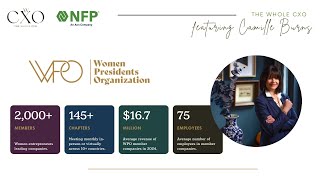
Camille Burns Unlocked: Scaling Secrets from 25 Years Leading Women Entrepreneurs
Camille Burns Unlocked: Scaling Secrets from 25 Years Leading Women Entrepreneurs
Camille Burns on Peer Networks and Scaling Women-Led Businesses | JPMorganChase
S5 E4: The Power of Womanhood with Camille Burns, CEO of Women Presidents Organization
Entrepreneurs as Equalizers (Feat. Camille Burns) | Dauntless LeadHERship Podcast #05

Empowering Women Entrepreneurs: Insights from Camille Burns and Linda Hamilton