The Excellence Exchange Podcast with Camille Burns
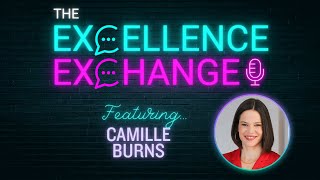
In this episode of the Excellence Exchange podcast, host Sharon Hulse interviews Camille Burns, CEO of the Women’s President Organization (WPO). Burns shares her personal background—growing up in Evanston, studying sociology and women’s studies at NYU, early HR work, and an unexpected path to leading a nonprofit that supports women entrepreneurs. She describes WPO’s evolution from a modest nonprofit in 2000 to an international network of over 2,000 members and 140 chapters, highlighting key turning points: the creation of the Platinum tier for $10M+ businesses, the annual 50 Fastest‑Growing Women‑Owned Companies list (partnered with JPMorgan Chase), and global expansion into Canada, Peru, Turkey, and other countries. Burns explains how the perception of women‑owned businesses has shifted, how media and research now recognize their economic impact, and how WPO’s advocacy and visibility have helped that change. The conversation moves to the organization’s pandemic response—rapidly shifting to virtual meetings, delivering webinars on remote leadership, PPP and CARES Act navigation, and lobbying senators to amplify women’s voices. Burns reflects on female leadership traits such as vulnerability, empathy, and people‑first culture, while acknowledging persistent challenges like limited access to capital, especially for women of color, and the slow pace of change. She discusses her own dyslexia, the coping strategies it taught her (leveraging relationships, asking for help, using tools like ChatGPT), and how those experiences shape her inclusive leadership style. The interview also covers mentorship initiatives, notably the Go 4 the Greens foundation’s focus on introducing women to golf and fostering cross‑organizational partnerships, and the importance of exposing young girls to successful female role models. Burns shares core messages she delivers onstage: the power of peer support, the need for women to claim seats at the table (or bring a folding chair), and the belief that rising tides lift all ships. Finally, she offers practical advice to listeners—seek out supportive communities, join organizations like WPO, and leverage networks for mentorship and business growth—while providing contact information for the organization.
Chapters
Thank you for tuning in to the Excellence Exchange podcast. I'm your host, Sharon Hulse, president of ERG Executive Search, a nationwide search firm based in Appleton, Wisconsin. Today's guest helped transform a humble nonprofit organization into an international powerhouse with over 2,000 members and 140 chapters dedicated to assisting women entrepreneurs in their growing businesses to the next level of success. She is an ardent advocate for women's economic development and a champion for honesty, transparency, adaptability, and evolution of female leadership. I am so excited to welcome to the Excellence Exchange the CEO of the Women's President Organization, Camille Burns. Welcome, Camille.
Thank you so much, Sharon. I'm so happy to be here.
Well, I'm excited to do this with you because you and I have been getting to know each other over the last year. A year ago, someone brought to my attention WPO, or Women's President Organization, and suggested that, you know, I look into membership. And it has been truly transformational for me in just the year that I've been in it. So, but, but even more so than, than my year, you've had a really, really fascinating journey to your current role as the CEO of WPO. So let's start with share a little bit of your background and then ultimately what led you to WPO.
Sure. So I guess I'll start at the beginning. I grew up right outside of Chicago in Evanston, and both of my parents were I would say workaholics. Their careers were very important to them, and they both ended up being pretty successful in their line of work. So I sort of had instilled in me from a young age working hard, that your career was really important to you. And also, my mother was very successful. She's a scientist. She's just a brilliant woman. And so for me, women having careers was something that was extremely important to me, and women being successful and having opportunities to be successful was really important. So when I went to college, I went to NYU and I studied sociology, but I took a lot of women's studies courses and just became very passionate about the advancement of women. So I'd worked in human resources at a law firm through college and a little bit after college, and I decided, you know, I wanted to really go work for a women's organization and I wanted to put all of my energy into supporting women. I didn't have an interest in business at all. That was not something that I sort of say all the time that if you told 20-year-old Camille that I'd have an MBA and I'd be running a business organization, I would have laughed in your face. You know, it just wasn't something that I knew much about or really thought was very interesting. But I loved the idea of women in positions of leadership. And I loved the idea of more successful women and helping women become more successful and feeling like successful women will help support other women, and that the more women we have in positions of leadership, the more we're able to help other women and also just help the world at large and help the economy. And, and I just saw so many aspects of business that I thought were really important when looking at— at that time, when looking primarily at leadership.
Well, and I love the fact— I think WPO, for a lot of us now, we have, I don't know, 16 members in our group, something like that. The— that group really becomes almost like an informal board to our businesses. They look at things, they give us candid feedback. I mean, that's been— it's been, like I said, in just the year that I've been in it, it's already been transformational. So you started in WPO in 2000, and I have to tell you that in doing research, the transformation has been pretty amazing. I mean, there's been some really key turning points for the organization. So, so talk to me about what you witnessed and how the organization has transformed under your leadership.
Sure. Well, it's been, you know, it's been a fun journey, 23 years. And a lot has changed. And I think I'll step outside of the WPO for one second, because one of the things that I think has been most significant is The perception of women-owned businesses, and there's been a significant change in that. When I started doing this, first of all, when Marcia Firestone started the organization, she founded the WPO. People told her she was never going to find enough women with million-dollar companies. And then when we started Platinum, which was our tier, which is our tier for women that have businesses over $10 million in annual revenue, people said, you're never going to find enough women with businesses over $10 million in revenue. People just didn't even know that there were these successful women business owners out there. When they thought of women business owners, I think they thought a lot about maybe mom-and-pop shops. They didn't really know that there were women doing really interesting and exciting things even 23 years ago. And I would tell people what I do for a living and they would sort of look at me with this kind of blank face and not really understand what I did. I tell people what I do now and it's like, "That is so cool. I love that." A lot of that is because women-owned businesses have become a thing. You know, presidents started talking about it, the media started talking about the economic impact that women-owned businesses have, and there was a lot of research that was done to show, you know what, hold on a second, women are contributing a ton to the economy and women are employing thousands and thousands of people. We need to really acknowledge this community. And so that for me has been one of the shifts that's outside of the organization that I think has been really influential in where the organization has grown and how we've been able to grow. More women have more opportunities than they did 23 years ago, and, and people aren't, uh, confused about what women business owners look like. I think one of the turning points for us was when we started the 50 fastest growing women-owned and led companies list that we do every year. We partner with JPMorgan Chase on that, and the reason we started that, uh, 16 years ago, I think at this point, is because was we felt like the media wasn't acknowledging these women that were in these fast-growth businesses. They were in non-traditional businesses. They were doing really cool things. And the media just wasn't focusing on that. So, we thought, well, if we create a list and we start pushing this out and publicizing this, then that's going to help the world see or the country see, at least probably at that time, that there are women doing really exciting things and women that are in industries that people don't think they're in. And I think today now, people know that. I mean, I think that the perception is very different. And so, I think that's been something that's been very powerful for me as being part of this organization. And one other thing I'll say is when we went global, so we first went outside of the United States in 2001 in Canada. And our Canadian growth has been really exponential. It's been really incredible how fast we've grown in Canada and the incredible women that we have as part of WPO in Canada. But then we started, We started a group in Lima, Peru, and we started a number of other groups sort of organically outside of the United States. And that's been something that I've been really excited about and something that's been really a driver for me because so many women in, in other countries, um, don't have the same opportunities that women in the United States have. And the perception of the role of what a woman is, is, is different, and it's changing, but it's It's not— it's changing slowly. And so, what I found sometimes in some of the other countries where we have chapters is that it's really hard for these women to find each other. And being able to create a place for women running successful businesses to connect with and bond and get to know other women running successful businesses and having that board of advisors of other women who get you and understand what you're going through has been something that's been really pretty special.
Well, and I think for those of us who share your tenure, so I've been in my business 27 years and, you know, I remember when I first started, it was a lot of, hey, little lady, what can you do for me? I mean, that was literally the perception versus today where, you know, we are legitimate, right? And we can sit at the table. One thing I do wanna clarify WPO isn't just for women-owned businesses, though. It's also women presidents in other organizations where they don't necessarily own the organization, correct?
They have to have some ownership.
Oh, some.
So, okay. It is not a requirement that you're 51% or more owner as it is for certification, things like that. We've got a lot of women who have partners and who may not be the— may not own 51% or more of the company or private equity or other things, but they have to have some level of ownership.
Yeah. The reason why I want to clarify that is because first of all, I did meet some gals who at the last meeting, I don't think they were primary owner, but for sure were a partner. But this organization is one that if you have any ownership, you absolutely should look at becoming a member because it's been transformational. I did attend the conference in Las Vegas, which was fabulous. I mean, talk about a group of brilliant women. I mean, I learned so much in that 3.5-day period. One of the things that I was curious about, and I just had to smile because, you know, I like to think I'm a fashionista, but then I saw the women from South Africa and I said, I clearly need to step up my game because these women are so striking and beautifully dressed. But my question is, how are you connecting all the different countries? Because I do know that there are a lot of global female-owned companies within WPO. So how are you helping to connect those dots?
Well, a couple of different ways. We do have a member portal where people can communicate with each other, and we're working on a lot of technology upgrades that are kind of happening behind the scenes so that we can make that easier. But we do— the conference is a great way. We really try to bring as many women from as many different countries to the conference and really encourage that. The conference is just a fantastic opportunity. And, and for us, not only just meeting and connecting and meeting these interesting women and, and getting to know each other and each other's businesses— there's a lot of business opportunity in that as well. There's a lot of opportunity for people to work across borders and support each other or partner. And we've seen a lot of that within WPO. Uh, we've done other things where we've had sister chapters before, uh, where they— a couple times a year, you know, the chapter in Turkey and the chapter in Baltimore got together on Zoom and got to know each other. And we also bring our chapter chairs together a couple times a year, and those are the consultants that run our WPO meetings. So we actually next week have our chapter chair training, and we have all of our chapter chairs from around the world come to that. So that is an opportunity where they all connect with each other, get to know each other, learn about each other's members, and they really facilitate a lot of great connections and, and a lot of, um, opportunities between each other as they get to know each other and their local chapters.
Well, and as you know, we have a member in my group that is in Manchester, England. So we just got back. And as I was sharing with you earlier, it was fascinating to me doing business, the differences in doing business in England with Brexit and all the challenges that they have versus doing business in the States. And, you know, I kind of came back with this new appreciation of being in the States and being a business owner and the opportunities opportunities that we have here. And, and again, they— she has a great business in England, but there are some unique challenges that they— that she has that we don't have here. So you've been doing this a couple decades. Let's talk about female leadership. What are you seeing as some of the strengths and then some of the challenges that are unique to women in entrepreneur— entrepreneurial world versus the male in the entrepreneurial world? And what are some things that either as a female we can help with or things that we can, you know, kind of maximize?
Well, first of all, I think what a leader is has changed. In the time that I've been doing this, I've seen that. And I think if I go back even before I was working, what a leader looked like, what the role of a leader was, and how you were taught to lead, I think has changed quite a bit. And I think there's been a lot of emphasis on some strengths that come a little bit more naturally perhaps to women. So being vulnerable, you know, you listen to Brené Brown, and I think a lot of those qualities are qualities that are comfortable for women in a lot of ways. And, and I'm generalizing here, there's obviously men and women who fall on both sides of the spectrum, but I think that women are innately caring. I think women often care about their people, they put their people first. I saw this so much in the pandemic where our members were just doing anything they could to keep their teams employed and to keep everyone they could on payroll and stopped taking salaries themselves and doing all sorts of things so that they could take care of their people and they could support their people. And I, I think that that level of care of others that I think a lot of women have in today's world, I see is really significant. As we know, it's, it's harder to hire people and people are going through a lot, particularly after the pandemic. And I think women are are good at that. Women are good at understanding that their employees have full lives, that their employees may be parents or dealing with aging parents or dealing with whatever they're dealing with outside of their work and can bring that to their leadership and understanding and accommodating people that work for them and people that are part of their team. I think that some of the challenges for women that I see, You know, there's opportunities and challenges, right? As we talked about, for everyone a lot.
Yeah.
And there's so many more opportunities for women now in terms of access to capital and in terms of having a seat at the table that just didn't exist 50 years ago, 20 years ago even. But with that, there's still a lot of challenges. And if you look statistically, women get such a teeny percentage of capital and women of color get even less. And there's just a lot of challenges that women still face. Walking into a room, um, and having the same opportunities in that level playing field. It's still not there. It's not, it's not where it should be. And I, I say this a lot, that when we're talking about the types of businesses that we work with, so not necessarily 51% or more, but women own about 4% of businesses in the United States. And that number was about 2% when I started 23 years ago. So the needle has moved, but in my mind, it's not, it's not moving fast enough. And so I think that there's there's still a lot that needs to be done to help level that playing field. But I think the more and more women that we have that are successful, the more and more faces we see up there, and the more that young women see women like you and can look at you and say, I can do that, that's something, that's a possibility for me. I think that's going to really change things as the, as the younger generation grows up and moves into more leadership positions.
Well, and, and first, two things. I think WPO does a great job of educating women how to get capital, and then having people who have the resources, whether they're private equity or people that help with capital. You do a great job of infusing that out into the WPO network, which is great. But I also— it's so impressive how many big companies are in WPO. These are not— I mean, I know it started with million-dollar companies, but when I was sitting at the conference and I'm watching women who are fastest-growing companies who went from, you know, $3 million to $100 million. I want to walk there and go, okay, right now tell me what you did. You know, I mean, it just was fascinating, the number of women and the significant growth in, in quite frankly businesses that I think I don't even know what that is. Obviously, there's a niche for it. What is it that they're doing? So that was the thing that was just so fascinating to me is I think the creativity as well that women were bringing to the table in creating a business They looked at a niche that wasn't being served and they figured out how to make it into a business. And not only did they make it into a business, but they made it into a significant big business, which was amazing. So let's talk— you brought up the pandemic. So how did WPO have to pivot during the pandemic? Because we all obviously— business changed a lot during that time. What were the changes that WPO had to go through?
Well, first of all, we're a very high-touch organization. Everything we did was in person. So we immediately had to go virtual, go digital like everybody else. All of our chapter meetings that were always in person became virtual meetings. And, and so we had to shift that way. Some of the things we did in the beginning is we put out a tremendous amount of content. We felt that there was a lot of fear, and particularly for entrepreneurs, and I think particularly for women entrepreneurs, that there was just— no one knew what was going to happen. Everything was so confusing. Everything was changing. You know, if you can go back to where you were 3 3 years ago, it was just, it was nuts. And so we were doing webinars 2 or 3 times a week on various different topics, whether it's, you know, managing your remote team, or we did a lot with on PPP and the CARES Act and helping our members navigate that. We worked closely with a couple senators on the Small Business Committee in trying to be a voice for women entrepreneurs, because if you remember the first round, women didn't get the capital that a lot of other companies were getting. So there were a lot of things that were happening that we were trying to help support and also just help with that fear and that confusion. And one of the things I said at the time is that I'd never been more proud of the work I did than I was during the pandemic. And the reason was that people didn't feel alone. And that's a lot of what we do at WPO. I mean, we always had this thing, you know, it's no longer lonely at the top and we've We've been saying that and having that for years. But really, during the pandemic, I think when you were at the top, as hard as it was for everyone else, it was a very lonely place. And I think having these other women that you could, you could talk about whatever was going on, talk about what was happening in your industry, get input, get ideas, have people who aren't in it the way you are tell you, you know, you could do this or you could do that, particularly for the business owners that were in industries that were just completely shut down. You know, our members that were in hospitality and travel and events and all of these things where they, you know, revenue just stopped. Having the other WPO members in their chapter rally around them and help them figure out other ways to make money and keep their business going and keep their people employed was huge. And so it was a really kind of special time to be part of this organization and really see how women were supporting each other. I think women get a lot of bad rap sometimes.
Well, and you know, it's the whole feminist thing and all of that. And I've always said I'm not a feminist. I think it's an equal opportunity, but we want to have an equal opportunity for everybody, right? Um, and you know, I've never been one that says because I'm a woman I should have special, you know, special disposition. But at the same time, as a woman, I want to have a fair opportunity. So if my product is as good then, you know, I'll step to the plate. I remember when the pandemic first, when they shut everything down, I sat here for months all by myself and I kept thinking, what are you doing? I mean, it was so quiet. And, you know, we had obviously Zoom meetings and team meetings and all of that, but it just was so different than having the buzz of having people around all the time and having a group like yours. I mean, I was fortunate enough that I ended up— we had a mastermind group group that we all came together and we all helped each other fill out the PPP. So we all received the first round of PPP because we all did it together. But I will tell you, if it wasn't for that group, it would have been absolutely zero communication other than, you know, a couple Zoom calls here and there with the team. So what you did, I'm sure, kept a lot of people going and a lot of people in business at a time where it would have been easy to get real depressed and just kind of give up.
Up.
So kudos to you folks. So I read somewhere that you had or have dyslexia. Mm-hmm. How, how has that impacted me? Because I think, you know, it's so funny, nobody ever wants to talk about the challenges, right, that we have, and we all have them. I always say we all have natural gifts, and then we all have things, quite frankly, we are just— we struggle with. So how have you overcome that?
Well, any learning disability is tough when you're trying to go through the school system and trying to learn like everybody else and you just can't. And I really struggled with reading and I really struggled with writing. I struggled with spelling. I just had a really hard time learning the way everyone else was learning. And it is really hard on your self-esteem. And I think even into adulthood now, I'm lucky I have a mom who's in the field, she works with a lot of people with various disabilities. So she saw it. She could see that there was something going on. So she was able to help me get support, put me in afterschool programs, and help me find ways to try to learn how to read in a different way. And today it doesn't impact me anymore. I can read, I can write. I mean, I wouldn't say I'm the world's best writer. And I have to admit that ChatGPT has been something I found, you know, for someone who hates a blank page.
And it's amazing how everybody is becoming a much better writer.
Exactly. And for people who hate writing, it's kind of a real dream.
Yeah, right.
But I think for me, what stuck with me the longest was the insecurity. And I think what stuck with me was this feeling that I wasn't as smart as other people. And it took me a long time, even into my adult years, to feel like, you know what, I'm not I'm not stupid just because I didn't get straight A's and just because school was a little bit harder for me. I mean, I went to great schools and I ended up getting an MBA and having a graduate degree, but it wasn't without that, that feeling of almost imposter syndrome feeling in terms of when I got into college, feeling like they don't know that I'm somehow fooling everybody. But I do think the upside of any kind of disability is that You learn workarounds, uh, and you sort of learn to hone other skills. So I, from a very early age, I think, worked on developing people skills and worked on building relationships with my teachers and learning how to get other people to help me out. I've never had a problem asking for help. I've never had a problem leaning on somebody. I've never gone into it and think, I know everything, I'm the smartest person in the room. And so I I surround myself with people that are smarter than me. And I bring in a lot of people into our organization who are really good at things that I know I'm not good at. And so I think the upside of a disability is you never really are fooling yourself and you're not afraid to ask for help because you have to. You learn from a young age, if you don't ask for help, you're going to fall behind. You're never going to be able to keep up with everybody else if you don't learn how to rely on other people. And it turns out in— the adult world as a professional, reaching out to other people, leaning on other people can be very helpful.
Well, and that's what WPO is, right? It's, it's leaders helping leaders. I have to tell you that you're just a force to be reckoned with. So your disability, as you call it, is, you know, you're not an imposter anymore for sure. And I also have to tell you that, I mean, we deal with executive search every day and I still have yet to meet a leader that doesn't feel like in some respects they're an imposter. I mean, it is so common. It's probably the number one thing that male, female leaders, every leader feels is that at times they feel like they're an imposter. Well, as you're forced to be reckoned with, and you know why I was so attracted to your energy and who you are as a person, you are absolutely an advocate when it comes to women's economic development. And, and I've watched you as a moderator, I've watched you as a panelist in a lot of prestigious summits and conferences. I mean, it's not just, you know, small. I mean, these are international and national conferences, Forbes, you know, any big mediums out there. So tell me, what is the core messages that you're trying to convey today in, in the economy that we're in, in the, in the world that we're in today? What are your, what are your core messages when you are standing on those platforms?
First of all, I, one of my core messages is just the power of peers and women supporting other women and people supporting other people. I think that we have to support each other and creating this space, as you said, this board of advisors to come together and help support you in your business is only going to make you more successful. In terms of economic development, I'm just a huge advocate for women in general because I think that women leaders— first of all, women deserve to be in leadership positions just as much as men do. And I'm, you know, I come from the same place as you. Even though I run a women's organization, I'm not looking for handouts. I think that we're looking for the same opportunities. I mean, I think we're looking for that, that same seat at the table and that ability to, to to impact others. But really, it's, it's about women supporting women. It's creating that kind of safe space, and it's the power of peers, and it's the power of asking people for help and, and supporting each other and knowing that we're only going to grow together. And I'm a big believer in all ships rise with the rising tide. And, and so for me, as women come together, it's not just about helping you in your business, but creating opportunities together and being able to create— you know, you're a 4 share, and you team up with another WPO member, you're, you're an incredible force. So, there's just this power in teaming up together and growing your companies together that I think is so important. And you were saying just now, talking about sitting in the pandemic alone, and I say that all the time, you know, women growing, Googling their businesses to $1 million, you know, sort of figuring it out and trying to grow and Googling how you do things and figuring things out on your own. Look, you, you meet other people, you connect with other people, and all of a sudden it just makes everything so much easier and you can all be more successful. There's plenty of business for everybody.
Well, and that's the one thing that, that's different than— I mean, I've been in a lot of groups, I've been in, in any number of, um, large groups like this over the years because I think that's how as a leader you continue to grow. And the one thing that I noticed about this group that I, I really appreciated is people are there to network. They are there to learn about each other's businesses and if it's appropriate to do business together. I've been in groups where quite frankly they have told us the intent is not to do business together and please don't come with that intent, which is fine. But if I see an opportunity or someone sees an opportunity in me, I think it's just a natural to want to, to network and have those conversations. I have had some wonderful Zoom calls with with a large number of WPO women that I met at that conference, just taking it another step and getting to know each other and the services they provide, the services we provide. And it's been fabulous for our business and, and I hope for theirs as well. So, mm-hmm. You're also heavily awarded. I can't even imagine what your plaque room looks like. Women Elevating Women Award. You were inducted into the Enterprise Women Hall of Fame, which I know having just won Enterprising Women, That's a big deal to get into the Hall of Fame. So how does the honor fuel you to want to be a better advocate for women?
First of all, I think the honors— and I know you've won a million awards too— make the hard times feel worth it. You know, it makes the really difficult things you've gone through that you've had to like put on your big girl pants and fight through and, you know, keep your head held high when things are really difficult. I think the honors, for me at least, make me feel like, okay, that was all worth it. We've gone through a lot of challenges and coming out on the other side of that and then having been recognized for that, I think is huge. And I think for me, it helps me the next time I'm going through something difficult, just knowing that we've got to keep moving forward and we're a mission-driven organization because we're a nonprofit organization. And so the awards just help me feel like, okay, we're providing value. And as long as we're providing value and as long as women are growing as leaders, becoming better businesswomen, creating networks, building relationships, as long as that's happening within WPO, I feel like we're doing the right thing. And how we deliver that may change over time and that may vary. But as long as we're providing value to these women entrepreneurs and we're making an impact on their lives and in their businesses, that's what's most important to me. So anytime I'm given an award or the organization is given an award, for me, it's really just acknowledging that we're having an impact, that we're all getting up every morning and trying our hardest to have and trying our hardest just to make life that little bit easier and that little bit better for women entrepreneurs. Because, you know, being an entrepreneur is hard work.
It is hard work. And, you know, I— it's my joke that I always say, you go from being the person who plans happy hours to the person who's no longer invited.
I love that.
And you need to learn to get over it, right? So, you know, and as I start to transition my next, you know, tier of— I talked to him about it. I said, you know, it's hard when you're like, for me, I'm incredibly social and, and you people look at you different and, you know, over time you get used to it and over time it doesn't bother you as much anymore. But, you know, I mean, I remember the sleepless nights where you think, how am I going to make payroll or all of that. And again, I wouldn't trade any of it because all of it is how you learn and grow. But it is not for the faint of heart. You just have to have a really good hairdresser and someone who can make you look good because there is stress for sure.
I love—
I have to tell you this. This was my favorite thing in studying, you know, Camille Burns. One of my favorite things is you had talked about your mentor Shirley Chisholm and what a role model she was for you. And this quote, I am going to have this emblazoned on something. If they don't give you a seat at the table, bring a folding chair. Oh, okay. I love that so much that she said that. So I always say, I wanna be in the room where it happens. I don't wanna be the person that hears about things or hears about the challenges. Let me help. Let me get in there and help to figure it out. I don't need to hear about it after the fact. And then, you know, I wasn't there to lend an ear or lend a suggestion. So knowing that that also resonates with you, what does it mean to you? What does it mean to you when you think about your career?
I think, first of all, being the only is, is challenging. And I'm so impressed with anyone who walks into a room and is the only and is able to hold their head up high and feel confident and not— and know that there might be judgments and people might be feeling certain ways about you and not care, or at least not seem like you care. And I think being the first and being the only is something that's really inspiring to me because it's hard. I mean, it's got to be extremely hard. And I think about women like Shirley and, and how hard that must have been every day to walk into a room and feel that confidence and know that you're smart enough. And we're talking about imposter syndrome— know that you belong to be there in a world where there are people who may not think that you do. That to me is, is so inspiring. And I think as women We're always in this position still today to have to walk into that room and have to sort of push our way in because it's not always, we're not always invited. And I think for women, people of color, and any group that isn't necessarily part of the in-group sometimes has to make their way in and bring their own chair to the table and make sure that they're a voice. And we need to hear from that voice. And the world is a better place when those voices are heard. So one of the reasons she's so inspiring to me or anyone like her is just forcing yourself to be heard in a way and walking in and being that voice and not really caring and being willing to be the only person and the first because I personally don't even know, you know, I've worked in a world of women. I don't know what it's like and how challenging it must be for some of our members who are in these spaces where there are no women. They walk into conferences and are, you know, there's one other woman across the room or you walk into a room and you're the only Black person in a room. I think that, has got to be extremely challenging. And so I'm always really inspired. And Phyllis Newhouse, who's on our board and just a powerhouse in herself, always talks about harnessing that power of being the only and using it to your advantage. And I just, I love that concept. And I look at a lot of the successful women that I know, and I think back to my mother's generation where there was, there just wasn't room for women and women really had to force their way into positions and women really had to prove themselves and still have to prove themselves. Themselves that they deserve to be there. And I look at the— that generation and think how much easier my life is and how much easier it is for my generation. And I look at the generation below me and think how much easier it is for them because of the women who've come before us.
And, and I would agree with that. In fact, um, I think that's going to be the topic of my next book, is what, what are the things that women do to you know, sort of catapult their career and what are the things that women do that sometimes hold them back. And I think about, you know, the women who, like you said, were there before there was any other female representation on leadership boards or, and just some of the things that they had to do in order to get validation that, you know, they, they should be there. So I know you're a board member of the Go For Greens Foundation, um, that obviously provides some pretty powerful resources to women-owned businesses and young female entrepreneurs. I love that, um, the two organizations that I'm involved in right now, WPO and Enterprising Women, both are very focused on young mentoring, young female leaders, which I love. Can you talk more about your work for the Go 4 the Green?
Sure. So one of it just— this tags on, I think, really well to the last conversation is that Go 4 the Greens has a few aspects, but one of the ones is playing golf and teaching women to play golf. And I'm not a golfer, but I— I don't play golf. I should. I was getting a lecture last week about how I should learn to play golf. But there are a lot of decisions being made and a lot of opportunities on that golf course. And there are a lot of times that women are not part of conversations because they're not out there playing golf. And so I love that about Go 4 the Greens is teaching women to play golf, empowering women to play golf, understanding the rules in golf, and just understanding, you know, not saying you need to be great at golf, but you need to be good enough so that you can be part of the conversation. And so I really support that aspect. Um, I also just— one of the things that I think with Go 4 the Greens is is partnering and bringing a lot of organizations together. And that's something that's been really important for me, is that I think that there's a lot of different women's organizations, a lot of business organizations doing different things. And I'm really of a belief that let's see how we can support each other, because at the end of the day, we're just trying to support— for, for WPO, we're just trying to support women entrepreneurs. And there are other organizations doing incredible things that are also supporting women entrepreneurs. And both Enterprising Women and Go for the Greens have great mentorship programs. And I think it's really inspiring. What I've seen is both events invite young girls, young high school girls, college girls to their conferences and to their events. And I can't tell you how many times I've seen a young woman who's, you know, 15 years old and just to be mesmerized at some of the success of some of these women and not even know that these are careers that are possible, not even know that this This is an opportunity. Entrepreneurship is an opportunity. And we've forever said to our members, if you want to bring a daughter to our conference, you can bring them. And so, we've had daughters that have been coming to our conference for years and people who bring their daughters. And really, it's that same thing. Let the daughters come and be inspired and meet these women doing these incredible things. And as you talked about, sit in and watch the 50 Fastest and women running these super fast growth businesses and just knowing that it's there because we need to know. In order to believe that we can be something, we need to know that it exists and we need to know that there's that opportunity. And so I think that all of the mentorship programs for young women are, are so beneficial in just helping women see that that's an opportunity for them and that that's a possibility. Because I know for myself growing up, I didn't know about that many jobs. Like, I didn't know, right? I never even thought of being a business owner. I never even thought of that as an opportunity because I didn't have entrepreneurs my parents weren't entrepreneurs, and that wasn't something I grew up in. And so I think it's really important just to be around successful women for young women to know that that's, that's in their future and that that's possible for them.
Well, and I, I sat at a table with a mom and a daughter when I was at the WPO, and it was fascinating to watch the event through that young woman's eyes. I also took my daughter to Manchester with me. And it was fabulous. I mean, we had a gentleman from Parliament who spoke, and who do you think was the first person who went up and talked to him after? My daughter Katie, which I love that about her. She, you know, she didn't hold back. She wanted— she was curious. He's very much into female entrepreneurship, and she just had a lot of questions. She works at a college, which is an all-girls college, so she just had a lot of questions for him. That was very helpful for her to take back to the college. So, I agree that the more young female entrepreneurs we can get involved, the better. And by the way, Go For The Greens, if they ever need a beer cart driver, I'm your girl. I'm never gonna be a golfer, especially at this age. I, I've just kind of chalked it up to that one's never gonna happen, but I drive a really mean beer cart. So, I'm, I'm just throwing that out there for you, Camille, if, if you need some help.
Well, that's part of the fun of golf, right?
Right. Right. I'm just, I'm really good at the cocktail hour and that's kind of where my skill set, you know, we all have to know what we're really good at. Exactly. Right. Just handing out beer and cocktails. So, you know, we're running into our time here. So reflecting on your own journey, WPO's mission, what advice do you give our listeners? I mean, you have We have a lot of female entrepreneurs who listen. I'm involved in a lot of organizations that are predominantly female entrepreneurs. How do you— what advice would you give these women to reach their full potential?
Seek out a community. Find people who want to support you and surround yourself with them and find organizations. There's a lot of organizations out there doing incredible things. WPO is one, and if you have a multi-million dollar business and you're a woman, we're here for you. But there's a lot of other organizations, and I, I'm a big believer in finding your people and, and finding people that you can go to, that it's a safe space, you can ask for help, you can lean on them when times are tough, and that you have people who have your back. Because it's so important, whatever career you're in and whatever you're doing with your life, It's so important to have people that have your back. And with any organization, one of the reasons WPO being all women, it's so beneficial because women are multifaceted. You know, you are an entrepreneur, you run a successful business, but you still— you talked about your daughter, you're still a mother, you have all these other aspects that are part of who you are. And finding a community of people who understand that and can help support you and lift you up when times are tough, I think is so important to being successful and achieving success and staying sane and all of the things. So I always tell people, seek out an organization, find a group for you. And you can contact me if you're trying to figure out what kind of groups are out there, because I know a lot of them, and there's a lot of incredible organizations doing incredible things.
Well, speaking of which, why don't you tell our listeners how they can find you?
Sure. Well, first of all, you can go to our website, which is women-presidents.com. You Go find me on LinkedIn, Camille Burns. I'm pretty active on LinkedIn. Or you can follow us @WomenPresidents on a number of social media platforms and reach out to us. We're happy to, happy to help. And we want to support as many women as we can.
Well, and, and I have to tell you, this has been delightful. I have really enjoyed being a part of the organization. And I absolutely agree with you. And I do think the tribe, your tribe, the people that that you can ask questions evolves as you go through your journey. As a woman who's been in business, in this business I'm in 27 years, this tribe has been incredible. I mean, it is a group of 2,000 of the most badass women I have ever met in my life. And not in a, not in a bad way, just in a very smart, thoughtful, business astute group that I am just so honored to be a part of. So Camille, thank you so much for being my guest. I can't wait to see you soon. I'm sure we've got something coming up where I'll get to see you again. And I just appreciate you taking the time because I know there's a lot of women out there that will appreciate hearing your story.
Thank you so much, Sharon. And you are definitely a badass woman yourself. And we love having you as part of WPO and just continue inspiring women. It's incredible what you're doing and I'm just a huge supporter. So thank you for having me today, and thank you for being you.
More from Camille
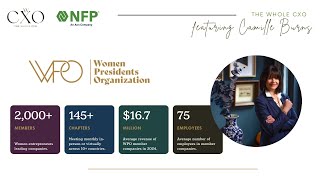
Camille Burns Unlocked: Scaling Secrets from 25 Years Leading Women Entrepreneurs
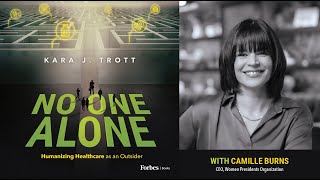
Camille Burns Unlocked: Scaling Secrets from 25 Years Leading Women Entrepreneurs
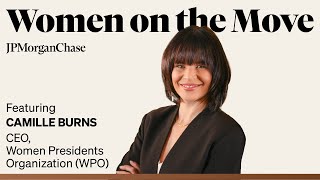
Camille Burns on Peer Networks and Scaling Women-Led Businesses | JPMorganChase
S5 E4: The Power of Womanhood with Camille Burns, CEO of Women Presidents Organization
Entrepreneurs as Equalizers (Feat. Camille Burns) | Dauntless LeadHERship Podcast #05
Empowering Women Entrepreneurs: Insights from Camille Burns and Linda Hamilton