Episode 26: Inspiring Women in Leadership with Camille Burns
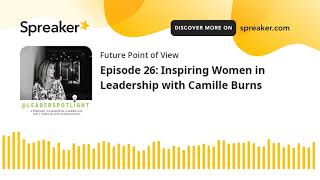
In this Leader Spotlight podcast, hosts Annette Kozowski and new co‑host Addison Price interview Camille Burns, CEO of the Women Presidents Organization (WPO). Camille shares her personal journey from a feminist‑minded child, through NYU sociology studies and a law‑firm HR role, to joining the then‑small WPO founded by Marcia Firestone. Over seven years she wore many hats, earned an MBA, and eventually succeeded the founder as CEO, stepping into the role just before the COVID‑19 pandemic. She describes how WPO grew from 17 chapters and ~200 members to about 2,000 members across 141 chapters in 12 countries, with a strong presence in North America, South Africa, Latin America, Turkey, and Europe. The conversation explores how women entrepreneurs navigated the pandemic by continuously adapting rather than merely “pivoting,” and how the crisis accelerated shifts toward values‑driven leadership, talent retention, culture, and proactive exit planning. Camille emphasizes the critical role of peer networks, mentorship, and community—highlighting the support WPO provides through webinars, master‑class style education, and tiered membership groups that scale with company size. She names four key influences: board chair Marjorie Krauss, board member Phyllis Newhouse, her late father, and the broader WPO community. Her advice to emerging women leaders centers on flexibility, building relationships, and seeking mentors. The episode concludes with practical information on how listeners can join WPO via its website, LinkedIn, or local chapter chairs.
Chapters
Welcome to the Leader Spotlight. On this podcast, we bring you the stories of leaders, their personal journeys, and we put a spotlight on the inspiring things they are doing in their organizations. Hello everyone, I'm Annette Kozowski, your co-host. I'm excited for the new year. Happy 2022. And I also have a big announcement. So I now have a new co-host that will be joining the program, Addison Price. I'm very excited. Our paths have crossed before, right? And you've done some of your own podcasts and you did some stuff at Oklahoma State University and did a podcast. So I'd like to welcome you, Addison. Talk a little bit about yourself so listeners know who you are.
Yes.
My name is Addison Price. I graduated in December of 2021 from Oklahoma State University with a degree in marketing and a certificate in sales. Um, I love marketing. I love sales. I love being able to speak to people. Um, I served as Miss Oklahoma for 2 years, um, 1 year due to COVID, but in 2019 and 2020. And through that, I was able to travel across the state of Oklahoma, compete at Miss America, and speak to a variety of audiences on many different levels. So, Speaking is one of my favorite things. I love to be able to meet new people and I'm really excited. I think this is going to be fun.
And you made us proud. Thank you. All the way in Missouri, you made us proud in everything you did. So, well, today on the show, um, I'm very excited because we have Camille Burns and Camille is the CEO at Women Presidents Organization. And I've had the pleasure of working with her since I'm involved in WPO for the state of Oklahoma. She is a visionary leader. She has a lot of experience working with women entrepreneurs. She also has helped take that organization from, you know, a small community of women entrepreneurs to a global enterprise. They do such a great job at educating not only the chapter chairs that lead the groups, but also the women that are in that community. So I'm very excited to have her. She's a leader in her field. She's a trailblazer. She's wicked smart. And so I think you guys will really enjoy listening to her today. So is there anything else you have before we jump into Camille?
Yes.
So before we officially kick off our interview with Camille, I just want to remind all of our listeners to follow Leader Spotlight on Instagram for updates on episodes and for the chance to also be featured in some of our episodes. So make make sure you're following us there and stay tuned because we have lots of exciting things coming up.
Well, welcome Camille. I am so glad that, uh, you took the time to be on the podcast today. Very grateful. How are you?
I am doing well, Annette. I'm so happy to be here. It's so wonderful to see you.
I know. I think the last time we saw each other was, uh, Florida. I think it was Florida.
Oh yeah, you're right.
Yeah, I know, I know. I know, it's like the time, it's like warp time or something.
I know, right?
So, well, I am, I'm excited for a number of reasons to have you on. Um, your personal story is very inspiring, so I definitely want to make sure we kind of COVID your background and, and kind of how your time with the Women Presidents' Organization went for you, what that was like, um, why you stayed, you know, now you're at the helm of it. So I'd like to talk about that, but you also work with some of the most amazing women, um, really all over the world through the Women Presidents Organization that I have had a pleasure of being involved in. And so I, I, I would love to hear just stories. We're going to talk about women entrepreneurs and what you see, how they're succeeding in this pandemic, and we'll get to all kinds of things there, but kind of let's start with just your, your background, your story. So how did you get to be the CEO of Women Presidents Organization? Sure.
Well, first of all, Annette, I was one of those kids where I was sort of like a feminist from when I was a toddler, you know, and on the playground as a little kid, it's, you know, if a boy was like, I'm a boy, I get to go first, it was like, you know, I was going to shove him out of the way or something. There's just always been something in me that, um, in terms of just like feeling like, you know, women, women deserve the same seat at the table. And I came out to New York for college and went to NYU, studied sociology, and, and I was working at a law firm through college in human resources and stayed on for a little bit and really felt like I wanted to work for a women's organization. That was my number one goal. And I had no interest in business. It was like the furthest thing from my mind. Working with women entrepreneurs wasn't even anything I even thought about. And this job came up for to work for this organization. It was a tiny organization. It was really Marcia Firestone who started the organization and founded it. I think when I started, we had about 17 chapters and maybe 200 members around the US at that time. And yeah, and I, and I thought, well, this is interesting. I like the idea of women in leadership positions and doing work there. And so that's how it started. And in the beginning, I wore every hat, you know, I sort of did everything. And over the years, staying staying with the same organization, you know, is rare, particularly people in my generation and the generation younger. But one of the opportunities for me was that because it was a growing organization, I got to do so many different things and I got to try basically all of these different jobs and sort of really figure out what am I good at, what am I not good at, what do I enjoy doing. And, and it really gave me that opportunity. Um, it was also really fun to be part of something that was growing and to be part of something, you know, we went global and, and expanded and and added additional programming and did all of these wonderful things. And that was just really fun to be part of. I developed a very strong interest in business that I never knew I had. You know, I ended up getting an MBA and I always sort of think that if I told 20-year-old Camille that you would get an MBA, I would have laughed in your face. You know, like that was the last thing on my mind, but I really started to understand the power of business, the power of small and medium-sized businesses and how they impact the economy in the world. And so I just grew a really, really strong passion around that as well. And I think lastly, I've had this incredible opportunity to be surrounded by just the most incredible women. And I've learned so much throughout my career just from the women I've had the, you know, the sort of I guess the gift to be able to be with and to be able to learn from and, and, um, just glean so much insight and inspiration and expertise from, from this community.
So how long did you sit in, because you were kind of the next in command, um, how long did you sit in that seat before you took over? Because it was a while.
Yeah, it was. I would say we were having the conversations for Probably, I mean, 7 years or so, the conversations were starting to be had before I came into the role, maybe 7 years prior. And then it became more serious about 4 or 5 years before I came into the role where it was a much more serious conversation. And it was like, okay, we're kind of moving in this direction. But it's tough, you know, Marsha Firestone had the vision to start this organization. She founded the organization and that's a tough transition. You know, it's hard. It's hard. I think it's hard for everyone. And she just had such an incredible vision. And then to be able to want to take that and move it forward and reach the next generation and take the organization into the future is sort of what my goal and passion has been. But it wasn't an easy process. And I don't think it is for any organization, particularly organizations when you're moving from the founder to the next leader.
Yeah. And I also think that The generations that are coming up, they don't have the patience, you know, like, you know, probably what you gained in those 7 years, let's say, preparing is probably vital for the success of that organization. And I just don't see younger people understanding that curation and what that gives you. And I know there's lots of ups and downs and, you know, there's probably a lot of things that are hard to do. But, um, you know, for the health of an organization, especially when you're taking over from a founder, that those had to be, you know, great years. Plus, you weren't sitting idle. I mean, you went back, got your MBA. I mean, you were preparing yourself. But I just find that, um, you know, that might be missing with some of these younger generations of just being patient and sitting and learning and really getting ready for when it's their, their time?
Yeah, I think that it certainly required a lot of patience. I've had many, many WPO members and other people be sort of be like, I don't know how you did that, you know, how you're patient, um, because entrepreneurs aren't always the most patient people. Um, but I think that I, looking back on it, there were certain, certainly very tough times. And looking back on it, I sort of think, well, I came into the role at the exact time that I was supposed to come into the role. And I feel like, to your point, that I learned so much and I grew so much in how I was able to handle things, my confidence, my just ability to take on the role that had it happened 5 years earlier, I don't think I would have been ready. And I don't think I, I know I wouldn't have been ready. I know I wouldn't have been the person I was when I came into the position and actually had to take it on. And I came into the role right before the pandemic, and then the pandemic hit. And I think being at the stage in my life and career that I was, I was really able to sort of step up and say, okay, we have to deal with this. You know, this is what's happening. And I'm not sure that, you know, Camille 5 or 7 years prior to that would have been able to do that with the same level of confidence and the same level of, um, just also just knowledge, you know. I learned a lot. I learned a lot over that course of time.
And it's a lot about yourself personally, you know, not just exactly organization. But yeah, I always say, you know, in leadership, the key is it's like if, if you are, you know, in the symphony, you have to know your instrument inside and out, then you practice and all that. Well, as leaders, it's kind of the same thing. You really have to know yourself inside and out in order to— especially— so talk a little bit about WPO.
How—
what are the size? How many chapters? How many countries? Because it's grown a little since you joined in the initial phase. Yeah, it's—
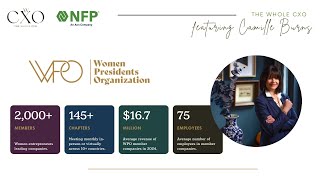
well, since the initial phase, it's grown quite a bit. We have about 2,000 members, give or take, at this point. We're a global organization. The majority of our chapters are in the US and Canada. We have very strong North America presence. And in total, we have— I think we're at 141 chapters today. So in a lot of different countries. I think we're in 12 different countries right now. Very strong presence in South Africa, which has been a real joy for me. I've loved being able to work with women entrepreneurs in South Africa, obviously Mexico, parts of Latin America, Peru, Turkey, some sort of scattered parts of Europe. So a lot of our global growth has been very organic, but that's been something that's been really really inspiring and really wonderful to be part of as well, because I think there's a lot of women on the global scale who need this even more than women in the US and in Canada, where it's just, it's so important to be able to find this community.
Yeah, it's a great organization on a number of fronts. So, well, let's dive in. Let's kind of talk about, um, just some of the women entrepreneurs that you've really, um, had a chance to work with, what you're seeing. And so kind of walk through— we've been through a couple of tough tough years, this pandemic, a lot of ups and downs with organizations. And so what have you really seen in how women, you know, that you get to work with, how are they succeeding? What have you seen?
Well, I think first of all, Annette, and you know this better than I do, I'm sure, but I feel like sort of the gift of the entrepreneurial mindset is that willingness to experiment, to take risks, to adapt. And I think entrepreneurs were sort of poised from the start for something like a pandemic hitting to sort of have that mindset of like, okay, you know, this is happening, we've got to change. And I think entrepreneurs also just, you can't be a successful entrepreneur without that fire burning, right? You can't be a successful entrepreneur if you don't get up every day ready to go, ready to take on the world. And so I think that the women in our community sort of had some innate qualities that helped them. I know looking statistically, women entrepreneurs struggled through the pandemic. We know that. We know that women business owners, more businesses were closed that were owned by women. It was a tough time. And I think that it is a tough time. And I think that there's a lot of factors that went into that. But what I've seen with our women in particular, I think, is that adaptability. And I sort of laugh now because, you know, I, by the end of 2020, if I heard the word pivot one more time, I was gonna throw up. It was like, okay, Everybody pivoted. But now we're going into our third year and it's sort of like it wasn't actually a pivot. It's just been this constant, continuous ability to change and see what's coming up. Because, you know, in 2020 we didn't think 2022 was going to look like this. And I certainly, I didn't. And so I think that there's been this continuous sort of ability to, to adapt and to adjust and to adjust what we're thinking about our business, but also looking at, you know, you're talking a lot about the leader as a human, and I think looking at who we are and what do we want. And I see women really doing that a lot in their businesses. It's this forward-thinking leadership and this quick decision-making, um, that I think has made it really possible for women entrepreneurs in our community to really thrive and to really, um, have some success even amid like all of the incredible challenges over the last couple of years.
Yeah, yeah, I think I, I agree with you on the word pivot. You know, I think we have to come up with the— it's a, it's a, it's, you evolve daily. Yeah, yeah, exactly. Presented to you, the flexibility. Yeah, yeah. So, and you know, I know now the, the, you know, the hot topic is this great resignation and I know people that are in leaderships are leaving, you know, and it kind of goes back to that redefining success metrics and life balance. And I think people are asking themselves, am I going to grind out for work? So what are you seeing kind of in that area of just redefining those success metrics?
I think that's exactly it. And that it's, it's that I think everyone, whether you're a leader of an organization or you're working for a company, took a step back and sort of looked at their lives. And I think what has happened, I think the Great Resignation isn't all that different than what we're seeing in the entrepreneurial community in terms of looking at their businesses and, um, changing the way they're thinking about their businesses. I see a couple of things. First of all, I think values have become so important. And I think with the women in our community, what are their values as a human? And making sure that their values as an organization align and making sure that their organization is following the same, you know, value structure as they are as a person and wanting to make sure that they're running a company that they believe in, not just looking at the bottom line, not just thinking about, you know, how they're going to make money and how they're going to succeed. I think that I've seen so many women who were running legacy businesses step back and take a look at that and say, is this what I want? I've seen more of our members sell their businesses, exit their businesses, merge with other companies than I've ever seen in my entire history. And, and I think some of that is the market. I mean, I think there's no doubt that in the market there was a lot of opportunity, but I think some of that is reassessing what do they want and do I want to have this legacy business or do I want to do something different or do I want to think about this differently? Um, I I also see with women entrepreneurs that the success of their people equates to their own success. And so I think sometimes looking at a sale or a merger or acquisition or whatever they're looking at, there's also this like, what's the right thing to do for my people? What's the right thing to do for my company? And so I've just seen a big shift in the way people are thinking about their companies. It's very different. When I started in this space 20 years ago, it was, so many women were running legacy businesses and that was their plan. You know, they were going to run this business, they were going to grow it, they were going to continue to scale, they were going to succeed, and that was that. And now you're seeing women coming into businesses with exit plans, right? And thinking about their businesses in a very different way. And I think also just seeing women who are starting businesses because of something they believe in and wanting to make sure that their team aligns with them on the culture of their business. I see that because of this sort of value-driven leadership, that there's also this prioritization of culture. And so we know we're going through this talent war, and what I'm seeing a lot of women doing is stepping back and saying, you know what, maybe I won't hire for the skills so much as I'll hire for the right people. Skills are trainable, you know, skills are teachable. But I want to make sure people align with my culture and align with my values, and that I'm running the kind of company that I'm proud of.
Yeah, because that, that's really why people stay, you know. They really stay because of the people, the culture. That's the first thing that they'll leave, you know, they'll say, okay, this isn't a good fit for me. So I agree with that. So I personally have the benefit of knowing what WPO does for a lot of entrepreneurs. I mean, you— the thing that I love is that you really do a great job of bringing learning education that's pertinent to what's going on. So it's, it's, you know, and I am watching the organization when 2020 happened and nobody really knew what was going on and the kind of content you were putting out to help these leaders, you know, to help leaders in all walks of life. So I mean, if you're part of WPO, you get almost a master's in business just, just by all the stuff that you offer. And you guys are very mindful of that. So what, what do you see? And I, I see a lot of the women on those webinars and, you know, that are taking advantage of it. But what are the commonalities that you see across the members of WPO, those women entrepreneurs, that you think make them successful?
I think that, first of all, I think there is this commitment to the identity, the mission, the values of their organization. And I think that looking at what differentiates them in the market, I think, is what I see with all of our women. I think that's really important. And I think they, they use this to develop and retain their talent. I mean, I think talent is huge. And I think that there's with women, and I may be wrong, but I saw this so much through the pandemic where it was like just wanting so badly to keep their people and so badly to retain their team, make sure that they were keeping people employed, make sure that they were doing right by the people that work for them. And so I think when I think about women running their businesses and one thing that I I think really is a commonality is prioritizing their people, making sure they have strong teams and doing the best, even in this really challenging time where it's really hard to find people and everybody is getting poached. I mean, I've been through it. I think we all have where, you know, you've got someone great and they're getting an offer that, you know, there's no way you can match. And I think sometimes with smaller businesses, that's tough. That's tough. You know, we don't have all the things that we can offer the way that larger companies do. But I think, I think I see with women also this ability to sort of see what they're not good at, you know, and sort of hire around it and find the right people with the right skills and experience to bring into their company and not try to do everything. I think with a lot of successful women, there's just that piece of not trying to do everything and to really hire the right people and trust them. And the companies that have really thrived, I think, work really hard on, on the people aspect. Another commonality I see with women, and, and this is our community, so I, I know that I'm biased, but it's utilizing their support networks and being able to ask for help and joining communities. I mean, I cannot emphasize how important I think that is for business leaders to be part of communities that can help you and support you through all of the challenges that entrepreneurs go through every single day. I think that doing it alone is so hard. And I think if we learned one thing from the pandemic, it's that doing it alone just didn't work. And I think that women joining peer advisory groups, joining industry groups, being part of a bigger community outside of just your business, I think is something that women in our world do, obviously. And I think it's something that has been hugely beneficial in, in helping them succeed, helping them stay in business. I mean, I know very few WPO members that went out of business in the pandemic, and, you know, statistically we know that's not the case. Many that, that did were just— it's industries and things that was just, you know, it— everything was stacked against them. But so many of our women survived, and many thrived, and I think it is having that community around them, that is huge. I think that makes, makes a huge difference. And you, you know, you were a member, now you're a chapter chair. I don't know if you agree with that, but I absolutely agree with that. That's the tool for success.
Yeah. Well, and I think they feel that way when they go through difficult times in their career. I think they lean on that group as support because that group, you know, is It's not like they're telling you what you want to hear. I mean, like, you know, they, they advise, they give, you know, their experience of what's been helpful. Like, they're a connector. They're— they help somebody stand back up one more time when they get knocked down. But I also saw through, especially in 2020, when most of us had never been through anything like that leading an organization. And I— what I saw was the women thrived because they were digging in, they were figuring out what to do, they were collaborating, you know, they were sharing, you know, here's policies that we're putting in place, hey, here's resources, and here's what we're, you know, here's what we're doing, you know, hey, here's a pivot model, you know, there was lots of things like that happening. And then towards the end of 2020, I really saw a fatigue in those women, but they had that group, and that group was really where they were trying to, you know, and because they knew they weren't alone. And because it is lonely at the top, you know, it's, it really is. And so I agree. I said, I don't know how anybody operates in business without a community like that for a lot of different reasons. So what would advice be for that young woman that's like Camille that came out of college and was looking for you know, where they were going to make their mark. And what would your advice be to kind of this next generation coming in and rising to leadership positions?
I think one thing is don't plan too much.
You know, one thing—
now I'm in my mid-40s, and it's— life sort of takes you in the direction it takes you in, and ride that, you know. Be open, be adaptable, and, and just go with what feels right. Go with your gut. Um, I think the other thing I'd say is surround yourself with incredible people, you know, find mentors, find communities, find women out there, particularly women who have what you want and get to know them and make that effort to have those relationships. Because I think that those relationships and what you're going to learn from women who've been there and done that, and women who are ahead of you on that journey, it's more valuable than any education you're ever going to get or any training you're ever going to get. So that would be my number one piece of advice is go out there, be proactive, and make those connections and build those relationships.
Yeah, that's great. Yeah, because I think most of us are doing things we didn't even know existed. Yeah, exactly. Exactly. That existed. Yeah.
Yeah.
Yeah. That's good. Well, anything else just from— I feel like, gosh, we could talk about so many things. But what are kind of the main things that you're really kind of bringing to the WPO members you're seeing as content or topics that are important to them. Anything there that would be helpful for listeners?
I think talent is huge. I think everybody's looking at talent and how are they going to find the right people. And again, I think what— who you are as an organization and defining who you are and your values as an organization is huge in that hiring and retaining process right now, where it is such a— where there's just such a shortage of people that are looking for roles. There are certainly challenges with supply chain still and logistics and things that are certainly topics that our women are very focused on. Another topic I think that is much more of a discussion than it was years ago, and we've already talked about this, but is that exit planning and is thinking about your business and maybe not looking to sell right now, but thinking about that, you know, 3, 5-year plan. What am I looking to do? Or am I looking to sell? And how can I get my company in the right in a great place to be able to, you know, move forward. Looking at how do I get my company ready to potentially become a public company and looking at all of these different options and structuring your company now so that it's poised to grow and be the kind of company that you want it to be in the future. I think that's— those are really big topics right now. Obviously marketing, sales, those kind of things are always coming up and I think Also looking at our last conference in Nashville and our upcoming conference in Montreal too is, um, is the future aspects. And I know this is your world and, and what, what, what's happening with technology, what's happening, what are we looking at and how can we think about that in a really strategic way so that we're not blindsided. And so that we're ready when, uh, you know, as things are changing that we know what's, what's coming down the pike. And I think lastly, and this speaks to the talent issue as well, but just as is the human aspect. You know, there's, there's tremendous focus on DEI and on culture and on creating a place that everyone feels comfortable and welcome and that everyone has an opportunity to succeed. So I know that's a lot of topics, but I know those are the conversations I'm really hearing a lot about and, and what I'm really focused on thinking about, you know, in terms of, of giving to our membership.
As you know, which we talked about, the people you put around you really will determine your success. And I've told my girls from a very young age, you know, whether it's, you know, friends in second grade or third grade, you know, going on through life, it's— if that's the same. So I would love to know, who are your four people that kind of have been mentors, been people you follow that have inspired you?
Okay, there I have so many that—
well, and I just know the network you're exposed to, so I'm like, okay, yeah, yeah, no, it's, it's, this is tough.
Um, in, in more recent times, I'll say over the last, because we've been through a lot and I've been through a lot in terms of where, um, the changes in my career and becoming a CEO, um, first and foremost, I'll say Marjorie Krauss. She's the chair of our board. She runs a global communications firm that she's been, you know, she was out there traveling the world, running a business as a woman 40 years ago when, you know, when very, very few women were doing that and going into countries where, you know, women didn't even have a seat at the table and, you know, pulling that chair up. And so she's someone that has just taught me a lot. A couple things I think I've learned from her over the last number of years is, um, is first of all, just thinking strategically and not rushing. She, it's very funny because she's in this communications firm. She does crisis communications, you know, that's a lot of the work she does. And, um, yet it's sort of always, she's always stepping back and like, okay, what is the outcome you want? Let's think about how you're going to go into this. Let's not just like walk into the room, you know, burst open the doors and start talking. Let's really think about what our objective is and what is the outcome that we want, and then make sure we're prepared for that. I think another thing from Marjorie is that she surrounds herself with really good people and she trusts them. And one thing that just— this was 2 days ago, I think, but it's so typical of Marjorie. I had a call scheduled with her and I get on the phone with her and I can just tell something's going on. And I'm like, how are you? And there's a massive crisis. That with one of her clients or something that's just come up. And I was like, oh, do you need to go? Do you need to deal with that? You know, we can talk another time. And it's like, no, my people are working on stuff right now. When we're done, I'll go check in. But it's just that ability to like step back and be like, I've got good people. They're doing the work they need to be doing. And I can have this conversation with you. I'm the chair of your board. And then I will, you know, step in when I need to. I think that's something that's been, really powerful to see because I think that if you're going to grow and if you're going to scale, that's number one.
It's really hard. It's easy to say that and then it's really hard to, to operate that way too. So yeah, yeah.
Another person that's really, I think, just been so incredibly inspiring, and she's also on our board of directors, is Phyllis Newhouse. You know, if you are listening to this and you don't know who Phyllis Newhouse is, look her up. She's just incredible. And she had joined the WPO and, you know, had a multimillion-dollar company, cybersecurity company. And what I've watched her do over the past, I don't even think it's been 10 years. It's, she has grown her company, you know, just by hundreds of millions. She's on our 50 Fastest list every year, which is the list of the fastest women-owned led companies that we partner with JPMorgan Chase on. She's launched two SPACs in the last year. She was the first Black woman to ring the bell at the stock exchange. She's just, she just pushes so much. And she's just been so inspiring and everything she's been able to achieve. And I think what I've learned from her is that pushing, you know, it's sort of like, she pushes me. She is not easy on me. You know, she does not let people rest on their laurels. She does not let you sit and sit still and wait for things to happen. You know, she, she sort of coaches everyone. And, you know, it's even the people giving her money, she's talking to them like she's their, you know, coach. But You know, she, she pushes people, and I think that she's pushed a lot of people to succeed a lot. She's also just one of those people who walks into the room and owns it. It doesn't matter who is in that room, she walks in and she owns that room, and she just exudes confidence. And I think that that's something that women in particular, we all can learn a lot from, because I think particularly when you're looking to get financing and you're looking for funding and you're looking for VC or whatever kind of capital you're trying to access. Um, walking in like Phyllis is what we all need to be doing in those situations.
Well, and both Phyllis and Marjorie, I feel, give so much to— they help other people. You know, that they are probably the busiest women in the room, but I feel like they, you know, do a lot to really help people around them and, you know, people especially in the WPO community.
Yeah, they do. And help other women entrepreneurs. And the other thing I'll say about both of them is they have big family lives and they make that a priority. And they both spend time with their families. They, you know, Marjorie has a million grandkids and, you know, she's running around the world and works night and day and she's going to their plays and she's, you know, having these big family trips. And Phyllis spends so much time with her family, her mother, her son. And I think that's And I think that's really important to see as well as we're talking about this life balance. Like you can be the busiest person in the room, but you also have to make time for the people you love.
Yeah, exactly.
The third person I'm gonna mention is my father. My father passed away just over a year ago and it was very sudden, but I think that because he passed away, it's really helped me realize how much of an influence he's had on me and how much I've learned from him. My father grew up very small town. He had very little in Southern Illinois, and he had a lot of working women around him. He had a father that wasn't really there, and he pushed, and he just worked so hard. He played professional basketball. He pushed him, you know, he got a basketball scholarship to college, and he went on to have a very very successful career. He was US Attorney appointed under Bill Clinton. And, but he always, with all of his success and all of his achievements, he always stuck with his ethics and his values. And he always put those first. And if that got in the way of him achieving something, so be it. You know, he was just one of the most ethical people that I've ever known. And I And I think about that a lot because I think that is something we on a daily basis have to wake up and think about. What do we value and who are we and make sure that we're moving in that direction. The other thing about my dad is, is because I maybe because he didn't have a father that was as involved in his life as a lot of women, but I have a sister, I have a brother as well, but he never like we were never girls. You know, it was like, you know, that we never talked about being pretty. We never talked about, um, you know, having boyfriends. Like, he— it was always about like, what are you guys doing?
Where are you? What's happening in school?
What are you learning? What are you working on? And, um, and so I think we sort of grew up with like zero— you know, I never thought like I couldn't achieve something because I was a woman and I couldn't— you know, there weren't opportunities available for me because like, that's just not you know, there was no difference. And we had to, um, you know, we had to work hard, and if we weren't, he was going to be hard on us about that. And so, um, I sort of give him a lot of credit for that, for both me and my sister.
Wow, that's great. My father was very similar.
Yeah, yeah, it makes a huge difference, I think.
Um, yeah, I think so too.
You know, I think the fourth— I'm not gonna say one person because I think I think for me it's just the women in the WPO. And the reason I sort of like make this amalgam of WPO members as my biggest influence is especially earlier in my career, being able to be surrounded by so many successful women just, just was so empowering. And I learned so much and I have like little one-liners running through my head. In my head all the time that are like one little sentence random different women said to me over the years, you know, where it's like, I got this great little piece of life advice from somebody along the way where it may not be someone I'm close to, it may not be someone that I even talk to anymore, but it's someone who made that little impact. And it's like, there's all these little impacts on me along the way and things that I learned from different women. And so I think for me, that's just— I wouldn't be where I am today without so many different women who touched my life and who came in and taught me something, taught me something about being a leader, taught me something about, you know, moving through life with strength, but also having vulnerability and being able to ask for help and ask for support when I needed it. And one other thing I'll say with the WPO is that watching the ups and downs of people's lives has been something that has been tremendously valuable to me because I've watched so many women. And we all know this in our own lives, especially as we get older, is like going through the hardest time. And it's like everything is going wrong. You know, it's like personal. It's just like you Watching women go through so many hard things that all seem to be happening at once and watching them persevere and stay strong and get up every day and put one foot in front of the other and show up and put on the face they needed to put on. And, you know, seeing them a year later and they're on top of the world and their business is thriving and their family's doing great or whatever's happening. It's like knowing that life has these ups and downs and knowing that we're all gonna go through these really hard times. And if we just persist and persevere, we're gonna get through it. And whatever through it looks like, you know, it's not gonna look the same. It doesn't mean that we're gonna have, you know, everything wonderful in the world, but we'll come out stronger. And I think I've seen so many women go through that journey that that's just helped me tremendously as I've gone through my own journey.
Yeah, definitely a lot of inspiring stories. Stories through the WPO. So, well, I do want to, you know, have you talk a little bit about— I would recommend anybody joining a WPO group in their, in their area. So what's the best way for them to connect or even look into becoming a member of a WPO group? Sure.
Well, first is our website. It's women-presidents or women-presidents.com. There's a lot of information on our website. You can see where all of the chapters are located. Our chapters are small. There are about 15 women in a chapter, and it's that really safe space, confidential environment to really get together with other women entrepreneurs and work on your business and work on yourself as a leader. So the website's a great first place. I'm also on LinkedIn. Anyone can find me on LinkedIn and write me on LinkedIn, and I can point you in the right direction. As you know, and that being a chapter chair, that the best place to go after you reach out to WPO is being connected with the local chapter chair and the local members in the community. Community and, and, um, you know, getting joining on the local level. But we do have virtual groups now, and we've got some other types of membership that are not just the local chapter. So there's various membership options that are all laid out on our website.
And I love too that you, you understand the different, um, issues that come with what size of a company. So as they grow, and I think it's like $10 million when they hit that point, there's actually a special group they can join that's really specific for that. And then there's even another one that's higher than that. So, um, your Platinum groups, and, um, then you have another one that's higher than that. So I think that's great.
Yes.
Yeah. So that people can kind of grow as they grow their business and find themselves in a different place and needs, and, uh, you have a place for that too. So So, all right. So I would highly recommend go to women-presidents.com and join. And I am happy to, if anybody wants to connect just to me to point them in the right direction as well. Well, Camille, thank you so much. It's been a pleasure. And there's so many things we could talk about, but I appreciate you taking time because I know you're incredibly busy. And so thank you very much.
Thank you, Annette. This has been a lot of fun. I love talking to you and just want to also acknowledge and thank you for all the work you do.
You're working in, you know, doing incredible work.
And I think a lot of groundbreaking information that you're looking at and just everything you're doing. I want to just acknowledge that because I've always found you extremely impressive. And so I hope all of your, all of your listeners do as well.
Well, thank you. Thank you.
The Leader Spotlight podcast and blog is dedicated to continual learning and thought partnerships that help us all grow as leaders. If you would like to be featured on our podcast, email AddisonPrice5@gmail.com. You can also visit our blog, medium.com/leaderspotlight, for more great content.
More from Camille
Camille Burns Unlocked: Scaling Secrets from 25 Years Leading Women Entrepreneurs
Camille Burns Unlocked: Scaling Secrets from 25 Years Leading Women Entrepreneurs
Camille Burns on Peer Networks and Scaling Women-Led Businesses | JPMorganChase

S5 E4: The Power of Womanhood with Camille Burns, CEO of Women Presidents Organization
Entrepreneurs as Equalizers (Feat. Camille Burns) | Dauntless LeadHERship Podcast #05

Empowering Women Entrepreneurs: Insights from Camille Burns and Linda Hamilton