Entrepreneurs as Equalizers (Feat. Camille Burns) | Dauntless LeadHERship Podcast #05
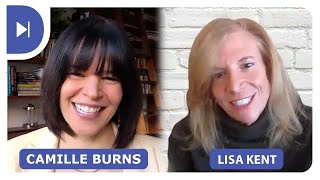
In this episode of the Dauntless Leadership Podcast, host Lisa interviews Camille Burns, CEO of the Women Presidents Organization (WPO). The conversation begins with a shared definition of "dauntless" as a blend of courage, fearlessness, and resolute persistence, especially relevant for women juggling multiple priorities. Camille explains that WPO is a global community of women CEOs and presidents of multimillion‑dollar companies that runs peer‑advisory groups, offering both business guidance and holistic personal support. The organization now serves about 2,000 members across 150 chapters in North America, South Africa, Mexico, Peru, Turkey, and Europe, and is expanding further internationally. Membership requires a minimum of $1 million in revenue for service‑based firms or $2 million for product‑based firms, with higher‑tier Platinum and Zenith groups for $10 million and $50 million+ businesses. Camille discusses the systemic challenges women face scaling beyond the $1 million mark: limited access to capital, psychological barriers, and a lack of visible role models. She notes a cultural shift among younger women entrepreneurs toward self‑advocacy, assertiveness, and a more collaborative mindset, contrasting it with older generations that were less likely to demand compensation or seek help. The dialogue explores the importance of viewing entrepreneurship as an equalizer—allowing women to set their own compensation and that of their teams—while emphasizing the need for personal wealth building and exit planning rather than reinvesting all profits back into the business. The episode also covers practical resources: how to join WPO, the tiered membership structure, and an alternative organization (Women Elevating Women) for businesses not yet meeting the revenue threshold. Camille shares early career advice she received from mentor Marsha Wilson, highlighting the value of perseverance, embracing unpredictable career twists, and learning from difficult working relationships. Throughout, both speakers stress the critical role of networks, peer advisory groups, and vulnerability in fostering resilience and growth for women leaders. Overall, the podcast blends personal anecdotes, statistical insights, and actionable guidance to illustrate how women can leverage community, mentorship, and a dauntless mindset to overcome barriers, scale their enterprises, and achieve both professional and personal fulfillment.
Chapters
First, thank you all for being with us. And as a reminder, you can find our podcast in audio on Apple, Spotify, or your favorite podcast platform. You can also watch us in video on YouTube or on our website, dauntless.works, W-O-R-K-S. We hope you'll find the Dauntless Leadership Podcast, subscribe, and tell all your friends about us. Today, our episode features the CEO of the Women Presidents Organization, and that's Camille Burns. I'm gonna welcome her in a minute. I want to say a few great words about the WPO. I was a member for many years. It was a terrific experience for me, highly advocated for women entrepreneurs. And I know as we get into the podcast, I'll be talking more about why that is. So today's episode, welcome to Dauntless Leadership. And welcome to Camille Burns. Hi, Camille.
Hi, Lisa. It's so good to see you. Thank you for having me.
Thank you for being here. I always start the podcast by asking my wonderful guests to tell me, how would you define the word dauntless?
The way I think about dauntless is obviously there's an element of courage or fearlessness, but I also think it's, it's kind of a resolve too, right? That determination, that not giving up aspect as well. So sort combine those two concepts together is how I think about Dauntless.
Thank you. I always think about, as I'm finalizing the edits for an episode, what would I call it? Not sure yet, but I love the idea of Don't Give Up, because I think that one of the attributes of dauntlessness for me is persistence. And in particular, women have so many priorities tugging them in so many different directions. It's hard to constantly keep at something. So thank you for that idea. And Camille, I know today you're the CEO of the Women Presidents Organization. Can I have you take a moment to tell folks about what is the Women Presidents Organization and your career journey so far?
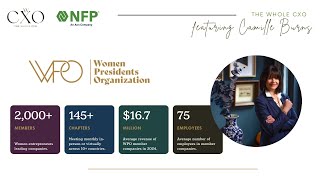
Sure. The Women Presidents Organization, or WPO as we usually call it, is a community of women CEOs and presidents of multimillion-dollar companies. So at the core of what we do is we run peer advisory groups. So it's almost like having a board of advisors of other women CEOs you get together with on a monthly basis and, and really work on your business. But also being women, uh, we don't detach from the other aspects of our lives as well. So it's a time to go and sort of, for lack of a better term, let your hair down and, and speak with other women, connect with other women who get you, who who really understand what it is to be a CEO, to run your own company. I mean, you know this, Lisa. It's, uh, it can be a lonely world. And so it's a space where you can go and talk about whatever's going on in your business, get that kind of support, input, feedback from other members in the group, grow and scale and maybe exit in a successful way your company, but also have that kind of community and that support. And so many friendships are built and, and relationships can go so much deeper than just the business within the WPO community.
For those who are listening who do run an entrepreneurial business that is multimillion dollar, I can't say enough good things about the, the relationships that I built, or the ability to ask any question to this board of advisors that I might have been intimidated to ask somewhere else, or I might not have wanted to expose myself as being vulnerable, or as being not fully knowledgeable on a topic. And I looked for this board of advisors through many different organizations. There are a lot out there. Some are just for women, some are not. And I think one of the unique things about the WPO for me, and there is a fee, by the way, great value for the dollar, was that your life could be fully integrated. So I have my little breast cancer pen right here. We had members who were experiencing breast cancer. We talked about how to support them through their healthcare scare, not just through their business situation. And that was really important to me, being able to see the whole person. And I think that's something unique about how women look at businesses and how they look at their teams. And in 2025, as I talk to younger women involved in business, They, they are looking for managers and leaders who help them manage their whole life, not just their work life, and in fact are demanding it today.
I liked this idea of, you know, helping women grow, scale companies, employ people, and, and believing that the more women that are in leadership positions, the more impact they can have and that the more economically strong women are, the more impact that they can have and the more power they can have, quite frankly, in, in the economy, in the country, in the world. So I like this idea of what WPO did, even though the business aspect wasn't really appealing to me at that time. So I came into the organization, it was actually the end of 2000. So I've been with WPO a really long time. I'm one of the few people who's been with the same organization that long, and I've had the luck of joining something that was really small and growing and became international over time. I was able to wear so many different hats and get so— just so much experience in different areas of the business because of the growth trajectory of the organization. And then in 2000, just about, what, 2 months before the world turned upside down and the global pandemic, I became CEO of the organization.
So not 2000, 2019 or 20.
I'm sorry, 2020. Yes, not 2000, 2020. Thank you. So in 2020, I became CEO right before the pandemic hit. And so I've been in this role for, I guess, about 5 years now.
Excellent. So it is unique that you've been at the same place for so long. Once upon a time, people stayed 20 years plus at an organization and grew within it. That is less common now if you look at people's career paths. And it's not— either one has its benefits. It sounds like you were able to grow and develop as the organization grew and developed. How big is the WPO today? How many people? How many chapters?
Yeah, today we have about 2,000 members in 150 chapters.
Wow.
We're very strong in North America, US and Canada, but we're also in a number of other countries. Our third biggest market is South Africa. America. We're also in Mexico, Peru, Turkey, Europe. So, you know, we're kind of scattered around, but we've got members all over. And, and, you know, it's wonderful to make the impact not only with women in North America, but with women outside of the US who need this kind of support very much. We're looking a lot right now at the global growth of the organization. And for me, that's something that I'm really passionate around. I— women in this country still need so much support, and we are it's not that we're not continuing to grow in, in the United States, but sometimes when I travel to other countries, I really see, first of all, there's not a lot of other organizations. There aren't other resources in the same way that there perhaps are here. Uh, and also just for women in other countries, sometimes it's very hard to find other women who run successful businesses. Sometimes there's cultural norms for women that make running a business a lot more challenging. Um, so I really enjoy some of our global markets and just feeling like, wow, the impact is so powerful because it's so hard for these women to find each other and connect with other women who are running substantial businesses, successful businesses, and build those relationships and share resources and grow.
I think that too. You know, I spend time globally as well, and I feel like, wow, if it's still tough for women here in the United States or North America, How is it elsewhere? And it is still tough. One of, uh, the episodes, a podcast episode, um, is on my all-girl deal team. I deliberately hired a woman investment banker and a woman attorney, um, to affect the transaction with me. And in talking to the attorney, she said I was the only women-led organization whom she had transacted for, and she had done hundreds a year. Um, and so that made me think there's still a lot of room for growth for women. And one of the key learnings— and I'm curious to your take on this— was women don't necessarily think about having an asset that they can sell. They think about doing good work, they think about making an impact, but they don't necessarily think about their legacy or selling that asset. And if she could encourage women to think about the fact that they do have an asset, they don't need to just shutter their business. They can in fact potentially sell it.
First of all, just the comment you made about, um, her working with so many companies every year and you being the only woman-owned one, I— it's so important to note that because when we're looking at women-owned businesses, women own about 40% of the businesses here in the United States. But only 2, 2.3% of those businesses ever generate over $1 million. So women own a lot of businesses in this country. Women are growing, and more and more women are starting entrepreneurial ventures. But getting past that million-dollar mark, actually growing and scaling a company, is a lot harder for women. And there's still a lot of reasons for that, and I think a lot of barriers for women. And so I think it's really important to, to think about it that way, because One thing I'll say is I agree with you, but I do think the younger generation is changing a little bit. I, if I think about when I first started in this space, you know, 20, 24 years ago, it felt like almost all of our members, it was like their business was their baby and they were building their business and they wanted to grow it and maybe they were thinking about eventually their children taking over their business or whatever the evolution of their business would be. But there wasn't as much focus on, on exiting the company. I am seeing some younger women now starting businesses and thinking about that exit even from the inception of the company. So I do see a little bit of a change there. I, I don't know that there's any data on that, but, um, I'm, I'm hopeful because to your point, I, it, it's really important to think women don't always put their own financial situation first. Mm-hmm. Um, and another thing I say to women business owners a lot is don't also just reinvest everything you make back into your business. You have to also build that your own financial wealth at the same time. Because you also see that where women spend 30 years running a company, continuing to reinvest in their business, and then maybe their industry changes significantly. Maybe they're not in a position to be able to sell the company, and there's more they could have done along the way to ensure that they would be financially secure.
And that's so interesting. I could think of 3 questions that come to mind just based on your statement. The first is, Why do women have a harder time scaling their businesses, do you think, than men? Or just in general, is there a, a way in which they manage where it's not the top priority? Or is it just they don't know how to access the resources? What do you think is holding back that million-dollar-plus scaling of the business?
I think there's a few aspects. I mean, first and foremost, I know, you know, access to capital is a huge challenge for women. So, and in order to grow and scale in a significant way, you have to have capital to do it, right? So that's one barrier right off the bat. I do think there's a lot of psychological barriers for women and, and challenges as well. I, I, I do feel that women sometimes don't picture themselves, and that's probably because of lack of role models and not really seeing women running these larger companies or having that be as visible. But I think sometimes women don't see their own potential. And when I'm talking to women with small businesses, very small businesses all the time, it's like the thought of running a million-dollar company, you know, is daunting. Speaking of Dauntless, but it's, it's like that doesn't even seem like something that could ever be possible. And so it's so important for women like you and other women business owners to talk about their journeys and talk about growing from, you know, one computer in their basement to running these multimillion-dollar enterprises. And, you know, it's one, one day at a time, one step at a time, but that it's, it's doable.
How do you think we can inspire women entrepreneurs to believe in themselves and to start to think about they're going to have this great successful asset that they may, they may not want to exit, but they may eventually?
And sometimes you don't even want to exit, but the exit opportunity is too good to turn down, right? So, and you need to sometimes think about yourself and put yourself first and your family first and all of that as you're making some of these decisions. But first of all, I think it's just getting more visibility on entrepreneurship. I do think it's changed a lot. When I, when I first started working in this space 24, 25 years ago, I would tell people what I did for a living and they would kind of like look at me and not even understand what I was talking about, almost like, why? What is, what does that organization even exist for? And now people, you know, I say what I do and that's exciting. That's great. That's really cool. So I think there has been more of a shift toward entrepreneurship and understanding the value of entrepreneurship. I think for women, often being an entrepreneur is an equalizer. You pay yourself what you feel like you deserve. You pay the women in your company what you feel like you deserve. But it's so much of it is role models. So much of it is is power of example, I believe. And the more visibility that people like you and, and so many others can give to women entrepreneurs, the more, the more powerful it is, and the more the younger generation of women will see this as a real opportunity for them.
I love that you said being an entrepreneur can make you an equalizer, and you can pay yourself what you think you're worth, and you can pay the women who work for you, or anybody who works for you, what you they're worth. If somebody wanted to consider joining the WPO, what requirements would they have and how do they find you? And whatever will super the website on the podcast too, on the video podcast as well.
Sure. First of all, to qualify for WPO membership, the minimum revenue requirement is 1 billion— 1 million for a service-based business and 2 million for a product-based business. So the qualification for membership is $1 million for service-based businesses and, and $2 million for product-based businesses. And they can go to our website. You can apply online. The website is women-presidents.com, and you can learn more about the organization, see where we have chapters. We do have different tiers of membership as well. So the core of what we do is the local membership with that million or $2 million minimum revenue. But we also have platinum groups for women that are running $10 million or larger businesses, and, and they're— the format is a little bit different. Um, women come from all over and meet a few times a year as opposed to the monthly meeting cadence. And we have a few Zenith groups as well for women that are running businesses that are at least $50 million. And some of those members, we have members up to billion-dollar companies in, in some of the larger revenue groups.
What about somebody who wants to learn from the organization but isn't yet ready to join? What does she do?
There's a lot of, I think, other great organizations for women that are running smaller businesses. One that I would love to recommend is an organization called Women Elevating Women. Their website is www.weewcrew.com. They call themselves a woo crew. And Betty Hines, who runs Women Elevating Women, is a longtime chapter chair for us. So chapter chairs are the women who run our WPO meetings and, and WPO chapters. And she started Woo really with the intention of helping women get to that million-dollar mark. So if you're running a business that isn't quite there, check out Women Elevating Women because it might be a great resource for you to help you, especially if you're looking to grow and scale and wanna be that million-dollar business to, to help you get there.
What else do you think is different about younger entrepreneurs and younger women leaders versus— I'm 61, so versus the older C-suite folks.
The other thing I see younger women doing, and I, I still think with all of this, Lisa, I do think that there's still a lot of work to do. So even though we're seeing change, you know, you heard the statistics I mentioned about our businesses. It's— there's, there's still a lot of work to do. And, and but one of the things I see with younger women too is I do see more self-advocating. I think in my generation and maybe the generation older than me, we were less likely to push for what we thought we deserved. And I give that credit to the parents who raised the younger women today. But I do feel that younger women are more likely to ask for more money, are more likely to be a little bit more assertive in some ways about what they, they think they need or what they feel they deserve, which is a, I think, is a, is a really good thing. In terms of entrepreneurs, I, another Another aspect I find very interesting with entrepreneurs is there's less fear. And, and this is anecdotal, so this isn't— I don't have research, but I feel like there's less fear around competition and more of a collaborative spirit in entrepreneurship, which is a really good thing. It's so important for women and so important for everyone to ask for help, to ask for advice when you're scared, when things aren't going the way you want. Look to others to get that kind of support. You know, you mentioned being vulnerable and, and talking about the really hard things in life with your WPO members. And it's so important because if you don't talk about these things, no one can help you and no one can help you get through the tough stuff. And so many of our members I've seen have businesses that were on the verge of falling apart. You know, their industry has been flipped upside down, or there's a global pandemic, or whatever is happening, and going to their other WPO members and saying, I don't know what to do, I'm scared, and having other members roll up their sleeves and help them. Women really want to support other women. And so I do think that this more collaborative spirit is a good thing. And I hope it's true. I hope it's not just sort of what I see, but it's, it's actually—
we should try to make it true because I always thought that part of the success of Lumination— there were other companies that did similar things— was the perspective that there's enough business out there for everybody who's good like this. Just go and deliver great work. Do it at a, at a reasonable value and you will grow. And there's room for 3 or 4 or 5 companies like us or 50. And when I would bump into somebody who was trying to steer away because they were afraid of the competition, I would reach out and say, What could we do together? Maybe there's a client that you can't help because I have expertise in that area. Maybe I have overflow needs that I could refer to you. And looking at it as a continuum of care, a continuum of talent, as opposed to there's this person competing with this person, I think made it a lot more likely that, uh, both companies would succeed and also way more fun. Who wants to use their energy duking it out with someone when you can be partnering in some way? And I think that's a uniquely, you know, feminine approach to that. Women are more open to— there's got to be a way we can work together as opposed to this is mine, that's yours. And by the way, if you can't officially have a board of advisors, You can create your own of people that you respect who may have been through similar things that you can confidentially ask for advice from until you get to the point where you want to be part of an official organization. We talked about very tough challenges like fraud and being a victim of fraud, like employees who are taking advantage, like having an office versus not having an office. And this was even pre-pandemic. You can imagine that that discussion got hotter during and after the pandemic. And while I would not go to certain groups of people in tears, I can remember crying at least twice in the discussions with my group and seeing other people cry too. And a reminder to all women who are listening, tears do not mean weakness. Tears mean frustration. It's just that you're more comfortable maybe having that show to certain groups, uh, than others. Why do you think it's so important for women to have networks, and what are some pointers on how to make sure networking is a priority? Because I find that with, again, everything going on, it's often harder for women to find their way to generating networks and to keep it up.
Yeah, I do think you're so right. You have to make an effort. You know, you really have to make a concerted effort to build and nurture a relationship and a network of individuals. Why it's so important is with networks come resources, with networks come contacts, with network networks come experience and advice and all of the things that you need, no matter what your career is and no matter— and honestly, in your personal life as well. I mean, we all need other people who've been there, done that. We all need to be able to ask those kind of questions to people. Sometimes we need resources. Sometimes we need a lawyer, we need an accountant, we need some kind of advisor. And having the— the larger your network is, the more people you can go to who can help you make those connections for you. Or if you're job hunting, the larger your network is, the more those connections can help support you in that effort. So it's extremely important, no matter where you are in your life, where you are in your career, to build that network. And I do think you're right, as women, particularly if I think about women business owners, because that's the world I live in. You're running a business, you're so busy, you're so overwhelmed, you know, you know how it is. I mean, it's your life sometimes when you're running a business, and then you have kids, then you may have a husband or wife, then you may have all of these other obligations outside of it. It feels like it's one more thing that you just can't almost afford to put energy into. But I will tell you, when you do put that energy into building that network and creating that community and, and building the relationships that you need, it's gonna— it's so worth it. And so it's important to make sure, even if it's just you join one group and you give their attention to whatever that group is, you know, you, you join one industry network, you join one peer advisory group, you join one local Chamber of Commerce, whatever it is, it's it's joining something and becoming someone that goes to these meetings. People know you get to build these relationships and having those people to call on when you need them.
What's the best advice you were ever given? Who was it from and why? Could be about career, could be about life.
So if I'm thinking about my career early on, and, and I've been blessed to have more mentors probably than anyone ever has had the gift to have. I mean, it's been an incredible journey growing up in this organization of women entrepreneurs, and I I remember very early on, you know, I was analyzing my life and trying to figure things out, and I'm probably in my early 20s, and there was a WPO member named Marsha Wilson, and she ran a company called Daffy's, and it was these kind of bargain clothing discount stores that were all around New York and New Jersey. And, um, and she just looked at me and said basically like, you know, honey, your life is going to take a lot of twists and turns. You're not going to be able to predict. So stop trying to plan out what your career is going to be 20 years from now. Just keep moving forward and work hard and do what's right, and you're going to be so surprised to see where you end up. And I think about that a lot, um, because where I— if you told me at that age and in that moment that I would be CEO of WPO someday, I would have fallen off my chair, you know. I would have thought that was ridiculous. Um, and so I think about that a lot. The other thing she said to me that I always love is is like you're always going to work with someone that frustrates you, that you can't— don't like working with, that's really challenging. And that's just part of life. That's just part of working with people. So you can't be in a job where you really struggle with someone and think, oh, I have to leave this job and I'm going to find some fantasy place where I'm going to love every single person I work with, that there's always going to be frustrations. And that's just, you know, you take a deep breath and you move forward. So these are just a couple of conversations I had really young that I think about often when, as my career has gone off on and I, and I think, you know, she's so right. There's no way I could have predicted my life today at 22.
You know, that's interesting because I have the question that I give to all of my guests. Talk to me about your career journey. And when I get asked to speak about it, people say, talk about your career path and how did you know you were going to get from here to here? And I always have to say, I did not know. I would like to tell you that I strategically planned out, I'm going to work for big companies like Procter Gamble and Johnson Johnson. Then I'm going to run a retailer that was founded by somebody else. Then I'm going to start my own company. Then it's going to grow and become successful. And then I'm gonna sell it. No, it sounds very methodical and well planned out, but I didn't know at every stage of the, the game where I would end up. And there were twists and turns. I had 3 kids along the way. That makes for lots of twists and turns. And, um, and also one company ran out of money. Um, you know, another company didn't run out of money, but there was a pandemic. It was actually good for us from a business growth standpoint because We had been doing virtual work for more than a decade and nobody knew how to do that, uh, but it wasn't planned out. And here I am stepping back from leading FlexForce.
I—
there are two women who are taking it over from me, um, and I don't know what I'm, I'm going to do next. I really don't know. It's going to be something, and I hope it's going to be something great to help women, just like Illuminations was. And maybe this is that thing, but I, I don't know. And, and it's scary and exciting at the same time. So the unpredictability, that's really important for people to get, if not comfortable with, at least familiar with, that things are not— no matter how much you plan, they're probably not going to go that way anyway. So I started today recording the words that I like to end the podcast with, which is my mom saying— and she was a career counselor and a grief counselor— you don't have to know what you're going to do for the rest of your life, just what you're going to do next. I mean, maybe that's it. Maybe not just women, everyone should think about how can I do my very best next, and then the thing after that will come, or you'll find it along the way. And the other advice that you got about you're always going to work with somebody who maybe you're not totally symbiotic with, right?
It's a better way of saying it. Yeah.
A lot of people think they have to leave a job because of one person. A lot of people also think they're going to go to a job because of one person. And I always say you can't depend on that one person, pro or con. They may leave so you don't leave because of them, and they may leave so you don't go because of them. You have to value the gestalt of the job opportunity and the total work you're gonna do. And if there's some learning to deal with a personality that doesn't see things the way you do, certainly in the political environment over the last couple years, I had a lot of learning in terms of how to really listen and understand and find common ground. I think that's an important skill as you grow as a leader, finding common ground even if you're not in agreement, alignment, even if you don't like somebody's style. So both great pieces of advice.
I would add to that that if I think back on my career now, from where I am today, some of those difficult working relationships taught me more than anything else in my entire career. Like, I, I learned how to navigate people and situations. And because of those people that I— that you have to deal with over time that are just so challenging for you, you learn so much from that. So there's a real value in it, even though it's not always that fun in the moment.
That's true. The easy things may not be the best growth opportunities. The harder things, they stink when you're in the middle of them, but when you get to the other side, you've learned a lot about how to be better at doing something. Thank you so much, Camille. It has been a pleasure having you on the Dauntless Leadhership podcast. I'm very appreciative both of this and all the other advice I've gotten from you over the years. So thanks.
Thank you so much, Lisa. And I just want to congratulate you on this podcast and just how important it is to have these conversations. I really value the work you're doing, and I'm excited to see what this next phase in your life has in store for it.
Thank you. Me too. As you know, I like to end every podcast with the immortal words of Arlene Barnett, my mom, who said, you don't have to know what you want to be when you grow up. You just have to know what you're gonna do next.
More from Camille
Camille Burns Unlocked: Scaling Secrets from 25 Years Leading Women Entrepreneurs
Camille Burns Unlocked: Scaling Secrets from 25 Years Leading Women Entrepreneurs
Camille Burns on Peer Networks and Scaling Women-Led Businesses | JPMorganChase

S5 E4: The Power of Womanhood with Camille Burns, CEO of Women Presidents Organization

Empowering Women Entrepreneurs: Insights from Camille Burns and Linda Hamilton