From Peer Groups to Power Moves: Camille Burns on Leading the WPO Movement
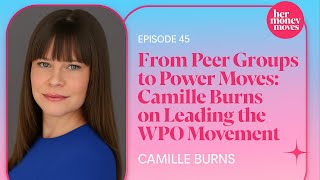
Camille Burns, CEO of the Women Presidents Organization, discusses a community of 2,000+ women CEOs across 147 chapters. Only 3% of women-owned businesses hit $1 million in revenue. WPO members scale through peer advisory groups, mentorship, and a culture where women help each other rather than compete.
Chapters
You want to have a $5 million company? Hang out with women who are running companies of the size you want. Spend time with them, network with them, ask people to mentor you. You know, what I find is women want to help other women, and you just sometimes have to ask. And so I always encourage young women, it's so easy now to rely on— try to rely on LinkedIn, try to rely on, you know, sitting behind a computer trying to get your work done. But you have to get out there. You have to do this. You have to network. You have to have those face-to-face conversations because that's how you really build those kind of deep relationships that can help you now. They may help you 20 years from now, you don't know. But those, those real relationships, I think, are so key to, to building a successful career. I really believe that.
Hello, money movers! Welcome to another episode of Her Money Moves, and today we're recording live from Colorado Springs. It's my first time here, and oh my goodness, The energy of these mountains and this beautiful landscape is just unbelievable. I feel like I can breathe better. It's amazing. We are at the 27th Annual WPO Entrepreneurial Excellence Forum. WPO stands for the Women Presidents Organization, and I'm so excited to welcome our next guest. She is the CEO of WPO, Camille Burns.
Thank you so much, Stacy. I'm so happy to be here.
Thank you. I mean, this is really special. I joined WPO last year. I'm in the Houston chapter. And, uh, for anyone who doesn't know, you have to have the requirements, at least $1 million in annual revenue, be a women-owned business, and be the CEO of that business.
Mm-hmm.
And you know, for me as an entrepreneur, it has brought So much richness and so much, you know, just having this network of women entrepreneurs who some have had their businesses from 2 years to 40 years, you know, they've seen it all and everyone is so helpful and really amazing. I just, I think it's one of the best decisions that I ever made in joining this organization. So being here with you, so It's, it's incredible.
Oh, well, I love hearing that. Music to my ears. Yeah.
So, I mean, you've been on this journey for 24 years now. Yeah.
Really? Yeah. Yeah. And it's been, it's been a great journey. You know, when I started with the organization, it was really small, just about 200 members in the US, and it's been fun to be part of something that's really taken off and grown as women have grown and women have gotten more and more into business, starting companies, growing, scaling, all of that. It's been, it's been a really fun ride.
So tell us about the purpose of WPO and, you know, why should somebody join?
Sure. So WPO at its core is a community of women who run successful businesses. So women who have, as you said, at least $1 million in annual revenue. And our core business is providing peer advisory groups. So it's like having a board of advisors, other women you get together with every month and you talk about your business, you work on business issues, but you're also a woman. So there's always those other aspects of your life that come in when you're a business owner, you're running a successful company, you know, but you still may have children, parents, all of the other aspects of the whole person that you are.
So plenty of mompreneurs.
Yeah, exactly. Exactly. So WPO really focuses on helping to support women. Ultimately, we want to see you grow. We want to see you thrive. We want to see you scale and hopefully exit and have a very successful exit at some point.
And where the chapters— how many chapters do you have? How many members now?
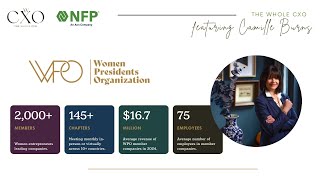
So we have about 2,000, over 2,000 members now. We have 147 chapters, um, and we are in 8 different countries.
Wow, that's amazing! And you've helped it grow from 200 to 2,000?
Yeah, yeah, yeah. And groups, as you know from your WPO chapter, they're small, so So it's like 15 women, you get together, there's never a competitor, and you feel really comfortable talking about whatever's going on in your business, in your life. It's, you know, we really try to have our work with our chapter chairs who are the leaders of our chapters to create a safe space so that you can talk about whatever's going on in your business and get that kind of support and input and, um, just guidance from the group and, and feel comfortable talking about everything.
Yeah. So I'm in the Houston chair. Becky Robbins. Yeah, our chapter chair, and she's amazing. And everyone in our chapter, you know, it's like we've created these really special bonds. And there's not— it's such a unique group because, yes, a lot of us are mothers, we are running successful businesses, so, you know, we have employees and, you know, who are depending on us, so their families are also depending on us. We are you know, pillars in the community. There's so many dynamics that oftentimes other people can't really be in your shoes and understand what you're going through, but that group does. And oh my gosh, and they've seen it all, they've been through it all, and they have such great feedback. And it's just, it's amazing.
I love hearing that.
Yes, yes. And tell us about this conference.
Sure. So we've got over 700 women coming here to Colorado Springs. It's all pretty much WPO members from all over the world, and it's a 2.5-day event. We've got great speakers. We have Jim Collins coming. We have Rana El-Khaloubi, April Brynn. So some really great content. And also it's just, you know, the content is a piece. There's learning. We really want our members to leave and feel like they've got tools to bring back, but also to sort of feel reenergized and ready to get back to work and you know, move forward. But it's really also about the women. You know, this event is about the women who are here, the connections that are made, the, the relationships that are built. And just, you'll see when you come to the conference tomorrow, there's just an incredible energy. And, um, one thing that I think is really special about this organization is that there's a very supportive feel. You know, there's not this competitive feeling of people in business trying to, you know, do better than the woman sitting next to them. It's really the supportive feeling of how can we help you, how can we support each other. And so, um, I think you'll really feel that over the next few days.
Yes. You know, and another thing that makes it so interesting is everybody is so many different industries.
Yeah.
I mean, we have it all here. We could create our own planet in our own, like, country because there's so much talent and so many different Businesses that are running, I mean, anything you could think of, right? I mean, from the Buzz Balls, you know, alcoholic beverages and other, you know, wine, Tenrell Cellars with the wine. And I'm one of the investors there too.
Oh, great.
Okay. Yeah, I love Jill. Um, to, I mean, major healthcare and AI and tech companies. I mean, you name it, it is here, right?
Yeah. And we're, you know, it's always been a diversity of industries in the WPO. But I think one thing that's interesting is seeing the shift over the years of, you know, we're seeing a lot more women in healthcare in the recent years, more women in fertility and menopause businesses and all of these types of businesses that almost didn't even really exist or there weren't very many women in the space just even a few years ago. So there's always sort of that shifting demographic. But yeah, I mean, we have members who have tractor companies and everything when you go to the WPO. So yeah, yeah, anything you can think of, they're probably here.
It's so cool. So Camille Burns, I'm sure a lot has happened in your over, you know, 20-year career with this organization, but let's go back in time. Um, how did your commitment in fostering a supportive community for women, bu— women business leaders begin?
I was kind of a feminist on the playground, you know, it's just since I was a little girl, it was, um, anytime I felt like there was some kind of inequality between even boys and girls when I was little, it like really got to my core. And, and I took a lot of women's studies courses in college and wanted to work for a women's organization. And I thought at the time I wanted to work to help support women, um, potentially women, help women get out of abusive relationships. Or I had all of these other ideas at the time, and then this job presented itself and I thought, wow, what's cooler than like women in leadership positions? That's how we're really going to make change. That's how we're going to make things different for women. So I interviewed for a job and I got it, and it was a tiny organization. And then because we've grown so much, I've been able to wear so many different hats and I grew this incredible passion for small and medium-sized businesses, seeing what, you know, small businesses provide to the economy, thinking, you know, going through the pandemic with watching women support each other so much in their businesses and also knowing that all of these women were keeping people employed through really challenging times. I mean, it's just something that became a real passion of mine that certainly wasn't when I was younger, but it's, it's been an incredible journey and it's been, it's really wonderful to watch. Women who have businesses grow and become part of WPO and, um, build confidence, you know, build those leadership skills, learn to scale, learn to grow their companies, and, you know, just, just feel different. Because as you said, you, you can feel very lonely when you're an entrepreneur, and your girlfriends don't get it, your family does— partner doesn't get it, your family doesn't get it. And, you know, you've got this drive to be an entrepreneur, right? I, I really believe it's a calling, um, and passion, but it's also, it's hard, it's scary, you know, it's not an easy path. People who choose to be a business owner are not taking the, the easy path. And so I think creating a space where you have other people who get it has just been something that's been really moving for me and something that's been a real driver for me in my, in my life. And it's you know, gets me up in the morning.
Love it. So you are living out your dream.
Yeah, it's not the dream I thought was my dream when I was younger, but yeah, yeah, no, it's amazing. It's incredible.
As a woman in this space, yeah, you know, it's common to encounter, you know, major obstacles or setbacks. I know I definitely have during our journey to the top. Um, were you ever faced with an experience that ultimately helped you grow professionally and, and personally?
I think I've had many experiences. Um, I mean, when I was growing up I was dyslexic, so I had a really hard time learning to read and write. And I think that helped me through my life in that I learned, I gained a lot of other skills. And then as I've gotten older, it, I really know what I'm good at and I really know what I'm not good at. You know, it's, it's really helped me ask for help and get support when I need it. But I think the biggest challenge I'll say is I, I've been with this organization so long, but I became CEO in January 2020, and I was not— you know, I had a lot of big plans, and like all of us, yeah, no one was predicting what was going to happen a couple months later. So I step into this new role, and all of a sudden, you know, the world flips upside down. So that was It was an intense time, you know, it was a, it was a challenging time, but it was also a really moving time because so many businesses that were just trying to keep everyone alive, just trying to keep people in business. And so it was a really exciting time as well. But yeah, it was not, it was not easy, but it wasn't easy for anyone, right? So I'm not unique there.
As we know, and maybe our audience, you know, isn't aware of this, But I think as women become entrepreneurs, we know that like access to capital to grow and scale is really a huge barrier. And I think they said on average, women-owned businesses kind of max out at $400,000 in annual revenue.
Mm-hmm.
So I mean, how are, how are these women getting to that million-dollar mark? And what are some of the data that you can show?
About 3% of women-owned businesses generate a million or more, and women own about 40— over 40% of the businesses in this country. So you can see that it's— there's a real barrier there for women, and a big reason is access to capital. I think there's also—
I find it kind of interesting because oftentimes we're very social we often have more friends than, than the guys do. So why are they already so well connected and have this network, and us, you know, that it's kind of a difficult thing for women?
I think some of it is from where they're coming, right? And I think that depending on where you go to school and how you develop those kind of relationships make a big impact. Um, and I think there's not there's more of them that are in the business space, right? So even though you may have a big network, you may not have a big network— I mean, you do now, but 20 years ago you may not have had a big network of entrepreneurs, of women, you know, and, and even just advisors, women lawyers, women bankers, all the people that you need to rely on when you're starting a business and that you need to learn from and that you need to count on and reach out to, because no one can do this alone.
No, I, one thing that I have learned and I tell people, make sure that you have a good relationship with your banker.
Mm-hmm.
I mean, I, um, for years would just go to, go to the bank, to the ATM. Like I had no idea until I became an entrepreneur and now seeing so many, so many, um, helpful ways that they can help support you. Mm-hmm.
Yeah. The banker is key. And I think, again, we really saw that in the pandemic where when you needed money, if you didn't have that relationship, it was almost impossible. So in 2019, the American Express report came out. It was 4% of women-owned businesses generated over a million. And now that number is, is 3%. The good news is there are more women-owned businesses than there were, but that number has gotten smaller.
So, and why is that?
You know, I think there's probably a variety of reasons. Um, I do think that with women, there are a lot of women who aren't trying to grow and scale. So I think, and there's nothing wrong with that, there's nothing wrong with having a business that's small, that you're making money, you're feeling good, and you're not looking to bring on employees and you're not looking to grow. So I do think that there's a percentage of women-owned businesses where that's not their end goal. But I think there's a lot of challenges, and I think particularly for women of color, the challenges are 10 times greater. And it's just, it's extremely challenging if You can't get access to capital, you can't get loans, you know, banks are turning you away. It's tough. It's tough.
We know that very few women ever break that million-dollar threshold in revenue. And even though we are creating these businesses at a fast rate, um, so here at the conference, I know you— there's a special awards for the 50 fastest growing companies. Um, can you tell us more about like, some of these similarities in these businesses that you see of how they're able to have the success that they have, that they've been able to achieve?
Yeah, sure. So we've been doing this for 17 years and it's the 50 Fastest Growing Women-Owned Led Companies Award. And so every year we partner with JPMorgan Chase and we honor 50 women who've grown incredibly quickly over the last 5 years. And so we're looking at a percentage in real growth formula. So some of these businesses were $575,000 and now they're $20 million, or they're $250 million and now they're $400 million. You know, it can vary. But there are definitely traits, I think, that you see with some of these, these entrepreneurs. I think one is incredible determination and tenacity. You know, just this— they're going to push forward and not, not letting obstacles get in their way. One thing I think I see a lot with these women is that everyone has horrible days, everyone has doors slammed in their face, everyone has deals pulled away, everyone has terrible things that happen in their day, personal, professional. But what I find with a lot of these fast growth women is, you know, they're not dragged down by that and they really have this ability to kind of reset and move forward, which I think is, is really incredible. Some of the things I see in terms of the decisions they've made, One theme I've seen over and over, year over year, when you ask them, what would you have done differently? Or what was the big decision that you made that really helped skyrocket your business? It almost always has to do with bringing in real leadership and bringing in real expertise and feeling like you couldn't afford it. But the minute you make that investment, the business takes off. And I see that over and over again. So I always say when people ask, just, you know, if you can bite the bullet and bring on that person who can really take your business to the next level, because you're not going to know everything and you shouldn't.
Yes. Do you find that a lot of the women are doing business with each other within WPO?
Yeah, I— the last statistic was from a year or so ago, but it was about 71% of WPO members did business with each other. And it's kind of a byproduct of this, um, you know, women want to support women. I think that women trust women. I really believe that for women the relationship is really important. You know, you want to feel— you want to trust your vendors, you want to have a relationship with them. It's not just a transaction. And so WPO members do a lot of business together because there is that, that safety, that trust, that, you know, belief that you can depend on this person and that they'll, they'll deliver.
They're going to deliver. Yes. And, um, how about some of the different membership tiers?
Sure. So the local chapter, the regular chapter membership is you have to have the minimum of $1 million if you're service-based or $2 million if you're a product-based business. Those members, the average revenue is about $14 million. So it really spans, um, that revenue range. And then we have Platinum Groups, which are for women that have to have at least $10 million in annual revenue. And it's a little bit of a different format. They get together 3 times a year. Uh, the average revenue of our Platinum members is about $44 million. So they're a little bit bigger businesses, they've got different operations, and the conversation's just a little different and they need different support. And then we have Zenith members as well, Zenith chapters, which the minimum revenue is about $50 million, but the average revenue in Zenith is around $300 million. So we have women with billion-dollar companies in our Zenith chapters. And, um, you know, and again, where they are, what they're going through is very different than when you have a $5 million company. And so as you grow and scale, you need different relationships, you need different expertise, you need different experience to make sure you can continue to grow your business and hopefully move toward that exit if that's your ultimate goal.
Yes. And so what is the top?
Zenith.
Well, I know Zenith, but I mean, who's, uh, what is, what number is it? Do you have any billion dollar?
Oh yeah, yeah. We've got members with billion dollar companies. Um, Janice Bryan Howroyd, who's been in our community a long time. She was on our board for a very long time. I wanna say she's at $3 or $4 billion at this point, but we've got a number of Zenith members with, with billion-dollar companies. And, um, you know, it's amazing to see a lot of these women, you know, started their business with one truck driving it themselves. And every WPO member has a story and a journey. And, um, it's really incredible to, to see that trajectory.
So yes, there are some fascinating stories of these women and learning where they came from and what they have been able to build is just exceptional. It's mind-blowing. Um, I've heard Merrilee Kick from Buzzballs speak, and to know, you know, what she went through coming from very humble beginnings, um, very low income, and then being a teacher, going back to school, and, you know, this was her thesis was Buzz Balls. And to see how much it's grown in like only 13 years, I believe that's one of the ones that's valued at $1 billion, isn't it?
She just had an incredible exit. You may not know that. It's very recent and I saw it on LinkedIn, so I can say it. But yeah, she just, she just sold Buzz Balls to a larger— it's an alcohol business. It's, um, and she sold it for a, a very nice sum of money. So it is, it's— she's a really inspiring— I mean, there was a point, I think, where she was living in her car. So she's just got an incredible story, and, and here she is selling this company 13 years later for a, a huge amount of money.
I love hearing that.
Love.
And, and for our money movers to know that you can do it too.
Another story that sticks with me is there's another Zenith member, um, and She has a scrap metal business, a recycling business. But she started— she had two— she was a single mom, two boys, was trying to make ends meet and was going around to construction sites and picking up scrap metal with her sons in a truck and bringing it to recycling centers and just trying to make some money. And now she has, you know, a company that's hundreds of millions in revenue, metal recycling company. So, you know, there's just these stories where it's And it is, it's that drive and tenacity that I just think is so incredible.
Which company is this?
It's Marsha Serlin. I'd have to— oh my gosh, I'm blanking. I think United Scrap Metal, I think, is the name of the company. But yeah, it's just, it's just an incredible story thinking about her driving, driving around in that truck, you know, recycling metal and, and where she is today.
Unbelievable. So looking back on your career, what advice would you give to your younger self? Yourself or to other women who are just starting their entrepreneurial journey?
I think that what I would tell my younger self is, um, be confident in yourself and you're good at things. You know, you bring a lot to the table and appreciate that about yourself. I think a lot of young women struggle, and I think women, you know, I— what I always find so interesting is I know women who run build businesses that are hundreds of millions that feel like complete imposters. And I think that everybody feels imposter syndrome to some extent, but I do think that women can struggle with that a little bit more. And so I think it's believing in yourself, building that confidence. I wish I had done that a little bit younger. I wish I had felt better about myself and really understood what I was good at, uh, when I was younger, because I think, um, I think I would've been happier. You know, I, I, I would give myself that advice. And I think the other thing I always tell young women is, is network and be around people you wanna be.
Mm-hmm.
So if you've got a $200,000 company but you wanna have a $5 million company, hang out with women who are running companies of the size you want. Spend time with them, network with them, ask people to mentor you. You know, what I, I find is women wanna help other women and you just sometimes have to ask. And so I, I always encourage young women, it's so easy now to rely on, try to rely on LinkedIn, try to rely on, you know, sitting behind a computer trying to get your work done. But you have to get out there, you have to do this, you have to network, you have to have those face-to-face conversations. Mm-hmm. Because that's how you really build those kind of deep relationships that can help you now. They may help you 20 years from now, you don't know, but those those real relationships, I think, are so key to, to building a successful career. I really believe that.
Yes, it's all about who you know. Did you have any mentors that helped you along the way?
Oh my God, I have so many. I mean, I've been doing this since I was 22, so I've been, you know, I've known so many women in the WPO that have just helped me in so many ways over the years and quite frankly believed in me long before I believed in myself. So having women that knew I could do it when I didn't think I could do it made a huge difference in my life cuz they really pushed me and they sort of pushed me into roles and positions that I might not have been totally comfortable with at the moment, but it's really been so helpful to me. And, and I also think sometimes, and I don't know, Stacy, if you've seen this in your life, it's like you need different types of mentors throughout your life. You need different types of mentors as you get older and as you move in different career paths. And so it's always important to continue to build those relationships because you need to meet different people. You need to, you need to get that kind of depth of experience that I guess a broader network brings you.
Yes, absolutely. So what drives you today in your role as CEO, but also as a woman?
What drives me is seeing other women succeed. What drives me is, is wanting women to be economically independent. I want women to be able to take care of themselves. I don't ever want women to be in positions where they can't get out of situations. They can't take care of themselves. I am just such a big proponent of women's economic development. We have to take care of ourselves. One thing I see with entrepreneurs is is with women in particular is often they put so much back into their businesses. They want it to grow. Women are, I think, are naturally caregivers. They want to take care of other people. They care so much about their employees and they're not, they're not taking the capital out of their business for themselves. And one thing that I really want to see more women doing that are entrepreneurs is, is making sure that they're going to be in a place 10, 20, 30 years from now where they're very economically secure, they have the generational wealth that they may want, and that they haven't just totally invested everything back into the business. Because it's really important that, that we can take care of ourselves and that we can be economically independent and that we can build the careers that we want to build. So that's my dream is I don't want— I don't want there to be these disparities. I want to get to a place— I want to live in a world where men and women are making the same amount of money, they're having the same amount of success, and they're able to achieve whatever they want to achieve, and that playing field is even. That's my, that's my big dream. Yes.
All right. Well, I didn't even have to ask what you're dreaming bigger about. Amazing. Um, and that's what this podcast is about. It's an engine for equity so that we can share and help women to thrive and to grow and to learn from trailblazers and women who have been there, who can provide amazing tips like, you know, like you're giving, and you're passionate about that, having that, um, building generational wealth and closing the gap in gender equity. Um, personally, I was physically abused at 18, 19 years old, having to go to courts and get a protective order. So I know how important— and that's why I'm still single to this day, probably— is that it is so important for women to be financially independent. I mean, it just, it changes everything. Then yes, you can get out of a very bad situation that can be, you know, very— you know, you could die if you You stay, you never know what could happen because it's not gonna get any better.
Mm-hmm. Well, in my mom, my mother and father were married for 52 years. Um, but so my mom had a very happy marriage, but I am telling you, since I was like 3 years old, she was like, you make your own money. You know, you always, you never wanna be in a situation where you're stuck. And I, I just am a really big believer in that. And I, I also believe, you know, that I think women really truly wanna help other women. And I know there's— I think there's a lot of bad stereotypes about women. I think that there's a lot of myths out there that aren't what I see. What I see is women who want to help other women, who want to take care of other women, who want to help bring other women up. And I just hope that that continues and that more women want to help other women along their journeys, because that's how we're going to get to that place of parity, I think. Yes.
Yes. So, you know, this podcast is all about, um, financial awareness and wellness. And so, um, what have you learned along the way, especially around all of these really powerful women who've had these thriving, successful businesses that you could share with our Money Moving audience on, you know, that could really impact their financial futures?
Well, I think first of all, I just wanna acknowledge you for doing this. Um, because I think this is such an important conversation and I couldn't agree with you more that women need to talk about this and women need to learn about money. And I, I, I find that women don't always have that same financial education. They're not taught it from when they're really young. And even sometimes there's women who are running really successful businesses that don't know a lot about the financial piece. You know, they had an idea, they're creative, they, started this business, it's taken off, and they're not super savvy about their numbers. They don't know how to read all the financials. And so for me, it's just getting that education. It's, it's understanding your books, understanding your finances, understanding your personal finances, and making sure that you understand money so that you can think about money differently. Because when you understand money, when you can read your financials, when you've got that kind of confidence in money, you think about money differently, you talk about money differently. And Look, I've worked for a nonprofit my entire career. I'm not someone who's wildly driven by money. That's not my passion. And it may sound like that while I'm on this call, but money's so important and it's— business is about money. We've gotta make money. You know, your business has to be su— make money so that you can pay your employees, that you can support your team, that they can go back and take care of their families. So at the end of the day, it's just such an important aspect of life. And I think that all of us women need to make sure that we are thinking about it, we're focusing on it, we're considering it, even if we think it's boring, because you don't wanna end up in a situation even where your business partner is gone and you don't know enough about the finances of your business, or your spouse has passed away and you haven't been paying attention to the finances. I, it's just listening to people like you is so important because we've gotta keep this front of mind and we have to, We have to pay attention. Yes.
Well, thank you so much, Camille Burns. Um, before we close out though, you know, since we are here at the, um, 27th Annual WPO Entrepreneurial Excellence Forum in Colorado Springs, hot off the press, can you reveal to us where is the 2025 annual conference going to be?
Yes, it will be in San Antonio, Texas. Oh, your state. Uh, we've got tons of WPO members in Texas, so we're so excited to be there next May 2025. Yay!
So excited. Well, we'll, we'll definitely be there, and, you know, hopefully can also bring on more members, um, into the organization so that they can see the incredible benefits and, and, you know, grow within this amazing network and organization. Thank you for all that you do. For women. It is so extremely important. And, um, thank you.
Well, thank you, Stacy, for everything you do, because it's also extremely important. And I, I look forward to, uh, continuing to work together and, and working together to help women, women rise. Yes, I love it.
More from Camille
Camille Burns Unlocked: Scaling Secrets from 25 Years Leading Women Entrepreneurs
Camille Burns Unlocked: Scaling Secrets from 25 Years Leading Women Entrepreneurs
Camille Burns on Peer Networks and Scaling Women-Led Businesses | JPMorganChase
S5 E4: The Power of Womanhood with Camille Burns, CEO of Women Presidents Organization
Entrepreneurs as Equalizers (Feat. Camille Burns) | Dauntless LeadHERship Podcast #05
Empowering Women Entrepreneurs: Insights from Camille Burns and Linda Hamilton