S5 E4: The Power of Womanhood with Camille Burns, CEO of Women Presidents Organization

In this episode of The View in Your Mirror, hosts Katie Harms and Lisa Rubin introduce themselves, share their entrepreneurial origins, and interview Camille Burns, CEO of the Women Presidents Organization (WPO). Lisa recounts how a chance connection led her to a wardrobe‑consulting career at Dayton Hudson’s FYI program, eventually launching her own business. Katie describes her path from teenage retail work to founding a home‑organization company. The conversation then shifts to Camille, who explains the founding of WPO by Marcia Firestone to create a safe, peer‑based community for women who have scaled their businesses beyond the startup stage. Camille details the organization’s growth from ~200 members in 15 U.S. chapters (circa 2000) to ~2,000 members worldwide, outlines the tiered membership model (local chapters ≥ $1M revenue, Platinum ≥ $10M, Zenith ≥ $50M), and emphasizes the adult‑learning, round‑table format that encourages experience‑sharing rather than top‑down instruction. She discusses the persistent challenges women entrepreneurs face—access to capital, reaching the million‑dollar revenue threshold, imposter syndrome, and the added burdens for women of color—while highlighting collaborative attitudes, multigenerational mentorship, and partnerships with groups like Women Elevating Women. Camille shares her personal “superpower” of relationship building, her daily routine (morning meditation, structured breaks, extensive Zoom calls), and her team composition (11 staff, a Chief Programming & Innovation Officer, and ~100 chapter chairs). The hosts also touch on personal habits (organizing spaces, dog breed analogy) and promote a nonprofit focus on UNICEF’s relief work in Turkey and Syria. The episode ends with contact information for the hosts and a call to action for listeners to join WPO if they run a million‑dollar‑plus business.
Chapters
It's time for The View in Your Mirror podcast. I'm Katie Harms, and along with Lisa Rubin, we help you check in and curate the best possible you and the best view in your mirror. We share tips, tricks, and strategies from our 35+ years in our respective industries. We talk about your day from morning to night and everything in between. We share our uniqueness, relish in our shared experiences. Along the way, we share conversation with fabulous people who give us their own thought-provoking insights. So come along as we help you hone the best view in your mirror. Oh, hello, Lisa Rubin.
Hello, Katie Harms.
Hey, you know what? That was fantastic, mirroring the person you're talking to.
I'm trying, Katie. I'm trying.
You are doing, you are doing, Lisa. We have a fantastic guest today, which when we were talking about what should we talk about as we before in our preamble brought up that I don't think we've really talked about how we got started. We have Camille Burns. She is the CEO of the WPO, which is Women's Presidents Organization. We have sorts of questions for her. And before we do that, I want to know— I want to go back, Lisa. You're coming out of college, you're deciding what to do. How did Lisa Rubin Wardrobe Consulting come to be?
I will try to give it a very short answer. Actually, I graduated from college and I had a sociology degree and a speech communications degree, a double major. And I thought, what am I going to do? So of course I went the marketing route, but I had an uncle who was dating this woman and we were out for dinner one night and he says, I have a job for you. This is perfect for you. I said, what's the job? I was a little sassy at the time. And he told me about—
At the time? Sorry, keep going.
He told me about this new business that Dayton Hudson was putting in called FYI, For Your Image. And he said, you would be so perfect for this. I go, what's For Your Image? And so he proceeded to tell me that they are trying to build a business to help working women with their clothing and their wardrobes, and maybe I should talk to the person that started it. I was like, oh my God, oh my God. So I ended up getting the number for Jacqueline Murray, who is the founder of FYI.
How did you get the number, Lisa?
Because my uncle was dating this woman.
Oh God.
And she worked with Jacqueline, and so he got it for me. And Jacqueline never did anything, never followed any rules. So she asked me to come to her condo and interview in the lobby of her condo, not at Dayton Hudson. So of course I did. I had my little suit on and I had my little bow tie shirt and, you know, back in the day. And we sat down and I told her that if she doesn't hire me, she's making the biggest mistake. I was very confident about it.
Where did that confidence come from?
I had— I don't know, but this was something that I guess I felt like I was naturally born to do, but I didn't know why or how or what. What that meant. But it just came from my gut, like fiery gut. So she called the human resource department at Dayton Hudson and said, I want to hire Lisa Plittman, which was my maiden name at the time, and I want to hire her. So I'm going to send her down to fill out the paperwork.
And they're like, no, no, no, no, no, you can't do that.
We have to interview her, blah, blah, blah. So I go down there, I interview with them, and then I never heard from them for 3 weeks.
Oh my.
So I called Jacqueline back and I said, by the way, I don't know what happened, but I never heard from anybody. And, um, you told me I had the job. And she goes, well, you do. I said, but I didn't hear from anybody. So she must have called the human resource department, asked him what was wrong. I had a woman call me right away and say, we're really sorry, you can't have the job because you look too young for the job. Stop it now. Now, that alone today could never happen.
That, right.
Well, I didn't stop there, and I called Jacqueline back and I said, I just want you to know what they told me. And she said, absolutely, forget it, don't listen to them, you're hired. She said, come on Monday, just come. So I did, and I came, and there was this small room with a desk. And there was me and this other woman who was probably 30 years older than me. And she said, just start working. I said, but I need to fill out paperwork. And she goes, I'll take care of it. I thought, okay. Making a long story short, it took about 2 weeks to get my paperwork and everything ready to go. They were really pissed off at her. But I just started working, and there was this box under the desk that was in my way. And so I kept kicking it, and I pulled this box out, and I looked at this woman— her name was Gloria— and I said, what is this box? She goes, oh, those are women that came in that filled out files. In those days, they filled up, you know, filled out this handwritten file of all these questions. And you know what? We couldn't help them. They just never came back. And it was this woman who had been working there that lasted about 6 months that wasn't there anymore. Her name was on all these files. So I just picked up the files. I started calling all these women and I said, you know, she didn't work out real well here. Can you just give me an opportunity to help you? And I will tell you that 10 of those women today are still my clients. 39 years later.
Bravo!
That—
so that's the shortened version of how I got started.
That is fabulous.
And, you know, I decided as a very young woman that I wanted to concentrate on executive presence, not personal shopping, and I made that very clear to Jacqueline. And so I— she became my mentor. Because all the other women that they were hiring, they just— the bottom line was the money, and they didn't understand executive presence. So I would sit with her every morning. We'd have breakfast together before the store opened. In those days, you could smoke and do all those things. Jacqueline was having a cigarette and we were having breakfast, and I just listened to her and took notes and notes and notes. And, um, I was with Jacqueline and FYI for 22 years.
My goodness. So when you went out on your own, was that when FYI was sunsetting basically?
No, no, they still had it, but Dayton sold to Marshall Fields, right? I stuck with them for a long period of time there, and then Marshall Fields sold to Macy's and I saw the writing on the wall. I, I could not help my clients anymore, and I thought, I got to get out of here. And that's when I left. I left right during the transition.
And then how did you forge the relationship? Because really, then you forged a pretty fabulous relationship at Bloomingdale's.
Well, at the Mall of America, because I did a lot of public speaking with Jacqueline, and we used to do seminars a lot. The store manager of Dayton Hudson went to open up Bloomingdale's and he really liked me. He knew me very well because I would do trainings for all the sales staff at Dayton's. I mean, I'm trying to shorten the story up. And so when he opened up Bloomingdale's, I went to him and I said, I'm going out on my own. Give me a salesperson. I'll give you my business, blah, blah, blah. And then I used to do trainings at the Bloomingdale's at the Mall of America too and help the sales staff understand executive presence. I wasn't really teaching them how to sell. I was teaching them how to wardrobe. And I did, you know, I used them as a resource, but going off on my own was the best thing I ever did.
That's fantastic.
But I couldn't do what I'm doing on my own if I didn't have that base and I didn't have Jacqueline Marie in my life. So that's my story. How about your story, Katie?
You know, we have a lot of similar threads. Um, my first job in the whole wide world was at Dayton's, by the way. Uh, and then I worked in—
didn't know that—
mm-hmm, at the Bubbling Kettle restaurant in Rosedale. I was a waitress, and then I really wanted to get into sales in women's, so the first job that was open was lingerie. So I worked in the lingerie department as a 16-year-old at Dayton's Rosedale. And from there, one of the things that I was trained to do way back then was to fit bras for women who had had mastectomies. And that was pretty, um, interesting for a 16-year-old to be in that realm. And, uh, saw the world really differently from that point on. From there, I went to college, had a few unmoored years of trying to figure out what I was doing with my life. But I had always, from the time I was a little kid, I would draw house plans and show them to my dad. And he'd say, oh wow, that's good. You put the plumbing close together, so you're being efficient. And, and he was a ceramic tile setter. My best friend's dad was a builder. And as a little kid, I would organize my room, move the furniture around. So I had always spatial things, you know, the house was 960 square feet. So we're not talking a lot to work with. My mom wouldn't let me at the, at the living room. So I was contained to the bedroom and the downstairs family area. And, uh, so worked in the retailing realm, wholesaling. Wholesaling took me to Texas and I walked into The Container Store, the very first one, and I was hooked. I'm like, this is the coolest thing in the whole wide world, these products and getting organized. And when we moved back to Minnesota, and I worked for a company that did similar organizational products and things like that. And I was, I was the company supervisor. They had 3 stores, and the economy turned, and the woman who owned the company chose to go a different direction. And so I was visibly pregnant trying to get a job at around the holidays. It was October, and I was due in November. And nobody's going to hire a pregnant girl. You know, this is back then. Nobody's going to hire a pregnant woman going into the holidays because you're not going to be there and they need bodies. So it became very difficult. And I decided, well, you know what? Builders need to know about closet organization. It's an untapped resource. And so I bit the bullet and opened the business. By the way, you were talking about you almost didn't get hired because you were too young. When I was living in Texas, when we were living in Texas, and that's when I was pregnant with my first child, I had to give up my job because I couldn't travel. That wouldn't happen now either.
Exactly.
So I started my job. I remember going to my first Builders Association meeting over in St. Paul at Hafner's in the basement, and there was an old man who was a builder. He was well respected, and he looked at me and he said, closets. You're going to have to do something else besides closets if you want to make a living, maybe sell carpet or something. And so I just, I picked away at it. And I actually, I remember talking to one builder and he said to me, I feel like you're interviewing me to see if you want to work with me. And I said, you know what, I am. I said, I'm a small business, I cannot afford to not be paid on one job. I have Small children, my husband's in medical school. So yep, I'm interviewing. I'm making sure that we're the right fit for each other. And to me, it wasn't about as much about selling a product as it was making sure the space was done right so people could grow into their homes. Back then, I think people lived in their homes longer. There was a little different thought process on it. It was a pole and a rod that was put in a closet. And I thought, you know what, we can do better. But it was really starting getting those builders to realize that, yep, they want their client to talk about one more thing when they're already overcome with decisions to be made on building a house or on a remodel. So had my small business, which started in '88, went into a very ill-advised partnership that lasted a little over a year, and then I took my part of the business and brought it into Sherbrothers Lumber Company, which was incredible and was able to build it through there because the model was I would go to the lumber salespeople and talk to them about their clients. They had had their same clients for years and years and years and years. And so then it was building the trust that we could provide for their clients, the builders, and thus their homeowners, something that would add value to their home. And that's how it grew. And Sherbrothers is still doing a really fabulous job. I still interact with them and sell product once in a while. And it's become for me a little bit more of a conversation where I get involved with the client on the front end of a project where I'm looking at plan review, you know, 40 years of being in homes and having this intuitive sense of design has really helped me focus to be able to say, let's do this right from plan up. I think there's phenomenal, there's phenomenal creativity with architects and designers and draftspeople, but sometimes they lose sight of the day-to-day function of the space. And even in focusing on, well, downsizing is another one. You're going to downsize, I've worked with a lot of people that have downsized that actually have more space when they downsize because their homes were not designed well for storage. So there's a lot of things to look at, and I still— it still excites me. I was at a dinner last night talking to this couple who had a very different sort of home that they bought years ago, and it didn't have any bedrooms. It was an experimental home, something done through the University of Minnesota. And they said, you know, we had to live in the home for a while and let the home speak to us. And I've always felt that there's energy in anything, right? There's energy in friendships, there's energy in the work environment, there's energy in a home. And I'm gonna end with this, how much I believe in this energy in the spaces that surround you. When we moved my mom out after my dad had passed and I was tasked with getting her moved, which we did, and then getting the rest of the home, the things that were not going to stay with anyone. And the house was completely empty. There was not one thing left in that home, this 960-square-foot home that they had lived in for 50 years. And I walked through that home and it still felt full to me. It felt like there was still stuff in there. And what that stuff was, was the energy of that space. So it was really a testament to me that helping create the spaces that people live in was what I was supposed to be doing. And it excites me every time I get the opportunity to do it.
Well, that's a great story, Katie. And, and what a lot of people don't know is that's how I met you, is we were building a house. Our builder suggested that we contact you to do our closets. And obviously you got the job, then you became a client, then a friend, and now we're doing this podcast. So you just never know what life will bring.
You don't. I, I love the interconnectedness as always that I find hearing your stories and that path that you've been on. I mean, I feel like you have definitely been straight on a path. You found it early and gone on. And continued to do the same thing, which is very neat.
I have done it in different ways though, right?
I mean, you have, you definitely have, you definitely have.
I mean, I've never advertised. I— it's all word of mouth. I was very against social media for my personal business. I use LinkedIn and Instagram only. I've stayed true to what I am. I don't know if that's a good thing or a bad thing.
You've opened yourself up to a podcast, which—
and that was my biggest— that, that's my, my biggest, let's call it, risk of people getting to know who I am. Because as most of my clients will say, is I'm their secret weapon. And I am always, as you say, in the weeds, in the weeds. And I know a lot of information about my clients because I'm that stranger on the train. I'm that person that they confide in. So I'm more than just an executive presence consultant.
Well, you and I, you and I, and I too did public speaking, a lot more public speaking many, many years ago on organization and whatnot to small groups of women. And you probably did it to larger corporations of women. As a CEO of our own company, as the president of our own company, I didn't know about WPO, and I don't know that that would've even been in my lexicon of thought back then. So it's going to be really interesting to talk to Camille Burns because you wonder if organizations like this would have changed any of the trajectory. For me, it might have helped focus. Camille Burns, she is CEO of the Women's President Organization. She champions the WPO's vision to help second-stage women entrepreneurs around the world take the companies to the next level of success. Since joining WPO in 2000, she has worked to steer the organization's significant growth trajectory and expand its global footprint. I think it was a pretty small business that she really got going. It's like a who's who. She's a member of Forbes Business Council New York and International Women's Forum, Golden Seeds, and IWC. She's an advisory council member for Enterprising Women, is on the, is on the board of directors for Go for the Greens. She has been included in Fast Company, Forbes, Medium, and Thrive Global. So she is very accomplished and on top of that has the letters behind her name. She's a BA from NYU and an MBA from Baruch College Zicklin School of Business. So we are excited to dive in and talk to Camille Burns. Camille Burns, thanks for being with us. In our preamble, we gave the salutations and the wonderful intro to who you are. What's your elevator pitch?
That WPO, the organization, our organization, Women Presidents Organization, we're a diverse and dynamic community of global women entrepreneurs, successful entrepreneurs who come together to be re-energized, to work with each other on their businesses and create a community of successful entrepreneurs.
That sounds fun.
It is fun.
Where were you?
I know that it's work.
Where were you 40 years ago? I mean, not, very young, but—
Yeah, I wouldn't have been doing this 40 years ago, but we're only— this is our 26th year.
Fantastic. How did WPO come to be?
Marcia Firestone, who is the founder and original president of the WPO, she had worked in women's economic development and she found that there were organizations at that time that were supporting women starting businesses. So there were a lot of opportunities to get help to write your business plan and, and some of those early stage, um, business support organizations. But that when women started to have some success in their business, they started to have employees and, and get to that multimillion dollar revenue, that it was very much an old boys club. And that if you were gonna join an organization for entrepreneurs of, of that size, you might be the only woman in the room. And so she wanted to create a space for women who were running successful businesses to come together to learn from each other. And she also, knew that there were a lot more women running businesses of that size than people thought. And so part of her mission was just finding these women around, originally in the United States, and bringing them together and helping them find each other. Because as you know, you know, entrepreneurship can be a lonely world and it makes a big difference when you have that community of other women who understand what you're going through.
And when did you come on board?
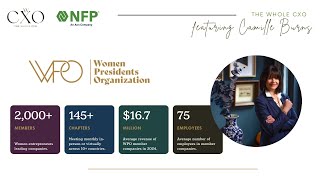
I came on board in 2000, so this is my— I'm entering my 23rd year with the organization. And when I came on board, it was a very small organization. We had about 200 members in, I want to say it was about 15 chapters or so in the United States. And today we're about 2,000 members in a number of various countries around the world. So we've grown a lot. So it's been an exciting journey.
That's incredible. Now, when you came in, I mean, we talked about age in the preamble, and you're— tell us how old you are.
I'm 44.
You're 44.
So you came in 23 years ago. You were right out of college, right? Graduated college.
Yeah.
So what was your job at WPO? Did you come in as a CEO?
No, Marsha was the president at that time, and I came in, you know how it is with a tiny organization. I just did everything. I was sort of her assistant, sort of conference planners, sort of supporting our chapter chairs who run our meetings and just wearing a million hats, which I think is part of why I'm with the same organization today is I kind of had this opportunity as the organization grew to try different things and sort of figure out along the way what I like, what I don't like, what I'm good at, what I'm not good at, and sort of use that as an opportunity to create a path for my career.
So what are you good at?
What am I good at? I love people. I love supporting women. I started out, I mean, I was like a feminist when I was, you know, 5 years old. So for me, just getting up in the morning and knowing that we're helping women succeed and we're helping women impact the global economy is so important to me. But it's really, I'm a relationships person. I'm an ideas person. I love connecting with people and I love hearing what other people have to say. And what their ideas are, and then kind of consolidating that and thinking about what makes sense and what's the right direction for the organization.
Well, I can attest to our very brief conversation before we even got on to record, and one of your questions for us was, what can I do to help you? Which is really lovely.
It was. No one's really ever asked us that, Katie, on— as a guest on the pre— on the preamble.
On the preamble. Yeah. So that was, that was you know, it just shows your sense of, of those connections, making those—
and community, and community, which is, I think, for women, one of the biggest gifts. So when women can accept being part of a community and they can be vulnerable and they can ask questions, um, I think WPO is all about that.
And that, to me, is one of the most important pieces of the work we do. I mean, we focus on business, and it's about women business owners growing and scaling and exiting and all the different things that are part of that entrepreneurial journey, but it's really creating that safe space. And that is one of the most important things for me because I think when you are an entrepreneur, you can't talk to your employees, your husband or wife may not understand what you're going through, your friends don't understand what it's like to have all of these stresses of running a company and supporting all of these people who work for you. And so Having a safe space where you can come and you can ask whatever you need to ask and you can be vulnerable and learn from each other and help support each other is, I think, really key to why this organization works and why we've been so successful. And, you know, one little story that really impacted me last year, our conference was in Montreal and there were about 800 or 700 women in the room. And one of the speakers said, Phyllis Newhouse, she's on our board, incredible woman. You should, you should bring her on this show. And she said, you know, is there a need? Does anyone want to get up to the mic and ask the audience for something? And one of our members got up and sort of emotionally, you know, you could tell she was a little nervous, said into this mic in front of 700 people, I'm struggling with cash flow, I need help. I've got a great business, I've got a great model, but I don't know what I'm going to do if I can't get the cash coming in the door. And the speaker said, who can help her? And all these hands went up around the room. But for me, it was just this power of being comfortable enough in front of 700 women and knowing that we're all part of this community to ask something and be that vulnerable. And it just, it really moved me. It really did.
I got emotional when you were telling that just now.
And the fact that she could take the risk and know that she could go up and ask that question, that says a lot to your organization. Yeah.
And that hands shot up all over the place. And so she said, you know, the speaker said, Phyllis said, after this, go find her, find her in the hallway, you know. And I think I spoke to her about a month later and she said it was one of the most powerful moments of her career, just how many women stepped up and said, you know, here's tools you can use, here's ways you can, you know, pay your bills and just all these different ideas other women had in the room for things they'd done to help manage their cash flow or could help support it with the type of business they were running. So yeah, it was a great WPO moment for me.
Which is really what women want. Is they want the dialogue and then to be able to figure it out. They want that kind of assistance as opposed to somebody telling them, you should do this, or it's a whole— right? It's just a different way to approach things. It really is. And that safe space— I'm just thinking back to, you know, I worked in a predominantly male-dominated building industry, and the companies that I worked with, the it was all predominantly male. And even in the company that I brought my company into, leadership was all male. And that safe space where they were all delightful people to work with, there were times where I was like, what am I doing wrong? What am I not? And I think it was definitely a female perspective that was missing. Not that we couldn't get to the same end result, but So having that, excuse me, safe space of female, female entrepreneurship is really something else.
Really something. And I think you, you touched on something so important that's kind of our model is that it's based on adult learning theory and that adults don't necessarily wanna be told what to do. They wanna learn from others. So, so much of the roundtable model, which we use to run our meetings, is based on experience sharing. And really, this is what I did in that situation and this is what I would have done, you know, what I— what didn't work, what did work, rather than, you know, you need to do this and you need to do that. Because I think human beings as adults, we just kind of, you know, we push back from that a little bit. And so it helps just really to hear other people's experiences and know you're not alone and hear what other people did well or the, you know, the mistakes to try to avoid.
The mistakes, being able to talk comfortably about your mistakes or have the vulnerability even in those smaller groups to say, all right, how did you go about this? How did you go about that?
And be able to say, I failed, and how can you help me? I mean, that is so hard for anyone to say. And I think that so many of my clients are part of your organization, and that's one thing that they do say is that when they get into the safe space for their meetings, it's almost like a family, and that what goes on in the meeting stays in the meeting. It's like what happens in Vegas stays in Vegas.
Yeah, exactly.
And so I think that they can come away from times where they have a different thought process, or they, they don't feel like they failed, you know, because there's probably another woman in the room that that same situation has happened. And now they can hear how they got through it. So I think that's really powerful.
Yeah, I do too. We all fail. I mean, that's just a part of life.
Yeah. And ultimately, what every organization ideally wants is for happy, healthy employees because productivity in whatever manner increases, right? But there's so many ways to get there. It sounds like my guess would be the energy of your gatherings is such that people walk away feeling fulfilled and energized rather than, oh my God, I was at a conference for 3 days and I'm exhausted, right?
Yeah, that's a big part of what I think our conference does is really kind of, it gives women business owners also that opportunity to step away from that day to day, but really to leave with a lot of energy. And we've had members tell us that they come back after a WPO conference and their staff is like, oh God, she's coming back from WPO conference because it's like, I want to do this and I want to do that and I have all these ideas.
That's fantastic. So what— when, when it started, I mean, obviously it's, it's taken a lot of paths. What are the biggest changes you've seen since the very beginnings? Is there a, is there a certain threshold that you need to meet in order to be a part of this organization?
Yes. So to join WPO for the local chapters, it's a minimum revenue of $1 million if a service-based business and $2 million if product-based. And that's really because the conversation is different when you get past that million-dollar mark. And then we've got our Platinum membership, which is women who make at least $10 million in annual revenue, and, and those women, the average revenue is about $42 million or something like that. And then we have Zenith membership, which is women who have to generate at least $50 million, and most of those women are, are in the hundreds of millions in revenue, up to a billion dollars. So we do have these different tiers just because the conversation, the challenges, everything changes along the way, and, and you have to talk about different things based on your size.
Absolutely. So 4% of women-owned businesses make $1 million, only 4% in the world. So you're talking about not necessarily ownership, you're talking about women that are presidents or above of major organizations, right?
They have to have some ownership, so they can— it can be a woman-led company, meaning that they are the CEO or president, but they may not have 51% or more ownership, but they do have to have ownership interest in the business. And some of our members are partners in firms, so they've got that ownership interest, but they may not be the CEO or president. But they do have to, they do have to have some level of ownership in the business.
So go back to that 4%. Does that 4% say any amount of ownership, or is that 4% women who own the company, not a percentage of the company? Does that make sense?
Yeah, that, that 4% is 51% or more in ownership. But what's— so there's been a lot of changes. You asked the question, you know, what has changed over the years and what have I seen that's different? And I've seen a lot of successes. I think one of the things that I've seen that's been most impactful is just what people think about women entrepreneurs, the conversation around, around women entrepreneurs. When I started in this space, I would say what I did for a living and people would kind of look at me blankly like, why? You know, it was almost like this, I don't, I don't understand that. And now I talk about what I do for a living and everyone gets it and everyone understands that there are women running successful businesses. You know, I remember when it's— when presidents started talking about women-owned businesses and the impact on the economy of women entrepreneurs. And so the conversation has changed a lot. We see a lot more visibility of women entrepreneurs than when I started in this space. But to your point, going back to the 4%, when I started 20— almost 23 years ago, that number was 2%. So in 23 years, that number has only changed by 2% of women that get over that million-dollar mark. So it's, it's a huge hurdle. And yes, there are women running lifestyle businesses that, that's not their objective to, to grow that large. But for women, it is so hard to get to that million-dollar level. And then when you get to the million, it's hard to get to the 5 and 10. And there's a number of reasons for that. Some is access to capital. Some is, you know, perception of women-owned businesses. I think some of it is women are starting now to have more belief in themselves and their belief to grow a larger business. They now see role models of women running much larger businesses than perhaps, you know, 20, 30 years ago. But we need to, you know, the needle has only moved a little bit. And that's hard to see when you've been doing this for a long time and to see that there's so many women now running businesses. But just getting to that million-dollar mark is just so hard.
That makes sense. And, and I would think too, as women, we have so many more pulls, right? Are you going to have a family? Are you going— there, that adds into it. And there's only— we all get the same 24 hours in a day, and what you do with them and how you organize yourself and what you want to take on.
And entrepreneurship is actually, you know, a lot of our members became entrepreneurs because of that, because they could control their own schedule. They could stop working at 4 and pick up their kids from school and then go back to work at 8 o'clock at night. It gave them much more freedom and much more flexibility on how they could plan their day and how they could make sure that they were doing everything they wanted to be able to do. Even though running a business is a baby in itself, I mean, it takes a tremendous amount of work and energy. Um, it is something that you, at least when you're the CEO, you have control over your own life. And women are starting businesses at really rapid rates. And in fact, the fastest growing segment of women-owned businesses is Black women. And so Black women are starting businesses at a huge rate right now, which is just incredible to see. But the— some of the issues that we as women face, and then when you're a woman of color, those issues are just magnified. And so there's a lot of work we have to do in helping all women and women of color access capital and have the same kind of growth opportunities as other entrepreneurs.
Do you have a segment of WPO that is specifically helping Black-owned businesses?
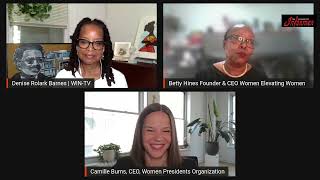
We do work internally and, and help support some of the women of color in our organization, but there's other organizations that we partner with that do that. There's an organization called Women Elevating Women, and they're a kind of sister organization of ours. And the woman who runs that is Betty Hines, and she's been a chapter chair, one of our chapter leaders in WPO for, I think, 18 years. And her focus is actually helping particularly women of color get to that million-dollar mark. So she works with women, and what she does in organizations similar to WPO, but there are certainly some differences. And her objective is to get them to that million-dollar mark so that they can join WPO and then continue to grow from there. So we've got a great relationship with her organization, and there's a lot of other organizations doing really great work. But, you know, we all have to work together to to help women succeed. It's, it's very much a group effort.
And I think that happens more in women-led businesses as well, is you're looking at it as a collaboration. And that is one of the beauties when you have these conversations is how can we collaborate? Because guess what? There's enough for all of us to get there.
Yeah. And I think that attitude's changing too. I mean, that's another change I've seen is I think there's a much more collaborative spirit in entrepreneurship today than there was. You know, 20-plus years ago. I think people are a little less closed off, and maybe that's just some of the millennial generation or younger generations just being a little bit more open. But, um, I, I think there is this sharing and this looking at how can we do things together. And look, when women come together and partner on things and create those strategic alliances, I mean, that's a really incredible way to grow your company.
What was the youngest woman that's ever joined WPO?
We've had a number of women in their 20s join WPO. Early 20s probably would be the youngest. We are in a world right now where we have had a couple people say, oh, this, this, you know, 16-year-old girl should join WPO because, you know, in today's day and age with the internet, there are, there are young women and girls that are running businesses that are over the million-dollar threshold. We haven't had one join yet, but we certainly had some conversations, and some of our groups have taken some of those young women under their wings to, to help support them. But yeah, it's amazing what young women are doing these days. It's really incredible.
Yeah, that's why I asked the question, because there are a lot of young women that are really doing great stuff. We had a guest on our podcast a month ago that is 25, and she's doing incredible things.
So Yeah, and I think there's so much— what I love is the multi-generational learning because there's so much to learn from a 25-year-old just in how they think about business, how they market, how they run their company. But then, you know, you've got the 65-year-old who's been through recessions, who's, you know, been through all of these ups and downs and can really give that perspective. And when you bring all of that together, just the experience and the new ideas, it's just, it's incredible the conversations that people can have because there's so much learning from We all have to learn from each other, right? Especially with how quickly everything is changing in the world. 25-year-old.
We definitely should learn from each other, that's for sure. Whether— and, and I would say yes, hopefully we can learn from each other because that's the biggest— really, we, Lisa and I, talk about this all the time. We're lifelong learners. And if you're, if you're not learning, you're, you're going backwards, right?
And one of our values is insatiable curiosity, for exactly that reason, is that, you know, to be a member, chapter chair, part of this organization, you have to have that lifelong learning attitude. Gotta be that type of person for this organization to make sense, because it's what it's all about.
Excellent. Well, we're going to take a quick break, and then we're going to come back and talk about how you organize your day.
Okay, sounds good.
Tips and tricks to get there. Stay tuned. Are you ready to elevate your jewelry and gift buying experience? Then you need Continental Diamond. Since 1981, Helene and Jimmy Texas have been operating Continental Diamond. Their staff is highly trained, exceptional, and have been with them for many years, and they will help you find the exact right gift. For the past 13 years, Continental Diamond has been named Minnesota Bride's Best Jeweler. Beyond engagement rings, they have a large selection of fashion jewelry, timepieces, and they have one of the most experienced service departments around. You can visit them online at continentaldiamond.com. Go in and give yourself the gift of that experience. It's a special place located just 10 minutes west of downtown Minneapolis, right outside the West End. Plan your visit. Continental Diamond. Continentaldiamond.com. Well, we are back, and once again, the conversation we have when we take our little breaks, I sometimes feel like I should keep the microphones on. But thank you. You just— your kindness and offering to help. I love that you are a connector. What do you think your superpower is?
Relationships. I think my superpower is I love people. I love spending time with people. I love getting to know people. And I think when you get to know people on that deeper level, you create partnerships and you create an ability to work with people and bring them into your world and help support your community. So I think my superpower is just my, my fondness of people and getting to know people and getting to know people on a deep level.
That's a great answer. And don't you also think that when you do that, it makes you a better person?
100%. I also think just for me, knowing what everybody else is going through, I mean, I do kind of go to those deep conversations all the time. My, my colleague I've worked with for 15 years, Kirsten Wynn, she's our Chief Programming and Innovation Officer. And, you know, she always jokes that when we meet someone, she's like, okay, let's get to the business. And with me, you know, it's like, how are your kids?
What's going on with Sam?
What, you know, whatever the conversation is, it's like I always want to, I want to know more, you know, I always want to know the whole person.
And that has to feel really good. And, and I, I can tell you just in the short amount of time that we've had chatting with you, that genuine care comes across. It's a, it's a level of comfort. You're so cute. You're just You really are. You just are. You're lovely.
So I spent years not— I didn't like being called cute. Now that I'm 44, I'm like, oh, thank you.
I know. And you know, when that came out of my mouth, um, Camille, I thought, oh, I'm like, you know, but I mean it in the utmost compliment. And I'm— I really do.
What you— what you really meant, Katie, because I've worked with you for so long, is you're just really special.
Yes. Oh, well, thank you. You both are too.
Thank you, Lisa. So what's your day look like? What, you get up in the morning and—
I get up in the morning. I'm a big believer, if I can fit it in, I try to as much as possible, is having some, a little bit of quiet time in the morning. So I typically do a short meditation in the morning. Uh, sometimes I'll read a little something. Sometimes I'll write a gratitude list, just a kind of way to set my day and get out of my own ego a little bit. Just make sure that I'm going through my day with putting other people first. I think that's just something that's really important to me. So if I have that quiet, even— I mean, I don't do long meditations, like 5 to 10 minutes, but it really makes a big difference for me and how I go through the day. And then I'm, I'm on the phone and on Zoom pretty much all day, every day when I'm not traveling. I travel quite a bit. So my day is full of calls, conversations with people, you know, moving things forward. And so I do try very hard to have little— a couple little breaks throughout the day. My assistant works with me on this and trying not to schedule things in those breaks because, you know, if I didn't have her, I would be like going straight through and then that's not good for anybody. So trying to have breaks in the day and trying to have some time for my team during the day to making sure I have enough breaks that I can help them when they need help with something or just need to have a conversation or talk something out.
You said you're an ideas person, so what does your team look like?
We've got 11 people on our team. Kirsten Nguyen, I mentioned, our Chief Programming Innovation Officer. She and I work really close because she's the super creative. So her, you know, she always has, you know, sometimes off-the-wall ideas, sometimes on-the-wall ideas. But I love her ideas and then figuring out how we can, we can make things happen. And for me, it's really just like what applies to our members, what makes sense for our members, and how can we incorporate this and help support people? My biggest problem is saying no. So this is actually my one thing for this year is that I'm going to start saying no more. And I actually made this my intention a couple of weeks ago because I get really excited. You know, one of the things about being the type of person I am with people is I, you know, you tell me something, I love it. Lisa tells me something, I love it. It's like I get excited about everything. And so Sometimes I can drive the team crazy with that because I think everything sounds great. But, you know, we've got operations staff, we've got our chapter chairs who I consider part of our team. We've got about 100 chapter chairs. They're all consultants that run our different chapters, and they're just the most incredible group of women. And they're here just to support women business owners. You know, being a chapter chair is a— it's a labor of love. And I'm so grateful to each and every one of them and their passion and commitment to supporting women entrepreneurs and wanting to see our women grow and thrive.
We talked about your day. We've gotten a really good sense of you. You live in New York City.
I do.
You're in a high-rise?
Uh, no, it's 16-story building. I'm in the Garment District, so it's actually an old button factory. So it's a loft. You can kind of tell it's a lofty space, high ceilings, um, a little bit of an industrial building.
And what's your closet look like?
It's more organized than it used to be. I, I'm working on it.
It's—
I try, actually, I got the tip a number of years ago of kind of trying to color code things, like line things up by color, because I know what I have within different colors. Although being a New Yorker, I have an obscene amount of black, so that, that's not always— that section's not always as easy. But, um, for me, it's trying to keep up on it because I'm not a neat person by nature. I'm just not. One of the things that's helped me, this isn't my closet, but I'm gonna give a plug for the reMarkable, which is, it's an electronic notebook, but it feels like writing, which I love is it actually feels like your handwriting. Cuz I used to have Post-its and pieces of paper and I would jot things down all over the place. And that's really helped me not live in a pile of paper in my office space. But I have to, I have to maintain, you know, keeping things neat is something I constantly have to maintain cuz I know that when it gets out of hand. It's frustrating. I don't like to live that way, but it's something that takes a little work for me. It's not something that comes supernatural.
Being what you say is sometimes disorganized, are you still a routine person? Like, do you stick with your routine throughout your day even though you might be disorganized in what's going on around you, like your spaces?
Yeah, I'm actually a very routine person. Like, I try to do my morning meditation. I exercise in the early evening. Sometimes I'll stop work at 5:30, work out, and then come back to my desk for, you know, a couple more hours. So that's really important to me too. I'm religious about exercise. I, I, so I do have kind of a structure, a routine that I do, I do really like to live by when I'm home. You know, it all kind of goes up in the air when I'm traveling. It's a lot harder.
Camille Burns, what's your strategy for organizing things? You talked about the fact that you don't love to do it, but have you set up this goes here, that goes there to make these things easier on you.
Yeah, definitely. When I walk in the door, I know where I put my keys. I put my purse actually in the same drawer up by the front door. I put my shoes in the closet because otherwise I've got a lot going on. I have a lot of people pulling me in a lot of directions at any given time, and it's really easy for me to space out and misplace things. I think my mom's maiden name is Stoner, and they talk in their family about the Stoner Zone where they're just kind of spaced out and don't pay attention to what they're doing. And so I think I have a bit of that stoner zone. So I really have to work to combat it and make sure that I'm putting things where I know where they are so that I, you know, not don't have to spend a half hour trying to find my keys before I leave the apartment.
Right. Well, and do you feel like you have to be more organized in smaller spaces?
You do. You do. And one of the benefits of smaller spaces, I think, is you can't, hoard. You know, you can't— you have to a couple times a year throw clothes out. You have to go and decide what you want to keep, what you don't want to keep, because your space just fills up so quickly. So for me, having— not having a, you know, a basement, an attic, a garage, any of these places where you can kind of shove stuff actually helps me a lot because I think I'd be one of those people who would kind of move things to other spaces if I had other space.
Good, good advice. But interestingly, as you said that, I was thinking, I wonder if that's the same with the mind. You know, you have to clear the mind out, right, in order to, to let new come in. And so the clearing out of the mind is important that we do each day.
And following up on all of this and kind of closing in on what your nonprofit is, I have a silly question to ask you. If you were a dog breed, what would you be?
If I were a dog breed, what would I be? I'm gonna say Mastiff. I have a dog now that we got from a shelter that's part German Shepherd, part Mastiff, and a couple other things thrown in there. And there's just this loving nature that he has and this love of people and this love of like, he's has a lot of energy, but he's also loves to relax. And I just, I've read up on Mastiffs that I know that Mastiffs You know, people think, oh, you shouldn't have a big dog in the city. And I'm like, he's lazy and it's kind of great in the city because he's happy just laying around. So it always, you know, I look at him and I think that that seems nice just to kind of love people, love, you know, getting pet and hanging out with people and just resting.
That's fantastic.
And you probably don't have to worry when you're walking him outside.
I don't, although he loves people a little too much. And, you know, he's 100 pounds and very large. People think he's a Great Dane a lot. So, um, oh, got it. Yeah. I, I have to be careful in just his size and how much he just wants to like run up to people and, and say hi. And people don't always wanna say hi to big dogs. Some people do.
Oh my gosh. So offline, when you're not working, what's your favorite thing to do in New York City?
In New York City, I love walking around. I love just if I have a day I can put on my headphones and listen to music or a podcast and just walk around the city. That's one of my favorite things to do. I'm also a big theater lover, so I don't get to the theater as much as I'd like to. But it's one of the, one of the great benefits of, of living in New York is the art, you know, just being able to go to galleries, the museums, the theater. I just, I love having that kind of at the tip of my fingers all the time.
We talked about the very accomplished woman by the name of are Kel Giorgio. We talked about imposter syndrome, how it was a very real thing. You work with a lot of very accomplished women. What can you tell us about imposter syndrome? Real thing?
Real thing. Very much a real thing. Uh, I found, again, going back to the vulnerability and, and the conversations people will have in the WPO, I, I was with an exa— a woman about a year ago at this point who's one of our Zenith members. So running a, I don't know how big, or $100 million company, let's let's say. And we were walking and talking, and I was like, wow, you've just been so successful. How's everything going? It's just amazing. And she looked at me and she said, like, I don't know, I just don't feel like I deserve to be here. And it's real. I mean, I think— I don't know how it is for men. I work with women, so I don't want to comment on how it is for men. But I do think that as women, we can struggle with this the more success we get. Funny, sometimes it's the women with the largest businesses who are the most humble and who can have those, you know, they've gotten to the place where they've gotten and then they think, oh my God, you know, I'm fooling everybody. And I can have that feeling, certainly. I mean, I think all the time those kind of thoughts come into my head. So I think as women, it's something that we have to, have to work on. And I think having other women where you can be open and honest and say that stuff and then have other women who are like, you're ridiculous. Look at all the incredible stuff you're doing. You're, you know, here's all your wonderful qualities. And I find that women build each other up. And so I think it's important, even with these women running billion-dollar companies, they need other women that are telling them how great they are and how the incredible work they're doing. Because I think sometimes our nature is to put ourselves down a little bit, or, or maybe just it's have some negative self-talk. So I think it's, it's very real. I see it with the most successful women in this organization, and it's something I think as a community of women we all need to help support each other with.
That was a very good answer. Thank you.
Thank you.
Truth. So what I see, it's my truth.
Thank you. We're going to take a quick break because we want to talk, uh, with Renee Keller from Renee Keller Interior Design. We'll be right back. A little insight on working with Renee and her team at Renee Keller interior design.
We have put together a team and a process that has been honed over 13 years to create beautiful homes with intentional beauty. We're storytellers through somebody's home. Our job is to take all the information from what a client wants in their home and bring it to life throughout their house. When you walk through their house, it should feel like them. It should have a kindred spirit about them. It should reflect their life, not ours. And so when we are designing, we are personally designing it for each and every client.
To explore working with Renee Keller Interior Design, go to ReneeKeller.com. And we are back with Camille Burns. And really, what just a lovely outlook, and, uh, at the helm of a really important organization, WPO. Did I say it right? For some reason I want to say YPO.
Don't say YPO, WPO.
WPO, thank you for being with us. Talk to us about the nonprofit you would like to focus on and why.
Today I want to focus on UNICEF and the work that they're doing in particular in Turkey and Syria. We've got a lot of members, we've got a great chapter in Turkey, and our members come from all over the country. And, and just the devastation that our members are seeing and experiencing and the work that some of our members are trying to do to help support the efforts in Turkey, you know, running soup kitchens, getting warm clothes to children, getting milk and bread to families. It's just so heartbreaking. And so today I just want to give a shout out to UNICEF and suggest that people can go online to UNICEF. They're doing great work there and make make small or large donations to help support, because I think these kind of things, it's going to take a long time. It's going to take a long time, and the people of Turkey and Syria really need all of our help.
They sure do. unicef.org is the website, very easy. And UNICEF has been around doing amazing work for a lot, a long, long time, and we thank you for bringing them to the forefront today. And we thank you for being with us.
Thank you so much, Katie and Lisa. This was just so much fun. I could keep talking to you for another couple of hours. So just had a great time and really love the work you're doing and really appreciate all you're doing to help create these conversations and bring women together.
Thank you. And we really do feel that. And as Lisa said, your organization is really what we're all about. We haven't hit the million-dollar mark yet.
You'll get there.
Put the qualifier on it. Or the million listeners, which we'd be happy to take also. But what we, what we know is that the people whose lives we hopefully touch are looking at themselves and in their mirror and saying, you know what, I am the only me and I'm gonna make me the best me that I can be. And having the tips and tricks and skills and strategies is what we're all about. All right.
Well, thank you both so much. This was a lot of fun.
It was a lot of fun. And thank you. She was delightful and she gave a lot of very good information that I think a a lot of our listeners are going to really enjoy.
I think so too. And I, I truly mean it. And we end always our show with that reaffirmation that you are the best you, and that view in your mirror obviously is a metaphor for that view of your life. And so it's, it's bigger than just the view in your mirror, but it starts with the view in your mirror and being able to say, I am the best me that I'm going to be on this given day. And beyond with a little help from, you know, yours truly and you, Lisa, on presenting ourselves, right? Absolutely.
You're right. And, and this organization helps women be the best version of themselves. That's what their platform is all about.
Yeah.
Helping.
Exactly. Wonderful guest. Thank you for making that happen. You know, Lisa, we forgot to do one very important thing, and that is ask Camille Burns how to contact her. But I know, we know you can contact her through women-presidents.com, and that is the Women Presidents Organization, WPO. You'll get much more information on the organization as a whole. If you are a woman with a million-dollar business or above, you should be in this group. Great information, chapters all over the world actually, and so we strongly encourage you to go that direction.
Now, to get a hold of Lisa, you would do this: wardrobeconsulting.net is my website, and lisa@wardrobeconsulting.net is my email.
For me, you would go to katie@katieharms.com, and website is katieharms.com. You can get a hold of us on LinkedIn. Both of us have our profiles on LinkedIn, but we have The View in Your Mirror also set up on LinkedIn. Theviewinyourmirror.com is another source to go to to get more information on us. We thank you for listening. We know that your days are busy, and we thank you for spending time with us. If you have a moment, please rate us, like us, share us. It's the ultimate compliment for growing our podcast. And until next time, we know the view in your mirror is Spectacular!
More from Camille
Camille Burns Unlocked: Scaling Secrets from 25 Years Leading Women Entrepreneurs
Camille Burns Unlocked: Scaling Secrets from 25 Years Leading Women Entrepreneurs
Camille Burns on Peer Networks and Scaling Women-Led Businesses | JPMorganChase
Entrepreneurs as Equalizers (Feat. Camille Burns) | Dauntless LeadHERship Podcast #05
Empowering Women Entrepreneurs: Insights from Camille Burns and Linda Hamilton