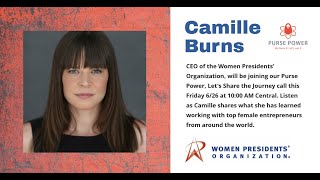
Let's Share the Journey Call with Camille Burns, CEO of the Women Presidents' Organization
Camille Burns, new CEO of the Women Presidents' Organization, discusses three urgent challenges for women-led companies during COVID: keeping remote teams connected and mentally healthy, managing cybersecurity risks, and abandoning traditional planning for agile decision-making. She highlights a toy-maker that pivoted to make hospital products and recommends staying connected while limiting negative news.
Chapters
So Camille, thank you so much for being here. I'm delighted to have you, really appreciate it. You're wonderful. And she leads the Women Presidents Organization, guys, which is one of the top organizations in the world for women entrepreneurs. Probably is the top one, I'd imagine. You have over 2,000 members, as I understand it. And 142 chapters around the world. Wow. Just for reference, on the website I saw that the average revenue for these companies is $14.5 million, and they have about 84 employees apiece, and that together all of them do about $26 billion in revenue a year and have 153,000 employees. That's amazing. So really, this is the high end of female entrepreneurship in the world. In order to join you have to either generate $1 million in service revenue or $2 million in product revenue, right? And then also I think you have to be a business owner to belong. Okay. So the Women Presidents' Organization is a peer coaching organization. So they have professional facilitators that facilitate conversations between business owners to help them learn from one another, right?
Mm-hmm.
Okay. And then you also have Platinum groups for $10 million in revenue and above, and Zenith groups with $50 million in revenue and above. Okay, and I know that you were recently promoted to the CEO job after being there for what, 19 years as the Chief Operating Officer? Holy smokes, and you've never— you always look 16 to me. It's amazing you're—
not anymore, no.
Anyway, so you've got a background in HR, an MBA in organizational behavior and HR management from Baruch College. Is that how you say it?
Yeah, yeah.
Okay, and a bachelor's in sociology from New York University. So when I was looking at your LinkedIn profile, people are saying Camille is intelligent and driven and results-oriented and caring and the ultimate problem solver. And I've just respected the heck out of you for years, so I appreciate you being here. Thank you so much.
Oh, thank you so much, Donna. I'm so happy to be here, and I love your mission and what you're doing for women-owned businesses. So, you know, just love collaborating with you and look forward to working together. As we move into the future.
Sounds great. Sounds great. All right. So first things first, we want to learn more about you. Please tell us a little bit about how you arrived at this place in your life and career.
Well, I always had an interest in women's issues. Even as a little girl, I, you know, sort of found sexism on the playground and didn't like that. And so it's always been something that's been inside of me. When I went to NYU, I studied sociology. And when I got out of university, I thought, you know, I really wanted to work for a nonprofit organization and I wanted to do something supporting women. I had zero interest in business at the time. I couldn't have thought anything was less interesting than business. But this job opportunity arose. It was a very small organization at the time. I think when I came on board, there were 17 chapters. They were all US-based. And I just thought, Well, this is interesting. Women in leadership. You know, I like that. I like that idea. And I think that, you know, that might be a way to solve some of the problems that I thought, you know, I saw and that I thought were so important when I was younger and still today. And just applied for a job and got it. And from there, I worked— Marsha Firestone, the founder and president of the WPO, started the organization in 1997, and I came on board in 2000. Okay, so we take this organization, it's, it's grown to an international global organization. As you said, 142 chapters around the world, uh, tiers of membership. So we can really, you know, work with business owners that are in that, you know, $1, $2, $3 million range as well as the larger business owners. Because, you know, as you know, some of the challenges and issues you're dealing with when you're a $5 million company versus a $100 million company can, can be very different. So, and you know, what we essentially provide is, you said, peer advisory groups. It's, it's really just like a board of advisors of other women CEOs. You get together monthly in the monthly chapter format and really work on your business issues. And, you know, as women, our personal issues, sometimes our personal lives, our families, our parents, all of that can all impact us as business owners. So, you know, there are conversations around those topics as well, but the objective of the organization is for women to help each other, learn from each other, and grow their businesses. And, you know, in a time like right now, also survive and manage and get through, you know, everything that we're dealing with right now. And as you said, I've been with the organization a long time. I grew to love business. I got an MBA and really found my passion in this. And, you know, we've been working on the transition as any, you know, organization should to where I knew I was going to become CEO for some time and really officially became CEO at the beginning of the year. So I did not anticipate that, you know, there was going to be a global pandemic and, you know, major economic crisis and everything else that has happened. But, you know, like any organization right now, we've just done what we can to innovate and pivot and, you know, adjust to the world around us as best we can.
Yeah, absolutely. And I know people really value what you're doing and the support they're getting from you. So what are some of the biggest challenges you see your members facing right now, and how are the most successful leaders responding to those challenges?
Okay, you know, a couple of the biggest challenges I see right now, first of all, I think is just Culture, you know, how do you maintain your culture in your organization? Obviously, every— most organizations, people are going remote, working in, you know, working in their homes. There's isolation. Also, just, you know, the world around us. There's a lot of fear. There's a lot of noise. There's a lot of negativity. And I feel like some of our business owners, for the first time, you know, they're not only dealing with keeping their teams motivated and creating the kind of culture and making sure that the teams feel connected and are working together. But there's also just a bit of managing mental health of your employees and thinking about what your employees are going through and trying to support employees in any way they can to make sure that they are helping their employees who can be very fearful right now, whether it's the illness, it's the economy, et cetera. And businesses are changing very rapidly. And some people don't adjust to change as well as others. So I think that the managing the teams and the culture is one big challenge I see. Another big challenge I see is around technology. Again, you know, people working from their homes, it's not only making sure that everybody can work effectively and efficiently, but there's a huge security concern now that I think is even larger than it was in the past. And I see a lot of our women business owners worrying about the security, trying to figure out how they can manage those issues to make sure that they are not— that it's not a threat for their organization. And, you know, really making sure that they're— some of them investing in that security to tackle that and making big investments there. And the last thing I would say, and possibly the most important, is that it's very, very hard right now to actually have a real strategy, right? Yeah. I mean, I think that everyone, you know, we all started the year with, this was our, you know, strategic plan. People have had 1-year, 3-year plans. And it's like, first of all, just accepting that whatever we thought was going to happen in January is kind of out the window. And also just this feeling of, you know, we can't really plan the way, you know, I, none of us can sit down right now and really work on a, 3-year plan effectively because we have no idea. We have no idea what the, you know, what's going to happen in the next 6 months. And so it's sort of shifting focus from strategic planning almost to just there's the scenario planning. We can all think about, okay, what's happening out there and how do we adapt and adjust to those situations and planning a bit more in the short term. So in terms of how the women are tackling these challenges, I think first of all with the, you know, talking about the cultural issues I think staying connected is huge. And, you know, this is within the business, certainly staying connected with your employees, making sure they're connected with each other. But I also think it's being connected with the world outside of your internal company, right? I think a lot of our members are working very hard to stay connected with their customers. You know, even if you can't sell right now, I think there's still the focus on, you know, reaching out to your customers, reaching out to your vendors, checking in on them. People, seeing how they're doing, seeing, you know, how they might be impacted depending on where they are in the country or the world or what industry they're in. So I think that these connections are huge. And I think within our organization, you know, our organization is kind of all about connections of other women business owners, right? So I think relying on connections with other business owners and, you know, people within your community right now, it's very, very important. It's a I think it's very important that we all stay connected so that we can keep our energy up and really think about innovation and what we need to do in our businesses. I think that another thing that I'm seeing just in terms of thinking about the strategy is, you know, looking at this as what are the opportunities for innovation, right? Because they're huge. There are huge opportunities out there right now. And I see the business owners that I think are really managing this successfully are are those that are using this as an opportunity, even if their revenue is way down and even if they've had to furlough employees and make other very, very difficult decisions, looking at what is the opportunity out there. And, you know, maybe what your business, what you thought your business was or the need that it served may not be what it, where it needs to go, right? You know, and I heard a story the other day that I thought was, I just loved is a woman business owner who has a company making toys for backpacks, you know, little things that kids can hang off of their backpacks. And obviously school shut down, and so, you know, her business was very impacted by this with no kids going to school. And so she started— she basically came up with the idea to work with hospitals. And so these toys became very popular for kids who are in hospitals for IV bags. And I know it's— and spirits up for children. And, you know, so that's not something she thought— that's not what she thought her business was, but she was able to make that change and, you know, help kids in hospitals to feel a little bit of joy and maintain her business. So, you know, I'm seeing a lot of stories like that, and I think that that kind of innovative thinking right now is hugely, hugely important. One other thing I'm seeing that I think is very interesting in the chapters is I'm hearing this, you know, we have consultants that run our monthly meetings and there is this, you know, some of them have been talking about almost returning to basics. So even though we work with business owners that have established businesses, right, women that some of them have been in business a long time and have successful businesses, there's almost this shift in thinking about our businesses almost as they're startups or as we did when they were newer businesses, right? And the entrepreneurial spirit that helped you start your business, I think, is very powerful right now. And I do feel that entrepreneurs actually have a leg up in that way because entrepreneurs are used to being agile, used to shifting, you know, very used to taking risks. And so I am seeing this, this sort of shift. It doesn't matter how mature your business is right now. You almost have to step back and think of it like a new business. And so the women that I'm seeing are really thriving in this are those that are thinking about innovation, going back to basics a little bit, and just really making sure that they're maintaining those connections and keeping everybody engaged and connected.
So is there a way that people are thinking creatively? Because I totally agree with you, I think entrepreneurs have a leg up. But are there any tools or any thought processes or mindframes, paradigms that are useful to think about how you might shift your business or pivot?
I mean, I think some people are going back to almost, you know, whether it's the Business Model Canvas or the One Page Business Plan, or using some of those models to, you know, almost as you would when you were starting starting a business or developing an idea for a business to think about their business from that perspective. I also think, and you know, I'm probably a little biased because we run peer advisory groups, but one of the things that's been so powerful for me to watch right now is watching our members, particularly those who are struggling or those who are in industries that have just been battered, watching them speak with their chapters and then seeing other women come up with ideas for them. And I think communicating with other business owners, other people, is so important because sometimes, you know, when you're a business owner, you know what your business is, you know what, you know, what your objectives are, who your customers are, and sometimes you need other people to think outside the box for you. And so that's where I think some of these connections and not just, you know, sitting at home working on our businesses, but talking to people and getting ideas from people and listening and just listening to, you know, what our customers are dealing with and what their needs are. And, you know, I think that helps so much with, with innovation and pivoting right now.
Absolutely, absolutely. That's really insightful. Okay, now you run the 50 fastest-growing women-led businesses in the world. You've got that competition. We had Phyllis Newhouse on here a couple of weeks ago. I know she's been a winner for many years in a row. What commonalities do you see in these winners, these women that have really successfully grown their businesses? What's their secret sauce?
I think there's a few things. First of all, I would say that I think that the 50 fastest winners, when you interview them and you hear their stories, they put a lot of value in their teams. And they also are very, I find, open with where their gaps are, you know, admitting they don't know everything and really surrounding themselves with smart, capable people and trusting their people. You know, the 50 fastest, to grow at that speed, you really have to surround yourself with good people and have faith in them and trust that they're going to make the right decisions. So I think that's hugely important. I also find that they're very relationship-focused. So whether, you know, when they speak about their customers, sometimes it's almost like they're talking about it's a partnership. You know, it's not who I'm selling to, but it's actually a relationship. Partnership. Thinking about their customers in that way, I think, really is part of their success and part of why they've grown, because they really are maintaining these relationships. And, you know, it's more than just a sale. And, you know, I would also say that I think that they want to grow. They're hungry to grow. And, you know, I think that not every business owner wants to grow at that speed. I mean, you know, just for myself, the thought of growing from $30 million to $300 million in 5 years and, you know, adding 1,000 employees, or, you know, that's daunting. And, you know, there's nothing wrong with not wanting to grow like that, right? But I think that the women who are in the 50 Fastest, many of them, they want that. They're, they're determined and they're focused on that kind of growth. And lastly, I would say they're quick. They adapt quickly. They jump on opportunities. You know, they're, they're very quick to change. They're very agile. And, you know, there's no they don't slowly think about things and, you know, decide if this is the right decision. Some of them just move. Some of them are just moving with their gut. And in many ways, that's made them very successful. So, you know, I think it's just that wanting to grow, working on their relationships, whether it's with their people internally or externally, and then also just, you know, really, you know, working quickly and moving quickly and adapting. And, you know, I think what's interesting with the 50 Fastest is a lot of them are, are continuing to grow right now, even when times are very tough. And I think it is that mentality of, of, you know, okay, time to change again, you know.
Right, right, right, right. And they probably don't overthink it too. I think women sometimes really think and think and think and think and plan and plan and plan. And right now you need to move quick.
Yeah, exactly, exactly. Exactly.
Okay, all right. All right, so this conference that you talked about that you've had to move, I think, this year. So you had the conference scheduled, you're having to move it to July. You bring in the top speakers in the world. I mean, I've been amazed every time I go. It's just so energizing and what you learn there. And I understand that you're changing it. What I'd be interested in is who are you bringing in, kind of the best practices that you're trying to bring in, what are the themes, and then I think you have an offer for the people listening today.
Yeah, yeah, sure. You know, the conference is something that we've been doing, you know, as long as I've been around, for pretty much, I think, since the first year. And normally it's an in-person event. Obviously, we usually have 800-900 women business owners there. So you can imagine, you know, the energy from all of these successful women business owners. And we were scheduled for early May in Montreal. And, you know, unfortunately, like like all of the conferences and, you know, all of these in-person events, we had to cancel that event. But we did decide to bring it to a digital platform. So on July 22nd, 23rd, we are going to have the conference virtually. So, you know, it'll be different, but we're looking forward to it. And we're bringing all of the speakers that were going to be with us in July to the virtual platform. In terms of best practices, you know, we work with our members. Often a local steering committee is put together wherever we're going to hold the conference. To really come up with the theme. So we really listen to our members, listen to what they're going through, and develop the theme around what topics would be of interest to our members at that time. So our theme this year just happened to be Reimagining Business. So in a way, that lends itself so well. I mean, you know, we couldn't have predicted how well that lends itself to what we're going through right now. A lot of our speakers are going to really think from that lens and incorporate what they've seen over the last few months happen and kind of rethinking their talks a little, you know, using the, you know, some of the subject matter they were going to use before, but rethinking it for, you know, how the world has changed. So, for example, Adam Grant is one of our keynotes this year, and he's an organizational psychologist professor at Wharton, and he has a number of of great books, top TED Talks. And I was talking to him last night, actually, about his keynote. And, you know, one of his TED Talks is on givers and takers. And originally we were talking about the givers and takers, which is within an organization, sort of you have givers and takers. And he's done a lot of analysis on that. And last night we were talking and sort of shifted to what his talk is going to focus on now is creating a culture of creativity and innovation in the world we live in. So really thinking about that culture, you know, as we were talking about before, and, you know, creating that innovative and creative culture in this, you know, new environment. And, you know, so I'm really excited about that. We have another woman who— her name's Lital Moron, and she's Canadian. She's from Israel originally, and she focuses on— her organization is the Academy The Future, and she's going to focus on digital disruption, which again just applies really well. You know, we brought her in with that topic previously, and now it, it applies even more. So I think her talk's gonna be incredible, just how do we disrupt digitally in the environment we're living in right now and really look what's happened over the last few months. And you know, a lot of other great topics we've got. A woman, she's from South Africa and she's an expert in neuromarketing. And so she's going to be talking about, you know, she talks about the brain and its response to marketing, but also with everything that is going on in the world and how that impacts the brain and when you're trying to sell and market your company. So I'm really excited about that. We've got a woman coming in to talk about, you know, Zoom presentation and how are you, how do you present yourself as a leader when you're not necessarily in person. So So we've got a lot of great, great topics and our registration is actually going to go live today. So we will be sending that out. And, you know, as you mentioned, Donna, our registration for non-members is $450. But for your Purse Power community, we are going to give a $100 discount. So the code will just be PURSEPOWER, one word. It's not case sensitive. So for any of your listeners that want to participate in our conference, you know, please, we welcome all business owners and particularly business owners that qualify and are at that multimillion-dollar level and want to network and connect with other women business owners from around the world that are, that are growing those size companies.
Thank you so much, you guys. Seriously, I— there's no relationship here. I'm saying this is fantastic because it's fantastic, and I have gone for several years, and you come away with amazing new insights that are really, really useful from the top thinkers in the world. So I hope people do register for the talk. I mean, for the conference. Okay, so what are some of the most beneficial resources you found for staying motivated and focused right now?
Um, first of all, I know I keep coming back to this, but connecting.
Uh-huh.
I think that having those connections with, you know, for me it's other women. I think it's been huge for our members to have that, you know, those check-ins with their chapters and have those close connections with other women business owners. A lot of our chapters have gone from, you know, most chapters would meet monthly. That was our format, you know, monthly advisory board meeting. And in April and May, many chapters were meeting weekly and just staying connected, even if it was just an hour meeting just to check in. It was keeping those connections alive, I think, is hugely important for just, you know, energy levels. And like you said, staying focused. I think something else that's very, very important right now is watching our consumption of negativity. I think, you know, news thrives on negativity. I think that, you know, you're looking at unemployment numbers, you're looking at the health crisis, there's just so much going on that can be very scary. And I think no matter who you are, there's no way not to feel a little worried what's gonna happen. The future is so uncertain, but I think it's so important right now to, you know, work on staying out of that negativity and having gratitude and looking at what's good in the world. And I think the only way you can really innovate and work on your business successfully is if you're really focused on, okay, what's positive? What are the opportunities? Where, you know, where can we go? And we're gonna get through this. And I think that's I think that's vitally important for leaders right now. I think that employees really need that. I think employees need to know that, you know, there's confidence and there's, you know, positivity coming from the leadership. I also think just keeping busy and working hard is really important right now. I think that, you know, particularly with people might be feeling isolated and it's, you know, it's easy to get distracted. We work with a— there's a strategy expert, he's a speaker and he's written a number of books named Chris McGough. I don't know if you know him, Donna.
First name, no.
He did a webinar for us recently and his first book was on the primes. And I would— if people don't know Chris McGough, I think he's brilliant. So I would check him out. But he was telling this story on this webinar he did and his father owned funeral homes. Funeral homes. So he grew up in this funeral home environment, and he would watch his father when he was young give— almost give tasks and duties to the families, to the grieving families. And he at one point was like, Dad, why do you do that? You know, go pick up clothes, you need to go get the flowers, like giving them all a job. And his father just said, it's very important when people are grieving to keep them busy. And I think that he's— he related that to the time we're living in, but I loved that. Because I felt like it is, it's very important with everything going on and, you know, it's hard not to feel fear right now. It's hard for your employees not to worry. And so I think just keeping everyone busy and keeping ourselves busy is important.
Yeah, no, I agree. You feel better if you take action, right?
Yeah, exactly, exactly, exactly. So I love that story because I just thought it, you know, was really applicable to the, you know, the time we're living in.
The thing that was going on in my mind as you were talking is there's this balance between being positive as the person running the business and being authentic. You know what I mean?
This is true.
And, and so that they— I don't know, so people don't feel isolated, they don't feel alone, they feel supported. I don't know how you walk that line. Do you have any insight on that?
I completely agree with you, and I'm glad you said that because I do think that it doesn't serve anyone to pretend. So, you know, if, if there are things you're going through with the business, I'm a big believer in transparency and I'm a big believer in, you know, some level of honesty, you know, what's appropriate with your, with your employees and not, not lying, not trying to push things under the rug. But I think you can balance that. I think you can balance that with, okay, this is what we're going through and our revenue is down or our sales are down. This is how we're going to respond to it and this is what we're going to do and we're going to get through this. And so I think you can balance the truth and being authentic, as you said, because I love that and I am a big believer in that. And I think for me, a courageous leader is an authentic leader. And so I think that you can balance that without, without making everybody feel afraid. And, you know, sometimes you have to— you know, a lot of our members might have furloughed employees or laid people off and had to make really tough decisions, you know, particularly in industries that, you know, where it's been hard to bring in any revenue for the last few months. And I think there is an opportunity to go through those tough challenges, be honest with your employees about it, but also stay positive and future-focused. And this is the decisions we had to make, but but we're gonna survive, we're gonna get through this, and we're gonna grow, and we're gonna come out on the other side.
Excellent, excellent. I wanted to give people a chance to ask some questions, and we have a few kind of on tap here. So, one, this is Jane Mudgett saying, could you please tell us more about security? What are people most concerned about?
I think people are concerned about their networks. I think that cybercrime is up. I think that, you know, criminals know that people are working from home and know that there's an opportunity. And so a lot of our members are even, you know, even if they don't necessarily feel like this is the best, you know, their revenues are down, they're still taking that opportunity to invest in security. So working with cybersecurity companies, making sure that their networks are strong, making sure that everything is encrypted. Because there are, you know, there are, theft is up. I was talking to our sponsor from Wells Fargo who I work with closely and, you know, she months ago, I mean, I think in March, she called me up and said, you know, you need to make sure, you need to check your security, you need to check, she told me, check your bank account every single day.
Wow.
I've actually been logging into our bank account every single day because she said there's so much theft that's happening on a much larger scale than it has in the past. And that the sooner you see a problem, the quicker you can react to it. So if you see something in your, you know, bank account that shouldn't be there, you can move quickly if you catch it quickly and the bank can help you. But the bank can't help you so much if you catch it, you know, 2 weeks later. But yeah, just really investing in the kind of technology that will help protect your business, I think is hugely important right now.
Wow, yeah, great answer, great answer. Okay, oh, also Jane was asking, what's the best stimulus for innovative thinking?
Um, the best stimulus for innovative thinking, you know, I think that for me, because I'm a very verbal person, I would say it's conversations. I would say it's talking things out. It's, you know, presenting an opportunity or problem and getting input from others. And, you know, I always find that other people, when they talk about your business or they talk about what's going on, it helps get your creative juices flowing. So I think that's very helpful. I think that also, you know, there's a lot of books you can read. I think that, you know, looking at some of the unicorn companies and thinking about how they saw something and responded to a need, I think is really important. Lastly, I would say listening. I think listening— our members who are listening to their customers, listening to what's going on, I think are the ones that are adapting so quickly. They're really taking that time to just sit, just listen to what the problems are, and then you can— when you really understand what's going on, really understand what the needs are, then you can get those creative, innovative juices flowing.
Yeah, excellent, excellent. All right, Anne Elliott, you know Anne, she's a chaplain.
Hi, Anne!
Please comment on the idea that some businesses are experiencing a paradigm shift in their businesses, a fundamental change in approach or underlying assumptions. When this happens, everyone goes back to zero. What mental or emotional attributes are best suited for this situation?
First of all, I think acceptance. I think that's huge. I think that we all just have to accept what's going on in the world, and I think our business owners that I I've seen that have just been doing incredible things are those that just immediately accepted this is happening, accepted that it's not going to go back to normal anytime soon, right? And acknowledging that and then quickly, you know, making sure their team understands that and working to come up with new ideas because of that acceptance. I think the minute we hold on to, it's going to go back, we're going to, you know, things will go back to normal, we just got to get through this, we're just weathering a storm, I think in in a time like this when everything is so uncertain, I think that doesn't serve because we can't necessarily just sit and wait this out. Because this could, you know, we don't know how long this is going to go on. We don't know what's going to happen to the economy. I mean, I think there's just so many unknowns. So I think just acknowledging it, accepting it, and making changes quickly, as you said, the, you know, the people who are moving quickly, I think that's extremely extremely valuable. And I will also say, and this is just from my own personal experience, is that, you know, Donna, you know this and Anne knows this, that WPO was always this very high-touch organization. And that's what we prided ourselves in, is, you know, you meet in person, we have conferences in person. It's this very high-touch. You bond, you feel safe, you can share whatever challenges are going on in your business. And we essentially had to become a virtual organization overnight. And I think again, it's sort of just— I have younger, you know, some younger members of my team who were just really quick to like, okay, we've got to get everybody trained on Zoom, we've got to make sure our chapter chairs know how to run these meetings, we've got to start putting out more content virtually, and just very quickly shifting. And so I think there's the acceptance mindset, but I think there's also just this agility and just having the kind of mindset that's agile. And, and, you know, quite frankly, I feel like this is— entrepreneurs are suited for that, right? I mean, I feel like entrepreneurs are sort of— that's baked in. And so that's— that can be a real plus for, for women business owners.
I so agree. Entrepreneurs have a leg up. They do right now. All right, John Davis, our favorite single male investor, is asking, what was the author of the name— what was the name of the author of the book that you mentioned?
Um, the keynote speaker or Chris McGough is the guy, author of the book called Primes. He's a strategy expert and I just, I find him to be so interesting. I just think he's great and he works within companies and he's doing a lot of work scenario planning and helping companies right now. He's based out of the DC area. And then I also, I know I mentioned Adam Grant, who's our keynote speaker, and he has a couple of books on on, you know, different, different aspects of business, organizational behavior, things like that. But, and he's incredible as well.
OK. Are there any other books that you're reading right now that you're finding really valuable?
You know, I think, well, first of all, you know, I'm a big Malcolm Gladwell fan, so I've kind of been revisiting Malcolm Gladwell. I actually have been listening to a lot of audiobooks of Malcolm Gladwell as I'm doing things because I think that For me, that— how he brings in history so much is extremely helpful for me right now in what we're going through, thinking about, you know, how the world has been through so many different things. I find that very helpful. I think with everything we've been dealing with in this country and all the challenges, I think that there are a lot of books that are really helpful for, you know, the the issues, the systematic issues we're dealing with in this country around race. And I read White Fragility when this all happened. And so for anyone who's, you know, struggling with that, especially if you're, if you're a white individual, I think that's extremely helpful just to understand again, put in context the history of this country and sort of why we're going through what we're going through right now and thinking about how we need to make the changes as a as a country that we need to make. So, you know, those are two that have been very helpful for me. And, you know, I think there's a lot of great books. I think Brené Brown is really helpful right now. Yes, yes, yes. I'm a big Brené Brown fan, and I think I've been revisiting some of her work because I think that it is that, you know, the dare to lead right now is huge. It's the courage. And as you were talking about You know, that being authentic, I think, is what Brené Brown is all about— vulnerability, authenticity. And I think that that's huge right now as well as we're thinking about how to lead companies.
Right, right. And I think she's got a bunch of— what are the talks? The TED Talks that people could watch that would be useful.
Yeah. And, you know, one other one I would recommend right now too is Angela Duckworth's grit. It's all about perseverance, and I think that, you know, we're in a time right now where perseverance is, is huge. And so that's another great book if you just need one to sort of get you going and think about getting through this time.
Yeah, very good, very good. All right, Deborah Woods is asking, what's your best advice for successfully initiating a new business relationship when it starts with a cold call, whether by email or phone? On, etc.?
I think that right now, you know, I think people are hungry to connect. And so I think starting with that connection, I think right now, probably, unless you— it depends on your industry, but in a lot of industries, budgets are being cut, right? And for a lot of services, budgets are being cut. So I don't think that the typical sales call is necessarily the best approach right now. I think I think that people don't want to be sold to because they don't have money. But I think calling people, checking in on them, seeing how they're doing, depending on where they are, asking them what's go— in different parts of the country, the virus is spiking at different times. And having a bit more of that emotional touch as opposed to just trying to sell, I think is important right now. Building the relationship, and then, you know, when the time comes and budgets are getting raised again and people start having more money, I think that that's really the time when you can start selling a bit more. But I think right now it's all about connections and relationships.
Right, right, absolutely. And Anne Elliott, by the way, is saying, "Hooray for grit!" Yeah.
Okay. I know Anne also loves Brené Brown, so.
Yes, indeed, yes, indeed. Okay, fantastic. I think we've answered the questions. All right, let's see here. What are the biggest things you would like to have people take away from what you've talked about today?
The takeaways, I would say, are, um, first of all, you know, I've probably said this word 100 times, but the connections aspect, whether it's with your team, your customers, just staying in contact. You know, having Zoom calls, having phone calls, reaching out to people in a way that can feel hard right now because I think— I don't know about everyone on this call, but I know the women I know, it's like everybody's working twice as hard. Right. Like there's no work-life balance right now. But taking the time to maintain the relationships and, you know, reach out and check in on people I think is huge. I think I think that, you know, going back to basics, I think stepping back and thinking about what your business is and what you provide and what needs are out there, I think is huge. And just having that agile mindset, I think is huge. And let's see, I guess the other thing probably is just paying attention to technology and making sure that you're safe. And making sure that your companies are safe. Because, you know, right now, I think that I have heard unbelievable stories within some of our member organizations where, you know, things have been hacked, websites that look very official. I heard a horrible story of going to AmericanExpress.com and then having, you know, having it actually be a hacker and it looked so real. And, you know, just really paying attention to what you're doing. Doing. Because I don't think anyone can afford right now to lose a lot of money, you know, and have— I think with a lot of people, you know, revenue is down and, you know, it's not an easy time to sell. And so I think we just really have to, you know, manage what we have and make sure that we're protecting all of our own assets so that we don't have to deal with any of those additional challenges on top of everything else.
Absolutely. Yeah, we're doing the same thing. We're doing a lot with ours to to really make sure everything's secure too. Yeah, I know, I know, it's amazing what they try.
Yeah, I know, I know.
We should probably do a show on that, cybersecurity.
Think about, right, you know, I— it's so hard for me to think from that mindset. So, you know, reach out to the experts. And, you know, there's so many great cybersecurity companies, there's so many women-owned cybersecurity companies. And Donna, I imagine, you know, within your network it's easy to reach and connect with those companies, but, you know, even consultations. I think, you know, one of the things I'll say is that I have seen women business owners support and help women business owners in a way over the last few months I've never seen in my entire career. You know, there is—
Wonderful.
—spirit of collaboration. There is this spirit of support. And, you know, I do feel like right now, if you reach out to someone and ask for help, ask for guidance, you know, I think people are willing to help right now. And, you know, people are doing things for each other for free. People are giving incredible discounts just to support each other. And so I think that there are so many experts in this field. I am not one of them. But I would certainly, you know, recommend reaching out and just try and have conversations and see, because I think there's a lot of people who want to help.
Yeah, absolutely. I'm finding that too. When I reach out to folks, we're getting a lot of people wanting to help us too. Yeah. And the audience. Okay. So tell us, if they are interested, if they qualify for WPO and they're interested in learning more about it, what should they do? So go over the qualifications again and then how they would approach you.
So the qualifications for membership for a service-based business, it's $1 million in annual revenue. And for a product-based business, it's $2 million annual revenue. And they would, they can go to our website, womenpresidentsorg.com. They could also email info@womenpresidentsorg.com. And, you know, look at— if you go to the website, you can see what the qualifications are. And we have monthly meetings. So you would join your local chapter. Or one of the things we've actually launched in the last few months is we're launching virtual groups. And we've launched two and they've been very successful. And we're launching a number of additional virtual groups. So if you're in an area where we don't have a chapter or, you know, we don't usually have competitive industries in the same chapter. So that people feel very comfortable talking about whatever issues are going on in their business. If there's a competitor in the local chapter, etc., these virtual chapters have been, been wonderful. And it's also a great way to, you know, have a— reaching women that aren't just in your community, right? So, right, that same, you know, peer advisory model meetings, but just doing it virtually. And, you know, right now most of our— almost all of our meetings are virtual at the moment. So, but, you know, the, the local meetings will go back to in in-person meetings, I think, when it's the, you know, when it's the right time and it's safe and things are better.
Okay. All right. Very good. Anything else you want to add, Camille? You've been amazing, and I'm delighted to have you here. Anything else you want to share?
You know, I would just say that, you know, I think it's an incredible time for women business owners. And I think that even though it's— there's so many challenges, I think, you know, there's a lot of opportunity. And I think all of us, myself included, we need to just do our best to focus on where the opportunities are and You know, think about the potential and where we can go because, you know, I'm hopeful that when we all come out on the other side of this that, you know, things will be better. And I think that I have a lot of hope for the future. And, you know, the last thing I would just say is, you know, women need to support women. And I, you know, that's why I love what you're doing, Donna, with Purse Power. And, you know, that's what we do. It's all about women supporting women. But I think that You know, especially in a time right now, it's really important for women business owners to support other women business owners, buy from other women business owners, and, and all of that, so that we can all weather the storm.
Absolutely, couldn't agree more. And it's a great time for us to change because I think women sometimes have been competitive with each other when they need to collaborate.
And just think how far we would go, right? Yeah, yeah.
Okay, so I want to thank you again, Camille. Camille, I appreciate it.
Yeah, it was great to be here.
I want to thank the attendees for attending today and our special guests. I wanted to let you know that next week I'm going to have Mae Snowden on, and Mae Snowden is the top, probably, diversity and inclusion executive in the country. I've known her for 25 years probably, and she was an expert at it back then. So she's run diversity inclusion for Kodak, for Starbucks, and she now leads the group for the Conference Board. So she's gonna have some really insightful things to say right now about what's going on in our society and in our country. Upcoming guests also include Monica Smiley. I know you know Monica. She's the editor-in-chief of Enterprising Women magazine, which is the top entrepreneurial women's magazine in the country. I've got Gail Becker, the founder of Cauliflower— a Cauli— what is it called? Caulipower. Have you met her? She does the cauliflower pizza crusts. So she's a kind of an interesting, innovative business Krate Brodak with Women 2.0. And then we've got a couple of really interesting guests coming up that we're trying to work out that I can't quite tell you about just yet. So thank you to those of you who completed the survey, and you're wanting to hear from national leaders and you're wanting to hear how to grow your businesses in this time and get new customers. So we'll be focusing on that. If you haven't signed up for a directory listing yet on pursepower.com, please do. You can have a free listing and then you can upgrade it if you like. Go to the— our website and go where the little red arrow is pointing, and you can get at our Google Chrome extension. When you download that on your Google Chrome browser, it will show you the women-owned and women-led businesses in our directory, because we're wanting to give you the information you need at point of sale to buy and support women-owned and women-led companies. And finally, please do buy from women, guys. To your point, that's the way for us all to thrive and survive. In this time. Okay, thank you so much. It's been a little shorter call than normal today, but I appreciate you for being here. And I want everybody to remember, purse power— we have it, let's use it. Thank you, Camille Burns. Thank you, everybody. See you next Friday at 10:00.
More from Camille
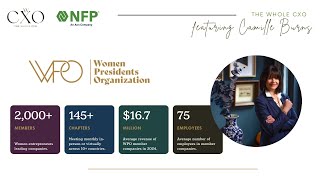
Camille Burns Unlocked: Scaling Secrets from 25 Years Leading Women Entrepreneurs
Camille Burns Unlocked: Scaling Secrets from 25 Years Leading Women Entrepreneurs
Camille Burns on Peer Networks and Scaling Women-Led Businesses | JPMorganChase

S5 E4: The Power of Womanhood with Camille Burns, CEO of Women Presidents Organization
Entrepreneurs as Equalizers (Feat. Camille Burns) | Dauntless LeadHERship Podcast #05

Empowering Women Entrepreneurs: Insights from Camille Burns and Linda Hamilton