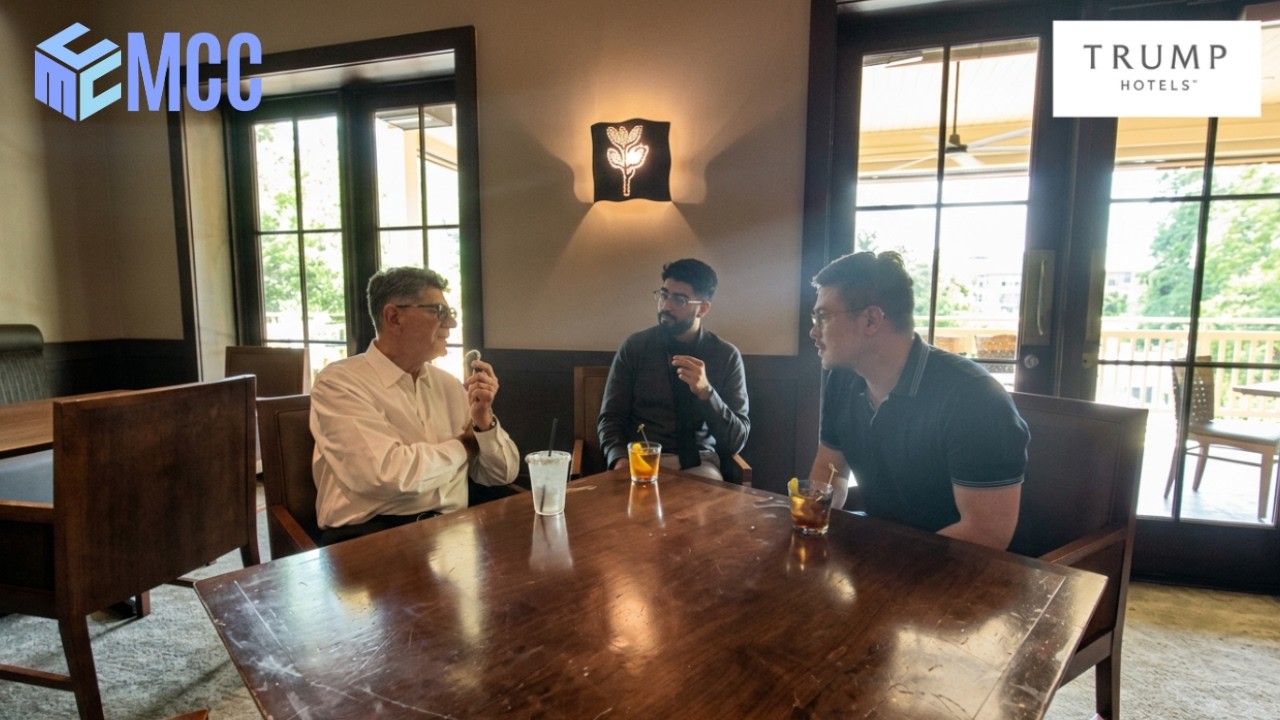
In this interview, veteran hospitality finance leader William reflects on five decades of budgeting and forecasting evolution. He recounts the early days of manual 13‑column paper budgets, the transition to early PCs with Lotus 1‑2‑3 and Excel, and the pain points of slow recalculations and formula errors. As computing power grew, granularity increased, allowing day‑by‑day revenue budgeting and detailed labor cost linking. After years of spreadsheet frustration, William’s organization evaluated alternatives and ultimately adopted Vena, a hybrid database‑Excel platform now deployed in six hotels. He discusses broader industry shifts: the 1995 internet/dot‑com boom that introduced direct booking engines, the current AI wave, and how these technologies reshape data‑driven FP&A. The conversation also touches on COVID‑19’s impact, emphasizing resilience and learning, and William offers career advice for accountants aspiring to finance roles, highlighting industry loyalty, the small‑world nature of hospitality, and the importance of patience and long‑term thinking. The interview concludes with gratitude for the Vena implementation and optimism for future functionality.
Chapters
So, hi, Charlie. So I started off in hospitality nearly 50 years ago, and in about 2 years' time will be 50 years. And one of the stories I have is talking about budgeting and forecasting, which in the early days was achieved by Using 13-column paper, a pencil, and an eraser. And I remember our president would ask us to change assumptions and we would have to go and manually erase and recalculate.
Oh, wow.
And re-add columns. So you can imagine around about 1980 or so when the first Microsoft PC came out, I think we used Lotus 1-2-3 before Excel came out.
Yes.
The top configuration of the machine was a 10-megabyte hard drive, half a gig of memory. The spreadsheets in those days didn't even have tabs. So you would have one page with every department from beginning to end on a single page. And that was a revolution that was amazing.
And William, just to pause you for a sec, when you say 13, so columns, so one is for the account and then just one.
No, no, no. So one, well, it's basically 14 columns, one for the account number.
Yeah.
One for each month and the 13th column for the total.
Okay.
And I, I assume forecasting and actualization was a very painful, painful process back then.
Well, the, Forecasting was always done, but became more and more accurate and reliable as systems progressed. So we would manually edit arrays, flow through the appropriate departments, and manually put or add the numbers and hope you didn't make an error. So you can imagine with the PC coming in and the various application software suites, It was a revolution. But having said that, when we ran, when we hit F9 on the keyboard for recalc, it would take up to 1 hour to recalculate, which, uh, you know, it was good. We would do that for our lunch break, come back and it would be done. But that was, that's, that beats working on manual paper.
Well, you know, I'm curious just because I am from a different generation when it comes to like today, at least in today's world, everything is Excel, multiple sheets.
Yeah.
Tracking is, I think, a lot easier. But in terms of your prior budgets or prior year budgets, did you, how did you keep everything organized? Did you ever lose anything as you were working on manual paper?
No, we were just very disciplined. Sometimes accuracy would be questioned because we totaled many columns, many rows over many departments manually. So work progressed on Excel, the Microsoft PC, which started improving in terms of performance capacity. Tabs were added to Microsoft Excel. We would have a tab per department, and we then started experiencing errors, basically formula errors, where— and typically when an edit was made, the formulas wouldn't be adjusted, or some were adjusted, some were not. And top management started losing confidence in Excel as a budgeting and forecasting tool.
Fascinating. So it's always been fragile. If I may, what year was this so that folks can kind of understand? Are we talking about the '90s, the 2000s?
The late '70s, '79, '80.
Okay.
And back then you're using Excel and you're getting errors or you're getting done tabs. Question, did the metrics and did the budget, did the granularity, was it always the same? Is the FP&A always the same, but the technology changed?
You know, having the ability to electronically calculate diverse sets of data, the granularity became far more detailed. So for example, we would, we would budget revenues on a day-by-day basis. Your labor costs would be linked directly to your Your revenues that each department generated. We would then break down the labor cost by position, by number of hours worked times the rate. In food and beverage, we would take the revenue buildup and break it down by food and beverage separately, and then break it further by meal period. So we could tell you how much was budgeted for breakfast, lunch, brunch, or dinner, even late nights in some instances. The increased level of granularity gave us a more efficient and reliable budget. And that, with the aid of a computer, helped us develop the forecasting in a sense that it became reliable. But as I previously mentioned, the use of spreadsheets had lost a lot of confidence because of manual errors in the code. And As hoteliers, we looked out to find alternate systems. And the alternate systems mimic a worksheet in a lot of respects. But they started becoming slow and cumbersome and also prone to errors. And we then took a decision to move back to an Excel-based product. And when I say Excel-based, partly database and partly Excel. And through extensive research, we encountered a system known as Venna, which we've successfully just implemented in 6 hotels.
That's amazing. Love to learn more about that. I think a lot of the audience would be excited to kind of see what that onboarding experience looks like. But it took, I think you said 10 years before you made the selection, right? Was this more of a change management, a due diligence? How did that process— I know, I know during that time you switched roles as well.
We weren't under urgency to change the system, but part of being a manager is to always explore what you have and what you may need in the future. So it's not that we were inefficient. It's just that, that I'd identified Vena almost 10 years ago and kept it in my to-do list until we needed it. And then about a year ago, we decided it was time to upgrade and Vena resurfaced. We found it was the appropriate system and it supported us well. The implementation went well. And we look forward to the dynamics of the system and what we and our management can get out of the system.
I'm curious as well, William. I know, I know you had mentioned you've been in the industry for 50 years for hospitality. Seeing what you see today and seeing what you did in the past, or what you see in the past, do you see a lot of hospitality moving into newer technology or do you feel hospitality is still stuck in its old place?
In 1995, there was the internet revolution, the dot-com revolution, where hotel website booking engines were developed, booking.com, Expedia, hotels.com, etc. And that shifted the whole paradigm from working through a travel agent to doing everything yourself. And now today we talk about AI and Claude and GPT, etc., and the next revolution, and that's far more material. And, uh, the internet revolution, and that just opens a wealth of, uh, opportunities in terms of management, uh, and the user interface with our guests.
You speaking about all these kind of online revolutions almost 30 years ago now with bookings.com, Expedia, a lot of it is you now have on-the-books kind of booking data. How How have you seen the industry change in terms of leveraging that data, at least for at P&A? Because now you're not just future looking and estimating. Now you have far more actual bookings, both corporate and personal. Now, has that changed things?
I think, um, an efficient, uh, system leads to incremental revenues and incremental bottom line. Every part of the cycle becomes more efficient and the more efficient it becomes, the You know, the revenue grows and the business grows, and that ultimately leads to new demand and new development and new jobs that are created. And it just makes everyone's life a lot easier and the processes more efficient.
I actually just thought of something. I know, I mean, everything feels better now with travel and everything, but if you remember, we go back a couple years, right? I don't know if this is a touchy subject, but the coronavirus, right? Like that was a difficult time for the tourism, hospitality industry. hospitality industry. What did you learn from that? And do you think the learnings there are going to be applicable for the future?
Well, any form of distress is, you know, provides a situation that we can always manage better having had the experience.
I would also like to know, William, given that, again, like I mentioned earlier, you've been in this place or this industry for a long time, how have you How have you handled failure? Do you feel like failure is something that you've come across and you didn't know how to handle it, or did you feel equipped to handle it? Was there support when you did handle it, for example?
Well, we always require support, support of our teams, support of management, and often support of outsiders. It's just such a dynamic industry that we need to Use every tool available to us.
So William, really grateful for this opportunity. It's been a pleasure kind of working with you along this as well. And it's really nice seeing you at the kind of Ven Accelerate conference. I think one thing that we often like to finish our videos and podcasts is, especially for our audience, they're generally younger. We actually get a lot of accountants that ask us, how do we move to finance? What is your advice, just your 2-cent advice that you think anyone that's in accounting or finance would would help to get to kind of where you are, your successes?
One thing I've learned is that once a candidate enters our industry and grows within our industry, they seldomly leave. Or if they do leave, they ultimately come back because it is fun. It's dynamic. The opportunities for advancement are great, and it's great to grow within the industry.
So it sounds like most folks that enter the hospitality space stays for a long time, and even if they leave, they come back. Does that mean it's important to make sure that you don't burn any bridges where you don't have a bad past because it's such a— is it a small world? Is it a big world?
It's an incredibly small world. I've been in different countries across the globe and bumped into people that I've previously met in hospitality, either because they've transferred within the industry or because I've just bumped them on Fifth Avenue, New York. But going, going back to the industry and the business, it's hard work, but it's a lot of fun. And I think when employees leave, they, they find that they've lost that element of fun. And self-fulfillment and they come back and it happens all the time.
I think that's a great advice for the folks. I think you gotta think long-term.
Yeah.
Too many people are too impatient, but good things takes time. You gotta put it in the hours. There's a quote I love, which is, be impatient with action, but patient with results.
Yeah. And, uh, thank you guys for the support you've given us, uh, with this, uh, Avena implementation. It's been a lot of fun and, uh, we look forward to adding functionality and using it to its fullest extent.
No, that's, I think the, absolutely the pleasure's ours. The pleasure's ours.
Right. So, okay.
Yeah. And just some words from me, like Charlie said, the pleasure's ours. It's been a pleasure working with you. And we as a company, as MCC, we look forward to continuing our relationship.