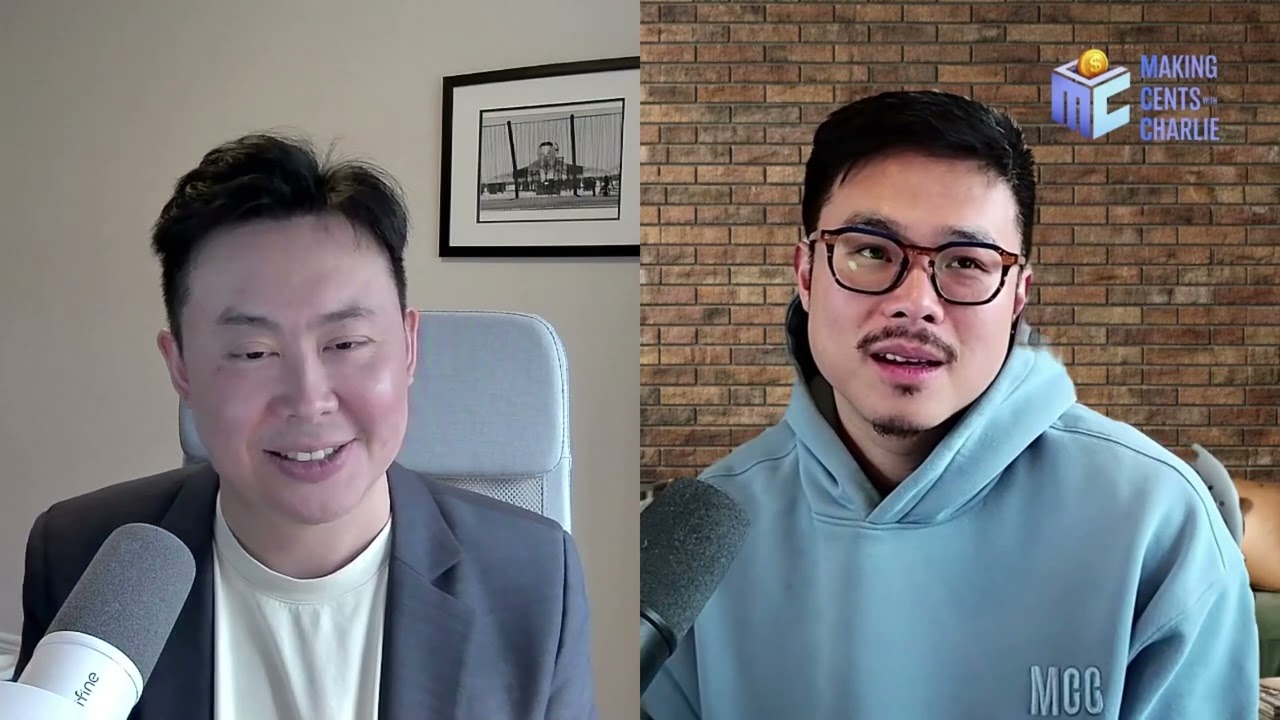
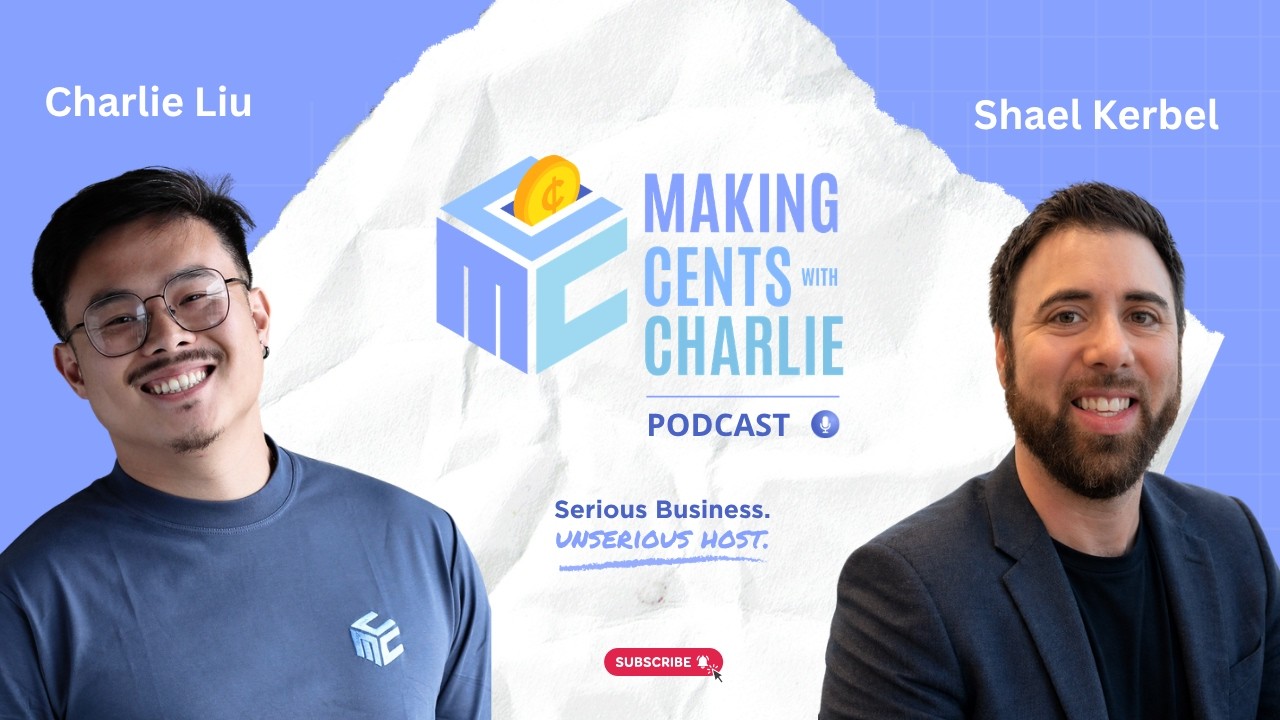
Making Cents with Charlie and Shael Kerbel
In this episode of the Making Cents podcast, host Charlie Liu interviews Shael (Shail) Kerbel, a CPA and Senior Manager at P&A Oliver & Bonaccini Hospitality. The conversation weaves together rapid‑fire personal questions, a deep dive into the AI tools Shael uses (Claude, Perplexity, Comet browser, N8N, etc.), and how he is applying generative AI to hospitality finance and operations. Shael describes building a prototype sales‑pipeline tool that scrapes LinkedIn and event sites to surface upcoming catering opportunities, and his broader vision of a unified analytics platform that fuses POS, general‑ledger, HRMS, OpenTable and other data sources into a single dashboard for forecasting and decision‑making. They discuss practical challenges of moving from prototype to production: technical reliability, data trust, repeatability, separating hard‑coded numeric logic from LLM “vibes,” handling blobs versus structured numbers, and ensuring provenance of AI‑generated insights. The dialogue also touches on personal‑growth themes—overcoming introversion, building networks through programs like the CPA Ontario Innovation Leadership Accelerator, and the importance of vulnerability. The episode closes with Shael’s two‑cent advice: be open and vulnerable in networking, and invest time training AI models and leveraging memory for better prompts.
Chapters
Hello everyone, welcome back. Today we have Shail Kerbo. Shail is a CPA, CA, Senior Manager at P&A Oliver& Bonaccini Hospitality, one of Canada's leading fine dining restaurant and catering groups, where he's putting AI to work on financial functions, building automated tools that turns raw POS data, GL details, and planning models into decisions the business can actually act on. Before landing hospitality— in a bit, I'm really excited to actually hear about hospitality data, finance, AI within that space. Yeah. But he actually spent roughly a decade across M&A and corporate development, PwC, Intact Financial, and Echelon Wealth Partners. Working on deals diligence has taught him that finance is less about the data themselves and more about the story they're trying to tell. I'm personally really excited for this one. Known Shira for a long time. I think one of the things that we're going to have today as we go through this is there's a big kind of focus between both of us in terms of personal growth.
Yeah.
growth, kind of living life on that YOLO scale, maximizing our career growth, but also on the personal side as well. Share, do you want to quickly introduce yourself? And excited to kind of get started.
Yeah, for sure, Charlie. Thanks for having me. Like we talked about, this is kind of something different, something new for me. So I'm really excited to be here and discuss what we've been talking about for so long, how to just Well, you know, of course there's the hospitality, there's the AI angle, but just that personal growth and just how to be a better person and be more comfortable in front of others. That's been a journey that I've been pursuing as well. And I know you have too. So appreciate that.
I think I'm going to come back to that immediately. It's something that I thought was really difficult to overcome. And I'm trying to basically help others, other mentees that we have as well. But we always like to start this podcast just kind of with some high energy, some fun stuff. rapid-fire questions. I'm going to start with that and then we'll come back to that focus on growth, especially on the personnel kind of human side as well. So first question, Prosecco or champagne?
Can I say beer?
Okay.
It's sparkling too, right?
Yes. What type of beer? Dark, ale?
Yeah, it depends on the season. Dark in the winter, sours in the summer. But yeah, not, not really a Prosecco or champagne kind of guy.
Nice. I am personally a fan of all stouts. I was actually in Ireland last year. It's good. Guinness is good.
That's the place to be if you want stout, right?
Exactly. Second one, brownie or cheesecake?
It's gotta be cheesecake.
Michelin star or Google 5-star?
Depends who's paying.
That is a good one. Straight up coming from someone in finance. Exactly. Folks, the reason why we're asking all this is because Shail is working in kind of in the food and restaurant industry. So that's why there's a lot of kind of ties and jokes and humor and language back to, back to food as well. I know you recently had a trip, but you were in Alberta. So I think this is a great question. Beach or mountain?
Definitely mountains.
Yeah. Audiobook or podcast or neither?
Depends on where I am. And both, I'd say, you know, when I usually listen to an audiobook to fall asleep to, but if I'm on You know, the TTC, public transport, you know, I'm usually listening to an audio podcast.
Something about podcasts that I think it's the style of it just makes you a lot more focused. When I have to do long drives or flights, podcasts is the one. What's your favorite AI tool? So this is a good one. So everyone's talking about it. Last time we spoke, actually, that was kind of the focus point of the conversation as well.
Yeah, I mean, I mean, now it's got to be Claude, um, you know, Opus 4.7, but I mean, there, there's a bunch of others out there. I honestly, I use all of them, okay? I, I don't— that's the one that I'll default to most of the time, uh, because I, you know, in our line of work, I find that it's the most capable. But I'll have, uh, you know, today I was, uh, when I was creating the, the headshot for this, uh, For this podcast, I tried a bunch of different AIs and turned out ChatGPT gave the best one. So there you go.
Really? Not Nano Banana?
Yeah. No, I like, I tried, I don't know, every, I just Googled like AI headshot generator and ChatGPT was by far the only one that preserved my actual face. I felt all the other ones kind of distorted it, made me look really fat or something. So. Oh, good.
Oh, good. It's, I'm excited to actually see it. I haven't, I didn't actually see the photo. out afterwards. I remember—
Oh, really? Yeah, you'll like it.
I'm excited to see it. I remember when I first tried them, this was a year ago. What I found is it doesn't work with glasses. Maybe things are better now. I tried Nano Banana, I think 2 months ago. It doesn't— I don't know if it's the training data or maybe I'm speaking out of my ass, but at least when I tried it, it's just the angles or the reflection with just glasses. It doesn't work out well.
I mean, maybe glasses are the new hands. I don't know.
So yes, I remember that.
I remember I made a video.
I made a video Eugene, and, um, it came out with like 7 fingers.
Yeah, it's gotten better with that. I don't know. I, I, thankfully I don't have to deal with the glasses issue.
But speaking about kind of workflow, right? So you mentioned, it sounds like you're primarily working on kind of the, the big ones. So GPT, Claude, Gemini. Are there any other kind of point AI solutions that you're focusing on as well? Or these are the main ones that you're playing with?
Those are the main ones right now. I am like, you know, I've looked into N8N. That's not specifically AI, but you know, there, AI can, can play into that. So I've looked into that. And, but I think, I mean, for me, I still consider myself, when I look on LinkedIn, I see all these people that talk about AI and I feel like I'm a total beginner. But then when I talk to other people, they make me feel like, like they treat me like I'm an expert. And I'm like, really? I don't know that much. And they're like, well, you know, a hell of a lot more than me. Yeah. I knew when LinkedIn is your main source of other information, it just kind of makes you feel like an idiot. Yeah, I don't even know all the other tools out there. I know there's a ton of them. I read, if you've never heard of it, The Rundown. It's like an AI newsletter every morning. So I read that. So it kind of keeps me in the know a little bit, but I mean, for the most part, I'm just doing Claude. I'm using Claude and Perplexity because Perplexity has access to different models and it's cheap. And then, you know, that just gives— if I need something else, it'll tell me.
Excited to actually learn about this. I was literally asking the question earlier this week with my team, what is the difference between kind of your main models? So we've recently made a switch from GPT to Claude, just jumping on the hype train like everyone else. And I think there's a clear difference in terms of what I'm seeing as well. There are use cases for both, but I was asking the team, like, what is the What is the point? Or what is— I personally don't know the difference of— let me ask you this. Why do you ask— why do you use a tool like Perplexity? Or there's some other ones like Madness, I think that's another one. And then there's also, um, there's a third one I can't think of off the top of my head. I will. But, uh, what's— how do you explain to the audience, especially the folks that's a little bit newer to AI, what is the difference between Perplexity and Claude and GPT and these— some of these main models?
Well, I, I mean, I think the way Perplexity frames itself is that it's a really good tool for doing deep research. To be completely honest with you, I've found that it doesn't do any better at deep research than, you know, an Opus, you know, kind of model. So, but I also have been using, I now, I know that Claude now has a Chrome plugin and, and I'm sure Gemini has like, uh, is like Chrome enabled or Chrome is Gemini enabled, but I've been using the What's it called now? The Perplexity browser. And that, um, that's been really cool because— no, no, it's, it's on Windows.
I did not know that. Okay.
Yeah. Um, Comet, that's what it's called. So I've been using the Comet browser and it has, you know, AI built into it. It was like the first one. That's why I've kind of been using it. Cause like, like I said, now Claude has it. I'm assuming, you know, Google has it. Um, but it was like the first one and I, so, you know, I've used it. To do some cool things, build a, you know, Google Maps, like for, for my trip to, um, to Calgary, and then for my upcoming trip I'm going this summer to the UK. So I've got it to kind of build like an actual Google Maps, not just, um, not just like give me, you know, some, some points on a map, but it says, you know, from A to B go here, from B to C go here. On this day you're doing this. So it's kind of got like the whole details. It's kind of a cool use case for it.
That's fascinating. I have used different main models, the major models to build an itinerary or plan for a trip, sometimes do research on where to stay. I found them to be a-okay. They're a good starting point, but I'm often back in the browser myself to kind of polish it up. Would you say that this is a little bit different where it's actually You're getting a pretty decent kind of outcome without much involvement from you.
Well, that's the thing is like you can, you can say, you know, open, you can open up a new, if it's something specific you want to look into that it's not looking into already. I mean, you could say go to Reddit and look at Reddit, or you can open up a specific Reddit tab and be like, look through this. And, you know, and it'll scour that page for, you know, whatever you're looking at too. And I've had it, you know, Like where it will go and find exact. So, you know, you can ask AI for comparing pricing on things. You're looking for a new toilet or whatever, right? Like you can easily, you can easily go into AI and ask it, but like this will actually go in, go to the Home Depot website, go to the Amazon website and like look for each one rather than— Fascinating.
So Comet can actually go shop for you. It will actually go to those.
Yeah, exactly.
Interesting. I've tested kind of some of the search or research tools. I found issues with certain kind of pricing or shopping. So I got to test this out myself.
Listen, it's, it's, it's nowhere perfect. It's, it's slow. So like one thing I had, I had it try to do is because I've used Perplexity for a while now, I have a million different, you know, you have all the conversations, the threads on the side. So I said, go into my threads and organize them by category. And it just, you know, it would do like 5 and then, and then you've got so many different threads going on. It'll take me a long time. I just say, keep going. Don't stop till you're done. It'll do like 10 more and then do the same thing. So, you know, it's, it's, it's not without its share of problems.
I see. I guess where it's any sense in terms of we're using a browser. We're actually mimicking kind of human clicks on a PC. It's still quite slow. I'm fascinated to actually see. I mean, Claude at this point is kind of old news. I'd love to see actually how much better those things are, but I haven't gotten that far in my own AI journey as well. But switching kind of conversation from kind of personal usage and tests, you mentioned that you are starting to test it at work. It's been, I think, 2 months since we spoke about this, where you're trying to build kind of integration. You talked about building different—
Yeah.
I think dashboards you mentioned as well with Claude. How has that been?
So, I can't remember. So, we have some dashboards that we've built kind of in Power BI, you know, kind of old school at this point, I guess, dashboards. I'm trying to combine— we've got our— right now we're using Vena for our, you know, finance data, budgeting, that kind of thing. But what I really want to do is combine our finance data with our POS data With our, our Dayforce or, or, uh, like HR, HRMS data. And, and then eventually bring in stuff from like OpenTable and Google and all that and just combine everything in one, make it into kind of one mega tool, um, for operations. It's something that I, I'm working at on a very high level right now. So I think that for me, the biggest thing is not conceptualizing the idea and not coming up with what I want it to be, but just turning it into a reality, that's it. I think it's going to be challenging, um, challenge that I'm excited for. But, um, that, that's kind of the most exciting thing that I'm working on right now. So, um, what has—
what was the— so, so I love the vision. You're basically combining financial data, operational data, ledger data, these things, so that you can go from just financial analysis, actually get a lot more deep, deep insights out of it. I think a lot of us kind of— that's the Holy Grail. We're trying these, uh, but What kind of success have you had and what kind of learnings you've had? Because I'm excited to kind of share mine as well. I recently got into it. I probably spent the last 4 Sundays doing nothing but just Claude. I want to put that— I do want to hear kind of your experience so far.
So I do have kind of call it an alpha. I wouldn't say it's, it's, it's a beta yet of a tool that I designed that kind of helps to build the sales pipeline for of our events-driven business. So we do a lot of catering as well. And, you know, if there are big events coming to town, you know, we want to be able to get ahead of that rather than just like wait for them to come to us. So just understanding what kind of events are, you know, in the pipeline. And so I built like, it's kind of like a one-click, like it just refreshes all the events that are coming within the next couple of, well, next like year basically. And it searches LinkedIn for key contacts and the websites for key contacts. And then it gives you angles on where you can approach, you know, how to approach these. Like if you think, if you're chasing after the main venue for the conference, say, or if you just want to get a smaller PDR, so private dining for maybe the executives or something like that. So You know, FIFA coming up to Toronto. So there's a lot of like private dining, corporate dining options that, that we could try to aim for there. Right. That kind of thing.
Fascinating. I'm very interested. I think this is a good point kind of to talk about, to dig into this and dig into Oliver Bonacci— sorry, Bonaccini as well. So you're actually doing this in terms of sales forecast, sales forecasting and trying to Not just analyze kind of past performance, but actually building almost like a revenue or sales strategy this year based off the events that you have coming. Just so that I think the audience do understand this, maybe introduce them a little bit beyond what I just said. They're a big kind of Toronto kind of catering restaurant business. And then I think the other things I actually have a disconnect is when you have these events, it sounds like there's actually a BD function where you go try to secure these potential hosting and catering for them. Love, I think if you shine a little bit on light, that'd be able to help me as well as the audience as well.
Yeah, sure. So Oliver and Bonaccini, O&B. So we do have, we have a number of restaurants across Toronto. If you've been in Toronto, like there's been an Oliver and Bonaccini cafe in Toronto for a long time. It's not there anymore. The one at Yonge and Front, there still is one up at Blue Mountain. But the majority, like all of our other restaurants have their own name, their own concept. You know, we've got French, we've got steak, we've got British, you know, Latin food. So it kind of spans like all over. And then we've also got the Concord Group, a Concord Entertainment Group based out in Calgary where they've got a number of concepts as well. So, you know, we've got over 40 restaurants between the two of them, but then on top of that, There's the events and catering business, which is particularly big in Toronto. It's still growing out in Calgary, but where we have venues. So we have some venues that are owned by O&B, like, you know, big massive like conference centers or where you may have a wedding or something like that. Or, and then there's other slight other like strategic partnerships that we'll have with other venues where We're their dedicated caterer. And within all the restaurants, there's that PDR space, the private dining space that is basically like another revenue stream. You know, people aren't just coming into the restaurant wanting to sit in the private dining room. I mean, it happens, but rarely. Usually they'll book that space. Sometimes they have, you know, AV setups and all that kind of stuff, if it's corporate meetings, that kind of thing. So slideshows for weddings, all that stuff. So it's not just—
Yeah.
You know, restaurants is a big part of the business, but it's certainly not all of it.
I mean, they're beautiful. We've had a few events at OMB restaurants. They're amazing. It's highly recommended. The food's phenomenal. Talk to me in terms of how BD and thinking about sales for kind of the catering function. Transparently, I have very little experience or seeing how that works. How does that look like? How do you work with them? Because right now it sounds like you're kind of actually doing research with the events, kind of these correlated activities with seasonal things like that, and then actually applying information so that the team can proactively go and develop and basically do B2D?
So honestly, I'm still learning myself. Like I'm kind of building this tool right now. Just, I had a meeting with, with like the CEO, like last week, just a quick meeting where I proposed to him the idea of, you know, working on some AI tools. And he brought up an idea, building the sales pipeline for the events business. And the catering business. And I should also mention, I didn't really mention before, but catering also involves in-office catering. So if you've got your, you know, your bigger, your Googles, your, your big tech companies, your, you know, big finance, that kind of thing, that where if they have a lunch program or an executive lunch program, that kind of thing, we'll do catering for that as well.
So what is the— so just because again, just dumb questions at this point, like, would you go out to them and try to network and be like, hey, if you're trying to host events, We can work with you. What does that actually look like? Is there a sales team? Is there a BD function? Is it largely relational marketing driven?
So we do have a sales team. A lot of, I think what we're, again, this is, I still have more to learn. I've been deep into finance for the past couple of years. So learning more about how we, you know, grow business and And grow that top line is still kind of new to me, but I know we have a sales team. I think a lot of what they do is kind of inbound sales. If people will call in saying they want to, you know, book an event, book a function, they'll handle that. But I think what we'd want to do is grow that outbound sales pipeline more. So where we're able to find whatever it is, potential events, potential businesses where we can provide executive catering, that kind of thing.
That helps a lot. Thank you so much. And I think you kind of connecting the dots for them, how to tie kind of the events, the activities, maybe. I don't know if you're using some sort of CRM to connect that data together and then services it up. I find a lot of people, they actually have okay systems, but they don't talk to each other. It's joining the data and then servicing it up that a lot of folks don't do. The lack of reporting and analysis, or even the lack of analysis actually comes from the lack of reporting, which comes from the lack of Surfacing that data up.
Exactly. Yeah. Yeah. Just being able to connect everything and, and, you know, listen, I'm not going to say that everything's perfect now. It's, it's still definitely a work in progress, but it's a lot more realistic to envision it now than it would have been even, you know, a year ago, say, right? Like, and especially compared to like 3 years ago where it just like, it wasn't even consideration.
What did you, as you, as you go through this journey, I think you've been testing for and tinkering for some time now. What is the biggest hurdle? Let's just take this one project because it's quite concrete. What do you think is the biggest hurdle to actually operationalize this?
Depends what you mean by that. Like you mean— so I guess there's, there's a couple of hurdles. There's the technical hurdle where I can get it built, but right now it's built for me working for me, getting it to work consistently and without an issue for other people. That, that'll be the next step, right? So there's the technical hurdle, but then there's also the adoption hurdle, which I think with a tool like this, I don't think it will be that much of an issue because the way I'm building it is so simple and you can iterate on it so quickly. Like it can, and if there is an issue, you know, with coding is not an issue anymore, right? Like it's, it's really turning that, that coded artifact or whatever you've built within Claude, turning that into reality is the harder part, but building the features into it, that's not an issue. It's just then, so for me, the biggest hurdle is just going to make it production ready. That's going to be the hardest part.
So if I'm hearing it's production ready and then some of it around adoption as well, the production ready, I want to dig into that as well because I've had my face of I faced a number of challenges as well. I remember when I started building this a couple weeks ago, I was like, this is magic. I can build these dashboards with a click. I could literally slap my— snap of my finger, I can start seeing it. And what I found is like over time, it requires a lot of maintenance. And I found that I could pass the same skill to other folks and they get different results because it just wasn't that granular and concrete enough in terms of the prompt or At least the way I was thinking about it. What do you think the strategy looks like in terms of building, because the data flow prompts around it, the agents around it, and then making sure that the calculations, the data is accurate so that when people start using it, they can trust it?
So you hit a bunch of things there. The first thing I'll answer, well, actually, I'll, the last thing I'll answer is how can you trust the data? That's huge. And I think once you think you're production ready, that's where you really gotta test the data. Even I found while I'm building this, you know, this sales outreach tool, it, it will compile data. It like, it told me the president of, um, I can't remember what it was, say FIFA in Toronto.
Yeah.
Was, you know, this person. But then, you know, I just ran the prompt again and it was like, actually I found it's not this person anymore. This person, You know, left this post 2 years ago and now it's this person. Like, it is tough to 100% trust the data. And then especially when it comes to numbers, it's even harder when it kind of sits in a black box. So I think when it comes to, I guess, when you have, when it's something that you like finance or something like that, I think you need to know that the numbers live in a source that you can always go back to. So if I'm, if I'm building something, a dashboard, whatever, that was AI enabled, I would need to know where it got this data from. And if I wanted to drill into that number, at least in the beginning, and then when you pressure test it over, you know, months and months and there's no issues, then, then you feel good about it, hopefully. But yeah, I, I think, you know, for me, I'm, I'm a finance guy. I, I need to kind of know the truth. And like, even though, you know, FP&A is a lot of kind of made up numbers, so to speak, but, but, but, you know, the accounting side of me, you know, I am a CPA and like those numbers need to be solid, right? So that part of it is still on my brain where I want to know where, where that data is coming from and know that it's accurate.
Oh, question, Xiao, here is what I'm finding is that AI, it's a lot of vibes. It's 5 coding. What at least my experience is you can take the same prompt, take the same skill, the same agent, but the outcome, like you said, changes if you just rerun it again. That example that you have with the president, I'm seeing that. So what I found is even though the prompts or the intelligence that you've built up works, to have it repeatedly work is a lot harder than I thought it would be.
Yeah.
So now to you, where being an accountant, CPA, finance, where data is important. How do you think you'll set this up, even if you don't have it today? Where do you think kind of your strategies are to get to a place where the infrastructure that you're setting up can repeatedly and consistently give you trustworthy output calculation data?
Right. Okay. So I guess there's 2 kinds of data, or in my view, there's probably more, but there's the numbers-based data, financial mostly, but also operational stuff that's numbers-based. And then there's the, I don't know what to call it. They, they, they, the words, basically the text-based data.
You know what they're called now? There's a brand new data type called blobs.
Okay. So is that what that is?
That's it. So it's a data type now. It could be anything. It's basically just anything. It could be text, transcripts, video, text. If you think about a SQL table, you can actually have a field that's just blobs where inside of it, it just holds stuff.
Okay. So blobs then, and then, and then, and then there's the number side. And the number side, I think you're, you're gonna always want to run that. Like, you don't want the LLM doing the, the calculations on that. You want it to, you know, use Python or use, use some, some kind of tool, usually Python, but could be something else that's repeatable and consistent and you know it's gonna return the right data. So when it comes to that kind of stuff, you're gonna want to make sure that it's using some kind of, uh, I don't, I don't know what the word is, but just like using like a coding tool in the back. Yeah. Like code in the background where it's codified and it's not going to change. And then when it, but it's the text-based data when you're finding the president of FIFA or whatever, right? Like that's the stuff that, I mean, prompting and training your AI as best as you can is important. It's still not perfect, but it, but it certainly helps.
I'm sharing similar sentiment as well, where initially I built these dashboards where the AI, which was generating the math, and I noticed every day, at least the first couple of days, I was like, I'm constantly fixing the math.
Yeah.
Because again, based off, I guess, how much power it was getting, the intelligence changes and the logic which was changing. At least the first 2 days I was testing this, and that's where I concluded there are hard math logics and there is vibes and blobs and things like that. And my conclusion is kind of similar to what you had as well, where certain quantitative math logic, things like that, they're not meant— like, AI can do it, but you can't operationalize it. You need to use AI to turn into the Python codes that you're talking about, or the Excel calculations, or whatever, the DAX for PBI, whatever language you're using, you're using AI to write that.
Right, exactly.
But then that is not an LLM output. It's not prompts. It's actually hard code. So the logic and everything's consistent. But then on the other side, the magical, wonderful kind of summarization analysis, kind of those things, those will continue to be vibes, prompts where it's okay if there's a margin of, at least I think a margin of difference day to day.
Yeah. Yeah. I mean, the time that you're saving by using it has already made up for it. I mean, it might be a little embarrassing if you reach out to the wrong person and try to sell them something that they have nothing to do with. But, you know, so I still think there's still got to be a human element. Even still, to point you to a person and then for you to validate that is still a time saver compared to finding that person Filling out all their information on your own. So if it happens to be wrong, then you can say, hey, this was wrong, here's the actual person, and then I can find the information on that person to reach out to, or this event or whatever, right? But it's still a time saver even when it's wrong.
Oh, for sure. I mean, making mistakes is part of growth and your day-to-day as well. I think one of the one thing It does is it allows you to make mistakes faster, which can be dangerous, but if done well, you can fail fast and then you can evolve or re-strategize or redesign whatever you're trying to do much faster. So I think that's one, one thing that's quite unique about it. Talking about kind of AI and all this stuff as well, I mean, clearly this fascination, deep interest, and a lot of hard work that's going into this. But I know one of the things that really bonded us was kind of that focus on growing And facing uncomfortable aspects of life as well. And I know for a fact—
Being human.
Being human. I know this is a common thing as well because I hear it all the time. It's a big aspect we're trying to push here as well, MCC, both the company and Making Cents with Charlie. What triggered all that drive you had?
It's a good question. And really it was just because I knew I had to if I want to advance. I mean, yes, in my career, but it wasn't really about just advancing my career. It was just, you know, personal growth. Like, I've always been an introvert and, you know, I don't love starting up new conversations and I, you know, I find small talk can be awkward sometimes. So—
I'm proud of you being here with me.
Yeah. Listen, the more you do it, the easier it gets, right? Like anything, but especially With just, you know, being a sociable person.
But you mentioned that you had to. I think a lot of us, change is really difficult. It's really uncomfortable. At your point in your career, you've done quite well, right? And then was there kind of a trigger where you're like, I need to change? You were talking to me, even doing kind of, I think, stand-up, things like that. I know it's terrifying. Like, I had anxiety. I don't think it's even public speaking. I remember it was like, This is not when I was young. I was like 20. Just to stand up in a room of an office with 6, 7 people, I was shaking, right? Like it's, it's so hard, right? And I have kind of my reasons that pushed me to switch, but was there any sort of trigger or did you just realize like, I want to change and I really want it badly and I have to do it?
I think it was more of the latter. It was just like, I've been who I am for so long and not that I'm unhappy with who I am. But, and I will also give a shout out to, so as we've discussed, I'm a CPA. So I did a program called the CPA Ontario Innovation Leadership Accelerator. That's indirectly how I ended up meeting you just because through there I heard of this event, right?
Yeah.
So through that, and even that for me was like, do I even really want to do this thing? I, you know, like I've I'm long done with school, with education. This wasn't like a scholar education. This was like very hands-on, completely different. But I think for that, I mean, the biggest thing for me was just realizing how important, again, not necessarily for your career, just for your life, just to have a network of people that you can go to if you have problems, if you have issues. Yes, of course, I have my family. And I'm blessed to have, you know, a lot of family that is all local. And so there's a lot of people that I can go to if I'm having personal problems, but if I have professional problems, they have no idea what the hell I'm talking about. Right. So just, just building that network. Yeah. There's past colleagues and stuff like that, but no people that are, that are kind of at my level have similar interests. So that was a big eye-opener for me. And that kind of is what got this, you know, the ball rolling and With all this?
It's not easy. And I, I think you have to get uncomfortable to get to learn and grow on it as well. You mentioned earlier, it's really just, I think you said the getting used to it or desensitize. I don't know if you said desensitize, but I often think about that. It's like a lot of it is I just need to get more of it. Like there's, yeah, I think I forgot what it's called, but like, let's say you're comfortable with something. It's about taking baby steps. They talk about this in Atomic Habits, like 1% at a time. Yeah. Right. And then you get there by just focusing on the improvement or the change or the experience. And then as you do more of it, at some point, like, it just becomes like, this is normal. Like, you're okay with it.
Yeah, yeah, no, exactly.
Did you have any tip that helped you during all this?
I mean, if you can find something, you know, for me it was the, the ILA program. Even, even that, like, for me it wasn't I decided I wanted to do this and therefore I'm going to join the program. It was, I joined the program just kind of out of curiosity. And then that's what really sparked me to like, wow, I really need to do more of this.
So finding, finding these kind of programs or events. Yeah.
Finding something, finding people that you have stuff in common with, finding people that, um, that have similar interests. You know, and it doesn't have to be this, right? Like if you, if you like, you know, if you want to get in shape more, you go join a running group or, you know, those are big these days, right? You know, go work out, meet people at the gym, that kind of thing. Like, but don't be a creep. Like, you know, but, you know, be friendly, be hospitable. And, and, and yeah, and you'll just see it kind of opens doors that you never knew were there.
I think that's really helpful for the audience. I also think there is A decent amount of these support circles or groups around now, right? If you want something, it's uncomfortable. People want to help. I generally believe people want to help. They want they want to be good. They want to help, and it's as awkward as it is. I think sometimes the simplest way just go like, "Hey, I want to do this." Not comfortable. Looking to get the support and guidance here, and then people generally they're not gonna make fun of you. This is about this is not like kindergarten or elementary school. Kids are mean. Kids are mean, but adults generally I think are are. How fun, they want to help. Yeah, this was a lot of fun. I think, um, this is kind of a good point to kind of, uh, kind of close it off today. I'm excited to kind of have you back another time. This is a lot of fun. Even though you mentioned this kind of a unique experience for you, I think this was— you've done phenomenal as well. We do like to always end it with kind of a, a closure, that 2-cent advice that we like to ask our audience. So, Shail, before we end this episode, what is your 2-cent advice for the audience?
So I, it's funny because I knew you were going to ask that, but I, I've been thinking about it as we're going and it's been changing as we've been, as we've been going along. So my 2 cents is really broken up into 2 different cents. So the first one is, you know, be vulnerable and, and, and, you know, just talk to people, open doors for yourself, you know, even if it's uncomfortable. And the second one is, you know, train your AI model. Take the time to train it and, you know, learn about prompting. And, you know, it doesn't have to be perfect. You can use AI to create prompts. So it doesn't have to be perfect, but just more, more than prompting, train it. So, you know, most of them, they all have memory now. So they remember prior conversations. You can put instructions for it, use that to your advantage and you'll get way better results from it.
I love it. That's our 4 cents in advice.
Yeah, I don't know how many cents that was.
One on the personal side, I think that was really helpful, being vulnerable. The second one is basically take advantage of the memory, train it, build your MD files in Claude. That's really useful. Someone was talking to me today, actually from the team. They said they didn't like Claude because it didn't sound as natural as they were doing in Gemini. And I was like, hey, you've been using Gemini for half a year. It knows about you. You just started Claude yesterday. Well, no shit, it's not going to know everything yet.
Yeah. And you can tell it, you can say, I want this tone. I want that tone. So play around with it. You know, like they all kind of do the same thing at the end of the day. It's just how good they are out of the box and how accurate they are when it comes to the more rigorous stuff that, that really puts one ahead of the other.
Well, thank you so much. It was a pleasure having you. Thank you everyone for tuning in and listening as well. Thank you. Our listeners as well. This is a lot of fun. Pleasure having you, Shale.
Yeah, pleasure. Thanks, Charlie.
Stay tuned for the next episode of Making Sense with Charlie.
More from Charlie



Making Cents with Charlie and Mark Schroeder | Coffee, Sports, Disc Golf, DIY & Scaling South Africa