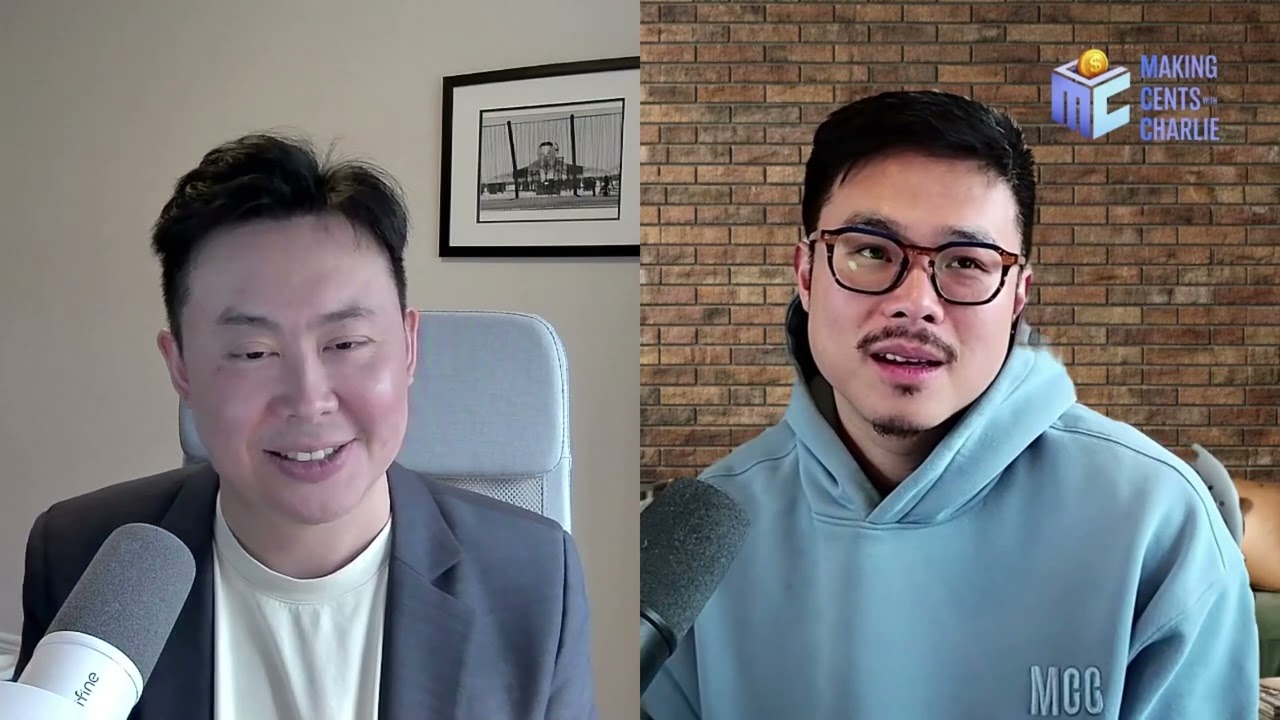
Making Cents with Charlie and Daniel Langdon

In this episode of the MCC Show, host Charlie Liu interviews Dan Langdon, whose career has spanned anthropology, forensic science, accounting, and finally a leadership role in finance and adoption at MCC. The conversation begins with light‑hearted rapid‑fire questions about spice preferences and reading habits, then moves into a deep dive on Dan’s unconventional career trajectory. Dan explains how early interests in anthropology and forensic anthropology led to a forensic medicine stint, but a lack of fit prompted a pivot to business after a career‑decision matrix helped him rank medicine, law, and business. He discusses the tools that guided his choices – a scoring matrix, the books What Color Is My Parachute? and How to Decide by Annie Duke – and emphasizes the importance of flexibility, curiosity, and transferable skills. Both hosts share personal anecdotes about mentorship, answering Slack questions at Vena, and how teaching others accelerated their expertise. They argue that early‑career in‑person work fosters networking, accidental learning, and stronger career ramps compared to fully remote roles. Dan highlights a concrete example of automating a painful monthly account‑reconciliation, illustrating how creating value through automation can both improve job security and free time for higher‑impact work. The episode closes with “two‑cents” advice: focus on building capacity, serve others, automate repetitive tasks, and stay curious.
Chapters
Let's Make Sense with Charlie. Serious business on serious hosts. Hello everyone, I'm Charlie Liu and welcome back to the MCC Show, Making Sense with Charlie. We have an interesting guest today whose career path sounds like a movie script. He started in anthropology, forensics before realizing that financial data tells equally powerful stories. After years, years as an accountant leading operations and partner programs, he is now the head of adoption at MCC, where he's at his happy place, the intersection of technology, finance, and change management. I love the last one. We'll dig into a little bit. A lover of history and storytelling, he's traveled to over 30 countries to experience the world. the world's narratives firsthand. Let me give you a warm welcome to Dan Langton. Dan, I'm really excited to have you both with us at MCC, but also on this podcast.
I'm excited to do this.
So Dan, we'd like to start with just some rapid fire, get us loose and have a little bit of fun, and then we'll carry on with our conversations afterwards. So the first one, hot sauce or chili flakes?
Can I do both? I love them both equally. I don't know if I could pick between them. Anything spicy. Really?
How hot do you get? Because I've had dinners with you where you can take heat.
Yeah. You know, as I've gotten older, I still love the heat, but the heat doesn't love me.
Ah, yes.
So it gets a little trickier, but I lived in Ghana for a little bit and everything had spice in it. So that was the heat level that I got used to.
I didn't know their food had so much spice to it.
Yeah. They even have this soup called pepper soup, which is just Peppers boiled in a broth. Lovely on a hot day.
I, yes, I may make my way down there the next year, especially as we start opening our office down in Africa. Paper book or audiobook?
I prefer reading. I've gotten more into audiobooks, but I find it hard to keep my attention span on an audiobook. I find that I drift away a lot and have to rewind.
I have a lot of respect for your ability to read, your ability to consume. It's like you finish a book in a day sometimes, right? A short one. Yeah.
I don't read as much as I used to, but I still love it.
It's a good hobby. I'm trying to get back into it. I think I've shared with you audiobook does the job just into a certain extent. The new hack I have to keep my attention is to read and listen to it at the same time, just because one is not enough. Yeah.
I, I've been really enjoying audiobooks on planes as opposed to watching something lately. So I've been listening a little bit more on flights.
That's where I started. And just to stop myself from drifting away, I would try to read while listening to it. same time. Speaking of books, what's your favorite author or favorite book?
Yeah, I've got a couple came to mind. So nonfiction, I love Team of Rivals by Doris Kearns Goodwin. So what I love about this book is I'm a big fan of the US Civil War. So I've done a lot of Civil War sites, been to Gettysburg twice. I love learning about Abraham Lincoln. So the book is specifically, it's a biography of Abraham Lincoln, but very much focused on his presidency. So it's called Team of Rivals because he brought together his opponents through the, basically his opponents during the Republican candidacy for presidency. So like Seward was someone he ran against who became a Secretary of State. And it's really about bringing diverse opinions together, in particular ones that you don't agree with. So that book, absolutely loved it, read it twice. Anything by Ernest Hemingway is my favorite, probably fiction. So I've read quite a few of his books, For Whom the Bell Tolls, The Old Man and the Sea, and I just absolutely adore them. I try and see Ernest Hemingway sites wherever I can. I was super excited because he lived briefly in Toronto and his house was 2 doors down from my daughter's daycare.
That's amazing. I can hear the passion you have when you're talking about these books. I love it. It's contagious. Speaking about Ernest Hemingway, if we're talking about the past, if you had the option to go travel to the past or travel to the future, what would you prefer?
Yeah, that's an interesting question. I think the larger chunk of me wants to see the past. I'm curious to see it. Maybe it's a reflection of my age too and the fact that I have a young child. I feel like the future belongs to her. And I'd like to make the world a better place, but I feel like that is now for that generation. I'm slowly here and more interested in seeing the past.
That's such an interesting time to be. The future is, I mean, I'm sure everyone says this every generation, but I really feel like a lot's happening and the future seems very unpredictable.
Yeah, probably more so than at least any time in my life.
We've had a fairly lucky kind of time, I think, on planet Earth. I don't know if that's the right way to put it. At least where we are. I know there's like war in other places, but like generally, generally it's been pleasant. There's— we talk about this here and there. There's enough food, there's enough off-job opportunities in terms of securities, things like that. It's been generally pleasant. I think final question before we kind of just kind of get into, I want to talk about kind of storytelling themes with you. And related to that, you started with forensics data and then you got into financial data and what is your preference and how, what is the story around there? I know a little bit, but I'm sure lots of folks in the audience do not know that side of you.
Yeah. So I think, you know, this about me, that I have many interests and I find it really hard to kind of stay in one place. And I've allowed my career to go in many directions, and that happened early in life. I didn't know what I wanted to do when I finished secondary school. I was thinking about archaeology. I was thinking about medicine, kind of liked it all and couldn't really pick. I opted for a liberal arts degree thinking I would do like history-archaeology combination. And in my first year of university, I took an anthropology course, which is the study of people. And I think the reason that I liked anthropology was it was everything related to people. So they had a cultural linguistic side, and then they have more of like a science side in terms of like archaeology and human remains. And slowly over time, I gravitated more towards the human remains side. So I took all sorts of courses in that and that's what I wrote my thesis on. So I was really lucky. I, I was at the University of Alberta, so they have a really good department, anthropology department there. And in particular, they had a guy by the name of Owen Beattie who exhumed, whose team exhumed the bodies of the Franklin Expedition. So he was the one who like dug up and tried to answer some of the questions that happened up there.
Hmm.
Really fascinating because that, that, that's the only, I'm pretty sure it's one of the few mummifications from the 19th century. So these bodies are in almost perfect condition 'cause they were frozen, permanently frozen. So, so I, I had probably one of the best teachers and then he went on to do forensic anthropology pretty much full-time. So less, less about the past, but actually more, he did a lot of work on genocides and Reconstructing what happened. So I very much fell in love with the medical legal side. Uh, I did my, uh, honors thesis in estimating time since death using human remains. So I, I got to spend time at, uh, medical examiner's office, saw a lot of autopsies, went through files and used data to kind of reconstruct, uh, how to estimate death in a particular situation. kind of my undergraduate degree. Um, uh, it was, I absolutely loved it. It was that blend of arts and sciences. Um, I got to do a little bit of everything. I knew I didn't want to go into academia, so I knew, uh, I knew I didn't want to be a professor. So my father was one and I knew that wasn't the career path for me. Um, so that's like how I wound up doing forensics and I, I did some odd jobs. I went back to school to get a Bachelor of Science.
Mm-hmm.
Thinking medicine was the right place for me. And as I met more doctors, I realized I would love medical school, but I don't know if I would have enjoyed being a physician.
And I had a similar experience. I started in medicine as well.
Oh, neat.
I didn't know this. I remember I did a, I did an internship. This was actually in high school. I was in downtown Toronto and Mount Sinai had a program for high school students where they were able to shadow doctors and surgeons. And at like 17 years old, I was in surgery rooms. I wasn't actually doing surgery, but I got to be there and I got to actually do some work on cadavers, which sounded a lot more fun until you actually get to it. Not a fun experience. But the biggest thing I think that deterred me was just talking to a lot of the early doctors or young doctors. There are people visibly you can tell like this is what they were meant to do. They're— this is the reason why they're on this planet. But a lot of them wasn't sure. They took it because it's a good kind of career path. Yeah, um, for the financials. And that one really kind of hurt when I spoke to them. It just didn't feel good. So that was when I made a pivot as well.
Yeah, and you did math, right?
Uh, no, my parents wanted me to— Asian— my parents wanted me to do math. And my, my, my mom wanted me to do actuary. My dad wanted me to go from Studying math to an architect. I didn't either. I mean, I still went to Mac for pre-med if you're American, if you're Canadian, life sciences. But then I switched to— I did a year of it, then I got into a program called chemical biology. From there, I realized I did not like it and I switched to chemistry. I hated it even more. I was an idiot. I then decided physics is the right move. Did not like that either. And I had no idea what to do. And I realized that at that point I thought I was getting older and I knew that I needed to make money somehow. I was like, if I don't like anything, might as well go into accounting because that is the area for money, accounting or finances. And didn't do great in accounting either. And I got into business informatics by accident and that's how I got into this space.
Yeah, I didn't know that. I knew you did a few things, so.
I went all over the place. The audience, the story, I think, I think there's some crazy stat out there that 60% of people— don't quote me, could be very wrong— something I remember seeing, 60% of people end up working in a career path that is different from what they studied. So if you're a little bit younger and you don't know what you're doing, I think I'm doing okay, I think Dan's doing okay. A lot of us are just— we didn't know when we were younger either.
Yeah, and I don't know what the right way is. Like, it sounds like you had a heavy-handed parental approach. And I had the opposite because my dad like went into engineering. He was a chemical engineer, hated it, and then wound up doing a degree in history and became a professor in that. And so I kind of had the opposite, do whatever you want with almost no structure. It sounds like you had almost like a selection of, for lack of better words, appropriate careers.
There is a bit of that. I mean, I think being an immigrant, but also just in general, like when people talk about Those kind of thought of— thought after positions or career path, there's only like 5, 6 that people think about, but there's a lot more to it. I mean, there was definitely influences, but I don't know what kind of guidance I would give. I think the idea is to fail a lot, go see a lot, go learn a lot, and then you kind of figure out what you want. I mean, I got into this line— I still want to hear your end of your story, but I got into this line truly because I was a hippie and I learned that you could travel while working as a consultant. And in my mind, travel, I thought all traveling was great. Quickly learned it wasn't the case. And I got into a traveling consultant for all the wrong reasons. And I had to leave the space, come back to really fall in love with it.
Interesting. Yeah. Yeah, that kind of makes sense. And I think maybe you and I have that in common that we like to try a lot of stuff. So it's And definitely needed to do that.
I mean, you— your history is quite rich as well. Um, I, I think like in your— I think in your early 20s, it's— you need to fail as much as you can.
Yeah.
And I don't know if you can— I'm sure it's possible, but I, I think if you don't fail enough and you don't see enough hardship in your 20s and you really focus enjoying life, um, you kind of get your 30s and you kind of get to a point where you're like, you might not know if you're in the right place in your career. I think family, a different story on your career, but then you've had maybe like a decade in your 20s where you had a better time, like a good time because you enjoyed it more versus the other side where if you ate glass for a while, you didn't have those years, but then you kind of found your place in your early 30s.
Yeah. And I've been lucky. I don't think there's any job that I've absolutely hated. And I think I've always found small joys in every job that I've done. And I think that's also part of like, if you learn to do that, then almost any role is okay if you're finding at least some happiness and looking forward to work. I, and it sounds like that's kind of similar to you. I don't know if there's been any job you've absolutely hated.
I think every job I've had, there were aspects where I think one of the things that really helped me is just very I'm a very curious person. I think I talk about this a lot. Curiosity plus empathy. Don't know if I'll talk about empathy today, but curiosity is very powerful. And I think every job I've had, there was aspects where I got really obsessive trying to figure something out, and that made it a lot of fun. But FP&A and finance, I think it took me many, many years to understand what it truly means and then really come to enjoy it. Jorrit after, I want to say 12 years in this space, but I know, I know you've took, I know the start of your career is quite different, but you did get into accounting and dig into finance versus I think I went all over the place. Love to kind of hear how you got to kind of the rest of the story and kind of share your learnings with the audience.
Yeah. I mean, I think I landed, um, you know, I realized I needed a career choice and I was really questioning medicine. And I sat down with who's my now husband and we like went through the different career options that I saw myself in and narrowed it down to 3. So business—
Rishi was part of your— I didn't— that's wild.
That's amazing. Yeah. And his parents had done something similar with him. So it was really helpful, like where we did a matrix of what you wanted out of life and then put the career choices and I put down basically medicine, law, And business, and business was a fluke. I'd mentioned like at the beginning that I lived in Ghana for a little bit. That was my first introduction to what business looked like because I was working with the finance department there. And I kind of got to see what this world looked like. And I came back kind of thinking, you know what, business might be a good choice for me. And it had never been on my radar before.
Dan, I want to, before I get there, just because I think you dropped a tip, I think that's really helpful for a lot of people, this matrix that you speak about. Like what are the dimensions? Like what are the, how does it work when you did this assessment?
Yeah, so it was scoring. So there was like a scoring. So one was like financial, like which one would produce the most money? And then I ranked the 3 choices. I kind of began to realize that flexibility was really important to me when I actually sat down. Like I wanted to choose what city I lived in. And I wanted to have growth in career cuz I think by this point I had also known that like doing the same thing over and over again was not for me. It's why I had been questioning medicine. I mean, I love forensic medicine, which was the branch of medicine I knew the best at the time. But as I started to think, okay, what happens if I don't do that? I was like, I don't know if I wanna see 70 patients in a day. That's really for me. And yeah, so, and I wish I had kept it because I don't have it anymore, but I came up with like 5 criteria that I was looking at and then ranked it. And the business school won, law was second, medicine was third. I think largely because of that flexibility, because medicine, you're kind of stuck with wherever you can go. You know what I mean? I looked at, it's where you get into med school. It's where you get in for your residency. If I want to do forensic medicine, it's where I do it. Postdoc, and then there's not that many jobs in forensic medicine. So it becomes where, where do you find a role?
I think what's really important you're saying is like, you have to be intentional. You and I talk about this all the time, kind of think about what are your non-negotiables. I think the questions that you had were very uniquely yours. Not everyone can use that, but really understanding what's really important for you. I know people change over time, but a lot of us, a lot of us A lot of us change, but a lot of us also doesn't change as well. I spent a lot of my life trying to change what I was, then I realized that it was never going to happen. And I think understanding and accepting that early on and using that to kind of path out the potential options would be really— is really powerful, kind of creating those criteria that you were talking about. But also the other thing that you've dropped, I think was awesome, was— who did I hear this line from? It's something along, think through the decision.
Yeah.
I think I don't, I'm sure I'm butchering it, but you really thought out if you went into medicine, you got to go to this school. You had to go here for residency. What does that look like? And you sat there and basically put yourself in the shoes of the future you, and that made it easier to make those decisions. And I think that's, that's really powerful.
Yeah. It also, um, it also like gave you comfort when the decision was finally made and it's hard to give up, uh, I think on something that you had envisioned for so long. And that definitely did take some time. But as I look back, I think I can only say that I made the right decision and I've enjoyed my career probably more than I would have going into those other 2 fields.
I love it. That's for all the younger folks out there, figure out your non-negotiables, sit there and think through it. If you can't, go find someone that's done that. They can give you what that journey looks like. Or if you want, you can also just cheat with AI these days.
Yeah. And there's powerful books and tools. Like that matrix was a very powerful tool to help make a decision.
What kind?
And what kind of tools?
Yeah, I've never, I at least didn't have access or I didn't know about these when I was younger.
I had no idea, but this matrix was like effectively how to kind of, you know, it was like what's important and then ranking in order. Another thing is like If, if, if people are looking at books, I love What Color Is My Parachute? Um, which I use for career planning. Um, that one was like very much like helping you think outside of the box of career, like what you want to do. Focuses very much on less on title and more what your day-to-day looks like. Um, so like one of the activities is in your past jobs, which was the first one you're most excited to do? Um, You know, so versus which one do you dread doing? So like for me, Excel and number crunching was always my favorite. It was something I kind of would love to do right away. And the other book I love, I really love is How to Decide. I'm trying to remember the author's name. It's like Annie something.
I think you lent it to me. I have, I haven't touched it. Yeah.
It's, uh, yeah.
How to Decide by Annie Duke. I, I gotta, I gotta—
Annie Duke. That's—
yes. Yes.
Yeah. And I love that one because it's, it's from someone that I wouldn't think has to make decisions. So it's by a professional poker player. Um, and you know, she's constantly taking various pieces of information and having to make a decision fairly quickly. And she basically took that skillset and applied it to life decisions. So, you know, what are the decisions that you need to speed up and go through fast? Which ones can you drop right away? How do you gather information? How do you identify the information that you're missing to help make decisions? So I found that book like insanely helpful for times that I've been paralyzed in decision-making just to help navigate. And I'm sure there's tons of other great tools out there.
Those are really good ones. When you mentioned tools, I thought these were like online tools or, but these are, they're more about frameworks and That's our next business idea. I think it'd be a great thing. I mean, I don't think I got any guidance from the guidance counselor back in school. I can see the difference between folks like you or my brother was really intentional. He knew he wanted to get into marketing from day one. He knew he wanted to make money through large impact in terms of kind of social psychology, which is all aspects of marketing. That's something you fall in love with really early on. I basically just took random paths and followed people. I don't think I would give that guidance to anyone. Kind of looking at where I am today, and oftentimes a lot of folks come to me for advice, I think the 2 that I found really that worked for me is basically what worked for me, I think, is the curiosity I brought up earlier, which is like everywhere I went, I tried finding something I learned. And I think if I'm going to boil that down to some wisdom to share, which is like, if you don't know what you're going to do, Build capacity. I stole this from Alex Hormozi, which is— what do I mean by that? Here's some examples I have. If I want to invest and I don't know how, well, at least you need money to invest. So save money capacity to do it. If you don't know what you're going to do tomorrow, but you know that if you go out, drink or whatever, you're going to have less time tomorrow, you're not going to feel as great. So Choosing to take the path that builds the most capacity so that whenever you need to make that decision or do whatever you need to do, you are better equipped for it. And then related to kind of this conversation, I think it's if you have an inkling where you want to go, even if you don't, there are skills that are universally applicable and useful. Try to build those.
Yeah. I think that's like the transferable skills is really critical. I think in many ways I've made a career of being a generalist. You and I, decently handful of things that allow me to go into different areas of business.
Yeah, we've kind of made this session today really about kind of career path, how we made decisions, how we kind of moved around. I want to make sure that we have, I think about 5, 10 minutes left. Tying it all back together. I mean, you're in finance now. I'm in finance now. We got to a similar position through a very different path. So all these learnings that you just shared, what helped and what didn't help that I think you could share with the audience?
Yeah, I mean, I think, so for me, I think being open to change was one thing that was like really big for me is that I constantly tried to see opportunity in everything that I did. And I think that opportunity, I don't know if I'd call it a blue ocean strategy, But it allowed me within a business to kind of go and slide around and see things. I think the curiosity is a really big thing. When, when I hire, I always look for curiosity and that's like a big promotion. Like if you can find interest and get excited about things, you're going to have a promising career. It'll allow you to connect with people. You know, in our line of business, I think that's one of the things that makes a successful consultant. If they get super excited about the business they're consulting with, The client's going to like working with them a lot more, you know, and I definitely saw that in myself when I was a consultant that I absolutely loved. And I still do love learning new businesses and getting a chance to meet and see a new industry. That's probably my happiest place is when I get a brand new industry that I've never seen and I walk out very knowledgeable in it. I think the other thing is I've been lucky and had really good managers. And there's a component of luck to that for sure. But, you know, and I think I've also found good mentors along the way that have been really helpful. And I think that's one thing that I'd really push is like, make sure you're networking and learning from people. I'm not a natural networker the way I kind of see other people, but I've always kind of been able to find people that are willing to help out. And then the last one that kind of comes to mind is teaching others. I think when you're able to teach something, you know that you know it. And back when I was at Venna, when I was much more junior, I remember my manager, Justin Chu, who you know well.
Yeah.
You know, it was just at the time when the chat, we just got Slack. So it was a chat function and Justin really, really pushed us to answer questions. And it was absolutely awful at first because it's like, I didn't know, I was looking stuff up and then I would jump in and answer. But Justin's team, we were one of the first ones to start answering questions. So, and you know, one of the founders of MCC, Eugene, was on that team. Both he and I embraced that. And it then became us, uh, got us, uh, into pretty much very much experts in the system because we started answering questions. You start getting invited to things, uh, product sessions and so on. It really compounded. And I think that was, that was why I was successful at, like, if anyone asks, like, why my career at Venmo was successful, I think it really started at answering questions for other people in a Slack channel.
I didn't know about that story. And thank you for sharing that. And I really liked that for 2 reasons. I, I had a similar experience where earlier, younger me, there was a lot of, I don't know. Um, I don't know what the right word is, but it was a lot of, it was kind of focused on short-term gains and selfish, self-centered gains. And I made a lot of decisions around that. And then a couple years ago, kind of had a shift in mindset, changed my life. A lot of kind of hitting rock bottom and learning from it. And, uh, I started focusing a lot in terms of serving. Now I truly believe like the purpose of life is to serve others. And I think funny thing, when I stopped caring about myself and just started helping as many people as we, as I possibly could. Um, the earning potential exploded afterwards. And I mean, we, you and I, we talked about this. This company started because I didn't know what to do and I just, I was just out there helping people for free. Still a big part of how we get biz dev and business today. I think that is, if you don't know what to do, try to figure out how to help others. In, in that focus of helping others, you are creating value.
Yes.
And everything will come with it. And I think there's another aspect you brought up, which is, I think this is Jensen, um, NVIDIA CEO Jensen's line, which is you cannot escape a bad past. If you help a lot of people, they will cross, even if you don't remember. I think, uh, Oni, actually I learned this last week at Accelerate. There was a lot of folks that's been helping us at MCC for reasons I didn't know, but a lot of it was many of us Helped them when we were at Venom. This is 8, 9, 10 years ago where we had no idea. People came to us with questions and we, instead of brushing them off, we sat down and helped them, coached them, trained them. Uh, yeah, who knew 10 years later they want to give back and help as well, right?
Yeah, yeah, it's, it's, uh, funny to reflect on that because, um, you know, I don't think either of us sat down You know, thinking that that would be the end goal. I think of those early days in Vena and it was just amazing to sit down and help each other. And it's one thing I've been enjoying at MCC particularly. I was at our South African office and I started seeing that and it reminded me a lot of like, you know, just that knowledge transfer that came and the strong culture and team that gets developed as a result of helping one another and uplifting each other.
Related to that, another thing, since a lot of the theme today is kind of helping younger folks decide and work through the career path, find a place that is in person. My God, do we see the difference. Us from our side as managers and execs, what does it look— what does it look like for ramp and learning and collaboration and commoderate in an in-person office versus a virtual one? I think virtual is good, but I think early on your career, you are robbing yourself of a huge boost in career growth by finding something that's virtual. You can always do this later. That's what I recommend everyone, especially if you're younger, earlier, make sure you get a place that's in person.
Yeah, I think so. I would align with that. It's just great to make connections and I think Most people that I talk to can pinpoint career directional changes in a conversation, in a physical space that you're walking by someone. Also allows you to get to know people outside of your team much easier. And I definitely would agree that your first job should be in person as much as possible, and you should go in. I remember even Venna, Venna had a very liberal approach to, you know, whether you needed to be in office years and years ago. And I think I went in every day because I was just learning so much.
The people made it easy. There's a lot of accidental learnings and rapport that you're going to build through in-person. I mean, many of us are friends for life now and colleagues or co-founders now. It's— I don't think I've ever had these similar relationships, or at least to this volume, at any of the places I worked remotely afterwards, even when I saw them daily. Now, there are exceptions, but generally I find that The truth. Dad, I think this is a good point to kind of end this. This was a lot of fun. I learned quite a bit about you. Something about the podcast structure gives people a platform to speak in a different manner. So this was a lot of fun. But for MCC, Making Cents with Charlie, we always like to end this with a kind of high-value kind of advice from you, your 2 cents advice. I'd love to hear yours.
Yeah, so this was a lesson early on my career as an accountant. I had to do this account reconciliation, which was the most painful thing to do. It was just so annoying. And I found a way to automate it just because I didn't want to do it anymore. And it was interesting because the member of the accounting team that I was working with, she was like, oh, this is so easy. Why don't I just take this off? Like once it was automated, I'll take this away from you. And, you know, it's easier for me just to run this now. And I basically had taken this like very painful couple of hour thing that I needed to do every month. And I was like, ah, I'm onto something here. And so my approach has always been to work myself out of a job and then find a new one in the process. So I've always tried to approach whatever I'm doing, realizing I won't be doing it again the same way the next time. And I think that's been the best thing. And I love, you know, technology like Fenna for doing that for people. Now I get to help people automate themselves. Out of their current role into work that they really want to do?
I think there are, there's definitely more, but I think there's 2 kinds of aspects of responsibilities or functions. I think there are ones that should be eliminated and there are ones that should be refined. Certain things you're going to have forever. You should get, you should focus on getting better. Certain things you should ask yourself, like, should this be done manually over and over again? If that's not the case, try to figure out how to automate it. It may not create the best job security, but you'll have a hell of a great time doing it.
Yeah, I found it creates pretty good job security because it shows your value to the rest of the organization. I find you become more demanded by other departments.
I agree. But I think, Dan, you and I spoke to, like, sometimes you get so good at it. Next thing you know, like, there is no options for you. But no, this is great advice. I think for all the audience listening, focus on creating value, focus on learning, and focus on automating things that should not be done manually anymore. And I think you'll It will take you far. But Dan, this was an absolute pleasure. Thank you so much for being here with me.
Thank you, Charlie.
And also both the company and the podcast. Thank you so much. And all the listeners out there, thank you so much.
Thank you, everyone.
Stay tuned for the next episode of Making Cents with Charlie.
More from Charlie


Making Cents with Charlie and Mark Schroeder | Coffee, Sports, Disc Golf, DIY & Scaling South Africa