Making Cents with Charlie - and Jacob Kim - Full Episode 3

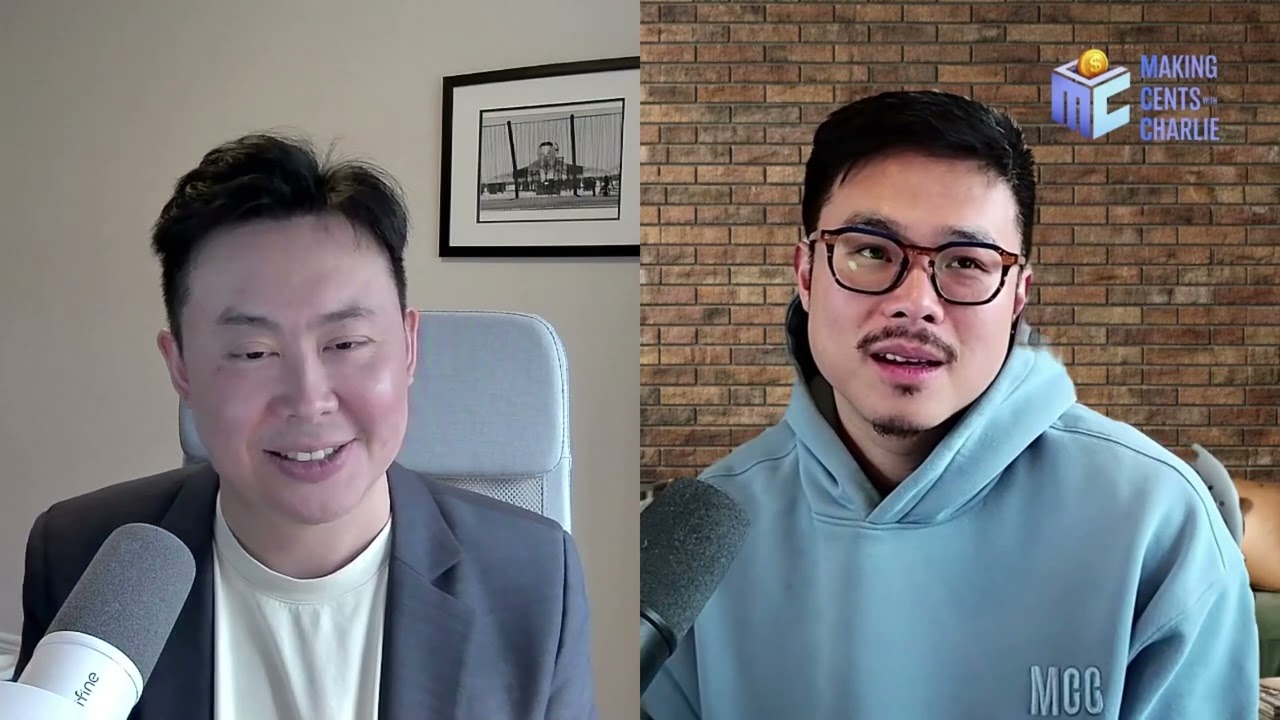
In this episode of the Making Cents with Charlie podcast, host Charlie Liu interviews Jacob Kim, the Head of Sales at MCC, to explore the world of business development (BD) from a practitioner’s perspective. Jacob shares his unconventional career path—from university leasing agent to HR tech, marketing tech, data engineering, AI, and finally FP&A sales—highlighting how each role reinforced his data‑consolidation expertise. He defines BD as the top‑of‑the‑funnel activity of reaching out to an ideal customer profile via phone, email, and LinkedIn to test product‑market fit, build trust, and uncover pain points. The conversation delves into how BD tactics have evolved over the past decade, especially with AI‑powered parallel dialers that enable 5‑way simultaneous calls, dramatically increasing outreach volume. Jacob emphasizes that despite technological advances, core principles—empathy, curiosity, and genuine human connection—remain essential. Both hosts discuss the importance of empathy versus sympathy, the role of curiosity in self‑improvement, and how these mindsets shape leadership, one‑on‑one coaching, and team culture. They reflect on handling rejection, learning from mistakes, and adopting an incremental‑growth mindset (e.g., 1% daily improvement, as described in Atomic Habits). The episode concludes with a rapid‑fire segment where Jacob shares personal preferences (craft beer, cold calls, hunter mentality) and offers a “2‑cent” piece of advice: stay grounded, breathe, and count blessings to maintain resilience in high‑pressure sales environments.
Chapters
Let's make sense with Charlie. Serious business on serious hosts. Hi everyone, I'm Charlie Liu and welcome back to the MCC Show, Making Sense with Charlie. Thank you for tuning in to our first 2 episodes. This podcast explores finance, leadership, and happiness. At the end of today's episode, I'll be asking our guest for his two-cent advice. For now, let's make sense. So pretty excited today because we have something a little bit different. I have Jacob Kim here with me, and I'll let him introduce himself for a sec. He is our head of sales. So a little bit of a pivot from the last two guests, Gene and Peter, who came from the finance, came from the integration space, comes from the sales side, and he didn't always sell FP&A platforms. It'd be really exciting, I think, for everyone to kind of understand What does the sales world look like? To me, it was all pixie dust, magical fairies and unicorns before I started doing a little bit of sales. And it's a world that's fascinating. I think there's a lot to learn that can be applicable across all parts of real life. But Jacob, let the guests kind of hear a little bit about you.
Yeah. Hey, thanks for having me on this platform. My name is Jacob Kim. I've been in sales for roughly 14 years since I was in university. And yeah, I think like Charlie said, I didn't come from the FP&A space. Transitioning wasn't the easiest, but it's definitely something I'm very grateful for having the opportunity to be in. Yeah, let's, let's get to the questions.
Yeah, this is gonna be exciting. I mean, there will be questions, Jacob, but it's Just a conversation, right? That's really just to kind of learn from each other, share our experience with the audience as well.
Okay.
Who recently stepped in the full kind of ownership of the whole sales revenue responsibility at MCC. But now I know for the vast majority of your history and career, you did, I think you did spend so much time in accounting exec, but then you later pivoted back into BD. Uh, one thing I really find fascinating with you and it's your deep, deep love of business development is unique. I would say like a superpower of yours. I find a lot of folks get into BD and they want to get out immediately. How did you get into this and what makes BD so fascinating for you?
Yeah, no, that's a very— thanks for the call out. And I think that's a fascinating question. Business development is something that was really introduced to me at a very young age. And where I found the love in business development is how uncomfortable it feels at first, but then once you do reach, you know, consent and understanding with the prospect, how good it feels. And I don't know about you, but I love quick wins and BD is that outlet for really quick wins. So I just fell in love with it. Now, just to explain a little bit about the work required for business development, there is the archetypal 3, which is the phone, the email, and then the LinkedIn outreach as of late. And in all 3 facets, we're eating glass every day. It's probably one of the hardest roles if you are uncomfortable with rejection, but it is a story of our lives. Rejection is part of it. So there's a lot more to kind of get into the weeds with, but I think that's kind of on the high level, just the quick wins that you get. The ability to sync with the prospect. And I didn't really explain in detail, but there's also this love for understanding how the prospect feels. What are they going through day to day and going through that rabbit hole? And there is an enjoyment in that. It's kind of like the Sherlock effect.
Such a difficult kind of responsibility you own for business development. I tried it myself for Few days. The amount of rejections you get is unlike anything else. All the audience listening, the sheer volume is there's nothing like anything else you can do, and it's a great learning piece as well. I remember when I first started MCC, the last company I was at, Onplan, we didn't make it. I didn't know what I wanted to do, but for some reason, I woke up the next day after Onplan closed, had this realization that almost everything in life is. Kind of BD. What do you mean? What do I mean by that? I mean, if you want an opportunity for a job, you got to find people. You got to find these opportunities. If you want to sell something, you need to have those introductions. You need to have those relationships. You need to start opening doors. If it's to find a mentor, if it's to raise capital, if it's to find people to hire, I look at it as recruitment, almost, not almost, exact same process as Kind of business development, thinking about the funnel conversion stages, things like that. And learning kind of, I found that was kind of the biggest learning center that drove the start of kind of early success at MCC. Basically going out there, talking to people, not just for getting opportunities for sales, but also just learning and talking to the world, seeing what kind of pain points people face. And then you're able to pivot on the fly. Based off your BD outreach tactics, or even what are the product offerings that the market is looking for. For you, I think this was an interesting journey because you never sold in FP&A. You sold in— you were always in data. If you could share kind of what your experience was back in that world, especially if you can tell the audience how much it has changed. And later on, I think it'd be really interesting to hear what was your journey like switching to FP&A.
Yeah, so I sold a lot of different When I was in university, I was a leasing agent where I was leasing short-term housing for students. I was in the University of Waterloo at the time, and nobody actually lives in Waterloo, so there's a lot of these short-term rental apartments. Then I moved into HR tech and I was doing that for a while, and then I was doing marketing tech, creating digital experiences, and then I went into data engineering tech. And then AI tech. And now I'm in FP&A. Now FP&A is, I would say, the hardest one that I've stumbled upon. And the core reason why is that it looks different for every single industry, sub-industry, and then by each company as well. The close process, what does reporting look like? What does forecasting look like? The depth is unbelievable. But I find the best BD folks are individuals who are sort of like the Sherlocks, where they're always questioning, how does that prospect feel? And in the world of FP&A, I think you can start to go into a lot of different rabbit holes, and you can say that it's a fault if you're at it too long, but I would say that you have to go in depth in order to, in order for BD to work. There is a level of trust that needs to be developed with the prospect, our ideal customer profile. In order for that to happen, you need to speak their language perfectly. I guess this transition was very difficult in that sense, but also it gives you a holistic understanding of the business itself, like what actually gets their gears running, what's working, what's not, what are the opportunities that they're not thinking about. So I'm super grateful. And I think this type of challenge at where I am in my career is the right one. But I guess there is like this red string that crosses all these different roles that I had. It's the ETL work, right? So regardless of what the technology was, people were having a hard time consolidating their data, making their data actually work for them, being able to speak to their data like you do, like an analyst. So it's, it was really reassuring to hear that, you know, in the bottlenecks of data was still there because I can really speak to it. But yeah, it's, it's a sobering thing. FP&A is not for the kind heart.
Speaking of this, I just realized I should ask this earlier. I don't know if a lot of folks, especially I'm guessing a lot of our audience are in finance and accounting. This is primarily, I mean, we're in finance and accounting. How do you define BD? What is BD to you? And so that the audience can understand.
Yeah. So business development is the act of reaching out to your ideal customer profile and it's for the business. To be able to test their product market fit through conversations over the phone, through LinkedIn, through email. And in principle, what it is, is you're speaking to total strangers and you are essentially within your problem statement trying to see if there's alignment with some of the challenges that they're having in their world. And if there's enough resonance and there's enough conviction and enough trust, For the other side to say, hey, yeah, I'm willing to learn more. And thereon, you know, pursue a longer conversation. And that looks like having a conversation with someone like yourself, Charlie, or having a conversation with one of our account executives. But the business development side, I would say, is that top of the funnel. And it is to, again, to speak to your ideal customer profile, be empathetic, and see if there's actual problems that you're solving for.
One piece I always like to think about is we have a good service. I mean, if you're working sales, you should work for a place that you believe in the service and the product. You've seen it with clients. And the goal here is to really just put that in front of more people, be able to help more. I know you've done this for a long time now, many different industries. How has BD changed in the last, I don't know, 10, 10, 15 years that you've been doing this? The world's been changing. How has BD changed for you and how you see it?
Yeah, I mean, there's a lot of different things that changed. I think the starkest one is the ability to just put out so much more output. The volume of output that you're able to put out in today's BD world is unbelievable. Where it was a magnificent feat of hustle and grit to do like 50 calls a day is something that's just a whiff in the air where people are making 300, 200 dials. That's thanks to AI technology. But I also think our Target demographic is changing in their wiseness about the technologies and, and wiseness about the cohesiveness of how things fit in the, in the entire journey where they're not just thinking short-term. I think our prospects are now thinking more long-term as well, where they're thinking about, you know, is this going to help with our entire process? Is this going to be hygienic, like good hygiene for our data processes as well. There's a lot more to go into, but I think it's the volume that's, that's really there.
I've seen you really take the kind of more empathetical, deeper approach with the team. I haven't seen this elsewhere. Elsewhere, I've often seen it with where it's quite shallow, but you really get a team to have deep conversation and actually study up on what we provide. The volume that you bring up, what does that mean? Because a lot of the folks on the other side don't know how this process works. Like when they hear someone's dialing 300 calls a day or 50 calls in the past, like what actually changed? Is someone literally just picking up the phone? You used to have the ring 15 years ago, but now you're actually like, what does it actually look like to give a painted image for our audience who's never done this?
Yeah, of course. That was a slight oversight. Not everyone's been doing what we've been doing. So what it looks like is someone that's on a web browser, That has like 6 different lines with different area codes, and they're able to make 5 dials at once. You create your list and how modern-day AI parallel dialers work is that you make these 5 calls and the first one, that first individual that picks up, you're directed to. So in that small instance, you're making 5 dials versus the one. So that's where you're getting the, the exponential amount of the volume going up. But I think what modern sellers forget is that the common principles that were existent since my beginning and Web 2.0 is the, like you said, the agility, the ability to kind of be empathetic. If someone picks up and they say they're at the gym, you might respond with, hey, like, okay, I caught you at a bad time. Sorry, I'll call you back. There's that. But then there's another individual that goes, hey, is it back or is it abs day? And then you start to develop this empathetic Like relationship. So there's a lot to do with the core principles about how to be a good communicator and also an empathetic human. So yes, there's a lot of different selling tactics, but I think the one that we like to lean on is the one of empathy, just to see people eye to eye. The unforgotten tale of first principle thinking of let's just tell the other person that we're human and we care. And I think volume only helps us be able to tell that story at a larger exponential opportunistic way.
I love that piece. And you and I talk about this all the time within organization. I think I used to think for a while, for the last, I want to say 2 years, I was using empathy. Recently I added curiosity to this. For anyone that's listening, there's a huge, huge mountain of difference between sympathy and empathy. Empathy is putting yourself, really putting yourself, removing the ego, removing the self, putting yourself on the other side and then asking questions. What are they looking for? What are their pain points? What's their life like? Sympathy is feeling happy, feeling sad, or feeling down for the other side. It just comes from you. The other side is really you putting yourself in their side. And I think mixing that with curiosity makes you better at being empathy as well. Just being obsessed, learning to get obsessed with what the other side is like, asking questions, often asking dumb questions. Dude, those two has changed the way I lead, the way I look at business, the way I think about offering, think about our sales, even outside of work. I mean, a big part of this podcast is driven by you and I, our goal to just be better humans, better individuals. With our parents, with our friends, with our loved ones. That empathy, such a, such a good piece. Just the other day, I was just reflecting on how sometimes I digest mistakes I make. Part of it was, I have this tendency, maybe a lot of folks, I don't know about you, but I'm sure a lot of folks, especially type A folks, I'm sure there's a lot of like finance and accounting where it's almost an imposter syndrome where you mess up and You're quite hard on yourself. You're like, I messed up again. I messed up here. And then, and I'm getting to the part where I'm talking about interaction with others, loved ones, friends, family. Not actually like, let's say you made a code mistake or something, but you miscommunicate something, you misalign something, you didn't bring something up.
Mm-hmm.
And something I found that was really powerful learning here is instead of just focusing on I messed up. which arguably I don't think it does anything. I don't think there's any sort of positive unless you mess up like a lot, you don't learn from it. But the bigger learning here is being curious on the other side. Like, what did I do? How did I hurt this relationship? How did I hurt you? How did I miss expectations alignment? Which you may have overpromised someone else because of the promises I made, right? If you focus on the curiosity, what exactly was the impact on That side, again, that side. So that's the empathy perspective. And if you just focus on that, those 2, then you're really focused on how do you improve the situation than just feeling down on yourself, which is not reproductive.
Yeah.
'Cause it's really hard to go, how do you fix the situation? But if you just focus on curiosity, empathy, quite a powerful combination.
Yeah, absolutely. Yeah, I think that's how you kind of get over a lot of like self-doubt, right? Start thinking externally, you know, in all relationships really.
Speaking of this, I remember, I remember a line from you. I think this was in the one— this was in the winter, uh, it was after we were in Saga for that team. Yeah, you and I had a drink near, near my place where you had a line that was— God, it was so good. I was talking about kind of how you manage a team. As a mentor and a manager, some— I'm probably butchering the line, but it was something along the lines like your whole job as your manager and mentor is to basically really understand from an empathetical standpoint, your team, how they run, their ups and downs, how they work, individually private, not private, selfish desires and goals. And your job is to help them achieve that through the vehicle we have.
Mm-hmm.
Do you remember this?
Yeah. Yeah. No, it's, uh, I, it also, it, it makes the job much more worth fighting for. There's, there's our work lives, but then there's also our personal lives. And I'm not expecting everyone to share with me all their dirty laundry, but I am curious. I am curious about what is it that you're going through. I want to understand the collage of different emotions and things that are going on in your life right now before I have the right to say, hey, like, You're not missing quota. You're missing quota. You're overexceeding quota. Before we get to those conversations, I kind of want to understand where you are. And by understanding that, we can look eye to eye and start to figure out a holistic plan about how we're going to get to your goals. And I think I have a lot of thanks to you for helping me think in this way, because you kind of— what, you found me at a dark place and you saw potential where I didn't at the time. So I think that's sort of the whole methodology that I've kind of been trying to scale, which is let's see potential in where we can be, you can be, and ignoring me, let's try to be selfish about where you can be. And every day, let's just work towards that. So every phone call that we're making, every email, every LinkedIn message we're sending is not just to make more money for MCC. It's not to Improve our professional desires, but also our personal desires to get to a better place mentally. So that's really a core ethos, I think, that we share in the sales team at MCC and MCC in its entirety.
Appreciate you calling it out as well. I mean, those people had hard times. I've messaged you when I was at low points as well. We held each other accountable. It's been, it's been a good journey together. I guess it's like one of the, to me, it's like the The best thing about being in entrepreneurship is kind of finding cool people you want to work with. It's like best friends that you can work together and align. And I think what brought us really close is that at that point in our lives, we were really focused on that word empathy and how to just be better human beings. For a long time, for many of the audience, even myself in the past, I often saw it as different things. Spiritually, mentally, being a good person, being good at your job. For years, I remember thinking I had to be a different person. I had to become a different person to get good at what I— get good at sales, get good at leadership. And oh my Lord, the amount of friction I had selling styles, managing styles. I didn't— that just was foreign, alien to me.
Mm-hmm.
That wasn't good for my health, but it also wasn't good for the people I was managing, the clients I was working with as well.
Mm-hmm.
All of this relates to each other.
Yeah.
I like the line you said, that red thread that connects all of them. Yeah, that's a good one. These are all connected.
Yeah, everything's connected. And you, like, you have your one-on-ones, everyone does. And if you start to go into your one-on-ones and start talking about work, the other individual on the other line, whether that's a coworker, colleague, or one of your— one of, like, a person on your team, they come onto the call with so much anxiety. Start the conversation with, Hey, like, like I know we talked last time about, you know, your, that, that accident that happened. How's everything been since then? It's, it's really easy to forget that like we're complicated collages of like different emotions, different timings. Like it's, and, and, and I'd rather much spend more time building that with you than rush to Getting like more, getting like work done. I'd rather understand where you are than, than trying to get to like this XYZ target for a quota. Because all of that will come after. All of that, I'm strongly, I strongly believe with high integrity and high understanding of each other on a personal level, we can get to the targets and goals.
At the end of the day, we're just people managing people. Which is the team managing the clients, which is the prospects and the clients, which are also people. It's just people managing people, managing people, managing people. And yeah, I think it all starts with that relationship. Despite all the AI stuff that's going on, still people helping each other. They're just tools for us. And it's really important to understand that aspect, wanting to help each other. Even you and myself, we're managers, I think I think a good way of running organizations is really understanding like those selfish desires and goals of your team, figuring out how that largely overlap with the company's kind of strategy and goals and direction. It's never going to be 100%, but it should be 40, 50, 60, 80%. Anything less, you should probably question your fit for both the manager and the individual folks. And you're not going to find that out if you don't have those personal conversations.
Yeah. Exactly. And then like, yeah, go ahead.
Sorry. Yeah.
And then it gets much easier, right? Let's rally towards this goal. We get so sure, like, and let's make one more phone call. Let's make, let's push through. You know, despite us having like a tough Thursday, let's try to make Friday better. And they see you eye to eye. We see each other eye to eye and we have that mutual respect and we say, hey, This is all for the greater good of all we've spoken to, and we can now find strength to push through. 'Cause BD is especially an emotional toll. Like you said, there's a lot of rejection and you have to, it's like the modern day foot soldier. Every day you're putting on such a heavy pack and you're climbing a hill. And every day that means, again, we're, we're talking about performance, high performances. You need to be, your tonality needs to be on point, right? On the phone, your energy needs to be there, your patientness to be able to listen and respond in a correct way. And then your diagnostic of the situation and then being able to, you know, seriously convey that we are the solution for their current situation. Having all of that and being able to show up every day over phone call, over phone call, over LinkedIn message is incredibly difficult. It's just, and I think the spirit that you need is that where we are empathetic to that. And then we're all rowing in that same direction.
Do you have a secret that helps you stay unserious during serious times like this? How to stay motivated and positive during hard times? Because you guys have a lot. I mean, we're a startup, we have a lot, but you guys are a BD4 startup. I can't imagine. Is there anything that The trick that you use for yourself and the team?
Yeah, yeah. I, the one that I've always heard from my good colleague and mentor Yusuf is we're not surgeons. Like if we make a mistake here, like we're not gonna like ruin a life. Mistakes are marginal, but if you don't, and if they are marginal and if we do say that they're, they're not like, like the worst thing that can happen, then why aren't we making more of it? Why aren't we trying and daring the boundaries? If all a mistake can do, as long as we're patient learners, is learn So that's, I think, the way I look at things. And if I look at that like that, I can start laughing at all the different mistakes that are happening day to day, all the blunders, all the little, you know, misspoken lines, all the different times we have miscommunicated internally. We are here to get better, and we need to create a platform where people can feel like They can, they can get better and make mistakes.
That's such a good one. Such a good one. We should thank you. Is it Yusuf?
Yeah.
That's such a good one. I had a similar one from my brother, younger brother. And I think there's a, there's a big, I think the big learning here is focusing on the learning aspect instead of the end goal. Can't, you can't, you literally cannot learn without making mistakes by definition. Learning is into new territory. By definition, by going to that new territory, you're going to be learning. You're going to be making mistakes. The more mistakes you make, the more you learn from it. And if you just focus on the incremental gain every day, you'll make it. I remember my brother told me this a long time ago. He told me, don't focus on all the kind of milestones and goals. Just focus on getting a little bit better every day. And that compounds over time.
Mm-hmm.
You're getting better every day and the vast majority of your days Which are part of weeks, which are part of months, which are part of years, which the, if the vast majority that you are getting better, it will compound. I think Atomic Habits was the one that's crazy where if you get 1% better every day, just 37 times by the end of the year. Imagine that for the vast majority of your life. I love it. Well, thank you for this, Jacob. We're coming to an end. We always like to kind of wrap this up with kind of 2 pieces. One is kind of just a rapid fire.
Mm-hmm.
Keep it fun. Keep it light. Let me know your immediate answer. And then at the end of it, which is the special of Making Cents with Charlie, what's your 2-cent advice for the audience? So let's start with the rapid fire. Craft beer or craft spirit?
Craft beer.
Is there any type of beer? Blondes, dark ale?
Uh, I think ales.
Yeah, just in Colombia.
And so yeah, go ahead, finish. Yeah.
How was your time? Your time in Colombia? How was that?
Yeah. Yeah, that was good. That was good. I, I was just gonna say, I had, I had a good time trying out their homebrewed beers. I, I'm a big fan.
Big culture down there. BBC is everywhere. There's one in, uh, where you were in Rio Negro. There's a really nice spot. I'm guessing that's the one that you went.
Yeah, yeah, exactly.
Really big beer culture down there. Second one, cold message, cold email, or cold call?
Cold call.
Farmer or hunter?
Hunter.
I would have questioned what you did if you said farmer. What is your favorite movie? Favorite sales movie?
My favorite movie these days is Zootopia.
One or two?
I like one. One is good. Yeah. I think it's a good sales movie too, if you think about it. It's a little rabbit growing up and challenging social societal norms.
That is true.
That is true.
Do you have a victory song after you close the deal? What do you celebrate with?
I really like GoldLink, Her Side.
And then the final piece, what is your 2 cents advice for the world, Jacob?
Yeah. 2 cents advice. I would say like, feel the surrounding. Like be grounded. Oftentimes it's not, it's easy to just be living in the future, especially in the jobs that we do. You know, take a look outside, you know, feel the ground beneath you, take a breath and realize how good things are and start to count all the blessings. And then maybe do that exercise for 5 minutes. And if, and I'm confident that it'll make it much easier to face your screen. And take that next meeting.
Well, thank you so much, Jacob. And thank you everyone else. Thank you listening listeners for listening and tuning in as well. Thank you so much for this and everyone's support. Appreciate it, Jacob.
Thank you for having me.
Awesome. Stay tuned for the next episode of Making Cents with Charlie.
More from Charlie



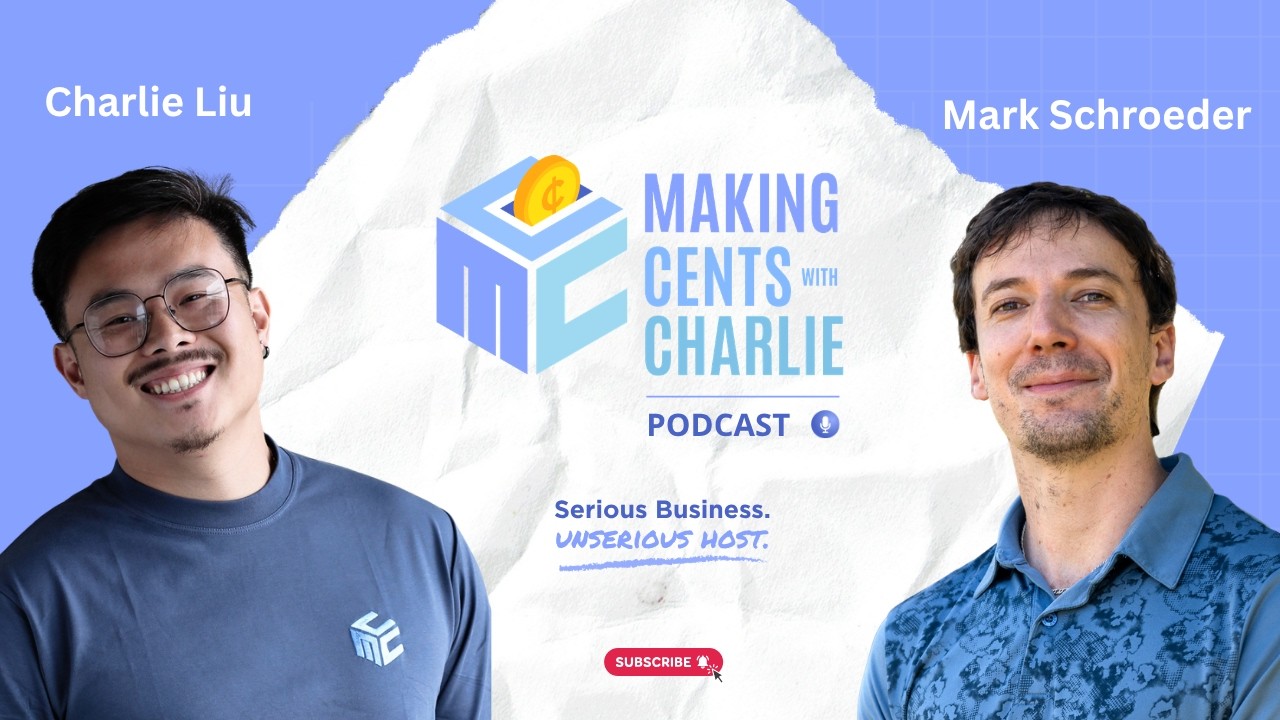
Making Cents with Charlie and Mark Schroeder | Coffee, Sports, Disc Golf, DIY & Scaling South Africa