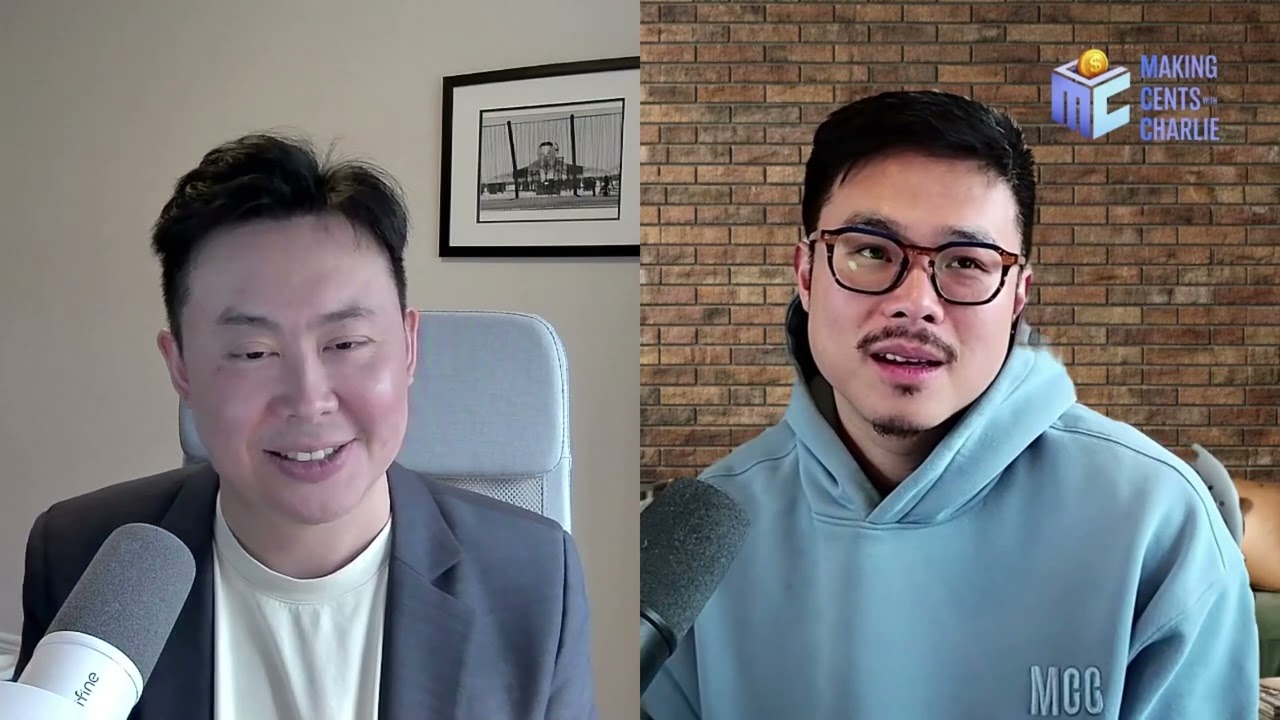
Making Cents with Charlie and Greg Hood
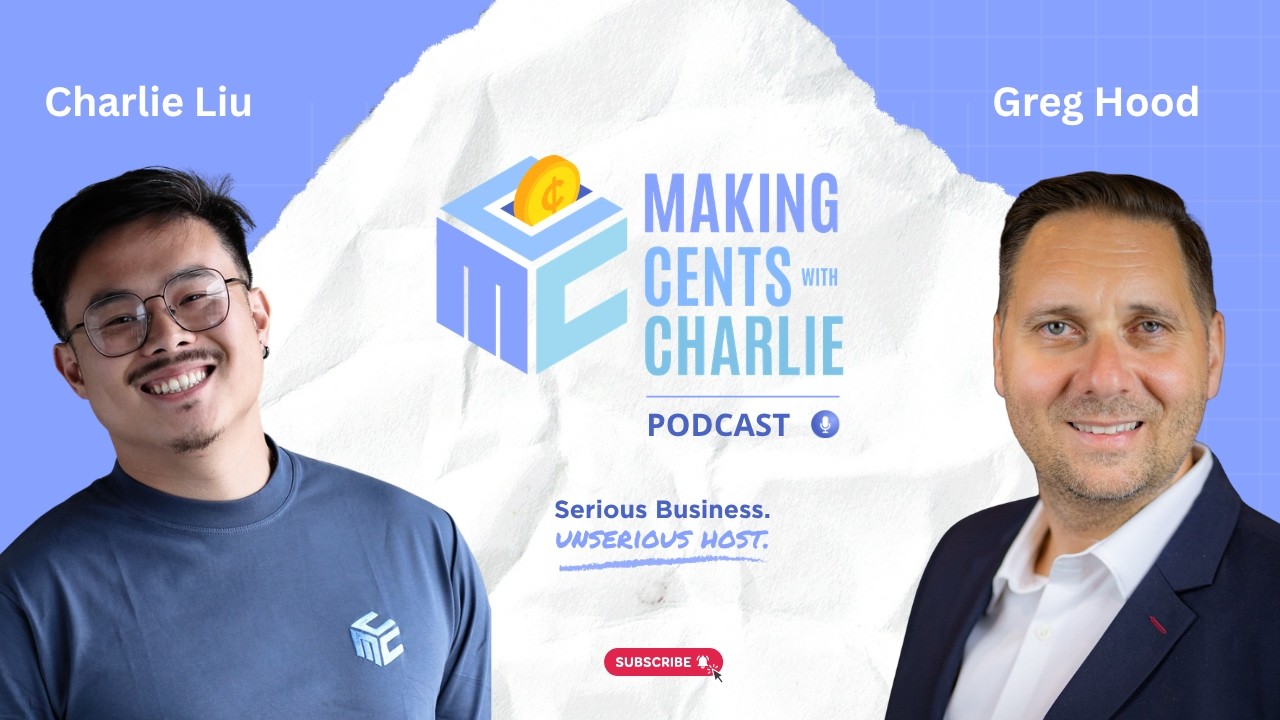
In this episode of "Making Cents with Charlie," host Charlie Liu interviews Greg Hood, co‑founder of Skysight Analytics and co‑author of Who Moved My Data?. The conversation starts with a rapid‑fire segment and then moves into a comprehensive discussion about the intersection of finance, data engineering, and generative AI. They explore systems thinking in finance, the evolution of AI tools (Claude vs. ChatGPT) and how AI is reshaping spreadsheet work, data warehouses, and M&A data rooms. Practical challenges such as single‑point‑of‑failure, documentation, version control, token usage, testing, and enterprise‑ready AI deployment are examined. Both guests share anecdotes about client engagements, the importance of curiosity, mentorship, and building AI‑first career pathways for the next generation of finance professionals. The episode concludes with advice on resilience, curiosity, and the need for rigorous QA when using AI in financial modeling.
Chapters
Hello everyone. Welcome back to Making Sense with Charlie. Our guest today is a co-founder and managing partner of Skysight Analytics, a boutique advisory firm specializing in finance. and data readiness for mid-market and PE-backed companies. He's a CPA, CPM, and co-author of Who Moved My Data? He's one of the first CPAs in Canada to serve as a chief data officer and has led finance functions through 3 successful exits over 20+ years. Straight from Bali, let's welcome to my show my mentor and friend, Greg Hood. Greg, good to have you. Your background looks gorgeous.
It is Bali afterwards. And no, I will say, you call me your mentor, I also call you my mentor. Like, you are so successful beyond me now. So like, I don't know who's a mentor anymore.
I wouldn't say that, but I'm quite grateful for that, Greg. It's, I mean, I think some of the best relationships you learn from each other, right? Just now we're just catching up kind of behind the scenes and immediately we're nerding out as well. And today I think we're gonna have the same thing once again. Greg, we'd like to start with a rapid fire, just get us nice and loose, have a little bit of fun, and then we'll get into some of this fun stuff, which we'll nerd out afterwards. Uh, first one, whiskey or wine?
So whiskey when I need to think, wine when I figured it out.
Ooh, I like the answer. Uh, island or jungle? I feel like I know this one, but—
Yeah, jungle. You got the jungle of DeFi here.
Uh, Tableau or Power BI?
Honestly, the best BI tool is one your team actually uses.
I like that one. It's not shelfware. People are using it.
I've used Power BI, Tableau. It doesn't matter. Whichever one your team's going to use, that's the best one.
I'm interested in this one. Your funniest corporate jargon that you've used or heard?
Well, so I actually was consulting with a Catholic-based, faith-based hospital system. So we were not allowed to use any violent terminology. So such things as we couldn't say bullet points, we had to say dot points. We couldn't execute an agreement, we had to make sure we signed the agreement. So everything we said had to be nonviolent.
How do I client. This is many years ago. I had— I forgot, I forgot the name of it. And, uh, I said, 2 birds, one stone, and the whole room froze. They're like, we can't use the language here. So that was a similar case as well.
I mean, like, we could— we couldn't— maybe we were— we couldn't try to hit the target, we just had to hit the goal, right? So like, like, there's so— you don't realize how much is in your vocabulary. So it took us, you know, a couple weeks to know, get ourselves straight. And we actually had like sticky notes on the side of our monitors remind us, don't say this, say this, don't say this, say this.
What was the favorite one?
It took me forever to get rid of bullet points and say dot points. I just could not stop saying that.
Yeah, I was gonna say like, that's a hard one. Paper book, ebook, or audiobooks?
Ebooks all the way. I read 20, 25 books a year, plus I travel a lot. So like, to try to lug around 25 paper books would be— paperback books would be really hard. And I just, I'm just never gone to the audio stuff. I like the ebooks.
I'm trying to get better with reading as well. I don't know if I have ADD or something, or what I found the format that works now is I have the physical book and I have the audiobook at the same time. And that double consumption finally works for me where I can sit down and actually go through a whole— well, not maybe a whole book at once, but sit down for 3, 4 hours and actually focus on reading something. Speaking about books, Greg, you released a book, was it 2 years ago?
Yeah, about a year and a half, 2 years ago.
Year and a half ago. Who Moved My Data? How did that come to be? I know you did it with a co-founder or co-mentor?
Co-author, yes. Yeah. So it was with Craig Fuchs. He was the first CFO I worked with. Back then I was an AVP of reporting analysis. He's the one that actually taught me my first data warehouse. So in some aspects, he was my mentor. So when he retired, we wrote this book together as part of his legacy for him. Part of it also is trying to inspire the next generation of finance geeks why you need to understand data, because in my opinion, you know, finance and data are joined at the hip. And as everything evolves, you know, really as a finance professional, you really, really need to understand data in the next generation.
Completely aligned. I think a lot of folks come to me for guidance, especially in finance, a lot of accountants. And I often tell them accounting is a great start, it's really important, it's the language we speak. But for you to do well in finance, I think it's far less accounting, actually far more data and far more business understanding. And I actually think, I think a new one now is systems thinking, where you're thinking about the whole flow, which, um, I think mattered less in the past because now AI can fill in the gaps for a lot of things, but for you to build something that's reusable, scalable, you actually have to think about processes and data movements and the whole system. Absolutely.
Like, I've worked in companies where we had 18 different systems feeding into finance, right? And that was primary systems, not even secondary or tertiary systems. That's where kind of the whole— some of the stuff Skysight actually came out to fruition was understanding that you have to link A to B to C to D to E. And how do you actually make that whole entire daisy wheel chain work? So system thinking is exactly where you need to be at. And systems, the foundation of all systems is data. So how do you get that data to flow from here to here without actually having to go like this, right?
I wanted to dig into the data and AI because I think that's where everyone's jamming and talking about these days. But I want to kind of wrap up a point about your book. What was kind of the aha moment that you either trigger the book, or what was your favorite piece of the book that you love to share?
Uh, the favorite piece of the book I love to share, uh, is just talking about the results that we've had that came out of the book. And not just saying, you know, the book talks about like, hey, we went from like, you know, 10 business days to a 9 AM business close, 9% revenues booked on business day 1. That's kind of some of the aha moments. But really it's when I start talking to— like, I do a lot of work with university students, and I work with CPA Society doing mentorship for first and second year university students. Seeing the look on their faces when I did my first speech, that was kind of the aha moment to say, hey, you know what? I should probably write a book about this. And so now I have the book to substantiate all the speaking engagements I do with the students.
That's a great combo. I do apologize. I've never— I haven't had time. I just wrote it down. It is a to-do that I'm going to check in for my PTO. vacation next week. I need to have something to do while I try to disconnect from work. But AI data, I mean, that's a big thing that everyone's focused on. The cost of inaction is higher than ever. I know you've been geeking out in it quite a bit recently. Your LLM of choice is Claude, right?
Yes, it is currently.
Yep.
I say currently because a year and a half ago it was ChatGPT, right? So it's ever evolving.
Yes. I recently switched over to Claude. I want to say March. It hurts me because I was a kind of early investor. OpenAI, and I felt like I was just cheating on my spouse, switching over. But I am loving it so far. Before, I mean, the podcast started, we were talking about kind of scale and AI, and there was a line that you mentioned to me last time when we caught up, which is, it feels like what VBA was back to you 20 years ago. And I think about that line, maybe not daily, Greg, but weekly. What did you mean by that?
So what I meant by that is, you know, AI is a great tool and cloud's a great tool. Cloud desktop's a great tool. But, you know, I was having a conversation with a senior accountant just about a week and a half ago, um, a great skill. And he was talking to me, he's like, oh, I got this great skill, I'm gonna go sell it. I'm like, well, first thing you want to do is check your employment agreement, uh, because anything you build at work is actually the IP of the company, not yours. Uh, so don't get yourself in trouble from the employment agreement standpoint. But B, I asked him, Does your controller know about it? He said, no. Like, so what would happen if you leave the company right now? He goes, nobody would have access to my cloud desktop. So what happens to that skill? It goes away. It goes with you. Um, so now you become a single point of failure. Well, this is no different. And I was that guy 15, 18 years ago. I wrote great Excel macros and I left the company. Well, nobody knew how to write that macro.
It broke.
It took them 2 months to reclose their books because no one knew how to write the macro except for me. So all we've done now, we've got all these senior accountants who are writing all these skills and cloud co-work and cloud desktop, but no one's actually transferring the knowledge upwards. We've just accelerated the single point of failure again. And this is a rewrite of VBA and Excel macros from 20 years ago. We're just rewriting history, but we're just calling it something else.
And I think it's even more unique now because it's, you can transfer all the MD, all the documentation, but it's still I think it depending on, I think for most people, the setup, it's not reproducible because a lot of it's based off the local memory that I have for your account. And it feels to me that what AI is doing now, it's, there's making a huge kind of distinction. If you're using AI, you're just going to get that much better. And if you're not, you're kind of being left behind. But where I'm going with this is it doesn't feel very collaborative and it's now making super soldiers or just making you that much better. And I spent a lot of time figuring out— I'm hearing the term kind of AI OS or company OS these days. I'm trying to test and I haven't found an answer yet. But have you seen kind of any work or anything that you've learned recently where how the infrastructure should be set up, how the documentation and the MD files should be stood up so that it's reusable by others, it's scalable, it's It's not just you doing your job better. Because the other thing I find is I find that AI is a very personal thing. The skills and these preferences you have, it's very personal. Yeah.
Well, first thing, yeah, first thing, like I will say that the engineering teams have done a way better, way much better job than the finance teams have because they automatically default into— they think about enterprise. So they all have the enterprise accounts like they have the corporate accounts. What I'm seeing on the finance side is everyone's just still working on like their free accounts or they have like the pro accounts, $20 accounts, right? So you don't have that enterprise mindset. Everyone wants to try to close their month end faster and make my life easier. Um, so the best ones I'm seeing are the ones that, hey, we're actually thinking about from enterprise, for taking, stealing from engineering teams, because they know the engineering teams are actually still using GitHub. They're still putting, transferring all their knowledge back into a centralized world. The finance teams aren't doing that. Uh, some of the ones I've seen are really great. They actually started to actually, uh, putting together documentation and putting that documentation of even their prompts into a centralized like SharePoint or, you know, GitHub, their version of GitHub, just to be able to say like, hey, here's how I actually accomplished that. And I was with one client and we were talking about like your monthly team meeting, make sure everyone presents at your team meeting what you did in AI or in Claude or, you know, some, a lot of companies are still using our friends over at Microsoft. So, you know, they have whatever tool you're using. Presented on a monthly basis, part of your team, so everyone understands it. But then you need to talk to your engineering team, make sure that gets rolled out, talk to your legal team, make sure you aren't sharing the wrong knowledge, right? Your AI that you're doing on your desktop has to be enterprise ready.
You brought up GitHub. So because I'm not an engineer, we're not engineers, when I started kind of testing around things, we felt we were able to build a bunch of really useful skills for ourselves. You've seen it. the senior accountants you spoke about, they're seeing it, but we struggle trying to recreate basically the skills and the infrastructure for the rest of the team. We tested heavily with Notion. We actually tried using Notion almost like GitHub, and we didn't really understand what GitHub was because again, finance accountants.
Yeah.
It started working where basically instead of writing local reference files, and this is getting very technical for the audience, instead of writing local MD files. We're basically using pages within Notion as the reference point. It worked, but then the token usage exploded. We actually had to stop, rethink. I actually got a Mac just to figure out, just to test this better, because I think a lot of it's the builders are the engineers. They're in Macs. They're the ones dogfooding it all the time. And we've seen improvements just testing AI and cloud within Macs as well. But when we went down to just back to your local MD files, things got much faster. The token usage went down easily 10, 15, 20 times. And we've learned, I think part of this is now we're able to become a lot more technical, a lot faster, a lot easier, which means there are a lot of engineering best practices like GitHub that we need to pick up if you want to get good with AI, if you want to create sustainable, long-term scalable infrastructure.
Like, as My kind of chief data officer hat kind of kicks in every so often. And like, from the data perspective, like we always had some of the best practices in engineering. Like we always had some sprints and all that good stuff, but we always documented every single thing we did. Every SQL query we ever wrote, every Python query we ever wrote, we shared with the team, right? Finance just has to become that, learn all those practices. It's just not something that finance people are aware of. You know, people, we've always loved spreadsheets. Every finance person has always worked on Excel. This is, you know, we're still going to work in Excel, but you still need to be able to now document what the heck you're doing. Because, you know, Claude can write you a great Excel spreadsheet now, even if it takes, you know, 5 different lines of the formulas and the formula is like this long and you don't know the queries and like, what the heck the function is this? Like, so you got to be careful with that, right? But it does give you that advantage. But we actually need to be more sharing rather than being siloed. And that's the kind of the duality of AI of all everything is like, as you said, it creates super soldiers that we can actually be so much more productive now in here, but it doesn't actually help the big picture because it creates that single point of failure again. Yes.
Beyond just that, what I find is a lot of folks, because it's so fast now, a lot of folks aren't testing and reading the plans, the contents. And if you actually talk— so recently I actually reached out to a bunch of engineer friends to learn about how they think, how they build, because to me it goes hand in hand in terms of how to get better with AI. A good engineer spends a lot of time actually planning the build, not just planning and figuring out what is the litmus test, what is a good output, what is not the output, what does that QA look like before they actually start building. I think it was— I mean, I think that was the biggest opener for me instead of just building, because I think for me a lot of times I'm like, I'm just going to go to build this Excel model and then figure out kind of the design sometimes on the fly. But it's slowing down, taking time to figure out what to build. And that QA thing, that was the biggest breakthrough for me on my end.
Absolutely. Like, once again, talk about my CDO roles. One of my very first data warehouses, We locked ourselves in a meeting room for three days, whiteboarding what we were building. Whenever we had a deployment, we had a QA person and we had a standard script. You know, that's all the stuff we stole from engineering. So once again, finance needs to steal from data. Finance needs to steal from engineering. Like you need to plan what you're going to build. Like I was guilty as the next person. I first went into cloud and started building Excel. Like I did it did a prompt prompt prompt prompt, and I got a seventeen tab spreadsheet that made absolutely no sense. It didn't have any good flows. I had hard hard code numbers over here, and I had. assumptions over here. I'm like, no, no, no, no. Wiped it from scratch, sat down for like an hour. What am I actually going to build here? Thought it out, put— actually put all my thoughts on paper and then actually started building it. That's the way you're supposed to do it. If you just give brain spew into Claude, garbage in, garbage out, it's going to spew back garbage to you, right? So you need to actually have some more— it can try to understand you, but the better prompting and the better model you have in your head, the better it's going to— the output's going to be.
Yeah, 100%. Recently, the first project I did when I got into Claude, I think this is 2 months ago now, where I wanted to kind of clone a piece of me that's useful in the sales process for what we're doing, FP&A and FP&A systems. What are the service offerings? What are the 4 walls of what we do and what we don't do? Because I was so used to working with GPT, which is designed, I think, completely different, where it's not designed for engineers, it's designed for the mass consumers. You can just sit there and prompt all day. So I took the same kind of habits I had, moved it over. I think the first iteration, it was after 3, 4 days of just me chain prompting. It created something like 135 MD files, which I looked at it 4 days later and I was like, I have no idea what I built. I have no idea what's in this. I had to absolutely slow down, basically design it on paper, think through what I wanted, learn that Claude has a planning mode or thinking mode in terms of Especially if you work with Claude Code. For anyone listening, it's not as scary. It's basically Claude Code Work. That's— it's basically— it can do everything it can. It's not code. You don't have to get— be an engineer. It's not that technical. And— but it has a planning mode where you will sit there back and forth and just plan where you're going to build first before you actually build it. And taking that step makes a huge difference.
Yeah. Like I had— I had one client send me a file they were so happy he produced and I went, okay, great. Like you're learning Excel, you're using Claude. And I went to assumptions tab. change a couple of assumptions and the output didn't change. There was no tie-in. So back to like, you still have to understand what you're building, right? Like, and another one sent me, we were talking like, oh, let's do— they started prompting right on the screen for me. And like, he started building this out. Like, you've got, you've just got a mess right now. Like, do you actually know what this tab is doing? He goes, no, Claude just put that in there. Well, if you don't know what that tab's doing, like, you still need to understand it. And I can look at the function. He doesn't understand what this function is. Like, he goes, I've never seen that function in my life. Well, now if it breaks, how do you fix it?
Yes, it's, uh, I'm seeing a lot of— I mean, who was it? Um, I can't remember the company, but they, they released some numbers where this is a software company. I think it was Mozilla, actually. They had record-high kind of releases, but then bug releases was also record-high in Q1 as well. Uh, a lot of it driven not by cloud and I'm seeing the same thing in finance now. I'm seeing a lot more models where I'm like, this is better than what I typically expect from this person 6, 9 months ago. But you dig into it, there's a lot of additional tabs, there's a lot of sections that's not fully connected. People aren't thinking through the whole thing. What I found with our team that's been really instrumental recently is before we start building, we write the test scripts almost kind of how you and I were good consultants. Like, what are we actually building here? What are the test scripts? Instead of jumping directly into that build and everything we were talking a few minutes ago, we write the test scripts and AI is great at building those functional test scripts. Then we can actually iterate and look at this with the client or look at ourselves. Are these the levers that we care about? Do they actually reflect kind of your day-to-day business functions? And then we start building it. The test cases gets us grounded from a functional, non-technical standpoint. It confirms this is what we want. And then we can use them after we build. And every time we make an iteration to the model, we go through the full test script again to make sure that it's QA'd, it's tested properly. A big piece now is it's just so fast at building, right? It's actually the guardrails around there that you actually have to spend more time on.
Yeah, I know we've been talking kind of some of the negative aspects of it, but like, no, don't get me wrong, I love it. Like, it is absolutely You're getting steroids here. It's a superpower. Uh, I'm doing work in 3 hours. It used to take me 3 days, right? Um, it is a great, great tool and making us efficient. It's just making sure that you use it effectively and responsibly. Yes.
And, uh, yes. And we're trying to figure out what we're going to, what we're doing with this superpower as well. Just lightning in a bottle kind of thing. We've actually walked away from a lot of the fractional FP&A work we did. And what's really interesting is a year ago, we would find a replacement, someone else in our network. We've actually had recent clients where we sat down and we kind of just gave them some of the skills, that class skills we built, gave them kind of the guardrails. And some of them are able to kind of maintain the model, actually even adjust the models themselves now with us as well. Now there are risks, they understand it. They're choosing to kind of try to own this themselves first before trying to kind of switch into another fractional partner. But it's changing quite a bit in terms of how we work with clients. Now, Greg, I know for what you do in terms of Skysight Analytics, you see a lot of different use cases. I mean, where have you been? What are some of the interesting kind of use cases for AI, or how has work shifted for you in the last year, 2 years?
One thing that's made our life a ton easier is the data cleansing world. So a lot of stuff we've done is making finance data warehouses, especially in the M&A world. You get a lot of like, hey, I've got 3 different databases. In one database you have New York, another base you have NY, other database you have N.Y., right? We used to have to try to build translation tables and go back in and filter and actually just try to cleanse all that data. And it would— that'd be a full day's worth of work. Well, now we just have a skill in Claude that can run it and cleanse it for us in 10, 15 minutes. Of course, you have to test the output, right? So when we load it into our database, we load it and actually say that, yeah, you only got 3 distinct names now, and here's numbers. And yes, the total still ties to the total, right?
Yeah.
Um, so stuff like that has made our life a lot easier. Like, I— like, one of my co-founders, he said, like, I couldn't imagine doing this work now without Claude. It's just changed our life, like, night and day on that type of stuff. Um, so, and what one of the really interesting things we're seeing now is, as you're getting ready for, like, M&A work, and as, as a founder, you're trying to, you know, sell your company, you're going to go through a data room prep. Uh, we're actually starting to see intelligent data rooms now, so you can actually start to query The data that's in a data room. Uh, one of the big things we always said before, and what's, you know, what's something we do is you have to make sure that your data is clean to go in the data room. Like we had one client, no, it's a great success story. No, they went from like $3 million to $7 million to $14 to $21.6 million in revenue as per QuickBooks.
Yeah.
As for the CRM, they had $21.3 million in revenue. And as per the databases, they had $21.15 million. So like now what you do, you have 3 different revenue numbers that the buy side is trying to look for, right? So that disjointed data. So we came in, rolled a finance data warehouse, reconciled it. Number was actually $21.52 million. We actually added $2 million back to the valuation. But now you have the data, you know, the reports all sliced and diced 5 different ways that can sit in the data room. You can actually query the data room and say, which file was it that showed me my revenue by salesperson again? Or which was my utilization? You can actually start querying it, which is really, really cool. Like, I would have never thought about that 2 years ago, actually querying data rooms. During the M&A process.
To double down on that, I haven't heard that term before, intelligent data rooms. Are you giving client access to that data room and they're using their own kind of agents or whatever to query the data, or are you querying live? What do you mean by that?
So it's a, it's a third-party tool. We don't create the data room. So the data room is a third-party SaaS tool that we partner with on. So we just populate all the data room and all the files with the data from our finance data warehouses, and then it takes care of organizing all the data and it says, you know, who would have access to what, you know, HR data, finance data, data is data. Uh, but then there's obviously, then there's just like a chat tool within it. Like any good piece of software now has a chat overlay, right? But you know, 'cause I, my one, my, even a transition I did just over a year ago, we had the due diligence list was 306 lines long, which meant that we had about 300 to 400 different documents floating in a data room while trying to keep track of 400 documents. Remember, like what document was that? And of course we'd have to, you know, trend transaction takes not 1 month, not 2 months, 3, 4, 5, 6 months. We have to start uploading files on a monthly basis. So then you start getting 400, 500, 600 files sitting there. How do you keep track of them all? It's a big, big ask. And if trying to remember what data was in what document, this little query tool, Intelligent Data Room, allows you to query, remember what document had what in it.
Okay. Got it. No, that's fascinating. I remember the one I prepared, I think this is about a year ago now, where they come back to you with lists of these questions, right? 20, 30, 50 questions that you just have to give the results back to them. But now you can query these live. Sometimes they can do it themselves as well. Yeah. Like we were on a call with one of the Big 4.
actually. It was like, you know, standard, like 2, 3-hour kind of reviewing this report, reviewing this report. And they were asking us, you know, oh, can we get this report? Can we get this data? So we keep on talking, talking, talking. And about 15 minutes after the call, we're having the wrap-up and say, okay, Greg, when do you think you can get the data to us? We're like, oh, it was in your inbox like 17 minutes ago. And they're like, what? We're like, yeah, we just queried it and we already have the dataset. So we just queried it and just recreated the report and here you go. Um, they were just like, wow, just wow. And like that's usually 3 days worth of work at best. And now we just did it on live on the call and it was ready within 17 minutes.
Things are getting easier. Things are getting faster. Um, where is, I think, where do you, where do you need to, I don't know if that's the right word. Where do you think your focus should be to increase your value in these kinds of projects, these M&A transactions? Because certain kind of the grunt work is getting a lot easier. Right.
Certainly definitely is. But where, you know, there's still a lot of foundational work that's missing. You know, a lot of companies that are exiting, they've been— a lot of them are high-growth companies that still haven't gone through data foundations. Does my CRM data tie back to this dashboard? Does this dashboard tie back to my financial statements? Like, I've been guilty of this myself in the past, saying, well, I know this dashboard is always off by $100,000, just don't pay attention to it. But now during due diligence, during like, people are going to look at that dashboard, right? Or it's like, oh yeah, you know, I always know that this product is always misclassified in this report. Well, you can't have that during due diligence, because every single, you know, question mark is a way for the buyer to go discount, discount, discount. So you need to have— so a lot of, a lot of that is not even AI-based. That's just data foundational. You can use the AI to help cleanse it.
Yeah.
But now you're You have to go back not just a day, a week, a month, you're going back 24 to 36 months. So you really know, yes, you can use AI to clean it, but you still have to understand that you still need to do that work. And we're still seeing a lot of people who miss that element of it, like, oh, it's good enough. Well, it's good enough for internal reporting. It's not good enough for a $100 million transaction.
Makes perfect sense. It does. It can help guide you, it can do a lot of work for you. But I think someone still needs to sit on top of and manage it. Get the clients to actually eat their broccoli.
Yeah, like one of the other ones we're working with, they had a great forecast. You know, like, yeah, we, you know, we used our, you know, we used Claude to create this great forecast. It's like, that's awesome. It's fake. You had 12% revenue increase last year, you had 6% the year before that, and now you're going to do 82% year-over-year revenue increase just because you can use Claude to put together a file. You know, Excel is still garbage at times, right? I know you can make, you can make a spreadsheet Say anything you want it to say, and Claude will do that for you now. So you can just make it say— you can make Excel say anything you want to say faster and easier, but it's still just a spreadsheet, and a spreadsheet's just numbers on a spreadsheet. It's not real life.
And I mean, with AI, it's even more powerful. I mean, it's deterministic. It's trying to just go towards kind of the goals that you want, right? I have seen cases where it's just changed the underlying data because it doesn't know what's right or wrong. It knows this is the goals, the growth and targets you want, And so sometimes the growth parameters are reasonable, but to get where it needs to, I've seen cases where actually when it changed the historical data, there's a lot of nuances that you have to be careful about. There's a lot more checks and ties and guardrails that you have to put in.
I was working with a pre-rev company and they're like, we stand by our forecast. We did it in Claude. Claude did an S-curve. So we have 100% faith that we can go from 0 to $3 million in the next 24 months. Like, you're selling $85 per month subscriptions. Do you understand what your go-to-market is? Do you understand how many actually subscriptions you need to sell at $85 a month? And by the way, are you actually still aware that, you know, SaaS valuations have gone down?
Are you actually seeing this where clients just have that confidence because the AI has kind of laid out the numbers for them and they haven't tried?
Like, it's an S-curve. They don't know what an S-curve was, but like, it's an S-curve, so it must be good because Claude said this is one of the foundational aspects of stats. You know, like it has an F table in Z-tables and the correlation response is 85%. So like, we're 85% against what though? Claude is testing itself. It's like, I'm 85% confident in my own garbage. So yes, we're actually seeing clients who are actually believing because Claude said that I used a statistical analysis, I used a profit model, I used this model. Think about it for a second. You are a team of 3 and you think you can do $23 million of sales and ARR in 24 months, $85 per month subscriptions. I just don't see it.
I think that's the part where more than ever, the common sense to ask each check to look at the whole business. It's more important than ever. I think AI can cover all this, but most people aren't asking the right questions. And the whole piece is driven off the prompt that you have. And a lot of people are still really bad at asking prompts. I found that, I found that at least from my experience, the best users of AI are, because people often think kind of younger folks are better with technology. They're better, usually early adopters, but I actually find that managers, execs, leaders are using it far better because they've just had more experience managing people. Managing agents is not that different, but also asking the right questions.
Yeah, I remember early in my career, one of the things I was taught was I don't have to know everything. I just know where to get everything. Who can get me the answer? So like now, yes, now I'm managing a couple agents instead of managing all the staff. And, you know, I do feel bad for some of the next generation because some of the junior work is getting eliminated, right? But there is that false confidence. Even one of my friends got Claude to do their tax returns, and I took a quick look at it. I'm like, by the way, your CRA classifications are all incorrect, by the way. So like, no, Claude told you the wrong classifications on your business taxes. So you can file it if you want, but you're going to probably get audited and fined. So, you know, you can't have blind confidence. Like I said, we've a lot of great things about Claude, like a lot of great, great things. Like we're like, we Like, we're using MCP all the time. Like, it's great stuff, right? But you got to be careful on the output.
And the thing is, it just looks— that's the word— it looks so high value, so trustworthy right now. It's easy to just skip the homework and then just believe it with blind faith. Yeah.
Like, one of my friends, he actually was trying to run his stock portfolio off Claude, and it's like, you know, like, you know, great, great, great, great. Here's a great investment. and it tanked. And like, oh, well, here's why it tanked. I was like, yeah, my bad. Like, just people have— I mean, it's that kind of slick salesman. You just person— they're personable. You talk with confidence, so they believe you, right? Like, once in my career, like, you know, one of my first manager jobs, I was totally just joking around with the staff, and I just was saying, like, they came in with a question, I came with the end. They had to say they have a problem. I'm like, oh, it's because of this, this, this, and this. So like, okay, they walked away. I'm like, get back here. Like, I'm totally pulling your leg. This has nothing to do with this. Like, I need you to critically think about this stuff. And that's what Claude is sometimes. It's just that fast-talking salesman sometimes.
I've never heard that one. It's right. Like, it's, uh, Claude, I think, has more— it's a bit more real with you. If you talk to ChatGPT, I think some of the other ones, they do a great job making you feel like you are the king. Like, you are— like, it's, it's smooth. It's smooth. It's, it's really That's a great kind of analogy for it. It's a fast-talking salesman for that interaction.
According to ChatGPT, I'm in great shape. I'm really, really nailing those weights. Like, it's my best trait. I'm its best client for the personal training. Like, I don't think so.
I love some of the things it says. Like, it just tells you, like, such a great idea. Like, you're good for you. Like, it really pumps you up and it feels good. to kind of talk into it. I mean, I think that's a big piece in terms of how they're getting clients. It feels good using these tools, not just for the output, but for a lot of people, it's companion-like. It feels good using it.
Oh, there's becoming like cases now of AI addiction. There's cases of like people actually going into depression because what AI told them, specifically ChatGPT told them wasn't really true. They weren't as great as they thought they were. Like, they didn't actually realize that though they solved all the world's problems and ended depression.
Yeah, I mean, earlier you were talking about kind of clients getting that blind faith confidence. I've seen it with the folks I've hired as well. They easily, they very quickly kind of fall apart after you start digging in and start asking some critical questions, because you tell, you can tell they just haven't gone through it. They haven't sanity checked in terms of the guidance and the learnings they've gotten from it. There's a lot of blind faith. I think what was, I think I think I saw a stat last year for an average person who used to do research on Google, even with Google, which has done all the work for you, I think it was 8 times, meaning every search you do, you go through kind of 8 links to look around. That's all gone. Most people, they have zero. Even for me, just guilty for this as well. A lot of times I'm not fact-checking. I'm just taking the answers directly as is.
No, it's great tools. Just you have to use it efficiently, effectively, and responsibly. You have to understand what you— you still need that common sense to understand what you're looking at. Like, it's great, like, use it, speed you up. Just make sure that it's corporate ready, enterprise ready. Make sure that you actually test it out, you know. Hey, I changed the assumptions page, did the P&L page change? Oops, nope. Well, maybe we should do some testing, right? Like, everything we already kind of spoke about.
Greg, earlier you mentioned you kind of feel sorry for the youth, kind of the next generation, because a lot of that early groundwork that's built up the foundation of why you and I are where we are today are largely disappearing. For you, if you think about it, someone that's kind of earlier in their career, or even for us where we're kind of trying to coach and wrap in that next generation, things are quite different now, right? Like, how would you think about how they should build their early phase of their career?
So one thing, just to get on my soapbox here for a second, is Is I want to talk to the universities. A lot of it comes from the universities and college universities. They have to teach the right stuff, and like some of the university academia is very, very slow at catching up to what's happening in the corporate world. You know, like some of the some academia are like that na na na na. It's still good. It's still good. You'll get a job as a junior accountant, and you'll still be doing bank reconciliations. No, by the time this first year graduates, that first year is not going to be doing bank reconciliations. And I should know my very first job was I was doing 28 bank reconciliations every single day up to 100 sometimes. That won't exist anymore, right? So I want to talk to academia and say, get your stuff in order and actually teach people useful skills, update yourself for AI. But beyond that, what I'm going to say is that you coming up in the next generation have an actual wonderful opportunity. You can be AI native. Maybe talk about Netsuite versus Campfire, for example, right?
Yeah.
So Campfire has a brand new They're AI native. You know, NetSuite is trying to tag AI onto a 20-year system. I'm NetSuite now, right? The next generation is Campfire. So you can actually come up being AI native. You can learn through it. Like, it's all— that's the whole entire thing about like, did I actually— no, yes, bank recs taught me a lot of valuable information. I would not want to do bank recs now anymore, right? So if I can become that superpower and teach other people how to use AI, Because there's still a lot of people, like I'm talking to a lot of SMBs and talking to smaller companies, and we're like smaller being like 10, 12, $13 million companies who have zero usage of AI, absolutely zero usage. So there's still a very, very big opportunity for the next generation to come in here and teach people and be part of that change going forward.
Adoption is always slow. Even most usage today, it's basically replaced their usage through Google now, right? So instead of searching for something, they're asking AI. Um, that AI first— I love your analogy. Uh, I need to ask myself if I'm Campfire or NetSuite, but that's it.
Uh, and sorry, my NetSuite friends. Can I have my user in NetSuite?
Well, they— I mean, NetSuite has been around for a while, right? Like, it has to be a household name. But, um, changes happen, right? Like, you have to go through time. But, um, at one point I'll grab a whiskey and kind of ask myself that question. But, um, I think this AI first question It's a great opportunity. Time, it's such an interesting time. But for someone younger, like, what does that mean? If you're able to give them like kind of practical advice, how do they get good? Especially let's just take into context of what we do— finance, accounting, kind of strategic finance, corporate finance, M&A, things like that. When they're coming out of school with very little experience and they may not have the opportunity to kind of go through that grind, go kind of understand the foundation, how would you recommend them becoming AI-first? Is it taking that engineering, that build kind of mindset and just building more? Is it thinking about learning more of the business aspect? What is your kind of practical advice for them?
Yeah, that is the crux of it all, right? Like, what is that? It's easy to say become AI-friendly, become AI-enabled, right? If I'm coming up, one thing I'm doing is I'm actually using I'm using Claude to teach me Claude. Like, it teaches you how to use it, right? So you have to have that curiosity by nature. You have to have that drive because like all of us at one point in time, we're all newly grads and like we all have to kind of struggle. And like the only thing we can ever say is like, what are you going to bring to the table? Well, I've got 0 years work experience. I've got, you know, an okay university average, GPA average, but I got really good work ethic and I'm curious to learn and I'm a sponge, right? But that's what you have to bring. So take it upon yourself. Like even my first job, I remember I would be working hours of overtime unpaid because I was listening to somebody else's problem over here and learning about, you know, fund— like I came up through fund accounting and investments and, you know, fund number 51 was having a problem. So I'd go kind of, you know, listen to fund 51, listen to senior accountant talking and they're working through the problem. And I kind of, you know, absorb that and realize, okay, well that took me 45 minutes of my time. It's now 5:30 at night. I need to still, I still have 45 minutes worth of work to do. I'm spending the next hour at work. just trying to learn because I was over here. I got to catch up, but that's on my own. But you got to do stuff like that. So I'd be— no, I would be taking every single AI course I can get my hands on. There's so much stuff available. Um, I'd be— no, I'd be looking at what are the AI tools. We just mentioned Campfire, right? Uh, I love the other tool we've been working with is Nominal. I actually am a big fan of Nominal. Um, they're AI first, right? Start actually researching that. I'm here telling people this right now. So if any students listen, research Campfire, research Brilliant, another great one, right? Nommo, take a look at these pieces of software. Maybe ask them like, hey, can I get half an hour? Like, can you give me like a demo? Like stuff like that. Learn that type of stuff. Because yes, business knowledge is acquired over years, but you can also read about business knowledge. Talk to people like me. I'll give you 15, 20 minutes of my time. Ask me a question. I'll give you the answer because it never hurts to have a conversation. I think that's the foundation for a lot of things.
I think it's like that curiosity. It's really, really important and being comfortable asking for help. So all the folks kind of listening, Greg and I, both of us love to help. Just reach out. Happy to give you time back. That curiosity is really important. I think at least for me, what I've loved for AI was it's so easy and so fast to learn now. And a lot of these platforms have— Google spent a lot of their focus building studying tools, learning tools. I love NotebookLM. And one of my factors, I think one of the reasons I love them is I think 2 factors. One, it's really good at not hallucinating. The outputs that comes with NotebookLM is really driven of whatever you feed it. Now, if you feed it crap, that's a different story. But if you feed it good material, it's really just going to come back with that material. And then the podcast function is phenomenal. It now has study guides and a bunch of other tools with But AI has made it so much easier to learn. But you need to have that curiosity, that willingness to learn. You can't just hear something, not understand it, and accept it as is. You should really try to figure out, like, if I don't hear— if I hear something, I don't get it. Make it a goal where, like, you need to understand everything you're seeing in terms of your line of work or your experience.
So one thing AI can't teach you is curiosity by nature. That's on us as humans.
Do you think that's an innate kind of thing you're born with, or it's a skill that you can strengthen?
I absolutely believe you can strengthen it within the right— nature versus nurture. I think in the right nurturing, anyone can learn that. You just have to be able to ask the 5 whys, like why, why, why, why, why? One example is like when we were on my first day at warehouses, we had a great sales quarter, They're like, oh, I have this great sales quarter. Oh, this fund went through the roof. Everyone says, yeah, yeah, great, great, great. But why'd that fund go through the roof? Oh no, it was, uh, no, BC was really great. Okay, BC had great sales, great. But why? Oh well, it looks like, uh, looks like Bob had a really great quarter. Why did Bob have a really great quarter? Uh, I don't know, Bob just sold a lot of funds. So we went and talked to Bob. Bob's like, oh, I tried this new technique, blah blah blah blah blah. There's your answer, right? That's the curiosity. You have to keep on digging out the whys. Like when you, when you see something like I had this one report, this is one of my very first worlds of SQL. I was, you know, I'm looking at this report. I had one number on page 3 and then page 4, the number's off by 1 penny. Page 5, same number as page 3. Spent 3 days locked in a, in a meeting room trying to figure this out. And I became like the crazy mad scientist in the room with white paper and all of that.
Yeah.
And someone else joined me and a second person joined me and a third person joined me and it'd be, everyone's like trying to figure it out and I'm trying to like make $1 entries in the system and it just won't correct. Well, someone else came by and said, what are you guys doing? He looked at us, walked back to his desk and said, try tonight. He spent about 10 minutes fixing something and it worked. And it was like, oh, he goes, oh, this is Crystal Reports. Uh, you know, we have actually duplicate tables. This report was picking this table up and it sort of rounds to 4 decimal places. This report picks up from this table, rounds to 8 decimal places. That should fix it. If I hadn't actually spent those 3 days asking why does one report have a 1 penny difference, I never would have learned SQL.
It's crazy how you've shared that story a few times with me now. That's kind of triggered your whole kind of start with data and SQL and kind of really made who you are today, just asking those whys. And I think a big piece is that curiosity is often contagious as well. As people see it, they see your obsessiveness in terms of figuring this out, people want to help as well. I agree as well. I really do think it's something can be built, right? So folks that's listening today, it is a must-have, I think, in terms of performing well, getting to the places that you want to be, but also especially surviving this AI kind of apocalypse as well. I often work with my team, and I think the big piece I'm always trying to get to them is don't just accept things as it is, right? If you have a problem or you have something that you're trying to reach, don't just go to your managers, be like, we have a problem, but try to get curious enough in terms of figuring out what are the options to get And then that's going to start building that muscle to be curious, but also have that critical thinking. There's a frame of mind that I often recommend for the team. I think it's called 1-3-1, where what is the one problem? What are the 3 options? What is the recommendation? And I think if you don't have curiosity, you're not going to be able to go through that whole process exercise. And a lot of times you kind of just expect someone else to spoon-feed you or give you that answer recommendation. I love this piece about curiosity.
Yeah. Like my very first manager role, I would not answer any questions about any of the mutual funds unless the juniors or intermediates came to me with a bunch of reports they'd written out with a possible reason of why they're having this problem with this fund. You just came to me and said, I know fund number 52 failed Rule 4, and that expect me to teach you what it is? No, we have a book, we have documentation.
Go try it yourself.
Come back to me with a possible solution. And then we can work through it. But I'm not going to give you all the answers. I want you to learn what row 4 is and why it failed.
That makes a great— I think a great mentor as well. It's not our jobs to do everything for everyone. It's also not scalable as well. A big pivotal point I had in my career was actually working with my mental health coach, where I think for a lot of my career, I always felt it was my place to take on all the weight and do everything for everyone. And he gave me a line which was really good, which is, by you doing the work, you're actually robbing someone else of the opportunity to learn and fail and go through this. Yeah. And that made me that much better of a mentor and a manager, because I think a lot of folks in the kind of corporate world, they go from an extremely strong IC, and then one day you're told that you're now a manager, you're a people manager, and you have to stop doing the IC work. And that is really hard for a lot of people.
Yeah. And you know, A lot of like, we are the CPA Society, they teach us accounting. They know the CFA Society teaches you valuations and risk. No one actually teaches you how to manage a team. You know, I was actually lucky, I worked for a big corporation when I first started, and they sent me on a 3-day HR management course when I got promoted into management. But you know, a lot of people don't have that. Like, hey, I'm great at month end, doesn't make me a great controller who's going to be able to coach a team of 5 people. Like, even by very— even with having taken that course, uh, I was— my manager was asking me to do something. I said, no problems. Manager asked me to do something, no problems. Your manager asked me to do something, no problem. And he's like, ask me to do something else. I'm like, I can't do anymore. Like, I'm already working this weekend. Uh, I've already done like 15 hours of overtime. He's like, Greg, it's because I ask you to do something doesn't mean you have to do it. You have 5 staff members, use them. That was my— oh no. But because I It was 2 months into being— moving from IC to being able to delegate down, right? That's a lesson everyone has to learn.
Setting boundaries is also really important. Um, setting it up so that it's successful, so you set yourself up for successful. Uh, any kind of guidance or that works for you in terms of managing others? Because a lot of people, it's a really difficult muscle in terms of how to communicate, how to manage, how do you even— how to delegate. How do you think about So delegation, what does that look like? How much input do you provide to the team?
Uh, a bit of a loaded question. Like, it all depends. Like, if it's my senior, the senior gets a lot less guidance than the junior does, right? Uh, I also believe that as a, you know, CFO or VP Finance, wherever you happen to be, that you still have the opportunity to train a junior accountant. Like, I want to make sure I still have—
I'm—
if I have an opera question, I'm going to ask— I'm going to obviously talk to my, you know, my manager, my controller, say, do you mind if I actually talk to a junior accountant, like work on this one one-on-one with the person? And usually the answer is like, oh yes, of course, right? No problem, right? And usually the junior will be like, oh, the boss is coming to talk to me, right? But we are like, at the end of the day, like someone taught me something, right? I'm just a really big believer in paying it forward. Um, so we— it's up to us to really train each other, next generation going forward. Um, someone gave me a break, so I want to give somebody else a break. Uh, but you know, down to the delegation, it's tough at first. And it actually requires a bit of a It requires you to be able to say like, a month ago I was your colleague, now I'm your boss.
Mm-hmm.
And so like, you do need to be able to understand that you're not sitting at this table anymore, you're sitting at this table now. And you just need to be able to have that confidence to actually say, I need you to do this piece of work. And there's that referent power of being the boss, right? But you have to understand like, you cannot do everything as the boss. You actually need your team and you're only as strong as your team. Because when I was at Candlelight, no, 50% of my performance reviews was based upon whether my team met their goals or not. So if I didn't make a strong team, I didn't get a good performance review.
Are you in the camp more of more you should be hands-off, or are you more in the camp of that you need to be in the details with the team? Some people might call it micromanagement. Some people call it leadership in the details. Which kind of camp do you have a preference towards?
I fly at the 30,000-foot level. And then do dive bombs into the 10-foot level when needed.
I like that. I mean, for what we do, MCC, I've spent the last better year and a half, I think the big thing was basically coaching a lot of ICs to become managers and execs. And I made a mistake in the beginning of flying really, really high and kind of being very hands-off. And then as I learned over the last year and a have, at least for me, that management in the details was really helpful in terms of helping them grow, but also kind of pulling the company towards the right direction. I think a lot of folks, they're too hands-off. You see this a lot of times with bigger corporations where people in the company talk about it. The folks at the top don't actually understand what exactly is happening at the front lines. For, at least for me, I find that you need to have that healthy balance of both sides.
It's important to get into the details as well. Absolutely. Like working with someone last year, you know, they were going towards $100 million of revenue, didn't really have a proper FP&A function set up. So I actually did the first third to 40% of the Excel model myself, then handed over to the— like I did one department, said, okay, now hand over to senior analyst and said, now try to replicate the next 4 departments by what we did together. So there's that, you know, kind of flying high, get down, get down low. Now I'm going to go back up and watch, watch him try to do it and then come back down as necessary. And then same thing though. Okay, we have an issue, we have an issue over here with this bank. Okay, I'm going to look at the documents. Okay, now it's resolved. We're halfway there. I'm going to start climbing back up and back up again and start monitoring again. Because, you know, good or bad, in the kind of the fintech world, the growth, you know, the messy middle, the founder-led worlds, you don't actually have the opportunity to stay at 30,000 feet. If you're up there, you're just going to fail. You actually have to get, you have to be a hands-on operator, but you have to And never quite figured this one out. Are you strategically operational or operationally strategic? But anyways, you got to find that balance of being an operator and being strategic, and that exists in any company that's less than $100 million.
I love the fact that you're also able to do both sides as well. A lot of folks, they can't. I think today it's more important than ever. Um, I think there's a lot of people talking about that middle management, or just people manager, pure people managers, a lot of it's disappearing. There's a lot of that with kind of discussions. I think a lot of— in the Valley, they talk about this a lot. A lot of it is that the middle management layer is disappearing. You have to be able to actually understand the work. You have to actually be able to understand what exactly is on the front line. You're able to actually get down and solve, roll your sleeve up and solve and build the things that you need to if needed as well.
Yeah, I remember talking to one company and I was talking One of the AVP, I think it was director, they literally 4 or 5 hours a day, they were just forwarding emails. Their job was they just basically forwarded emails to everybody all day because they wanted every email to come into them and they were the central hub. And that's not really a job anymore. You're just forwarding email for 4 hours a day. That's just not an efficient use of resources.
One of my team members, Peter Lei, who's kind of one of the early founders with me, he was spending a decent amount of time in one of the big tech companies. Don't think he wants me to kind of say which one, but he was telling me every month they'll spend 15, 20 days preparing for that presentation meeting to explain what they're actually doing instead of actually doing the work themselves. And it's refreshing, actually. I think a lot of that's getting disappearing. It's a lot of bloat a lot of companies have had for a long time. Those are disappearing. People are recognizing that this is not how business should be run. But also to me, like, it's from a personal, humane level, I don't know how happy you can be if you spend most of your you're just justifying what you do instead of actually doing the work.
I was involved in a debate last week. It's like, should a board deck be 57 pages or should the board deck be 15 pages?
And what's your answer to that question?
15 pages. You can put a bunch of stuff in the appendix, but if you actually have 57 pages at the board level, your board's not being strategic enough.
Yes. They're not asking the right questions.
Yeah. And I was guilty. I was doing the— I think the more information you give the board, the better the deck. Properly formatted, brilliant effort, you know, 2 weeks of hard work just to get this beautiful deck out. And then, then of course, you know, page 3, page 17, and page 34 have different numbers on it, like 21.5, 21.6, 21.55. Oh man. By the way, Claude still— even Claude does that. I actually caught a report last week doing— where Claude actually had rounding issues. They had page 3, 17, and page 24 all had slightly different numbers on it, even though I told it to double-check its work. It's like, oh, you're right, great catch, you're the best, thank you for catching that. Like, don't make that mistake in the first place.
I think that's a really good tip just for anyone just using AI. At the end of it, start a new conversation and just ask it to double-check the work once more. That has saved my ass multiple times, just doing that one final QA on the work.
Like, all my Excel models I have Claude help me build now all have— and this is just good financial modeling practices— is having all the checks and balances balances and a check and balances page. There's this tab attached to this tab. Claude does not do that by nature. You have to tell it to do that, right? So there's no— but I now have 22 different checks and balances on this to know that my model actually ties back across all the different views.
Greg, I think, um, it's kind of a good point to kind of end. We've had a lot of fun talking about AI, kind of your past, kind of helping, giving guidance to kind of younger folks in terms of how to figure out the career, the growth plan in this crazy AI world that we live in today. I know there's been a lot of advice you've already given out, but we do like to kind of end every session with your 2-cent advice. What's your 2-cent advice, Greg?
That it's never over until it's over.
I like that. I have a similar one where I go, I didn't come this far to come this far.
The story behind that was that it was one of my dad's favorite sayings. And he taught us that when we were 8 years old, we were losing 6-nothing with, you know, with like 10 minutes left in the game. Like, it's never over until it's over, which is actually, you know, Yogi Berra was the one who actually said it to begin with, but it stuck with him and stuck with me my whole entire life that, you know, it's never over till it's over. Like, you can always fight to the end. And whether— no, if you get knocked down, you get back up, but it's never over till it's over.
I know we're coming to an end, and I actually— I think that's a big piece for some of the younger audience, that resilience, that grit. I don't know if it's more important than curiosity, but it's up Like you have to struggle and that's okay. It's part of the journey as well, part of the fun as well. But you have to, as Greg says, it's not over until it's over. Well, thank you so much, Greg. This was an absolute masterclass in finance and tech in terms of maybe even a bit of career planning as well. And then for everyone who's listening, thank you so much.
It's a blast. I always love talking to you, Charlie.
Same as well, Greg. I love it.
Thank you. Peace out, everybody.
Stay tuned for the next episode of Making Cents with Charlie.
More from Charlie



Making Cents with Charlie and Mark Schroeder | Coffee, Sports, Disc Golf, DIY & Scaling South Africa