Making Cents with Charlie and Mark Schroeder | Coffee, Sports, Disc Golf, DIY & Scaling South Africa
Mark Schroeder, a South African finance professional and fractional CFO, talks about rewiring a 120-year-old brick house, hiring eight to nine graduates to scale his consulting work, and why curiosity and empathy matter more than technical brilliance. He uses AI as a teaching tool for mentorship and keeps asking why.
Chapters
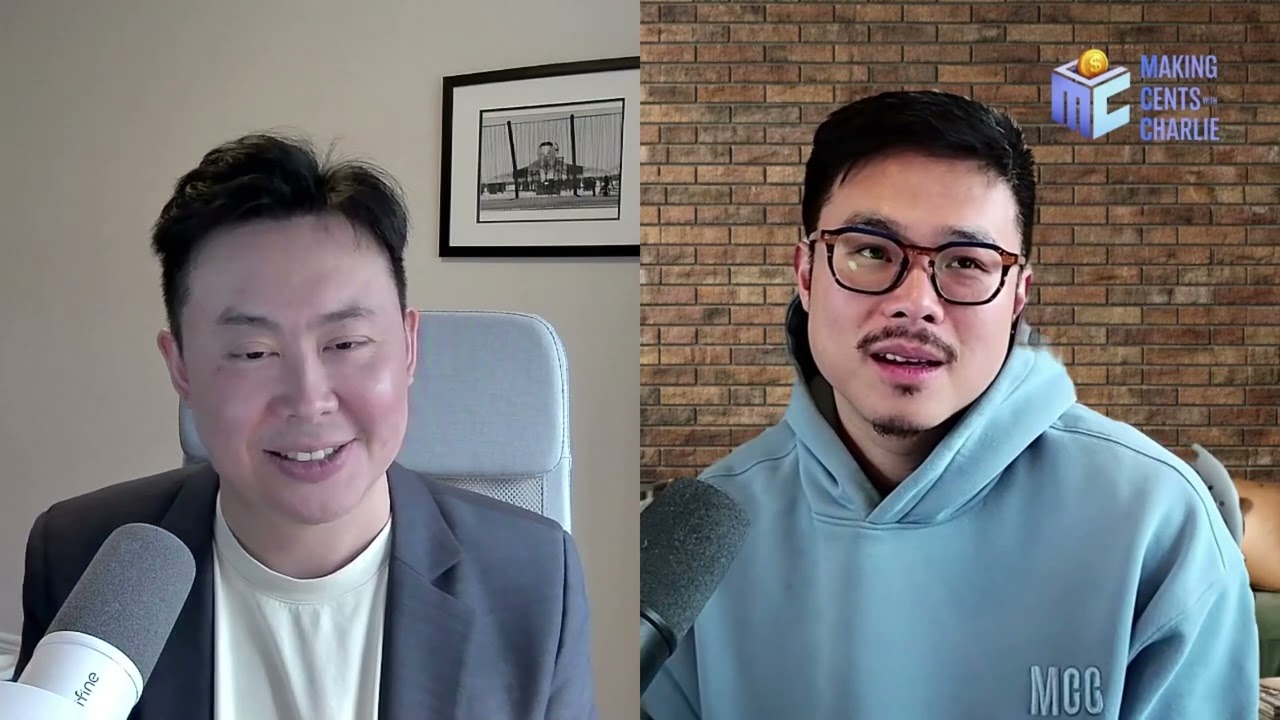
Let's make sense with Charlie. Serious business on serious hosts. Yes, let's have fun. Hello everyone, I'm Charlie Liu and welcome back to the MCC Show, Making Sense with Charlie. We have a unique guest today. He's a real jack of all trades. I describe him as a bilingual in the world of finance and tech. He began his career in accounting and programming and then moved to consulting. Since then, he's navigated this industry as a Bennett consultant and a fractional CFO. While he is in architectural— architecting financial systems, he's a self-claimed engineer of all things kind of DIY projects. Love to learn a bit more about that today. He's also a dedicated multi-sport athlete. I think, Mark, once you told me you may be the most fittest non-professional athlete I'll ever know, but the number of sports includes squash, running, cycling, competitive disc golf. He is the head of our international team at MCC, straight out of South Africa. And let's give it up to Mark. Mark, it is great to have you here today. Welcome to the show.
Thank you, Charlie.
I'm really excited. I think you're our first guest, um, outside of North America, and We're gonna start things a little bit different today. We're gonna have our rapid fires just to get the energy up, have a little fun, and then we can have our shits and giggles and our typical talks afterwards. I'm excited for that. But let's start. Beer or wine?
Wine, absolutely. My house has a wine cellar. That's why I bought the house.
I can't wait to come. FP&A project or DIY projects?
My DIY project? Yes. Someone else's FP&A project?
Yeah, I guess, I guess that's sick. Yeah, between those ones. What's your coffee ritual? I know you're a coffee snob.
You said the word rapid fire. I make my own I just did that recently for the first time. Easier than you think. I grind my beans. I have a manual lever machine that's preheating in my own water on the stove. I'm grinding beans into a little ceramic, into a nice big grinder. 2 different types of beans, one for mine, one for my wife. I make hers first. I pull my manual shots. I do the milk separately. It's a cortado generally is my style and my wife's too. think it's one of the most important things in my life. The smell of the coffee in the morning is wonderful. It actually got me married, I'm fairly sure. So one of the first things my wife noticed when she came to visit me in my apartment, she saw sparkling water and coffee, and she thought, okay, this is the guy, her 2 favorite things. Massively important in my life. And the ritual is it. I'm in charge of every variable. I maximize everything. I've got to be like a German, like a Swiss clock or a German clock. You've got to run like a train. You've got to move.
You've got to move.
Can't lose heat in the system. Can't add more variables. It's honestly one of the most fun things I do.
Love that part about you. Again, I can't wait to visit and have one of your coffee. Do you have a particular bean that you're obsessed about?
There's a region in Ethiopia called Yirgacheffe, or Yirgacheffe. I'm not sure how they pronounce that, but it is like the opposite of old school coffee. It's bright, it's acidic instead of— and it's sour instead of bitter. It's floral and fruity. And I often get it wrong, including this morning. I got it wrong.
That sounds delicious. I can't wait. I know. I know you switch between multiple sports, but between all the ones that you do—squash, cycling, disc golf—what's what's what's what's what's your number one? Disc golf.
Watching something fly—that's just fun.
And I know you're competing later this year as well. Yes, yes. Very close. Are you the number one? Yeah, are you the number one representative of South Africa? Number two? I'm number two.
I was number one, but I have been beaten and usurped. The guy that I beat. to become number 1 has beaten me back.
I see. How long were you number 1 for?
A year, a solid year.
Okay. Okay. Well, you have, you have more opportunities coming. Do you find that you are more athletic now versus when you were in your 20s?
No, no, no. I dedicated 12 to 14 hours of solid training every single week. Hard training, training like a professional for, for no monetary reward or hope of monetary reward, just for the love of doing it. Yeah. It was really good. I enjoyed it. I don't regret it, but my body told me it was time to stop doing that and become a normal human, which I've promptly ignored. And I just do different things instead of hardcore cardiovascular training. But yeah, that was really good fun, really, really good fun to be at that level. I wish everyone in the world could just try it, try it for a month, just for free, just to see what it's like, because I think a lot of people would like it. They just don't know what, what it's like over the hump of all the work to start.
I love all the dedication and focus. It's beautiful. I don't think I've ever done it to that level, but I think I can guess what it feels like by kind of my dedication elsewhere. I often hear kind of athletes, they talk about sometimes they're a little bit, once they get a little bit older, kind of you're in your late 30s, they might not be as fit, I guess, their joints doesn't feel as good, but there's like a certain level of Kind of physical intelligence or the way to navigate the sport that might be more mature. Is, is any of that, did you feel any of that?
Yeah, that's where disc golf speaks to me because I was a squash player. COVID was the reason I stopped because it's 2 people in a shared space. There's a skill element, there's a technique element, and that is so appealing. The, the other sports required fitness. Like I liked mountain biking more than I liked road cycling because mountain biking again had a skill component. For me, it's the skill component that's the most, most exciting because, you know, we can all practice. Anyone can practice as much as they want, but there's a talent element to it. And really, that's when you start cutting-edge competition. And that's the joy here. It's the competition.
And then the final question today before we just have our typical chats. What's the most majestic animal in South Africa for you?
I have a hot take on that. I think it's the kudu, which is a a buck antelope type thing, which is taller than a grown man standing up. The males can be enormous and they are some of the most beautiful creatures. I have a vivid memory of one. I was in a, in the back of a game drive vehicle, so you're very high up and this thing was next to us and I had no idea. It's a massive, massive animal and it was right next to me and it just appeared next to me. It and I made, you know, full eye contact and it decided I wasn't a threat, but it still wanted to run away. But they are, I suggest anyone who's listening, Google a kudu and the word majestic perhaps, and just look at that animal. They are fantastic. They're also delicious.
Fun in multiple different aspects. How do you spell it?
K-U-D-U.
K-U-D-U. I'll look it up afterwards. Hope I can see one when I visit later this year. South Africa, I'm gonna guess, and I think I'll be right, but most folks listening have never been there. You've traveled around, you know what it is like in North America and Europe, other places. How would you compare to someone on the other side of the What South Africa's like.
We're better than the world in so many ways and worse in so many others. There's, there's no middle ground. Friendliest place you'll ever come. No matter who you are, if you're walking in the same direction as someone, you can start up a conversation and expect to, to talk to anyone you make eye contact with and be very friendly. It's warm. It's hospitable. We're not very good at, you know, the basic things like keeping the lights on. That makes the news a lot. Water is not always there when you open a tap. Those kinds of things. There are, there are some systemic issues. My biggest gripe is the education system is very poor. The standard has been lowered. And the result is that there's a bunch of very, very, very smart kids who are very capable, who don't have access to the international world. My parents had to pay extra for my schooling. I did the national government schooling and also wrote international exams so that my schooling was recognized by any university I wanted to go to. Didn't matter. I went to a university that I can almost see out the window. But, uh, you know, one of those things just makes it much easier. If you've got to take an extra step in South Africa, you've got to put a solar panel if you want the lights on continually, you've got to put a backup water tank, you've got to expect the traffic lights don't always work. You've got to do a few things that the rest of the world doesn't do, which really off-puts a lot of people there. That turns everyone off. They don't understand. But when you look past all of that, the good is amazing. The good of this country is it's one of the most beautiful places and the people are amazing. We're a melting pot, a proper rainbow nation, they call us. We've got everything that we could ever want. We're just not always using it the best that we could do.
I can't wait to see this. There's so many things I'm learning right now about this country. I've never heard of it being a melting pot. Sometimes they say Toronto is a melting pot, but there's so many places I've been to where I'm like, can't compete at all. So I can't wait to see that. And I've never actually heard of South Africa as being warm. Um, I mean, knowing you, I know you have a few folks out of South Africa now on our team. I can see it. I can't wait to kind of meet more, see what it's like. I can sense it. I know the socioeconomic gap in South Africa is quite high. I know it's one of the countries with one of the lowest economic social mobility. Seen this in some of the countries in South America as well. And I— my guess is the largest difference just by the education system. If you aren't— if you did not select the right parents, It's very hard for you to get a decent education, biggest driver to move across different tiers in the economic ladder. What's the education system like there? It's because you mentioned you had to do extra schooling, extra tests. What is it for a regular person who doesn't have those opportunities?
It's too many people in a class. There's a dumbing down of the curriculum and removing of higher maths options and higher stats and higher science options. It's limiting people's choices. Yeah. The pass rates for certain core subjects are in the 30% range, which to me is not acceptable. And I don't think many employers want someone who says they have a math degree, but they only got, you know, 35% to pass it. Yeah. There's a focus on getting people through and the focus on getting people through, but then getting them through with nothing of value. So—
This is across the board. You see this from elementary, junior high school, university.
Not university. Not university. The universities are dealing with the consequences therein because you've got a bunch of people that you've got to give basic maths to so that they can do their accounting degree. I actually spoke and taught in my economics class because the lecturer was a guy that I knew from school. He went to the same school as me. So he looked at me and went, Mark, why don't they understand what I'm saying? This is basic. And I had to, can I explain it? And I did on multiple occasions, stood up and explained, you may have been taught it like this. But if you change it ever so slightly, it's what he's telling you. This is the translation. And that's just a gap that my school filled for me that other schools might not. But my school is on the top 10 list of the most expensive, which is a very unfortunate thing to have to pay for.
But that is unfortunate. So it sounds like getting to towards the end of high school is not difficult. It's easy to get in, but it's also easy to go through all the different grades and years. But once you get in university, you almost get hit by a wall where there's such a gap in terms of expected I hope this is the right word, competency at different levels, but many people might not have it.
It just makes the people that you meet that didn't have the benefits that I had and didn't have the leg up and didn't have people who were able to sacrifice for them to do it. When they have had to do the sacrificing and they've had to drag themselves through, when they get through and they reach that level of competence that is world-class, then you're even more impressed with them. They're even more of a someone worth considering hiring.
Are there kind of social support structure like libraries and easily accessible accessibility to internet that helps kind of the locals enable themselves proactively beyond just regular school?
Cell phones do make the world a much easier to access place, but again, it's for some people the answer is absolutely yes. For some people it's, well, yes, but there's always a proviso. And the further out you go, the more rural you get. from the city center, the harder it is.
I know one of our topics is later is kind of talk about what we're going to be building in a few weeks, actually a week. It's partially driven by this as well, but we'll come back to it. Earlier we mentioned DIY. I know you have a lot of different hobbies. You're always working in your house. You are spending a decent amount of time with 3D printed goods. What's, what's been the Biggest project in the last 6 months for you?
I think there's so many to mind on the house. I do a lot of hobby things. I do things for fun. Absolutely.
I love it. I love it. And most people don't, right? Most people just— but this is a lot of people in North America just work like nothing else.
Yeah. I hurt my neck and I hurt my back and I ripped my hands apart. And then I sit at my computer quietly on a Monday morning. There's been a lot of electrical gremlins in my very old house that I've had to fix and had to repair. It got so bad that I had to recruit external bodies to help. You know, it's not a one-man fix. Walls disappearing into cavity, wires disappearing into cavities behind walls that I can see the other side of the wall. Where is the wire? You know, I'm playing with endoscopes trying to find missing wires. I'm drilling holes and smashing my house that had just been painted and just been finished. And I'm using a jackhammer to try and find things. Rewiring almost an entire house.
How old is your house?
120-something years, but the Maintenance between then and now is almost none.
I'm even more excited to see, I love old houses. My last house was 90, when I was there, it was 98 years. So now this is slightly older. Everything had to be redone, the electric work, everything.
Yeah. And it's one of those things that the last electrician who left this week, who helped me fix that problem, I asked him how much I owe him and he said, you did all of the thinking. If you hadn't helped me, I would still be standing in your house smashing things with a jackhammer. So you tell me how much you think my time was worth. To which I, like, a great compliment, but I still need to pay you. What's a fair amount to pay you?
Good guy. Very fair. In terms of the, actually just outta curiosity, what are the walls made out of? 'Cause it's so interesting. 'Cause North America, our houses are made outta drywall, basically paper mache.
No, no, no. Everything is brick here. Everything is solid. I have 2-foot thick walls in places that I was smashing through. That's why there can be a cavity for things to disappear into. Everything is brick. Everything is solid. Great for, you know, strength, but in the winter it can be a bit cold.
Oh, okay. Fascinating. It's brick. So the walls are all brick. Okay. So interesting going around the world, like in South America and in China, it's all cement. In North America, it's all just wood and paper mache. If you lean on a wall too hard, you'll make a dent. And down in South Africa, it's all Yes.
And our voltage is 220, which makes it safer than American 110. And you guys have houses that are made out of paper and wood, and then you have wires running in there. For me, a wire that I lost, I know that it's buried in cement and it is completely unable to, to do anything of any danger. Whereas if I had drywall, I'd be very nervous.
That is an interesting thought. I've never thought about it actually. That is a little bit terrifying, but houses down in South Africa, I'm Sure. Some of the audience, especially this being a finance-oriented podcast, your career has been fascinating. You started as an accountant, then you actually did some programming, and now you work with us in terms of delivering all these systems. What were some of the highlights and how did you get to where you are today? And if you were to give yourself kind of some guidance, if you could go back 10 years, what would that look like? I know that was a lot of questions. So feel free to go through any sort of direction you want.
Simple steps. I studied accounting because I couldn't think of anything else to do. And I applied for a bunch of degrees and the university said yes to all of them. And I went, well, I guess I'll do accounting because it's the most general, the most vague, and you can branch out. Um, the good thing that happened to me was I did my articles at a small firm, which allowed me to try to build my own, our own CPM tool, which was really cool. So I immediately got out of accounting despite being an accounting article clerk and doing all the things you had to do. I also did a lot more CFO and FM and FD and all those kind of in-between steps. I did all those kind of jobs. So I got a much better education than most. I didn't do much audit, so my time was spent more, but of course, when you work 60 to 80-hour weeks, you can get a lot done in 3 years. So I did all of that. I left that. I went to consulting. I did a lot of Power BI, a lot of other programming, and found the tool that we use now and have been doing that on and off ever since. My advice to myself would be not to study accounting, frankly. I feel that, you know, you can learn that from a book yourself. The amount that I use on a day-to-day basis is, you know, over the last 10 years, how much have I used of my insane accounting knowledge and all these texts and all these rules and audit and everything else versus how much of it was self-taught, things to do with computers, maths, programming, all of those things. So I would probably suggest do a BSc in something maths and computer related because that's the way the world is going. AI is maths and done by computers ridiculously fast. That, that's the world and the future. So I think that's the better way to have gone. Not that I'm upset.
I think you like what you do today, and it sounds like we're not using a lot of it. Do you really think that being better at the technical kind of programming mathematics is the biggest strength here, or are there other kind of aspects like managing? Kind of interpersonal relationships or the business aspect? Because if you think about a CFO, you mentioned that a little bit. CFO is not a controller, but not just in accounting day in, day out. What other kind of aspects do you think that are our biggest drivers in being good at what you do?
I think there's a depth of thought and a depth of understanding, the empathy to put yourself in everyone's shoes, because, you know, you can type anything you want into AI, but what you type in matters. It matters a lot. And you can, you can steer the AI in many different directions. But in just a normal day-to-day life, you need to understand why you're doing what you're doing. How does this help someone? How could I help them more? How could I help them better? How could I do something that'll improve the situation? And that is the professional aspect that we bring. And it's asking why. Why do you want this? What problem does this solve? Why is that problem so big? Why is it your problem?
I love it. I think that's why one of the reasons we work so well together. I remember when I started my career and the general Kind of way you worked in our field, this financial systems consulting, where typically it's based off the deliverables from the contract. And I never felt like it did what the clients want or did what I wanted to. And I think one of the reasons we were decent or good at what we do is we care about the other side and we try to look beyond just what's the contract. The contract is definitely important. It's the handshake. It's what's legally abiding us to do, but it's actually understanding.
Yeah.
The why, right? What is the reason behind this project? What is the real pain points, processes, things you're trying to do? I often think about it as truly we're just helping other people. They all individually have their own personal selfish goals, and generally they're aligned with the corporations as well. We need to tap into that to understand how we can help them better. For, I think a lot of folks, it takes a long time to get this realization? You talked about empathy a few times. What has helped you in your career to get to this realization and to get better at being able to understand the other side, ask the why?
I spent a lot of time where I was the sole consultant and a sole proprietor doing that work. If the client didn't like me, that was a problem for me and my ability to continue eating. So you have to really think Right from the get-go, how can I make this person happy whilst being profitable myself? You know, I need to move on from this project. So that's an experience. That's hard lessons, hard learn, you know, hard learnings. You need people, you know, around you to occasionally step in and help. But for the most part, it's you. And you understand the consequences of a soft word where you meant to be firm and say something explicitly and you didn't, and you left it vague. You'll understand those kind of consequences when you're the one at 2 o'clock in the morning fixing them and compensating for your own words. You know, you're the one who has to deal with the client wanting their time back again, because if they'd known now what they knew then, they would've told you something different. That's when you think, can I not help them better? Can I not ask the questions? Can I not steer them? Can I not apply some professionalism to the situation and explain why? It's not just asking why, it's telling why. Detailed explanations. Why do I say that you're wrong, Mr. Client, who's done your business for 20 years and knows your industry inside and out? I'm telling you wrong because, and then you have to convince them in a way that they actually believe and will back you on. That's a thing that took the longest to learn. It's one thing to use logic and explain to people. It's another thing to get them to buy in.
I love this piece because I think a lot of folks in our space don't realize that. We're consultants. Our job is to consult.
Yes.
I did this for a long time and I see this with a lot of folks. Much of the industry's just taking clients' current processes and then moving them to new technologies, which is a disastrous combination. You have to push back. You have to explain, we have to change the process, re-engineer the whole thing, not just set up new systems for you, cuz now you've taken The whole problems and misunderstandings and processes, and now you're in a foreign environment that just adds that level of difficulties in terms of what your day-to-days look like. And you bring up a good point where if you don't push and explain that why in a way that they can understand, often there is pain later.
Yeah. I started out being way too smartass, way too clever. I can solve your problem, but never explained it well enough. I had a mentor who really helped me with that, sort of explaining that whilst this is brilliant, no one else knows what this is, you know? And I realized fairly quickly on that I'm not going to get paid for brilliance if it's not explained and usable and keep it simple in that case and build with the client, explain to people. This is, this is the lesson that I had to learn the hardest. I think that was the, that took me the longest to learn.
I think that's a good one. Let's double-click on them for a bit. It took me too long in my career as well to get good at communications. I think this was Vin, this communication coach from Australia. that he explained that you don't get paid for your skills. You get paid for your perceived skills, which is why sometimes you see folks that their skill level's here, but then they get paid here. It might not necessarily be— I don't think it's always ill intent or lying what you do, but they're just really good at presenting what they can do. But you also have folks that's here in terms of what they can do, but then get paid Here, because the other side, their clients, their managers don't actually know what they're capable of. And I think there was a quote that he had which I really love, which is communication is the tide that lifts all. So if you think about all your skills, all your capabilities, they're like little boats, but the tide is your ability to communicate. You're going to be able to be far more effective in terms of getting requirements. You're going to be far more effective In terms of change management, you're gonna be far more effective in terms of negotiating the scope, the changes, the requirements. And a lot of what we do is selling these new process, these new transformations to our clients and being able to communicate that across and able to convince them to take a chance to work differently. That, I think that's what makes a good consultant, the difference between a good consultant versus an average one.
I'll take the average consultants whose technical ability is brilliantly high, I'm happy to hire them and fix them on the soft skills.
Actually, great question. Which one do you think is harder? Getting someone strong in communicating and teaching the technical aspects of what we do on software engineering, coding, FP&A, accounting, or vice versa?
I think my answer is that there's a middle, there's a middle skill, and that's that, are you willing to probe, to question, to answer those things? Even internally, if you're technically strong because you're asking those questions and you're excited by a problem and trying to solve it, then I can teach you the soft skills. If you're great at the soft skills and you ask all the probing questions, I can teach you the technology. But if you don't have that middle piece, then consulting's not for you. We have to be innately curious people who want to solve problems. You got a problem? Tell me about it. I'm curious. How would I solve that? I don't care for problems I already know how to solve. Okay. For novel problems, if you've got a novel problem, fantastic, even better. That's, that's what motivates the consultant mindset.
I really enjoy that. Recently came to realization that there's 2 skills or 2 muscle I think that can benefit you in almost every aspect of your life. I used to talk about empathy a lot. We talk about this all the time, but I think the second one is curiosity. My God, if you combine those 2, there's so much you can do. Even being a good manager, you're leading a team now. Being curious what the other side is feeling helps you get more empathetical. And being curious about what it's like, that genuine childlike curiosity is what drives— at least what drives me. I want to learn more. When I talk to a client that's in a completely different industry, the curiosity for me to just go beyond what I'm supposed to do this project, to understand what is it that they do themselves, what is it they do for that company, what does that company do, then allows me to understand kind of the big picture and why we're doing what we're doing for that, that, that picture, that, that business better. Do you think that something can be taught and strengthened, or you're born with that level of curiosity that you speak of?
I think there's a bit of both. You can definitely flex that muscle. You can strengthen that muscle. You need to strengthen that muscle. You need guidance on how to strengthen that muscle. You can be curious about the wrong things. You can You can ask people things that aren't relevant and lose trust. You can ask questions the wrong way, all of which can be trained, but it's easy. For some of us, life is easy when you're born this way and you find a career that allows you to express yourself in your natural way. Great. Makes me think of people, some of the people that we're actually hiring who are coming to us having had successful careers in other industries and said, I need out. It's too boring. I need variety in my life. I need problems. I need something that's going to keep me entertained and keep me engaged. And I'm like, come to me. I've got problems for you that'll keep you engaged for a good 10 years or so.
I love it. Thinking about that curiosity, almost baking it into your recruitment process to look for the resourceful, the curious individuals that even if they're not, even if they don't have the skills or strength that you need today, but you know that they're curious, they care enough to try to ask the right questions and build those skills. Talking about hiring, I know we're starting something Pretty cool. Maybe, maybe share that with the audience.
Putting my money where my mouth is and asking the company to do the same. I said, South Africa is the place. We've got the smart people, all those kids that I spoke about that are fighting their way through university, that are struggling to achieve things that other people in the world might consider normal. Those, those bright kids that don't have a job, that don't have anything. We are taking on 8 or 9 of them starting next week.
And I didn't know it was that many. Yeah, it's that many. I shouldn't be finding this out on a podcast.
I can explain the reasons. It's all good reasons, wonderful reasons, and they're all wonderful people. And I will tell you that the first people that we said yes before we'd even finished the list, all the curious ones, all the ones that said, why? Can I stop? Can I ask you a question? Can I ask? Those are the kids that we all wanted. And they're all super, super bright, super talented people. You know, initially I thought, because I've worked here and I've lived here my whole life, I thought South Africans, all the problems and the foreign must be the answer because I only deal with highly professional foreign people and I realized, no, that's a very silly, very immature thought. Actually, it's the other way around. Let me work with the people I know. Let me expose the rest of the world, specifically the Canadians here, to what South Africans can do. And obviously there are economic factors that make that very viable, but from our perspective, that's just good business. We can take people from a situation and change their entire directory of their lives, entire careers, and their earning potential can grow up. So it's a win-win-win for everyone involved, especially for the people themselves.
And I know you bring up the economic factor. Absolutely, it's part of it. But my goal, I think if you're good with what you do, you should be paid a fair market rate globally. It doesn't matter where you come from. So I think a big piece of what we do here is give the folks we work with opportunities. And with kind of everyone working remotely, that's something that just wasn't possible before. But just to give a sense of what it's like in South Africa for a lot of the audience, the unemployment rate is quite high, right? It's near—
Youth unemployment is 60. Well, youth unemployment is 60%. Yeah. That just means that the youth who have, you know, whatever schooling, whatever education, they don't have jobs. Only 40% have a job, which to me is a failing mark. That's not good enough.
Yes. And for anyone listening, like, it's possible for us to help and it can benefit everyone in that potential equation. And that's what we're trying to do here. This is kind of your first time doing this, right? Building an office, hiring a group like this and coaching them. I know we haven't started, starts next week. What is the part that makes you the most excited? And what's the part that makes you the most anxious about this?
I'm truthfully bored of the solving people's problems with FP&A tools, but I find that teaching people how to solve other people's problems with FP&A tools is very rewarding, very motivating. So having had lots of individuals or groups of individuals, never had this many people all at once whom I can actually share that knowledge with. And, you know, the better they do, the better it looks on me, the better I can teach them, the better their careers go, the better I teach them, the sooner I can go back to working remotely, you know, the life For me, there's an opportunity and a challenge and a problem, and I know how to solve it. And it's not a simple logic problem. It's a people problem, which is way more rewarding because you get to see that your rewards are seeing other people. The challenge—
What about the anxiety part?
All of the same, all of the same, you know, assumed knowledge. How do I communicate what I think they already know? How do I constantly empathize with people for whom have not had 15 years in finance, have not been at boardroom tables since they were in their early 20s, who've not had that exposure. How do I get these people to know all the little things that they may need to know to feel confident and to build their skills and to flex the muscles to get good at this job?
It sounds like there's a new calling in your life, which is kind of getting up and mentoring others. I really believe from my own career the last couple of years, One of the biggest drivers was finding mentees. That's been for me far more rewarding than any client work I've done for the other side. It's to grow the people around me. And it's fascinating. I spent most of my career, and a lot of folks, I think you get guidance, you need a good mentor, which is absolutely true. But what I found was after getting good mentees, it held— it holds you accountable and you really have to practice what you preach because like You're telling them, right? And then action speaks louder than words. It makes a big difference. Question for you, especially we're going through this, and, um, 9 of them, 8 or 9 of them, it's not a small group. This is not 1 or 2 where you can individually coach. And I may be putting you on the spot because I should probably know what this is going to look like. How are you thinking of what this, this onboarding, this educational process? Do you see it more like a, in, in like a school-like setting? Or Where is it closer to typically what you see for a company where, I don't know, a few weeks of kind of coaching and then trial by fire? How do you plan to go through this?
So we do have a bit of a leg up here in that they're coming to us through a company who has found them and sourced them and has been educating them in business life work. They show up at 8 and they leave at 5. They do case studies, they do work, they do teaching. So they're coming to us with a classroom environment. as what they've been doing for the last year or so. So we're gonna continue that. We won't rock the boat too much there, at least for 3, 4 months, giving them slow and steady, piece by piece, building some foundation. For some of them, it's gonna be the most boring 3 months in certain aspects and the most exciting in others. We wanna make sure everyone's got that sort of basic level of understanding. And from there on, we're gonna do a lot of shadowing. We've got some amazing people and we need to tap into that knowledge and tap into that skill. So screen sharing, working with people, explain to me why. Don't just do, tell me why you're doing it. And then you can go do it for yourself offline, you know, go, go, go practice what I just showed you and come back to me with the questions because I can show it to you again.
We talked about AI earlier and we're talking about kind of growing that next generation. Part of it's growing MCC and part of it is to kind of give back a little bit. How do you, things are very different now. Things are very, very different now compared to a couple of years ago, compared to 6 months ago. Do you have any plans to kind of work AI into the equation in terms of helping and coaching these kind of new generation that start next week with us? Does that kind of impact how you plan to kind of coach and ramp them?
I'm still a bit of an AI skeptic when it comes to AI creating value and content, but one thing that it is undeniably brilliant at is marking homework. You can ask it questions, critique this, explain to me why this is bad. If I wanted this, say an email, to be written in a friendlier but firmer way, how would I do that? Those kind of things. And particularly good when it comes to now with Excel and other files, you can ask AI, explain why this is an inefficient or bad template. What would I do to do it better? You can, as far as I'm looking at it, and I am looking at being a teacher, And a mentor to all these people. It's, well, this is a teaching aid. This is a mentoring tool that doesn't sleep. It's available to you anytime. And the subscription fee is quite reasonable.
I love it. I think too many of us use it as a, I don't know what the word for it. It makes a lot of us use it to simplify. That's the word, simplify individual tasks. The biggest ROI that I have gotten on it is actually to critique The work I do, the decisions I make, the strategies I think about. It's to create almost like an individual coach for yourself. You're a great coach, mentor yourself, but you're not going to have the bandwidth to be able to compete with an AI in this case and be able to give each one of them kind of tailored guidance that you might have if it's one or two kind of people, but you have a larger group. I like that in terms of how you're thinking through it. There's a future in AI, Dad. Yeah.
And that feature is most people, most of us are good at solving a problem. And once you've solved it, you run out of energy for that task. AI, you can say, I need to solve this in a different way. I wanna practice. Let's talk about brainstorming ideas of how I'd solve it. And I'm not allowed to use that existing solution. And as a consultant, that's a muscle that most people take a long time to learn because usually a client restriction, a whatever the case happens to be, that teaches you That you've got to find another solution. Whereas now you can actually do that, simulate that with AI and say, this doesn't work, or pretend it doesn't work. Tell me why and how I can solve it a different way.
That simulation is, I don't think most people are trying it. It's quite critical. You can actually have it pretend to be an actual client. Some of our sales team, they start their day by cold calling their AI and they'll tell the AI to be as rude, as cold as possible. So that they start with the worst potential prospects every day. And I think that's a great kind of opportunity to give the consultants that trial-by-fire experience, but it's not real. Like, that's something that you and I went through. We were just, we were thrown into the fire, but they were real. This gives us kind of the opportunity to give the team that experience, but at the same time, it's in a Supported, protected environment as well. Mark, this has been a lot of fun. I do think we have to come towards the end, but for us being the MCC Show, our ask is we'll always get a 2 cents advice from our kind of attendee. What's your 2 cents advice for the audience?
Very simple. Keep asking why. Ask why and ask why again.
Should drive everything you do. We should be very intentional behind the reasons what we do, why we do things like that. Well, thank you so much, Mark. Thank you for everyone attending. Thank you for all the listeners. This is a lot of fun, Mark. Hope to have you back soon. I hope to see you soon in person.
Yes. Can't wait to see you in person.
Awesome, dude. That was fun. Stay tuned for the next episode of Making Sense with Charlie.