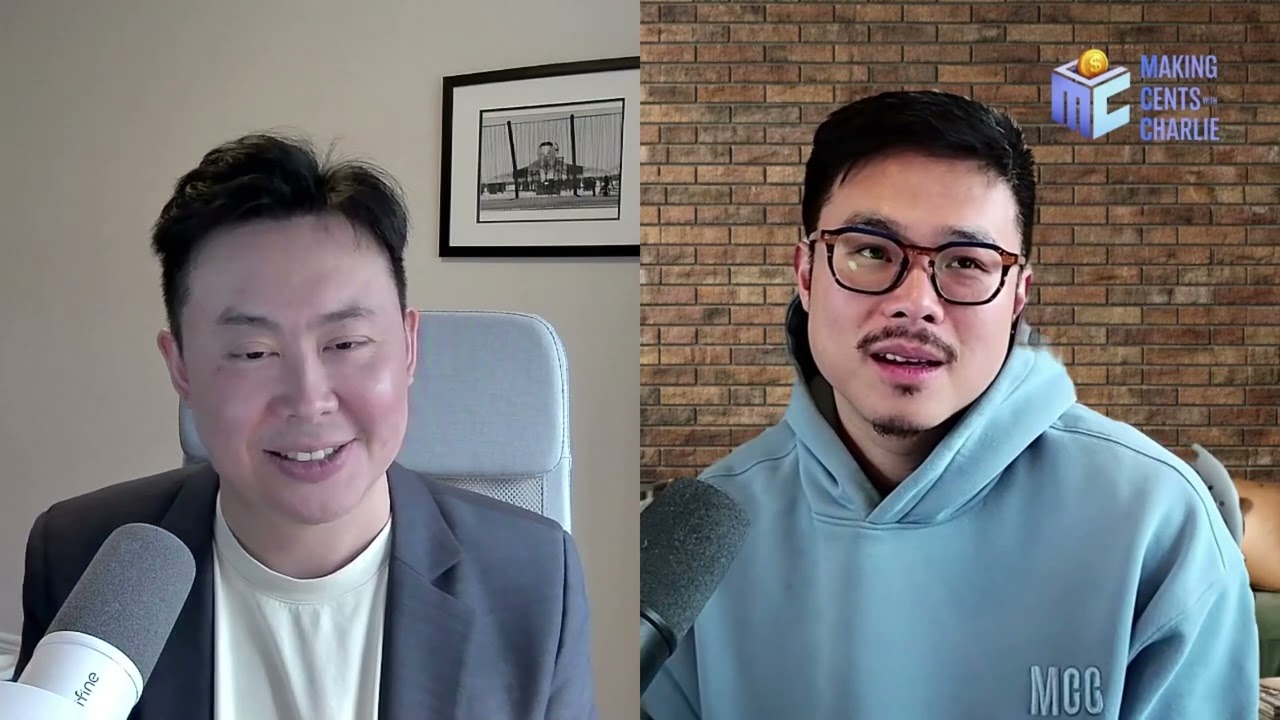
Making Cents with Charlie and Bill Rausch

In this episode of "Making Cents with Charlie," host Charlie Liu interviews Bill Rausch, founder and managing director of Brightpoint Solutions. The conversation traces Bill’s unconventional career—from early JD Edwards ERP consulting, through a stint at Hyperion, Host Analytics, and a pivotal move into FP&A consulting—highlighting the personal and market forces that shaped his path. Bill shares practical insights on transitioning from ERP to FP&A systems, emphasizing the challenges of moving from transactional databases to OLAP models, the importance of dimensionality and master‑data management, and the value of a data‑readiness workshop before any FP&A implementation. The duo discusses the evolution of finance technology over the past two decades, noting the shift to cloud, remote work, and the transformative impact of generative AI (Claude, Gemini, ChatGPT) on consulting, data cleaning, and knowledge‑base creation. Bill’s “2‑cent advice” warns against over‑engineering and encourages rapid, iterative delivery. Throughout, the tone is conversational, anecdotal, and pragmatic, offering actionable guidance for finance professionals, consultants, and emerging FP&A talent.
Chapters
Let's Make Cents with Charlie. Serious business on serious hosts. Hello everyone. Welcome to Making Cents with Charlie. Our guest today is the founder and managing director of Brightpoint Solutions, where he helps finance teams modernize how they plan, forecast, and make decisions. With more than 25 years in FP&A and performance management, He refocused Brightpoint around Pigment in 2022. He's a lifelong learner who spent the past few years digging into what AI can actually mean for the future of finance. When he's not doing that, he's out on the golf course and watching New York Jets. I'm really excited to have you here, my friend Bill. It is a pleasure to have you. Thank you for being here with me today.
Charlie, thanks for having me.
So, Bill, we always like to start with a round of rapid fire, just get you warmed up. So really quickly, One app you cannot live without.
One app I can't live without. Well, I probably like most people, Claude, I can't live without it. 80% of my day I'm in Claude.
It's on your phone too?
It's on my phone. Although on my phone, I tend to use Gemini. Um, so like all my personal stuff, I go to Gemini, all my work stuff, I go to Claude. So like when I'm watching some program and I'm like, who was that actor? I go to Gemini for that.
But if it's not that good, Claude is really good on the consumer side of things. They, I think they know to really, it's Especially media. They're really good at figuring out what their focus is. Have you tried the AI function and the new one on Google Maps? It's phenomenal. If you go on the next trip or you just want to figure out what you're going to do for an afternoon, just go on Google Maps, go on the AI feature because it knows exactly where you're at.
Yeah.
It knows your calendar. It knows what kind of day you've had. It will suggest that you should wind down or find something energetic and it will actually map out a whole plan for you so you can just follow it. I go here first and go here next. Um, at this point you really don't have to think anymore. But, uh, next question, save money or spend on experiences?
Um, given my age at the moment, it's been saving money. Retirement is on the horizon. It's not near, but it's close.
I think you still have a while, Bill. I mean, you can't slow down. Yeah, you got— every time we talk, I don't think you're going to slow down for a while.
It'll be a while. I just want the ability to retire. I want to like retire and feel really good about it.
We're all trying, right?
I mean, it's what drives me, right? I love what I do and I have taken time off and as you know, in my career and I was bored and I came back and that's where you and I met.
Yes, exactly. How long has it been now? 4 years, 5 years?
6.
You were 6. No, you were just leaving Cube. I think you were actually—
No, it was before that. It was before that. It was January of 2021.
It's been half a decade. Well, I'm glad. It's been a while. Um, I know since I've known you, you're a very unique human being. There's really nothing you can do. You can sell, you can demo, you can scope. And we're talking about in terms of our trades being the EPM, CPM, kind of FP&A systems world. You can consult. You've also built a business. You have sat on the other side as well. Not many people's in that boat. How did you end up like this? And the reason I bring this up though is, uh, we have a lot of folks that's watching this a little bit younger in their career.
Yeah.
They don't know where to go. I often get, I get a lot of accountants actually asking me for guidance. I think hearing your story will help a lot of people.
My story is an interesting one, Charlie. It, it started not, I won't go all the way back. I had done early in my career, I had fallen into doing JD Edwards consulting. They were an ERP system back on, back in the day, very big for manufacturing distribution companies, had a very strong culture based in Denver, Colorado. And I kind of left that environment. I was like looking, trying to figure out what to do next. And I was ended up playing golf with some random guy and he said, have you ever heard of Hyperion? And I'm, no, I hadn't heard of that. And he goes, oh, well, actually I said, no, I had heard of it, but I don't know a lot about the company. He goes, oh, it's amazing. And he knew a lot of the same people I did from J.D. Edwards. So he basically, long story short, said you should go look at Hyperion. So long story short, he effectively hired me. I was doing consulting for them. Um, grew, grew, grew with them. And then they got bought by Oracle. I was miserable. A friend of mine went over to Host Analytics. And they brought me in to do pre-sales. I was their first pre-sales person. So, but in the short, I'm doing jobs, right? But I kind of fall into this FP&A thing, having done a little bit of it earlier in my career, but that's another story. Doesn't matter. Long story short, my wife at the time got a job traveling. It was a big job making a lot of money. And I left Toast Analytics. I, there were things happening that weren't going to work and they needed me to travel. She was traveling. I said, you know what? I'm just going to be a consultant. I know how to be a consultant. I know this Host Analytics platform. I'll be a consultant. And I got a few projects through the company. And the next thing I know, my wife and I get divorced and she's still traveling a lot and we've got a family and I'm like, I can't travel. So this at the time, working in the cloud was a big deal. And I'm like, this is great. I can still do my job and I don't have to travel and I can be home with my family.
When was this, like in the late 2000s?
2010. Okay. And I mean, and at the time I was like, I have to make this work. I can't get a job because every other job I've ever had required me to travel. And it's sort of a long story of it's a burn the boats. It's the burn the boats story. I had to make this work. I didn't have a choice. I mean, I felt like I didn't have a choice, but it also happened to be that I love talking to people. I love connecting people. I love solving problems. And for me, I am very comfortable being uncomfortable.
Um, okay. Yeah.
And that's a thing that most people that move into consulting, like, you have to understand that that's a thing that you have to be okay with. It's never easy, especially these last 4 years. Things are going to surprise you left and right. And you just, you have to be prepared to roll with it.
Well, they say, um, what is it? Something is the mother of all invention. Necessity.
Necessity is the mother of invention.
I think it's necessity.
Because, uh, I mean, that's the case, Charlie. Like, I mean, I had to make Brightpoint work and it did. I got lucky. They hired a new VP of sales at Host Analytics at the time. And this is like 2 and a half years in. I've been working my ass off. I mean, putting in a lot of hours, working really hard. And this new VP came in and he is like, why are you on your own suffering like this? And I'm like, I don't know. It's just what ended up happening. And he goes, this is dumb. Like, you're smart. Customers seem to like you. Let's make you a real partner and let's help. Let me help you grow your business. We need you. You need us. And that we took the, I took the company from that point. I think we had, there was 4 of us and suddenly we were 15.
Yeah.
And then like a year late, I mean, that was within like, 6 months from 4 to 15, and then jumped up to like 20 or 25 and kind of stayed there for— vacillated a bit, but basically hung around that spot for a really long time.
I believe it was at one point like one of the biggest hosts. Well, that's called Planful now, partner in the ecosystem, right?
We were from probably 2015 or '16 up until we sold in 2017. We were, I think, the biggest Had the most consultants.
You learn a lot kind of being forced. I mean, you and I talk about this, like it's not easy building a business.
No.
Like a lot of times you just have to, you have to make it work. It's like staring into an abyss and eating glass. I think that's what some people call it. You don't know where you have to go, but luck, I do think you make luck, right? Like if you go back to that story that you just told, if you weren't good at what you did and you weren't good at building relationships, no, the VP of sales would not have started that initiative with you.
Exactly. And, you know, I had spent 2 and a half years building a reputation of doing a good job and willing to do whatever it took to make sure the client was happy and establishing that as my brand. And when he got there, I was in position to take advantage of the luck. And I think that's a lot of it, right?
There was a quote I got. I think this is, uh, Ormosi, that really jacked guy on YouTube these days. He's, he's very good at going viral. So one thing he talks about is if you don't know what you need to do, you build capacity. So if you don't know how to invest, save cash. If you don't know what you're going to do tomorrow, sleep early. Um, and I think in your case, in cases like this, it's just building the, the brand, building the connection, building the ability to have those conversations. So when it does show up, you're ready for it. Bill, you're, you're, I didn't, I, I do remember this. You telling me you actually had, you started in the ERP consulting days. I actually found a lot of, I tried, I actually tried hiring an ex-ERP consultant. They had a very difficult time jumping from ERP to FP&A systems. They're very different animals. One is all about settings, knowing exactly what switches to use. I have met NetSuite consultants that know nothing about consulting, but they're like gods of NetSuite. They know exactly what they have to change. They know how to move data, what settings, but they don't actually understand the whole picture. How did you find the transition?
Unbelievably difficult. It was so hard. It was really hard. There's so many things that are different and sort of in short, for me, I actually have a fairly technical background, like early in my career, like that's my background. The 2 things that were hard was moving from a transactional database environment to an online analytical processing environment. Just the star schema OLAP concepts of FP&A versus your traditional SQL environment for ERP. Like that, that change was hard, but like you can work through that. And I think OLAP was still new back then. So people didn't quite know how to describe it. I think now we've gotten to the stage where we can describe it and it's very easy and fairly well known how it works. The harder thing was process. ERP consulting is all about uncovering processes that companies have, whether it's, you know, how do I handle blanket purchase orders or how do I close the books or how do I take a sales order? How do I manage inventory? Like it's these processes and you're translating processes into transactional systems. FP&A consulting is all about, like, you don't care about transactions anymore. It's all about effectively balances and then adjusting and slicing and dicing and planning. And there's not as much process other than your annual budgeting process. But like, that's only to me a 10th of the issue. So that was like understanding. And then probably like the idea of working in a live model, like in ERP consulting, you never touch the live system. It's always a clone. You always work in a clone. You have a test and development and production environments. And FP&A consulting, I mean, you have a little bit of that, but not a lot. And that was a big part of like my career too. Like, oh God, wait a minute, we're in a live production OLAP cube. Like we're changing stuff. Yeah, it's fine. It's okay. It was hard. It took a lot of work. I think, I think the, maturity of the FP&A platform environment has made it significantly easier for people as well. Kids are coming out of college with like corporate finance degrees, like degrees focused on doing planning. And back when I got started, there was no degrees. People just, you'd have an accounting degree and that's what you would hire.
I want to come back to that because when I was in school, like there was no corporate finance. The only finance is like Wall Street banking finance, right?
That's what people thought of.
Yeah. And I don't know if things change in Canada. I still haven't heard any, but I know in the U.S. they exist now and it's fascinating. I do want to come back to that, but, um, you're one of few I know that have sat on both, all actually all the different sides. You've sat on the kind of seated corporate side. You've been on the ERP side. You've been on the P&A system side now, because I get this question a lot and I know enough to sound intelligent. Now, for anyone listening, and then we had a conversation, I know enough to be intelligent, but you've actually done both sides of it. Like when anyone's actually implementing an ERP system, I know at JD I worked with one of the more older systems, but I do think a lot of the best practices are still similar. They're evergreen in that sense. Are there things that you should be aware of in terms of how you think about dimensionalities, in terms of your setup so that you're set up for success? With other systems like an FP&A system in the future?
Um, uh, Charlie, I think probably the thing that I would, I coach our clients is try not to, I see this happening where, you know, folks are like, oh, I want to, they build this gigantic chart of accounts and they're embedding dimensionality into their chart of accounts. And I coach them to say, well, you have these other dimensions, like in NetSuite or classes or QuickBooks, they're called classes, right? Like you can have Many of those things, and frankly, I think those are a little bit easier to work with than just having a very, very long, complex chart of accounts. So dimensionality, I think, is important. And then as you're working with other systems, the best thing I tell clients is, you know, having some platform for master data management. It's a fancy word just to say, how do I ensure that my departments in NetSuite match my departments in HighBob or my You know, or in greenhouse, somehow those things all have to match and invariably they don't because different departments using different platforms require different levels of granularity. So invariably you're building these mapping tables where it's a one-to-many, many-to-one, or many-to-many relationships. And so building a mapping table that someone in the business has access to, to change, that to me is one of the most valuable things a company can put in place before they go do an FP&A solution, or at least while they're deploying those types of solutions. Because invariably, like FP&A, that's the other thing is it tends to be a clearinghouse for really all of your data. Like data is coming from all different kinds of systems being brought into your FP&A platform, your planning platform, EPM, whatever you want to call it. And like, that's when you need these sorts of mapping tables and having them somewhere easy for those folks to manage is to me the most important thing. Like I see it put in like SQL tables in Snowflake, but then the only people that can update them are the IT folks. So recently there's a whole story behind it. I won't bore you with it, but I've been using database tables in Notion for doing these mappings for our own internal processes.
I'm using Notion as well, and it's accessible through AI so you can manage a lot of things. So I love this tip that you just gave. It's pure common sense, but I do believe common sense is not common, and that is phenomenal advice because one of the biggest asks and things I see is once they get larger, they're manually mapping this stuff every month between every system they have. They never— no one really ever tracked and managed it, and then they got really, really difficult. And I honestly do believe, like, we're in the same space, a big value proposition of what we do is actually not even setting up the system, it's making sure that the data is all normalized, mapped, clean, sitting in one place, and then you start getting value out of the platform. And if you start doing that homework from day one where you have the map, that's phenomenal. That's great advice.
We're implementing a new offering for our clients. We're calling it— we haven't gotten a good name for it yet, but effectively it's a data readiness Workshop. So I don't really care whose platform you're going to use, but it's having someone with a systems mindset to come in and look at your data from all different sources and figure out, is this all ready for an FP&A deployment? And it, I mean, it's everything from, you know, I'm extracting the trial balance out of NetSuite and, oh wait, there's these 5 cost centers over here in this old entity and somehow we're still using one of those cost centers, but the other ones are not being used or, you know, Can I come up with a balanced balance sheet out of the trial balance coming outta NetSuite? Or are there these weird top-end entries that somebody's doing in some offline spreadsheet that nobody knows anything about? So it's sort of getting that data cleaned up. It's not hard. It shouldn't be that expensive, but just giving someone with that mindset to ask our clients the right questions so that they can go solve the problem themselves. Our conversation triggered one other thing, Charlie, that I don't want to miss.
Yeah.
Often clients will give us spreadsheets and something's wrong with the spreadsheet, whatever it is. Like there's a couple misspellings or there's something. And often consultants will just clean the spreadsheet up, load it into the platform that we're working with, and then move forward. But they don't always remember, I need to like understand why did I have to make that change? And because I don't want to have to make that change again. And our consultants do it. Our customers do it. I mean, I try not to get our consultants to do it, but it happens, right? It's a thing that you have to learn as you evolve your consulting career, but understanding where those errors are sourced from and fixing it that way versus just saying, oh, I'll just fix it and upload it and pray it never happens again.
What is the concrete— I think I'm following, but what is the concrete example? Because to me it sounds like a— is this a data problem where It's a data problem. It's a data problem.
Almost always it's a data problem.
So example of this would be what? You export your data from NetSuite and there is an adjustment they just never do in NetSuite. So they're doing that in Excel and then you're doing that elsewhere when the proper process is that adjustment, whether it's an allocation or a journal entry, should have just done in NetSuite so that if it comes out of it, it's just clean.
In short, yes. Invariably it's related to something that happened. We acquired a small business, or we acquired a small business 2 years ago, and they've been incorporated into our NetSuite environment for a few years. And then auditors found something from a year and a half ago, and there's some journal entry that happened that for whatever reason got tagged weird in NetSuite and it never comes out. And so, you know, somebody in finance always goes, oh yeah, there's that one thing I have to do to kind of clean this up. And they forget because they only have to do it maybe once a year. And that's the kind of data problem I'm talking about.
That makes perfect sense. And for everyone that's listening, this should be done in the accounting system. That's your system record. I've seen people do this in Excel. I've seen people do this in FP&A systems. You can mirror a system of records in an FP&A tool, not where you should be doing it. Also, like, you and I, we live off FP&A platforms, but the average life, I believe, for an ERP system is 8 years. The average life of an FP&A system is 4 years. So statistically, you're, there's a higher likelihood you're going to be switching FP&A systems. You want to make sure those records are stored in the accounting system. Yeah, for sure.
And keeping, keeping your system clean and it's hard to do. There's so much transition in accounting and finance departments today. I mean, just people move from job to job often enough. And I don't think we're quite at that stage yet, but I can imagine in the not too distant future where people are going to know like, oh, you know, Bob from, you know, me incorporated, like that guy, he leaves a mess in his, you know, his accounting systems. At some point that'll start to get around. I don't think we're quite there yet, but you don't want to have that reputation of not leaving a clean environment.
That triggered a thought I had that's potentially unrelated. So you don't, you can't escape a bad past. So I agree with that completely. And I just had a memory. So this was years after I I had a consultant reach out to me on LinkedIn. What happened was, 'cause you and I are like, we write ETL codes and scripts. And then very early on, I had a mentor who came from comp sci. A big piece about it is just commentary, writing who made what change, what was the log, what was the date. The consultant had issues with it, but my comments still lived in the ETL script after 4 years, and they had to basically ask me what happened. And then I actually did remember the project and it was a very technical integration. I think it was like joining like 9 different systems and I was able to give them a few pointers. It'd be fascinating to see a world where a system of records, I guess the system of records, you do actually track who's making all the entries.
So you do. Yeah.
I mean, you could technically find out if you wanted to. Now, Bill, I said I wanted to bring this back. So you're talking about kind of students coming out of school and they're actually graduating from corporate finance. Have you had any experience with working with them? What is it like? Yeah. What is it like? Cause I've only trained accountants out of school. I have, I haven't met one yet. That's from corporate finance.
Uh, I have a client based in Fort Worth, Texas, and they hired, I mean, like we had an onsite meeting. I don't get to do many onsite meetings, but I had an onsite meeting with them. I don't know, 2 and a half years ago, 3 years, 2 years ago. And we're just sitting at lunch and I, I said, like, You know, where'd you go to school? Where'd you graduate? And they all said corporate finance. And I was like, really? And like, so you learn about budgeting and allocations and like headcount planning? And they're like, yeah, yeah, yeah. We had classes for all that stuff. And it was amazing. Like you didn't have to teach, like you just didn't have to teach 'em any of that. Like all the stuff that corporate FP&A people do, they're like learning it in school. I mean, they don't know everything.
Yeah. But like, Holy mackerel.
Like that whole piece is just, they know it. And so now you're just applying the technology platform to the things they already know. Like I used to teach accountants as well. And it was like, you have to teach 'em like, hey, we're not doing accounting here. Like getting your budget variance to, you know, some tiny little threshold. Like that's not the value of this job. The value of the job is like, okay, well getting a plan together and understanding where variances are coming from. Like why is there a variance? Not making a small variance. And like, you don't have to teach them any of that stuff. Like, they all get it. Like, they're immediately talking about value add to these systems and, you know, these systems helping them figure out how can I be a better partner to the business as opposed to, again, getting very tight variances on BVA reports.
Debit, credit. I get it.
All that stuff. I mean, it was fascinating. It's a It's fascinating. I know who these people are. I should ask them what school they went to, or I guess I could just look them up online and see what school they went to. I wish there was a tool that you could do that, Charlie. Is there a platform where you can look people up and see what college and jobs they have?
If only one of those tools existed. I'm looking it up right now. I'm seeing even in Toronto, they have this now. I don't know if they're master's degree level courses, but No such thing existed when I was in school. And that is such a— for anyone that's listening, that's maybe a little bit younger, that's such a useful understanding. Because I think a lot of folks, I don't think there's a single degree coming out of school where you holistically really understand a business. Like accounting, you get accounting really well, but actually I think most accountants don't actually understand how a business works. Marketer, marketing, right? Like, like very— no one really understands a business coming out of school.
Well, I mean, obviously like your MBAs do, right? But I think like Yeah. Pure. I think there are now pure business degrees that you can get and it's sort of holistic sort of business approach, but yeah.
I think that's really—
For me, it was lots and lots and lots of consulting.
I actually think I was too dumb. I don't think I actually figured it out when I was a consultant. It took me building a business and working in corporate, doing different parts of a business, doing ops and doing sales, doing marketing. little bit stunts of that to understand it. Uh, and then when I came back to our space, I was just like, okay, I get why, why I'm doing what I'm doing now.
Um, I, I, I couldn't agree more, Charlie. When you have your own business and you don't have a planning tool, it's torture. Or your planning tool is in Excel.
Yeah.
It's awful. It's awful.
Yes.
I built a whole, uh, I built a spreadsheet to kind of manage my company. I did that earlier this year and I didn't account for, well, what happens if I bring on some consultants as opposed to just hiring people full-time? And like changing the model was, it was a nightmare. Like it was a lot of work and I used Claude to actually build the whole model. It still took time. Like, ugh. So.
Having a system helps. We're on a system now and it's actually helped me learn that I, my philosophy on implementation, how to set up for clients changed. I actually think You should rebuild your FP&A platform every year to 2 years if your business dynamics change. I think it's a fallen fallacy that a consultant can come in, you don't put in the time, and they, we can just set up a system that you can use over and over again, like an accounting system. I don't, I don't, I don't think that really exists. I think you either have to accept that you have to have someone that goes that full training and be able to do this near, near a consultant, near an admin level, or like get some, get some consultant help. So every 6 months, 12 months, things change and you need to rebuild the business. It's supposed to be a reflection of FP&A, right? And FP&A itself is supposed to be dynamic.
I had somebody ask me, why do I do what I do?
On your team?
They're not, I don't even think they're a business person. I don't remember. This feels like this was like a week ago. And they asked me like, how did you get to this? How did you fall in? Like, why this? And for me, the value is exactly what you just said. I have to understand the entire scope of how a company works, all the different pieces and parts, how they work together, how one part drives another. Like, I find all of that really fascinating from a— it's, I mean, frankly, it's probably like the guys that like, or people that like working on cars, right? You know, how the fuel system drives the engine, which drives the transmission, which drives the wheels and kind of how all those different pieces and parts interoperate. Like, For me, it's the same thing for business. Like, that's the part I find really fascinating.
I think that's why we— that's a big part of what we do, what we do.
Absolutely.
I think we get to meet clients, understand new business. It's almost like an investigation, understanding how it works, and then be able to get in to see how we can help. I find a lot of clients don't actually know how they can improve. I mean, that's why it's called consulting. It's to get in, understand the pains, to process their data, understand it. Then you can actually prescribe things. How do you see things? How have you seen things change in the last 20 years? And, um, I know a lot's happening in the last couple of years. Everyone's talking about AI, but how have things changed over the last 20 or 15 years?
I'll leave AI as a second part of my answer, because I think that's dramatically changed everything. But going 20 years ago, I mean, nothing was in the cloud or very few things were in the cloud. Like just that movement was pretty enormous and not just how you deal with software, but how we work together. Like, I mean, again, I'm going back to 2008 when I joined Host Analytics at the time.
Yeah.
Like we would do calls, we would do GoToMeeting calls, but nobody turned their camera on. I mean, it was very few people turned their camera on. I think COVID changed that, but like we were all working remotely and clients were like, wait a minute, you're not going to come on site?
Yeah.
Like that was a question we would get 2008 to 2000, I don't know, 2015. And then in 2015-ish or so, Clients would say, please don't come to my office. I have too much work to do. Can we just make our meeting an hour or 2 hours long? So remote work has been dramatic.
Do you think that was negative or positive?
Um, I think it's incredibly positive. There's negatives to it. I love seeing people in person.
Yeah, really.
I mean, Charlie, the funny thing is we've known each other for 5 and a half years and we've yet to meet in person.
We tried.
That's tight.
We'll get there.
We'll get there. But anyways, I think that's negative. But the positive is like, I hire folks from all over the country. Like my hiring pool is, I mean, it's North America, frankly, it's Western Europe too, if I really wanted to go that far. And that has allowed us to get the right people for the job. Like, again, we are all specializing as people, as a society, we're specializing, you know, it's Back in the day you were a businessman.
Yeah.
Now, like, I'm a very specialized businessman, right? Like doctors, it's the same thing. I mean, it's, it's across the board. So you just, we're getting specialized, putting the right person in the right job. For me, I have just about 1.5 million flight miles. These are not frequent flyer miles. These are flight miles. That is my butt on a seat, on a plane going somewhere. And of that 1.5 million, I promise you 1.2 or 1.3 is domestic travel. Yeah. And it's really hard. New York to Chicago, Denver to San Francisco, Raleigh to San Francisco, Raleigh to Toronto. That is draining. It's draining on you as a person. It's draining on your relationships. It's draining on your family. It's draining on your friends. It's just, it's draining. It's a definite hard thing to do. Having everything remote, I no longer have to do that. I spend my time at home with my family, with my friends. That's what's important to me. Um, the other thing I'll say is I, I do think it forces us to be, for me, significantly more organized. Like I've always been a kind of an organized person, but the more I really, like, I need to be hyper-organized. I mean, and frankly, if you think about it, we tell our clients to be organized with their data all the time, right? Like make sure your data is clean because your systems will work.
Yes.
Well, AI to me has completely changed everything we're doing. I mean, we were, we were pretty early on with AI, uh, building a solution where we were trying to normalize vendor names for Planful.
Yeah.
Um, when ChatGPT first came out and like now, I mean, we're using Claude for everything and I've got Claude connected to all my systems, Google Drive, Calendar, Notion. Uh, we're, we've developed, uh, AWS knowledge bases for all our call transcripts. Those are all connected in. Like I've got my whole, all of the stuff for Brightpoint is connected into MCP. And if it's not organized, AI agents don't know what the heck to do with it.
That is the first piece of having that AI strategy is your data strategy. I love to dig into it. I don't think we have enough time today, but I agree with you. I do think there are some negative impacts on kind of getting systems onboarded. I remember when I used to travel, I didn't get to 1.5 million. I think it was like I got to 700, 700, 800, and I gave up. Oh, it's exhausting. There was a couple years where exactly half the year I was in the US because we were— I was in Canada and the US, and it's rough. For a while I couldn't travel. For a while I hated airports. But it did allow you to be locked up with the client for 4 or 5 days, and that drastically improves the knowledge transfer, the speed of a project. But I do completely agree with you. I think from the human standpoint, the human balance that Work-life balance, that's day and night. Sometimes I think about how efficient we were back then, but I also knew, like, I didn't really think about it until you brought up now, I hated life for years. I left the space for a while actually because of the traveling that came with it.
Well, frankly, that's why I left doing ERP consulting because I just did not want to get on a plane anymore. Yeah.
Story for another time. When I was doing pre-sales, that was a whole different world. That was a flight every day. Um, but Bill, this was lovely. We're coming down to time. I can't wait to have you back and we can nerd out a bit more on AI. It's the topic of the day. I think we can definitely have a full workshop together actually on how to actually get clients prepared for that. Um, but we often end our podcasts with a 2-cent advice from you. What's your 2-cent advice?
I would say don't over-engineer anything you're working on. I'm a perfectionist by nature. I want to over-engineer everything. I want it right the first time. And I have learned it's better to get something done and get it close versus getting it perfect.
That's really good advice. I'm going to ask the second part to that because we have a little bit more time. I, being a perfectionist, had a ton of trouble in stopping a build with AI because you can just keep finding errors to improve it. And then you're just, and it's awful because it tells you how else it can get better. And then you just spend so much time building it versus actually using what you've built. How do you manage that?
I don't know. I don't know if I have a good answer, Charlie. Like that's, uh, that's, I said I'm a lifelong learner, uh, as part of my intro and like, I'm still trying to figure that out. Like, I don't, I don't know if I've got a good answer. Um, sometimes I've got it as close as I can get it and be like, okay, it's going to be good. And then invariably I Let other people test what I've built just to figure out like, is this going to work? Our calls transcript knowledge base is a perfect example of that. Like it's, it's a little bit more than duct tape and baling wire, but let's just say it's that and it's far enough along.
Most AI infrastructure looks like that.
Yeah. Um, but anyway, it's, uh, yeah, it's, it's still a learning process, but like I said, it's part of it is the confidence in yourself that even if it doesn't work or somebody doesn't like what you've built, or it's not perfect, that you can make it perfect at some point in the future, or you can scrap it and start over and do something different. You have to have a lot of confidence, I think, in yourself to pull that off.
I think that's really helpful. I think a lot of folks are too scared to get started, but it's really just to get started, build something, and if it's crap, throw it out, rebuild. One thing that I found that was immensely helpful for me was I told Claude that I have focus issues. that I sometimes go on tangents. I told it to basically manage me. So often when I'm going off on these tangents, trying to perfect something, it will tell me, I recommend you stopping here for today and leave that for another time. And that's been really useful for me. But Bill, this was lovely. This is a lot of, this was a lot of fun. I can't wait to have you back in. Thank you so much for joining me today.
Charlie, thank you for the opportunity. I, uh, I'm looking forward to having you on my podcast whenever I get that rolling.
Anytime. Appreciate it.
Thank you, everybody.
Stay tuned for the next episode of Making Cents with Charlie.
More from Charlie



Making Cents with Charlie and Mark Schroeder | Coffee, Sports, Disc Golf, DIY & Scaling South Africa