Making Cents with Charlie and Paul Barnhurst
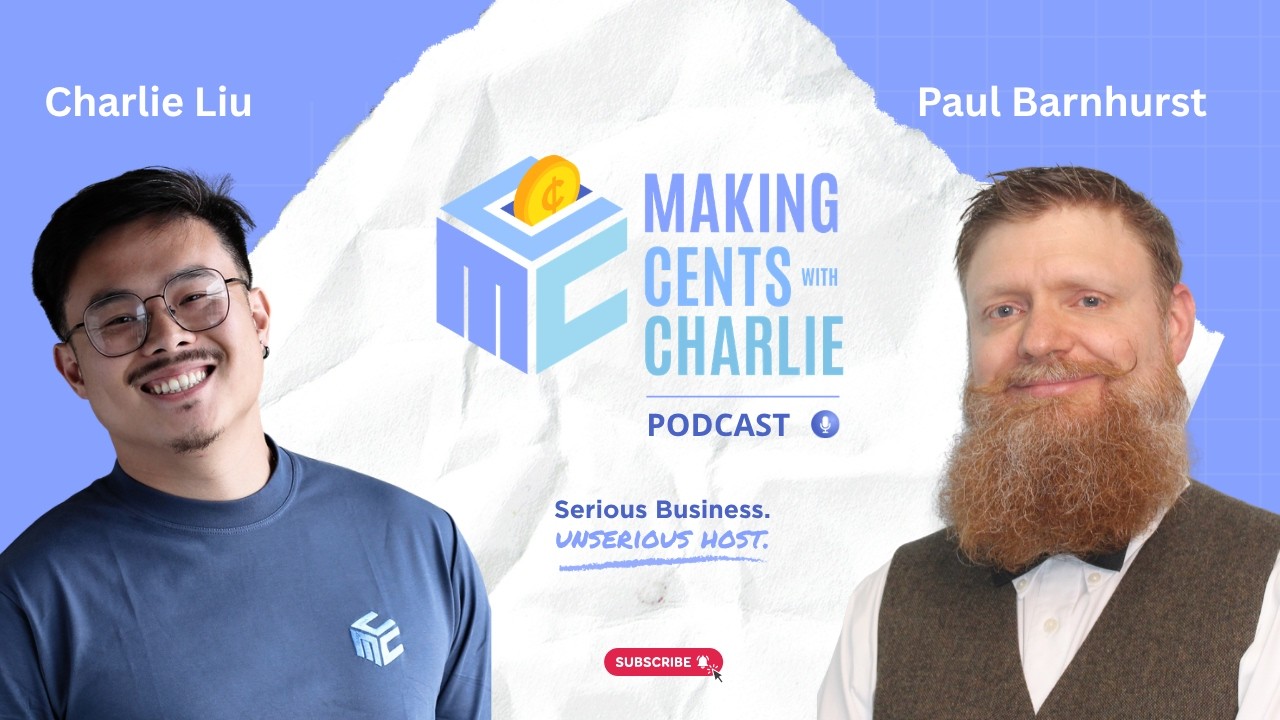
In this episode of "Making Cents with Charlie," host Charlie Liu interviews Paul Barnhurst, founder of The FP&A Guy and veteran FP&A practitioner. The conversation starts with rapid‑fire personal questions (sports background, running habits) before moving into core FP&A topics. Paul explains his preference for driver‑based budgeting for revenue and the occasional use of zero‑based budgeting for expense control, and he discusses how model rebuild frequency depends on industry maturity and growth stage. They compare the trade‑offs between flexible, Excel‑centric models and structured CPM/FP&A platforms, noting that flexibility often suffers when automation and speed are prioritized. The dialogue shifts to the impact of generative AI and large language models on financial modeling: prompting challenges, limited context windows, the need for compression techniques, and the emergence of AI‑driven agents in planning tools. Paul emphasizes that the real value lies in the planning, auditing, and documentation phases rather than pure model construction, and he stresses the importance of deep business understanding, empathy, curiosity, and strong soft‑technical skill blends. They explore evolving skill priorities—data‑thinking, systems thinking, and the need for both technical and interpersonal abilities—while offering career advice for recent graduates. The conversation also touches on personal well‑being, noting that building and reviewing models can serve as a mental‑health exercise, and they warn about the risk of over‑reliance on AI making professionals "stupider." Finally, Paul shares his servant‑leadership philosophy, recommending the book The Go‑Giver and encouraging listeners to focus on serving others within reasonable boundaries. The episode ends with both hosts summarizing key takeaways and thanking each other.
Chapters
Let's Make Cents with Charlie. Serious business on serious hosts. Hi everyone, welcome back to Making Cents with Charlie. Our guest today is one of the most recognizable voices in FP&A. He's the founder of The FP&A Guy. and host of 3 popular podcasts, FP&A Unlocked, Future Finance, and Financial Modeler's Corner. He's also spent 12+ years inside finance teams at companies like American Express, Solera, Digicert. Welcome to the show, the FP&A guy, Mr. Paul Barnhurst. I'm really excited to have you.
I'm excited to be here. Thank you for having me, Charlie. As you know, I got excited and I put on my gear that you gave me. So I, I came prepared to be your, uh, free billboard for the day. Love it.
No, no, I fully love it. Thank you so much. I gotta get one of those hats actually. We should trade hats next time.
Sounds good. I need to order some more of these, so I'll have to do that. I'll have my, my wife made the order and I was gonna go with kind of the trucker hat. So no, this one will look better and I'm really glad it turned out a lot better than anything I would've done. Sometimes you just gotta go with the, with the wife cuz they know best.
I mean, this is from the girl, so as well. So it's, uh, it's the same idea.
Yep, you get it.
Fully, fully understood. Well, Paul, we'd like to start with kind of just some fast kind of rapid-fire questions, and afterwards I'd love to kind of dig into your experience, your history. I mean, you're well loved online. I think a lot of folks would love to see kind of your opinions about building their career at PNA. Everyone's talking about AI, so of course we're going to chat about that as well. But I didn't actually know this, but it seems like you actually have a sports background. So I think the first question I have for you is basketball or baseball?
I played a ton of basketball as a kid. Never was good enough to play on any of the high school type teams, but a lot of church, ton of that. So I would have to say basketball.
Wonderful. I also didn't know this, you like running. So love to actually hear about that background. What's your What do you play when you run? Are you, are you just raw dogging and just running without anything? Are you on podcasts? Is it music?
So most of the running I do nowadays is on a treadmill. Going to admit I do. It just makes it easier. And so I'm usually following a workout. I'm having music in the background and listening to whoever the trainer is on the workout I'm doing.
Oh, I see.
If I'm not doing that, if I'm outside running, I'm either listening to music or sports talk. Surprisingly, I don't listen to many podcasts. Probably shouldn't admit that. But I don't.
Well, you create your own style, right?
I, yeah, I get plenty by doing 8 or 9 a month. So most of them I listen to are sports talk or sports talk radio when it comes to pods.
In terms of planning, because that's the space that we're in, driver-based or zero-based?
Driver.
For everyone or for—
No, I mean, there, there's always exceptions. I think when you're dealing with revenue, it's kind of almost always going to be driver-based. When you get into expense, there are places Especially if your expenses have been out of control. I think zero-based can make a lot of sense to say, look, we're going to reset everything, justify it all. When you need to make cuts, I mean, I think that's a common practice for PE when you first come in. If they feel like the expense base is wrong, they're going to comb through everything because you can always find savings. So no, it's not, there's not a clear cut, always driver-based. I think your revenue models as a general rule should be driver-based. Expense, you should have drivers, but there's definitely times you need to do zero-based budgeting.
Related to that. I think about this all the time. And do you feel that the model should be revamped constantly?
I mean, it depends. If you're dealing with a mature industry, you may not need to. For example, and actually I did rebuild some of the models, but it was probably just because they needed to be, but they weren't done very often. I supported Travelers Check. You got a mature dying business. You could probably run the model for a few years, but if you're in a high-growth business, you're probably needing to rethink it a lot because things are changing. Like, I, let me ask you, you've been running your business for a couple of years now. How many times have you had to rethink the model and change the drivers?
Quarterly. Uh, there were the first year I rebuilt the whole model, I think monthly.
Yeah. Right. I mean, so I think a lot of it depends on what stage you're at, what kind of business and what the economic environment's like. The more stable, The less you need to do it, as long as you have a good model, the more you're going through trying to find product market fit or hypergrowth, the more likely you're going to be rebuilding it more often.
I love this piece. I think we'll come back to it a little bit as well. I think the landscape in terms of, I mean, we're in this kind of CPM, FP&A software space. I think things changed a lot in the last 10, 15 years. I used to implement solutions where it's going to be the same for 4 or 5 years. Now, depending on who I'm talking to. I need to design things in mind where I know the whole model needs to be completely rebuilt every quarter, maybe half a year.
Well, especially if you're doing a lot of acquisitions, right? If you're in a, if you're doing, you're putting in a tool for a company that does a lot of M&A and they're wanting to actually have their revenue models in the tool. Sometimes they don't, but if they want it inside the tool, you've got to have a lot of flexibility or, and they still may be rebuilding it quite a bit, but it has to have incredible flexibility. Which is always the challenge inside of a tool, because you trade structure for flexibility. And it's just a question of how flexible can you make it with that structure? You know that, you've done plenty of implementations.
But I think these are things that people actually don't think about, right? And like, it's truly a trade-off. If you want full automation, speed, control, security, oftentimes you lose flexibility. But if it's a fast-changing company or business or industry, The other one's just not going to, not going to work. It's not going to reflect your business in a few months.
I think it's the main reason. So stepping back from just planning tools, just talk modeling tools. There's tons of modeling software that say we're much easier. I think everybody would agree revenue minus, you know, cost of goods sold to get gross profit makes a lot more sense than A5 minus B5 equals C5 logically. But that structure comes at a cost of flexibility. And I think that's why so many modeling tools that have tried to bring that structure have struggled to scale like Excel, because as soon as it can't handle a use case and it's going to happen, it's a question of when, not if. The default is to go back to the tool everybody's been trained on. Everybody knows that virtually costs zero and will do it in short order.
Interesting that you use this term modeling tool. I've always thought about it as reporting tool. Dashboarding tool and planning tool for me. For me, modeling has always been the same as planning tools. How do you, how does that differ for you?
Oh, so what I mean is, you know, planning tools are usually, they're designed around budgeting and forecasting. There are tools out there that try to say, hey, our goal is to help you build a financial model, whether it's M&A, they may be doing a lot of M&A or discounted cash flow. Often they're supporting investment banking. And so they're basically a lot like a planning tool. They're just different use cases. And so that's why I say modeling, because they're often much lighter. They're not dealing with a ton of integrations and all the scalability you might need with a planning tool. Because if you're building a modeling tool for say M&A transactions, the data you're bringing in is different every time. You're not building an integration to every single company's platform. Now with AI, you may find a simple way to say, okay, connect to the tools, but in general, you're probably historically, you're going to do a data dump, right? And then just build your model off of it. And so the tool often can do a lot more. There's more structure there. It's a little easier to automate with M&A than FP&A when you're dealing with every single revenue model under the sun.
I see.
And doing it in detail. So it's just, you know, very similar. There's a lot of similarities, but I think they're a lighter weight tool. A lot of people have tried to bring similar to what they've brought to planning. And nobody has really cracked the code. I mean, I would argue the same in planning outside of enterprise, you know, in the mid-market more so, small market, not really. Nobody's really cracked the code over Excel outside of the, you know, the upper mid-market enterprise they have because there's too much pain to deal with just Excel.
I also, it's, they cracked it, but I also think because they're bigger, it moves slower, right? It's not a brand new business model every quarter. So you have 6 months, a year to redefine these models. So you have more time, right? Given them time—
Well, you can hire an army of consultants as well, right? To run the tool. Whereas if you're a small company, you don't have those resources.
I also think the way they think about it's quite different. I was talking to, I think 2 of the Big 4s do this, where all the modeling is done in Excel and then they use, I believe, Anaplan for one of them, and then the other one, they actually built one internally. It does all the calculations, but they don't actually use it. They use it as a storage. They basically back up all the drivers, the calculations, the logic, so that it's there. Everything is somehow connected. They have documentation, but the actual usage, it's all in Excel.
That doesn't surprise me.
That was interesting.
That's why you've seen so many tools try to extract that logic from Excel. I've seen a bunch that are cloud-based who say, hey, build everything you want in Excel. We go in and extract all the logic and actually do the calculation in the cloud and send it back to the Excel file. I've seen a few tools try to do that just because we all know there's limit in the time it takes and the scale. So I've seen a few tools that are trying to do things like that, where they're pulling a lot of the drivers and assumptions out of Excel into the cloud and actually doing the calculation and sending everything back.
It's really interesting. Back to Excel?
Yeah, they send a lot of it back. You could also work on the cloud and they'll do things there, but often they're sending stuff back as well. Kind of interesting. I think it's Schematic. They were bought by somebody. I can't remember who now, but there's a few different tools that I've seen over the years that have done some things like that. I haven't seen any that's gained real traction with that approach. You didn't know of any of them. That kind of proves my point. None have really become mainstream, but it's interesting to see all the different types of approaches to trying to keep people in Excel.
We're basically just going off. We're basically done with the rapid fires, but have you seen any large change? Because this is, I mean, you and I nerd out about this. Have you Have you seen a large shift in terms of the planning reporting platform, the softwares, the CPM, the EPMs, whatever you want to call them, the FP&A platforms? Have you seen a shift in how they think and how these softwares are being built now? Because if you remember, I think it was 2 years ago when you and I caught up, we said that there were 150 of these tools. We don't think there's going to be more. We think there's going to be consolidations, but especially with the explosion of AI.
Yeah.
I don't think it's slowed down. I think how they're thinking about these tools has shifted a lot as well.
Correct. I don't, I don't know that it's necessarily slowed down. I think what we've seen, if we talk FP&A, is I was saying the other day, there's kind of 3 or 4 different categories now. There's your traditional planning tool and all of them are starting to go more and more toward agents. Just yesterday we were interviewing the CEO of OneStream about how they're using agents. Recently had a conversation with Profics and Really interesting. And then I'll get into those differences. I think you'll find this fascinating. It was a post on LinkedIn. The Prophet guy said, we have the CFO that uses our product and they're using it for variance commentary, this, this, and this. And I said, well, why aren't you using it to update your model? Oh no, we won't let it touch the numbers. And I asked him, I go, so is this agent you built, is where it touching the numbers? Are you using a deterministic process for that part? Even though, you know, there's AI.
Yeah.
Gen AI throughout. And he goes, yeah, it's all deterministic. It's like, well, I'm sure they'll use an algorithm that's deterministic from the system. So what's the difference? So it was really interesting, you know, people, because you have this idea, well, LLMs are bad at math, so I can't let it touch numbers. Yes, but there's lots of other tools that LLM can call in many ways around that. So I thought that was really interesting as we start to see all these agents. So anyway, sorry, a little bit of a side—
No, I want to dig into that actually. So I actually, I mean, 2 years ago, I mean, that was like the— that was the joke, right? Like, it can tell you how to plan your whole life, but it can't do 1 1. That was the joke 2 years ago. But it's quite good now. Now, consistency, that's a different discussion. I do find issues with consistency, but generally I find the logic and the math quite good now. Are you saying they're not using it because of the— Oh yeah.
So the CFO was saying, I won't let it touch my budget. And they're like, it can't touch any of my numbers. I don't trust that they'll be right type of thing. It's like, but they'd use it for variance commentary and they'd use it to, you know, For maybe reporting or whatever. And I just thought it was really interesting. And so we had the conversation because, right, any LLM can call other tools to do the math. It doesn't, an LLM doesn't need to do any math if you don't want it to. Yeah. And an agent. And so he was saying, no, no, we have other stuff doing all the math. All the math's deterministic. But yet the CFO still wasn't comfortable. So I think there's still that fear and misunderstanding out there. And so I think that's something the planning tools are struggling with is helping people realize, yeah, we reached a different point. There are ways we can get around that. And it's no different than your employee doing it. Yes. Is there a chance of error? Sure. But if you're doing it deterministic, it means it's a wrong input or something, not that the math's wrong.
So, I mean, earlier we were talking about our love for Excel and the flexibility that comes with it. I have been testing I mean, Claude, everyone's talking about Claude. I mean, testing Claude with Excel. And what I have found is that if you know how to prompt and you put in all the guardrails and you put in the QA, it can build some phenomenal models. But what I've found in 2 issues actually is not everyone knows how to actually set up the prompt. People sometimes go, hey, like it builds stuff, but the formula is like whack, right?
Yeah.
But for me, it's like you have to put the guardrails. And then the second one I found is I'm finding, at least for me, A lot of these AI tools don't have enough context window or enough memory to manage the data and also do the modeling.
Yes, there's definitely a context issue, especially with Claude. So I think there's a couple things. You can overcome a lot of the prompting and that side by also adding skills, right? Skills to your formatting, skills for other things. You can get around some of that context window in the sense of build the model, ignore all the formatting.
Yeah.
Then come back in a second chat and have it do the rest, the formatting. So you're not using up a bunch of tokens on format, at least in that first initial pass. You know, from the data side, I think that's one of the differentiators with all these different tools out there. And I don't think the LLMs have done the best job from talking tools. Now, I haven't been able to test that, but how much can they compress the data you're giving them? Because anyone who's just taking everything line by line, and someone told me that's what Copilot's doing, is part of the reason it's so bad is they're trying to read the entire context with Mm-hmm. When they work on your Excel file. So not just building the model, but working on the file. So can they make assumptions like, hey, if I see this formula in the first 3 columns, I should assume it's the same for the whole row. I know the logic and I just need to pass the logic to the LLM to process instead of giving it 5,000 columns, right? That's a lot less tokens. And so there's a compression side to this that, that was early on, that was the biggest problem. I know Microsoft built an LLM all around compression. To try to reduce it. And they're now, they're getting better, but that's what they need to continue to improve if you're building really complex models is how they can compress things both in reading it and in delivering it. You know, how can they use less tokens? So I think it's really interesting to watch. And that's where some of these— I see.
Yeah.
Third parties have done some unique things around writing their own compression language to pull the data out of complex models so they're not using as big of a context Fascinating.
I haven't thought about that. I have, I, at least in my opinion, how I think about things is there is the modeling aspect, there's the data aspect, and there's the actual planning aspect. What I mean by that is actually going and figuring out the drivers, the inputs, the outputs, but a layer in there—
Yeah, I would argue probably the most important part of it, that planning phase. We all wanted to do the modeling, which is the area with the least language. And the most often where we should be spending 50% or less of our time. But the real benefit in modeling is usually in the planning phase, the auditing phase, the documentation phase AI's better at. But yet we all immediately go to the modeling phase. It's kind of interesting. It's because we, it's where we have to do a lot of stuff that we may not like the most. And we often ignore the documentation. We're not great at the planning. So we think it's all about modeling. But if you look at really disciplined modeling houses that are doing it for a living, their benefit is in the other areas more than the modeling, because they realize that's where the real time savings and where AI's strength is. It's really interesting to watch right now.
Yes. I also think, um, the actual planning exercise, it's quite different from the actual modeling exercise. And I think for a lot of folks, 100%, you're one or the other. A lot of folks, at least in my space, that came from setting up models, they may have been an analyst building the models where they're a systems implementation folk and they're setting up the calculations, the models. They're actually not thinking about the actual planning piece. But then your CFOs, right, your head of sales, head of marketing, in that collaborative manner, they're actually more focused on the planning piece. And I think what I've seen that's really nice is the folks that just spend all their time building the machine, the planning models, That's— you're saving time now and they're actually able to actually have more of that discussion, business partnering session, and actually think about actually how to build the plan versus just building the model. It's been interesting seeing what that looks like. I know a big piece of what you do is kind of educating different companies, different audiences as well. How do you see the split there between how to build good models and then building the plan? Because they're 2 very different exercises.
Yeah. So I think, you know, when it comes to planning, what I always tell people, so FP&A, right? The P stands for planning. So let's talk building FP&A models. The biggest thing you can do to be better at the planning stage is to deeply understand the operations of your business. The better you understand the operations, the better you'll be able to ask the right questions and support your assumptions. Because at the end of the day, all models are wrong. The modeling phase should really be about, I think, just a couple things. Good design, the correct math, making it as easy as possible to update and providing the outputs that the business can look at to have trust in the model. The real work to me and where the, where you're getting paid is really to help with those assumptions, right? Because all models are wrong, as George Box once said.
How wrong are you?
It's how well are you? And I loved my professor in grad school. I'm really grateful for him, George. I'm trying to remember his last name now. It's been 20 years, but I can still picture him giving us 5 million pages to read. But one thing we had to do with every single modeling assignment is it started with doing a Porter's 5 Forces of the industry and understanding the strategy. And he almost graded us as much on our thought process there as he did on the actual model. He wanted to see that we had thought through things and we'd come up with good assumptions. In his view, the rest was math. And to a certain extent, he's right. And so I think in general, in FP&A, whether it's putting together a board deck, doing an analysis, a presentation, a model, we don't spend enough time on the prep, on the planning, on the understanding so we can ask good questions. Because you can build a model 100% accurate from a math math standpoint, that's garbage from a business. And vice versa, you can build one that has a few mistakes on the math side, but has really good assumptions. You're getting more value out of it because the mistakes are mostly immaterial.
Yes. And you mentioned earlier, ease of use, right? For me, we're predicting the future. Like if you can predict the future, you, there's a lot better ways to making money than FP&A, right?
That's what I always tell people. I'm like, hey, if your models are perfect, you're predicting it right. We're going to Vegas because we're going to make a lot more money than you're making right now.
Exactly right. And to me, I think it's the ease of use, actually adapting this thing constantly as the business is shifting as well. I mean, you brought up this fact that it's really important to actually be thorough with understanding of the business, thinking through the strategy, how this works. I'm seeing this more and more even with AI these days. I find that if you just go in and immediately start prompting, You go nowhere, right? It's like any sort of initiative, any sort of project, you got to sit there and talk and figure out what exactly is the scope that we're trying to do, right? What are we trying to build here? What are we trying not to build here? And documenting that makes a big difference. I get asked a lot by kind of younger folks coming out of school, and we're talking about what FP&A is, how to survive in this environment in Excel with tooling. How do you think someone kind of coming out of school these days should think about getting better in this finance, corporate finance space, and what are the skills important to them? And I often ask like, how important is accounting? Like these things, how do you see this, Paul?
There's a lot of skills you can list and corporate finance. I once saw a report that was listing professions that required the highest combination of kind of soft skills and technical skills. And at the very top in this matrix, as far as any other tool or any other business role was finance, which I thought was really interesting. So you have to have both.
Bottom line. Wait, Paul, just to confirm, it's the highest need for both.
Combination of needing both. So it was a grid where they mapped both together and the highest combination of both, there were a couple of others, was finance. And I can't remember the other professions. I'd have to go find it. It was a report from like 5, 6 years ago that I came across. It was like a Harvard study or something. It was really interesting. And so first is you have to have both. You can't just be, as a general rule, there are exceptions, there's specialized roles, but you need both technical and soft skills. Now, historically, because I ask people what the most important skill is every single episode of FP&A Unlocked, I've asked like 100 people. Historically in finance, it's generally been some combination of Excel and financial modeling. With, you know, a bunch of other answers, but those have come out most often. Sometimes it's accounting and different things. Recently in the last month, these have mostly been smaller companies and there's a reason for that. I'm seeing more and more people say system thinking, data thinking, data modeling, because they're all trying to get the most out of AI. And so it's interesting to watch what they consider most important. Not saying you don't need all of them.
Mm-hmm.
But what's most important, where before that was hardly listed as most important. People would say it's a skill, you need it.
Yeah.
So we're seeing a shift. That's the first thing. And so I think people outta school, I would recommend taking a data class even though you're in finance, whether it's a database, a data modeling, a thinking, a minor in IT, whatever it might be. You need to understand data flow and data thinking, what, get the most out of AI, out of systems to get where we're going. So, you know, in addition to knowing AI, but I think having a decent data background is incredibly helpful. On the soft skills side, there are a bunch that are listed. One that I really like, and it's all usually mentioned by very senior, very successful leaders. So CFOs, it often comes up, or CEOs, is empathy. It's rarely mentioned by somebody early in their career because it's something you have to learn. And you learn it more when you're leading, I think.
Once you understand, I think also to understand a business, right? You talked about earlier, like a good foundation with good FP&A is to really understand a business. I think, and it's not sympathy, it's empathy. It's putting yourself into sales, into marketing, HR, into ops, being able to place yourself there. I think combining empathy and curiosity.
That's another one I get a lot is curiosity, empathy, curiosity, active listening. And then some way of influencing. Sometimes it's data storytelling. Sometimes it's directly influencing. Sometimes it's being able to collaborate. But I think some combination of those are really important. Then one dark horse skill I'll mention that I think it's a technical, you could argue it's a soft, but I say it's more technical, is being able to think in simple terms, making things simple. Because that is really hard. That's something I wasn't good at. I've got better, but I wasn't very good at it in my career. I was way too detail-oriented.
Yeah.
And there's a quote I love, simple is hard, complex is easy. It's really easy to make something really complex, but then to take that and tear it apart and make it simple is not so easy. Think of a nested if statement. How easy is it to write that really ugly nested if than figuring out the logic to put it in a table and write a simple lookup?
100%. I think I even remember back my ETL data days, the code were far longer earlier in my career. But if you look at it and design it properly, right, a lot of times—
Big old case statements, I'm guessing.
Yes. Case statements, loops, nested if statements. Later on in my career, it became a lot of dictionaries, mappings, right? So having, I don't know, 50 or a lot of—
Creating a table in the system to pull from. Yeah.
It's a big difference. Now, you mentioned earlier systems thinking. It's something I've actually been talking with the team. constantly, I think it's a very different skill. For some reason, I've seen this a lot, and I think it makes sense to me. Like, your engineers, they're good at this stuff, but I've seen a lot of folks get really good at this stuff being kind of ex-FinOps people.
Yeah.
They know about moving data. They think about the requirements, the output requirements, but I do find this skill incredibly difficult for a lot of folks, and I don't know if a course or studying something is enough. Do you have any sort of guidance around that?
I mean, that's a good question. So I'll tell my journey of how I learned it. And so one, I did do a Master of Science in Information Management, but I also, before I went to grad school, I, I moved from procurement. I started my career in procurement. I moved into a business analyst role. So I did, I was on a software requirements board for the government, for the U.S. military for a few months. So you're getting to see, you know, kind of building a system and working with all the different branches, really unique experience. It was kind of an internship. Experience I did. And then I did my degree in grad school. And then after that, before I got into finance, I spent a year and a half in a business role where I was writing a lot of SQL, helped involved in our first BI. So I think if people want to get some of that experience, I mean, there's 2 ways. You can try to do some kind of operations role in the business that's around data, but then do you ever come back to finance? Maybe, maybe not, which isn't necessarily a bad thing. You could, you know, you could work for a company that's early stage where they often, a lot of their data goes into finance and you have to figure it out. Now you're kind of throwing yourself in the fire because you're right, a course isn't enough by itself. And so I think, you know, beyond that is usually trying to get that actual experience. And I think it's either going into some kind of role that gives it to you in a larger company, which maybe it's a hybrid role where you're doing a little bit of a data analyst and a finance type role. Or it's working for a smaller company where odds are you're going to get it whether you want it or not.
Oh yeah, absolutely. Like smaller, especially tech companies, there is no RevOps. It's just finance. Finance owns all the data, all the infrastructure, trying to make sense of everything, trying to make sense, trying to make sure that you make the call.
Yeah, you're often, you know, it's a VP of finance and business intelligence. I've seen that several times, you know, in growing companies where they own both.
Yeah, absolutely. No, I think that's a great tip. Thinking about your story, I think I can relate as well. I started career in kind of data, moving data between different systems. And then I think what really changed in terms of my career, and you mentioned earlier as well, just understanding business. I think after leaving FP&A and going to do sales, going to do ops and trying to run businesses where I can see the whole thing, and then coming back to FP&A, a world of difference. My models are lighter now. This seems like to be a trend. It used to be much grander, much more complicated, a lot more math. Now they're lighter. But I think they're more effective because they're easier to use by the, um, your head of sales, head of marketing, the other departments now.
Yeah, I, I generally say, you know, the best FP&A people would really benefit from a, an operations role. Now you may never come back and that's okay, but the better and deeper you can understand operations, the better you're going to be at FP&A. Like if I went back to a head of FP&A role today or VP or whatever, I would be better for having run my own business for the last 4 years. I'm 100% convinced.
You know the nuances, you know the reason behind the different departments on their budget requirements. You understand the intricacies. They're all really interconnected, right? Your marketing relates to sales, which relates to your ops, right? And like, you can't just go, I need you to cut 5% here and you got 10% here. They're going to have downstream impacts.
Yeah. And right, the better you understand it, you understand the levers. Like, all right, I got to hit this target. I can cut some of these low-end products, but it is going to have an impact down the line. But I can get away with 6 months where if I cut everything by 20%, it's going to have a much earlier impact and be a bigger problem. You can be more strategic in those conversations with the business the more you understand the broader picture. And running your own business or being in operations, you don't get that same experience in finance. You just don't. Smaller the company, the more likely you are because you wear multiple hats. But in a large company, You're not going to get that experience.
Paul, what is, what is FP&A to you and why have you spent so much time in this space? I think that's a question I just thought of. That's fun. Like sometimes I ask myself, like, why did I come back to this? And why do I have so much fun here?
You know, it's a combination of a couple of things. I tried to move into the business. I wanted to go into product. I still think it would be fun. Um, I'd have no problems going elsewhere. For me, when people listen to me about FP&A, the part I like about FP&A, it's not the budget. I don't love building a budget. I do, I do enjoy building a model. Don't get me wrong, but the budgeting process and cycle is painful. And anyone who's gone through multiple where they take 6 months and you build 36 versions and you end up back close to version 1 knows what I'm talking about.
Yes. Yes.
Right. And so those parts aren't really enjoyable. The part I love is FP&A allows me to build relationships, talk to people. I love the business partner. What I love about my business is I get to talk to leaders all the time. Sometimes, frankly, I would love to start a more special interest podcast, but it feels like whenever I go outside my area, people don't listen. So there is a little bit of that if I'm completely transparent.
Yeah.
And that doesn't mean I don't enjoy FPA. Don't get me wrong. But there are times, like I interviewed a guy who was rated as one of the top CEOs of the 21st century. Um, had a 93% approval rating over 20 years on his customer Are his employee surveys, a 93% average. Try getting that from your satisfaction survey from your employees. That's pretty much impossible in a global company. And so, and we talked leadership and hardly anyone listened to the episode. It's really interesting.
I guess there's a mismatch of ICP. I think understanding the actual listener, not the ICP that you want, but actually figuring out who's listening makes a difference here.
Yeah. I mean, people have come to expect deep FP&A conversations from me, modeling finance. And it feels like when I go too far from that, I don't get— outside of LinkedIn personal stuff I do, but business-wise, it's really interesting to watch. And it's not good or bad. It's just you start to understand your business and where it makes the most sense. So it's a combination. I do enjoy it, but it's also what people come to expect from me. It's what I've built. So now I stick to it as it's the area I can grow and continue to build a profitable business and I do enjoy it. So it's not like that's bad, but there are times I'd love to stray a little bit more here and there. And it always ends up proving harder than I think.
How, how much FP&A do you use for yourself for your smaller kind of early stage company?
Not, not a lot. I mean, I do some analysis, obviously I'll, I'll do a high level budget. I don't build a bunch of drivers for me. I look at customers and opportunities. and kind of channels and figure out where I want to be. But I'm not doing the type of analysis I'm just doing in corporate America. I don't have a 3-statement model. I have a file, look at my bank account once a week. I look at my open invoices. I look at where my cash is. I look at kind of, hey, where my revenue is going to come from. Every so often I'll make some predictions and put some things down of where I'm going. And that's about it. So I can't say I'm great at budgeting for my own business. But I do have a good handle on my finances.
I mean, it's second nature for you, right? You came from that world. And the reason why I brought this up, because I recently had a realization. I don't know if it's like widely kind of accepted. I realized, at least for an earlier stage company, I find it almost like a great journaling processing tool. I found that in hard times and good times and times of stress and anxiety, I often block myself.
Wait, stress in a small business?
Yes, exactly. It's, it's, you can sit there and like try to get out of it. But what I found that exercise of actually building a model, looking at numbers, looking at how we're performing, are we actually going to hit the numbers? And if we're not, that's okay. But understanding the reality of that as well, it's almost been a, it's been good for my mental health, just practicing FP&A for, for, for ourselves.
Yeah. And it's, see, that's on a light scale. That's what I'm doing each week is I go through, I go through my bank and I put in all And I, I've thought of automating and having AI put them all in, but I go through them manually. I like that exercise because I know if I'm missing something, it makes me think, okay, well, I got this one. What about this person that hasn't paid me? And, and so I have an invoice sheet. I have a revenue and expense sheet. I list every single one. I have my affiliate commissions that I track for my different relationships. And I can look at different things and say, okay, well, that hasn't come in or And then I have a sheet off of where I'll just put my kind of my big bets and where I think I'm going to go, how much revenue. I'm almost always short of several goals. Not always. I am. I set some really high stretch goals and then I end up somewhere less than that. I freely admit it, but it's a good exercise and you start thinking, okay, if I want to shift, how do I? So I'm doing it. I'm just not doing it as structured as I would if I was doing it for a company in the sense of I have this formal model.
No, I think we're fully aligned as well. I wonder how things are going to change with AI because like that processing, that's where largely some of the AI is going to take that. out of you. And I don't know if, um, by not going through that exercise, are people actually going to miss caveats or nuances of the business? Because they're not building it. They're not thinking through how the business works.
They will, but we'll figure it out much like we did moving to the computer. My big fear with AI, and this isn't companies, this is just society as a whole, is it's going to make us stupider. I've gone on record saying that. I think 10 years from now, if we continue down the path of how we're using AI, we will be stupider as a society. I hate to say that, but that's my prediction. No, everybody, there'll be people that will be a lot smarter because they're using it as an augmentation. There's a difference between augmentation and letting it be your brain. And I've done both at times.
I think there has been a study that's already shown IQ drops. So it's already proven. It's such a wild thought.
I haven't seen IQ, but I've seen some that they show different patterns in the brain. Like you're losing some of the brainwave patterns the more you depend on AI.
My patience is a lot worse now, I find. I'm so used to getting instant answer, instant analysis. My patience, it's a lot worse now. Something I'm trying to work on. Just recognizing that, I think it's already a win for me.
Yeah, that doesn't surprise me. I mean, right? We used to think instant was going to the internet and Googling something. Now we've— or social media, being able to go find a topic. Now with AI, we've hit a new level of instant, even with analysis. It's really, unfortunately, the time span we expect something is getting shorter and shorter and we just want instant. Yes. There's something to be said for the struggle and the time. And that's something we have to create at a minimum in the educational system to still allow that struggle to happen. Because people need that throughout life beyond just what they're doing in their job, even if they're getting a lot of things quick. Because there are going to be times you have to challenge that thinking. There are going to be times it's wrong. There's times you need to make a different decision. There's times AI won't have the answer. Shocker. Did you know that, Charlie? It doesn't have the answer to everything.
Well, you have to push back, right?
You know, and so I think we need to make sure whether it's our families or kids, employees, the education system, how do we continue to make sure people are challenged? Because the best employees thrive on being challenged. And that doesn't mean challenging, hey, you're wrong. But being stimulated, doing work that really requires thinking and planning. And, you know, there are exceptions. Some people just want to check, check a box and process things. And there, you know, maybe that works if you're just taking AI, but what we want with AI is the judgment, right? That's what we keep hearing. AI, what we want from people who are using AI is to apply judgment. That's now the bigger part than doing the manual tasks.
So we need to make sure— By definition.
we've struggled enough to apply good judgment.
By definition, I think growth is growing your circle of competence, which means making mistakes, which means going through challenges, overcoming hurdles.
Right. Yeah. When you said mistakes, one of the best lessons I ever had, I, uh, so I did a mission for my church, I'm in the Church of Jesus Christ of Latter-day Saints, if anyone knows me, and I'm my mission president. So I'm 19, maybe 20 at this point. And this guy, and he'd run a billion-dollar company. So this is 30 years ago. The mission president was much older. I'm 19, 20, you know, this president had run a successful billion-dollar company. And he looks at us and he goes, called us elders, because if you've ever seen the name tags for us, it'll say elder. He goes, elders, I've never had a failure in my life. And I remember thinking BS, like, what are you talking about? And he paused for a minute. He said, I've only had a learning experience. I didn't really recognize it at the time, but as I've got older and older and I look back, one of the best pieces of advice I'd ever heard is look at, don't look at failures as failures. Look at them as learning experiences. Life is all about learning, expanding your circle of competence. And so that has always stuck with me.
My older sister had a quote, like one of my first businesses was with her and she often said, these aren't mistakes, these aren't fuckups, they're just tuition. We're just paying tuition, right?
Yeah, there's a story, I don't know if it's real or not, but of an IBM executive, he made a mistake. It was like, Cost the company $10, $50 million, something like that. It was like $50 million. And he walked into the CEO's office and figured he was going to get fired. And the CEO said, why would I fire you? I just paid $50 million for you to learn. And I'm sure it's a mistake you'll never make again.
That's a good way to look at it. Uh, absolutely. That's a great, that's, that's great leadership.
Expensive leadership.
Yes.
But great.
There's ROI, right? They learn from it and there's ROI. It will pay off. 100%.
And if you have a good leader, they're going to learn for it. So it is going to pay off. They're going to learn from it. You have good employees.
I'm trying to install that across the team as well. We have these weekly kind of, we call, what do we call it? Coach approach, where basically we just learn and share our fuckups every week. And I think it's working, but it's definitely something that we're trying to make it more intentional in terms of the team, trying to celebrate them instead of hide them. Because most of these things are solvable. And you can learn from them as well. But Paul, I think we're kind of coming down to time as well. We often like to finish the session with our 2 cents of advice. I'd love to kind of hear your 2 cents of advice, your kind of aha sharings with the audience. What's your 2 cents of advice?
The biggest one for me is learn to serve others. That's both in life and in business. The best leaders, I believe, are servant leaders. And they're not serving just for compassion. They're serving because it makes good business sense as well as just making good sense in life. Um, I think a great book for that is The Go-Giver. Berg wrote it. I can't think of his first name right now. I interviewed, I have an interview on him on YouTube that we did. And, uh, The Go-Giver is a great book of that point. I think find those ways to serve. It gets you through hard times in your personal life. And you'll be a better leader when you learn to find ways to serve those you work with, but also make sure you do that within reason. There's constraints.
And I think you just learn that as you go.
And what I mean by that is don't just take on everything because you want to serve. You still have a role. You still have a job. You still have certain responsibilities. Be servant-focused and making sure you're serving the business within your scope of responsibility. Because if you try to be that serve person that says yes to everything, you're just going to overwhelm yourself and You're not going to do good work for any of them.
No one gets served properly. You have to set boundaries. Do you? I actually personally believe now that I'm a little bit older, went through kind of a few rock bottoms. I actually believe like the purpose is to figure out how to serve others. And that's, that's what we're here for.
No, I agree. I agree. The more we can learn to be grateful for the journey and serve others, the happier we're going to be in life. So I remember hearing this story and this is an extreme example. But this lady had cancer and she was kind of at her wit's end and she went to her husband, you know, had gone through a couple rounds, like, I can't handle it anymore. And he looked at her and he said, I don't, I don't think I do this. But he said, we need to serve people more than— and she's like, you're not, she was thinking at the time, like, you're not listening to me. Like, wait, I'm like, I need your empathy right now. And she said later they decided to do that. They started to serve people and she found herself much happier and was able to get through it easier. So sometimes even in the hardest times, getting outside yourself can be the medicine you need. Not always. I'm not saying you're on your deathbed, you need to make sure you serve people, but having that mindset can help you get through difficult times.
I also absolutely agree what you said earlier by focusing on others, your team, your clients, it's often the better decision-making framework as well. It's better for a business as well.
No, I agree. Versus focusing on just how do I make the next dollar, which is easy to do because we have to make money.
Right. You do it by giving better services, growing the team, things like that. But Paul, correct. Thank you so much for being here. This has been a masterclass in kind of modern FP&A platforms, kind of career advice as well. Thank you so much.
And thank you for everyone who listened to me as well. I appreciate it. Keep up the great work. I love what you're doing and excited to watch how you continue to grow in this ever-changing environment.
Thank you so much. Stay tuned for the next episode of Making Cents with Charlie.
More from Charlie



Making Cents with Charlie and Mark Schroeder | Coffee, Sports, Disc Golf, DIY & Scaling South Africa