Making Cents with Charlie and Haseeb Rana - Full Episode

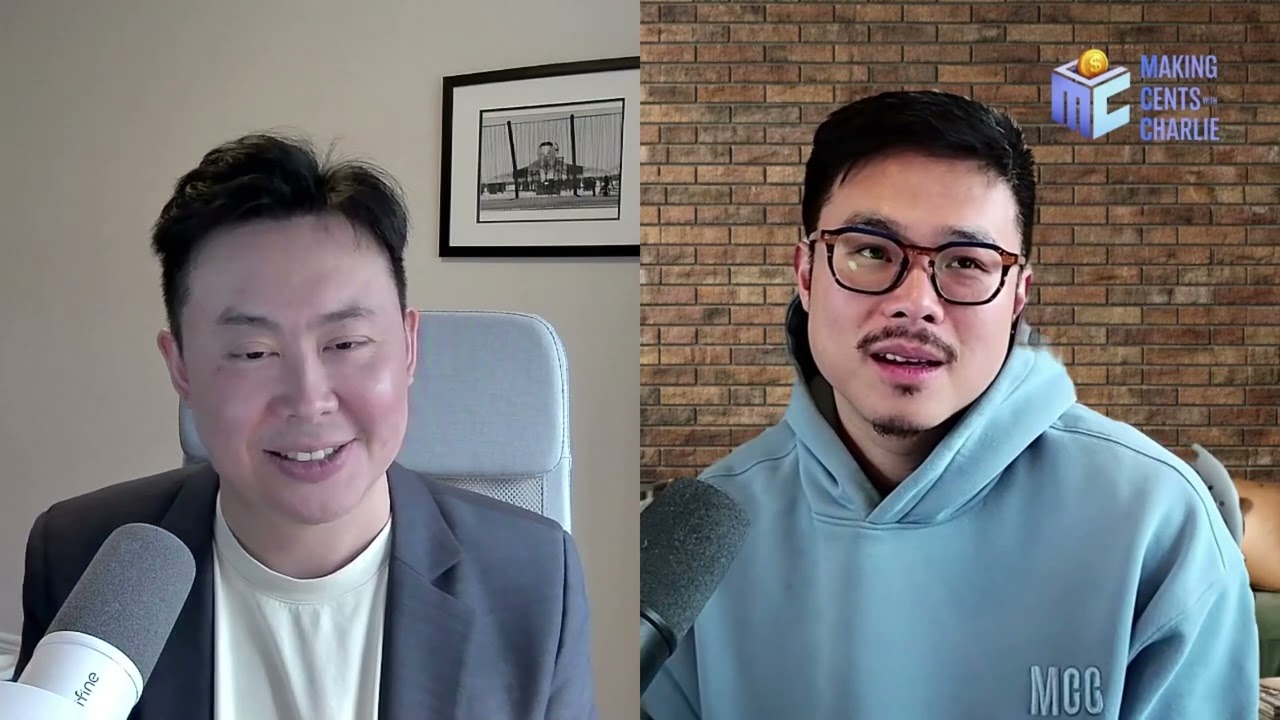
In this episode of the Making Cents podcast, host Charlie Liu interviews Haseeb Rana, Professional Services Manager at MCC. The conversation weaves through Haseeb’s community work with the nonprofit Seeds of Leadership, where he mentors high‑school and early‑college youth, and his philosophy that leadership is service. Haseeb shares a five‑step “healthy team” framework—intention, cohesive team, purpose, cadence, engagement—and explains how intention differs from purpose. The duo delves into the distinction between management (KPIs, execution) and leadership (vision, empathy), emphasizing empathy as the core “muscle” that bridges the two. Haseeb recounts his transition from an individual contributor to a people manager, highlighting the challenge of letting go of “heroic” solo work and learning to coach and trust his team. The discussion then shifts to practical advice for FP&A/CPM digital‑transformation projects, identifying three success pillars: a psychological shift in client mindset, clean and accurate data, and continuous milestones that deliver time‑to‑value. Throughout, Haseeb reflects on personal mindsets—seeing time as limited to stay positive—and ends with a rapid‑fire segment revealing his favorite hot sauce, biohack, Office character, and health supplement. The episode blends community leadership, management theory, and finance‑technology implementation insights for listeners interested in personal growth and effective project delivery.
Chapters
Let's Make Sense with Charlie. Serious business on serious hosts. Hi everyone, I'm Charlie Liu. Welcome to the MCC Show, Making Sense with Charlie. We have another guest, special guest with, with us today. Let's dive into it. Let's make sense. Joining us today is Haseeb Rana, our professional services manager at MCC and a true powerhouse of all things EPM. Data-driven strategies, change management. Boy, is he good at change management, both internally within MCC as well as within our clients. When he isn't leading organizational changes, he's championing youth leadership in his community, also honing his craft. In my time. Everyone, let's give it up for Haseeb. My friend, it is a pleasure to have you with us. I'm really excited for this episode. I didn't know you were kind of coaching and providing these kinds of leadership in your community. I've known you for a long time. Love to actually learn a bit more about that.
Yeah, thanks for having me today, Charlie. A pleasure joining you on Making Cents with Charlie. Amazing podcast. Looking forward to some of the future episodes as well. Everything we've recorded so far. So yeah, I can dive into that first question. Growing up in a community out here in Hamilton, really kind of over time felt that I'm close to this community and I wanted to always add value back. And a way I'm doing that is just volunteering, whether it's through food banks or just having conversations with youth in the community. And one of the areas that I've really championed over time, an organization I'm close to, is called Seeds of Leadership. So they're on a mission to develop youth to be the leaders of tomorrow, simply put, right? So it's a variety of free programs. They have retreats, impact projects, and it helps shape the youth of today to really have leadership skills and be involved in something greater than just their day-to-day.
Seeds of Leadership. Love the name of it. How did you find them?
Yeah. So how that started was, this is a couple of years ago, I'd say a little over 5 years ago. This is during the month of Ramadan. And I was just fasting and there's an opportunity for a food bank where at our local mosque we were doing food distribution for actually the local Hamilton community, partnering with like Red Cross or the local food bank and distributing meals. We have a program called Meals on Wheels where we distribute warm meals to the less fortunate. And through that, the founder of it just connected with me and he said, you demonstrated strong leadership qualities as I was able to kind of manage the flow floor, manage and direct the traffic and manage like the youth that were attending that day. And he told me about this program that he's starting. Now they're in co— you know, I think they're about 5 years into it. So they're on cohort 5 or cohort 4, if I'm not mistaken. And through that, I was just really interested and I wanted to be more involved. And that was the start of the journey. And yeah, then the name really stuck with me, Seeds of Leadership. So back when I started the first cohort, we planted those seeds. And a lot of those youth now, they've gone through high school, they've gone through undergrad, some have even graduated, some have, you know, working professionals, or some are in the journey of their undergrad journey, and they're championing projects within their community, whether it's fundraising, whether it's creating communities, whether it's creating safe spaces for other members of the community to have conversations. So that's, that's kind of the background there.
It's something I historically have not done well. I really want to get into it. I think, uh, I look at life as, I truly look at life as kind of the purpose is really just to give back and to serve others. This, I didn't know this side about you. What, what does it actually look like? What does your involvement look like? Are you involved with every cohort? And what, what is the age group of, uh, the folks that you've worked with? Love to learn more.
Yeah. So first I'll begin by sharing like a quote that was shared by the founder. And the founder, he has a lot of experience. He comes from a Fortune 500 background. So he's very involved with organizational behavior and just leading teams and he's the executive coach, right? So one of the things he said was leadership is service, right? Or you can put it the other way around that like being of service is leadership. And that's something that stuck with me and that's kind of my involvement, right? It's just being of service to others, whether it's through food drives, whether it's through retreats, whether it's through just sometimes having conversations with people in the community, right? And some of the offerings within that group was having summits, right? To showcase skills that they've learned over time through coaching sessions. Also having coaching sessions, which are led by the executive coach. And we explore different topics, engaging in discussions. Of how to, you know, be a community leader, how to be professional. So those are some of the areas that we touched on.
How long have you been doing this for? Has this, was it since the beginning, 5 years ago?
Yeah. Yeah. So the journey started about 5 years ago. I was very active in the first 3 years. I've kind of moved into more of like an advisory role and just helping some of the newer cohorts or just even having conversations with some of those early on youth members from the first cohort as they're now involved with the community and having projects within the community. So just advising them or helping them open opportunities and doors as well.
That sounds amazing. I have a few questions. First one, if there's any opportunity for me to help, let me know. I would love to see if I can help you in any sort of capacity. 2 of them, for some of the audience out there listening, especially if they're— is this more tailored for kind of the younger crowd, more like the high school kind of age group?
That's right. Yeah, it is tailored for more of the younger crowd, high school, new undergrad students. And a lot of the models that we went through in the coaching sessions, these are models that the executive coach was sharing with Fortune 500 companies, as I mentioned earlier. So I'll share one as an example, right? Like a healthy team model, right? As you work with teams, one of the areas that we focus on is how do you actually engage within a team, right? And how do you have productive engagement? So as you work with a new team, we started with a 5-step model and the 5 steps I'll share with you quickly just to summarize them is having your intention set, right? So renewing your intention. I know you often talk about this as well, is always start with the why and start with the intention.
Yeah.
The second is building a cohesive team, right? So having the right people in the right team. We often discuss this as well. The third is defining the purpose, defining the why. Why are we coming together? What is the goal here? What are some of the objectives? The next one is having a productive cadence, right? Because you don't want to spread yourself out too far apart where you're meeting once every month or once every other month. Maybe having a healthy flow to keep momentum built is really going to help have a great team model. And then lastly, engaging others. We're opening up perspective for others, having conversations with others, gathering feedback. So that's just an example of like one of the models that we did in our coaching session. Which was the healthy team model. So just wanted to kind of give an example of what we actually have gone through and who it caters towards.
So what I'm hearing is purpose, the right people, intention. I think it was intention first, the right people, purpose, engagement. What was the last one?
Intentions, building a cohesive system, defining the purpose, setting a productive cadence, and engaging others.
Cadence, cadence, and engagement. I love that. I am a little bit confused. What is the difference between purpose and intention?
Yeah. So intention, I think the reason we start with that is because, and this is more personal to me, how I see intention is you want to define your intention before doing an action, while doing an action, and after doing an action. And the reason for that is because you may start with, you may have an action, right? You may have, you know, let's say you want to act upon something. You want to, you want to do something. Now, starting with the why prior to doing that action will help setting the right tone as to why you're doing it. While you're doing that action, things may change, right? Like, let's say you want to give charity, but then that changes while you're actually committing the act of giving charity, and it becomes very much ego-driven, right?
Yeah.
Like, you want to maybe showcase like, hey, I'm the one raising my hand. I'm the one causing awareness. I'm the one who is really going above the audience and now being the one who's creating the presence of giving charity. That is something very dangerous.
Why?
Because now you're changing why you were initially looking to give charity and you're in a stage of actually letting your ego get the best of you. So, which is why I focus on renewing your intention while doing the action. And then the third is following up on that intention as well. Once you've committed that act, now it's a matter of acceptance, right? Like, is this something that I really wanted to be accepted? And is this something that's perceived well by others? So renewing that attention at the end as well, to me is very much important. And how this differentiates from the purpose is because while you're building that team, while you're going through the rhythm of whatever it is you're looking to do, the purpose is kind of more objective-driven, right? Like, what is the end goal? Like, what are you working towards? The intention helps you set the stage. It helps you align with other members of your team as to why you're doing what you're doing, but the objective is actually What the end goal is and did we achieve that or not? So that's how I would differentiate the two.
Can I think of it more about the altitude? The intention is the overall purpose, because this is a framework for running meetings, right? Or, and then it's the purpose, the individual outputs of kind of the shorter meeting or shorter, like a week or two week goal. Intention is the whole. concept behind why we have these meetings. Would that be a decent way to kind of look at it?
Yeah, yeah, I think I like that. I like that. I think that that's a good way to understand it.
Yeah. This is awesome. I can't believe you guys are talking to high school kids about this. And just to summarize again, I love this framework. It's just like, what is the intention for everything you're doing? Having the right people with you, because, uh, if you don't have the right people, not gonna be very productive. Having the right purpose and being purposeful so that there's an output, an objective. I think too many Too many of us have meetings without a goal or purpose. I love the cadence piece, right? If you have any sort of objective, you have to be reviewing on a proper cadence. Otherwise, you're not really going to track the outputs or even be able to perform what you're looking for. And the last one is getting the team engaged. So it's not just driven by one person, it's to have that collaboration. This is amazing. Thank you for sharing this with me. I've known you for a long time. I didn't know about these aspects. This aspect of you, that's pretty sweet. Uh, we'll talk to Gona as well. Let's try to push this out as well so that for some of the junior folks out there, some younger folks out there, this is a great opportunity for them to learn about this, but also for other awesome people, if they can figure out how to come in and provide advisory and coaching, that would be, that'd be really cool. Spread that seed, right? Let's spread that seed.
Spread that seed. That's it. Let's, uh, continue to grow those, uh, trees and, and into flowers and, and let them blossom.
I love it. Earlier you brought up this piece about leadership. I'd love to dig into that. And I think this is a fun timing as well, because you're kind of, I've seen you grow in an insane kind of velocity over the last, I don't know, 1, 2 years. And I think you really stepped up from an IC to a manager and a leader today. And there's something you and I talked about. How do you see the difference between A manager or leader? Earlier you talked about leaders to serve, but how do you see it both conceptually, but also to become it? Because there's one thing to say what this is, but to actually action and be faithful and be accountable with what you're trying to do. How do you see all that?
Yeah, that's a great question. Just to reiterate what you're asking is stepping into leadership position and into management, kind of what What is, what is the difference between management and leadership? Is that right?
Yes. What is the difference between a manager versus a leader? And how, because to become a good leader, a good manager, there's different things you have to perform. And it's especially for some of the newer folks who are doing this, even folks that do it all the time, it's easy to slip. It's easy to become a bad manager. It's easy to become a bad leader. So how do you find the techniques and strategies that keeps reminding you to be a good leader versus a good manager?
Yeah, so something that comes to my mind immediately, it's a muscle I built over time here at MCC, and I've actually really learned it from some of the seniors such as yourself and having conversations with others in leadership team here, which is empathy, exercising empathy. And that's something that I think is very foundational and keeps me grounded in understanding how to be a manager while also being a good leader and bridging the two. And the reason I emphasize empathy is because there's a concept that you've also mentioned to me, which is being kind rather than nice, right? And the kind thing to do is having team objectives, having company-wide objectives, manage them closely, managing them effectively, while also understanding the level of expertise of everyone, while also understanding how competent everyone is on your team and understanding what their skills and strengths are, and then using those to meet those objectives. Not everyone's going to be great at doing everything, right? Everyone's going to be kind of spread across and they're going to have specific skills. And I find that managing a team now, certain folks have skills that are easily transferable, but some are not, right? So some may be great at project management while some are great on the technical side and, and, you know, having that solution architect hat. And now as a manager, I need to know how I can blend the two. And then effectively create an environment where there's collaboration and also having a healthy space where everyone feels that they're adding value. While from a leadership perspective, it's exercising that empathy muscle where it doesn't feel like someone is not contributing to the overall success of the team, right? Where they feel that the skill that I have is driving the train forward. And the other skills of other members are also contributing to that success. So to summarize, I think it's exercising empathy while managing a team, while having, you know, healthy objectives and targets, but also being in a position of understanding what everyone is great at and taking that and blending it together and moving the team forward.
I think that's really helpful. I think these soundbites, you could be kind or you could be nice, focusing on that. Kind of core principles. In this case, we bring up empathy. Keeps you accountable, constantly reminds you the intentions we were talking about earlier, the intentions of what we're doing. Well, what is the difference to you between to manage and to lead? Folks, a lot of folks confuse that. Or sometimes they don't have a good definition for it. What is the difference to you?
That's an interesting question, right? Because I could definitely see how those two can overlap, management and leading. How I would differentiate is kind of what I mentioned earlier as well, where leadership I see more as being of service. Whereas management is more of ensuring that how we operate and what our goals are, what our objectives are for us to be a healthy organization and a healthy company, for us to grow as a company, are being met, or there's a path to attaining those, right? So to differentiate the two in simple terms, management to me would be understanding what our scorecard is, what our KPIs are, what are the objectives How many projects are in flight? What are our objectives on how we deliver value to customers and how do we track those? Whereas leadership is understanding how every resource that I work with, you know, whether it's direct reports or it's reporting upwards to leadership as well, is I'm a trusted resource and I'm someone who can bridge the gap between all the middle The lower layer and the upper layer as well, right? And to demonstrate that, I have to hear both sides and I have to communicate well.
I like that. I like that. I like the way you look at it. The reason why I also bring it up is it's funny, like it's oftentimes like on LinkedIn or whatever social media you're looking at, there's always, most seen these like posts where people putting down a manager. There's all these posts like leader versus manager and the leader is like pulling people forward and then like a picture of manager, some guy yelling at his team.
Yeah.
It's getting a bad rap, but I think they're 2 very different things. What I'm hearing from you, I think, is what I'm aligned with as well. What I'm hearing is the leader aspect is how do I pull people forward? What is the purpose? What's the tension? I forgot where this line came from. I think it was, I can't remember, which is like the bigger the why, the easier the how. So if you create that purpose and you pull people forward, you inspire them. You get the team to be aligned on the vision and the mission. That's leadership. But at the same time, like pulling people enough, pulling people forward is not enough. Some people don't actually have the skills or the coaching to do what you need them to do. The manager to me is the, is the people helping push people forward. So they're the ones actually giving them the guidance. It could often be the same person, right? But one is pulling and one is pushing. That's how I see it. The pushing is like, are we doing what we're supposed to be doing? Like, are we tracking the right KPIs? Are you getting enough time with me to learn about certain aspects or skills? But then the leadership is the how. Maybe, maybe that's, that's how we're going with this. The leadership is the how. The why? And management is the how.
Yeah, I think that's, that summarizes it well. Management is more like execution and the how. Leadership is the why. And as you mentioned earlier, inspiring and directing the team, right? So, um, and I would say it is a, it is a challenging skill. And that I've had to learn over time is how to inspire others as well, right? Because everyone kind of knows what the objectives are as they come into that role. They kind of know what the competencies are. They kind of know what the expectations of the role are, but inspiring folks to not only understand where they need to be, but how to level them up is something that you need to build over time. It can't just be one conversation. And it has to be from a place of interest. It has to be from a place of actual, you know, invest— like you're making an investment here. You can't just inspire someone if you're not inspired yourself, right? You can't help someone move in a direction if you're not already moving in that direction.
Haven't been a people manager for that long from what I understand, but you're incredible. It's a You have a talent for it. What is the kind of biggest learnings you've had to move from just a straight IC that does phenomenal work, but that's just thinking about what they have to execute every day to now leading a team of 4 or 5? I love the fact that you even named the team. I think giving it personality and brand even within an organization is helpful to create that team camaraderie and alignment.
Yeah.
And Mitch, but what is the challenge and learnings? Because they both two sides of one coin, right? That you've learned from this journey. So I'm sure there's lots of folks in the audience that's going through that. I'm sure your learnings is instrumental to helping them as well.
Yeah, there's definitely thoughts that come to my mind here. I'll maybe share one for today and then, you know, in the future we could share some more. So we'll leave something for the audience. One area where it was a bit of a challenge and it was a learning for me was Learning how to trust the team enough to kind of manage stuff and stepping away from just being heroic. What that means is, you know, in the space that we're in, in a services company and the tools that we work with, I had a strong background on how these tools work and the best practices around them. And often I would find myself, hey, if I need to move something forward for a client of ours, I can just jump in. I can just go ahead and course correct. I can quickly go ahead and figure out how to solve this. And I I, before realizing I'm quickly wearing that hat of an architect or a consultant and I'm building again, right? So learning how to step away from that and actually the learning there was how to coach others to do this, right? So the challenge was if I saw a scenario or a situation where I needed to quickly turn something around, pausing, getting the right team involved and actually having a conversation of like, hey, what is it? that we need to do here and what are your next steps? And then how can I support you on how to unblock this item? And let me actually invest time in coaching you on how to turn this around was the learning here. So stepping away from doing things very in a heroic manner to coaching others to lead was the learning here.
We learned this from EOS too, which is they use the word heroics and I love that concept. Too many of us, especially like high performers, there's just this natural tendency to be like this, uh, get shit done mentality. Like, we'll get this done. I will get this done. But that's not scalable. So arguably it deepens the cracks or widens the cracks for an organization because there's so much tribal knowledge and capabilities that reside within you that you have to learn that it's not a You can't be a Superman. You can't superhero it all the time. It's about how to build a stronger team.
And that's how you scale too, right? So that's how you can get some time back. You build the right tools, the right process and the systems. So the team levels up as a whole.
I often tell folks as well, like you owe it to yourself. Like you spend all your career becoming this amazing, like you're, and you have an opportunity to grow and step into new shoes. I personally think there is a limited capacity. It can always grow like a little. I think the capacity of your ability in the brain will grow a little bit over time, but generally, I think it's not moving that quickly. So if you want to learn a bunch of new stuff, you almost have to give up a little bit of your old stuff. I think you actually have to make that conscious decision that I am just not going to be this great in this aspect. I'm going to coach a team how to do it. I owe it to myself. I got to be kind to myself that. I have to let these things go to take on new learnings and new capabilities. I want to talk about FP&A, CPM a little bit. It's what we do together, right, with our clients. And this is largely a finance-oriented market. So it's literally called Making Cents for the title. And you're very good at pushing projects forward. Question for you, what is the biggest kind of common Blockers or frictions in these projects, and the reason why I ask this is it's almost like a magic sauce. I find that most projects are either amazing or horrific. You never hear someone talking about the middle, and I mean, I know for a fact there's definitely responsibility to rebuild both sides, and I think that's the question: both sides for for the folks that's delivering these digital transformations, CPM implementations, as well as the other side—the clients, the CFOs. VPs to analysts. What is the magic equation to have a good product? I mean, a good product is magical. It's transformative. It's automating. People get promotions on it, right? Uh, the other side, we all know what that looks like. No one wants to get there, right? But how do we, what's the magic equation?
Yeah, it's, uh, I'll start by saying this magic equation is always going to change. The answer and response I may provide today may have differed from what I thought a couple of years back. When I started this in this industry and then where it's headed to, right? So I feel that a part of the equation indirectly is actually being innovative and adaptable to how the industry moves and how customer behavior has changed over time as well. So let's start with that as a preface. Secondly, I'll go into what's common and what I have seen over time that kind of has been consistent. And what's consistent here is it's very much a psychological shift. in how clients understand the implementation of a new tool. And then from our side, what I often overlooked, which I've really focused on over time, is understanding why did they start this journey? Like, why did the client, between their day-to-day in their office of finance, in their functions of finance, why did they have to pause and go to the market and find a tool And find an investment or make an investment into a software that helps them with their day-to-day, right? And really digging into that and understanding that. And the way I exercise this is putting myself in their position of someone who comes from the, you know, someone who comes from the industry, someone who's an end user and understanding what are the pain points that we're solving. And that led me to understand that, you know, a lot of these investments clients are making is because Not only are they looking to change the way they practice some of their operations in the world of finance, but it's also to save time and move in a direction where they can help their overall team and how they operate, right? So, so I think a part of that equation is understanding why the customer's investing in these tools. And then from our side is understanding what their pain points are. To add to that equation, I would say often a pattern that I've seen over time is on the data, right? Data integrity. We always talk about messy data, how to clean data, how to transform data, how to get data in the right format, how to use data, how to ensure that the data is accurate. And a lot of that investment has to be upfront. And we can always have a successful— we measure a successful project by how it started and A good indicator of that is how clean that data was and how accurate the data was. And when we get that data upfront with accuracy, where it's clean, it's something we can actually use. We can understand, we can know how to pivot it, how we can transform the data. It often leads to conversations in the business requirements gathering sessions or in the kickoff process that are much more fruitful, that help us understand, you know, this is the dataset, this is how we're going to use it. And this is how it will help us segment how you report and plan and how you slice your data as well. So I would add the second layer there is actually on the data side. Lastly, I think from over time implementing a lot of customers over the last several years is building momentum and not letting that fire die. And how we do that is by having milestones, right? So ensuring that throughout the journey, it's not that we have a strong start and you've set the stage.
Mm-hmm.
And everything sounds so exciting. You're getting the customer built up, you're starting this new journey with us, you're going to make great investments, you're going to have this great tool where you're going to showcase some of these mockups of where you're going to be. But throughout that journey of the next couple of months, there aren't any milestones that you're hitting. So we've changed our strategy to ensure that we're hitting these milestones over the course of the implementation and the customer journey. So the client feels that they're getting value.
Yeah.
So we're really focusing on the time to value here. And how the customer can understand the investments that they've made over time are met through these milestones. So when the data is signed off, when the reports are built, when the templates are built, when the coaching is done, these are all milestones that we'll track over time. And through this, the client actually feels that they're getting value by ensuring that throughout the journey that, you know, these milestones are measurable. So I think those are the 3 components, which is The psychological shift of an implementation, the data integrity paired with having milestones throughout the customer journey. I think these 3 components will help you overall in a successful implementation. Now there's many, many more aspects to this, but I think I would summarize it in these 3 buckets.
I hear you talk about these. It's, um, I actually think the first one and third one are connected. Because if you think about it, like the, it's funny, it goes back to the word that we started the whole session today, which is intention. What was this client's intention to take on this project? I think there's too many folks in this space. Um, I mean, I was one of those earlier in my career as well, where it was a very self-centered approach towards life and projects. It's about what we have to deliver based off the really hard contract. And I looked at it as my job to actually just deliver items. And I think over career, I found that's just not, that's not what it's for. Right. The whole idea is the other side chose to make this leap of faith, this investment in this human to partner with because they want to solve X, Y, at least the vast majority of folks. And for us to become like the partner, it's not that I have to finish the contract once, sell item by item. It's like. I actually have to understand why you're doing this. What's the reason behind it? So that ultimately we solve that, the pain points, the process, the goals you have. Recognizing that early means sometimes the contract might not be correct. You've seen this, I've seen this. We get you into a project. Yes, we deliver every item, but it's actually not what you're looking for. And I think circling that back to your milestones, especially from a functional milestone, can you do this at every stage, forces you to be empathetical and you're going to give clients that much more value. Data, absolutely. I actually think too many folks in the space don't realize it's largely a data metadata project. What is the, what is the data infrastructure? What is the financial data operational data? What is the metadata? So that's the structural data, current accounting allocation rules, true consolidation rules. These are data points as well. And I find over and over again, I think one of the biggest values that we provide is we help clients understand their data better. We help them liaise on between their data, their operation, their IT folks, so they have a better awareness of what's actually available. And I think that's a big, big factor in terms of how we help our clients. Now, Sid, we're getting to the end of the time that we have today. This was a lot of fun. We'll definitely have more of these. The pleasure's kind of all ours. About your involvement with Seeds of Leadership. Let's figure out how to spread those seeds. It was really wonderful kind of hearing you talk about your journey into management and leadership, sharing kind of your learnings with the audience as well. And then talking about what a successful kind of digital transformation project looks like in the FP&A finance space. Because the show's called Making Cents with Charlie, we always try to end this with a, a 2-cent advice, a 2-cent advice.
Yeah.
Right. For you, what's your secret to staying unserious and positive during tough times?
That's a good question. The response is a bit serious, but it kind of helps you. It helps me at least stay on the unserious side as well, which is the concept of time. Time is limited. Everyone has finite amount of time and how we choose to interact with others, how we have conversations, how we operate. It's, it's just, I would say that it allows me to get through the tougher times as well. Right. Because you understand that every happiness is limited. Every moment of grief is limited. Every moment of excitement is limited. And this all revolves around time. And time is always going to constantly change. And time is something that once it's passed, you can't get back. So if there was something serious that happened, it's okay. Let's move forward. If there was a moment you enjoyed, remember that, hold on to it, cherish that. And see that how you can have those more of those moments in the future as well. So I think the secret to staying unserious and positive during time is just understanding time is limited and there's only so much you can do with your time.
We all only have the amount of time allotted to us. It's our decision how we utilize it. Even if you have, you're in a bad mood, it's your choice to have an approach today in a difficult, depressed, kind of low-energy manner, or you can choose to make it a little bit brighter. I like that focus on time. It truly is limited. I think there's a line somewhere where everyone has 2 lives. The first one, the second one starts when they realize that time is limited or something like that. I'm absolutely butchering it, but that's a different mindset afterwards.
Yeah.
We are in our kind of final minute. We like to kind of end it up with kind of a rapid fire. So please let the audience know kind of the first thing that comes to mind. Favorite condiment?
Hot sauce.
Any type specific?
Yeah, there's a new one I've been trying out. The brand is called Campfire and they got a really good hot sauce. It's like Scotch bonnet and like Louisiana mix. And yeah, that's, that's the brand. It's a little pricier side. I don't know how I came across it. Actually, funny enough, I was at a grocery store and an elderly lady, she's like, my son's, you know, he loves hot wings and making wings. So I recommend this sauce. I'm like, sure, let me try it out. And that's the hot sauce I've been sticking with. Love it.
Favorite biohack? You're a biohacker.
Yeah. Waking up and getting some sunlight, right? Like I, I've, some, I've overlooked that and it's something that I find that The days I'm not doing it, I feel a little groggy. It's harder to start the day, but I do that and definitely feel like I'm more awake. The body needs that. The body needs the sunlight to kind of get the system going there.
Favorite Office character?
I would say Dwight. Dwight is definitely one of those characters where he got— he has that serious side to him, but is naturally funny as well. So definitely Dwight.
What's harder to fight, messy data or a Muay Thai I don't know, competition or—
I'd probably say, uh, messy data just because the amount of hours you may spend on circling your wheels. But, uh, we're getting better with that. So it's becoming a better component to manage.
Favorite health supplements?
Yeah, this is a natural one, black seed oil. So it's sometimes, um, trying to get into the habit of having a tablespoon of that. Uh, there's a lot of health benefits. It is also anti-inflammatory and, uh, Overall, I find it helpful with like digestion, your gut health, and, uh, it definitely has a stronger kick to it, but once you adapt to it, uh, you'll see the benefits over time.
I'm going to check it out. I do fish oil too. I think that's it, dude. Um, well, Steve, this was an absolute pleasure having you. Um, I love these conversations we have. I'm learning new things from you all the time.
Sure. Thank you so much for having me, Charlie. And, uh, regarding my 2 cents here, empathy is a glue that holds relationships together.
And all relationships. I completely align with that. It's all relationships, not just work, but romantic, family, everything. Completely aligned.
Thank you. Thanks for having me. Thanks, Charlie.
Thank you so much. Dude, that was a lot of fun. Stay tuned for the next episode of Making Cents with Charlie.
More from Charlie



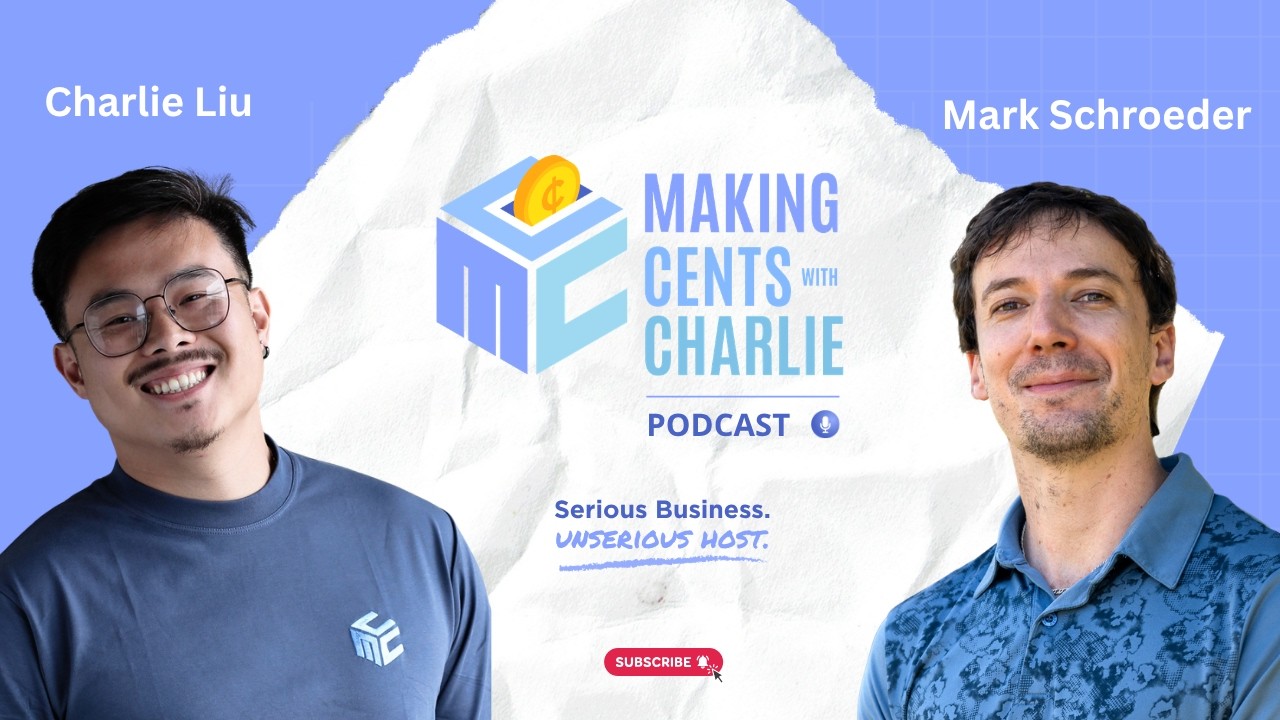
Making Cents with Charlie and Mark Schroeder | Coffee, Sports, Disc Golf, DIY & Scaling South Africa