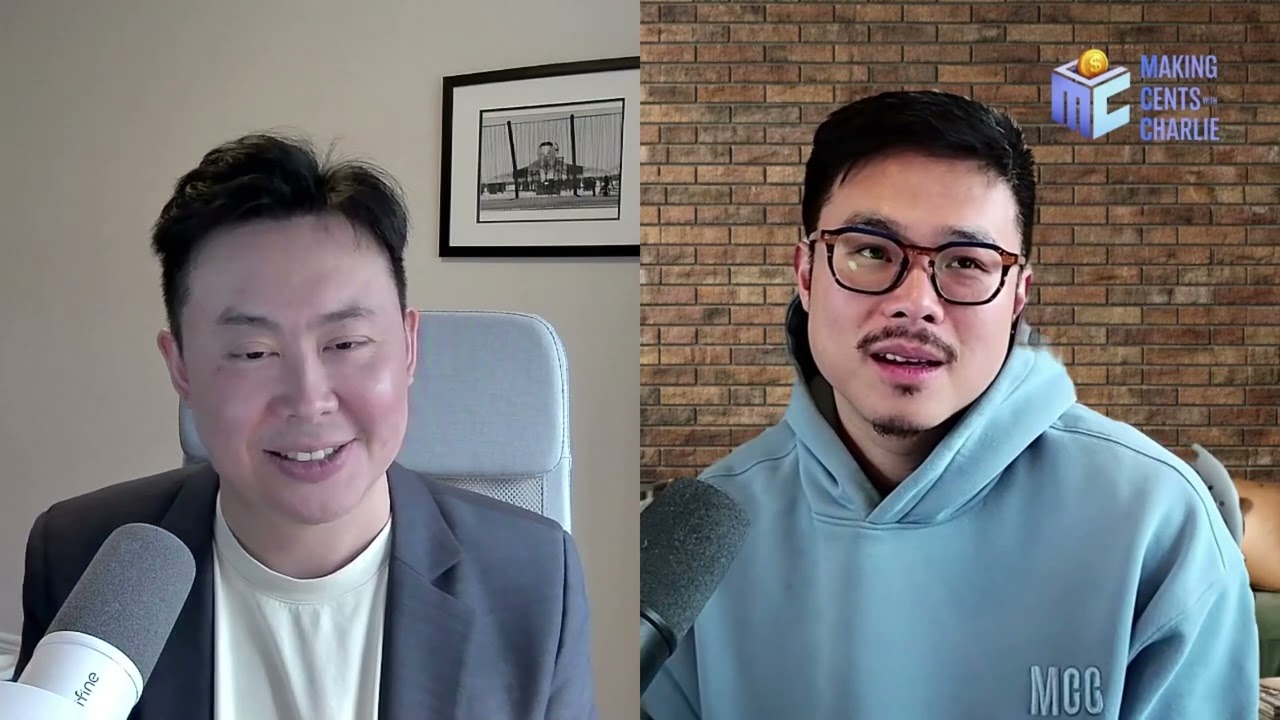
Making Cents with Charlie and Owais Khan - Ep 4 Full episode
In this episode of the MCC Show, host Charlie Liu welcomes longtime friend and MCC Head of Client Success, Owais "Always" Khan. The conversation begins with an introduction to Owais’s background: a 13‑year career that started in FP&A, progressed through hands‑on troubleshooting, and evolved into leading professional services at Monte Carlo Consulting (MCC). Owais shares personal passions—volleyball, basketball, golf, scuba diving, food, and extensive travel—highlighting his love for exploring new cultures and cuisines. Both hosts discuss how a study‑abroad exchange in Singapore served as a pivotal moment, teaching resilience, independence, and a love for the unknown. They then shift to the professional realm, describing MCC’s mission to simplify finance planning by replacing manual Excel modeling with Vena’s database‑backed, AI‑enhanced platform. Owais explains the recent, dramatic impact of generative AI on FP&A, noting that future models may be built with a single prompt, shifting the value of professional services from building spreadsheets to asking the right questions, coaching, and ensuring clients feel heard. The dialogue reflects on how AI may actually deepen human interaction, drawing parallels to coaching and medical diagnosis. Both express excitement about technology democratizing access to healthcare and other services. The episode wraps up with each sharing a “2‑cents” piece of advice—embrace the unknown and stay curious—and a rapid‑fire segment covering favorite food, ideal food pairings, client communication styles, preferred pump‑up song, and Owais’s side‑hustle as a food‑vlogger. The conversation blends personal storytelling with industry insight, offering listeners both inspiration and a glimpse into the evolving landscape of finance technology.
Chapters
Hello everyone. My name is Charlie Liu and welcome back to the MCC Show, Making Sense with Charlie. Today's conversation is one that I'm particularly personally excited for, and we have a very special guest, Always Khan, with us. Let's dive in and make sense with Charlie. Today we have Always Khan. He is our head of client success at MCC. He brings a wealth of knowledge and experience in building kind of lasting relationship with clients. And also driving insane measurable value for clients on the FP&A finance side. He's the bridge between complex financial solutions, but also the people who use them every day and the people behind the scenes on his team setting up for clients. I am thrilled to have him here and share his insights in truly what it takes to make every cent count for the client. And it's, it's, this one's also really special for me because I've known Always for a very long time, my friend. It's what, 4 companies now? I started my career with UA Profits, and then we were at Venna together, and you and I were at OnPlan together, kind of in the trenches trying to build a software company from scratch. And now we're together at MCC. I even have my swag today, building what we want to be the kind of world's best FP&A services consulting firm. I'm sure the audience is dying to learn a bit more about you.
Yeah.
Love to, please, please share some, what's your story, my friend?
Yeah, no, thank you for having me on MCC, Making Sense with Charlie. I love the name. Yeah, you know, seeing Eugene and Peter and other folks on it, I was a bit jealous. When is my turn? But yeah, all right. So yeah, getting diving right into it. Yeah, I mean, you said it right. Like we've known each other for a long time. That's so I had just returned back from from Singapore. That's when I actually did my interview, and yeah, that was my first job whilst still being in school, and that was my first exposure to this industry, and I have never looked back. I have been in this space since then, and yeah, enjoyed every bit of it. So yeah, you know, just I mean a good segue here. So you know, for for the audience here. Name's Awais. I lead professional services here at Monte Carlos and, you know, started my career deep into the weeds of FP&A. So like my initial part of my career was a lot of, you know, building, troubleshooting, figuring things out, right? And then slowly started to transition into leading teams, owning delivery. And, you know, at this point in my career now, I'm kind of more focused on building a team that can deliver consistently, Making sure projects get done, but they don't just get done, they actually get done for the better for the client. So it actually works in the real world. That's the key. Yeah, that's more on the business side. But, you know, just, I think it's a good opportunity just for also for me to just talk a little bit about kind of my personal side as well. So, you know, I mean, in this space, as you mentioned, been in this space for a long time. It's actually been almost 13 years now. And jumped around a wide variety of roles, and here I am now. But outside of that, what I love most is I love playing volleyball. That's a big part of my life. I also enjoy a lot of other things like playing basketball, but recently I've really gotten into golf and always feel like also this one time when I hit the perfect shot, I've just been trying to chase that feeling. And still haven't been able to get there. I recognize that I suck at it today, and there's a long way to go for me to improve. But that's that's the that's the key part that I'm really trying to strive for. Outside of that, I have a I've always mentioned this to you. Like I have a big group of cousins and friends that I hang out with on the weekend.
So incredible.
Yeah, every weekend without a miss. Friday night, I'm at my cousin's house, who's a great host. He has a big heart, and he hosts all of us. at his house every weekend without a miss. We've been doing this for the last 15, 20 years now. And yeah, outside of that, I think this is another thing that you know a lot about me is I'm a big foodie. I love— I live to eat. I live to eat good food. And I'm always on the hunt for looking out for the next best spot. And I also always recommend it to you guys as well. So That's one thing I don't want to give up about my life ever. And yeah, I mean, this is something that everyone likes to say. Everyone likes to talk about how they love traveling, but I truly embody it. I really, really like traveling. If I ever want to spend my money on something, that's to travel more, that's to learn more about different experiences, different cultures, different cuisines, and would love to continue that with me and my wife. Once a year, we always end up— so I've traveled to 15+ countries so far.
Wow.
Once a year, we always somehow end up in Cancun. That part of me is never going away. Both me and my wife both are like, really, we love being next to the beach, love being in the water. I am a licensed scuba diver, so I love going scuba diving as well.
Where did you learn that? Was this when you were in Singapore? When did you get that?
Yes, I did. So in Singapore, we actually went to this interesting place in Malaysia called Perhentian Island, and I was there for roughly 4 days. Where I did my entire course. I did the so we do the pool training, then we go out in the open water. You know, so did did the entire course there, and since then, anytime I travel, I try to at least get a dive in.
But jealous. I gotta get my. I paid for a long time ago when I was in Australia. This was my exchange days as well, but I got distracted by other stuff. I never never finished. I go ahead.
No, I was gonna say this is the time when you were. I think you did a good chunk of Australia night. In a camper van.
And yeah, you're right. I lived in Australia for close to, I want to say 8 months. I lived out of a van for a while, kind of just driving nomady and living from the peak north, Cairns, all the way down south to Melbourne. Something I got to get back to. One of the reasons why I didn't pay for the scuba diving course, but then I found that trip, I found that van. I couldn't stay in a city for a week.
And do you feel like that's— that is that something that's kind of shaped your, your, your, your, your current life and how you love— you still love to travel? For a good chunk of your time, you were kind of living the nomadic life, you know, where you were just moving from country to country, city to city, exploring different places. Is that—
Yeah, I mean, I think that trip, that one exchange really shaped up Hawaii. It's funny, I moved around a lot as a child, but I didn't really enjoy traveling back then. My dad moved us around from China to Japan to Canada, back to China, back to Canada. But I don't remember liking any of the trips I did back then. But then after that trip, I realized like that was who I am. I don't feel great staying in one place for too long. It's funny, the apple doesn't fall too far from the tree. I think one of the learnings I had in my early 30s is accept who you are.
Yeah.
God, except for you, I spent way too much of my life trying to be something else, trying to conform to kind of typical societal path or recommendations or guidance, especially us being immigrants and, and Asian, South Asians. There's almost like a, what is the right thing to do? And I think the more conformed I was, the more friction I had being who I was and the more disappointed I was. And I think a couple of years ago, like I had a true realization, time is limited. You only have so much time, at least for me. I think we only live once, YOLO, right? And I think it all comes down to the way I see life now is live a life where you think you'd be proud of it in your final moments. Yeah.
Absolutely. You don't want to have those regrets on your deathbed.
Yeah, absolutely. Right. It's like, I don't truly— the way I live now, it's like, to me, no one judges me but me on that bed. So I constantly think about like, am I doing the right decisions? If I'm doing the right things so that I can make that future great Charlie satisfied, content, can't always be happy, but at least content with the path I took. Great question. Great segue. How about you? Right. So what shaped you?
So honestly, like, I don't wanna steal what you said, but I will say that my experience of going on exchange was truly a life-changing experience as well. That was my first time. Well, like, I mean, I was living at school. So just for the audience, I'm originally from, like, I used to live in Mississauga, but then I was going to school in Hamilton. So that was my first ever experience living away from home. But even that wasn't the same. Like, I would still come back on the weekends. I was still supported by my family. My mom would cook for me and send food for me. I'd come back to a comfortable bed every weekend, not having to worry about much. But then moving to Singapore was the first time ever I kind of lived on my own. And that taught me a lot of valuable lessons, especially like just being first arriving to a country which you know nothing about.
What was the first thing you remember from landing?
So one thing was I moved, I went from, so it was December here when I went to Singapore. So the weather was phenomenal. It was extremely humid, but you don't have snow around you. So I'll take that any day.
But what was the first kind of thing you're like, fuck, I'm in Singapore. Like, what is the—
Yeah, it's hard. Like, okay. So now that I think about it, I think I think it would have been definitely like the fact that I'm so far away from home. I'm in a country that I know nothing about. That definitely shook me. But I think the part that was a bit comforting is Singapore is a country in the middle of Asia that's still an English-speaking country. So that part was a bit more comforting. But I think outside of that, just the whole shock of being somewhere in your early, early 20s, Not having left home for a prolonged period and arriving to another country where— because I didn't have accommodation decided at that time. I went to a hostel, stayed there for a week before I figured out where I'm going to be staying. So that whole experience was definitely very overwhelming at the time, but also I just got thrown in the fire and I just figured it out. So that was something that really taught me resilience. This is what you're dealt with and you got to figure out what What comes next?
Dude, you're my type of guy, man. Like, I, you'd never hear this. I landed in Sydney without accommodations either, dude. I didn't even know what hostels were. I remember the night before thinking like, what am I going to do? I was like, hotels are really expensive. And I was like, I will figure it out once I get there.
Exactly right. And honestly, like, obviously, like now we've, we're a lot older. We're We're kind of getting used to, like, the finer things in life too, you're right, as you get older. But I'd still take it. Like, I still take that experience. I would, I don't know, like, I, I, I, if, if it, if it, if it wasn't for the comfort of, of, of my wife, like, I would go stay at a hostel, meet new people.
We're gonna do trips sometimes and we'll just figure out where we go.
Exactly. I would still, I will still take that. I don't, I don't mind. I don't mind.
I want to drop the next. This is, I was thinking back to my trip and this hilarious when it happened. So I remember getting to Sydney. I didn't know where to go. I did zero research and I was looking up the subway and there's always a center, Central Station or something like that. I was like, I think I should go downtown. I go to Central Station. Like most cities, Central Station is usually downtown, and most downtowns are around Chinatown. I don't know why, but my people are really good at finding the right place for establishing Chinatown. I remember I came out of Central Station, whatever it's called now, or whatever it's supposed to be, don't remember. And I came down and it was this big Chinese sign. I was in Chinatown. I remember being extremely confused that at this point I probably flew 24 hours. I got out of the subway station. Yeah. And it looked like it looked like China. And I was like, am I am I in the right country?
That's hilarious.
But it's you learn so much of these. I'm glad we brought this up. What made you do the trip?
Oh my god! I man, there's this. It's so funny. Like I I don't I don't even know where to start this. There's this Bollywood movie that me and my friends watched. It's so for for folks like the folks who watch Bollywood. Like there's this movie called Zindagi Na Milegi. It's it's basically about three guys. One of the guys is about to get married, and they go on a bachelor trip, and they go to Spain, and they get taught with a lot of life lessons how they should be living life. It's a very male-centric movie, by the way. Like now, as I'm old, as I'm getting older, I realize that. But that talked about you know you just so so what the word the phrase that I said it translates to you only get life once.
Can you say that once more?
So it's in Urdu it's it or Hindi it's it's it it says ज़िंदगी ना मिलेगी दोबारा meaning You only get life once, or you only live once, right? And the whole concept is, you know, be true to yourself, explore, live life, get in touch with your own personality, understand what things you like, what things you don't like. And that really inspired us. And this is like a bunch of like 20-year-olds sitting in a dorm room watching a movie on a tiny screen and getting inspired by it. And we're like, okay, you know what? I think we got to travel. This is that Mac. This is that Mac in our— and then we decided, you know what, we should go on exchange. We should go live somewhere else for a bit. So that's how this whole thing started. I applied for it and somehow I remember I was applying for exchange and then at some point I was almost demotivated to go because I was like, you know what, how am I going to go to a different country and figure out my living situation, going to a different school where I don't know people? All of that was charted territory for me. So I kind of almost got demotivated at one point and I stopped applying. I got that email and I was like, okay, you know what? Like, even though I may have missed the deadline, I think there's the opportunity still there. And then I had a chat with my friends and next thing I know, like I finished the process, I got accepted and yeah, the rest was history.
I love it. Did all your friends that watched the movie with you go as well? Was it just you?
No, there was 3 of us who went.
All Singapore?
All went to Singapore. Yes. All 3 of us went to Singapore together.
Why Singapore?
Asia was just unexplored. I feel like we always think about Europe or like South America, for instance. It just feels close enough that you can go anytime. Asia always felt like a far distant place that you would never think of visiting. So that's why we're like, you know what? It has to be something truly different.
My brother went to Singapore. I remember I had a similar reason. I actually got into Norway first. And I backed out because I was like, I wasn't going to leave Canada in winter. I think it's December for even colder place. So that's why last minute I switched to Australia. And the reason why I chose it was I wanted someplace as far as possible to see what it was like. It turns out there's actually not that much culture shock between Canada and Australia. Very, very similar purpose and goals behind us. But I'm so glad you did it because I think so many people— People have these desires, goals, intentions, but they don't actually execute and decide on it. It's like as they start doing this process, things in life happens and they're like, there's just a million excuses not to do it. It's hard. It's a new place. You don't know anyone. The ones you mentioned, I remember the ones I faced was, should I be doing this? Should I be, or should I start thinking about, back then I was on the accounting path. I'm like, should I? spend more time getting my CPA credits? Should I try to build network and get a job? I'm so glad I didn't listen to the logical brain, which at like 20 is not even that developed.
Yes.
Did any of that kind of push you into kind of the career path you took, or was that completely random?
The career path was at the time when I actually first, I was just trying to get a job. Let's be real. I applied to several places, interviewed at several places. But once I did my internship, it was very clear to me that I really enjoyed doing CPM. So it gave me the flavor of business and technology at the same time. And I was really just starting to get my feet wet with technology. Like I knew nothing about it when I first started. Like I had no idea what SQL was, how to even use Excel, right? Things like that. Like this is all from this industry. So I'm truly grateful. Like, you know, I picked it and I'm truly grateful I'm still in it.
Yeah.
Like I think My learning just accelerated from that point on.
Now we're kind of primarily a Fedim partner, but I know you and I have gone through multiple of these tools. And a lot of the folks listening, they may be finance, they may be in our space, they may be looking into getting into our space. What is our space? If you want to explain to others, like, what do we do? Right.
So what I'll say is our space allows finance users, finance folks to plan better, to analyze their data better, have more— make more insightful decisions because they don't have to go and do all the grunt work that they needed to do before we came into the picture. So what that looks like is previously you would've had to crunch numbers in Excel, build models before you can even make something of the information you have at hand. With what we offer, you don't have to do much of that. All you can do is focus your time on just making better analytical decisions. So that's the crux of what we do, if I was to just put it in a nutshell.
You mentioned earlier, and I agree with all this, I saw it firsthand as well. I remember when I first started my career, I was like, what is, what is, what do we do? Trial by fire, basically what you and I went through doing exchange program, but now we're doing it on a career level. You've been in the space for a long time. You and I got That's really all we know in and out. FPA, FPA systems data. How have you seen it change over the years? How are you seeing it changing now? And what has changed for you between the time that you were in IC? And it's pretty cool because you went from the customer success side into the actual delivery side. Now you run this whole department, MCC. How have you seen the change over the years for yourself, but also broadly the whole space?
Honestly, the most drastic changes have come very recently. And what I mean by that is, and honestly, this isn't like a promotional talk about just Vena itself, but this is just reality. I think Vena is by far the best position tool out there for the developments that we're seeing in AI today. And what I mean by that is if you just pick up all the platforms that are out there, like, for instance, if you talk about like Clod for Excel or Copilot, these tools are positioned in a way to be able to do a lot of model building that natively, like if you look at other tools out there, they are trying to productize all of these things, but it may not fit everyone's needs. Whereas with Vena, you can actually build a bespoke model still powered by a database where you can still store data, slice and dice data. But with the power of Excel, meaning you can, you can build these models very quickly with these next-gen AI tools. And I say that because like, this is, this is the most drastic change I've seen in our recent times. And that's just changing this space entirely.
I'm fully aligned. It's the change we're seeing in AI is insane. I remember, I don't know if you remember this, when GPT just came out. It couldn't do math. You asked a serious question and it was just off, but it was really good at explaining to you why 1+ 1= 3, right? Because back then they didn't understand GNOME. They had all the kind of— it's been trained on all the written language and books of humanity. It's really good at explaining things to you, even if it's false. But now I was able to build these complicated equations, able to solve them, able to build full models. And I fully align with you, my friend. It betties on Excel and it allows all the LLMs and AI companies, they're all trying to figure out how to get better with Excel because the TAM is that big, right? A billion people use Excel today. None of them are focused on actually getting better with a specific kind of niche tool. And I think that is where we're seeing the biggest leverage. I mean, you and I talk about this all the time. My job being the head of MCC is to try to figure out how we navigate through all this. But I see this in a world where a year or 2 years from now, a lot of the modeling aspect that people do, that's going to largely disappear. It's interesting because a lot of people love Excel, but a lot of people don't like Excel. To me, it's really fascinating because the people that love Excel, it's great. It's going to make it easier. People who don't love Excel, well, they usually don't like it because the Formulas, the references. Well, the AI is going to take care of that for you. And then having Venat kind of power that behind the scenes, you can make the full picture. And I don't know what the future looks like. You and I talk about this all the time. What's your take? Let's say 2 years from now, a click of a button, the model is fully functioning. In that case, what does, what does the head of PS or client experience? What is that responsibility?
Yeah.
What does the team look like? What does the full client experience look like? Right.
You said it spot on. Like, I think we're not that far from being able to just click a button and have something ready to be built for you. So what that means for us is, so what makes us good today, right? What makes MCC attractive for a customer? We are good at, we are good at, very good at asking questions. and understanding requirements. Some things like, even if you— so, you know, sometimes I talk to one of our life coaches that you also talk to. And what he helps us do is just ask us, ask yourself the right questions a lot of times. Sometimes people just don't know how to ask the right questions. They may have something in their mind, they're just not able to translate it. So I think that's what we're really good at. And that's something that we will continue to add value on. And that's where I see the biggest shift. It's moving from us building stuff to just becoming really good at asking questions and helping people understand what their gaps might be. That's the first thing. Second thing is, as the head of professional services at MCC, I think for us, for us as operationally, what if, let's say like the whole area of what we used to call building starts to fade away, what is the next thing that really makes us valuable? So that part is being able to, like, so if I was to just paint the full picture is Being able to understand their requirements, being able to translate those requirements to a functional model. So now instead of us actually building a solution design, this may just turn into prompting, right? Then the second piece to that is the client needs to feel heard. The client needs to feel that they are understood. They are getting the outcomes that they expect. So that is the part of project management and client management.
Would you say it makes it more, would you say like the human aspect? Well, it's funny, the AI aspect, it's making us become better humans. But instead of spending the majority of your time building your— from what you're talking about, it's the other aspect. It's the client management, it's asking the right questions, it's strategizing together what we should have in the solution. It's the coaching around that.
Absolutely. I think it's, as funny as it sounds, like just human interaction, human touch, human Feedback is starting to become a lot more novel than it used to be. Like, I don't know, at some point you're going to see a lot more coffee vending machines, but I would still prefer to go to a coffee shop and talk to a person to have my coffee served to me.
Yeah, I mean, I remember when I was younger, everyone's outside playing. Now I look at kids and they're just not the same anymore. And even if you're seeing kids together in a coffee shop, just sitting there next to each other, texting each other.
Yes.
Maybe there's a world where actually the AI forces us to actually have more human interactions again, because especially, well, at least in this, say, this piece when we're talking about work, right? Because the actual build, that's largely disappearing. It's the coaching, or I think about maybe being a coach or a doctor. Right. Like the doctor's not making the medicine to heal you. Majority of them aren't, right? But they're, they're asking questions, diagnosing you. They're testing treatment, seeing how you perform, nurturing you, coaching you. If you think about all your physiotherapists, they teach you how to get back in your feet, teach you how to walk better. That's almost kind of the shift in mentality.
Absolutely.
What are you the most excited about for the future?
That's a tough one. So as I have to really think deep about what I'm most excited about from just from an industry and from my own professional work standpoint. But I think if you just talk about from a humanity standpoint, I think I'm most excited about the developments that come that cure diseases that we haven't been able to cure, you know, making help more accessible for people that weren't able to access it before, and it used to cost an arm and a leg. I think that's the most I'm excited about the most, just seeing this world become a better place and more accessible for people, even if they can't afford it.
Yeah, I think what's really exciting, it's a lot of this being more democratized. If you think about it, like photography was meant for the rich. Now every single one of us have one. Right now it's like, how do we have better service, better treatment, better diagnosis? I mean, we live in Canada, we're lucky, but there's a lot of places that don't. But I'm seeing more and more options now where you can get a full, fully diagnosis, full scan, blood works. Still decently amount, but it's, it's not unreachable.
Exactly.
For a small, small vacation, you can now get a full diagnosis. Compared to before, maybe a lot more. And it's largely due to the impacts that we've seen with technology. Now, Waze, I know we're coming to an end today. This was a lot of fun. We'll definitely have more of these. We can reminisce, think about our past together. We definitely have to do a trip together. The show is called Making Cents with Charlie, so we always like to end it with our 2 cents of advice. So for you, what's your 2 cents of advice for the audience?
Yeah, absolutely. I think it resonates with a lot of what we've already been talking about. So I think what I've realized is that the deepest learning really comes from stepping into the unknown. It's largely— it's very uncomfortable for people when they are stepping into something they don't know about. They resist it. But if you can shift your mindset from fear to curiosity, I think that's where the real growth happens. And I think this also like really aligns closely with how we think at MCC, right? Like this is something that you You always say, and it's always really stuck with me, that no one can really take your skills or what you know away from you. So if you just keep investing in learning and pushing yourself into the unknown, the more you expand, this expands your opportunities in life that'll come your way. Ultimately, you'll increase what you always say, your earning potential.
Thanks for highlighting me. I completely align with that. I think I think the fastest way to learn is through experience. That's funny, to experiment and to experience are 2 different words in English, but in Spanish, they're actually one word, experimentar. It's to experience the unknown, it's to also experiment with something new. And that's where you have kind of the highest leverage in terms of learning opportunities and growth. I think for many of us, if you just focus on that, and you said it spot on, to Just be curious, right? If you see a hardship in front of you, think of mindset, right? How can I learn to do this better? This is an opportunity for me to ramp up this, things like that. Thank you. That's a good one. Now we usually generally try to wrap it up, which is a series of kind of rapid fires. So I've got a bunch of questions for you. I, I set up our first one, uh, which relates to what you were saying earlier. What's your favorite food? What's your—
Oh, this one's a funny one. Uh, you've been there before. It's this infamous Ridgeway Plaza. A lot of— this is like, I would call it the halal ethnic food plaza in all of North America. You can find like all sorts of things there, like shawarmas or like, you know, like desi food, uh, anything, anything halal you could think of, you'll find it there.
Best haleem I've had in my life was—
Absolutely.
Oh my God. Uh, for anyone who doesn't know, haleem is a Pakistani, also Indian dish. It's a little bit different on different sides of the border. It's cooked down of, I think it's beef or mutton. It's like a stew cooked down with lentils. That's glorious. So good. It's so heavy. But to move on, we have a few more questions. What's a combo or match made in heaven? What are the things like milk and cereal? Those things go hand in hand.
Sorry, what's a match made in heaven? Is that your question?
Yeah, what's the— what's, uh, they want, right? So think about milk and cereal.
Oh yeah, I mean, uh, yeah, like peanut butter and jelly.
Okay, I, I do. I love it. Some people also outside of North America cannot stand it. I love it. Angry client or silent client?
I think angry client because at least you know what's on their mind. Silent client just means that they've— they don't care what you say. They've checked out. Same.
I think almost any relationship, right? Anger means they want to be heard. There's an opportunity here, but if they're gone, nothing can do that.
Exactly.
When talking to clients, emojis or no emojis?
That's a good one. I'm actually pretty old school still. I'm not that old, but I I think this is where I kind of draw the line. I do no emojis. I like to keep it professional in my emails.
So different aspect. I've always used emojis. I remember when I was like early in my days, I would ask clients for stuff. And if they don't send it, I'd follow up. And the second time I'll put a happy face. And then I'll go in the car and go, hey, remember that happy face? You owe me this. And it usually cracks a laugh and usually gets me what I need to move the project forward. Interesting.
Interesting.
What is your go-to pump me up song?
Oh, that's a good one. So I think my favorite one that I still actually— I've butchered, like, I've overplayed this song. I've abused this song. It's called Still D.R.A.Y. by Dr. Dre and Snoop Dogg. You know, when the piano hits?
Yes.
I feel like I'm about to walk into a deal I haven't even closed yet.
Love it. I think the final one, it's if you're not doing CPM, What do I— what would someone usually catch you doing on a weekday?
Oh yes. So like I mentioned, like I'm a big foodie. Like I love, I love trying different things. I love— I wouldn't, sorry, I wouldn't call it, like, I think I'm specific about what I eat. Like I love good food and I have very, like, I have a criteria for it, but I would 100% be like a food vlogger or something. Like I would've been either like reviewing different restaurants and trying them out and putting my reviews out for people, or I would just be making my— like, I would be cooking something on my own. I would be watching like 5 different recipe videos and tweaking my own ingredients, making sure it comes out the right way. And also, I wanted to add there, actually, to an interesting point, I am a Google Local Guide level 6, so I do a lot of food reviews. And yeah, like, you know, I came to a point in realization, like, I was actually thinking about it the other day. If I wasn't doing this, I would definitely be just recording videos on food.
Dude, we should start. I think we should start. Check out Ridgeway with Always. We should just invite.
Absolutely.
And we'll have a link together. You might gain a lot of weight. That would be a lot of fun. Always, this is a lot of fun. Lots of energy. The chemistry is great. Thank you so much for being here and for all the folks listening. Thank you so much. for tuning in, and I look forward for our next session together. Thank you always.
Yeah, thank you for having me here. I appreciate that.
Awesome, dude. This was— you're great on camera. Stay tuned for the next episode of Making Cents with Charlie.
More from Charlie



Making Cents with Charlie and Mark Schroeder | Coffee, Sports, Disc Golf, DIY & Scaling South Africa